
NOAA Teacher at Sea
Charlotte Sutton
Aboard NOAA Ship Reuben Lasker
June 7 – June 18, 2024
Mission: Rockfish Recruitment and Ecosystem Assessment Survey (RREAS)
Geographic Area of Cruise: Pacific Ocean; U.S. West Coast
Date: June 6th, 2024
Weather Data (Santa Cruz)
Date: 06/06/2024
Time: 08:00
Latitude: 36.98°N
Temperature: 60°F
Longitude: 122.01°W
Introduction
Hello! My name is Charlotte Sutton and I am thrilled to be a Teacher at Sea for the 2024 Season. I have been teaching for 5 years, and currently teach preschool at Orion Elementary at Joint Base Elmendorf Richardson (JBER), Alaska. It is truly my passion to teach our littlest learners, and to help them grow and learn each day. Teaching in Alaska, students are surrounded by nature and wildlife. JBER is located near both the Knik Arm (Dena’ina: Nuti) and the Turnagain Arm (Dena’ina: Tutl’uh) waterways that are part of the northwestern Gulf of Alaska, as well as many mountain ranges and forests. My students are very curious about the world around them, and often tell me about the fish (especially salmon), beluga whales, moose, and bears that they see around the Anchorage area. In my classroom, I love to help students investigate the world around them by explicitly teaching and practicing the foundations of the scientific inquiry process to help them to become resilient problem solvers not just in preschool but in the years ahead.
I plan to use my experience as a NOAA Teacher at Sea to educate and inform students about the world’s oceans not just in my own classroom but throughout my community on JBER.


Photos: Charlotte Sutton; A mother and juvenile moose outside Orion Elementary in JBER, Alaska; View of the Turnagain Arm waterway, Alaska, taken from Bird Point Trail
Science and Technology Log
This week I will be aboard the NOAA Vessel Reuben Lasker as a NOAA Teacher at Sea. The Reuben Lasker is a fisheries survey vessel, meaning the primary mission to “support fish, marine mammal, seabird and turtle surveys off the U.S. West Coast and in the eastern tropical Pacific Ocean”. The main scientific focus of the upcoming mission is the Rockfish Recruitment and Ecosystem Assessment Survey (RREAS). This survey has been conducted since 1983, and the data collected on rockfish and other fish like salmon helps scientists to better understand the heath of different fish species, and make predictions and assessments of ocean trends.
When I arrived in Santa Cruz, I had the opportunity to meet with NOAA Corps Officer LTJG Bonnie Vierra, who gave me a tour around Southwest Fisheries Science Center Santa Cruz Lab. This lab is where NOAA scientists and their team conduct research and operations when not at sea. This lab hosts an array of scientists who conduct various projects. I’m excited to join the NOAA crew aboard the Lasker soon!


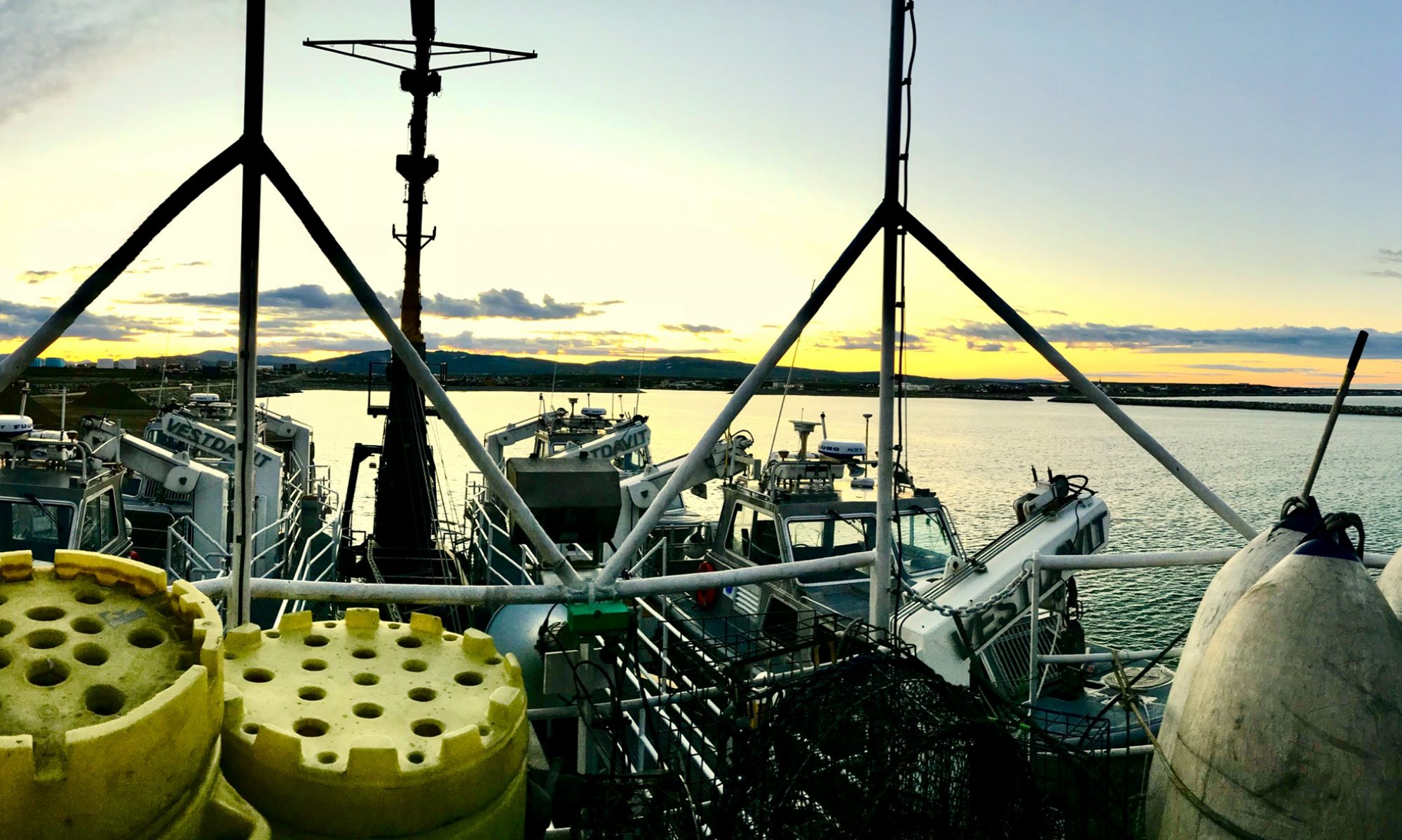
Photos: Small NOAA vessels, research lab, and salmon tank at the Southwest Fisheries Science Center Santa Cruz Lab


Photos: Art found at the Southwest Fisheries Science Center Santa Cruz Lab
Personal Log
Before I left for my Teacher at Sea trip, I received a last minute invitation to the National Marine Sanctuary Foundation Ocean Awards Gala. The National Marine Sanctuary Foundation’s mission is “The Foundation is a leading voice for U.S. protected waters, working with communities to conserve and expand those special places for a healthy ocean, coasts, and Great Lakes. Working together, we safeguard species and the places they call home, and preserve America’s maritime history.” The foundation supports the NOAA mission as the official nonprofit partner to NOAA’s National Marine Sanctuary System.
I happened to sit at the same table as Rear Admiral (RADM) Chad Cary. RADM Cary is currently deputy director for operations, NOAA Office of Marine and Aviation Operations (OMAO), and deputy director, NOAA Commissioned Officer Corps (NOAA Corps). He also was a previous Commanding Officer (CO) of the NOAA Ship Reuben Lasker which I’ll be sailing on in just a few days! He had so many wonderful things to say about both the science research team and the officers and crew of the Lasker. RADM Cary is also originally from Alaska, and I was so fortunate to get to speak with him before my upcoming time at sea aboard the Lasker.
I am so excited for the journey ahead!


Photos: Charlotte Sutton; National Marine Sanctuary Foundation Gala at Union Station in Washington D.C.; Charlotte Sutton and RADM Chad Cary
I’m sure the awards gala was amazing! As a 2022 NOAA Teacher at Sea participant aboard the Oregon II, I know your experience is a chance of a lifetime! I look forward to seeing your research throughout your journey. Enjoy & have too much fun 😉