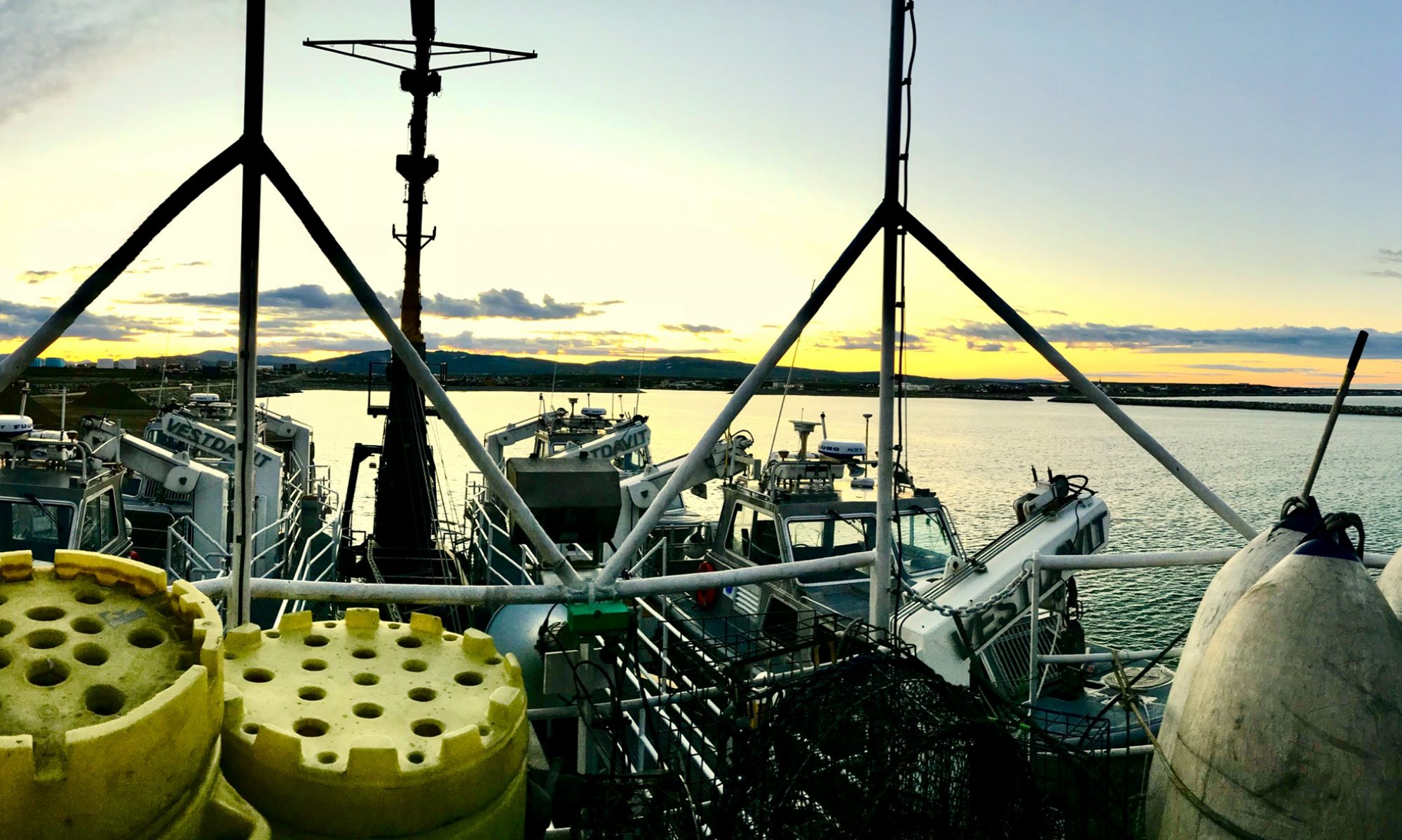
Julia West: In Port in Pascagoula, MS, March 17, 2015

NOAA Teacher at Sea
Julia West
Aboard NOAA ship Gordon Gunter
March 17 – April 2, 2015

Mission: Winter Plankton Survey
Geographic area of cruise: Gulf of Mexico
Date: March 17, 2015

Personal Log

I made it! A smooth flight down to Mississippi (which is a new state for me – I’ve never been here). I arrived to sunshine and warm temperatures – OK, downright hot to me, but I’ll get used to it quickly I’m sure. Pamela Bond, the chief scientist on this cruise, met me at the airport and brought me out to the Gordon Gunter. I quickly learned that it is not only Pam who is super nice and welcoming, but the entire crew. I’ll be introducing them more in future posts.

The ship is not at the usual port near the NOAA lab, but at the former naval station, on an island at the mouth of the Pascagoula River. This yard has multiple uses now, as you can see from the pictures below. So not only is the Gunter here, but it has the company of a Coast Guard vessel, and both are dwarfed by a massive oil rig. On the other side of the pier (not pictured) is a USGS vessel and others. There’s a lot going on here!

Gordon Gunter
The Gordon Gunter at the dock
Gunter, CG vessel, and oil rig
The Gordon Gunter (right) and Coast Guard vessel dwarfed by the huge Sovereign Explorer (oil rig), an old rig that has been docked here for about a year, waiting for bids to take it apart for scrap .

Across the way is Pascagoula’s largest employer, and Mississippi’s largest manufacturing employer, Ingalls Shipbuilding, with 11,000 employees right here in Pascagoula! I can see ships in various stages of construction.

I have learned a lot about this area in the one day here at port. Two major events have happened here in recent years – Hurricane Katrina (2005) and the BP oil spill (2010). Both events simply ravaged this area. Everywhere we have been in the last day – the naval station, the NOAA lab, the highway – was under several feet of water during Katrina. You’ve seen the pictures. To hear about it from the folks here is profound. The BP oil spill (also known as Deepwater Horizon oil spill), another devastating event, changed the whole NOAA season (as it did for the fishermen and just about everyone else here). All the NOAA ships on the east coast, and one from the west coast, had to cancel their season’s research and congregate down here to be involved as needed, looking for oil, looking for marine mammals, etc. Today we visited the NOAA lab, where several employees are analyzing plankton samples taken from the affected waters. This is five years later, and still very relevant and ongoing data collection! (sorry, forgot to bring my camera to the lab, but I got to check out lots of plankton under the microscope).

my room
Deluxe accommodations!

Backing up now, to my arrival: Pam showed me to my room – I’m surprised that I have my own room! It has a refrigerator, closet, desk, comfy chair, my very own sink, and a shared bathroom with the room next door. And it has a TV – I barely know how to use a TV!

And then Tony, the ET (electronics technician) gave me a tour of the boat. Since then, I have been wandering around, sometimes in circles, trying to figure out the layout. I can tell right away that the food is going to be amazing.

My head is already spinning with some of the details about the equipment and technology. Pam was not sure if we would be launching on time – everything has to be just perfect for a research cruise to start, and if there are any issues, we don’t go. There were two repairs that needed to be made since the ship came to port just two days ago: one had to do with the unit that makes our water, by distilling seawater (very important!), and the other had to do with a malfunctioning gyro, or gyrocompass, needed for navigation (also important!). I wanted to know more about how a gyrocompass works, so I first looked it up on Wikipedia, and then talked to Dave Wang, the NAV (navigations officer). It’s so fascinating – a compass that points true north partly by using the rotation of the Earth. The good news is that both of the repairs are done and we will be launching on time!

Water tank
This large fresh water tank was added after the Deepwater Horizon oil spill.

I just want to share one bit info about a simple piece of equipment on the aft deck. It’s a water tank. I asked Tony what it’s for, when we have the technology to make fresh water. Well, after the oil spill, getting fresh water was a problem, so the tank was added. It was decided that it was convenient to have after it was no longer needed, and is now used for things that need a freshwater wash.

I am wrapping up this blog post now, a day after I started it. I’ve had my safety and ship protocol briefing, and we are underway. We’ve passed the barrier islands, and the ship is starting to rock a bit. Here we go! We have another 5 hours or so to go to get to our first sampling station, so the science work will start tonight. One final photo – to get out of the tight spot we were docked in, a tugboat was necessary:

Tugboat
The tug getting ready to help us leave the dock. At first it held the stern of the ship in place while our bow thrusters pivoted the front, and then it pulled us out.

 Word of the Day (time to start learning the terminology):

Neuston – the organisms that are found on the very top of the water, in the surface film. Contrast that with plankton, which can be said to be found within the water, not always right at the surface.

Louise Todd, Underway, September 16, 2013

NOAA Teacher at Sea
Louise Todd
Aboard NOAA Ship Oregon II
September 13 – 29, 2013

Mission: Shark and Red Snapper Bottom Longline Survey
Geographical Area of Cruise: Gulf of Mexico
Date: September 16, 2013

Weather Data from the Bridge:
Barometric Pressure: 1014.01mb
Sea Temperature: 28.8˚Celsius
Air Temperature: 29.9˚C
Wind speed: 19.22 knots

Science and Technology Log:

Oregon II
Oregon II (Photo Credit NOAA)

We left Galveston a little before 2pm on Sunday, September 15.  We were in transit to our first sampling location and should arrive there around 8pm tonight.  Depending on the conditions we might actually be able to do some fishing tonight!

Today we went through our abandon ship drill.  The ship’s alarm is used to alert everyone on board in the event of an emergency.  Abandon ship is indicated by 7 short rings followed by one long ring of the alarm.  When the alarm sounds with the abandon ship signal, we must carry our survival suits, personal flotation devices (PFDs), long pants, a hat and a long-sleeved shirt to the well deck, at the bow (front) of the ship.  My survival suit and personal flotation device (PFD) are kept in cabinets in my room.  The survival suit is tricky to get on and it gets very, very warm when you are wearing it!

Survival Suit
In my survival suit (Photo Credit Lisa Jones)

Personal Log:

During this initial transit, there hasn’t been much for me to do.  I spent a lot of time sleeping on Sunday.  The way the waves rock the ship back and forth makes me very sleepy!  I have taken a few short naps today in order to be ready in case we do any fishing on the later part of my shift tonight.  I am on the day shift which means I will work noon to midnight.  I think it will take me some time to get used to staying up that late but I think these naps will help!  As we start fishing the days will be much busier for me so staying awake will be easy I hope.  The views off of the ship are amazing.  I was surprised to see how blue the water gets.

View off the ship
View off the Oregon II

My stateroom is very comfortable and I have plenty of space in drawers and cabinets for everything I brought with me.  I am getting used to latching doors and drawers behind me so they do not slam back and forth as the ship rocks.  On the ship there is always someone sleeping so everyone works hard to be courteous and stay quiet.

My stateroom
My stateroom

My roommate is an officer on the ship so we are usually in the room at different times.  Officers on NOAA ships are part of the NOAA Corps.  Roommates are usually assigned based on the shifts people are working so each person has some time alone in the room.  As we start fishing more I will bring my computer and other items I might want throughout the day into one of the labs on the ship so I won’t have to go in and out of the room when my roommate might be sleeping.  The curtains are helpful in blocking out any light that might prevent you from sleeping.  The showers are right next to my room which is convenient and the common head (bathroom) is just around the corner.

There are plenty of food choices in the galley on the ship and everything has been delicious.  In the mornings you can even get eggs made to order!  I certainly don’t think I will be going hungry!

Did You Know?

Even in the warmer waters of the Gulf of Mexico, hypothermia is risk due to the difference in water temperature and our body temperatures.  The survival suit helps to protect our bodies from the difference in temperature.


Johanna Mendillo: Greetings from Alaska and the Bering Sea! July 27, 2012

NOAA Teacher at Sea
Johanna Mendillo
Aboard NOAA Ship Oscar Dyson
July 23 – August 10, 2012

Mission: Pollock Survey
Geographical area of the cruise: Bering Sea
Date: Friday, July 27, 2012

Location Data from the Bridge:
Latitude: 63 12’ N
Longitude: 177 47’ W
Ship speed: 11.7 knots (13.5 mph)

Weather Data from the Bridge:
Air temperature: 7.2C (44.9ºF)
Surface water temperature: 7.2C (44.9ºF)
Wind speed: 13.3 knots (15.3 mph)
Wind direction: 299T
Barometric pressure: 1001 millibar (0.99 atm)


Science and Technology Log:

Greeting from the Bering Sea!  It was a long journey to get here, complete with bad weather, aborted landings on the Aleutians, a return and overnight in Anchorage, and lost luggage, but it was a good introduction to the whims of nature and a good reminder that the best laid intentions can often go awry.  As O’Bryant students know, our motto is PRIDE and the “P” stands for perseverance, so I simply stayed the course and made it to Dutch Harbor and NOAA Ship Oscar Dyson… only 29hrs late!

In upcoming posts, you will learn a lot about the acoustic technology, statistics, and the engineering know-how behind the trawling process and how it is used to find, collect, and study Pollock populations.  But first, let’s start with splitting open some fish heads!

Now that I have your attention, let me explain.  There are many steps involved in “processing” a net full of Pollock, and I will show you each soon, step-by-step.  I think it would be more fun, though, to jump ahead and show you one little project I helped with that literally had me slicing open fish heads…

Hard at work...
Hard at work…

Here I am preparing and cutting away!  The objective: remove the two largest otoliths, structures in the inner ear that are used by fish for balance, orientation and sound detection.  These are called the sagittae and are located just behind the fish’s eyes.  These otoliths can be measured– like tree rings — to determine the age of the fish because they accrete layers of calcium carbonate and a gelatinous matrix throughout their lives. The accretion rate varies with growth of the fish– often less growth in winter and more in summer– which results in the appearance of rings that resemble tree rings!

Time to cut...
Time to cut…

From a small sampling of otoliths, along with length data, projections can be made about the growth rates and ages of the entire Pollock population.  Such knowledge is, in turn, important for designing appropriate fisheries management policies.  Fisheries biologists like to think of otoliths as information storage units; a sort of CD-ROM in which the life and times of the fish are recorded.  If we learn the code, we can learn about that fish!

Can you spot the otolith?

For each net of Pollock, we will collect 35 otoliths, which translates to approx. 1,500 otoliths from this cruise alone!  They will be sent back to Seattle and measured under the microscope this fall and winter.

Finished!
Finished!

Personal Log:

Wondering where I am at this very moment?  Check out NOAA Ship Oscar Dyson on NOAA Ship Tracker!

Small things become important when your daily life gets confined to a small space, right, students?  Perhaps some of you have been to sleepover camp and know firsthand?  In a few years, you will also experience communal living in close quarters— in college!  It only seems appropriate that I start by explaining to you (and showing you) my personal space aboard NOAA Ship Oscar Dyson!

First, my stateroom.  This picture shows you that I am in room 01-19-2.  I am on the 01-deck, and there are four other rooms on my hall that house most of the NOAA science team- Taina, Darin, Kresimir, Rick, and Allan.  Allan is my partner in crime- he is the other “Teacher at Sea” (TAS) onboard this cruise; he teaches high school science in Florida!  In addition to the NOAA team, Anatoli is a Russian scientist on board.  These NOAA scientists are based in Seattle in the Midwater Assessment & Conservation Engineering (MACE) group at the Alaska Fisheries Science Center and, depending on their schedules, come out to sea 1-4 times per year to collect data.  They are just one group of many NOAA teams conducting research in the Bering Sea; you will learn much more about the science team in later posts.

My door
My door

Originally, I was going to be bunking with the Chief Scientist, Taina!  However, one of the scientists was unable to join the trip, so Taina has her own quarters and I have mine!  This is quite the luxury, and it is very nice to know that I do not have to worry about waking up a roommate as I get ready for my shift.  Most roommates have opposite shifts, so each person gets at least a little bit of “alone time” in his/her room.  For example, Allan’s shift is 4am-4pm (0400-1600) and Kresimir’s shift is from 7pm-7am (1900-0700).

Here is my bunk!  I chose the bottom one, so if I fall out in rough seas, it is a shorter fall!  One trick- if the seas are rough, take the rubber survival suits and stuff them against the metal frames, so if I do smack against them, there will be some padding!  There is a reading light inside, and I also brought my trusty headlamp and pocket flashlight, so I should be pretty well set on any hasty exit I may have to make- such as for a safety drill!

My bunk!
My bunk!

I also have a desk and a locker, which is a closet for my clothes and other gear.  One thing ships excel at is maximizing small spaces with hooks- I have a row of hooks for my jackets, sweatshirts, hats, etc.  In the head (bathroom), there are many hooks as well.  The other neat trick—the use of bungee cords!  Here is one holding the head door open so it does not swing back and forth as the boat rolls.  They are also used throughout the ship to secure desk chairs, boxes, and any other object that could take flight during rough seas!

See the bungee cord?

Since it is summer here in the high northern latitudes, the days are very long—sunset does not occur until about 12am each night and sunrise occurs around 7am.  The ships provides shades on both the bunks and the port holes (windows) to help people sleep, but as you can see, the earlier tenant in my room even added a layer of cardboard!

My window...
My window…

There are a few other features that help define life at sea.  The shower curtain has magnets to help secure it to the walls.  As you can see, it is a pretty tiny shower, and that handle could become essential if I chose to take a shower and then the seas turn rough!   The medicine cabinet locks shut, and if you leave it open, the door can swing during a big wave and smack you in the face!  Lastly, the head includes special digesting bacteria, so you can only use a special cleaner that does not kill them by accident!  There is a very powerful FLUSH noise that takes a little bit of getting used to as well– it scared me the first time I heard it!

Spot the shower handle...
Spot the shower handle…

That about does it for our first tour.  Please post a comment below, students, with any questions at all.  In my next post, I will give you a tour of the second most important area in daily life— the mess, where I eat!

Stacey Jambura: The Adventure Begins, July 8, 2012

Stacey Jambura
July 6 – 17, 2012
.
Geographical Area of Cruise: Gulf of Mexico
(You can also view the NOAA ShipTracker here: http://shiptracker.noaa.gov/shiptracker.html)
Date: July 8, 2012

.

Weather Details from Bridge: (at 18:45 GMT)
Air Temperature: 29.50 ◦C
Water Temperature: 30.70 ◦C
Relative Humidity: 66%
Wind Speed: 1.52 kts
Barometric Pressure: 1,017.82 mb
.

Science and Technology Log

Virtual Tour of the Oregon II

I know many of you may have never been on a ship before and are probably curious to know what it is like to be aboard the Oregon II. I’m going to take you on a little virtual tour, but first you will need to know some common terms that are used to refer to certain areas on the ship.

Ship Term

What It Means

Bow The front of the ship.
Stern The back of the ship.
Starboard The right side of the ship when facing the bow.
Port The left side of the ship when facing the bow.
Forward The direction towards the bow of the ship.
Aft The direction towards the stern of the ship.
Bridge The location of the command center for the ship.
Galley The kitchen.
Mess Hall The dining area.
Head The bathroom.
Stateroom Where crew members sleep.

On Deck

The Bow

At the bow of the ship is where most of the scientific collection equipment is deployed/released. The CTD (conductivity, temperature, depth), the neuston net, and the bongo nets. (I will talk about each one of these in upcoming blogs.) There are several large cranes that help lift these up off the deck and swing them over the edge of the ship to be released into the water. When you are at the bow and the cranes are running, it is very important to keep yourself safe. Everyone who is at the bow when the cranes are operating is required to wear a hard hat and a PFD (personal floatation device). You never know if a cable will snap or the wind will swing the equipment towards you. There is a sensor on the PFD that is activated when large amounts of saltwater touches it, like if you were to fall overboard. Once salt water touches the sensor, the PFD will inflate and keep you afloat until you can be rescued.

Oregon II Bow
Oregon II Bow

The Stern

At the stern is where the samples from the neuston cod end and the bongo cod ends are collected and preserved in jars for scientists to examine at a lab. This is also where the large trawling net is deployed. The scientists spend most of their time at this part of the ship.

Stern of the Oregon II

What Makes the Ship Sail?

Bridge

The bridge is where the officers of the Oregon II work. It is located toward the bow of the ship. The bridge has all of the navigation tools necessary to steer the ship to the next sampling station. There is also a lot of weather equipment that is monitored and recorded throughout the day. The bridge is where you’ll find the best views of the ocean because it is almost completely surrounded by windows and it’s higher than any other room on the ship.

At the Helm
At the Helm
Bridge
Bridge

.

Chart Room

This room is where all of the maps are stored. While there are more technologically advanced methods used for navigation on the ship located in the bridge, it is important to have physical maps on hand to refer to, especially if the instruments stop working for any reason.

Chart Room
Chart Room

Engine Room

Before we untied our ship from the dock I received a full tour of the engine room. This is where the heart of the ship is. Everything in the engine room powers the ship. Our water is even purified down here using reverse osmosis (passing water through a membrane to filter the water). Because of this machine, we can filter salt water into fresh water to use on the ship.

Reverse Osmosis
Reverse Osmosis Machine

It was great to venture down to the engine room  before we set sail because I was told that it can get up to 110 degrees when the engines are running! It is a large space, but it feels small because of the large equipment. There are two of everything, which is especially important if something needs repair. Below is a picture of the two engines. The other is a picture of one of the generators.

Engine
Engine
Generator
Generator

Living on a Ship
Stateroom

My stateroom is compact, but its main purpose is for sleeping so size isn’t really an issue. There is a bunk bed, a sink with a mirror, latching drawers for clothes, and a hide-away desk. There is also a compact tv that is attached to the bottom of the top bunk and folds up when it is not in use. I only use the room to sleep and get ready for my shift because my bunkmate works the opposite watch shift as mine (midnight to noon), and I want to be the least disruptive as possible. After 12 hours shifts, sleep is really needed and helps reenergize you in time for the next watch.

Stateroom Bunks
Stateroom Bunks
Stateroom
Stateroom

The Head

The head is the same as a bathroom. On the Oregon II there are private and communal heads. The private heads are for the officers and are typically connected to their staterooms. The communal heads are open for any crew member to use. There are also communal showers for the crew to use. All of the toilets use salt water that is pumped onboard. The reason fresh water is not used is because it is a precious source on the ship and is not readily available from the ship’s surroundings. The sinks, showers, drinking fountains, and ice machines all use fresh water. Fresh water on the ship should never be wasted. Water for the sinks is timed so that there will never be a faucet that is accidentally left on. Showers are to be kept to a maximum of 10 minutes, though it is encouraged that they be even shorter.

Heads
Heads
Shower
Shower

Galley and Mess Hall

This is one of my favorite places. The galley is where our ship’s cooks prepare all of the wonderful food for the crew. The mess hall is where we all eat during meal times. During meal times it can be quite crowded in the mess hall as there are only 12 available seats and over 30 crew members onboard who are ready to eat. There is an “eat it and beat it” policy to help ensure that everyone who comes down to eat will be able to find a spot. Despite this, it is still a great way to converse with the crew and talk about events from the day before giving up your set to another hungry crew member.

Galley
Galley
Mess Hall
Mess Hall

Crew Lounge

This is the place where crew members who have some down time can gather and socialize, though down time can be rare. There is satellite tv, a couple of computers, and hundreds of movies to choose from. Some available movies haven’t even been released onto DVD for the common household yet, but they are available to the military. They do this because not everyone has access to current movies when they are away from home for extended periods of time. All of the DVDs are encrypted and can ONLY work on the machines aboard the ship. I was excited to find a copy of The Hunger Games and I plan on trying to watch it before my trip is over.

Lounge 1
Lounge 1
Lounge 2
Lounge 2

Labs on the Oregon II

The Wet Lab

The Wet Lab is where all of the samples from the groundfish trawls are sorted, counted, measured, weighed, and sexed (gender identified). Buckets filled with animals from the nets are dumped onto a large conveyor belt and spread out to make sorting the different species out into individual baskets easier. Everything in the wet lab can get wet except the sensors connected to the machines. We need to be cautious around the sensors when we are cleaning up after a sampling so as not to get water in them.

Wet Lab
Wet Lab

The Dry Lab

The Dry Lab is where all of the computers are located that record all of the data from the samplings. As the name of this lab states, everything in it is dry. Water should never come into contact with the equipment in here because it can seriously damage it. In between samplings, this is typically where the scientists gather to wait for arrival at the next sampling station.

Dry Lab
Dry Lab

The Chem Lab

This is where all of the plankton samples are stored. It is also where water samples taken from the CTD are tested for dissolved oxygen (DO). The CTD does have its own DO sensor, but it is always best to test something more than once to ensure you are collecting accurate data.

Chem Lab
Chem Lab
Personal Log
Day 1 – July 5th
I arrived in Gulfport/Biloxi, Mississippi late in the afternoon of July 5th. The chief scientist, Brittany Palm, met me at the airport and drove me over to the Port of Pascagoula where the Oregon II was docked. We met up with two college volunteers, Kayla and Andrew, and got a quick tour of the ship  (the air conditioning was out!) before we headed over to a wonderful local barbecue restaurant. We returned after dark and were welcomed with a fixed AC! I unpacked my belongs into my latched drawers and made up my bunk bed up so that everything would be in place when I was ready to hit the sack. It took a couple of nights for me to get use to the sounds of the ship, but now I hardly notice them.
.
Day 2 – July 6th

Oregon II and IWhen I woke up the next morning, I decided to venture out into downtown Pascagoula which was only a 5 minute walk away from the ship. It is a quaint area with little shops and restaurants. I met up with the two volunteers and we picked a business that had the best of both worlds, a restaurant and a shop, to have a wonderful breakfast. We had to be back on the ship by 12:30 for a welcome meeting, but we took some time to snap a few pictures of our floating home for the next 12 days. We were underway shortly after 2 pm (1400 hours in military time). It was fun to watch our ship depart from the dock and enjoy the light breeze. It wasn’t long until we had another meeting, this time with the deck crew. We learned about the safety rules of working on deck and discussed its importance. The rest of the afternoon was spent relaxing and getting my sea legs. The gentle rocking does require you to step carefully, especially when you have to step through the water tight doors!

Day 3 – July 7th
Our first day out at sea was slow to start. We didn’t reach our first sampling station until early in the morning on the 7th, even though we left the Oregon II’s port in Pascagoula mid-afternoon on the 6th. I was sound asleep when we arrived because my shift runs noon to midnight every day, so my first sampling experience didn’t happen until almost 24 hours after we set sail. This was nice because it gave me time to explore the ship and meet some of the crew.
.

Right after lunch I got to jump right in and help finish bagging, labeling, and cleaning up the wet lab for the team that was just finishing up their shift. After we had finished it was time to conduct my first plankton sampling.  We went out on deck at the bow of the ship to prepare the CTD (conductivity, temperature, depth) device for deployment/release. After the CTD was released and brought back on deck, we deployed the neuston net to collect species samples from that same station. (I’ll explain the importance of this type of net in a later blog.) Once the collection time was complete, the neuston net was brought back on deck where we detached the cod end and placed it into a large bucket. Cod ends are plastic cylindrical attachments with screened holes to let water run through but keep living things inside during collection. The neuston cod end’s screens have 0.947mm sized openings.  We then deployed the bongo nets to collect samples of even smaller species like plankton. (I will describe the purpose of the bongo nets in a later blog.) When the nets were brought back on deck, we detached the cod ends from the two bongo nets and placed those into buckets as well. The screens on the cod ends for the bongo net are even smaller than the neuston’s at only 0.333mm. When all of the nets were rinsed to make sure nothing was still stuck to the inside of the nets, we brought the buckets back to the stern of the ship to further rinse the samples and place them into jars for further examination by scientists.

Day 4 – July 8th
Blowfish
Holding a blowfish collected from a trawling
Today was a lot of fun because I completed my first groundfish trawl. The net for this trawl is located at the stern of the ship. When the net was brought back up on deck, it was emptied into a large box. There was quite the commotion when the fish were emptied out of the net. Not only were the fish flopping around like crazy and splattering water everywhere, their scales flew everywhere and it looked like shiny confetti! Anyone who was in a 6 foot radius was bound to be covered in scales. By the end of the day I thought I was part mermaid with the amount of scales that had stuck to me!
.
There were so many fish in one of our trawls that we had to use large shovels to place the fish into more manageable sized baskets. The baskets were brought inside the wet lab to be sorted, weighed, measured, and labeled.
.
The coolest animals I saw today were sea urchins, a sharpnose shark, and a blowfish. It was also fun to observe the different crab species, so long as I kept my fingers away from their claws!
.
Question of the Day
There is only one right answer to this question. ? You’ll be able to find it at one of the links I placed in my blog. Can you find the answer?
Good Luck!

Cathrine Fox: Issue Six: Alaska, impossibly big and impossibly green

NOAA TEACHER AT SEA
CATHRINE PRENOT FOX
ONBOARD NOAA SHIP OSCAR DYSON
JULY 24 – AUGUST 14, 2011


Mission: Walleye Pollock Survey
Location: Kodiak, Alaska
Date: July 27, 2011

Weather Data from the Bridge
True Wind Speed: na
Air Temperature: 14° C dry/12° C wet
Air Pressure: na
Overcast
Latitude: 57.44° N, Longitude: 152.31° W
Ship heading: n/a
(Limited data, as ship is in port)

Scientific Log:

I’ve received an in-depth tour of the ship and labs, and I am starting to piece together how the “Acoustic Trawl Survey” works. Basically, NOAA is responsible for monitoring the populations of walleye pollock and accomplishes this task in several ways. The acoustic trawl survey is one part of how this is done.

Net Reels
Net Reels

The science team identifies particular transect areas in the Gulf of Alaska. The ship travels to that area, then transmits acoustic signals about once per second as it travels along each transect. The returning echo gives scientists an initial measurement of the abundance of organisms in the water below the ship. Just “listening,” however, is not enough. We also have to sample populations physically to determine the ages, sizes, and species of the organisms. The ship trawls for these additional data.

A trawl is a large net towed behind the ship to catch fish and other organisms. The individuals (of all species) in the catch are identified and counted. Cameras (three) are mounted inside the back of the trawl (codend) to collect images as they pass through the trawl. From this larger catch, a sample of the walleye pollock (about 300 individuals) are dissected to determine sex, diet, measured (length and weight) for size and aged by looking at (yes) their ear bones or otoliths. I’ll cover all of this in depth once I have been able to do it and see it in action, but that is the gist.


Personal Log:
I think first impressions are important. Alaska? Alaska is impossibly big and impossibly green. Too big, perhaps to describe with common adjectives. It took me about two days of travel from the 4-Corners to make my way up here: a Beechcraft 1900 from Cortez to Denver, then flights from Denver to Seattle and Seattle to Anchorage. I spent the night in Anchorage and wandered the city at midnight… …not that you can tell that it was so late from the pictures.

The next morning I took off from Anchorage and met up with the crew and scientific party onboard the Oscar Dyson in Kodiak, an island the size of Connecticut in the Gulf of Alaska

Adventures in a Blue World, Issue 6

As for how ‘impossibly green’ Alaska is, I was thinking about the reasons Georgia O’Keeffe gave for moving from New York City to New Mexico in 1949. She said (and I paraphrase) that she wanted to use more vibrant colors in her palette of paints than just green. Ms. O’Keeffe would have it rough here in Alaska: greens, greys and blues abound. Adventures in a Blue World Issue 6 may not convince you of the colors of Alaska, but I hope it gives you a grasp of its size.

Kodiak, Alaska dock
Kodiak, Alaska dock

I’ve already settled in to the ship and my stateroom. My stateroom is small but comfortable, and I share it with a woman who is part of the scientific NOAA team. Interestingly, she worked for the same professor at the Rocky Mountain Biological Laboratory in Gothic, Colorado as an undergraduate that I did. Very Small World.

We are docked in Kodiak for a few more days than anticipated: we are awaiting the arrival of another deck-hand, and there are a few repairs that need to be made to the ship. Once we get started, I will be working the 4am-4pm shift, and taking part in whatever science is taking place. In the meantime, I get to ‘nose around’ Kodiak, go for hikes and runs, check out museums (see below), and eat as many salmonberries as I can stuff into my mouth.

Until our next adventure,
Cat