Sena Norton, July 9, 2004

NOAA Teacher at Sea
Sena Norton
Onboard NOAA Ship Rainier

July 6 – 15, 2004

Mission: Hydrographic Survey
Geographical Area:
Eastern Aleutian Islands, Alaska
Date:
July 9, 2004

Location: In transit to Shumagin Island collection, due to anchor at NW Egg Island Date: Friday, July 09, 2004
Latitude: N 55 degrees 26.60’
Longitude: W 159 degrees 33.97’
Visibility: <1 mile
Direction: 221 degrees
Wind Speed: 13 kts
Sea wave height: 0-1 ft
Swell wave height: 1-2 ft
Seawater temperature: 10.6 deg C
Sea level pressure: 1016.0 mb
Cloud Cover: 8/8
Weather: 11.7 deg C, fog cover most of the day, some clearing into high cloud cover.

Plan of Day:

1200 stop ship hydro and begin transit to Shumagin Is, specifically Egg Island for anchorage. Anchor set for 2100 or earlier.

Science and Technology Log

The local patch that was being surveyed is too large to finish in one pass. The RAINIER had already done a few lines during their previous legs and on this pass we got about 10- 12 lines surveyed. They will steam back by here to finish the patch at a later date. Tomorrow is set for the first of 5 days of small boat launches and survey. Because I will be aboard a launch I was run through some basic boat safety this afternoon. I was also given an engine room tour and simple explanation and spoke with some crewmembers about standing watch. The XO showed me some books that might be of interest for my curriculum planning and also my general knowledge.

Small Boat Safety and Etiquette

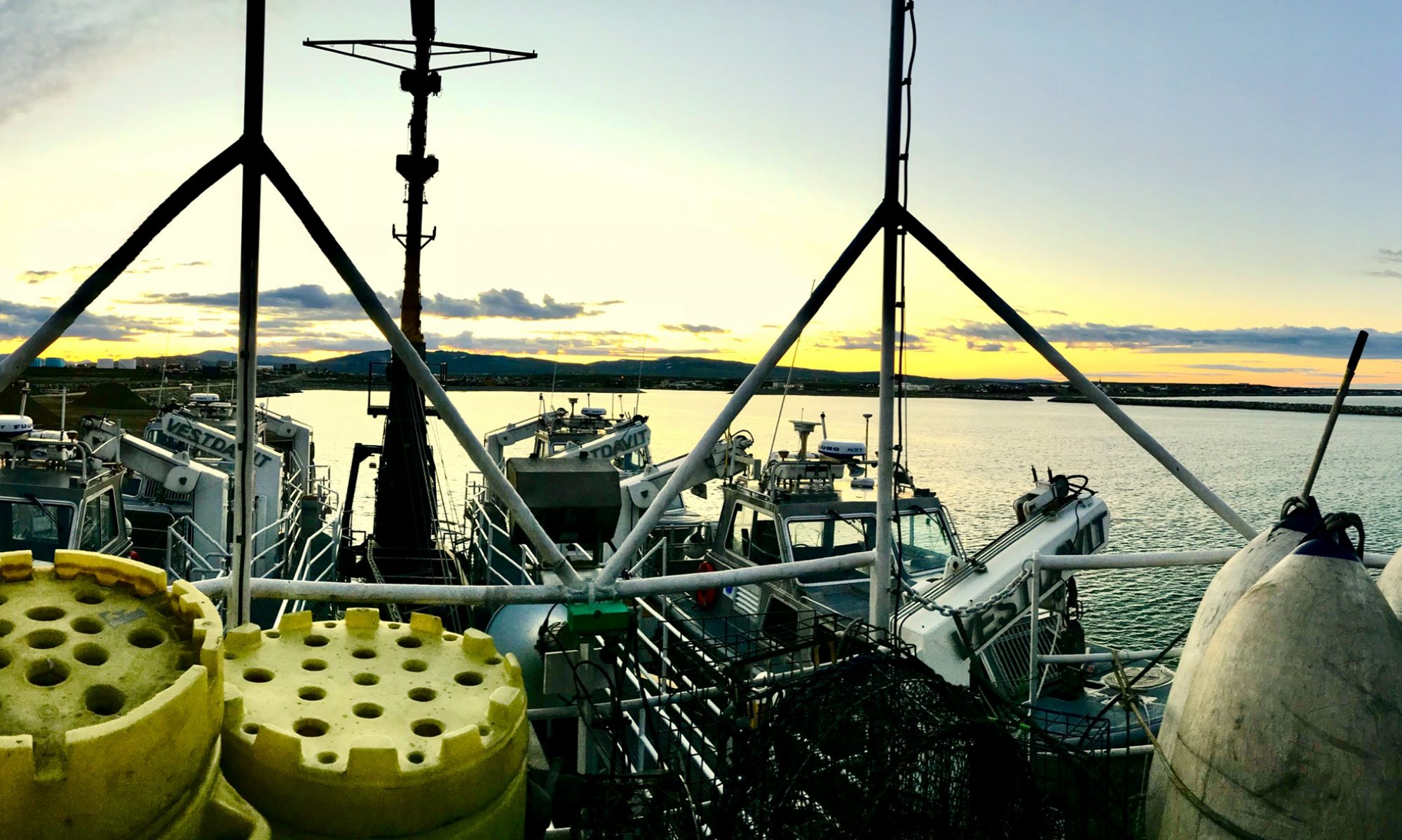
The launches are put in the water around 0800 and will stay out doing survey work till 1600 or so. There will be a complement of people aboard: the coxswain who drives the boat and in charge of safety, three officers from the ship who will run the program and collect data and myself. The launches are stored on the gravity davits along the ship. The boats will be lowered to deck level where the crew will get on board and then the boat is lowered to the water and unhooked. Getting on board the launch you must wear the Mustang survival coat and a hard hat. Nothing is to be in your hands while you board, so all other material need to be near the rail and will be handed over once you are onboard. One of the most dangerous times on the ship are launching and taking up the smaller boats. You are required to wear positive flotation at all times and since the Mustang jacket is bulky and warm, I was issued a float vest. We are launching number 5 and number 3 boats tomorrow.

Standing Watch

While underway there is a rotating watch schedule 4 on, 8 off, 4 on is its most simple explanation. An example watch schedule would be 0800 – 1200 on watch 1200 – 2000 off, 2000 – 2400 on again. So you work 8-12 on both sides of am and pm. Even though the routine is easy to remember it is very difficult on your body and your sleep schedule. The added hardship is the constant light this far north and the pitch black of your berth. For a visitor who has kept a normal sleeping routine you have a different perspective on just what is required for this ship to keep going 24 hours a day. There is a lot more upkeep then I expected and the watch standers are those people. While anchored most people go back to a normal 8 hour work shift, although some of those work shifts are at night there isn’t the constant change.

Engine Room Tour

The engine room tour was loud, even through earplugs and head phone like muffs that roar is amazing. You hear it throughout the ship but nothing compares to the pure sound when you are right next to it. The control room looks out over the two main engines. Each engine turns the port or starboard screw. Control over the engines can be given to the bridge but ultimately if the engineers need to control anything that comes from that area they are all powerful. There is fuel to keep moving to balance out the ships list, fresh water to make, generators to watch so as not to over load any of their out-puts. In a sense the engine room is the heart of the ship. Being self contained completely means that everything has to be running well. This ship even in port generates its own power and while out at sea is capable of making fresh water from salt water. I felt very much at home seeing as I have been in many engine rooms in my life with my father, I plan on going down there a few more times during my time on board.

Question of Day:

How long would it take to survey the entire patch? 8 days going 24 hours/day.

Personal Log

I did a lot of research today from the resources made available to me from the XO. Today was also a day I collaborated with my fellow TAS, something educators rarely get enough time to do. We bounced off a few adaptations of what we have already learned from our time on board. I hope to continue this process throughout my time onboard. No more seasick patch, I think that I am doing well and can handle the rolls. There is some crazy weather on the way too! If it chooses to run up into the Bering Strait we are okay but according to the XO, if the low pressure rides on the south side of the Aleutians it might get sketchy. The RAINIER would have to find a place to hole up and wait for the storm to pass because she is such a small, top-heavy ship. So I might just get a wild Alaskan ship ride after all.

Leyf Peirce, July 7, 2004

NOAA Teacher at Sea
Leyf Peirce
Onboard NOAA Ship Rainier

July 6 – 15, 2004

Mission: Hydrographic Survey
Geographical Area:
Eastern Aleutian Islands, Alaska
Date:
July 7, 2004

Time: 10:15
Latitude: N 57°31.730
Longitude: W 154°58.325
Visibility: 10 + m
Wind direction: 250
Wind speed: 18 knots
Sea wave height: 2 – 3 feet
Swell wave height: 2 – 4 feet
Sea water temperature: 10.6 °C
Sea level pressure: 1020.1 mb
Air temperature: 12.2 °C
Cloud cover: 2/8

Science and Technology Log

I talked more with P.S. Shyla Allen about how the multibeam echo sounders work on the ship to gather data about the depths of the ocean. Both the RAINIER and the launch ships use the following method to gather data. All of these vessels use echo sounders with anywhere from 120 to 240 beams that scan the ocean floor. The following diagram illustrates how this is done:

Peirce 7-7-04 Fig1
Figure 1: Multibeam Echo Sounding

Here, “z” is an echo sounding two-way travel time beam, and the multibeams are spread over the footprint distance of “f”. The size of the sound footprint, “f”, depends on the depth at which the measurement is taken, “z”. The greater the depth is, the greater the footprint is. However, the greater the footprint is also means less accuracy on the outer edges of the footprint. Therefore, the ship will run a “mowing the lawn” pattern across the given section to get desired overlapping of data:

Peirce 7-7-04 Fig2
Figure 2: Mowing the Lawn pattern

The width of these lines is determined by: width of x = 3 * z. By using this rough equation, the ship will be able to overlap the areas of least accuracy, i.e. the areas on the outer range of the footprint:

Figure 3: Ship running mowing the lawn pattern so the footprints overlap.

From this data, the depth and contours of the ocean floor can be determined. I also asked P.S. Shyla Allen about the problems and sources of error associated with this data collection. She responded by detailing three main issues that must be corrected when cleaning the data, i.e. the data must undergo three main correction factors before accurate readings can be analyzed. These three factors include: a) tide changes, b) sound velocity, c) the motion of the ship and GPS positioning. To correct for tide changes, the researchers must have accurate readings of the tides. Tide gauges are installed along the coastline at various points, and all readings are reduced to Mean Lower Low Water (MLLW). This basically gives the average of the lowest possible depth at a given location. To correct for sound velocity changes, which is the most important correction factor dealt with, researchers take measurements of water temperature and salinity level at the given depth reading. For every change of 1 ppm in salinity, there is a change of 3 m/s in sound velocity. Therefore, salinity is perhaps one of the most important factors. Finally, the motion of the ship and GPS position need to be corrected for. This includes correcting for the pitch, roll, and gyration of the ship as well as error in the GPS system. Because the ship uses Differential GPS (DGPS), this error is already accounted for. However, for the pitch, roll, and gyration of the ship, two antennas are used to on the port and starboard sides. These antennas, often referred to as Motion Reference Units (MRU), are very stable feed into the same computers that process the data. Therefore, the computer takes into account the readings from these antennas and combines this information with the corrections made for the tidal changes, sound velocity factors, and positioning of the ship. After cleaning the static from the data, a nautical chart can be produced. This method of charting the ocean floor is definitely more efficient than when researchers used lead lines—long ropes with lead that would be dropped down and then measured to determine the depth!

Personal Log

I woke up this morning after sleeping for about 12 hours—I think the seasickness medicine I took last night made me very sleepy. Luckily, however, all traces of seasickness are gone; I can even sit here at the computer and type without noticing the pitching of the ship very much at all. I think all of my muscles must be getting stronger as a result of reacting to the changing ground and all of the stairs I go up and down every day. I spent some time on the bridge this morning mostly asking questions about the tools used there and what various measurements mean. I find it very interesting that simply reading tiny numbers and using small switches and knobs will run this 231 foot ship. However, my experience aboard ships tells me that it is not even close to impossible. I know that even the slightest adjustment at the helm on a sailboat can change the course of the boat. I am reminded of sailing in the British Virgin Islands and the dispute over if it was more important to maintain the way point or try to make the boat go very fast. However, that is not an issue on this boat. We are supposed to reach the Shumagin Islands tonight, and tomorrow we will start the launches—I can’t wait!

Question for the Day

How many sets of data points must be filtered out before the data is considered clean? On what does this number depend? How does one determine if a data point is an outlier or and actual reading?

Sena Norton, July 7, 2004

NOAA Teacher at Sea
Sena Norton
Onboard NOAA Ship Rainier

July 6 – 15, 2004

Mission: Hydrographic Survey
Geographical Area:
Eastern Aleutian Islands, Alaska
Date:
July 7, 2004

Location: In transit to Shumagin Is. Via Shelikof Strait
Latitude: 57 43.2 N
Longitude: 154 58.4 W
Visibility: 10+
Wind Direction: 280 degrees
Wind Speed: 18 kt
Sea wave height: 2-4 ft
Swell wave height: 2-4 ft at 210 degrees
Seawater temperature: 10.6 C
Sea level pressure: 1020.1 mb
Cloud cover: PC 2/8
Weather: 12.2 C, sunny with moon visible straight off bow

Science and Technology Log

I learned about the NOAA Nautical Charting Program today. A nautical chart shows the marine environment in a visual format for navigation purposes primarily. Any mariner needs to have an ability to use fixed points to plot a course and know/avoid any underwater or other hazards along the way. Most charts show hazards, natural and dredged channels, water depth and other features that are needed for safe navigation. The National Ocean Services marine Chart Division is in charge of 1,000s of charts. Most mariners use these charts along with the U.S. Coast Pilot when ever they are out. When changes are charted a new chart is made. From the time the NOAA Ship RAINIER makes their readings it takes between 3-5 years to be produced in chart format and readily made available. New charts are asked to be made for uncharted, poorly charted or changed areas. The three hydrographic ships that NOAA maintains do on average 50 charting runs a season for updates. However, with the current backlog of changes only 200-300 items are updated a year. The cycle of a update goes as follows: first chart users relay needs, second the Hydrographic Surveys Division prioritizes the resources and produces survey instructions, third, a NOAA field unit travels to the location and conducts the hydro survey, fourthly, the data is examined at a on shore branch and prepared for application on new chart and finally the Marine Chart Division is complied and printed. NOAA is not the only team member on this mission; other important organizations provide data for new charts. U.S. Army Corps of Engineers provide dredge and channels depths, U.S. Coast Guard maintains navigational aids, GPS beacons and other communication sources, while the Photogrammetry unit of NOAA complies aerial photos for shoreline and landmark additions.

The bridge is an important part of the overall ship function. The ship is driven from this location, the progress made is plotted and recorded and hourly logs are kept with various location and condition data. I take my condition and location directly from the ships log when I write these logs. Today there were a few ships on the radar and the officers wanted to make visual contact with them. I got to keep a lookout for the one off the port/south side of the ship with binoculars. The helm is where the ship is driven from and is kept on course with direction relation to the nautical chart and heading. Small adjustments have to be made from time to time to keep the correct bearing due to changed in sea swell and wind direction. The bridge is always manned 24 hours a day because of the importance of what is done there. We are making about 13 knots today with a friendly wind and hope to be anchored in the Shumagin Is. by tomorrow. We will commence the ships hydro at 0300 tomorrow morning to begin the surveying of the area.

Question of the Day:

How far is a fathom? 6 feet
How many people are on board? 74 crew/officers 5 visitors / 79 total

Day Activities:

  • Interviewed Chief Yeoman Paul and discussed his role/responsibilities on the ship. He in charge of bills, keeping track of expenses, ordering fuel and stores, personnel changes and promotions, a liaison between crew and command and manages expenses overall.
  • Visited the bridge and interviewed various officers and crew about bridge processes and equipment.
  • Wrote down some possible classroom curriculum options.
  • Discussed curriculum with fellow TAS, read some NOAA research and PR.
  • Downloaded some important pictures for use in curriculum/reports from ships computer network.
Personal Log
The night was a little rough with the swell height and wind direction and speed. They call my room the anti-gravity chamber and every once in awhile I could tell why. Today the rocking and rolling is much better and at times I think that I have my sea legs back. It is still unique to walk around on a ship that is bobbing; you get a different feeling when the deck is not where your foot thought it should be. I have put much thought into what I can turn this experience into as far as curriculum goes and my fellow TAS and I have been bouncing some ideas off of each other. There is much to say about the value of sharing this experience with a colleague as well as having the chance to discuss in general with that same colleague. I think that there is a professional connection being made thanks to the NOAA Teacher At Sea program! The science behind the survey process with help and that is a main goal to learn about, however there is something more to this experience that I haven’t put my finger on yet…give it some time…something that the sea is very well trained at allowing you to have.

For now,
S.

Leyf Peirce, July 6, 2004

NOAA Teacher at Sea
Leyf Peirce
Onboard NOAA Ship Rainier

July 6 – 15, 2004

Mission: Hydrographic Survey
Geographical Area:
Eastern Aleutian Islands, Alaska
Date:
July 6, 2004

Time: 20:00
Latitude: N 59°03.205
Longitude: W 150°41.139
Visibility: 10 + mi
Wind direction: 280
Wind speed: 11 knots
Sea wave height: 0 – 1 foot
Swell wave height: 3 – 4 feet
Sea water temperature: 12.2 °C
Sea level pressure: 1016.0 mb
Cloud cover: 4/8

Science and Technology Log

We left Seward today and are headed toward the Shumagin Islands to conduct hydrographic surveys to map the ocean floor and the coastline. The overall goal of this research is to update existing nautical charts. Most of the charts that are currently used have not been updated since the early 1930’s. After talking with ENS Brent Pounds, ENS Nicole Manning and P.S. Shyla Allen, I learned more about the tools and techniques used to map the ocean floor. Steve Foyd also provided me with an excellent pamphlet titled “Nautical Chart Programming”. From these sources, I learned the following information about data acquisition and analysis. The RAINIER will first be positioned using the Differential Global Positioning System (DGPS) near the desired area to be mapped. Then, the RAINIER launches up to 6 research vessels, each equipped with two main measuring devices. One device, the ELAC C-Beam 1180, is basically a side scanner that can scan a swath of the bottom of the ocean up to 200 meters using 180 individual sound beams. Any depth change will appear to be different shades on the sonogram. The heights of different points can then be calculated from this sonogram. In conjunction to the ELAC C-Beam 1180, the launch boats use an echo sounder mounted to the ship’s hull. While this can retrieve more accurate data, data with only a 0.1 m margin of error, it can also only scan an area up to 5 meters. However, using these two systems combined produces the most accurate data. The RAINIER also installs tide gauges that produce accurate data that can be added to the resulting nautical charts. Researchers aboard the RAINIER take this data, “clean it”, and eventually send it to the mainland to be used to create the new updated charts.

Personal Log

This day has been full of excitement as we are finally underway! The scenery is absolutely beautiful here, and the wild life is truly fascinating. The snow covered mountains dip into the water with an awesome power as sea otters and puffins play in that same water below. We have also seen several porpoises and one crewmember claimed he saw a whale. I am overcome with awe at how this ecosystem is filled with so much wonder and unknown as the mountain goats and moose mirror the whales and sea lions only to be separated by where the land and water meet. Life aboard ship is similarly full of excitement. It is like a finely tuned machine how well everyone works together to make this boat maneuver. As much as I am enjoying the sight seeing, I can’t wait for the research to begin. I am excited to have my engineering background meet my teacher profession!

Question for the Day:

It is summer here, and the tilt of the Earth causes the “sun to never go down”. One could even read a book in the middle of the night with no flashlight! As I was thinking about navigational techniques and the history of navigation, I couldn’t help but reflect on the importance of using the stars for guidance at night. The question for the day is: What did sailors use, before all of the GPS technology we have now, to navigate at night in these upper latitudes when it never got dark enough to see the stars at night?