Susan Just, June 24, 2006

NOAA Teacher at Sea
Susan Just
Onboard NOAA Ship Oregon II
June 15 – 30, 2006

Mission: Summer Groundfish Survey
Geographical Area: Gulf of Mexico
Date: June 24, 2006

Weather Data from Bridge 
Visibility: 10 nautical miles (nm)
Wind direction: 153 ◦
Wind speed: 09
Sea wave height: 1-2
Swell wave height: 2
Seawater temperature: 27.6
Sea level pressure: 1014.8
Cloud cover: 4/8 Cumulus

Science and Technology Log 

This morning when we came on watch we were informed of a new procedure.  We will now be keeping one specimen or each type caught along with one species of skate. These will be placed together in a plastic bag and returned to the lab for further study. There is a relationship study being conducted between the species.

A Hemingway fish was waiting for us this morning too.  It is red all over and has big poofy cheeks. It is interesting to look at and this one was about thirteen (13) inches long.  The catches today were much smaller than the previous night.  By morning we were not catching many shrimp at all.

Personal Log 

I had a much better time today.  It was possible to get all the work done without rushing and we were also able to keep the baskets and the lab relatively clean. When the mud gets thick, the place takes on a bad smell that becomes oppressive.  It is important to maintain a constant vigilance on the fish odor to keep the bacterial buildup under control.

Question of the Day 

During what part of any twenty-four hour period can you expect to catch the most shrimp?

Answer: The dark time.  The shrimp hide in the mud during the day and come out to feed in the dark when the predators are not able to see them as easily.

Susan Just, June 23, 2006

NOAA Teacher at Sea
Susan Just
Onboard NOAA Ship Oregon II
June 15 – 30, 2006

Mission: Summer Groundfish Survey
Geographical Area: Gulf of Mexico
Date: June 23, 2006

Weather Data from Bridge 
Visibility: 10 nautical miles (nm)
Wind direction: 300 ◦
Wind speed: 11
Sea wave height: 1-2
Swell wave height: 2-3
Seawater temperature: 27.2
Sea level pressure: 1016.3
Cloud cover: 3/8 Cumulus

Science and Technology Log 

This was a day when we were never able to catch up with the fish.  There were constantly fish on the deck waiting to be sorted. The trawls were frequent and close together.  Throughout the night and into the morning, the catch was mostly shrimp.  We had a wide assortment of shrimp.  All the commercial varieties—brown, white and pink—were well represented, as well as the several types of non-desirable species.

Personal Log 

Today was the day I “hit the wall.” I worked myself as hard as I could throughout the shift.  The only time that I relaxed at all was when I was watching the dolphin that had followed the net and that was attracting the attention of Brittany.  Otherwise, I was working as fast as my brain and body would allow.

Question of the Day 

What kind of shrimp do they use to make “popcorn shrimp?”

Answer: Trachypeneus similes! I know that’s a “trachy” question. Trachypeneus shrimp are not considered “commercially viable” at this time. Previously, brown shrimp were not considered to be marketable. As the demand for a product increases, so does its marketability.

Susan Just, June 21, 2006

NOAA Teacher at Sea
Susan Just
Onboard NOAA Ship Oregon II
June 15 – 30, 2006

Mission: Summer Groundfish Survey
Geographical Area: Gulf of Mexico
Date: June 21, 2006

Weather Data from Bridge 
Visibility: 10 nautical miles (nm)
Wind direction: 105 ◦
Wind speed: 10
Sea wave height: 1-2
Swell wave height: 2-3
Seawater temperature: 27.7
Sea level pressure: 1012.8
Cloud cover: 2/8 Cumulus

Science and Technology Log 

Things started out fairly normal this morning.  There were fish waiting on the deck when our watch began. We then steamed to a new location. This station went as planned. On the next station the trawl went out and things were going well. We were processing fish when we smelled something strange. We concluded that there was something burning and we went out onto the deck.

Yes, something was burning. It was a clutch. This was an engine part, not an actual fire. There was no need for a fire alarm to sound. The problem was recognized. Although we are now short one Power Transfer Output (this is what takes engine power and uses it for winches and other power tools) we can continue our mission.

Personal Log 

The engine problem was really no big deal. It was much like burning up a clutch in a car. The smell is pretty awful and there is a little smoke but no fire. The smoke comes from the rubbing together of the surfaces under pressure. It was great to see the various ship’s personnel work together so smoothly and quickly to discover and correct any problems.

After going off watch and showering, I made a mistake. I did not remember that we have weekly drills. So, there I was, fresh out of the shower standing in the middle of the room when the alarm sounded and my roommate came running in to gather survival gear and personal flotation devices. I jumped into the nearest clothing, my pajamas, and joined in the drills.

Question of the Day 

As part of the Commerce Department, what is the goal of NOAA science research?

Answer: To collect information which can be used to answer the scientific and policy questions which impact our shared environment.

Susan Just, June 20, 2006

NOAA Teacher at Sea
Susan Just
Onboard NOAA Ship Oregon II
June 15 – 30, 2006

Mission: Summer Groundfish Survey
Geographical Area: Gulf of Mexico
Date: June 20, 2006

Weather Data from Bridge 
Visibility: 8-10 nautical miles (nm)
Wind direction: 023 ◦
Wind speed: 11.6
Sea wave height: 1-2
Swell wave height: 2-3
Seawater temperature: 27.8
Sea level pressure: 1012.5
Cloud cover: 3/8 Cumulus

Science and Technology Log 

Most of this watch will be spent steaming to the first southern station. Our ETA (estimated time of arrival) is 8:00 am.  We are planning to do a full station meaning CTD, Neuston, and a Trawl. It is midnight now and I am hoping to get an interview with our Chief Scientist prior to beginning the station.

The first Bongo is scheduled for noon. Dan Carlson, a graduate student at Florida State University, is aboard researching his master’s thesis. He is utilizing the water samples from the Bongo to learn more about the development and origination of red tides which bloom in the Gulf of Mexico.

I have just been put “in charge” of the Neuston for this station. That means I am responsible for seeing that the net is dragged for ten minutes, that the organisms which are gathered are washed down into the cod end and that the sample is then gathered are delivered to the plankton transfer table.

Personal Log 

The Chief Scientist has been actively engaged with data collection and correction activities. I understand that a server has failed and that all time/date information must be hand entered into all data sheets. This is time consuming but very necessary for the sake of accuracy.

Question of the Day 

What is red tide?

Answer: It is an organism, named Karenia Brevis, which produces a neurotoxin which, in turn, is toxic to virtually all sea life.

Susan Just, June 18, 2006

NOAA Teacher at Sea
Susan Just
Onboard NOAA Ship Oregon II
June 15 – 30, 2006

Mission: Summer Groundfish Survey
Geographical Area: Gulf of Mexico
Date: June 18, 2006

Weather Data from Bridge 
Visibility: 10 nautical miles (nm)
Wind direction: 124 ◦
Wind speed: 11.6
Sea wave height: 1-2
Swell wave height: 2-3
Seawater temperature: 27.9
Sea level pressure: 1014.4
Cloud cover: 5/8 Cumulus

Science and Technology Log 

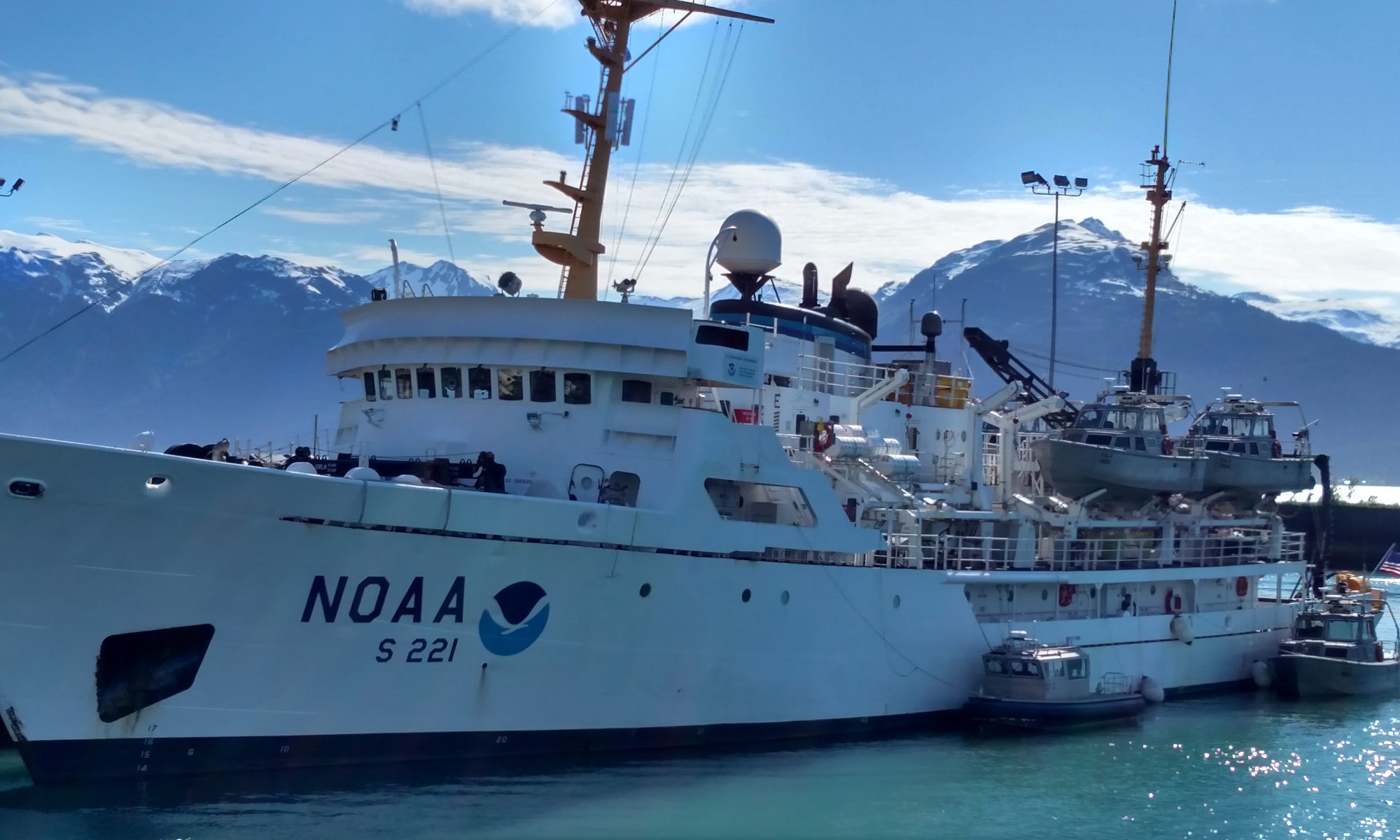
There will be no fish caught today. The OREGON II is steaming to port in Galveston. One of the two radars has failed. The ship is required to have two functioning radars in the event that one should fail. Therefore, we must return to port and make repairs.

When the radar was lost, we were underway to the tip of Texas, off the coast of Brownsville, to begin surveying in preparation for the Gulf Coast shrimping season. We expect to make port this afternoon and get underway south again sometime Monday.

Personal Log 

I don’t mind having this time off from the fish. Part of my mission is to write lesson plans that correspond to the activities aboard. This will give me time to work on the plans.

Question of the Day 

What does the radar do?

The radar serves as a set of electronic “eyes.” It recognizes obstacles in the distance so that they can be avoided by making necessary course corrections.