
Karah Nazor: The Glowing Dolphins of the Channel Islands and Interview with UCSC Graduate Student Ilysa “Ily” Iglesias, May 31, 2019

NOAA Teacher at Sea

Karah Nazor

Aboard NOAA Ship Reuben Lasker

May 29 – June 7, 2019


Mission: Rockfish Recruitment & Ecosystem Assessment

Geographic Area: Central California Coast

Date: May 31, 2019

Game Plan and Trawling Line: Channel Islands San Nicolas Line

I am up on the flying bridge and I just saw two humpback whales spouting, an albatross soaring and a large Mola Mola on the sea surface.  In this blog I will write about an amazing once in a lifetime experience that from last night- May 31, 2019. The first haul was called off due to an abundance of Pacific White-Sided Dolphins, Lagenorhynchus obliquidens, (as reported by the inside marine mammal watch prior to net deployment), so we motored on ahead to the second station, but dolphins chased the ship all the way there, too.  One strategy to encourage marine mammals to leave is for the ship to stop moving with the hope that the dolphins become disinterested and vacate the area. This pod was intent on having a party at the ship so Keith Sakuma encouraged everyone to just go outside to observe and enjoy the dolphins! 

Fishing on this survey takes place at nighttime (so the fish do not see the net) and Scripps graduate student Kaila Pearson and I stepped outside on the side deck into the darkest of dark nights. Kaila and I carefully placed one foot in front of the other because we couldn’t see our feet and where to step next. I was afraid I would trip. When I asked Keith Hanson if we should use a flashlight to safely make our way up to the top deck, he suggested that we stay in place for a few minutes to allow our eyes to adjust. Within 5 minutes or so objects around us started to present themselves to us within the black void.  We could eventually see our feet, each others faces, the dolphins, and even the finer features of the sea surface.

Within a few minutes Ily Iglesias reported seeing bioluminescence, a type of chemiluminescence that occurs in living things, such as the familiar green glow of lightening bugs in the Summer in the South.   This glow results from oxidation of the protein luciferin (present in photophore cells/organs) by the enzyme luciferase.  It its excited state, lucifern emits light.  This reaction is known to occur in some marine bacteria, dinoflagellates (single celled photosynthetic organisms), squid, deep sea fish, pyrosomes and jellyfish, and I am fortunate to have observed many of these creatures already on this research cruise (see photos below).  Some animals have photophore organs and generate their own luciferin, while others are hosts to bioluminescent bacteria.

deepsea longfin dragonfish
The large photo organ is a large green circle under the eye of the deepsea longfin dragonfish, Tactostoma macropus.
California lanternfish
California lanternfish, Symbolophorus californiensis, with photophores under the lateral line and the ventral surface.
California lanternfish photophores
Blue lanternfish
Blue lanternfish, Tarletonbeania crenularis, collected from a bongo net at 265 meters. Photophores line the ventral surface of the body.
Cranchia scabra
Cranchia scabra “baseball squid” with large photophores lining the eyes.
Chiroteuthis veranii squid

When dinoflagellates floating on the sea surface are agitated, they glow.  At first when I was trying really hard to see this, I noticed a couple of tiny flashes of green light, sort of like lightening bugs, but it wasn’t anything super obvious. In time, I noticed clouds of faint light, sort of like a glowing mist floating the water’s surface, that moved up and down with the swell.  I hypothesized that dinoflagellates on the sea surface were being agitated by the passage of waves through them and Ily suggested that it was caused by schools of anchovies.

Since the dolphins were intent on staying, we decided to head to the next station.  I knew that as the ship began to move that the bow would be breaking through surface water that had previously been undisturbed, and I predicted the bioluminescence would be much more intense.

As we took off, the dolphins began to bow surf and, as I predicted, the dinoflagellates were activated and this time their glow was a bright white.  As the dolphins surfaced to breath, their skin became coated with the glowing algal cells, creating an effect as if they were swimming in an X-ray machine.  The dolphins were literally glowing white swimming in a black sea! We were so entranced and excited by the beauty, we screamed in delight. I am sure the dolphins heard us cheering for them. They too, seemed excited and could see each other glowing as well.

Next we saw the faint cloud of dinoflagellates caused by Northern anchovies (Ily was right) up ahead of us. As the ship encountered the school of small (~ 3-6 inch) fish, they also started to glow really bright and it was easy to see all of the individual fish in the school. The dolphins could also see the glowing fish and split off in different directions to hunt them.  There were hundreds of fish that dispersed as they were being chased creating a pattern of short white glowing lines somewhat like the yellow lane markers on the highway.

The display was unlike anything I have ever witnessed. It was like the Aurora Borealis of the sea.  Despite our best efforts, our cell phone cameras were unable to pick up the bioluminescent signal, however, we do not need photos because the patterns of light will be forever embedded in our minds. The dolphins eventually tired from the surf and chase and departed. Ily said the experience was “an explosion of light that overwhelmed the senses” while Flora said it was “better than fireworks.”

With no marine mammal sightings at the third station, we completed a five minute haul in the deep channel and collected a huge white bin of anchovies (see photo of Keith Hanson with this catch below). In this catch we found a few Mexican lampfish, 3 king of the salmon, a lot of of large smooth tongues, a lot of salps, a few pyrosomes and one purple striped jellyfish.  The purple-striped jelly (Chrysaora colorata) is is primarily preyed upon by Leatherback turtles. Haul 2 was conducted over shallower water near San Nicolas Island and we only found salps and four small rockfish in the catch.  After these two hauls, we called it a night and wrapped up at 4:15 a.m.

Scientist Spotlight: Ilysa Iglesias, NMFS SWFSC FED/ University of California Santa Cruz (UCSC)

Ilysa “Ily” is a doctoral student who works in John Field’s Lab at UCSC.  She is studying the fish we are collecting on this cruise as part of her research. She is very knowledgeable about all of the survey research objectives. She is also one of the most positive and gregarious people I have every met. Ily grew up in Santa Cruz, CA, and enjoys surfing, hiking, gardening and raising chickens.   Ily is a fan of early marine explorer Jacques Cousteau, who often wore a red beanie/toboggan and a blue shirt. Ily came prepared and brought six red hats (that she knit herself) for each of the members of the sorting team. Ily’s favorite fish is the hatchetfish. She was thrilled when we found on in the catch!

Ilysa with hatchetfish
Ilysa Iglesias with deepsea marine hatchetfish
deepsea marine hatchetfish
A deepsea marine hatchetfish caught in the bongo which was deployed to depth of 265 meters.

Ily obtained a Bachelor’s degree from UC Berkeley in integrated biology and a Masters Degree from the University of Hawaii in Zoology with a specialization in marine biology.  Her thesis was on the function of intertidal pools as a nursery habitat for near-shore reef fish. She compared otoliths (fish bone ears) of fish reared inside and outside of tide pools and compared their growth rates.  Otoliths can be used to the age of the fish much like counting rings on a tree and stable isotope analysis reveals information about where the fish were reared.

Ily, Flora and Kristin have all used otoliths in their research and taught me how to locate and collect the sagittal otolith from anchovies and myctophids. It is a tiny ear bone (one of three) that is positioned near the hindbrain of fish.  See photos below of the otoliths we collected. This is a technique that I will definitely take back to my classroom and teach my McCallie students.

Otoliths
Otoliths we collected and observed under the dissecting microscope.
Photomicrograph of otoliths
Photomicrograph of otoliths we collected from blue lanternfish (top) and Northern Anchovy (bottom) and observed under the dissecting microscope.

After obtaining her masters degree, Ily was Conservation Fellow for the Nature Conservancy in HI and worked in octopus fisheries before returning home to join NOAA’s salmon team and then the rockfish team as a Research Associate.  Ily has just completed the first year of her doctoral work in the Field Lab and expects to complete the program within 5 years.

On this cruise, Ily is collecting small fish called Myctophids for her research. These are small bioluminescent fish that live at depths of 300 and 1,500 m in the bathypelagic zone. In this survey, we encounter these deep sea dwellers during their nightly vertical migration up to the edge of the photic zone at depths we are targeting.  They are likely chasing their prey (krill) on this upward journey. It is amazing to me they are able to withstand the pressure change. Mcytophids are also known as lanternfishes and have bioluminescent photophores dispersed on their bodies. The fish sorting team analyzes the position of these organs to help distinguish between the different species. There are 243 known species of myctophids, making these little fishes one of the most diverse vertebrates on Earth.  They are so abundant in the sea that they make up 65% of the ocean’s biomass, but most people have never heard of them!

In 2014- 2015 there was an anonymously high sea surface temperatures off of the Pacific Coast known as The Blob.  Marine scientists are still elucidating the effect of the hot water had on fish populations and ecosystems. Ily explains that “atmospheric forcing caused changes in oxygen and temperature resulting in variability in the California current.”  The water was less nutrient dense and caused a reduction in phytoplankton. This disruption of primary production propagated up the trophic cascade resulting in die offs of zooplankton, fish, marine mammals and birds.  

Ily is using the catch records and acoustics data from the rockfish survey to study changes in distribution and abundance of myctophids from before, during and after The Blob (2013-2019).  She aims to understand if and how their trophic position of myctophids was affected by the unusually high sea surface temperatures.   Using elemental analysis isotope ratio mass spectrometry to analyze the Carbon and Nitrogen atoms incorporated into fish muscle, Ily can determine what the myctophids were eating each year.

Allison Irwin: The Journey Begins, June 26, 2019

NOAA Teacher at Sea

Allison Irwin

NOAA Ship Reuben Lasker

July 7 – 25, 2019

Mission: Coastal Pelagic Species Survey

Embarkation Port: Newport, Oregon

Cruise Start Date: 7 July 2019

Days at Sea: 19

Introduction

I’m actually afraid of the sea. The unspeakable power, the dark depths, the mysterious uncharted territory – the sea has always held curious minds captive. I want to be someone who faces the things that scare me. And for 19 days, on a relatively tiny ship, I will be doing just that.

NOAA Ship Reuben Lasker
Reuben Lasker Pulls Into the Navy Pier on 1 May 2014

NOAA Ship Reuben Lasker is “one of the most technologically advanced fisheries vessels in the world” according to the Office of Marine & Aviation Operations.  In addition to studying fish and marine life populations, it is also equipped for acoustic data sampling and the gathering of oceanographic data. It can stay out to sea for up to 40 days at a time without needing to return for food or fuel replenishment. 

And yet, as I’m writing this, I can’t help but think about SS Edmund Fitzgerald and RMS Titanic. They were the most advanced ships of their time too. Of course, I’m just letting my imagination get carried away. People fear the things they don’t understand. And I’m looking forward to learning as much as I can on this cruise in order to understand not just how this incredible vessel operates, but also how the ocean and atmosphere impact my life on a daily basis.

I was lucky last year to stumble across a professional development opportunity funded through the American Meteorological Society. I took two graduate level courses since then – DataStreme Atmosphere and DataStreme Ocean. Upon finishing this program I’ll earn a graduate certificate from the California University of Pennsylvania and be able to apply my new understanding of earth science directly to my classroom instruction. Already I’ve been able to incorporate fascinating information about coral reefs, the Bermuda Triangle, map reading, and weather into lessons and activities this year.

Why does a Reading Specialist need all this professional development, you might ask? In science of all things? Because nobody reads about things they’re not interested in (unless they have to). Students need to have something to connect with, to care about, in order to learn. When was the last time I, as an adult, read something I didn’t care about? Probably years. 

Humans are curious by nature, and by incorporating new topics into our reading lessons over the past year, I’ve noticed that students really like learning about earth science. It’s like the mother who hides cauliflower in the lasagna – students are more motivated to read when they’re reading about something exciting and directly relevant to their lives. Thankfully, the more they read, the better they get at comprehending the nuances of the text. And then the less they need me.

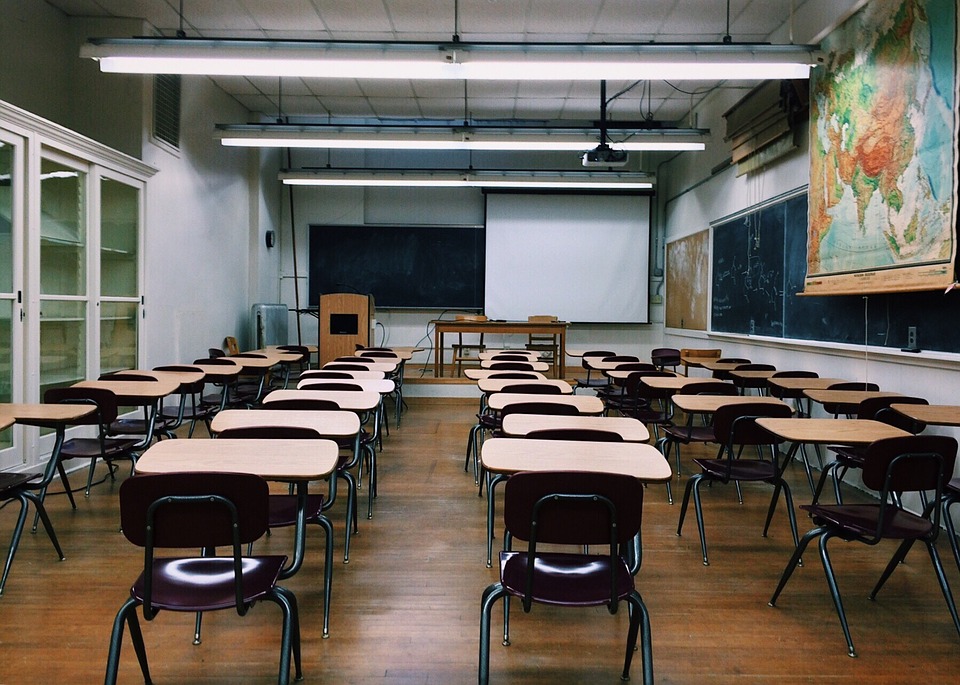
A classroom

One of the most valuable aspects of this trip for me is that I’ll return with a new appreciation for earth science, current events as they relate to our food supply and environment, and marine life. I can use this experience to build exciting lessons for high school students who may use their connection to these lessons as a lifeline. The last ditch effort to find something exciting to learn before graduating with a lackluster memory of the doldrums of the high school classroom.

Teenagers are tough eggs to crack! But I like them. And I’m very grateful to the NOAA Teacher at Sea program for giving me, and other teachers, opportunities like this to show our students that there are literally thousands of directions to take after high school in regard to career and quality of life. And that high school is one of the few places where they can build the foundational knowledge necessary to get them there – for free.  I want my students to pursue their passions. To get excited about learning! And the first step to doing that successfully is to expose them to as many post-secondary options and lessons about their world as we can in the short time that we spend with them. Thanks NOAA! I’m excited to start my journey.

Karah Nazor: Sorting Protocol and the Ubiquitous Tunicates of the Central CA Coast: Salps and Pyrosomes, May 30, 2019

NOAA Teacher at Sea

Karah Nazor

Aboard NOAA Ship Reuben Lasker

May 29 – June 7, 2019


Mission: Rockfish Recruitment & Ecosystem Assessment

Geographic Area: Central California Coast

Date: May 30, 2019

Last night I fell asleep, twice, at the lab bench in between trawls, since I am still adjusting to being on the night shift.  We worked from 9:00 P.M. to 6:30 A.M. After the shift I had a nice hot shower and slept a solid 9 hours from 7:00 AM to 4:00 PM.  Hopefully, I will be less drowsy tonight!

Upon waking, I went to the galley and grabbed some Raisin Bran and coffee and took it up to the flying bridge to hang out with Ornithologist Brian Hoover.  Our current location is in the middle of the Channel Islands, an area I know something about because my friend Evan Morrison, mentioned in my first blog, helps with the Channel Islands Swimming Association, and I would like to swim between these islands one day.  Lauren Valentino, Flora Cordoleani, Ily Iglesias and I congregated on the flying bridge and decided we should exercise. We joined Flora in her squat challenge (80 squats on this particular day), followed by 5 minutes of planking and a bit of erging.  Half of female members of the fish sorting team are avid rock climbers. They did lots of pull-ups using the rock ring climbing training holds that are installed there.

It felt nice and warm when the ship stopped for deployment of the Conductivity, Temperature and Depth (CTD) Rosette, and it got chilly again as the wind picked up when the ship started moving again. We saw a few whale spouts in the distance and at 5:30 P.M. we went down to the galley for a delicious meal of steak and mashed potatoes.  I am beginning to really appreciate how nice this whole experience has been in terms of amenities. The NOAA Reuben Lasker first set launch in 2014 and is a state of the art fisheries vessel with a sophisticated acoustics lab, fish lab, dynamic positioning system, CTD, etc., but is ALSO equipped with creature comforts including a movie lounge, an ice cream cooler loaded with ice cream sandwiches, snickers, fruit pops, you name it, and my personal favorite – a coffee bar where all coffee is freshly ground, an espresso machine, and all varieties of milk and creamers, including Reese’s cup whipped cream. The mattress in my stateroom bunk is quite comfortable and the shower gets hot within seconds! I doubt it can get much better than this for a research experience at sea?

Game Plan and Trawling Line: Point Sal line with five 15 minute hauls.

I am familiar with the sorting protocol now. The catch is dropped from the net into the bucket by members of the deck crew and survey tech, with the oversight of Keith Sakuma, Chief Scientist and NOAA Operations Officer Keith Hanson.  The bucket is immediately placed in the fish lab and this is when the fish sorting team starts our work.

Cobb Trawl net
Dropping the catch from the Cobb Trawl net into the bucket.
fish on a sorting tray
A volume of fish just placed on a sorting tray. This catch has a lot of anchovies, krill, and California smoothtongues.
Separating the krill
Separating the krill from the myctophids, Northern anchovies, and California smoothtongues.
Sorting fish group photo
Team Red Hats sorting fish. NOAA’s Keith Hanson in the rear left side.


SORTING AND COUNTING METHOD

We start by carefully picking through a 2000 mL or 5000 mL volume of the harvest, depending on Keith Sakuma’s initial assessment of the species density and volume in the bucket.  The first volume of catch to be sorted is evenly dispersed onto four white sorting trays arrayed on the main lab bench. Once you have a pile of the catch on your tray, you start to separate them into piles of different types of organisms, such as Northern anchovies, ctenophores, krill, salps, pyrosomes, Californian smoothtongues, squid, rockfish, myctophids, and young of year (YOY) fish.  I prefer to use my hands for sorting while others use forceps. Once sorted, we count the number of individuals for each species. If we have difficulty identifying an animal that we have not yet seen, we ask Keith Sakuma or a more experienced team member to help with identification. YOY fish, some in larval form, are particularly difficult for me.

Once sorted and counted, we verbally call out the common name and number of organisms to Keith Sakuma who manually records the data in a 3-ring binder for the lab hard-copy.   For smaller organisms, such as krill or salps, or in hauls with a high number of any particular species, it would be quite tedious to pick out and count each individual in the total haul.  This is why we start with a small subsample volume or 0.5, 2 or 5L, count the individuals in that small volume, establish the ratio for the number of individuals in that volume, and then extrapolate and calculate by the total volume of the haul.  For example, if we counted 97 pyrosomes in the initial 5L sort, and we collected a total of 1000L, then we can say that there are 19,400 pyrosomes in the haul.

Chief Scientist Keith Sakuma
Chief Scientist Keith Sakuma recording the data from a haul during sorting.

Once 20 individuals of each species have been called out, we no longer have to count that species since the ratio for this catch has already been established and to expedite sorting the rest of the volume.  Following sorting, the length of the twenty representatives of each species is measured using electronic calipers and the values populate on an Excel spreadsheet. After measuring, specimens requested by various research institutes including Scripps Institution of Oceanography, Moss Landing, and Monterey Bay Aquarium Research Institute (MBARI) are collected, labelled and frozen.

Flora Cordoleani
Flora Cordoleani keeping track of which specimens are to be preserved for various research groups.
Keith Sakuma bagging specimens to send to collaborators.

Creature(s) feature: Salps and Pyrosomes. 

Salps What are these strange gelatinous organisms in our catch that look like little puddles of clear jelly with a red, green, yellow, and brown digestive organ in the center?  They are goopy, small and slippery making them difficult to pick up by hand. They float on the sea surface and are ubiquitous in our hauls BUT NOBODY KNOWS ABOUT THEM.

These creatures are called salps and belong to the subphylum Tunicata. Tunicates have a notochord in their early stage of life which makes them members of the phylum Chordata, to which humans also belong. Having a transparent body is a way escape being preyed upon.

A group of salps. This species is dime to quarter sized and this number of salps occupies a volume of ~10-15 ml once placed in a beaker.
Salp digestive organs.

Salps are planktonic tunicates  That can be found as individual salps or in long chains called blastozooids.   The salps shown in the photo below were individuals and were notable in most of our hauls. Individual salps in this pile are dime to quarter sized and occupy a volume of ~10-15 ml. We measured the volume of salps in every haul.

While on the topic of salps, I will tell you about a cool 1 inch long salp parasite I found on my sorting tray (see image below). Keith Sakuma explained that it was a deep sea amphipod called Phronima which is a parasitoid that takes up residence inside of a salp’s body, eats the salp’s organs, and then lays its eggs inside of the salp. The King-of-the-salmon, Trachipterus altivelis, (which we are also catching) uses its protrusible jaw to get inside of the salp just to eat this amphipod!

Phronima amphipod
Phronima amphipod – lives and reproduced in salp after eating the salp’s organs. King-of-the-salmon fish use their protrusible jaws to eat the amphipod.
King-of-the-salmon
King-of-the-salmon, Trachipterus altivelis
King-of-the-salmon jaw protruded
King-of-the-salmon, Trachipterus altivelis, who preys upon phronima living inside of salp, with jaw protruded.
A large haul full of salps.

Another type of salp we keep catching is Thetys vagina, a large solitary species of nektonic salp that feeds on plankton, such as diatoms, and is an important carbon sink in the ocean. Thetys has an external surface, or test, that is covered with bumps and ridges, as seen in the photo below.

Thetys vagina, the twin-sailed salp.
internal filtering organ
The internal filtering organ of Thetys vagina.
Kristin Saksa examining a larger Thetys
Kristin Saksa examining a larger Thetys vagina, or the twin-sailed salp. The dark colored tentacles are downward facing. This is the siphon where water enters the sac-filled body.

Pyrosomes Pyrosoma atlanticum are another type of planktonic tunicate which are very numerous in most of our hauls. Pyrosomes look like bumpy pink hollow tubes with openings on both ends. They are rigid in structure and easy to pick up by hand, whereas salps are goopy and difficult to pick up by hand.  We have collected some pyrosomes that are 13 inches long, while most are in the 4-6 inch range. The small pyrosomes look like clear Tic Tacs, but they do not taste as such.

Pyrosoma atlanticum
Pyrosoma atlanticum, with an ~6 inch specimen on the left and small pyrosomes on the right.

How can pyrosomes be so ubiquitous just 20 miles or so off of the Central California Coast, but I have never seen one that has floated up on the beach or while swimming?

Pyrosoma atlanticum are also planktonic tunicates, but are colonial organisms made up of many zooids held together by a gelatinous structure called the tunic. One end of the tube is wide open and filters the water for zooplankton and phytoplankton, while the other end is tighter and resembles a diaphragm or sphincter. The pyrosomes we harvested appeared in diverse array of pinks and purples.  Pyrosomes are believed to harbor intracellular bioluminescent bacteria. Pyrosomes are drifting organisms that swim by beating cilia lining the branchial basket to propel the animals through the water and create a current for filter feeding. 

Pyrosome rainbow
Pyrosoma atlanticum assorted by color.
Kristin Saksa
Moss Landing Graduate Student Kristin Saksa excited about the large haul of Pyrosoma atlanticum.
high-five
Pyrosoma atlanticum high-five.

Karah Nazor: Departure from the San Francisco Bay and First Night of Fishing, May 29, 2019

NOAA Teacher at Sea

Karah Nazor

Aboard NOAA Ship Reuben Lasker

May 29 – June 7, 2019


Mission: Rockfish Recruitment & Ecosystem Assessment

Geographic Area: Central California Coast

Date: May 28-29, 2019


I departed Chattanooga, TN, for San Francisco, CA, on May 28th to participate as a NOAA Teacher at Sea on Leg 2 of NOAA’s Juvenile Rockfish Recruitment and Ecosystem Assessment Survey.  My job as a Teacher at Sea will be to share my experience and knowledge acquired over the next 10 days working alongside NOAA scientists with MY AUDIENCE. Who is my audience? You! I hope that you all can be my students!  You, my McCallie students and colleagues, my friends, my swimming community and my family members. My intention here is to explain in layman’s terms what I learned, and especially, what I thought was cool.

After tapas in North Beach with my San Francisco friends Cathy Delneo and Evan Morrison, they dropped me off at Pier 15 to sleep in my stateroom on the NOAA Ship Reuben Lasker. I felt rocking even while docked in the San Francisco Bay, but I slept great and am happy to report that my CVS brand “less drowsy” Dramamine tablets seem to be working as I am prone to motion sickness. This morning Evan and I got to explore the ship and take a bunch of photos of The City from the top deck of the ship, called the Flying Bridge. I imagine I will be spending many hours up here over the next 10 days!

Karah and Evan on the Flying Bridge
Karah and Evan on the Flying Bridge the morning of departure.


Meeting the Science Team

The first science team member I met was Kelly Goodwin, Ph.D., an environmental molecular biologist from NOAA National Marine Fisheries Service (NMFS), Southwest Fisheries Science Center (SWFSC) La Jolla, and NOAA Atlantic Oceanographic and Meteorological Laboratory.  Kelly is here along with Associate Researcher Lauren Valentino to collect environmental DNA (eDNA) from water collected at three depths (5 meters, the chlorophyll maximum, and 100 meters) during deployment of the Conductivity, Temperature and Depth (CTD) Rosette.  There will be more about these marine scientists and the cool biotechnology they will be employing to come in a future post!

Next, I met my stateroom bunkmate Flora Cordoleani, Ph.D., of NOAA NMFS, SWFSC,Fisheries Ecology Division (FED).   Her research lab at the University of California Davis focuses on the management of the endangered king salmon in the Central California Valley.  I will definitely interview her for a future blog!

Meet the rest of the team: Doctoral student Ilysa (Ily) Iglesias, NMFS SWFSC FED/ University of California Santa Cruz (UCSC), works in John Field’s Lab.  Ily will be analyzing the myctophids (one of the most abundant mesopelagic fish groups) collected on this survey and elucidating their role in the trophic cascade.  She was on the cruise last year as well and I can already tell is psyched about this opportunity and wants to teach everyone. 

John Field, Ph.D., was on the previous leg of the cruise and is the Principal Investigator for this project while Keith Sakuma, of NMFS SWFSC FED, is the Chief Scientist and has been working on this survey for 30 years as of this cruise!     

Kristin Saksa of NMFS SWFSC FED/ Moss Landing Marine Lab (MLML) and Kaila Pearson, NMFS SWFSC FED, of Scripps, who are both working on master’s degrees in marine science.  

Jarrod Santora, Ph.D., an ecologist from NMFS SWFSC FED/UCSC, will be on the day shift.  Brian Hoover, Ph.D., an ornithologist who works for the Farallon Institute for Advanced Ecosystem Research (FIAER), will be observing birds and marine mammals on the day shift. 

Keith Hanson is a NOAA Corps Officer representing NMFS SWFSC FED and is also a valuable member of the science team.

Night shift fish sorting crew
Night shift fish sorting crew. From left: Karah Nazor, Ph.D., Flora Cordoleani, Ph.D., Kristin Saksa, Keith Sakuma, Keith Hanson, Kaila Pearson, and Ilysa Iglesias.

After a welcome aboard orientation and safety briefing given by NOAA Corps Officer David Wang, we enjoyed a delicious reuben sandwich in the galley (cafeteria) of the Reuben Lasker.  Meals are served at 7 AM, 11 AM and 5 PM. Since I will be on night shift I can request to have meals put aside for me to eat whenever I want. Below is a typical menu.  The food is superb! See a menu from one of our last days below.

Menu for my last day.

After a noon departure the engineers spent a couple of hours testing the dynamic positioning system just north of the Bay Bridge.  This system takes inputs from ocean conditions such as the tide, wind, waves and swell and uses the propulsion and thrusting instruments on board to maintain a fixed position on the global positioning system (GPS).   Most of the night shift science crew used this opportunity to nap since we had to stay up all night!

Kaila Pearson woke me up just in time as we exited San Francisco Bay to take in the spectacular view of passing under the Golden Gate Bridge.  It was a gorgeous sunny day in San Francisco and I felt super grateful to be a part of this research team, excited to get to know the team of amazing (mostly) female scientists I had just met, and ready to start fishing! It was fun to get to serve as a impromptu San Francisco tour guide as we departed the Bay, since I am quite familiar with this landscape. This body of water was my first open water swimming playground when I used to live in San Francisco during my postdoc at UCSF and was a member of the South End Rowing Club.  

Departing San Francisco Bay
Our departure from the San Francisco Bay. Photo taken on the flying bridge. From Left: Kaila Pearson, Flora Cordoleani, Ph.D., Lauren Valentino, and Ilysa Iglesia with Teacher at Sea Karah Nazor, Ph.D., in front.


Night 1 of Cobb Trawl and Fish Sorting

We arrived at our first trawl line, Monterey Bay, around 11:00 P.M.  My job as part of the night crew is to participate in marine mammal watches before and during fishing, and then to sort, count and measure the different species of animals collected, as well as bag and freeze specimens for various research organizations.  The fishing method used on this survey is a modified Cobb midwater trawl.  The net is deployed to fish at 30 meters depth and has a 9.5 mm codend liner (mesh at the end of the net where the fish gather).  Trawl operations commence just after dusk and conclude just before dawn, with the goal of conducting up to 5 trawls per night. The duration of fishing at target depth before “haul back” of the net can be either 5 minutes or 15 minutes.  Five minute trawls are used in areas of high abundance of gelatinous organisms such as jellyfish in order to reduce the size of the catch (e.g., fishing the additional 10 minutes would result in catches large enough to damage the net). 

catch from the first Cobb trawl
From left, Keith Hanson, NOAA Operations Officer, and Chief Scientist Keith Sakuma, help release the catch from the first haul of the survey.
first haul's catch
At first glance, it appeared the catch consisted mostly of Northern anchovies.
Graduate student Ilysa Iglesias
UCSC graduate student Ilysa Iglesias examines the first sort of the first haul, with the organisms arranged by species.

There are two marine mammal watches per trawl: the inside watch and the outside watch.  The inside watch goes to starboard side of the bridge 30 minutes prior to reaching the planned trawl station.  If any marine mammals such as sea lions, seals, dolphins or whales are spotted within one nautical mile of the planned trawl station, then the ship must move.  This protocol is employed for mitigating interaction with protected marine species.

If the inside watch does not see any marine mammals, then trawl operations can begin.  This is when the outside mammal watch takes over and looks for marine mammals during net deployment, trawling, and haul in.  The outside watch is conducted one floor above the fishing deck, and the person must wear foul weather gear, a life vest, and a helmet. This is summer, but it is the Pacific, and it is COLD out there.  If a marine mammal is spotted by the outside watch then the trawl net must immediately be reeled in.

I spotted a school of dolphins in Monterey Bay during haul back and reported the sighting via radio to the bridge officers and recorded my observations in the lab on the provided data sheet in the lab.

The duration of the entire fishing operation from net deployment, dropping the two “doors” (large metal plates weighing 900 pounds each) used to spread the net mouth open, fishing, haul in, properly wrapping the net on the winch, and finally, dispensing the harvested fish into the collection buckets, takes between 45 minutes to an hour and a half, depending on conditions.  

Our first catch consisted primarily of Northern anchovies (Engraulis mordax) and California market squid, Doryteuthis (Loligo) opalescens. Ily was excited by the presence of a few plainfin midshipman, Porichthys notatus, and showed us their beautiful pattern of large photophores located on their ventral surface.  These fish are quite hardy and survive the trawling procedure, so as soon as we saw one in the bucket, we placed it in a bowl of sea water for release after obtaining its length. Photophores are glandular organs that appear on deep sea or mesopelagic fish and are used for attracting prey or for confusing and distracting predators.  

Northern anchovies
Northern anchovies, Engraulis mordax,, are one of the most abundant species we catch.
Photophores
Photophores on ventral surface of Plainfin midshipman, Porichthys notatus.

Mesopelagic depths start around 200 meters, a depth at where 99% of the sunlight can no longer penetrate, and extend down to 1000 meters below the ocean surface.  Above the mesopelagic zone is the epipelagic zone where sunlight reaches from the ocean surface down to 200 meters and, in California, corresponds to the ocean above the continental shelf.  

In this survey, we will conduct trawls at 30 meters, which is technically the epipelagic zone, so why do we catch deep sea creatures?   Many deep sea creatures participate in a daily vertical migration where they swim up into the upper layer of the ocean at night as that area is relatively rich in phytoplanktonic organisms.  Phytoplankton are the sun-powered primary producers of the food chain, single-celled photosynthetic organisms, which also provide the majority of the oxygen we breath.

After the first night of work I feel confident that I can identify around 10 species of mesopelagic fish and forage organisms, the California Headlight Fish (more to come on these amazing myctophids from my interview with Ily), a juvenile East Pacific red octopus, Octopus rubescens, (alive), and ctenophores!  Thanks to the Tennessee Aquarium’s Sharyl Crossly and Thom Demas, I get to culture ctenophores in my classroom.

Californian Headlightfish
Two large photophores in between the eyes of a Californian Headlightfish, Diaphus theta
Small octopus
Small octopus – Octopus rubescens.
Karah holding ctenophores
Karah Nazor with a handful of ctenophores! These are Hormiphora – Undescribed Species.


Scientist Spotlight: Ornithologist Brian Hoover

Brian Hoover, Ph.D., an ornithologist who works for the Farallon Institute for Advanced Ecosystem Research (FIAER) in Petaluma, CA, observes birds and marine mammals on the day shift of this NOAA research cruise.  

Brian Hoover
Brian Hoover, Ph.D., at his office in the San Francisco Bay
Brain and Jarred watching for birds
Brian Hoover, Ph.D., and Jarred Santora, Ph.D., watching for birds and marine mammals as we went underneath the Golden Gate Bridge.

Brian is from Colorado and earned his doctorate at UC Davis in 2018.  On this cruise we will be traversing through biological hotspots that occur near islands, underwater canyons, and where there is strong upwelling of the cold and nutrient rich deeper waters of the California Current.  Small fish feed on these nutrient rich waters, and birds feed on these fish. Hotspots on this cruise included the Gulf of the Farallons (just south of the Point Reyes upwelling plume) , the Channel Islands, and Monterey Bay with its submarine canyon. Brian’s hours on the ship are from 7am to 7pm.

Brian can be found perched on the flying bridge during the day shirt with a pair of binoculars in his hand and his laptop off to his right on a table.  Every time a bird or marine mammal is spotted within 300 yards of the ship to the right of the mid centerline of the bow, Brian records the species and numbers of animals observed in his database on his laptop. The objective of Brian’s work aboard the ship is to study how what is present underwater correlates with birds observed above the water.  In other words, he aims to find correlations between the distribution and abundance of seabirds and marine mammals to the species and abundance of prey we collect during our night trawls and data collected from the ship’s acoustic krill surveys which collect data during the day. Brian explains that such information teaches us about what is going on with the bird’s prey base and how well the ecosystem is functioning as a whole. His observations allow him to observe shifts in the system over time and how this affects tertiary and apex predators.  To find trends in these datasets, he used R software, Python, and ArcGIS mapping software to run spatial statistics and linear models.

Since 2010 Brian has been on 12 to 13 cruises and this is his third on the Reuben Lasker.  Brian is excited to perhaps spot the Cooks Petrel, Pterodroma cookii, or the Short-tailed albatross, Phoebastria albatrus, which only lives in a volcano in japan.  His favorite birds are the storm petrels because these birds are small and live in open ocean, only coming onshore to breed once a year.  His dissertation focus was on the reproduction and behavior of the leeches storm petrol. He explains that seabirds have an incredible sense of smell which they utilize to find a mate and food. Brian was able to collect blood samples from burrowing birds for genotyping. He found that the major histocompatibility complex (MHC) molecules located on antigen-presenting cells may play a role in odor detection and mate selection in these birds.  He found that males chose and avoided particular genotypes combinations and that healthier birds had more diverse MHCII complexes.

Brian is a sensory ecologist and studies how seabirds interact with their environment  through observations of their behavior and physiology. When Ily asked Brian how do the seabirds know where the fish are in the open ocean, he explained that birds have a sense of smell that is as good or better than any commercial sensor that detects sulfur.  Why have some seabirds evolved to be so good at sniffing out traces of sulfur in the ocean breeze up to 10 miles away from its source? Brian explained that sulfur is an important part of the photosynthetic pathway for phytoplankton (algal cells) and that when krill eat the algae, the algae releases the chemical dimethyl sulfide (DMS).  Marine plastic debris floating on the sea surface also release DMS and provides an explanation as to why seabirds eat plastic.

Karah Nazor: One Week Until I Board and I am Already Dreaming About Fish, May 22, 2019

NOAA Teacher at Sea

Karah Nazor

Aboard NOAA Ship Reuben Lasker

May 29 – June 7, 2019


Mission: Rockfish Recruitment & Ecosystem Assessment

Geographic Area: Central California Coast

Date: May 22, 2019

Hi!  My name is Karah Nazor and I am a science teacher at McCallie High School, an all-boys college preparatory school in Chattanooga, TN, which is also my hometown. It is one week until I board the Reuben Lasker in San Francisco, and I am already dreaming about fish.  I teach marine biology, molecular biology and environmental science and “coach” students in our after-school science research program. We typically have around 20 tanks running at a time in my classroom including three species of jellyfish, a reef tank, zebrafish tanks, and a freshwater shrimp tank.  Ongoing marine research projects in my lab include primary culture of nerve nets of the jellyfish Aurelia aurita, moon jellyfish, (students Jude Raia and Danny Rifai), the effects of ocean acidification on the jellyfish Cassiopea xamachana, upside down jellyfish, (students Ian Brunetz and Shrayen Daniel) and spawning of the lobate ctenophore Mnemiopsis leidyi (Thatcher Walldorf). Seniors Keith Kim and Eric Suh just presented their findings on the effects of river acidification on freshwater snails at the International Science and Engineering Fair in Phoenix, AZ, and sophomore Kevin Ward just wrapped up his research on the effects of a high sugar diet on tumor formation in tp53 zebrafish.

A corner of the Nazor Classroom/Lab
Freshmen Ian Brunetz and Shrayen Daniel Shenanigans
Typical shenanigans with Freshmen Ian Brunetz and Shrayen Daniel
Freshman Danny Rifai and Junior Jude Raia Culturing Moon Jellyfish Nerve Cells

Education

I am a lifelong competitive swimmer who loves the sea, marine mammals, and birds, and like many of my students today, as a high schooler I dreamed of becoming a marine biologist.  I earned a bachelors of science in biology with a minor in gerontology from James Madison University, where I was also on the swim team. I was interested in learning more about the neurodegenerative diseases of aging, such as Alzheimer’s disease (AD), and attended the Ph.D. Program in Gerontology at the University of Kentucky and worked in the Telling Lab.  There I studied the molecular foundation of prion diseases, caused by protein misfolding which forms aggregates in the brain, a pathology similar to AD. I continued this research as a postdoc at the University of San Francisco (Prusiner Lab).

How did I come to raise jellyfish in my classroom?

Chattanooga is home to the world’s largest freshwater aquarium, the Tennessee Aquarium, located on the Tennessee River waterfront.  This non-profit public aquarium has two buildings, River Journey, which opened in 1992, and Ocean Journey, which opened in 2005. The Ocean Journey exhibit “Boneless Beauties and Jellies: Living Art” (2005-2019) featured exotic invertebrates including around 10 species of jellyfish, ctenophores, cuttlefish, giant Pacific octopuses, and spider crabs. On my first visit to Ocean Journey in 2005, I became transfixed with the “comb jelly” (the ctenophore Mnemiopsis leidyi) tank, specifically its rapidly beating ctene rows, which refract light creating a rainbow effect, and function as the animal’s  swimming organ. Many people mistake the light refraction of the beating ctenes for electrical signals traveling along the ctenophore’s body.  This first visit to the comb jellies tank left a lasting impression on me, and I was truly inspired by their beauty and curious to learn more about this gelatinous creature..

A  comb jelly Mnemiopsis leidyi in my classroom tank
A comb jelly Mnemiopsis leidyi in my classroom tank

Six years ago, I visited the comb jelly exhibit again and decided to try to bring jellyfish into my classroom.  I missed swimming in the frigid waters of the San Francisco Bay, so I sought to bring the cold ocean and at least one of it’s critters into my classroom. I chose to raise the Pacific Ocean variety moon jellyfish, which I so often encountered swimming in the San Francisco Bay and at Tomales Point!   A gifted student built a special jellyfish tank, called a Kriesel, and next I contacted the TN Aquarium’s invertebrate specialist Sharyl Crossley to inquire about how to raise jellyfish. I was beyond thrilled when she invited me to train under her for a summer!  That Fall, I began culturing moon and upside down jellies in my classroom and my students began research projects right away. Raising jellyfish is not easy, as they require perfect current, and water the salinity and temperature that matches their native habitat.  Jellyfish require daily live feed of two day old enriched brine shrimp nauplii and rotifers. We actually have to feed the jellyfish’s food. The next year, I was ready to introduce the more difficult to raise comb jellies into the lab and have cultured them ever since.  In 2017, I got to spend a week with Dr. William Brown at the University of Miami to learn how to spawn ctenophores, study hatchlings, and dissect out stem cell rich niches from the animals for in vitro work in the cell culture lab.   You can often find me in the lab late at night at the dissecting scope still mesmerized and awed by the simplistic nature and immense beauty and of ctenophores in their spawning bowl.

Moon Jellyfish (Pacific Ocean variety) in my classroom tank

Back to the Bay Area for a cruise on NOAA Ship Reuben Lasker!

The years that I lived in San Francisco for my postdoc were some of the best of my life because of the science plus athletic opportunities afforded by living next to the ocean including open water swimming, surfing, and abalone diving.   I made lifelong friends partaking in these cold and rough water ocean sports. I lived in the Sunset neighborhood and I often went to Ocean Beach for the sunset and swam in the Bay several times per week at the South End Rowing Club (SERC).   In 2008 I swam the English Channel. While swimming in the Bay, we often saw NOAA ships and I never thought I would get to join a cruise one day as part of the science team! While living in San Francisco, I did have the opportunity to go on a couple of whale watching tours and swim all over the San Francisco, Richardson, and San Pablo bays for my training swims, but I have never got to spend much time on a boat and I have never spent the night at sea!  I am a bit nervous about becoming seasick and adjusting to being on the night shift next week.

Swimming with SERC friends in 2017 next to the Muni Pier at Aquatic Park in San Francisco (I am in the center with goggles on).

Even though I was raised visiting the Atlantic ocean for summer vacations and am fond of the Caribbean Islands and the coral reefs, I am partial to the West Coast, where the mountains meet the sea.   I prefer the cold green rough seas, the winter swell, kelp forests, abalone at Fort Bragg, great white sharks at the Farallones, Pier 39 sea lions, harbor seals, salps, humpbacks, orcas and sea otters in Monterey Bay, Garibaldi of La Jolla Cove, sting rays of La Jolla Shores, and elephant seals of Ano Nuevo.  I enjoy kayak fishing for rockfish and yellowtail in San Diego with my brother, Kit.

Karah at Pillar Point near Half Moon Bay, CA in 2018
Abalone shell on top of a cooler or some other white surface
A large beautiful abalone I harvested from about 40 feet down from Fort Bragg, CA in 2007. You can see the algae on its shell. The abalone diving season is now closed until 2021.

The rockfish recruitment survey is a longitudinal research project in its 30th year led by the NOAA chief scientist Keith Sakuma.  I have always been inspired by ichthyologists, specifically Dr. David Etnier, of the University of Tennessee, who worked with my step-dad, Hank Hill, on the snail darter case (Hill v. TVA) in the court’s first interpretation of the Endangered Species Act in 1978.   I am excited to learn from NOAA chief Scientist Keith Sakuma and the other members of the Reuben Lasker‘s science team about the rockfish and groundfish species we will be targeting in the recruitment survey. I look forward to learning how to identify up to 100 additional species of epipelagic fish, most of which I have never seen (or even heard of) before, as well as micronekton including several types of krill, tunicates, and hopefully jellyfish!  

The animals we will be surveying are known as forage species and are mostly primary and secondary consumers in the food web. These young of year rockfish and groundfish, epipelagic crabs, and small fish such as anchovies, sardines, and lanternfish are important prey for tertiary consumers including marine mammals, large fish, and seabirds. Long-term research studies allow for scientists to study the relationships between hydrographic data such as sea surface temperature, salinity, and density and the abundance and geographic distribution of forage species over decades, and in the case of this survey, three decades. An ecological rearrangement of forage species can affect not only the tertiary consumers and apex predators such as orcas and great white sharks, but will also impact the fishing industry. It is important to understand the impact of warming oceans and weakened California upwelling events have had and will have on the diversity and health of the ecosystem of the Pacific Coast.