Jessica Schwarz, June 19, 2006

NOAA Teacher at Sea
Jessica Schwarz
Onboard NOAA Ship Rainier
June 19 – July 1, 2006

Mission: Hydrographic Survey
Geographical Area: Alaska
Date: June 19, 2006

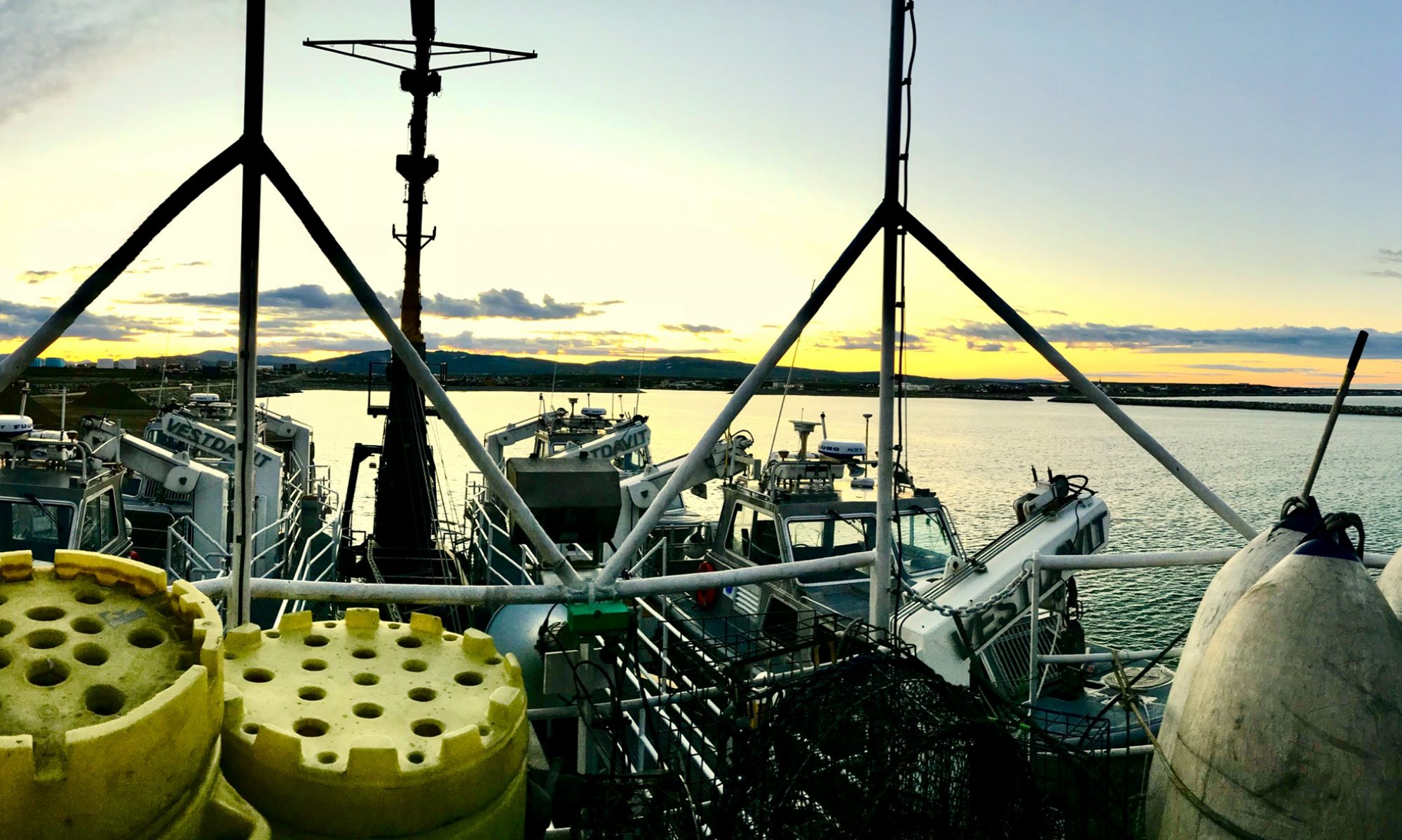
NOAA hydrographic ship, RAINIER, preparing for departure from Sitka, Alaska

Science and Technology Log 

The RAINIER departed Sitka, Alaska this evening, officially making me a NOAA Teacher at Sea.  While preparing to leave the dock, I spent my time on the flying bridge, located directly above the bridge, to get a good view of all the activity involved in getting the ship off the dock. I was very impressed with the amount of work it takes to get a 231 foot ship underway. The spring line, which basically looks like an enormous rope (3 inches thick), was used to change the pivot point of the vessel, making it easier to maneuver the ship away from the dock without any kind of serious impact.  Larry, the Electric Technician on board, pointed out the importance of standing back away from the line as the pressure on the line is very tense and has been known to snap.  Needless to say, I kept a safe distance from the lines, but was still able to hear the sound of the lines tightening as the RAINIER pulled away from the dock.  Yikes.

Once underway and traveling out of the channel, I went into the Bridge with the ship’s Executive Officer, CDR Julia Neander, or as she is addressed on the ship, the XO.  She explained some of the activity I was observing from the Officers in the bridge.  Alaska is an amazing place to visit and the mountains outside made the view from the bridge spectacular.

NOAA Teacher at Sea, Jessica Schwarz’s journey onboard the RAINIER begins here!

On the bridge, officers are very focused on their assigned task. The AB, or Able-Bodied Seaman, Jodi was behind the helm and steering the ship.  Jodi received course commands from the acting Conning Officer, Nate.  By calling out helm directions to Jodi, Nate was making sure the ship was on, or as close to, the course charted.  The ship’s Navigational Officer, Sam, had the ship’s route already charted prior to departure and the chart was clearly displayed on the port side of the bridge. This chart is used to track the ship’s exact position while underway. Officers in the bridge are constantly navigating to be sure the ship is staying on course. While underway, a fix, composed of three bearings and/or ranges (distances), is taken every 15 minutes and recorded.  I want to learn more about this entire process.

As for who is working onboard the RAINIER, NOAA Corps is one of seven uniform services within the United States. Each officer on board is in uniform.  The view of the uniformed officers in the bridge behind the navigational equipment working to get us underway was very impressive. There is a very strict protocol and all the officers time is accounted for on a rotating schedule. With the vessel’s commissioned officers, deck crew, engineers, stewards, and survey technicians I have really begun to get a feel for how hard everyone works to keep the ship running smoothly to complete successful missions.

As a side story, while heading South outside of Sitka, our course was somewhat interrupted by a marine mammal all my students in Hawaii should be very familiar with.  The XO spotted a humpback whale just to the starboard, or right, side of the boat. I think it must have been around 100 ft away. Within a matter of minutes, the humpback was directly in front of the ship.  We thought it dove down into the ocean, but as the vessel continued to move forward, it surfaced again, this time only 5-10 feet from the hull of the RAINIER.  The officers had to call for an immediate change in direction.  It was a very exciting and unexpected encounter. I was so surprised the whale remained within a few feet of the ship.  I like to think it was trying to say hello to me, since we both have made the long journey to Alaska from Hawaiian waters.

We are now anchored in Kanga Bay just south of Sitka within the Islet Passage.  Tomorrow two survey boats will launch to get started on collecting the hydrographic data. I will not be participating in surveys tomorrow because I need to get oriented to the RAINIER. There is an incredible amount to learn starting with how to find my way to and from my sleeping quarters from any point on the ship without asking for help.  You might be surprised how difficult that is.  Luckily everyone onboard is very kind and helpful! I suggested they put some sort of transmitter on me in case I show up missing for a while.

I am so excited to be onboard! I am at the beginning of my adventure with the RAINIER and feel I have already learned a lot.  I look forward to sharing my experiences with everyone! WHEA crew…I am counting on hearing from you!!!

Jeff Lawrence, June 2, 2006

NOAA Teacher at Sea
Jeff Lawrence
Onboard NOAA Ship Rainier
May 22 – June 2, 2006

Mission: Hydrography survey
Geographical area of cruise: Alaska
Date: June 2, 2006

Weather Data from Bridge as of 0730 Hours: 
Visibility: 10.0 miles
Wind direction: 0 deg. (N)
Wind Speed:  0 calm
Sea level pressure: 1005
Temperature:  48 deg. wet/dry 51 deg.

Science and Technology Log 

Today is my last full day on the RAINIER.  We came into port at Juneau this morning.  Today I will tour around Juneau trying to see and do as many things as I can since I am leaving early in the morning to fly back to Oklahoma.  The trip from Hot Springs Bay to Juneau last night was beautiful and spectacular.  The crew of the RAINIER did an excellent job piloting the ship through some treacherous narrows.  They know these waters well since they have surveyed most of this part of Alaska.  Captain Guy Noll has a lot of experience in these waters and has a well-trained crew.

Personal Log 

I have thoroughly enjoyed my trip and want to thank NOAA personally for allowing me this opportunity to live and work aboard the RAINIER.  This trip has provided with memories that will last a lifetime and I am thrilled I took the time to apply and come to Alaska. Alaska is such a beautiful stat—every American should put it on their schedule of things to do. There is so much to see and experience.  NOAA gave me the opportunity at literally no cost to myself.  I also learned a lot of about what NOAA scientists are doing in Alaskan waters as well as around the world.

I would also like to give a special thanks to LTJG Nicola Samuelson and ENS Laurel Jennings who took the time to explain what they were doing in detail.  They didn’t seem to be afraid of overwhelming me with information, and I found them to be very helpful in helping me understand how and why the data collected was used.  Both were very professional, skilled, knowledgeable, and helpful in every endeavor that I was involved in. NOAA has done well to secure two such bright, motivated, and eager officers.  I am sure they will have a positive career and impact while at NOAA.  All the crew were a great help and very nice to me while aboard the RAINIER.  Also AB Tonya Watson and Survey Tech Nick Gianoutsos have shared many stories with me about their lives on and off the RAINIER.  It was nice to talk to Nick, a neighbor from Texas.  You meet a lot of fascinating people on board the RAINIER.  AB Leslie Abramson was always willing to explain to me her role on the ship and how to do certain things in the deck department.

On the bridge I found ENS Nathan Eldridge, GVA Kelson Baird, and ENS Megan McGovern to be very helpful when I was attaining weather data from the ship or had general questions about the bridge and the function of different departments on the ship.  The FOO, LT. Ben Evans, was helpful in explaining the scientific research of the vessel and its main goals and objectives.  ENS Sam Greenaway was very helpful in taking time each day we set sail to explain how the ship would navigate the waters, how to read the charts, and how the charts were developed and used by the ship.  LTJG Abigail Higgins was always nearby when we were launching and recovering boats to explain to me what everyone was doing and what I would need to know to do some of the tasks.  She was very instrumental in making me feel a part to what was going on during operations.  In the deck department I would like to thank everyone—all the crew, made me feel welcome, whether it was aboard their boat or as a fellow crewmember of the RAINIER.  Thank you Chief Scientist Steve Foye for all the information on the native Alaskan wildlife. I found it very useful and will use it with my students next year.  Thanks to Kenny Keys for teaching me about the navigation on the small boats through the Wrangell Narrows.  Thank you to Floyd Pounds for always greeting every morning with a warm smile and welcome and the great meals you and the other stewards provided me while at sea.

A special thanks to Captain Guy Noll and the XO, Julia Neander for making me feel right at home, answering all my questions, allowing their crew to be at my disposal for questions and interviews, and for a really terrific time aboard the RAINIER.  I am usually a little quiet and reserved and make friends slowly.  However, aboard the RAINIER I feel that I have made many friends in a short time and I will think of them quite often and have fond memories of my time aboard the RAINIER.  Surely no other ship in the fleet could be as complete as the RAINIER.  THANK YOU NOAA FOR A GREAT TIME!

Question of the Day 

What does each letter in the acronym NOAA stand for?

Name 5 projects from around the world that NOAA is involved in.

Jeff Lawrence, June 1, 2006

NOAA Teacher at Sea
Jeff Lawrence
Onboard Research Vessel Rainier
May 22 – June 2, 2006

Mission: Hydrography survey
Geographical area of cruise: Alaska
Date: June 1, 2006

Alaskan beauty, Humpback Whale in the distance

Weather data from bridge
Visibility: 8.0 miles
Wind direction: 0 deg. (N)
Wind Speed:  calm winds
Sea level pressure: 1019 mb
Present weather: light sprinkles, partly sunny, calm seas
Temperature:  51 deg. wet/dry 52 deg.

Science and Technology Log 

Alaska has to be one of the most beautiful places on the Earth.  Add to this working aboard a beautiful ship like the RAINIER with a wonderful crew and it equals a really good time.  I saw a variety of wildlife I never thought I would see up close and personal.  I also learned so much about hydrography.  Before this trip I didn’t know the term even existed.

Beautiful sunsets aboard RAINIER!

NOAA provides a wealth of data and information for the general public, private industries, and scientists all over the world.  The trip aboard the RAINIER is a lifetime experience that I will cherish and remember.  Any teachers reading this log who have thought about applying for the Teacher at Sea Program ,but for some reason haven’t done so yet, need to apply NOW!  If you like to learn new things, meet interesting people, see fascinating wildlife, and see extraordinarily beautiful scenery, than a trip aboard the RAINIER is your ticket. The staff at NOAA, take care of all the travel arrangements— all you have to do is be at the airport on time. I have had the best time of my life.  I have been to teacher camps, workshops, and conventions all around the country, but none compare to my time aboard the RAINIER.

XO of the RAINIER: Julia Neander

Captain Guy Noll and XO Julia Neander have gone out of their way to ensure that I was involved in the activities aboard the ship and a part of the crew.  The crew on board the RAINIER, are very helpful and all of them have made my stay at sea a pleasurable experience. I hope I have the opportunity to partake in this program again.  Thanks again to the crew of the RAINIER and the staff at NOAA for taking care of everything.  In the 19 years I have been teaching this has been one of the most rewarding and exciting opportunities of my career.  If you are a teacher thinking about the Teacher at Sea Program, wait no longer, apply today! 

Personal Log 

Captain of the RAINIER: Guy Noll

Terrific, outstanding, excellent, a perfect 10 on the rating scale of what an exciting teacher learning experience should be.  I can’t wait for school to start to share this trip with my students.  Developing lessons that correlate with my experience should be quite easy due to the wealth of information I attained from the crew of the NOAA ship RAINIER. Today I helped them take bottom samples from around the area.

Question of the Day 

FOR TEACHERS:  How do I apply for the Teacher at Sea Program? ANSWER: go here.

Erin Campbell-Survey Tech
Carl Verplank-Seaman Surveyor
This could be you working aboard a NOAA science research vessel.

Jeff Lawrence, May 31, 2006

NOAA Teacher at Sea
Jeff Lawrence
Onboard NOAA Ship Rainier
May 22 – June 2, 2006

Mission: Hydrography survey
Geographical area of cruise: Alaska
Date: May 31, 2006

Weather Data from Bridge as of 0730 Hours
Visibility: 10.0 miles
Wind direction: 340 deg. (NNW)
Wind Speed:  1 knot, light winds
Sea level pressure: 1014
Present weather: mostly cloudy, cool outside, calm seas
Temperature:  49 deg. wet/dry 50.0 deg.

One of the RAINIER’s boat launches going off  on a beautiful day in SE Alaska.
One of the RAINIER’s boat launches going off on a beautiful day in SE Alaska.

Science and Technology Log 

Today I was invited to ride along to Sitka to pick up four crew members and the mail.  The day was beautiful and the boat ride was terrific.  Sitka has been a part of Alaskan history for a long time. The Russians were the 1st Europeans to settle at Sitka.  It was also where Russia turned over Alaska to the U.S. after the purchase by Secretary of State Seward. It was an early capital of Alaska before moving to Juneau. The harbor and city were spectacular, off in the distant background was Mt. Edgecumbe.

Three of the crew we picked up will be returning to the RAINIER after leave. The other passenger has just finished NOAA Corps officer basic training and will be boarding the RAINIER for the first time.  ENS Tim Smith will begin his career with NOAA aboard the RAINIER. Tim is a native of Rhode Island.

Russian Orthodox Church in Sitka

Personal Log 

Today was a spectacular day in SE Alaska full of warm sunshine, calm winds, and calm water. Later in the day it began to cloud up but the winds remained calm.  On the way to Sitka I was able to observe dozens of sea otter, a sea lion, and a porpoise.  Sitka looks like a picturesque town and popular tourist location for large cruise ships.  There was a large cruise ship in the bay when we arrived.  The surrounding mountains and the backdrop of Mt. Edgecumbe makes for beautiful landscape photos.

Questions of the Day 

How many ships are in the NOAA fleet? What is the name of the 2 ships that do hydrography in Alaska? Approximately how many glaciers does Alaska have? What is the capital of Alaska? What is the capital’s latitude and longitude? When did Alaska become a state?

Ceremonial Tlingit Canoe
After a dip at the Hot Springs, back to the  RAINIER paddling a kayak in calm waters.
After a dip at the Hot Springs, back to the RAINIER paddling a kayak in calm waters.

Jeff Lawrence, May 30, 2006

NOAA Teacher at Sea
Jeff Lawrence
Onboard NOAA Ship Rainier
May 22 – June 2, 2006

Mission: Hydrography survey
Geographical area of cruise: Alaska
Date: May 30, 2006

AB Leslie Abramson & Chief Steve Foye  piloting the ship
AB Leslie Abramson & Chief Steve Foye piloting the ship

Weather Data from Bridge as of 0730 Hours: 
Visibility: 10.0m miles
Wind direction: 350 deg. (N)
Wind Speed:  2 knots
Sea level pressure: 1018
Present weather: Scattered cirrocumulus clouds, sun shining brilliantly – It’s a beautiful morning in SE Alaska.
Temperature:  49 deg. wet/dry 50 deg.

Science and Technology Log 

Earlier this week I went out on launch RA 6 to run some lines off Biorka Island.  The weather was a little dreary and cold but made much warmer by the crew, which consisted of Chief Boatswain Steve Foye, AB (Able Body Seaman) Leslie Abramson, and LTJG (Lieutenant Junior Grade) Nicola Samuelson.

LTJG Nicola Samuelson collecting sonar data aboard RA 6

Seas were a little rough running between 4 and 6-foot swells, but the crew did an excellent job staying on their lines and completing the task assigned. Conditions are not always ideal, yet the job must still be done.  If seas are too rough the crew will head to a bay or protected area that still needs to be worked.  Steering a boat in rough sea conditions isn’t easy.  Chief Foye was on board to assist AB Abramson if needed.  Leslie did an excellent job controlling the boat while down below LTJG Samuelson was collecting the data from the sonar.  LTJG Samuelson has finished her 2-year assignment with the RAINIER and will be heading to Rhode Island for her next duty station when we reach our next port stop of Juneau.

Personal Log 

This day was an interesting one. I learned when you feel nausea or seasickness it is better to eat something even though you don’t fell like doing so at the time.  I really enjoyed learning so much about the day-to-day data collection techniques used by the crew of the RAINIER. The equipment is quite sophisticated and the people using it are very well trained. LTJG Samuelson was very helpful in explaining how the data is collected, stored, retrieved, and used to make the nautical navigation charts that NOAA publishes.  The boatswain crews are well trained and do a good job piloting the launch boats through strong tide currents, rocky coastlines, and even rough seas.

Questions of the Day 

How deep is a fathom?

When a ship anchors there are red, white, and blue chain links to show how deep the anchor is. What is the length between these colors called?

How long is this length of chain?

How much does one anchor on the RAINIER weigh?

How much does one marked length of chain weigh on the RAINIER?

What is the keel of a ship?

What is meant when people are talking about a ship or boats draft?

What does it mean when a ships bell rings continuously for 5-6 seconds every minute when it is anchored in open water?

Thanks to Ordinary Seaman Megan Guberski for helping me to pose and answer some of these questions.