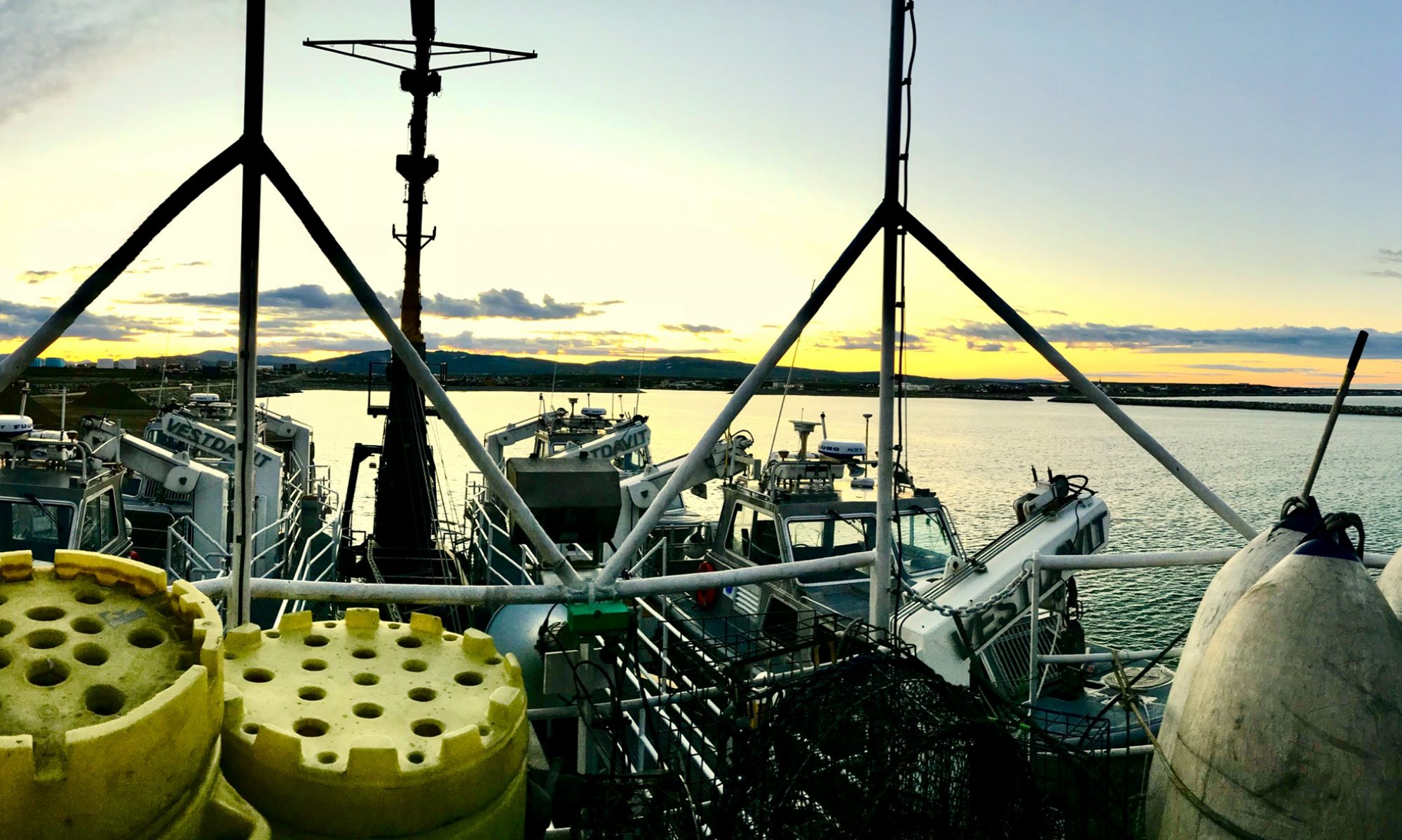
Long time no hear from, right? The explanation is quite simple…there was no Wifi on my research vessel. I was definitely writing about my experience and taking pictures of my observations but I had no way to share the information with you in a blog post. Now that I have been home for several weeks, I have been working hard to complete my blog (6 posts in particular) which are in the process of being completed and am now ready to begin posting.
In a prior post, I described my participation in the Teacher at Sea program and how I plan to translate my experience and observations into classroom activities and projects for my students. In fact. As I prepared for my upcoming cruise assignment, I developed a Google Site that not only provides more detail about my upcoming experience as a Teacher at Sea educator, but also instructional resources and project ideas related to ocean sciences. What I would like to do in this post is talk about the opportunity presented to me and all other educators in the Teacher at Sea program.
Teacher at Sea Program
The Teacher at Sea program is a unique Teacher Research Experience (TRE) opportunity managed by NOAA that allows teachers to learn by doing rather than by reading about it. In these types of experiences, the teacher is placed with a team of research scientists and immersed into their scientific work, serving as an honorary member of the team. The TRE provides the teacher with an opportunity to not only conduct the research, but to also ask questions, engage in detailed investigations about aspects of the research, and most importantly, distill these experiences into lessons, activities and projects for classroom implementation to the benefit of my students. I would strongly encourage my educator colleagues to explore the Teacher at Sea program
and should you qualify, please consider applying for this unique educator experience.
SEAMAP
I would like to now speak about the research I would be involved in during my assigned cruise. I was assigned to participate in Leg 1 of the Summer Groundfish Survey conducted in the Gulf of Mexico in collaboration with NOAA Fisheries as part of SEAMAP (Southeast Area Monitoring and Assessment Program)
The survey consists of a series of collected samples of marine life at positions determined by SEAMAP to make decisions about damaged marine ecosystems, depleted populations and destruction of habitats. Exactly what was entailed in the collected samplings will be described in an upcoming post.
Assigned Cruise
Cruises designed to engage in SEAMAP Surveys are seasonal (generally occurring in the Summer and Fall from April to November) and are typically executed aboard NOAA vessels in legs or segments consisting of 2 – 3 weeks with cruises occurring over 3 – 4 legs per survey. My assigned cruise underwent a change in schedule and vessel from my initial assignment. My original assigned cruise was scheduled as Leg 2 of the Summer Groundfish Survey aboard the NOAA Ship Oregon II from June 20, 2022 departing from Galveston, TX to July 3, 2022 arriving in Pascagoula, MS for a 15-day cruise. However, due to maintenance issues, the Oregon II was not seaworthy for the scheduled cruise which required a replacement vessel. The replacement vessel was the R/V Tommy Munro. There is a lot to say and pictures to show about the R/V Tommy Munro which will be the subject of the next blog post.
In this installment of my exercise of the Ocean Literacy Framework, I would like to ask you to respond to three questions about the second essential principle:
The ocean and life in the ocean shape the features of Earth.
presented in a Padlet accessed by the following link:
Remember, there are no right or wrong answers – the questions serve not as an opportunity to answer yes or no, or to get answers right or wrong; rather, these questions serve as an opportunity not only to assess what you know or think about the scope of the principle but also to learn, explore, and investigate the demonstrated principle. If you have any questions or would like to discuss further, please indicate so in the blog and I would be glad to answer your questions and initiate a discussion.
Allow me to provide a summary of the survey and what was accomplished on this leg. June 9, we departed from Galveston and made our way out to sea. The survey started the next day. We traveled 1,866.6 nautical miles (or 2,148.04 miles) along the continental shelf. That’s like driving from Florida to California! On this leg of the survey we (they) deployed 169 cameras, 22 CTDs, 13 bandit reels, and 12 XBTs (still don’t know what that is). We collected 15 eDNA samples (go Caroline!) and mapped 732 nautical miles. This year’s survey started in April, and this was the last leg. We’re making our way back to Pascagoula (yes, I can pronounce it now), a near 28 hour transit. We will be docking and unloading at the Gulf Marine Support Facility. The next survey on the Pisces starts next week, deploying Remote Operated Vehicles (ROVs). The science never stops, folks.
The SEAMAP Reef Fish Survey began as a fish trap survey in 1980’s and transitioned to a video survey in 1991, and the technology continues to evolve year after year. This over thirty years of data provides abundance and distribution information on Gulf of Mexico reef fish. Reef fish abundance and size data are generated directly from the videos. So though the work feels slow, it is essential. An index of abundance for each species is determined as the maximum number of a fish in the field of view in a single video frame. Here are some snippets of the footage recording during our trip.
A school of amber jacks recorded on the camera array.Marbled grouperSnappersA stunning tiger shark
*NOTE: The tiger shark shot was not from our leg of the survey, but too cool not to include.
This survey combined with all research approaches (i.e. traps, bandit reels, eDNA) allows for a comprehensive stock assessment of the fish populations in the Gulf of Mexico. Stock assessments collect, analyze, and report demographic information to estimate abundance of fish, monitor responses to fishing, and predict future trends. This significant data is used in managing fish populations and preserving our oceans resources.
Mapping Operations
One of the scientific operations I have not yet mentioned is bathymetric mapping. Senior Survey Technician Todd Walsh works the night shift running the mapping show – multibeam echo-sounder hydrographic survey to be precise. An echo-sounder determines the depth of the seafloor by measuring the time taken for sound echoes to return. The technology is impressive. Todd is straight up 3D mapping the bottom of the ocean. He watches it come to life, line by line. That’s freaking cool. I see you, Todd.
Though mapping occurred overnight, Todd was sure to point out any interesting finds in the morning. The Pisces mapped an area south of the Flower Garden Banks National Marine Sanctuary and found an impressive geological feature hosting two mud volcanoes. A mud volcano is a landform created by the eruption of mud or slurries, water and gases. Man, the ocean floor is like a whole other world. It was so interesting to watch the mapping unfold right before your eyes. Maybe the seafloor will be my next destination.
The long days take their toll. This crew has worked so hard and is ready to decompress. Some have been out here for months and are counting down the days. You really can’t blame them. You ask anyone out here, “how many days?” and you will hear “three days and a wake up.” “Two days and a wake up.” “One day and a wake up.” They have all earned some serious rest and recovery, and long awaited time with their families and friends. I mean, I’d like to call them friends, but I get it, you can have lots of friends.
I cannot believe it is already my last day out here. Though each day felt like 100 hours, somehow it still flew by. The last CTD hauled out of the water last night marked the end of the SEAMAP survey. I cheer and shout in solitude and run round giving high fives. Good work, everyone! They are all exhausted, but certainly excited and proud of the work they have accomplished. Listen guys, if you aren’t proud, let me remind you that you most certainly should be.
The last day is the first sunrise I didn’t catch – sleeping in was just too tempting. Friends at home have to literally drag me out of bed to catch a sunrise, but out here, it just feels right. We ease into our day and clean and prepare the working spaces and equipment for arrival. I mop. That’s about all I am good for. TAS card. I spend the day roaming as usual, this time reflecting on my arrival and experience at sea. Time slows down even more (if you can believe that) when it’s your last day. I do my best to take in every last moment. I balance the day with some relaxation, a nice game of “bugs” with my pals, a good deal of snacking, revisiting the views, and saying my goodbyes.
Though thrilled to be heading back, most everyone finds their way outside for the last sunset. I soak up every colorful ripple. Mother Nature does not disappoint in those last hours. Dolphins put on a show jumping out of the water at a distance. The stars start to appear, not a cloud in the sky. I stargaze for what felt like hours. We’re greeted by multiple shooting stars. These are the moments I live for – when I feel most at rest. I am overcome with humility and gratitude.
Some of the most memorable moments.
I consider myself lucky to have met and worked with the Pisces crew. Every person on this trip has left an impression on me. From day one, the crew has been so welcoming and willing to let me participate, committed to providing me an exceptional experience. For that, I am grateful. I had so much fun learning from each department and goofing off with the best of them. The work that goes in to the research is remarkable, from navigation, the science, to vessel operations. I learned much more than expected. It’s hard to summarize my experience, but here are some valuable takeaways, in no particular order.
NOAA research is vital in protecting our most precious natural resource.
Ocean conservation is the responsibility of every one of us.
Remember why you do the job you do and the impact you have.
Never pass up an opportunity to learn or do something new.
Everyone should have the opportunity to connect to our natural world.
You can never see too many sunsets.
Expose your toes to the great outdoors.
I can’t express enough how grateful I am to have been selected for the NOAA Teacher at Sea Program and be a part of its mission. The experience was so much more than I could have even imagined. Participating in the research was so rewarding, and offered valuable insight into fisheries research and scientific operations. The questions never stopped coming. The novelty of the work kept me hooked. If there is one thing above all that I took away from this trip is – never stop learning. Continuous learning is what enhances our understanding of the world around us, in so many ways, and why I love what I do.
I look forward to sharing my experience with the many students I have the opportunity to work with, and hopefully inspiring them to continue to learn and grow, building a better understanding and appreciation for our planet. NOAA, your investment in me will not go unnoticed. The biggest THANK YOU to all involved in making this experience a reality.
We ride together, we die together. Pisces for life. – Junior
NOAA Teacher at Sea Jordan Findley Aboard NOAA Ship Pisces June 9-22, 2022
Mission: SEAMAP Reef Fish Geographic Area of Cruise: Gulf of Mexico Date: June 20, 2022
Science and Technology Log
Fishing Operations
Alright, it’s time for the good stuff, the moment you’ve been waiting for (whether you knew it or not). It’s fishing time. FPC Paul Felts monitors depth and habitat to determine suitable fishing sites. When the crew hears “I’d like to set up for bandit reels” over the radio, they come running. I mean they come out of the woodworks like the Brady Bunch on Christmas morn. Let me remind you, the days can be real slow out here. Lots of transiting and waiting. Fishing offers just enough excitement to keep us going.
Three bandit reels are deployed once or twice per day. I promptly insert myself into the fishing operation on day one. Thank you, Rafael and Junior. The reels are motorized and mounted to the side of the ship. The line starts with a weight and then ten baited hooks are clipped on. When deployed, it sinks to the bottom. We get five minutes. Five short minutes for the fish to bite. Boy does anticipation build in that five minutes. If you have a good one, you can feel it on the line. “One minute to haul back.” By this time, everyone is leaning over the side (the gunwale if you want to be fancy) staring at the water. “Reels two and three you can haul back.” “Reel one you can haul back.” We start reeling back in, from somewhere between 85-100 meters deep. Click, click, click on the reel as we impatiently wait.
Baiting the lineWaiting for the haul backReeling in
We start to see a glimpse of the bait coming up around 40-60 meters and try to make out what we’ve hooked. RED SNAPPER! 11 red snapper caught between the three reels on the first fish. This is what I’m talkin’ about. I can handle two weeks of this. Everyone rotates between stations to see what we caught and we all celebrate like we just won some sort of tournament. Let’s remember folks, we are doing this for science. All fish captured on the bandit reels are identified, measured, weighed, and have the sex and maturity determined. Select species have otoliths and gonads collected for age and reproductive research. I excitedly follow the science crew into the lab to get the run down.
Caroline with red snapperAmanda with a marbled grouperRafael with a red porgyMarbled grouperQueen snapper
*Read no further if you are squeamish.*
The work up of the fish start with some measurements and weights. Of course it immediately became a competition. Game on. Now these fish aren’t your regular ol’ fish. These suckers are huge. Next we dissect the fish to extract and weigh the gonads. That’s right, I said gonads. You can learn the age and maturity of a fish by examining a sample of the gonads under a microscope. From that, you can estimate lifespan, spawning patterns, growth rate, and possibly even migration patterns. Knowing the age distribution of a fish population helps to better monitor, assess, and manage stocks for long-term benefits. Fish gonads, that’s a first for me.
Next step is the fun part, extracting the otolith. Otoliths (ear bones) are calcium carbonate structures found enclosed inside the heads of bony fish. This bone tells us how old the fish is. Otoliths are removed from the fish’s head either by entering through the top of the head or by pulling back the gills. At first, I observe. They really get in there. By the third or so time, I am ready to get my hands dirty. Remove the gills and start digging. Once you find the inner ear, you crack it open and inside is the otolith. Some species are much easier than others. It’s no walk in the park folks. One grouper took us two hours. It’s like a real life game of operation. Though intense, it’s a fun challenge.
On this leg of the survey we caught 20 red snappers, 2 silky snappers, 1 queen snapper, 2 scamp, 1 marbled grouper, 1 yellow edge grouper, and 1 red porgy. Sampling these organisms strengthens the data. Employing multiple research methods produces a comprehensive description and interpretation of the data. The workup of the fish was one of my favorite parts of this experience. Not only did I actually get to participate in the research, I learned valuable new skills, most of which I teach about, but have never had the chance to do it. This is the exact reason I applied for the Teacher at Sea Program.
Have I convinced you that science is cool yet?
Meet the Deck Crew
I’d like to give a shout out to my friends on the deck. NOAA Ship Pisces couldn’t do the research they do without the Deck Department – Chief Boatswain James, Lead Fisherman Junior, and ABs Dee and JB. The Deck keep up general maintenance of the boat and on deck, operate equipment and machinery, support scientific operations, and stand watch. These guys might be salty, but they have good spirits and make me smile. I have enjoyed every minute working with them.
AB Jamison “JB” BoydLead Fisherman Farron “Junior” Cornell Jr. AB Delwin “Dee” Jackson
Personal Log
Yesterday, we did another fire drill. This time, with the help of firefighter Jordan Findley. LT Duffy set me up to participate in the drill. He shows me the gear and how it works. It’s hot up in there. Two days later when the alarm sounds, I jump to attention. Not really. It took me a minute to remember I was involved. I pop up out of my usual lounging in the lab and swiftly head out to the deck. 0% do I remember where I am supposed to go. Thank god I pass JO ENS Gaughan. She points me in the right direction. By the time I make it to the locker, they’re all dressed out and on their way to “fight the fire.” They’re impressive.
Though late to the game, JB helps me get suited up and I head down to the scene. As you might expect, the “fire” is out by the time I arrive. I provided moral support. Following the drill, we (I trail behind and try not to trip) walk the hose outside to test the pressure. I get to shoot this sucker over the side. I can barely even hold the nozzle in place. LT Duffy comes in for reinforcement on the hose and I go for it. I sprinkle here, I sprinkle there, hose checks out. Good deal. This was a blast. See what I did there? Later I come to find they had stamped the hose nozzle with my name as a memento. This is such a thoughtful way to remember my time on NOAA Ship Pisces. I shall carry it with me always. Not true, this thing is heavy, but I will certainly cherish it. I have so much respect for our firefighters and first responders (on board and beyond), and even more so today.
Fire fighting gearFire station
At this point, I have been out at sea for 12 days. That’s a record for me. My previous PR is one night on a lake in Indiana. I really had no idea what to expect on this trip. I was pretty nervous I would be violently ill and concerned I may not sleep and they wouldn’t have enough coffee to sustain me. None of these were issues, actually far from it, and man am I grateful. No seasickness, I’ve slept like a baby, and there is coffee for days. They even have espresso. Winning. They’ve really spoiled me out here. We have had some really tasty meals, including the fish. No fish goes to waste! I am going to miss being out here at sea. I think I might stick around.
Did You Know?
So you now know that otoliths are basically ear bones. What is cool about them is that they grow throughout the life of a fish, leaving traces on the ear bone. Seasonal changes in growth are recorded on the bone and appear as alternating opaque and translucent rings. Under a microscope, scientists count the number of paired opaque and translucent rings, or annuli, to estimate the age of a fish. Just like trees!
Obviously, safety is of the utmost importance out here at sea. Respect. When working on deck, crew must wear life vests, hard hats, sometimes safety belts, and closed-toe shoes. I don’t know how these people wear closed-toe shoes all day long. I hate it. My piggies are suffocating.
The plan of the day for Friday (6/10) included safety drills at noon. Noon rolls around and I am not really sure what to do. No surprise there. Confirm with Paul what to do and where to be. Oh, okay. Amanda, Caroline, and I go grab our safety getup and start to head to our assigned life raft muster stations (where we gather). On the way down, Commanding Officer LCDR Jeffery Pereira, passes by. “Wow, you ladies are ready.” …… something tells me it’s not quite time. We promptly return to our stateroom. I casually go check our muster stations. Yep, there’s no one. Turns out drills commence with a signal. I’m on to you CO, you just getting a kick out of us roaming around like fools with our safety gear. It’s okay, I have accepted my role onboard.
We run through fire and abandon ship drills. At sea, everyone aboard ship, be they crew, scientist, or passenger, is a member of the fire department. When the alarm sounds, everyone jumps to respond. My response, go to the back deck and wait. Meanwhile, the crew is hard at work donning firefighting PPE and preparing fire stations. Great work, team!
Then we move on to the abandon ship drill. Abandoning ship in the open sea is an action of last resort. Only when there is no reasonable chance of saving the ship will the order ever be given to abandon it. When signaled, everyone reports to their assigned life raft muster station with their protective survival gear. We throw on our survival suits, or immersion suits, and in the actual event, would launch the life rafts. This immersion suit is intended to protect your body while out in the open ocean. Now, I know safety is serious business, but these suits are ridiculous looking. We somehow make them look good. I’ve said it before; I’ll say it again – safety is sexy.
Immersion suitFire stationPPE
Science and Technology Log
We spent our first day at a reef known as Claypile Bank, approximately 80 miles offshore. The second day we headed to East Flower Garden Banks, 125 miles offshore. Flower Garden Banks National Marine Sanctuary was expanded from 56 mi² to 160 mi² to protect critical habitat in the Gulf of Mexico in 2021 and is now made up of 17 different reefs and banks. Cameras were dropped at around 48 meters (or 157 ft) the first go around and 116 meters (380 ft) the second. Since the start, we have sampled Rankin Bank, Bright Bank, and started on Geyer Bank, with a total of 62 cameras deployed. That’s a lot of cruisin’ and droppin’.
Mapped sampling sitesFPC Paul FeltsEcho Sounder
Camera Operations
Let’s talk about these cameras. Deploying and retrieving cameras occurs ALL DAY LONG. Man, the days are long. Here is a quick summary of the work…
Dropping the camera
There are two camera arrays, one 48” tall and the other 36” tall. These things are beastly. Each Spherical/Satellite camera array has six video cameras and a satellite camera, battery, CTD, tensiomet… tramsmiss… transmit…. What it is Ken? … TRANSMISSOMETER (measures visibility/turbidity), sonar transmitter, trawl net ball, and bait bag. The first camera goes out at 7 AM and the last by 6:15 PM. Predetermined sampling sites are selected along the U.S. continental shelf using random stratified selection (dividing the area into subgroups).
When at the site, cameras are lifted by the A-frame, dropped with the yank of a chain, and boom, they sink to the bottom. They sit on the seafloor and soak (record footage) for 30 minutes. First camera goes in, we head to the next site, second camera goes in, we retrieve the first, we retrieve the second, and repeat.
Though the deployment itself only takes like two minutes, there is a lot of coordination involved. It’s amazing how the Bridge (NOAA Corps), Deck, and Lab crews work together to effectively deploy and retrieve the cameras. The communication is nonstop. Field Party Chief (FPC if you know him), Paul Felts, is the brains of this operation. Paul keeps scientific operations running smoothly, providing coordinates to selected sites, monitoring conditions, keeping time, processing data, and I am sure so much more. This guy doesn’t stop. The Bridge are they eyes and ears – they are on watch, navigating to sites, and maneuvering and position the ship all while working against the elements. You guys deserve more credit than that, I know. The Deck are the hands (this is a terrible analogy, but I am committed at this point) – they are operating the deck equipment, raising and lowering cameras, and working the lines and buoys. I, Teacher at Sea Jordan Findley, am the appendix. I have potential, but am mostly useless, and can be a real nuisance from time to time.
Camera array deployment
Personal Log
We are almost one week in and I am still just as excited as day one. Have I encountered challenges, yes, but being out here in the middle of the Gulf is something special. I am greeted every day with a beautiful sunrise and evening sunset. It is spectacular. The water is so beautiful. One of the things I really hadn’t considered to impact my experience at sea is how amazing the people would be. You all inspire me. Every single person on this ship has been so kind and accommodating, allowing me to participate and taking the time to teach me, despite how long they’ve been out at sea or how long their day has been. It’s like one big (mostly) happy family out here. They have me cracking up all the time. Now, they could just be on their best behavior for the ol’ teach (that’s me), but I am convinced they’re just good people. I mean, I even like most of them before my morning coffee. That’s something right there.
SunsetMoon rise
I think I am getting my groove. On a typical day on the ship, we wake up at 6 AM (oof), breakfast, then to the lab. I like to take a minute on the back deck to drink my coffee and look out over the water. First deployment (CTD and camera) is at 7 AM. They do some science, and then continue to deploy and retrieve cameras about every 10-30 minutes until sunset. I pop in and out of the lab all day to observe, but try to keep myself busy. When I am not “helping out,” you will find me in my office. Some call it the mess. I don’t mind. It’s also conveniently where all the food is prepared and served, and where the coffee and snacks are located.
We all refuel on coffee during lunch. Shout out to Paul for making that coffee a real punch in the face. Fishing occurs in the afternoon, almost daily. More to come on this, but man it is fun. The rest of the day is a waiting game (at least for me). Living on a ship is weird; there is only so much you can do. Honestly, the first couple of days, I had some concern I might die of boredom, but as things progressed, I got more involved in every aspect of the operation – even driving this beast! Also, been trying to sneak in a workout. Don’t forget to hydrate. That breaks up the day a bit. Dinner rolls around at 5 PM. All I do is eat. I have been eating like a grown man. The crew starts to wrap things up, reset for the next day, and then transition to mapping operations. The day isn’t complete without watching the sunset. Then we just hunker in until bedtime. The ship “rock-a-bye babies” everyone to sleep.
Generally speaking, I have improved immensely on my ability to open doors – solid 8/10. Those heavy brown doors though, they still kick me in the butt on my way through. I am learning my way around the ship for the most part. Mmmm, kind of. There is a door like every five feet. What I have not improved on is my ability to walk. I am walking all sorts of ways but straight. Everyone stands clear when I walk by. They say you’ll get your sea legs, but I am not sure I am convinced.
The Mess (cafeteria)ExpectationReality
Did You Know?
A continental shelf is the edge of a continent that lies under the ocean. Though underwater, continental shelves are still considered part of the continent. The boundary of a continent is not the coastline, but the edge of the shelf. The shelf extends to a drop-off point called the shelf break. From the break, the shelf descends deep to the ocean floor. Depths of the shelf where we sample range from 45-165 meters, mostly because it gets to be too dark much past that. The depth of the Gulf of Mexico can be more than 5,000 meters deep! Sorry friends, I am done converting units – we’re doing science out here. Just know that it’s deep.
NOAA Teacher at Sea Jordan Findley Aboard NOAA Ship Pisces June 9-22, 2022
Mission: SEAMAP Reef Fish Geographic Area of Cruise: Gulf of Mexico Date: June 5, 2022
Series of Events
In October of 2019, I learned of the NOAA Teacher at Sea Program. Without hesitation – yep, sign me up, and applied in November. In January of 2020, I received the following message:
Dear Applicant,
On behalf of the National Oceanic and Atmospheric Administration’s (NOAA) Teacher at Sea Selection Committee, we are pleased to inform you that you were selected to be a finalist for the 2020 season! Now onto the next steps…
Stoked. Couldn’t be more thrilled. February 2020, medically cleared and ready for the more information call.
(Insert Record Scratch Sound Effect)
January 2020, the U.S. Center for Disease Control and Prevention confirms the first U.S. laboratory-confirmed case of COVID-19, and by March of 2020 the United States declares a nationwide emergency. On March 9, 2020, I was notified of the cancellation of the 2020 NOAA Teacher at Sea season in response to the pandemic.
As for all of us, COVID put a screaming halt to my travel plans, but more importantly the world around us. As the pandemic progressed, the 2021 Teacher at Sea season was also canceled. No, this is not a blog about COVID, and I am in no way downplaying the impact of the pandemic, but it is a part of my story. I, much like all of us, have gained a great deal of perspective, patience, and gratitude (and maybe a few gray hairs) during the last two years, and the anticipation of this trip has made me that much more grateful and excited for the opportunity to participate this season.
Okay, back to the good stuff. March 2022, we are back in action and in April, I received the official cruise offer. NOW I can get excited. In just a few days, June 9-22, 2022, I will be participating in a Gulf SEAMAP Reef Fish Survey on NOAA Ship Pisces. The Pisces will conduct a survey of reef fish on the U.S. continental shelf of the Gulf of Mexico using a custom built spherical stereo/video stationary camera systems and bandit reels. The ship’s EM 2040 multibeam system will be used to map predetermined targeted areas on a nightly basis to improve or increase the reef fish sample universe. A patch test of the EM 2040 multibeam echosounder….
You lost yet? Yea, me too. Looking forward to learning what this actually entails. I shall follow up in layman’s terms.
NOAA Ship Pisces (R-226).Photo courtesy of NOAA.
Introduction
Oh, ahem. Let me introduce myself. Hi, I’m Jordan Findley.
My resume reads, “I am an environmental professional dedicated to demonstrating environmental advocacy and sustainability, while fostering a generation of future environmental stewards.” Professional is relative here. My professional background is in husbandry and environmental education. On a personal level, those who know me well might describe me as an educator, traveler, and outdoor enthusiast. My interests have always aligned with nature, wildlife, and the outdoors and I am continually astonished by our planet and passionate about protecting it.
I grew up in rural Indiana and spent all of my time outside. At an early age, I gained an appreciation for a simple life, a grand adventure, and the beauty of the natural world around me; and that is the essence of my being. I would simply describe myself as a bit of a wanderer with a thirst for life and motivation to inspire others. I’ve spent my entire existence chasing the next big opportunity, and because of that, life has afforded me some amazing opportunities. I often hear, “I live vicariously through you,” but that really isn’t my hope. My hope is that I inspire and empower others to have their own amazing experiences in life, do what they love, and be the best version of themselves.
Loved nature from the startSwimming with sharksEl Yunque National Forest
“Professional” Profile
To be honest, my background is all over the place and true to myself. I hold a B.A. in Zoology and M.A. in Biology from Miami University (that’s Ohio). My education provided fundamental knowledge of animal, environmental, and social sciences and science education. I traveled to Mexico, Australia, and Kenya during graduate school to study human impact on the environment and community-based approaches to conservation. These experiences abroad vastly broadened my view of the world and the environmental challenges it faces.
Superpod of dolphins in BajaGreat Barrier Reef diveMaasai students in Kenya
I worked seasonally until hired as an educator at Tampa Bay Watch (TBW) in 2016. I will spare you all the details of me bouncing from job to job, but I will say it was then that I had some of the most unique experiences and learned of my passion for education. As much as I thought otherwise, I am an educator at heart, but I knew the classroom was never for me. And though I have mad, mad respect for formal educators (you are all saints), I knew that any facilitation I would be doing had to take place outside. Experiential education became my niche and has been such a rewarding job. I get to teach about what I love, be immersed in nature, and be a part of creating meaningful experiences.
A snapshot of my classroom
As the Education Program Coordinator at Tampa Bay Watch, I coordinate and facilitate field trips and camps for students K-12 known as Estuary EDventures. Our programs hosted at the Auer Marine Education Center in Tierra Verde, FL focus on estuary ecology and conservation. Students are exposed to the wonders of our natural world through hands-on, marine science labs and immersive field experiences. Our most popular programs are otter trawling and seining. Why wouldn’t they be? We have so much fun collecting animals of the bay, learning about their unique adaptations, and connecting to the marine environment.
A typical trawl at Tampa Bay Watch finds crabs, seahorses, pufferfish, and other organisms [no sound].
Another view of organisms sampled in a trawl [no sound].
Ready for Sea
I cannot even describe how excited I am to be out at sea working with scientists, and learning something new. Let’s be real, I am not sure I really know what to expect, but I’m here for it.
My time at sea will be spent in my home waters of the Gulf of Mexico. I have so much to learn from this trip and such a great platform to share that knowledge thereafter. I am inspired by the students I see every day, some of whom experience a sea star or puffer fish for the first time. The spark in their eyes I will carry with me on this trip. I have been teaching marine science informally for nearly six years and it never ceases to amaze me. I mean, it’s pretty amazing, right? Our oceans are essential for life and home to millions of species, and its conservation is one of the greatest challenges our scientists face.
I am so incredibly grateful to have been selected to participate in the NOAA Teacher at Sea Program. The allure to this program was the opportunity to be immersed in the research, the hands-on, real-world experience at sea. The goal is to provide my students first-hand exposure to the exciting NOAA research projects at sea. Making their learning relevant through my experience will hopefully ignite a curiosity and excitement for science and build a better understanding and appreciation for our planet.