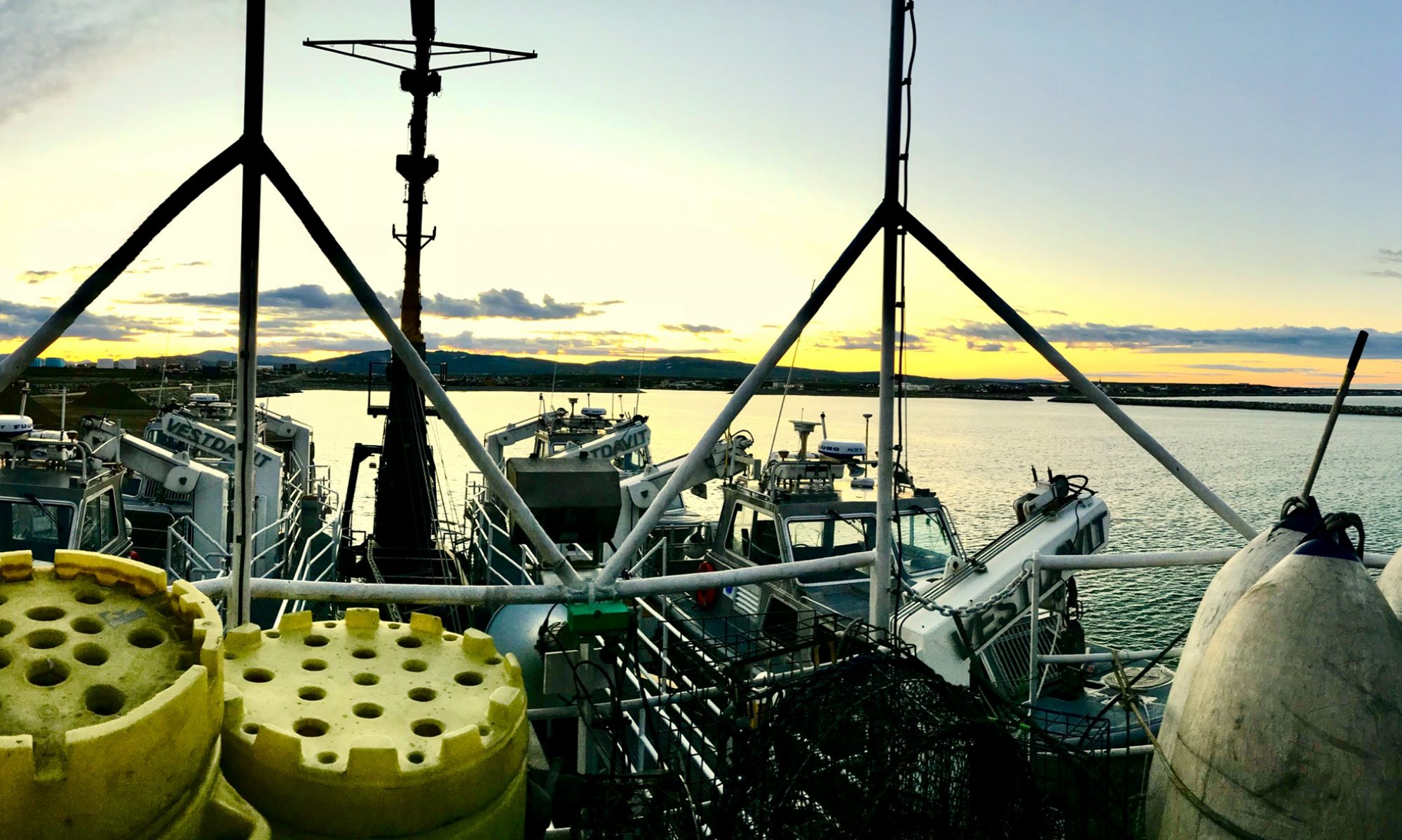
Charlotte Sutton: Learning the Lasker, June 11, 2024

NOAA Teacher at Sea

Charlotte Sutton

Aboard NOAA Ship Reuben Lasker

June 7 – June 18, 2024

Mission: Rockfish Recruitment and Ecosystem Assessment Survey (RREAS)

Geographic Area of Cruise: Pacific Ocean; U.S. West Coast

Date: June 11th, 2024 

Weather Data from the Bridge

Date: Tuesday, June 11, 2024
Latitude: 35.42 °N
Longitude: 121.22 °W
Sea Wave Height: 4-5 ft
Wind Speed: 4 knots
Air Temperature: 57 ° F
Sky: Foggy / light rain

Science Log

Arriving on the Lasker

We’re off! After landing in San Francisco and driving down to Santa Cruz, I arrived on the NOAA Ship Reuben Lasker by way of small boat transfer. The Lasker was anchored in Monterey Bay, and sent a small boat to pick up myself and some of the science team and crew to be taken aboard. We boarded the small boat, the “RL-2 Shark,” then traveled to the side of the Lasker where we were hoisted up via a winch. I then got a full tour around the ship, and the opportunity to meet many people who work on the Lasker, including members of the science team, NOAA Corps, and Lasker crew.

The Night Shift

Running a ship like the Lasker is a 24-hour-a-day operation. At all times there are some groups of people sleeping and others who are working. The majority of the science crew works at night, so my day typically begins with dinner at 5:00 pm and then working with the science team from approximately 9:30 pm until 6:30 am. As a morning person this was very difficult at first! But after two nights working, I’m finally adjusting to our new schedule.

What is the Goal of the Survey?

The main scientific focus of the upcoming mission is the Rockfish Recruitment and Ecosystem Assessment Survey (RREAS). This survey has been conducted since 1983, and collects data on rockfish and other organisms in their ecosystem.

Rockfish are a very important fish commercially and recreationally in California and on the West Coast. One of the primary purposes of the survey is to use the data collected to help provide additional information about the management of commercial and recreational fisheries off the west coast. 

CTD Operations

On the ship's deck at night, a man stands facing away from the camera, looking down a large apparatus nearly the height of his shoulder. Inside a round metal frame are gray cannisters arranged in a circle (the "rosette"), surrounding a scientific probe mounted in the center. A cable extends from the top of the appartus out of sight. The man wears a hard hat, a life vest, and sunglasses and grasps a gray rope looped through a rung of the rosette. Another man, also wearing life vest and hard hat, is seen at a distance beyond the apparatus. It's nighttime.
CTD rosette, ready to be deployed into the ocean.

I began my first night shift by observing a CTD deployment. CTDs are instruments that measure Conductivity, Temperature and Depth (CTD). CTD measurements are conducted approximately 5-6 times a day, and twice at night. The CTD descends down into the ocean to a depth of up to 500 m . There are other instruments and sensors attached to the CTD that measure things like chlorophyll levels and oxygen levels. The data taken from the water column serves as a foundation for scientists to understand the ocean environment.

All of the CTD data, and all the data that the Lasker collects, is free and available to the public.

Trawling

a hand-drawn diagram of a trawl net in two positions: net while fishing (on top) and net deployment and retrieval (bottom.) The lines are all labeled: we see the headrope (with buoys) at the top of the net, the footrope (small buoys) at the base of the opening, the bridle lines, door leg and transfer lines, the doors, and lines "to trawl winch" and net "to cod end."
Hand-drawn diagram of trawl net, courtesy of scientist Tanya Rogers.

When do we trawl?

The reason the science team trawls at night because there is net avoidance during the daytime, meaning the fish will see the net coming during the day and swim away from it. Other creatures migrate towards the surface at night. In a pattern called vertical migration, these mesopelagic species migrate to shallow waters to feed during the night, while spending day hours at depth.

Having more diverse species to study is useful for the Rockfish Recruitment and Ecosystem Assessment Survey (RREAS). The more data that is collected on rockfish and other species helps scientists to better understand the heath of different fish species, and make predictions and assessments of ocean trends.

How does trawling work?

Each night, the Lasker crew, NOAA corps officers, and science team work together to trawl for different fish species.

Trawls, which are nets towed behind a boat to collect organisms, have been used by fishers for centuries. Trawls can be divided into three categories based on where they sample the water column: surface, midwater, and bottom.” (NOAA Ocean Exploration)

In our Rockfish Recruitment and Ecosystem Assessment Survey, the science team conducts midwater trawls, at approximately 30m depth to target the fish and other ocean organisms that are targeted for the study.

The last few days we’ve averaged 5 trawls per night. The process begins by deploying the trawling net behind the ship into the midwater section of the water column, and trawling for fish for either 5 or 15 min. After the net is brought in, the contents of the trawl are sorted, measured, and recorded by the science team. This data will be later analyzed to help better understand the ocean ecosystem.

Charlotte stands at a large white bin, about three feet long, containing a pile of small silver-colored fish. She uses two hands to hold up a plastic pitcher filled with a sample of the fish - two other empty pitches rest in the bin. Charlotte wears a coat, orange grundens (fishing overalls), long orange gloves, and her Teacher at Sea beanie hat.
Teacher at Sea Charlotte with the catch of a trawl.
Six people stand three to a side along a long metal table and face the camera for a photo. They are wearing heavy fishing overalls and long orange gloves, and each grasps a pair of tweezers in one hand. On the metal table, white plastic trays contain subsets of the catch; in the foregroud, two of these plastic trays contain organisms that have already been sorted and neatly arranged.
The science team sort fish and other organisms from the trawl.

Personal Log

NOAA Ship Reuben Lasker: My New Home at Sea

starboard view of NOAA Ship Reuben Lasker underway. Prominent on the hull we see the NOAA logo, the word NOAA, and the ship's number, R 228.
NOAA Ship Reuben Lasker (photo courtesy of NOAA)

My new home for my time at sea is the NOAA Ship Reuben Lasker. The Lasker is a NOAA fisheries vessel, with a home port located in San Diego, CA.

The ship’s primary objective is to support fish, marine mammal, seabird and turtle surveys off the U.S. West Coast and in the eastern tropical Pacific Ocean” (NOAA Office of Marine and Aviation Operations).

During my time at sea, the Lasker will be sailing off the coast of California, sailing out of Santa Cruz and back into port in San Diego.

Living on the ship reminds me a lot of my college dorm room. On the ship most people have roommates, and we all have shared spaces like the mess (cafeteria), science labs, outside decks and places to relax. Everyone aboard the ship has been extremely welcoming and kind, always answering any questions I might have and teaching me about life aboard a ship. I am happy to call the Lasker home over my trip at sea!

a bulletin board housed in a case with sliding glass doors, titled OUR CREW. The background of the display is a nautical chart of the California coast around the Channel Islands, though it is mostly obscured. Photos of the crew members are cut out and pinned all over the chart. There's also a magazine article about Reuben Lasker, the ship's namesake.
There are three major teams working and living as a cohesive unit aboard the Lasker. The Reuben Lasker crew, NOAA science team, and NOAA Corps officers each have distinct roles and work together each day to accomplish various science projects.
view of a sunset over a calm sea
Sunset aboard the Lasker.

Did you know?

Adjusting to working the night shift (approximately 9:00 pm – 7:00 am) as a typical morning person has meant sleep is often on my mind. Chatting before our second night shift, scientist Ily Iglesias shared with me how dolphins sleep. Both dolphins and whales sleep much differently than most mammals. Known as unihemispheric sleep, dolphins

“only rest half of their brain while the other half stays awake to breathe. Also, most whale and dolphin respiratory and digestive tracts are completely separate, so they don’t get water in their lungs when feeding underwater.” (NOAA Fisheries).

Jacqueline Omania: Introduction, June 11, 2024

NOAA Teacher at Sea

Jacqueline Omania

Aboard NOAA Ship Thomas Jefferson

June 17 – June 28, 2024

Mission: Hydrographic Survey of the Northern Gulf of Mexico

Geographic Area: Galveston, Texas

Date: June 8, 2024

Weather Data from the “Bridge” (My Deck): 

Latitude: 37.8715 º N”
Longitude: 122.2730 º W 
65º Fahrenheit
Wind: 11 kn, Wind direction: SW
Air pressure: 1011 hPa
Humidity: 70%, Sunny 
Rainfall: 0 mm

Introduction

Hello! My name is Jacqueline Omania and I am preparing to join a hydrographic project on NOAA Ship Thomas Jefferson originating out of Galveston, Texas on June 17th.

I am a fifth grade teacher at Oxford Elementary School in Berkeley, California. This coming year will be my 20th year teaching. I have a masters degree in Environmental Education and teach with a strong emphasis on outdoor education in my curriculum. Prior to being in the classroom, I founded the first school Farm and Garden Program in our district. Now, every school in our district has a school garden program staffed by a garden teacher. I am known at school as the teacher who takes her students on the most field trips; we go sailing, cycling, hiking, climbing, camping and dragon boating. Since my students do not all have the same access to outdoor experiences, I believe it is essential to experience the natural world as part of school. My  goal is for students to fall in love with nature and, thus, be inspired to work together to protect it.

A group of 18-20 students sit, stand, and jump on a hillside by the ocean at sunset. The students are facing away from the camera. Most are mid-leap, with their hands in the air. They cast long shadows on the grass at this time of day.
Pacific Coast, NorCal / Photo credit: Jacqueline Omania

One special feature of my class is our success as a Zero Waste Classroom. For most of the last 9 years, we have made less than a quart of landfill waste for the entire school year. I weave a theme of sustainability into all the academic content areas all year. My students learn to be activists and to use their studies to make a difference. Recently (after 3 years of activism) my students have successfully persuaded our school district to switch from throwaway paper and plastic foodware to reusable foodware for school meals.

Landfill Waste for the ‘23-’24 School Year  Photo credit: Jacqueline Omania;
student photos courtesy of Oxford Elementary

Outside of teaching in the classroom, I run a local chapter of a youth group called Heirs to Our Ocean through which I continue to mentor my former elementary students in their middle and high school years. Currently, I have two students on our city’s Climate Commission, occupying the first-ever youth seats.

In my free time, I am learning sailing (started in 2022)—both locally in the San Francisco Bay and in the Caribbean, where I have roots. I am also fascinated by Polynesian wayfinding and the journey of Hokulea (a Polynesian double-hulled voyaging canoe which is circumnavigating the Earth to raise awareness of the importance of the ocean) and have been eagerly reading to learn more. I will definitely be working on knots and the star compass while at sea. Besides sailing, I love to be outdoors and enjoy long walks, gardening and trips to local beaches. I have two grown children—Mehrnush (PhD student in Geography at UCLA) and Farhad (working in a restaurant and reflecting on his next steps); I enjoy being a mother of grown children. 

Caribbean Sea/ Photo credit: Jacqueline Omania;
Hokulea photo Polynesian Voyaging Society
Farhad and Mehrnush

Personal Log:  Why am I doing this?

I love being at sea. I was fortunate to spend 100 days on Semester at Sea in my second year of college, sailing on the SS Universe from Seattle, Washington around the world to return to Ft. Lauderdale, Florida. This experience gave me a strong experience in shipboard life, a deep respect for the ocean and a glimpse at many diverse cultures around the world. I continue to love exploration and marine science and work to weave ocean literacy into my classroom curriculum to cultivate students who will be inspired to learn more and care to protect our ocean.

I am excited to be selected for the Teacher at Sea program and have the opportunity to assist with hydrographic research, as well as learn about marine science careers.  I can’t wait to share all that I learn with my students. They will be interested in how hydrographic surveys work, since we already study charts of the SF Bay. They will also be interested in jobs at sea since many absolutely love our class sail on the Pegasus and want to know more about ways to be at sea. Thank you to NOAA for giving me this opportunity to experience work in marine science in the Gulf of Mexico. This part of the world is new to me and I am very curious about what wildlife I will see.

 Science and Technology Log

NOAA Ship Thomas Jefferson is a 208 ft. long hydrographic survey ship that maps the ocean floor to help maritime commerce, to preserve the coastline and to better understand the marine environment. It uses side scan sonar to create images of the seafloor that help locate marine hazards as well as multibeam echo sounders to find accurate depths and create detailed images of the sea floor. The ship became part of the NOAA fleet in 2003 and was named after President Thomas Jefferson because he created the Survey of the Coast in 1807. NOAA Ship Thomas Jefferson has also responded after hurricanes—as well as after other catastrophic events like the Deep Horizon oil spill—to determine when it is safe again for ships to travel.

NOAA Ship Thomas Jefferson, seen from the port side as it sails past the Statue of Liberty
NOAA Ship Thomas Jefferson. Photo courtesy of NOAA.

Please write if you have comments and questions and I’ll respond to you!

Ryan Johnson: Third Coast to the Gulf Coast, June 11, 2024

NOAA Teacher at Sea

Ryan Johnson

Aboard NOAA Ship Oregon II

June 18 – July 2, 2024

Mission: SEAMAP Summer Groundfish Survey

Geographic Area of Cruise: Gulf of Mexico

Date: June 11, 2024

Introduction

Hello! My name is Ryan Johnson, and I am a 7th and 8th grade science teacher at Jovita Idár Elementary School in Chicago, Illinois. You can find my teacher page HERE. I was born and raised in the Chicagoland area and now live on the far south side of the city with my lovely wife Kellan, two dogs Xena and Gare, cat Lucy Chef Meowly, and a variety of scaled friends that crawl, slither, and swim. In my free time I like to read, play video games, run, ride my bike, and swim (badly).  Science has been my favorite subject since I dissected my first owl pellet in 4th grade… which Kellan thinks is gross. I have been a teacher at Idár for 12 years and am excited to continue to grow and develop the young minds of the future!

View from a distance of a large, modern looking school, as seen across a bright green playing field. The sky is blue with wispy clouds.
Built in 2011, this shows the north side of Jovita Idár Elementary School as seen from our soccer field.

My passions as an educator lie in-and-around equity in STEM for underrepresented and historically marginalized communities, environmental education, climate science, food education, and urban education. This year, my students and I undertook a climate project: Seeds of Change Thrive in Concrete, a program that saw my students and school community grow (literally and figuratively) to new and exciting heights.

a title page featuring an image of a coneflower. The title, in fancy script, reads Jovita Idar Elementary School: Seeds of Change Thrive in Concrete. At top is a circular logo for Idar Elementary, Acero Schools, with an icon of a large cat, perhaps a jaguar, in the center.
Project logo for our 2024 Green Program: Seeds of Change Thrive in Concrete, featuring the purple coneflower, our keystone species.

We were FIRST PLACE Winners in Illinois Green School Project through the Illinois Green Alliance

Our project was GREEN FLAG Certified by the National Wildlife Foundation

We earned Ocean Guardian School Year 2 status by the National Oceanic and Atmospheric Association

We were Take Action Global certified as a Climate Action School & USA Blue School Certified

Some highlights from SY23-24 for the Jovita Idar Community

  • Composted over half-a-ton of fruits/vegetables and diverted the waste from landfills, off-setting over 800 driving miles and 40 gallons of gas! 
  • Reused 1,895 cutlery packages from breakfast, encouraging reuse above all else, or refuse if not needed!
  • Recycled over 454 POUNDS of plastic bags… that’s about 40,000 bags repurposed/reused for a second life!
  • Grew over 15 pounds of produce hydroponically/aquaponically for students and animals to eat – rethink our growing systems
  • Grew over 50 pounds of produce in traditional soil gardens 
  • Collected and properly disposed of over 100 pounds of garbage from our school grounds to properly dispose of or recycle.
  • Raised chickens and over dozen quail from egg to adulthood and harvested hundreds of eggs
  • Raised over $2,000 (and counting) to devote directly back into environmental projects: 25% raised by students, 25% raised by families!
  • Completed a waste audit with our partners from Arup Chicago and the Illinois Green School Project – Took first in state for the IL GSP
  • Featured in the Daily Herald, Acero Food Newsletter, Illinois Green Alliance, Ocean Guardian School Newsletter, TAG Climate Action Spotlight, USA Blue Schools, and more!
  • Supported by Pilot Light Chicago, Camp Eco.Logic, Morton Arboretum, Shedd Aquarium, Museum of Science and Industry, Project NEED, Illinois Green Alliance, Urban Canopy, Take Action Global, National Marine Sanctuaries, NOAA, Arup, Chicago Public Libraries, NSTA, The Hydroponic Venture Project, and the Peggy Notebaert Nature Museum.
  • Created dozens and dozens of individual, group, and class art projects to support sustainability, environmentalism, and the importance of all this work (pollinators, junk robots, trash-trees, conserving wildlife, recycling, and SO MUCH MORE).
Elementary school children observe a hydroponics set up inside a building
First Graders at Idár observing some of the hydroponic and aquaponic growing systems in SY23-24. Photo courtesy of Jovita Idár Elementary.

I am honored and excited to participate in this year’s NOAA Teacher at Sea program, particularly the groundfish study in the Gulf of Mexico. This incredible opportunity holds immense potential for both personal and professional growth, and I am eager to embark on this journey. As a middle school science teacher, this experience will enrich my teaching practice and provide my students with a deeper understanding of marine ecosystems and environmental science.

an indoor hydroponics set up. shelving contains growing green plants; a nearby table also houses an aquaponics set up with a fish tank, connected by small hoses to other containers of plants
One of the ‘Hydroponic Hallways’ at Idár. This dynamic system acted as an authentic learning experience for teachers, students, and families that changed quarterly.

The NOAA Teacher at Sea program is a prestigious initiative that bridges the gap between scientists and educators, fostering a deeper understanding of marine research and its implications for our planet. Participating in the groundfish study will allow me to gain firsthand knowledge of marine ecosystems, the species that inhabit them, and the critical work being done to monitor and sustain fish populations. This hands-on experience is invaluable for educators, as it provides a unique perspective that can be directly applied to classroom teaching.

Groundfish, which include famous species like cod, flounder, and halibut (unlikely to catch any on this trip! We’re more likely to catch red snapper, blue crabs, and lizardfish) play a vital role in marine ecosystems and are also economically significant. Understanding their populations, behaviors, and habitats is crucial for maintaining healthy ocean environments and sustainable fisheries. By participating in this study, I will be able to observe and contribute to the scientific methods used to collect data on these species, such as measuring, tagging, and monitoring individual species and their habitats. This practical knowledge will enhance my ability to teach my students about marine biology, ecology, and the importance of sustainable practices.

students sit around tables in a science classroom tasting leafy greens on paper plates
Third graders trying new produce during a winter harvest at Idár. One goal this year was that every student K-8 tried at least one new fruit and/or vegetable for the first time. Photo courtesy of Jovita Idár Elementary.

One of the most exciting aspects of this program is the opportunity to bring real-world science into the classroom. My students are already engaged in innovative projects like organic gardening, hydroponics, and aquaponics, where they learn about plant growth, ecosystems, and sustainability. I partnered with the Morton Arboretum this year in a trip to Costa Rica that has proved invaluable to me and my students, and I hope the NOAA TAS program will be similarly impactful. The groundfish study will allow me to expand our curriculum to include marine ecosystems, providing a broader understanding of biodiversity and environmental stewardship. I plan to incorporate lessons on the different species of groundfish, their roles in the ecosystem, and the methods used to study and protect them. This will not only enhance my students’ scientific knowledge but also inspire them to consider careers in marine biology and environmental science. By bringing my experiences into the classroom and school community, I hope to foster a greater appreciation for science and its impact on our world. This will also provide an opportunity for interdisciplinary learning, as we can integrate these experiences into subjects like geography, social studies, and art.

a line of four receptables, two of them clearly marked with the recycling symbol. small signs on the wall above indicate recycling for aluminum, paper, plastic. Also on the all hang two wooden signs. The first has paintings of sea creatures surrounded by trash; it reads: From the Mountains to the Sea, Recycling Matters No Matter Where You Are. The second has only words, and reads: Nuestra mision - Producir, conservar y educar contribuyendo a perpetuar la vida en la tierra. Union Varsan de Monteverde.
A bilingual recycling station used to emphasize the importance of proper waste disposal, recycling, composting, and the links between land and sea.

Environmental education is a critical component of my teaching philosophy, and the NOAA Teacher at Sea program aligns perfectly with this goal. Our school community is already engaged in various sustainability projects, such as composting organic waste, circular growing of produce, and reducing single-use plastics. The groundfish study will provide additional context and examples of how we can protect and sustain our natural resources. I plan to create a series of lessons and activities that connect our local environmental efforts with the larger global context of marine conservation. This will help my students understand the interconnectedness of ecosystems and the importance of taking action to protect our planet.

groups of students stand around tables in a classroom. Each group circles around a cardboard box as one student drill holes with an electric drill. Around the table we see Popsicle sticks, scissors, and worksheets.
Students building tools to use when planting and/or harvesting crops. Photo courtesy of Jovita Idár Elementary.

Moreover, the skills and knowledge gained from this experience will contribute to my growth as an educator and leader. I am currently participating in a school leadership initiative with the Museum of Science and Industry, and the NOAA Teacher at Sea program will further enhance my leadership capabilities. By integrating my experiences into our school’s professional development programs, I can help other teachers incorporate environmental education into their curriculum. This will create a ripple effect, where more students across our school and district will benefit from enhanced science education and develop a greater appreciation for the environment.

a group of students in a classroom. tables are covered in orange paper and filled with trash to sort. students are wearing thin plastic gloves.
Students performing a waste audit. They collected food waste from three lunch periods, sorted it, weighed it, and the used the collected data to make plans for the future about how to improve waste processing. Photo courtesy of Jovita Idár Elementary.

Again, I am honored and excited to participate in this year’s NOAA Teacher at Sea program and the groundfish study in the Gulf of Mexico. This experience will provide invaluable knowledge and insights that will enhance my teaching practice, inspire my students, and contribute to a more scientifically literate and environmentally conscious school community. By bringing real-world science into the classroom, sharing my experiences with the broader community, and continuing to develop as an educator, I hope to make a lasting impact on my students and the environment. This opportunity represents a significant step towards achieving my goals as a teacher and environmental advocate, and I am eager to embark on this transformative journey.

an illustrated graphic titled FOOD JUSTICE FOR ALL: Empowering Communities Through Quality Food Education, with Paul Floyd and Ryan Johnson. From top left: Nutrition Education: What do we need to know? - We are what we eat. - Mental health and food. - Microbiome. Pilot Light Porgram and Standards. - Chicago Based Non-profit. - Training for teachers and students. Food Connects us to Each Other. What do we learn? - Seasonality of food. - Food analysis. - Ingredients/ratios. Making informed decisions. Results: - understanding food. - learning food behaviors. - knowledge and action. Food Memoir. Climate justice and food justice are social issues! Chicago Food Policy Action Council. Big growth in small spaces. - Relevant community actions. - Creativity and storytelling. G.R.O.W.T.H.S. (Gardening,Reflection, Organizing, and Wondering Through Hydroponics and Sustainability) - Gardening - Raising animals - Composting. - Environmental Awareness, Responsibility. The Marker Point. Jovita Idar Elementary School (Ocean Guardian School.) Health Centered Approach.
Students and staff participated in the Chicago Food Justice Summit emphasizing food education in schools.
Students seen from a distance on a green field. Some are working on or near raised gardne boxes. Others are standing at the side. There are potted plants, an electric lawnmower, other equipment that is difficult to discern at this view. It's a bright day, with some clouds over a blue sky.
Students, families, and staff from Idár and our sister high school working to expand our school garden. Photo courtesy of Jovita Idár Elementary.

Charlotte Sutton: Introduction, June 7, 2024

NOAA Teacher at Sea
Charlotte Sutton
Aboard NOAA Ship Reuben Lasker
June 7 – June 18, 2024

Mission: Rockfish Recruitment and Ecosystem Assessment Survey (RREAS)

Geographic Area of Cruise: Pacific Ocean; U.S. West Coast

Date: June 6th, 2024 

Weather Data (Santa Cruz)

Date: 06/06/2024
Time: 08:00
Latitude: 36.98°N
Temperature: 60°F
Longitude: 122.01°W

Introduction

Hello! My name is Charlotte Sutton and I am thrilled to be a Teacher at Sea for the 2024 Season. I have been teaching for 5 years, and currently teach preschool at Orion Elementary at Joint Base Elmendorf Richardson (JBER), Alaska. It is truly my passion to teach our littlest learners, and to help them grow and learn each day. Teaching in Alaska, students are surrounded by nature and wildlife. JBER is located near both the Knik Arm (Dena’ina: Nuti) and the Turnagain Arm (Dena’ina: Tutl’uh) waterways that are part of the northwestern Gulf of Alaska, as well as many mountain ranges and forests. My students are very curious about the world around them, and often tell me about the fish (especially salmon), beluga whales, moose, and bears that they see around the Anchorage area. In my classroom, I love to help students investigate the world around them by explicitly teaching and practicing the foundations of the scientific inquiry process to help them to become resilient problem solvers not just in preschool but in the years ahead.

I plan to use my experience as a NOAA Teacher at Sea to educate and inform students about the world’s oceans not just in my own classroom but throughout my community on JBER.

Photos: Charlotte Sutton; A mother and juvenile moose outside Orion Elementary in JBER, Alaska; View of the Turnagain Arm waterway, Alaska, taken from Bird Point Trail

Science and Technology Log

This week I will be aboard the NOAA Vessel Reuben Lasker as a NOAA Teacher at Sea. The Reuben Lasker is a fisheries survey vessel, meaning the primary mission to “support fish, marine mammal, seabird and turtle surveys off the U.S. West Coast and in the eastern tropical Pacific Ocean”. The main scientific focus of the upcoming mission is the Rockfish Recruitment and Ecosystem Assessment Survey (RREAS). This survey has been conducted since 1983, and the data collected on rockfish and other fish like salmon helps scientists to better understand the heath of different fish species, and make predictions and assessments of ocean trends.

When I arrived in Santa Cruz, I had the opportunity to meet with NOAA Corps Officer LTJG Bonnie Vierra, who gave me a tour around Southwest Fisheries Science Center Santa Cruz Lab. This lab is where NOAA scientists and their team conduct research and operations when not at sea. This lab hosts an array of scientists who conduct various projects. I’m excited to join the NOAA crew aboard the Lasker soon!

A partial whale skeleton (lacking skull and perhaps pectoral fin bones) mounted on metal posts at a cliffside. Coastal plants cover most of the sand surrounding the display, but a picnic bench is visible in a clearing to the right. Beyond the vegetation, the gray ocean blends into the cloudy white-gray sky, creating a notable contrast with the brown whale bones.
Photo: Partial Whale Skeleton outside of the Southwest Fisheries Science Center Santa Cruz Lab

Photos: Small NOAA vessels, research lab, and salmon tank at the Southwest Fisheries Science Center Santa Cruz Lab

Photos: Art found at the Southwest Fisheries Science Center Santa Cruz Lab

Personal Log

Before I left for my Teacher at Sea trip, I received a last minute invitation to the National Marine Sanctuary Foundation Ocean Awards Gala. The National Marine Sanctuary Foundation’s mission is “The Foundation is a leading voice for U.S. protected waters, working with communities to conserve and expand those special places for a healthy ocean, coasts, and Great Lakes. Working together, we safeguard species and the places they call home, and preserve America’s maritime history.” The foundation supports the NOAA mission as the official nonprofit partner to NOAA’s National Marine Sanctuary System.

I happened to sit at the same table as Rear Admiral (RADM) Chad Cary. RADM Cary is currently deputy director for operations, NOAA Office of Marine and Aviation Operations (OMAO), and deputy director, NOAA Commissioned Officer Corps (NOAA Corps). He also was a previous Commanding Officer (CO) of the NOAA Ship Reuben Lasker which I’ll be sailing on in just a few days! He had so many wonderful things to say about both the science research team and the officers and crew of the Lasker. RADM Cary is also originally from Alaska, and I was so fortunate to get to speak with him before my upcoming time at sea aboard the Lasker.

I am so excited for the journey ahead!

Photos: Charlotte Sutton; National Marine Sanctuary Foundation Gala at Union Station in Washington D.C.; Charlotte Sutton and RADM Chad Cary