Jacob Tanenbaum, October 6, 2008

NOAA Teacher at Sea
Jacob Tanenbaum
Onboard NOAA Ship Henry Bigelow
October 5 – 16, 2008

Mission: Survey
Geographic Region: Northeast U.S.
Date: October 6, 2008

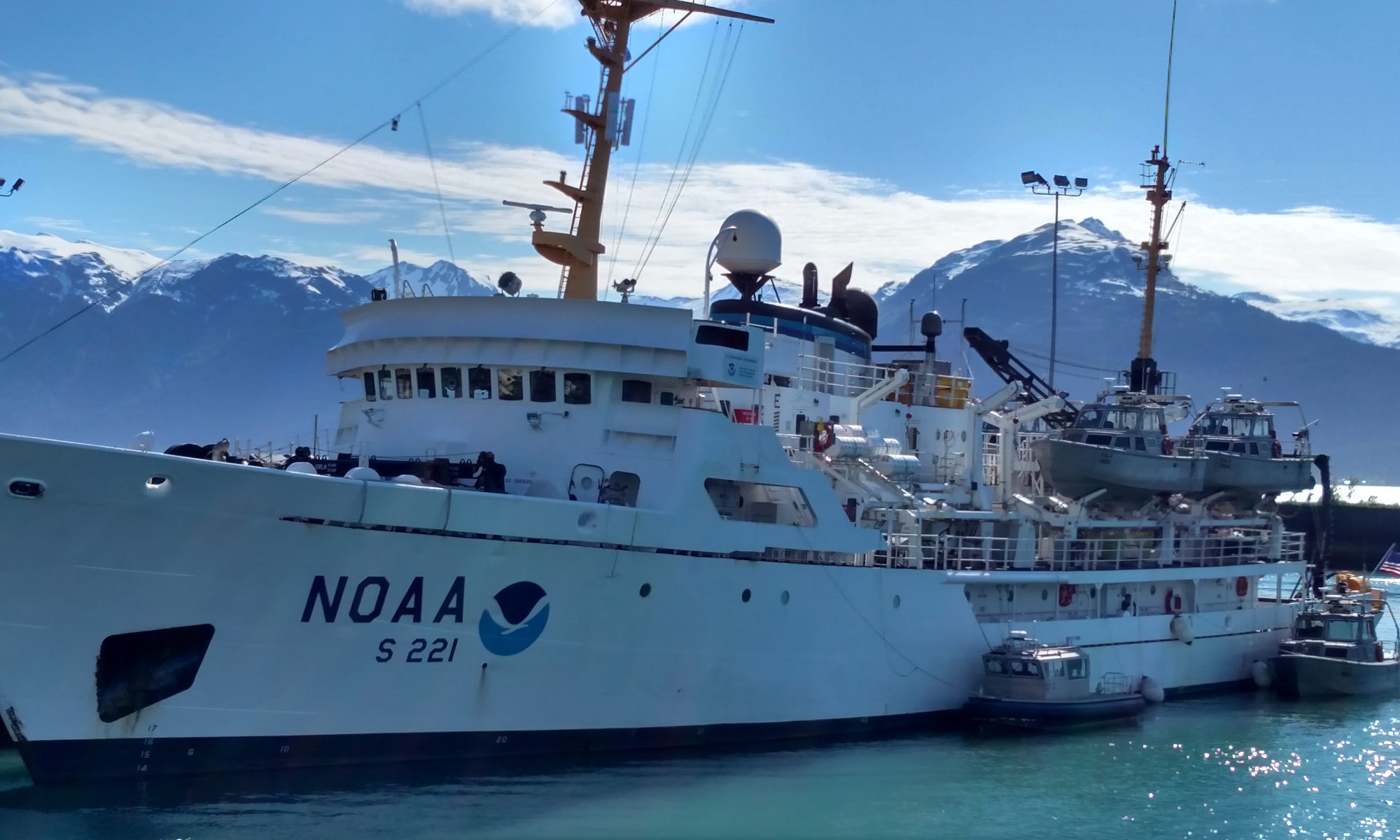
Now here is a view of the bridge of NOAA Ship HENRY B. BIGELOW.

Science Log

I made it to Newport and am writing from the ship. It was an interesting trip, can you find Newport, RI, on the map?

Remember its’ Columbus Day next Monday and we are going to spend some time on this cruise comparing this ship to the one Columbus was on. I stopped off to see an old Square Rigger Sailing Ship run by the Coast Guard. It is called the Eagle and it is based in New London, Connecticut. Here is what the bridge of the Eagle looks like.

How do the crew of the Eagle know where they are? They use the sun and the stars. In fact, it is the only Coast Guard Base where Celestial Navigation is still taught. Here a friendly Coast Guard Officer, Lieutenant Lally, shows us how to use a sextant. See the tables below? He needs those to convert his sextant sighting to a latitude.

Masts of the ship
Masts of the ship

Thanks to Lieutenant Lally and to the entire crew of the Eagle for their hospitality. Fourth graders tomorrow should work in pairs and post 4 ways the Eagle and the Bigelow are the same and 4 ways they are different to the blog. Then you can work on the navigation part of this website. Don’t miss the simulation of the tool you just saw demonstrated.

Newport is also famous for mansions an beautiful sea coast. Here are a few photos of the mansions. Thank you to Harle Tinney and her wonderful staff at Belcourt Castle for letting me take photos of the inside for you. She told me something else about the Castle. The weather vane at the top of the castle was marked on the maps sea captains used back in the old-days. From that weather vane, they could calculate their position and avoid crashing on the rocks nearby.

See you tomorrow.

~~~~~~~~~~~

Navigation instrument

Response to your questions and comments: Thanks to all for your good wishes. MAB – I will tell you all about what we catch. OG, we are not permitted on deck while work is going on unless we have a life jacket. Everyone here cares about safety. CB, the ship holds about 36 people. I’m not sure how many are sailing on this cruise. About half the crew are scientists. Several of you asked how long I would be gone for. I’ll be gone for about two weeks. We come back on the 17th of October. Many of you suggested I bring warm clothes. Yes I did. I brought just one suitcase (there is not a lot of room on a ship for extra stuff), but it is full of clothes. I brought lots of layers as well.

Hello to Miss. William’s Class: I am very excited to be going to sea again. I love it. I’ll be back in two weeks, but while I’m away, I’ll tell you all about what we catch and what we do while I am out.

Oh, and to everyone who asked, If I get sick, I’ll tell you that too! I promise! Thanks for writing.

J from TZE, I’ll show you about the cups in a few days. We are going to do an experiment with them. Keep watching!!

MH you asked a lot of great questions. Thanks for writing. I’ll try to answer all of them over the next few days. As for where I’ve been. Well, I spent the last two voyages in Alaska, so this will be very different. And much warmer.

Oh, and I did bring a few things to read. Most of them are on my computer to save space. There are a few books.

Keep watching the blog and keep writing! I’ll respond to your comments as best I can either personally or in the text of the blog now and in the days ahead. Remember, students should just use their initials when commenting.

Jacob Tanenbaum, October 5, 2008

NOAA Teacher at Sea
Jacob Tanenbaum
Onboard NOAA Ship Henry Bigelow
October 5 – 16, 2008

Mission: Survey
Geographic Region: Northeast U.S.
Date: October 5, 2008

The mascots
The mascots

Science Log

I am packed and ready. Here is a photo of Zee, our High School Mascot and Snuggy on their way to Newport to meet the ship. Monday, I will leave early in the morning and will post a blog entry from Newport, Rhode Island before we leave on Tuesday.

Next to Zee are the styrofoam cups our 4th graders and 1st graders made for an experiment. Some of our 4th graders also decorated my hardhat. It looks great! Thanks for helping keep me safe and in style while I work on deck, and thanks for all your comments and suggestions. You really helped me remember what to bring!

Styrofoam cups ready for the depths

Jacob Tanenbaum, Kodiak, Alaska, May 28, 2007

NOAA Teacher At Sea: Jacob Tanenbaum
NOAA Ship MILLER FREEMAN
Mission: Fisheries Oceanography Coordinated Investigations
Day 10: May 28, 2007

IMG_8737-793551

Last night we stopped survey operations and sailed for the Coast Guard Station in Kodiak, Alaska. We went through a part of the island called Whale Pass.

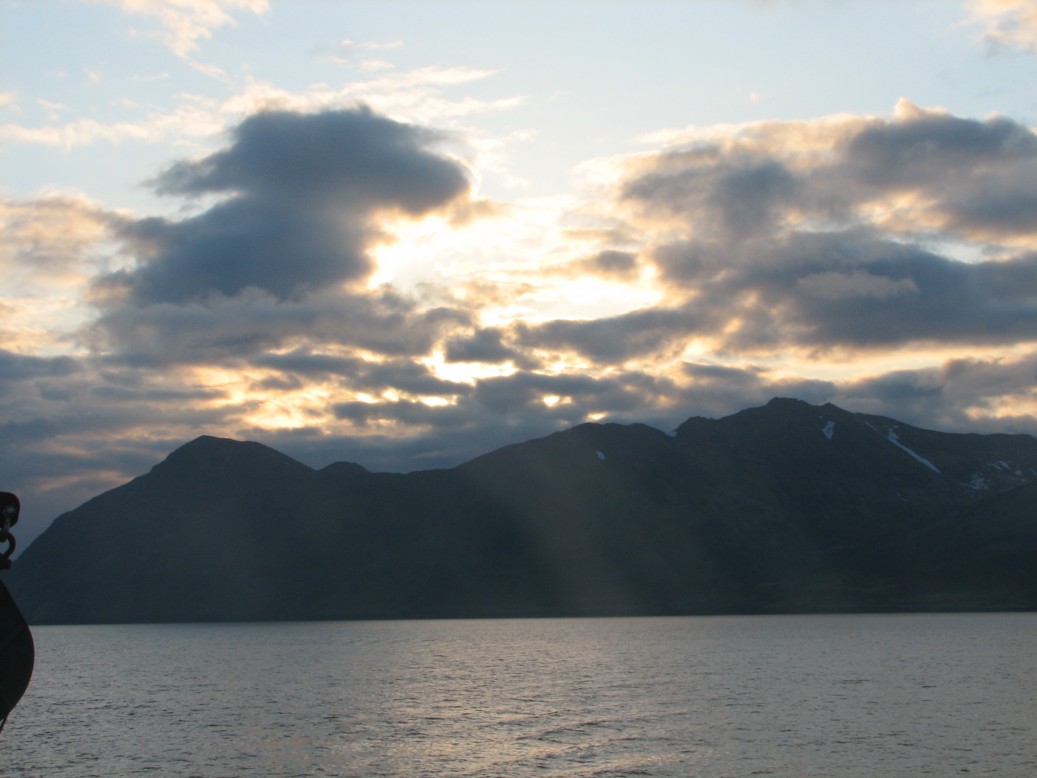
We saw whales blowing in the distance, sea otters drifting with the tide and a spectacular Alaska sunset that seemed to go on forever.

IMG_8695-790625

We pulled into port and found another NOAA Ship, called the Fairweather. They were on the pier right next to us. Lieutenant Sean set me up with a tour. Imet ENS Matthew Glazewski who took time from a busy morning to give me a tour. What an amazing ship! They do work mapping the bottom of the sea with allkinds of interesting sonar equipment. I as glad I had a chance to go on board.

This morning, I said some sad goodbyes to the crew on the FREEMAN and left the ship along with the science crew. The scientists departed by plane forSeattle while NOAA Ship MILLER FREEMAN prepared to leave later in the afternoon for a transit south. The crew are leaving for warmer waters off the west coast of the USA. They will spend a few days in transit, a few in port and then pick up more scientists for studies along the west coast of the USA. The crew have had a long spring in the cold Bering Sea and Gulf of Alaska. I think they all will be grateful for some bright sunny warm days. I wish them pleasant journeys and thank each and every one of them for all their support and hospitality and for a wonderful 10 days.

IMG_8939-721133Today I had a day on Kodiak Island while I wait for my flight out tomorrow. What an amazing day. I tried to rent a car in the airport and was unsuccessful.

I was sad at first, and then set out to make the best of it by exploring on foot. I started with some lunch. What a treat! For Memorial Day, Kodiak had something called a Crab Festival. There were rides, treats, and of course, Alaska King Crab. Take a look a lunch today!

I next set off on a long hike through the areas near the town of Kodiak. Lieutenant Sean had given me a list and guide to the town, and using that, I visited the harbors near town, and then a park just outside of town where I was able to hike through spruce trees covered with moss, and then find isolated beaches full of birds, including eagles.

IMG_9025-795884
Squirrel
IMG_9082-798379
Eagle

IMG_8964-752672

IMG_8991-730876

Next, I decided to hike to the top of a mountain overlooking Kodiak, again, following Lieutenant Sean’s recommendation. I found myself on top of a peak overlooking one of the most beautiful views I have seen on the trip so far. In fact, I took almost 500 photos today and had a very hard time selecting what to show you on the blog. I’ll put more on the gallery when I get back to New York, so you can see more soon.

IMG_9119-724271 IMG_9129-750746

On the way down, the weather started to grow cold. Suddenly the clouds opened up and rain began pouring down. I still had miles to go to get back to town and shelter. And I thought they called this DRY land! Fortunately, I was “rescued” by the Kelly family, who were driving down the gravel road I was walking along. They offered me a ride and then asked if I would like to join them for dinner. When we got to their beautiful house in Kodiak, we found that one of their friends had left a treat for us. Fresh red salmon, caught just down the road. What a feast!

I was also amazed when they brought fresh vegetables out to make salad. I found out that the vegetables are brought to the island by barge from the west coast. We had a great time learning about each other’s home towns. Thank you to the Kellys, and thank you to everyone who made this such a spectacular voyage.

Tomorrow I’ll be traveling, but will check the blog on Wednesday when I get back into the New York area, so please write comments. I’ll see you all in school soon.

If you could travel anywhere you wanted to, where would you decide to go? Why?

Jacob Tanenbaum, Final Day of the Survey, May 27, 2007

NOAA Teacher At Sea: Jacob Tanenbaum
NOAA Ship MILLER FREEMAN
Mission: Fisheries Oceanography Coordinated Investigations
Day 9: May 27, 2007
IMG_8653-709575
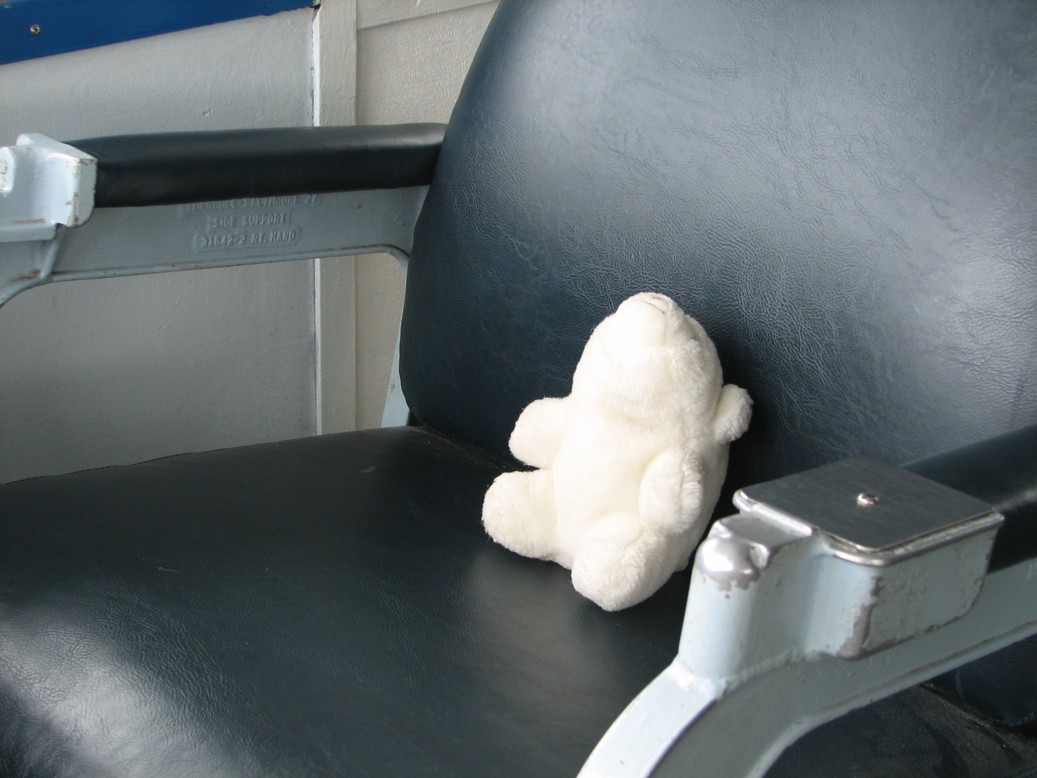
Snuggy in the captain’s chair
Weather Data from the Bridge:
Visibility: 10 Miles
Wind Speed: 20 Kts.Sea Wave Height: 2
Water Temperature: 4.7 Degrees Celsius
Air Temperature: 6 Degrees Celsius
Pressure: 1010.7 MbsPersonal Log

We reach Kodiak in the morning. I am excited to be seeing Kodiak, but sad to be leaving the ship. It has been a wonderful 10 days at sea. Please check back
tomorrow. I should be able to do a blog entry from the hotel in Kodiak and I can show you this incredible island. My heartfelt thanks to everyone on the
ship who gave me such a wonderful welcome and who gave such support to this project.

Here are a few last photos from around the ship: Snuggy in the Captains chair and Snuggy at the wheel of the ship.

Snuggy steering the ship

Science Log:

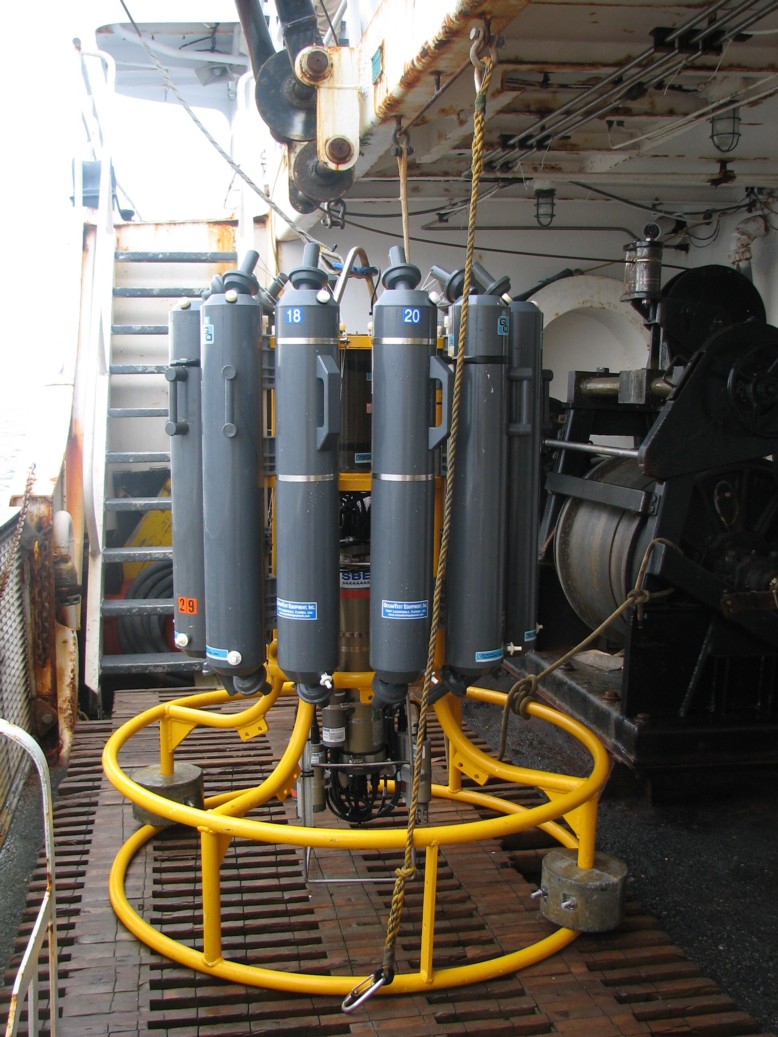
Today was an important part of the cruise. On section, in addition to thebongo nets, we also deployed an instrument called a CTD array. This array allows the scientists to sample water at different depths. This is very importantin oceanography because the water lower down is very different from thewater higher up in the water column. The chemistry changes as you go down, the temperature changes and the creatures living at each depth may be different from the creatures above or below. Want to learn more about this important research? Click here for a video. We also stopped to have some fun with the CTD.

CTD
CTD


We attached someStyrofoam cups to the array and watched what happens when the pressure at depth presses in on them. Click here for a video.

IMG_8648-703079
Presurized Styrofoam cup


We are coming to the end of the cruise now. We deployed the bongos 125 times and have done 8 CTD’s, and released one drifter buoy. The scientists had
wanted to do more. They had planed 169 bongo deployments, but the bad weather forced us to change our plans. “That is the way things go out here,” says
Chief Scientist Annette Dougherty. Lets talk to her more about what we have learned so far on this cruise:

Tell us what you have learned so far:

On the standardized grid we have been doing, the numbers of Pollock are low, but spread out across the grid. The fish are also small. 4.5 to 6.5 mm. Which
is considerably smaller than last year.What does that mean?

It is a colder year and a very turbulent year, with a lot of storms, and what that can do is flush things out through the strait we are sailing in. The
fish may have spawned late. Or we could be catching the end of the hatching. It is hard to predict how many Pollock return as spawners if you can’t be out
here all the time.

So what does the survey tell us?

This is a colder year, and the growth rate has been slow. They are eating, so it does not mean they will not survive. There is a lot of stuff out there.

The study mainly tells us about the early life history. About what the fish goes through from hatch to spawning. The egg is the strongest stage these fish
have. After they hatch, they have a short time to use their yolk sack before they have to start to feed. If they can learn to feed! Some fish are stupid
and they can’t figure that out and just die. Most figure it out because they have to grow. There is mortality around every corner for these fish. They flow
with this current stream – well what if there is not food where it takes them? What if they don’t develop as fast as the fish up stream? They will be
competing for the same food. There is a lot against these fish, and they manage to survive. Females produce thousands of eggs, but very few survive. There
are a lot of hungry mouths out there!

What happens next in the study:

The database that we have been entering numbers into will go into a centralized database. I will also build a cruise report from that. It will state
general numbers and what grid stations they occupied. The numbers that we put in are preliminary estimates of the population. We wait until the samples
come back from Poland. They will be very meticulously sorted. Those final numbers are what we use for larval abundance (the number of Pollock babies).

How many years has this study been going on?

The study has been going on for 21 years now.

What have you learned in that time?

It is amazing how much things vary from year to year. It is hard to predict, based on a few environmental variables what will happen to these fish. You
have to have patience. This could be a good recruitment year. We could have missed them.

When will you know for sure if it was a strong year?

We will have to wait for 3 to 4 years to decide how many will spawn. Next year in the March survey, we will be able to see how many we catch as
one-year-olds. They go through their first year, which is very hard for them.

What is next for you?

I have a whole lot of otoliths (ear-bone samples) to read from another survey. I come back in September with Mat Wilson to see these same fish as what we
call age-zero. They do a lot of growing between now and then. They don’t have a vertebra right now. They can’t swim against the current yet. At about 12
millimeters, they will begin to grow bones. That is the beginning of juvenal transformation. They will look like miniature adults in September. They are a
beautiful golden bronze.

Jacob Tanenbaum, A Tour of the Ship, May 26, 2007

NOAA Teacher At Sea: Jacob Tanenbaum
NOAA Ship MILLER FREEMAN
Mission: Fisheries Oceanography Coordinated Investigations
Day 8: May 26, 2007

IMG_8576-791393 (1)
Calm seas are a great time to see whales


Weather Data from the Bridge:
Visibility: 2 Miles

Wind Speed: 3 kts

Sea Wave Height: 1 Foot (Whew)

Water Temperature: 5.7 Degrees Celsius
Air Temperature: 7.2 Degrees Celsius

Pressure: 1007.2 Mbs

Personal Log

The sea finally calmed down. Calm seas are a great time to look for marine mammals, like whales and dolphins. In calm water, they are easier to
spot. The picture above is a fin whale. Here is some video of a few Dall’s Porpoises that came by.

IMG_8610-738380

Ships like this are very different from our homes. First of all, everything is made of metal. So be careful. The walls are very hard. The ship hasa lot crammed into a small space. So it may seem small in some ways, but there are lots of places to go and explore. The ship we are on actually has 5 decks. Would you like to take a trip around the ship? Click here for awalking tour. Tell me, is the ship larger than you thought? Smaller? Write me a comment and let me know.

Science Log:

We are continuing to wait for data from Excalibur. It may have flipped itself over during the storm a few days ago. Come on, Excalibur, let us know
where you are!

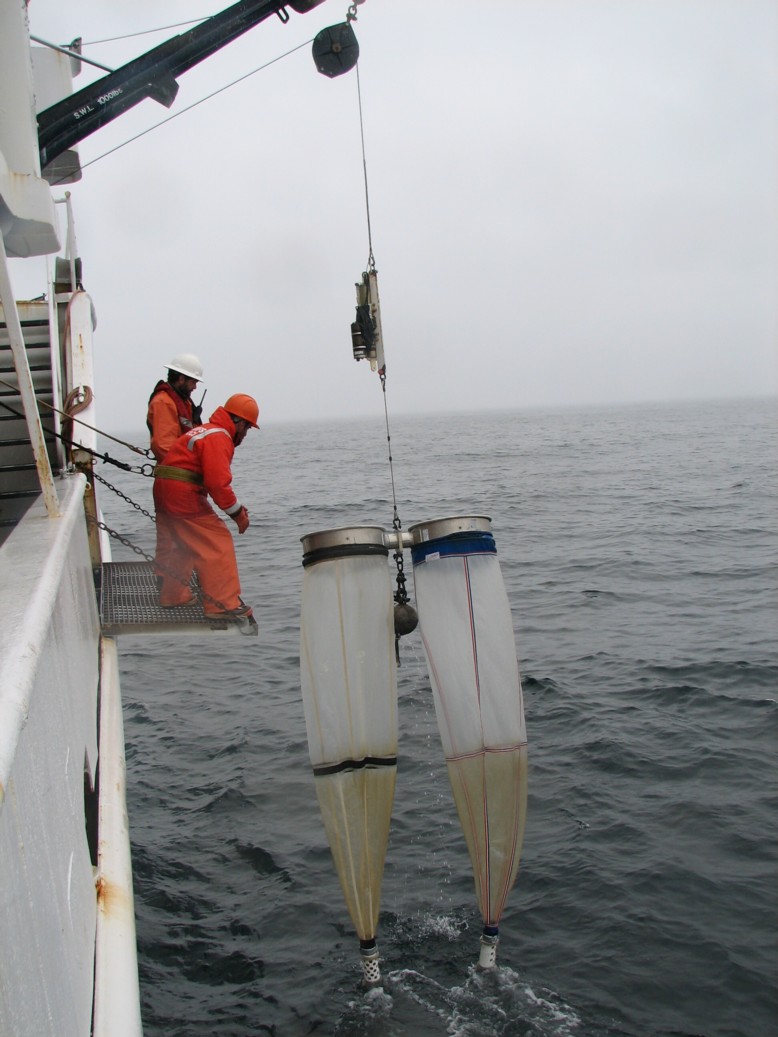
In the mean time, the survey continues. We have deployed the bongo nets over 100 times so far on this cruise. Here is a photo of Chief Survey
Technician Phillip White and I bringing in a bongo. Take a look at some of the creatures we are finding:

Jelly Fish
Jelly Fish
 An arrow chaedognath (brissle mouth) eating the larvae of a krill

An arrow chaedognath (brissle mouth) eating the larvae of a krill


We think this might be a salp They are tiny creatures made of what looks like jello.
Copepods. You can really see what they have been eating. It is the green line running through its body.
Copepods
Copepods 
We saw one of these yesterday. It is called thecosomate pteropods, or winged foot. Here you can see the foot extended. It really does look like a wing.


 This is the larvae of a krill.
This is the larvae of a krill.

Question of the Day:

How would you like to live on a ship? Write me and let me know what your thoughts are.

Answers to Your Questions:

The water temperature yesterday was 41.18 degrees Fahrenheit. The air temperature was 42.8.

Hello to Ben and family in California. Great to hear from you. Thanks for your kind words. I’m glad you are enjoying the blog.