NOAA Teacher at Sea
Dan Steelquist
Onboard NOAA Ship Rainier
July 6 – 24, 2009
Mission: Hydrographic Survey Geographical Area: Pavlov Islands, Gulf of Alaska Date: July 7, 2009
Weather Data from the Bridge
Latitude: 56° 20.76′ N
Longitude: 157°09.52′ W
Visibility: 10+ Nautical Miles
Wind Direction: 220° true
Wind Speed: 14 knots
Sea Wave Height: 1-2ft.
Swell Waves: 3-5ft.
Water Temperature: 9.4° C
Dry Bulb: 11.7° C
Wet Bulb: 11.1° C
Sea Level Pressure: 1021.0 mb
Science and Technology Log
The Rainier is a self-contained workstation that has many different types of jobs that need to be done. As I have arrived and settled in, I have tried to learn what jobs people do on board and how their work contributes to mission of the ship.
The workers on the ship are divided into six different departments.
The officers oversee the total operation of the ship. They plan the ship’s course and control the ship from the bridge while it is underway. The officers are also involved in the survey operations
The Survey Department gathers and processes hydrographic survey data.
The Electronics Department maintains electronic equipment and electrical systems on board the ship.
The Stewards keep the crew fed
The Deck Department handles all the work on the deck including launching and retrieving the small boats. They also handle the lines when the ship is docking and they operate machinery to raise and lower the anchor
The Engineering Department maintains and operates the ship’s engines and generators.
There are many different career opportunities on a ship like the Rainier. Some of the jobs are similar to land based work, yet with a nautical twist. Most of the jobs require some specialized training. All of the jobs appear to be both challenging and rewarding.
Personal Log
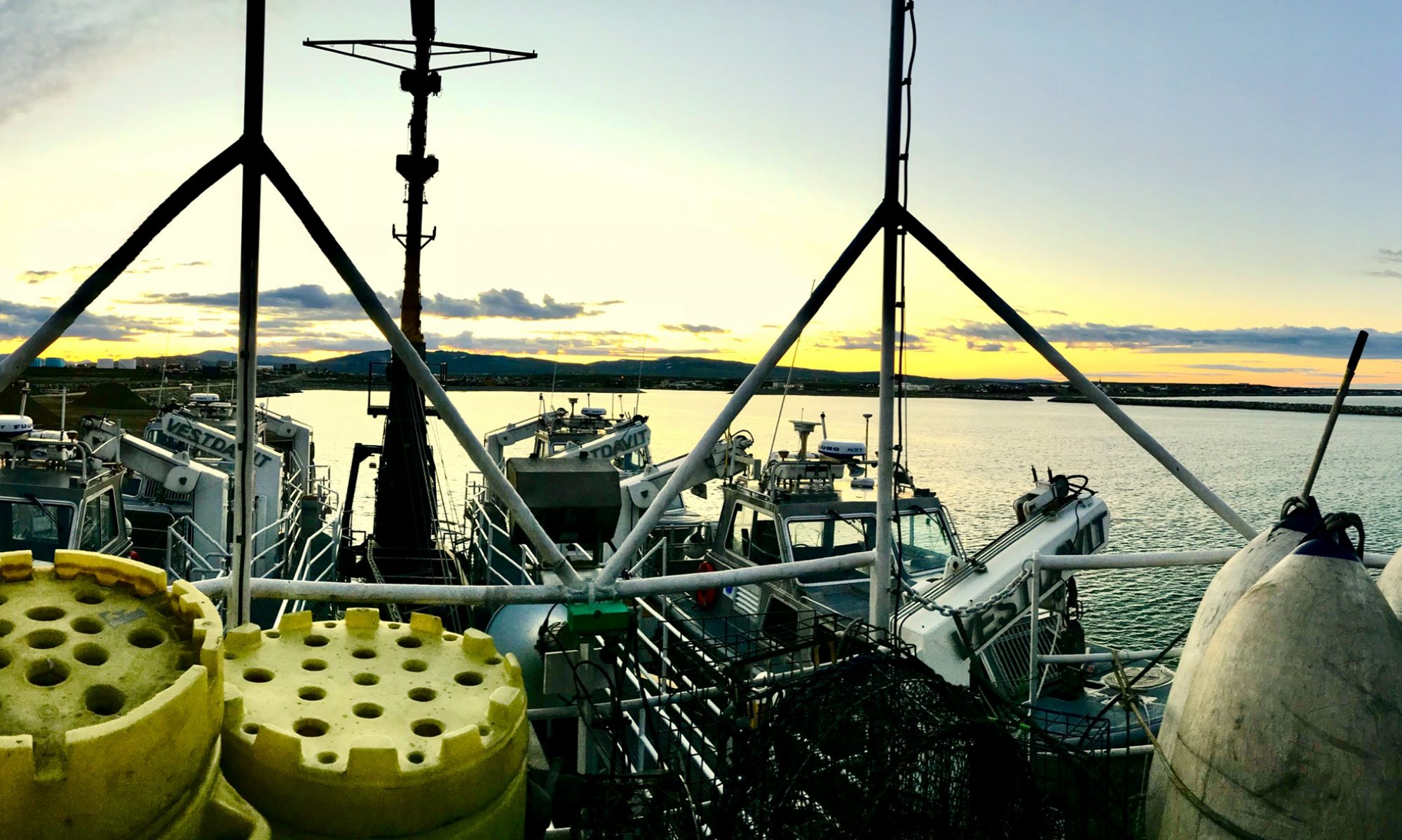
That’s where I’ll be living for the next 3 weeks: NOAA Ship Rainier
Wow, what an experience so far. Ship life is so much different than life on land. There is so much to learn and know. There are necessary procedures for every aspect of this world and the crew of the Rainier has been very helpful in making me feel welcome. Once we left the dock in Seward, the importance of clear procedures became obvious. Moving this much equipment around an ocean with people living and working on board is no small feat. Everyone has very specific jobs to do and time and places they are assigned to work. I have spent much of my time finding my way around the ship and getting to know what types of jobs these people have. The trip from Seward to our work area takes about forty hours. Once there, we will begin the survey work. Our ship has been assigned the task of surveying the seafloor in some areas that have never before been charted. Once we get that work underway, I’ll be able to peer further into the world of a hydrographic survey ship. The adventure goes on…
Something to Think About
How might the types of work on a ship like the Rainier be similar to and/or different from a closely related job on land?
NOAA Teacher at Sea
Jacob Tanenbaum Onboard NOAA Ship Henry Bigelow October 5 – 16, 2008
Mission: Survey Geographic Region: Northeast U.S. Date: October 16, 2008
Falcon
Science Log
This bird came by for a visit. I think is a type of hawk or a falcon. Can anyone identify it for me? We have been trying but can’t seem to figure out what kid of hawk this is. In any case, it stopped by and perched on the bow just out of the blue when we were about 80 miles from shore. I wonder how it got here? Was it blown out to sea by a storm? Did it follow a ship looking for food? Is it lost? I hope it finds its way back.
It was foggy during the early morning and the ship had to blow its fog horn. I found out that ships use a code when they sail. One long blast means we are steaming ahead. One long and two short blasts means we have equipment such as nets in the water and cannot manuver as quickly. Listen by clicking here.
We found more spoon armed octopi. Can you see that one of the arms has a little spoon like object at the end? The male has an arm shaped like a spoon. Can you see it in this picture?
OctopiiThis baby skate has a yolk sack still attached to it. The baby uses the yolk as food while it grows. Usually this happens in the skate case. I wonder what happened with this little guy.This is a red gold-bordered sea star. Isn’t it amazing how many different kinds of sea stars there are in the ocean!This is a red gold-bordered sea star. Isn’t it amazing how many different kinds of sea stars there are in the ocean!This is a shrimp close up. Can you guess what the blue mass is under her back end? Post your answers to the blog.
A sea anemone. This opens up and tenticles appear. They wave their tenticles in the water to collect food. When fish like Nemo, the clown fish, go into a sea anomone, it will sting the fish, so the clown fish backs in which helps it tolerate the sting.
Sea anemone
Here is an interesting story: We were approaching a station where we were expecting to take a sample from the water with our nets. Do you see the note in the chart that says “Unexploded Ordinance?” (you can click on the chart to make it bigger). that means there are bombs from an old ship that may still be active! We decided to move our trawl to a nearby area. When we did, look what came up in the nets! Part of an old ship! The coordinates are Latitude: 42°27’23.65″N and Longitude: 68°51’59.12″E. Here is that location on Google Earth. What could have happened way out here? CLE students, tell me the story of that wreck. Be creative. Please print them out and leave them for me on Monday. Make them fun to read. I am bringing back what came up in the net for you to see. When I get back, we will see if we can do some research and find out what really happened!
Now lets meet Phil Politis, our Chief Scientist on board the Bigelow. I asked him to tell us about his job. Here is what he said:
The main job of a chief scientists is to meet the goals and objectives of the the scientific mission. In our case, that is, to pair up with the ship Albatross in as many stations as possible, following their route. My day to day job is to coordinate with the officers, and crew, setting the nets properly, make sure that the samples are processed properly and solving problems as they arise. Say we have an issue with the nets. It is the chief scientists job to decide what to do next. I can accept the tow, code it as a problem, or re-do the tow. I have to look at each issue individually. If we tear on the bottom, will it happen again? Is there time to re-tow? I also coordinate with the other vessel.
My title is fisheries biologist, but I am a specialist in the nets. My background is in trawl standardization. We have to ensure that our nets are constructed, maintained and that we fish same way each time. Small changes in nets can effect how the nets fish and that effects the study. That way we can compare this years catch to next years catch. Remember, this study is called a time series. Over time, you can see changes to fish population. The only way you can trust those numbers is if the nets are the same each time we put them in the water year after year, tow after tow. We have to document what we are doing now so that in the future, people know how and what we were doing. This way the time series remains standard. We have to standardize materials the nets are made of, way they are repaired. We inspect the nets each time we come on here. We train the deck crews in the maintenance and repair of our nets.
——————————-
In answer to many of your questions, I will be back to SOCSD on Monday. I’ll be in WOS on Monday and CLE on Tuesday. See you then.
Mrs. Christie-Blick’s Class:
You asked some AMAZING questions. I’m so proud of you guys. Drl Kunkel was impressed as well. Here is what He told me:
You asked: What is your proof that these lobster shells are softer than other lobster shells? How do you measure hardness:
We have an engineering department at U Mass and one of the projects they have to do to become materials engineers is to test for hardness and they do an indentation test. Another way is to shoot x rays at shell and we can tell how hard it is by how the x rays scatter.
You asked: What is causing the harmful bacteria in the water?
We don’t know if they are harmful bacteria. My theory is that it could be the same normal bacteria that are on the backs of healthy lobsters. We think it is the weakness in the new lobster shells because of environmental influences south of Cape Cod that causes the trouble.
You asked: Can you get rid of the harmful bacteria?
It is possible to reverse the environmental conditions that have been created by us or by mother nature.
You are right about these sources of pollution. Good thinking. And yes, Dr. Kunkel believes that one or more of these factors may be hurting the lobsters. The problem area is south of Cape Cod. Look on a map today and count the number of cities between New York and Boston. Is this an area with a lot of people and pollution or is this an area that is sparsely populated?How would you expect this area to compare to areas where the lobster population is healthier off of Maine and Nova Scotia? Do the problem areas for the lobster and the pollution occur in the same area? If they match, scientists say there is a correlation between the two and they wonder if one is causing the other. What do you think?
Hag fish did gross me out a little. Interestingly, there is no way to determine the age of this fish as there are with others, so I’m not sure we can even tell you how long they live.
Several of you asked about the red dots on the lobster. They are a disease. It is called shell disease.
The lobster on the right is healthy. I just love this picture so I thought I would share it.
SR, the water temperature is about 16 degrees C last time I checked.
MF, nice to meet you. It is really cool to be a Teacher At Sea.
DTR, my favorite thing about this trip is working with you guys from the middle of the ocean.
MR, Snuggy and Zee are having loads of fun touring the ship.
CF: I will try to count the teeth of a fish and tell you what I find. Sometimes they are hard to see. I do not know if I am going back next year, but I hope so. I like being at sea. The truth is, I like being on land too. Both are nice. Thanks for writing.
BS: No, we find mostly adults, but some babies. Many creatures are small as adults.
BV: We have seen lots of jellyfish. We had so many we had to hose down the lab at the end of our session the other day. They were everywhere.
GS: We will continue to take samples here.
TL and Many Others asked how long we put the cups down for: We put the cups down for about 15 minutes. That includes the time it takes to lower the CTD to the bottom. When it gets to the bottom, it comes right back up. Thanks all for writing.
AS: Right you are!
Good job calculating all those who got 984 feet!
MM, I love the adventures I’m having here and the people I am meeting. It has been fun. I like being on land too.
JS, Dr. Kunkel took samples from some lobsters so he could help cure the disease.
KF: Could the hag fish bit us? Yes, Mel Underwood, our Watch Chief was very careful as she held the bag and backed her hands up when the fish got close to her hands. Mel is very experienced working with sea life and I have never seen her back off the way she did with this thing.
HRF: Go for it! It is a cool job!
CF: Good question. No, your bones are a lot stronger than styrofoam, so you would have to go down many miles to hurt yourself, and you could not swim that far without gear. When divers get hurt from pressure changes, it is usually something different called the bends. This happens when you are swim up to fast and certain gases in your blood stream expand as the pressure increases and form bubbles that can hurt you. Divers have to swim up slowly (the usual rule is don’t go up faster than the air bubbles next to you) in order to avoid getting the bends.
DC: Good questions: The dots are not bacteria on the lobster, they are the result of the bacteria eating away parts of the shell. The actual bacteria are too small to see. Good question about he temperature relating to growth. It is a bit more complex than that. There are many factors at work. The factor that may be causing more bacteria are chemicals like fertilizers from land getting into the water.
Dr. Kunkel came on board to study lobsters. He is a biologist, not a medical doctor. There are many scientists on board working with us, and me with them.
The quadrent is an old invention. People have been able to find their way with the stars for thousands of years. It is an ancient art. It was fun to practice it here.
SF, VF and others: The fish stayed in the bag. We made sure of that. From the bag, we put it back in the sea.
SD, sorry, I can’t help you there. I don’t think a pet skate would survive the trip back to NY.
Several of you have asked if I have gotten sick. No, I have not.
How many lobsters have we caught so far? Lots!
SS, sleeping on a boat if fun. If the waves are small, they rock you to sleep. If they are huge, however, they throw you out of bed!’
CP: bacteria infect the shells of the lobsters. This destroys the protection that the lobster should have. They grow weak and die of other causes. Good question!
Why do we work at night? Because ships work 24 hours a day so that no time is wasted. I ended up on the night shift. Why do we wear suits? To stay warm and dry on deck.
The hagfish eat shrimp and small fish, though they are scavengers and can eat large creatures as well.
Mrs. Christie Blick’s Class, you guys are doing some great work. I check on the skates for you. Some skates have protection, like thorns or spikes. They also have some interesting fins that look almost like feet. They use these to “walk” along the bottom searching for food. I know you asked about skates, but I have to mention the ray I worked with yesterday. It is related to the skate and could shock with an electrical charge for both protection and for hunting prey. Cool!
NOAA Teacher at Sea
Jacob Tanenbaum Onboard NOAA Ship Henry Bigelow October 5 – 16, 2008
Mission: Survey Geographic Region: Northeast U.S. Date: October 15, 2008
Using the sextant
Science Log
Our study of creatures on the bottom of the sea has been done every year for 45 years. In fact, it is the longest series of data for fish, in the world. Why is this important? I asked Dr. Michael Fogarty, head of the Ecosystems Assessment Program, at the Northeast Fisheries Sciences Center in Woods Hole, MA.
Mr. T: This is the longest uninterrupted time series of a trawl survey anywhere in the world. Is that important?
Dr. Fogarty: Really important because the changes that we are observing occur over long periods of time due to fishing and climate and other factors, so we need to track these changes to see how individual fish species are doing and to see how the ecosystem itself is responding to these changes.
Mr. T: What have you found?
Processing samples
We have found overall in the 45 years that we have been doing this survey, the number of fish has remained the same, but the types of fish have changed. In Georges bank, we would have mostly cod, flounder in the past, now we have small sharks, skates, which are relative of the rays.
Mr. T: What does that mean in terms of the ecosystem?
Dr. Fogarty: It has changed the entire food web because, for example, these small sharks we are seeing are ferocious predators. Because these dog-fish prey on other species, they keep the fish we usually like to eat down in number
Mr. T: Why is that happening?
Dr. Fogarty: Our hypotheseis is that because the some fish have been hurt by too much fishing, the other fish have come in to take their place.
I thought about that for a while. It means this ecosystem has been effected by something called Overfishing and something called climate change. I started wondering about all the different factors that might have effected the environment we are studying. There are so many! Let’s look at some of the may things that human beings have done that have changed this ecosystem in the 45 years we have been doing this study. Dr. Fogarty and I talked about this and then we created talked about this mini website for you. Click each problem area to learn more.
Remember the other day when I tried to use a sextant to fix our position? I could not even get close, so today, I took a lesson with one of the NOAA Corps officers on board, Lieutenant Junior Grade Andrew Seaman. Click here to come along.
Elsewhere on the ship, Snuggy and Zee paid a visit to the dive locker on the ship. This is the area on the ship where SCUBA gear is stored. We are not using SCUBA on this trip, but it was fun to visit the locker and see all the gear. Snuggy and Zee learned that the crew can actually fill up the air bottles they need right on the ship. They have all the equipment they need to do work underwater right here on the ship.
We had a fire drill yesterday. I know you are all familiar with fire drills, because we have them at school. When we do them at school, we often practice evacuating the building and calling the fire department. Well, at sea, things work a little differently. We have to get away from danger, but then, we have to practice putting out the fire as well. After all, there is no fire department to call way out here! Click here for a video.
Finally, so many of you asked about dangerous creatures that we have caught. This torpedo ray does have an electrical charge to it. The ray can zap you if you are not careful. I used rubber gloves to keep from getting hurt. The hardest part was holding the thing while we took the picture. I kept dropping it becuase it was so slimy!
————————–
AT: I have not been frightened by anything on the ship or in the sea that we have seen. The hag-fish did seem gross. Very gross. Other than that, no.
Hi SP, I enjoy Korean food very much and have eaten lots of crab roe. It does not gross me out at all. Thanks for writing.
NV, Zee and Snuggy are just fine. Thanks for asking.
Mrs. B’s Class: I’m glad you liked the blog. We found the dead whale 100 miles or so off of Cape Cod. There are no sea snakes here. The water is too cold. I’m kind of glad about that!
Hello Mrs. Graham’s Class. I am staying nice and warm. Even working on deck, it is not too cold. We could stay out for several more weeks without a problem. Do you know what we use to make electricity? See if you can figure that out. We have to go back to port before we run out of that.
Mrs. Christie Blick’s Class: Very interesting. Our chief Scientists says that they can tell the whales don’t like barnicles because whales without them don’t behave in quite the same way.
This particular fish, which we call a monk fish or a goose fish has all the adaptations you mentioned. You did very well thinking those up. The Chief Scientist, Phil Politis and I are both impressed. He says that the fish hides in the mud (that is why it is brown), which keeps it hidden from predators. It has another adaptation, the illicium which we are calling a fishing rod. This adaptation lures smaller fish to the monkfish. Since it does not move around as much as many other fish, it can stay safer from predators.
Hello to Mrs. Coughlin’s Class, Mrs. Berubi’s Class. I’m glad you like the blog.
NN, I’ll be back next week. Because the crew and I, as well as a few birds are the only land-creatures we have seen out this far! Thanks for writing.
Hi Jennnifer. Thanks for your kind words and thanks for checking in on the blog.
Today is “Meet the crew Monday,” and the two sections you will meet today are both fundamental to the smooth running of the HEALY. One, you never want to visit, the other you visit three to four times a day, so with that introduction meet the “Galley, with Tysin Alley” Due to the great quality of the food I usually make it to the galley at least two and in some instances for three meals a day. I am also up most nights and I do not think a day has gone by when I have NOT seen Tysin cooking. He is always there, baking pies, cleaning, boiling crab legs the man never stops.
Surf and Turf Friday, steak and crab legs. Mouth wateringly good.
When living aboard a floating ice breaker, kilometers from land out for 30 days you need to think of priorities, yes maps and scientific operations are important, but full bellies vital. No one wants to work when they are hungry. And to be honest I think many individuals are gaining weight, especially with four meals a day.
There is no shortage of protein on this vessel. And even after 21 days we still have fresh greens for salads.
There is not a time, 24 seven when food is not accessible. Bread and the fixings for sandwiches between meals, always cereal, and in the rare instance when zoning out after midnight a possible taste of something new Tysin has created. And yes, I am one of the few who have gained weight.
The food is hot, fast and readily available, no one goes away hungry.
Since we are now satisfied gastronomically, let’s talk about the Medical division, a place where no one really wants to end up, yet, the proficiency I saw today makes me feel very safe should an injury occur.
From fillings to feet and everything in between the training and skills these men have is beyond excellent.
Jason and Corey are always on, 24 – seven and constantly available should a medical emergency occur. They work with training teams practicing scenarios involving injuries and offer classes to the crew in topics such as CPR. These responsibilities are not only their duty, but a chosen profession to care for the welfare of everyone on board the HEALY.
Spotlessly clean with numerous testing equipment these men appear to be ready to handle any emergency.
Both men entered the U.S. Coast Guard when they were young, and in Corey’s case 17. Both men also entered as enlisted personnel and choose to go through “A School” as Health Services Technicians. Corey and Jason are also within the five year mark for retiring, with over 15 years of amazing service to the United States Coast Guard…
While talking with Jason I was amazed to follow his Coast Guard career. Here is a sample: Oregon→Alaska→Hawaii→Texas→Nebraska→New Jersey→Virginia→Bering Sea…
…and all this with the total support, financially, and physically, from the U.S. Coast Guard. Jason was also able to not only become a Physicians assistant, but also received a fellowship to do post graduate work at the Navy hospital in Portsmith, Virginia in orthopedics.
I find the career paths of both men fascinating and an excellent recruiting example for the Coast Guard. Two men with high school degrees and now look at them, pretty darn impressive! I am hoping my students take the hint!
Well they can’t work all the time!
Quote of the Day: “The art of medicine is in amusing a patient while nature affects the cure.” -Voltaire
FOR MY STUDENTS: Have you figured out yet how many career paths are available within the U.S. Coast Guard? How about in Science, have you figured out yet how many different types of scientists are aboard?
A pre-drill brief, to discuss props, expectations and safety issues that the trainers might see. If a real casualty happens during a drill, the ETT would let the individuals who are training take control unless there were difficulties in responding to the casualty. Remember a casualty in this respect does not infer human.
At dinner last night I was invited to meet BECCE, and after a moments confusion I realized I had not been invited to meet a person, but to observe a readiness drill. BECCE stands for Basic Engineering Casualty Control Exercise and I was on my way to watch as the experienced crew aboard the U.S. Coast Guard Cutter HEALY maintains their skills, and passes that knowledge on to new cadets (students from the CG Academy in New London, CT who are here for a month during their summer break) and enlisted personnel. There is an expression in the engineering department, “Slow it down or shut it down,” and that is what BECCE is all about. Once a crew member on watch finds a problem it is their responsibility to report it to engineering and then take appropriate action, thus BECCE a drill.
The steps to take when there is a problem or alarm in Engineering are simple: investigate the alarm, take initial action to control the casualty, stabilize the plant and report status to the bridge.
Jet fuel has ruptured, pipe spraying leak…the circle indicates people have started to work on the leak. This Brian Liebrecht part of the ETT
This procedure might sound simple, but if 250 gallons of lube oil is rushing from a punctured pipe individuals can easily get flustered. That is why BECCEs are such a great idea! Drill, practice and make sure all personnel are prepared for the advent of anything, and you then have a smoother running vessel.
On a side note, as I learn more about the roles and responsibilities aboard a U.S. Coast Guard Vessel I am constantly stumped by acronyms. The EOW is in charge of the “plant” during this drill and is being evaluated on his responses to the various “casualties”.
LCDR Petrusa (The officer in charge of all engineering on the ship) is observing and watching protocol, with the results of this drill falling on his shoulders. Simultaneously MKC Brogan evaluates the EOWs during their drill sets. How about CWO3 Lyons who is in charge of all machinery technicians, both main propulsion and auxiliary divisions? Do you see what I mean, lots of acronyms, and it gets confusing. Everyone has collateral duties, and don’t even think you can figure out what an OSG is???? I also learned that there are nicknames as well, you could be a twidget (electronics technicians), or a snipe (who are mechanics), sparky (electricians), all of which are vital positions on the boat. There is a lot of humor as well with the use of slang, for instance I wonder if anyone knows the difference between a Clean EM and a Dirty EM?
This is a fuel oil leak that has not been engaged…the team is discussing the situation.
Expression of the Day: “A Clean Slate” Before we had the technology of the 21st century, and there were no onboard computers, or GPS, vital information such as course and distance were written on slates. At the end of each watch this information was copied into the ship’s log. The slate was then…”wiped clean.”
Chief Machinery technician Doug Lambert is addressing the casualty during his BECCE drill, while Chief Machinery Technician John O’Brogan observes and evaluates, as a member of EET team.
FOR MY STUDENTS: Can you think of any other nautical expressions we now use in everyday language?
LCDR Petrusa as EO overseas operation of the BECCE exercises. On the computer you see a representation of main diesel generator set number one. Along with all live telemetry represented so that the EOW can at any time see what is going on with the engines.Recent academy graduate Lisa Myatt is the newest member of the engineering team. A rarity as a female engineer, Lisa probably represents the less than 10% of the HEALY crew as a woman in the engineering department.Petty Officer Hans proof-reads this journal entry to make sure that the information I have given on engineering is correct.