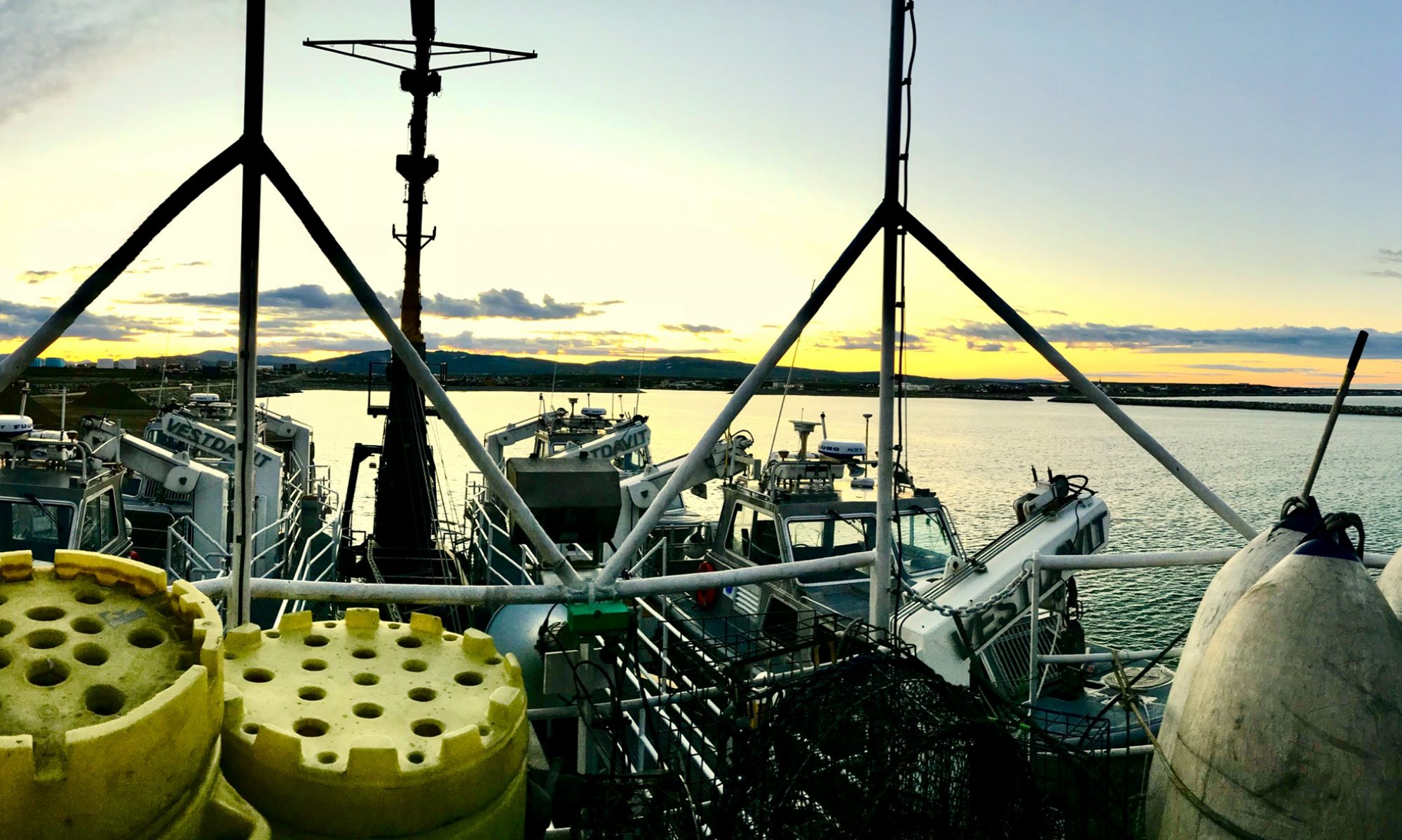
Tom Jenkins: Introductory Post, April 6, 2018

NOAA Teacher at Sea

Tom Jenkins

Aboard NOAA Ship Henry B. Bigelow

April 10 – 27, 2018

Mission: Spring Bottom Trawl Survey

Geographic Area: Northeastern U.S. Coast

Date: April 6, 2018

Introduction

Now that word is out about my NOAA Teacher at Sea selection, I am being asked many questions about my upcoming research mission.  The truth of the matter is that I am unsure exactly what to expect. While the administrators of the program have done a great job of communicating information, NOAA has many different objectives.  Even the missions, which are annual events, appear to be unique experiences as there are so many variables involved when doing research at sea.

One thing I know for sure is that almost 3 weeks out at sea seems like a long time, especially for someone that has lived in Ohio for his entire life.  Clark County, Ohio (where I teach 8th Grade Science and STEM at Greenon Jr./Sr. High School) is probably what most people think of when they think of “Midwestern living.” A mixture of agriculture and fading industry, we are a close-knit community, which is something John Cougar Mellencamp would find familiar.  While we have plenty of creeks and lakes, many of my students have never seen the ocean. I have been fortunate enough to go on a handful of cruises, but have never been at sea for more than 10 consecutive days, and those included stops along the way.  I am fairly confident I will do fine, but I am also packing motion sickness medication to be on the safe side. Fingers crossed!
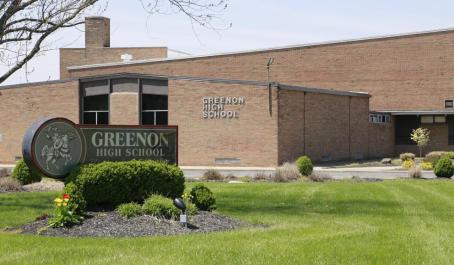
Greenon Jr/Sr High School

I will live aboard the NOAA research vessel Henry Bigelow (Follow this link for additional information).  This 209 feet long, state-of-the-art, research vessel is likely a giant step up from what you may have seen on “Deadliest Catch.”  While it is definitely built for collecting fish and other biomass, it conducts trawl sampling (think of a long, specialized net that is dragged behind the ship).  NOAA Ship Henry Bigelow is equipped with many advanced features including a modern wet lab which allows scientists (and me!) to sort, weigh, measure, and examine the catch.  This information is then added to NOAA’s extensive database which provides our country’s scientists with valuable information regarding the status of the organisms that reside within the ocean.

downloadfile
NOAA Ship Henry B. Bigelow

Another question that I am frequently asked is, “What about your students?”  The best part about this arrangement is, not only will I be immersed in authentic scientific research (which will add value to my educational practice), but the use of Google Classroom will allow my students to share my adventures from the field.  In addition to frequent online updates where I will answer questions and discuss ongoing research and associated phenomena, my students will use NOAA educational resources to learn more about our oceans and the life within them.

As I prepare to leave in a few days, I am full of emotion.  I am obviously very excited to be afforded this unique opportunity.  I love travel, adventure, and learning, so this research cruise will be a perfect fit.  I will work alongside 37 people (sailors, fisherman, scientists, and engineers to name a few) who are very good at what they do for a living.  I can’t wait to pick their brains to learn how I can incorporate their knowledge into my classroom. All of that being said, I will definitely miss both my family and my students.  I look forward to returning home and sharing my experiences with them.

Please check back over the next few weeks as I will write additional blogs regarding my NOAA Teacher at Sea adventure.  I would love to make this blog series interactive, so if you have any questions, please post them in the comments section below.

Cecelia Carroll: Visit with the NOAA Corps Officers, May 10, 2017                   

NOAA Teacher at Sea

Cecelia Carroll

Aboard NOAA Ship Henry B. Bigelow

May 2 – 13, 2017 

Mission: Spring Bottom Trawl

Geographic Area: Northeastern Atlantic

Date: May 10, 2017

Latitude: 42 54.920N
Longitude:  069 42.690
Heading:  295.1 degrees
Speed:  12.2 KT
Conditions: Clear

Science and Technology

I am on the day schedule which is from noon to midnight.  Between stations tonight is a long steam so I took the opportunity with this down time to visit the bridge where the ship is commanded.  The NOAA Corps officers supplied a brief history of the corp and showed me several of the instrument panels which showed the mapping of the ocean floor.

“The National Oceanic and Atmospheric Administration Commissioned Officer Corps, known informally as the NOAA Corps, is one of seven federal uniformed services of the United States, and operates under the National Oceanic  and Atmospheric Administration, a scientific agency within the Office of Commerce.

“The NOAA Corps is part of NOAA’s Office of Marine and Aviation Operations (OMAO) and traces its roots to the former U.S. Coast and Geodetic Survey, which dates back to 1807 and President Thomas Jefferson.”(1)

During the Civil War, many surveyors of the US Coast and Geodetic Survey stayed on as surveyors to either join with the Union Army where they were enlisted into the Army, or with the Union Navy, where they remained as civilians, in which case they could be executed as spies if captured. With the approach of World War I, President Woodrow Wilson, to avoid the situation where surveyors working with the armed forces might be captured as spies, established the U.S. Coast and Geodetic Survey Corps.

During WWI and World War II, the Corps abandoned their peacetime activities to support the war effort with their technical skills.  In 1965 the Survey Corps was transferred to the United States Environmental Science Services Administration and in 1979, (ESSA) and in 1970 the ESSA was redesignated as the National Oceanic and Atmospheric Administration and so became the NOAA Corps.

“Corps officers operate NOAA’s ships, fly aircraft, manage research projects, conduct diving operations, and serve in staff positions throughout NOAA.” (1)

“The combination of commissioned service with scientific and operational expertise allows the NOAA Corps to provide a unique and indispensable service to the nation. NOAA Corps officers enable NOAA to fulfill mission requirements, meet changing environmental concerns, take advantage of emerging technologies, and serve as environmental first responders.” (1)

There are presently 321 officers, 16 ships, and 10 aircraft.


We are steaming on a course that has been previously mapped which should allow us to drop the net in a safe area when we reach the next station.

The ship’s sonar is “painting” the ocean floor’s depth.  The dark blue is the deepest depth.

The path of the ship is highlighted.  The circles are the stations to drop the nets for a sample of the fish at that location.

This monitor shows the depth mapped against time.

This monitor also showing the depth.

A view inside the bridge at dusk.

The full moon rising behind the ship ( and a bit of cloud )

What can you do ?

  • When I asked “What can I tell my students who have an interest in NOAA ?”

If you have an interest in climate, weather, oceans, and coasts you might begin with investigating a Cooperative Observer Program, NOAA’s National Weather Service.

“More than 8,700 volunteers take observations on farms, in urban and suburban areas, National Parks, seashores, and mountaintops. The data are truly representative of where people live, work and play”.(2)

Did you know:

The NOAA Corps celebrates it 100 Year Anniversary this May 22, 2017!

Cute catch:

  1. Bobtail Squid

This bobtail squid displays beautiful colors!  (3 cm)

View from the flying bridge.

On the flying deck!


Bibliography

1. https://www.omao.noaa.gov/learn/noaa-corps/about

2. http://www.nws.noaa.gov/os/coop/what-is-coop.html

3.   http://www.history.noaa.gov/legacy/corps_roots.html

Cecelia Carroll: Off to Newport, RI! April 27, 2017

NOAA Teacher at Sea 

Cecelia Carroll 

Aboard NOAA Ship Henry B. Bigelow 

May 2 – 14, 2017 

Mission:   Spring Bottom Trawl Survey, Leg IV

Geographic Area of the Cruise: Sailing out of Newport, R. I. Northeast US Coast, George’s Bank – Gulf of Maine

Date: April 27, 2017

I am honored to have been selected to take part in the Teacher at Sea Program. I’ll be driving down to Newport from southern New Hampshire in a few days to begin what should prove to be an amazing adventure working along with the fishery scientists and crew on the NOAA Ship Henry B. Bigelow (FSV 225).

Science and Technology Log

The purpose of the Spring Bottom Trawl Survey is to monitor the fish stocks and invertebrate found on the continental shelf. The scientists will study any changes in ocean conditions and the sea life to make informed decisions for conserving and managing the fishery resources and their habitat.

The Henry B. Bigelow was named in honor of the founding director of the Woods Hole Oceanographic Institution, the “Father of Modern Oceanography.” Henry Bryant Bigelow (1879-1967) was an expert on the Gulf of Maine and its sea life and a member of the Harvard faculty for 62 years. The ship is a state-of-the-art 208-foot research vessel commissioned in 2007. It boasts a “quiet hull” that allows the scientists to observe the sea life using sound waves with limited disturbance to their natural state.

Fish that we expect to observe include: Monkfish, Herring, Skates, Dogfish, Atlantic Salmon, Hake, Cod, Haddock, Pollack, Flounder, Mackerel and more! I’m looking forward to viewing these specimens up close!

Personal Log

I have been teaching middle school mathematics for 26 years at Hampstead Academy, in Hampstead, NH.

426c8d8b374bc156f1a9550985e3b0db_400x400

How does a mathematics teacher find her way to intensifying her interest in the sea? In 2014 I was selected to attend a week at Space Camp in Huntsville, Alabama along with 200+ teachers from around the globe. While there I learned of the SeaPerch program. Soon after, I received a grant from the US Navy for several SeaPerch kits, journeyed down to Newport, RI Naval Base for a day of constructing the SeaPerch ROV, and then set up a SeaPerch program at Hampstead Academy along with a co-teacher and my husband. Cutting pipe, waterproofing the engines, soldering the microcontroller, and all the tasks to complete the build of the SeaPerches was such a proud achievement for the group! We are fortunate to be near enough to UNH in Dover, so with a group of my students, we toured the Jere E Chase Ocean Engineering Laboratory and tested our SeaPerch ROV’s in their wave and deep-water tanks. What a marvelous facility, welcoming student tours and hoping to spark an interest in the oceanography field.

I hope to inspire my students to consider a career in STEM professions, to open their eyes to the possibilities in the field of marine sciences where the work they do can impact the present and future generation.

Thanks you to the Hampstead Academy administration, fellow teachers that are taking over my classes for these two weeks, and for the support of the school community and my family and friends.

Thank you to the dog sitter for Clover!

Thank you to NOAA Teacher at Sea program for this enriching opportunity.

Did You Know?

The Henry B. Bigelow was the first NOAA ship to be named through a ship-naming contest by the winning team from Winnacunnet High School in Hampton, N.H.

Below is a picture of Clover at North Hampton Beach last week when we had some welcoming warm weather for a short spell.


Tom Savage, Introduction, June 2, 2015

NOAA Teacher at Sea
Tom Savage
     (Almost)  On Board NOAA Ship Henry B. Bigelow
        June 10 – 19, 2015

Mission: Cetacean and Turtle Research
Geographic area of Cruise:  North Atlantic
Date: June 2, 2015

Personal Log

Greetings from Western NC.  My name is Tom Savage, and I am a Science teacher at the Henderson County Early College in Flat Rock, NC. I currently teach Chemistry, Earth Science, Biology and Physical Science. In a few days I will be flying to Rhode Island and boarding NOAA ship Henry B. Bigelow, a research vessel. We will be traveling in the North Atlantic region, mostly in Georges Bank which is located east of Cape Cod and the Islands.  The research mission will focus on two types of whales: Sei and Beaked Whales. Our primary goals will be photo-ID and biopsy collection, acoustic recording, and prey sampling.  I am looking forward to learning about the marine life and ocean ecosystem, and I look forward to sharing this knowledge with my students.

This will not be the first time that I have been out to sea.  A few years ago, I spent a week with eighteen other science teachers from across the county, scuba diving within the Flower Garden Banks National Marine Sanctuary. This week long program was sponsored by the Gulf of Mexico Foundation and NOAA.  This exceptional professional development provided an opportunity to explore, photograph and develop lesson plans with a focus on coral reefs. I also learned about how important the Gulf of Mexico is to the oil industry.  I had the opportunity to dive under an abandoned oil platform and discovered the rich, abundant animal life and how these structures improve the fish population.

Prior to becoming a teacher, I worked as a park ranger at many national parks including the Grand Canyon, Glacier and Acadia. Working at these national treasures was wonderful and very beneficial to my teaching.

Providing young adults with as many experiences and career possibilities is the hallmark of my teaching. During the year, I arrange a “Discover SCUBA” at the local YMCA. Students who have participated in this have gone on to become certified. In the fall I have offered “Discover Flying” at a local airport, sponsored by the “Young Eagles” program. Here students fly around our school and community witnessing their home from the air. A few students have gone on to study various aviation careers.

Flying
“Discover Flying”


I am very excited in learning about the many career opportunities that are available on NOAA research vessels. It would be very rewarding to see a few of my students become employed with the NOAA Corps or follow a career in science due to this voyage.

Regards,

~  Tom


Chris Henricksen: Marine Life is Amazing! May 14, 2014

Christopher Henricksen

NOAA Teacher at Sea

Aboard NOAA Ship Henry B. Bigelow

May 6 – May 16, 2014

Geographical area of cruise: Georges Bank & Gulf of Maine

Mission: Spring Bottom Trawl & Acoustic Survey

Date: May 14, 2014

Air Temp: 9.7°C (49.46°F)

Relative Humidity: 81%

Wind Speed: 10.76mph

Barometer: 1016.2mb

Science and Technology Log

The abundance and diversity of marine life in these waters is amazing.  Depending on the ship’s location, and the depth of a trawl, one may see any number of different species on the sorting table.  Bony fish, such as haddock, cod, red fish, dory, ocean pout, silver and red hake, winter flounder, four-spot flounder, longhorn sculpin and on and on.  In deeper waters (around 200 meters), one is likely to see crustaceans such as lobsters, which can get really big!  We also haul in scallops, shrimp, octopi, small sharks, such as dogfin and chain dog, a variety of sea stars, and squid.

Scientists who may not be aboard the Henry B. Bigelow make requests for different data regarding any of the species mentioned above.  Sometimes, a scientist needs a whole organism preserved, or just a part of its anatomy, such as the gonads, or the otoliths (ear bones that are used to determine age of a bony fish).  Often, all a scientist needs are measurements, which the ship’s science team input into a computer database, and which the scientist may access later as part of his or her research.

pic of preserving specimens
preserving specimens

Below are some of the astonishing critters I have seen on this cruise.  Enjoy!


Personal Log

I am so impressed by the people I have met aboard the Henry B. Bigelow.  Everyone is courteous and helpful and, above all, professional.  These folks take great pride in their work, and they enjoy doing it.  I visited the bridge yesterday, where the Commanding Officer (CO) and the Officer of the Deck (OOD) both welcomed me and were more than happy to answer my questions and to explain what they were doing at any given time.  The same can be said of the deckhands.  They don’t mind my questions, and they are amazing at what they do, which includes near constant physical labor. The scientists and techs I am working with are dedicated and do an outstanding job of teaching volunteers, such as myself, the ins and outs of processing a haul, and collecting the resultant data. These folks come from all walks of life, but one thing they have in common is a love for their job and it shows.

pic of fish lab
Science team at work in fish lab

On another personal note, I did laundry yesterday.  As one can imagine, working with marine life can be a seriously smelly endeavor, and keeping yourself and your clothing clean and fresh is a must.  The ship has a laundry room stocked with everything you need to wash and dry your clothes.  It’s a nice feeling to know that I will not leave the ship smelling like the creatures that inhabit deep blue sea.