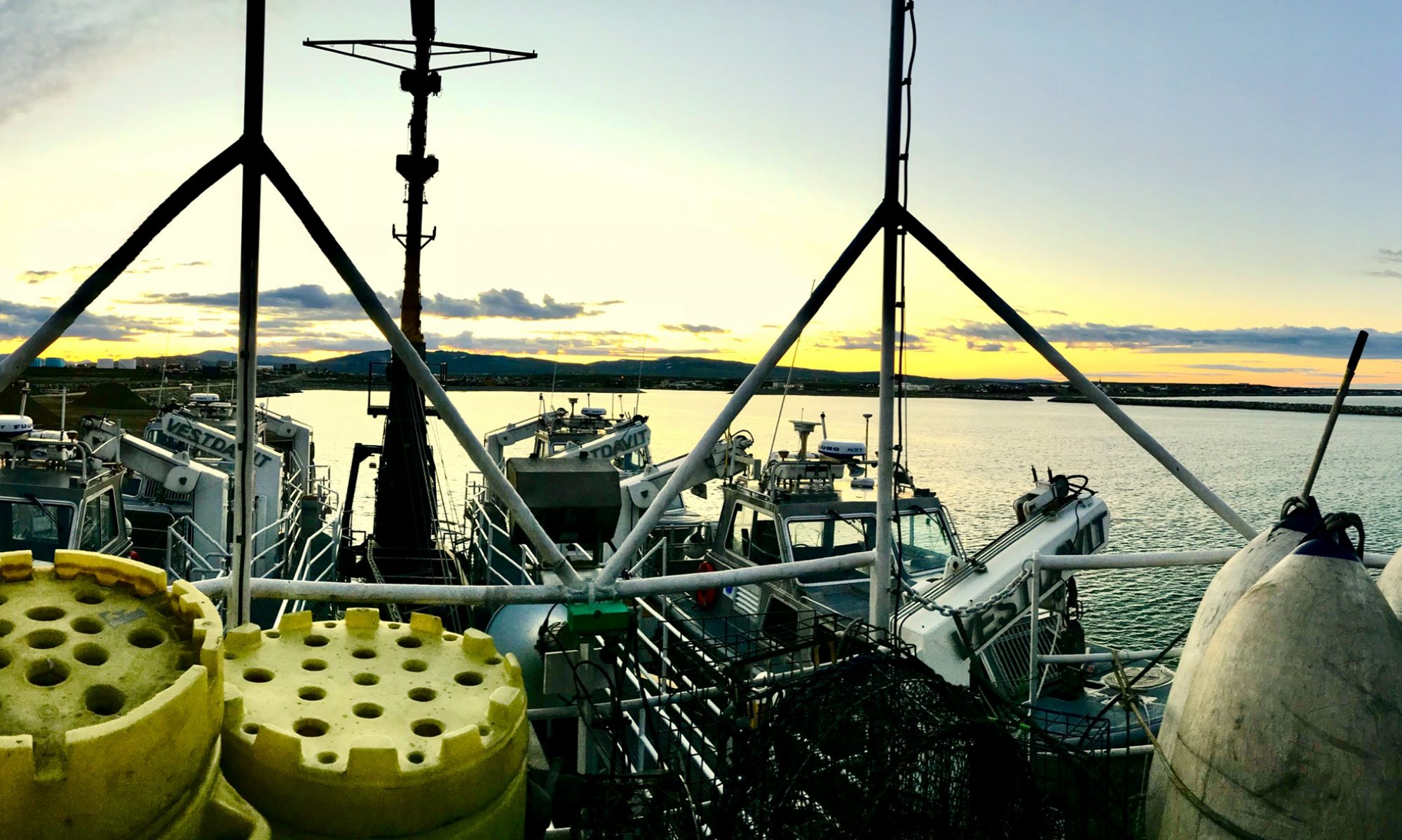
NOAA Teacher at Sea Cassie Kautzer (Almost) Aboard NOAA Ship Rainier August 16 – September 5, 2014
Mission: Hydrographic Survey Geographical area of cruise: Cold Bay, Alaska Date: August 11, 2014
Personal Log
Hi! My name is Cassie Kautzer and I am writing to you from my couch in Northwest Arkansas. I am hiding inside with the air conditioning today because my thermometer shows it being 95 degrees Fahrenheit, and that is too hot for this former Wisconsin girl! I am finishing packing and doing some final research before I head to Alaska on August 16! (I am also very much looking forward to cooler temperatures!)
Alaska or Bust! This science girl is ready!
I am a fifth grade teacher at Monitor Elementary in Springdale, Arkansas! I have loved MONITOR and all my little Mallards since 2008 when I had the honor of joining the Monitor Team. Monitor Elementary houses a very diverse population of around 800 students each year. This school year, I will have the pleasure of teaching science to 112 of those students, and I cannot wait to share this amazing experience with them! Since Arkansas is not a coastal state, neither my students nor I have a lot of experience with marine ecology or tidal influences. In the Paleozoic Era, however, the entire state was covered by relatively shallow ocean, the Ouachita Basin.
I applied for this wonderful learning opportunity for several reasons:
• I am like my students, I learn by DOING! I can’t take all of my students with me (though I would if I could), so I will learn and gather new information, first hand, and take back pictures, videos, stories, lessons, and activities to share with them!
• I want my students to see the bigger picture–how is our life in Arkansas affected by oceans, tides, floods, erosion?
• I want my students to see the scientific opportunities, jobs, and careers that are available to them! I want to help inspire future scientists!
• I want my girls to see women working in scientific fields!
• And… I love adventure, and exploring and learning about our beautiful world! I will not fear the unknown; I will learn and grow as I figure it out!
On top of the world! I made my first visit to Whitaker Point in Arkansas this summer!
My mission this summer, from August 16 – September 5, will be a Hydrographic Survey aboard the NOAA Ship Rainier. NOAA is the National Oceanic and Atmospheric Administration. NOAA’s mission is to understand the Earth’s environment in order to conserve and care for marine (ocean) resources. The Rainier is “one of the most modern and productive survey platforms of its type in the world” and uses multibeam sonar systems to “cover large survey areas in a field season. The ship’s hydrographers acquire and process massive amounts of data and create high-resolution, three-dimensional terrain models of the ocean floor.” Those models can then be used to identify obstructions and shoals along the bottom of the ocean that are dangerous for navigating ships. (http://www.omao.noaa.gov/publications/ra_flier.pdf) Hydro ships, like the Rainier, map the ocean floor to help with safe navigation of the seas. Knowing the depth and make-up of the ocean floor surrounding Alaska will benefit all the vessels and ships, large and small, passing through the Gulf of Alaska. Activities onboard can include echosounding, tide gauge installation, shoreline surveying, verification, and mapping, and data processing.
NOAA ship Rainier, named for Mt. Rainier – a volcanic cone in Washington state that rises 14,410 feet above sea level. Photo courtesy of NOAA.
So what does all of that mean?? I am about to find out! NOAA’s Teacher at Sea program aims to provide me, the teacher, with real-world research experience through work with world-renowned scientists, to allow unique insights into oceanic and atmospheric research crucial to our world. To this end, I truly believe the best way to learn is by getting ones hands dirty and trying to figure things out. So, on August 16 I will head to Alaska and meet up the Rainier in Kodiak, AK. On August 18 we will depart from Kodiak and head toward Cold Bay to begin our hydrographic survey mission.
Right now, I have more questions than answers: What will it be like without land beneath my feet for three whole weeks? What hours will I work? How am I going to learn all the crew members’ names? Will I get sea sick? What is echosounding? Will I get to go out on a launch? What marine life am I going to see? Will I ever want to leave Alaska? I guess I am about to find out!
For My Students
Can you find out…..?
1. How can I track the distance and speed I am traveling at while on the Rainier? (What units would I use to measure and share this information with you?)
2. When I am on the Rainier, weather information will be shared in degrees Celsius. How can I convert that information to degrees Farenheit so all of my non-science friends can understand?
“Leave a Reply” at the very bottom of this page! I am looking forward to answering (or trying to answer) your questions and sharing this epic learning adventure with you!
And of course, as Will.I.Am wrote and sang, and I kareoked to my students all year, “Reach for the Stars” and you’re sure to end up in the “Hall of Fame!”
Geographical Area of Cruise: Bering Sea North of Dutch Harbor
Date: Sunday, July 6th, 2014
Weather Data from the Bridge:
Wind Speed: 6 kts
Air Temperature: 8.6 degrees Celsius
Weather conditions: Hazy
Barometric Pressure: 1009.9
Latitude: 5923.6198 N
Longitude: 17030.6395 W
Science and Technology Log
Part One of the Survey Trawl: Getting Ready to Fish
This is a picture of a pollock from our first trawl.
Today is my second day aboard the Oscar Dyson. We are anxiously waiting for the echosounder (more information on echosounder follows) to send us a visual indication that a large abundance of fish is ready to be caught. The point of the survey is to measure the abundance of Walleye Pollock throughout specific regions in the Bering Sea and manage the fisheries that harvest these fish for commercial use to process and sell across the world. The Walleye Pollock are one of the largest populations of fish. It is important to manage their populations due to over-fishing could cause a substantial decrease the species. This would be detrimental to our ecosystem. The food web [interconnecting food chains; i.e. Sun, plants or producers (algae), primary consumers, animals that eat plants (zooplankton), secondary consumers, animals that eat other animals (pollock), and decomposers, plants or animals that break down dead matter (bacteria)] could be altered and would cause a negative effect on other producers and consumers that depend on the pollock for food or maintain their population.
The main food source for young pollock is copepods, a very small marine animal (it looks like a grain of rice with handle bars). They also eat zooplankton (animals in the plankton), crustaceans, and other bottom dwelling sea life. On the weird side of the species, adult pollock are known to eat smaller pollock. That’s right, they eat each other, otherwise known as cannibalism. Pollock is one of the main food sources for young fur seal pups and other marine life in Alaskan waters. Without the pollock, the food web would be greatly altered and not in a positive way.
How do we track the pollock?
Pollock
Tracking begins in the acoustics lab. Acoustics is the branch of science concerned with the properties of sound. The acoustics lab on board the Oscar Dyson, is the main work room where scientists can monitor life in the ocean using an echosounder which measures how many fish there are with sound to track the walleye pollock’s location in the ocean. They also use the ships’s GPS (Global Positioning System), a navigation system, to track the location of the NOAA vessel and trawl path.
Sonar Screen
What is sonar and how does it work?
Sonar (sound ranging & navigation; it’s a product of World War II) allows scientists to “see” things in the ocean using sound by measuring the amount of sound bouncing off of objects in the water. On this survey, sonar images are displayed as colors on several computer monitors, which are used to see when fish are present and their abundance. Strong echoes show up as red, and weak echoes are shown as white. The greater the amount of sound reported by the sonar as red signals, the greater the amount of fish.
Echo Sonar Screen Showing the patterns of echos from the ocean.
How does it work? There is a piece of equipment attached to the bottom of the ship called the echosounder. It sends pings (sound pulses) to the bottom of the ocean and measures how much sound bounces back to track possible fish locations. The echo from the ocean floor shows up as a very strong red signal. When echoes appear before the sound hits the ocean floor, this represents the ping colliding with an object in the water such as a fish.
The scientists monitor the echosounder signal so they can convey to the ships’s bridge and commanding officer to release the nets so that they can identify the animals reflecting the sound. The net catches anything in its path such as jellyfish, star fish, crabs, snails, clams, and a variety of other fish species. Years of experience allows the NOAA scientists the ability to distinguish between the colors represented on the computer monitor and determine which markings represent pollock versus krill or other sea life. We also measure the echoes at different frequencies and can tell whether we have located fish such as pollock, or smaller aquatic life (zooplankton). The red color shown on the sonar screen is also an indicator of pollock, which form dense schools. The greater amount of red color shown on the sonar monitor, the better opportunity to we have to catch a larger sample of pollock.
The Science Team Wonderful group of people.
Once we have located the pollock and the net is ready, it is time to fish. It is not as easy as you think, although the deck hands and surveyors make it look simple. In order to survey the pollock, we have to trawl the ocean. Depending on the sonar location of the pollock, the trawl can gather fish from the bottom of floor, middle level and/or surface of the ocean covering preplanned locations or coordinates. Note: Not all the fish caught are pollock.
The preplanned survey path is called transect lines with head due north for a certain distance. When the path turns at a 90 degree angle west (called cross-transect lines) and turns around another 90 degree angle heading back south again. This is repeated numerous times over the course of each leg in order to cover a greater area of the ocean floor. In my case we are navigating the Bering Sea. My voyage, on the Oscar Dyson is actually the second leg of the survey, in which, scientists are trawling for walleye pollock. There are a total of three legs planned covering a distance of approximately 6,200nmi (nautical miles, that is).
Trawling is where we release a large net into the sea located on the stern (the back of the boat). Trawling is similar to herding sheep. The fish swim into the net as the boat continues to move forward, eventually moving to the smaller end of the net. Once the sonar screen (located on a computer monitor) shows that we have collected a large enough sample of pollock, the deck hands reel the net back on board the boat.
The crew are beginning to release the trawl net.This is the stern of the boat where the trawl net gets released into the ocean.
We have caught the fish, now what? Stay tuned for my exciting experience in the wet lab handling the pollock and other marine wild life. It is most certainly an opportunity of a lifetime.
Personal Log
What an adventure!
I was lucky enough to spend a day exploring Dutch Harbor, Alaska before departing on the pollock survey across the Bering Sea. It took me three plane rides, several short lay-overs and and a car ride to get here, a total of 16 hours. There is a four hour time difference between Dutch Harbor and Dover, Delaware. It takes some getting used to, but definitely worth it. The sun sets shortly after 12:00 midnight and appears again around 5:00 in the morning. Going to sleep when it’s still daylight can be tricky. Thank goodness I have a curtain surrounding my bed. Speaking of the bed, it is extremely comfortable. It is one of those soft pillow top beds. Getting in and out of the top bunk can be challenging. I haven’t fallen yet.
My bed is the top bunk.
During my tour through the small town of Dutch Harbor, I have encountered very friendly residents and fishermen from around the world. I was fortunate to see the U.S. Coast Guard ship Healy docked at the harbor. What a beautiful vessel. Dutch Harbor has one full grocery store (Safeway) just like we have in Delaware, with the exception of some of the local Alaska food products like Alaska BBQ potato chips. They have a merchant store that sells a variety of items ranging from food, souvenirs, clothing, and hardware. They have three local restaurants and a mom and pop fast food establishment. One of the restaurants is located in the only local Inn the Aleutian hotel, which also includes a gift shop. Dutch Harbor is home to several major fisheries. Dutch Harbor is rich in history and is home to the native Aleutian tribe. I took a tour of their local museum. It was filled with the history and journey of the Aleutian people. While driving through town, I got a chance to see their elementary and high school. They both looked relatively new. Dutch Harbor is also home to our nation’s first Russian Orthodox Church. Alaska is our 50th state and was purchased from Russia in 1867.
Mary Murian in front of the Oscar DysonA very funny photo of me in my survival suit.
One of the coolest parts of my tour was walking around the area known as the “spit”. The “spit” is located directly behind the airport. I’m told it is called the “spit” because the land and water are spitting distance in length and width. We walked along the shoreline and discovered hundreds of small snails gathered around the rocks. We also found hermit crabs, starfish, sea anemones, jellyfish, and red algae. We saw red colored water, which is a bloom or a population explosion of tiny algae that get so thick that they change the color of the water.
One of numerous amazing views in Dutch HarborStarfish
Another animal in abundance in Dutch Harbor is the bald eagle. There is practically one on every light post or tall structure. Often the bald eagles are perched in small groups. Watch out: if you walk too close to a nesting mother, she will come after you. They are massive, regal animals. I never get tired of watching them.
We had to watch our step, the snails were everywhere along the shoreline of the Spit.A bald eagle hoping to find some lunch.Russian Orthodox Church in Dutch Harbor, AK
Did You Know?
Did you know that Alaska’s United States Coast Guard vessel has the ability to break through sea ice?
This is especially helpful if you want to study northern areas, which are often ice covered, in the winter, and to assist a smaller boat if it gets trapped in the ice.
U.S. Coast Guard Ship Healy docked at the Spit.
Did you know that scientists set time to Greenwich Mean Time (GMT) which is the time in a place in England?
This reduces confusion (e.g. related to daylight savings, time zones) when the measurements are analyzed.
Key Vocabulary:
Carnivore
Primary Consumer
Secondary Consumer
Nautical Miles
Trawling
Stern
Acoustics
Decomposers
Echosounder
Meet the Scientist:
Alex De Robertis Chief Scientist
Leg II Chief Scientist Dr. Alex De Robertis
Title: NOAA Research Fishery Biologist (10 years)
Education: UCLA Biology Undergraduate Degree
Scripps Institute Oceanography San Diego, CA PhD.
Newport, Oregon Post Doctorate work
Living Quarters:
Born in Argentina and moved to England when one-year old.
Lived in Switzerland and moved to Los Angeles,CA at the age of 13.
Currently lives in Seattle, Washington, and he has two kids aged one and five.
Job Responsibilities:
Responsible for acoustic trawl surveying at Alaska Fisheries Science Center
Was able to help with the Gulf of Mexico oil spill clean-up using the same echo sonar used on trawl surveys.
What is cool about his work:
He enjoys his work, especially the chance to travel to different geographic locations and meet new people. “You never know what you are going to encounter; there is always a surprise or curve ball, when that occurs you adjust and just go with it”.
In the near future, he would love to see or be part of the design for an autonomous ocean robot that will simplify the surveying process.
He has been interested in oceans and biology since a small boy. He remembers seeing two divers emerge from the sea and was amazed it was possible.
False Point on Kenai Peninsula (viewed this morning through the fog)
Science and Technology Log
How do scientists use acoustics to locate Pollock (and serendipitously other ocean creatures)?
Scientists aboard the NOAA Research Vessel Oscar Dyson use acoustic, specifically hydroacoustic data, to locate schools of fish before trawling. The trawl data provide a sample from each school and allow the NOAA scientists to take a closer look by age, gender and species distribution. Basically, the trawl data verify and validate the acoustics data. The acoustics data, collected in the Gulf of Alaska in systematic paths called transects, combined with the validating biological data from the numerous individual trawls, give scientists a very good estimate for the entire Walleye pollock population in this location.
This screen is showing the echogram from the EK 60 echosounder during a trawl at 83.13 meters. The red line in the middle of the screen is the ocean floor. The colorful spikes above the red line indicate “backscatter” that is characteristic of capelin, a small fish that pollock feed on.
Hydroacoustics (from Greek words: hydro meaning “water” and acoustics meaning “sound”) is the study of sound in water. Sound is a form of energy that travels in pressure waves. In water, sound can travel great distances without losing strength and can travel fast, roughly 4.3 times faster in water than in air (depending on temperature and salinity of the water).
Click on this picture to see how sound travels from various ocean creatures through water. (Photo from sciencelearn.org)
The Oscar Dyson has powerful, extremely sensitive, carefully calibrated, scientific acoustic instruments or “fish finders” including the five SIMRAD EK60 transducers located on the bottom of the centerboard, the SIMRAD ME70 multibeam transducer located on the hull, and a pair of SIMRAD ITI transducers on the trailing edge of the centerboard.
Image of acoustic instruments on the Oscar Dyson. (Photo courtesy of NOAA Teacher at Sea Program)
This “fish-finder” technology works when transducers emit a sound wave at a particular frequency and detect the sound wave bouncing back (the echo) at the same frequency. When the sound waves return from a school of fish, the strength of the returning echo helps determine how many fish are at that particular site.
The green ship’s transducer is sending out sound waves towards the fish. The waves bounce back echoes towards the ship that are received by the transducer. (Photo courtesy of Oracle Thinkquest)
Sound waves bounce or reflect off of fish and other creatures in the sea differently. Most fish reflect sound energy sent from the transducers because of their swim bladders, organs that fish use to stay buoyant in the water column. Since a swim bladder is filled with air, it reflects sound very well. When the sound energy goes from one medium to another, there is a stronger reflection of that sound energy. In most cases, the bigger the fish, the bigger the swim bladder; the bigger the swim bladder, the more sound is reflected and received by the transducer. The characteristic reflection of sound is called target strength and can be used to detect the size of the fish. This is why fish that have air-filled swim bladders show up nicely on hydroacoustic data, while fish that lack swim bladders (like sharks) or that have oil or wax filled swim bladders (like Orange Roughy), have weak signals.
The above picture shows the location of the swim bladder. (Photo courtesy of greatneck.k12.ny.us)
These reflections of sound (echoes) are sent to computers which display the information in echograms. The reflections showing up on the computer screen are called backscatter. The backscatter is how we determine how dense the fish are in a particular school. Scientists take the backscatter that we measure from the transducers and divide that by the target strength for an individual and that gives the number of individuals that must be there to produce that amount of backscatter. For example, a hundred fish produce 100x more echoes than a single fish. This information can be used to estimate the pollock population in the Gulf of Alaska.
The above picture shows a computer screen with dense red “backscatter” characteristic of large amount of fish, most likely pollock. The yellow lines above and below the backscatter show the location of the trawl lines.
Personal Log:
Safety
Safety Announcements Don the Walls of the Oscar Dyson
Continuing with Maslow’s hierarchy of needs, I will continue up the pyramid (see below) and discuss some ways that the basic need of safety is met on the ship. The safety and security of all staff (as well as sea animals we encounter) are top priority on the Oscar Dyson. There are constant reminders of this priority during ship life.
A Version of Maslow’s Hierarchy of Needs
Safety Drills
On the first day of our travel, before the Oscar Dyson was far from port at Kodiak, we had three drills. The fire drill and man overboard drill required me to report to the conference room and meet up with the rest of the science team. Patrick, the lead scientist, then reported that we (the scientist team) were all accounted for. The crew had more complex tasks of deploying a small boat and retrieving “the man overboard”.
The other drill was the abandon ship drill. On the ship, every person is assigned to a life boat (mine is Lifeboat 1). When the drill commenced, I reported to my muster, the portside of the trawl deck, with survival gear: jacket, hat, survival suit and life preserver. We will have drills weekly at anytime.
Abandon Ship Crew Assignments
Safety Gear
When working in the lab, the scientists wear orange slickers, boots, and gloves, not only to keep clean, but to protect us from anything that might be dangerous (fish spines, jellyfish tentacles, and so on). When on deck, we must wear hardhats (to protect from falling objects from the crane or trawl) and life preservers like the rest of the crew.
Gloves, a Must in Fish Lab!
Water Tight Doors
Watertight doors are special types of doors found on the ship which prevent the flow of water from one compartment to other during flooding or accidents. These doors are used onboard in areas, such as the engine room compartment, science and acoustics labs, and control bridge, where chances of flooding are high.
Water Tight Door on Bridge
These are just a few examples of how safety is emphasized on the ship. There are reminders in one’s line of vision constantly.
Safety, Everyone’s Responsibility
Did You Know?
There are various seafarer or crew positions on the Oscar Dyson. A ship’s crew can generally be divided into three main categories: the deck department, the engineering department, and the steward department. Rob and Greg are members of the deck department; both men hold Merchant Mariner Credentials as “Able Bodied Seamen” or ABS. Rob is from Boston, Massachusetts and went to school for seamanship in Fairhaven, MA. He considers his NOAA position as a good job with a good income, but his main profession is lobstering which he does on the open sea when he is not working for NOAA. Rob says, “The ocean is in my blood” and always wanted to work on it. Greg, on the other hand, chose to be a Merchant Mariner after a voyage at sea. He moved to Texas from Louisiana in his 20’s, went fishing for the first time, and got seasick. He considered battling seasickness a challenge, and thus pursing seamanship as a career. In his free time he is a free-lance photographer and journalist. Below are some pictures of Greg and Rob on the job. Notice they are always wearing their safety gear.
Greg and Rob Bringing in the Trawling Net
Greg and Rob, Preparing for a Camera Drop
Something to Think About:
Since I will begin teaching Zoology later in August, I have decided to highlight some of the animals that the scientist team has found in our trawls. Today’s feature will be one of the simplest multicellular animal families, the Porifera. Porifera is a word formed from combining the Latin words porus which means “passage-way” and fera meaning “bearing.” Porifera, commonly referred to as sponges, have tiny pores in their outer walls that filter water to get nutrients.
Various Porifera (Sponges) from a Bottom TrawlTeacher (me) Demonstrating How Water Flows out the Osculum (opening) of a Poriferan
To learn more about the Porifera Family, click the Porifera on the picture below, and stay tuned for further exploration of this animal Tree of Life.
NOAA Teacher at Sea Kathleen Harrison Aboard NOAA Ship Oscar Dyson July 4 — 22, 2011
Location: Gulf of Alaska Mission: Walleye Pollock Survey Date: July 12, 2011
Weather Data from the Bridge Air Temperature: 10.15° C, Sea Water Temperature: 7.6° C
True Wind Speed: 12.26 knots, True Wind Direction: 191.38°
Very foggy, visibility < 1/4 mile
Door open on bridge to hear other fog horns
Latitude: 56.07° N, Longitude: 158.08° W
Ship Heading: 24°, Ship Speed: 11.7 knots
Science and Technology Log: Finding Fish
In a previous log, I talked about using nautical charts and trawling as 2 methods used in calculating the biomass of Walleye Pollock in the Gulf of Alaska. Finding the fish to catch is tricky business in the ocean, they don’t usually come up to the surface and say hi. The NOAA scientists working on the Walleye Pollock Survey spend a lot of time looking for fish, so that their trawling efforts won’t be wasted (that is the general idea, anyway). How do you look for fish in the ocean? With acoustics, of course, another method used in calculating biomass.
Acoustics is the use of sound, which will travel through the water, and bounce off of objects that it hits. There is Simrad ER60 echosounder that operates 5 transducers mounted on the center board under the ship, and it continuously sends out sound waves.
The Simrad ER60 echosounder sends sound directly under the ship, finding fish anywhere in the water column.
In the Acoustics Lab of the Oscar Dyson, the data from the multi-beam echosounder is being studied all of the time. The sound waves leave the device, travel down, hit the swim bladder in a fish (the fish doesn’t even know), and reflect back to the ship. The time it takes for the sound to return is used to calculate the distance down, and a computer generated picture called an echogram is produced.
The echogram shows plankton at the surface in blue/green, fish near the bottom as red/brown spots, and the ocean floor as a red/brown line.
The echogram tells the scientists several things. The surface of the water is shown, with surface dwelling organisms such as krill, phytoplankton, zooplankton, and juvenile fish. The fish that are mid-water are shown as well, showing up as red or blue dashes or blobs. This is where the Pollock usually are. Some fish are bottom feeders, and the red and blue dashes on the bottom represent those. The ocean floor is also shown, which is very important when choosing which type of trawl to use. If the bottom is flat, the Poly Nor’Easter could be used to capture to fish on the bottom. The Aleutian Wing Trawl might be used in mid water if the bottom is rocky and irregular.
Now, looking at the fish from the surface is nice, but wouldn’t it be better to see them close up? Of course! The scientists have another tool at their disposal, and no, it isn’t me diving down to the fish (brrr). This tool is called a Drop Target Strength, or DTS.
The Drop Target Strength (DTS) can be lowered into the water, and get closer to the fish. The information is fed into the computer by a water proof cable.
About once a day, or every other day, the DTS is lowered over the side, and it starts sending out sound waves (3 pings/second), just like the echosounder mounted on the ship. The advantage with the DTS, though, is that it is closer to the fish, giving a more detailed and accurate picture. Individual fish can be sighted. Taking a picture of a fish is kind of like taking a picture of a toddler, they don’t hold still very well. So, a count of the fish on the echogram might not be exact. Also, they might change the angle of their body, making the sound wave reflect off their swim bladder at a different angle. The colors on the echogram are significant: brown and red mean a strong signal, yellow is medium, and green and blue indicate a weak signal.
Studying the echogram from the DTS gives scientists a better picture of where the fish are. Each individual wavy line is probably a separate fish.
The scientists will study the echograms to determine where the fish are, and make a decision to fish or not. Once fishing begins, they will move from the acoustics lab to the bridge, and study the echograms there. An estimate of how many fish are in the net is made, and then the scientists will ask the crew to “haul back” the net. (I am learning a whole new language!) Then, things get very busy as we head to the fish lab to process the fish.
Here are the NOAA scientists that I am privileged to work with on the Oscar Dyson: (left to right) Darin Jones, Fish Biologist, Denise McKelvey, Fish Biologist, Neal Williamson, Chief Scientist.
New species seen:
Giant Pacific Octopus (juvenile, 1 cm)
Opalescent Squid
Chinook (King) Salmon
Egg yolk jelly fish
Sculpin (juvenile)
North Pacific sea nettle
Spud sponge
These are juvenile squid, about 2 cm long. They are nearly transparent.This is a juvenile Giant Pacific Octopus, only 1 cm wide, complete with 2 huge eyes, and 8 perfect legs.
Personal Log
My days have developed a routine now: wake at 3:30 am (ugh), start my shift in the acoustics lab about 4:00, breakfast at 7:30, lunch at 11:30, end my shift at 4:00 pm, dinner at 5:30, shower, in bed by 8:00.
See the orange life saving ring? My window is just to the right of the ring. The 3 white canisters on the back wall hold life rafts that inflate upon release of the canister.
In between these times, I work on my Teacher at Sea log, post pictures on Facebook, read and answer e-mail, visit the bridge and ask lots of questions, and of course, process fish whenever there is a trawl (very fun). Today marks the halfway point of our cruise! The ship is quieter than I thought, even though there are 35 people on board, the most that I ever see might be 10 during mealtimes. There is constant background noise of the ship’s engines, waves hitting the bow of the ship, creaks and groans of the furniture as the ship rolls, but I am used to it now, and hardly notice it. I am thankful for the calm weather that we have had so far.
NOAA Teacher at Sea Melinda Storey Onboard NOAA Ship Pisces June 14 – July 2, 2010
Mission: SEAMAP Reef Fish Survey Geographical Area of Cruise: Gulf of Mexico Date: Friday, June 25, 2010
Weather Data from the Bridge Time: 1000 hours (10 am) Position: latitude = 27°53.9 N longitude = 093º 51.1 W Present Weather: 5/8 cloudy (cumulonimbus/cumulus clouds) Visibility: 10 nautical miles Wind Direction: E Wind Speed: 4 knots Wave Height: 1 foot Sea Water Temp: 30.5°C Air Temperature: dry bulb = 29.2°C, wet bulb = 26.3°C
Science and Technology Log
Video from the Camera ArrayEchosounder
The technology on this ship is amazing! The picture on the left is video of what the camera array filmed yesterday. The fish just swim around and sometimes they even come right up to the camera like they are “kissing” it. Then they back away and swim off. It’s beautiful to watch. The picture on the right is the EK60 Echo Sounder. The red line that you see shows the bottom of the seafloor. The blue above the red line is the water itself and the white specks that you see are fish. The most recent reading is located on the right side of the screen. The echo sounder sends a “ping” to the computer and that “ping” is a fish. Sometimes we can see definite shark outlines in the images below our ship. If you look at the bottom right hand corner of the echo sounder photo, you will see a large white speck along the red line. This indicates a large fish (possibly a shark) trolling the bottom of the ocean. When we came upon the dead sperm whale, the Electronics Technician (ET) came to the lab and told us there were a lot of “large fish,” most likely Mahi Mahi or even sharks, swimming under the ship.
The Pisces would not be able to operate without the engineers who make sure that everything onboard is functioning properly, including the 4 massive diesel generators that power the ship, the freshwater generators that convert seawater into fresh drinking water, and the hydraulics that power the cranes to lift the cameras in and out of the water. Chief Engineer Garet Urban leads the team of engineers, oilers, and electrical experts who take care of all the mechanical issues on board the ship.
First Engineer, Brent Jones, took us on a tour of the very impressive engine room on the lower deck of the Pisces. He showed us the incinerator which burns all the trash, oil filters, and other waste at a temperature of 1200°C (2192°F). Paper, plastic, and aluminum is brought back to shore and recycled. Before entering the engine room, we were told to put in earplugs because the sound can damage your eardrums. In addition to not being able to hear a thing inside the engine room, the heat is incredible! The engineers need to be careful to stay hydrated while working in these conditions.
Engine roomDiesel Generators
The Pisces is powered by 4 diesel fuel generators which generate electricity that drives two large electric motors. The photo above on the right shows one of the generators in yellow. The engineers are constantly monitoring the mechanics of the ship to make sure everyone on board has a safe and productive voyage while conducting scientific research on board.
Personal Log
All this technology on board makes me drool! The Pisces is certainly a beauty of the NOAA fleet. Each morning Chris Gledhill, our fishery biologist, looks at the video from the camera array and I’m hanging just over his shoulder watching all the coral and fish. It’s really interesting to see the fish swim by the camera and now I can even identify some of them. I never knew there was a type of coral called “wire coral.” It looks like curly-cue wire used in floral arrangements. One of our deck hands caught some on his fishing pole one night and when I held it, the coral moved! Wire coral is a living creature so, of course it moved!
What I thought was really funny was watching a big grouper swim by the camera and then we caught it on the Bandit Reel. Nothing like seeing your fish before you catch it! Here you can see Paul Felts and me holding the 21 pound grouper.
Big GrouperBig Grouper caught
Just like school, the Pisces has drills – fire drills, man overboard drills, and abandon ship drills. It’s always good to be prepared. When we have an abandoned ship drill we have to put on our “Gumby Suit.” This survival suit would protect us by keeping us afloat and warm if we really had to go into the water. The Gumby Suit is not exactly the latest fashion but I would certainly want it if I have to abandon ship.
Gumby SuitTeacher at Sea in their Gumby suits
The day after this Abandon Ship drill, we had a REAL fire drill. Over the PA system we heard, “This is not a drill. This is not a drill.” The forward bow thruster was smoking. We “mustered,” or gathered, on the second deck, but when we got there we could really smell smoke. So, we were sent down to the main deck for precaution. Fortunately, we have an outstanding crew who fixed the problem immediately.
New Term/Vocabulary
Muster – to gather
“Something to Think About”
While on the bridge last night, I heard on the radio another ship broadcast they were “taking on water.” What would you do if you were on a boat in the Gulf and it suddenly started taking on water?