Matt Lawson, June 10, 2008

NOAA Teacher at Sea
Matt Lawson
Onboard NOAA Ship Rainier
June 9-20, 2008

Mission: Hydrographic Survey
Geographical area of cruise: Bay of Esquibel, Alaska
Date: June 10, 2008

Weather Data from the Bridge as of Wednesday 
Visibility: 10 nautical miles (Nm.)
Wind Direction: none
Wind Speed: none
Sea Wave Height: none
Seawater Temperature: 7.8 Celcius (C)
Sea Level Pressure: 1018.1 millibars (Mb.)
Cloud Cover & skies: overcast
Air Temperature: Dry bulb – 12.2 C Wet bulb – 8.3 C

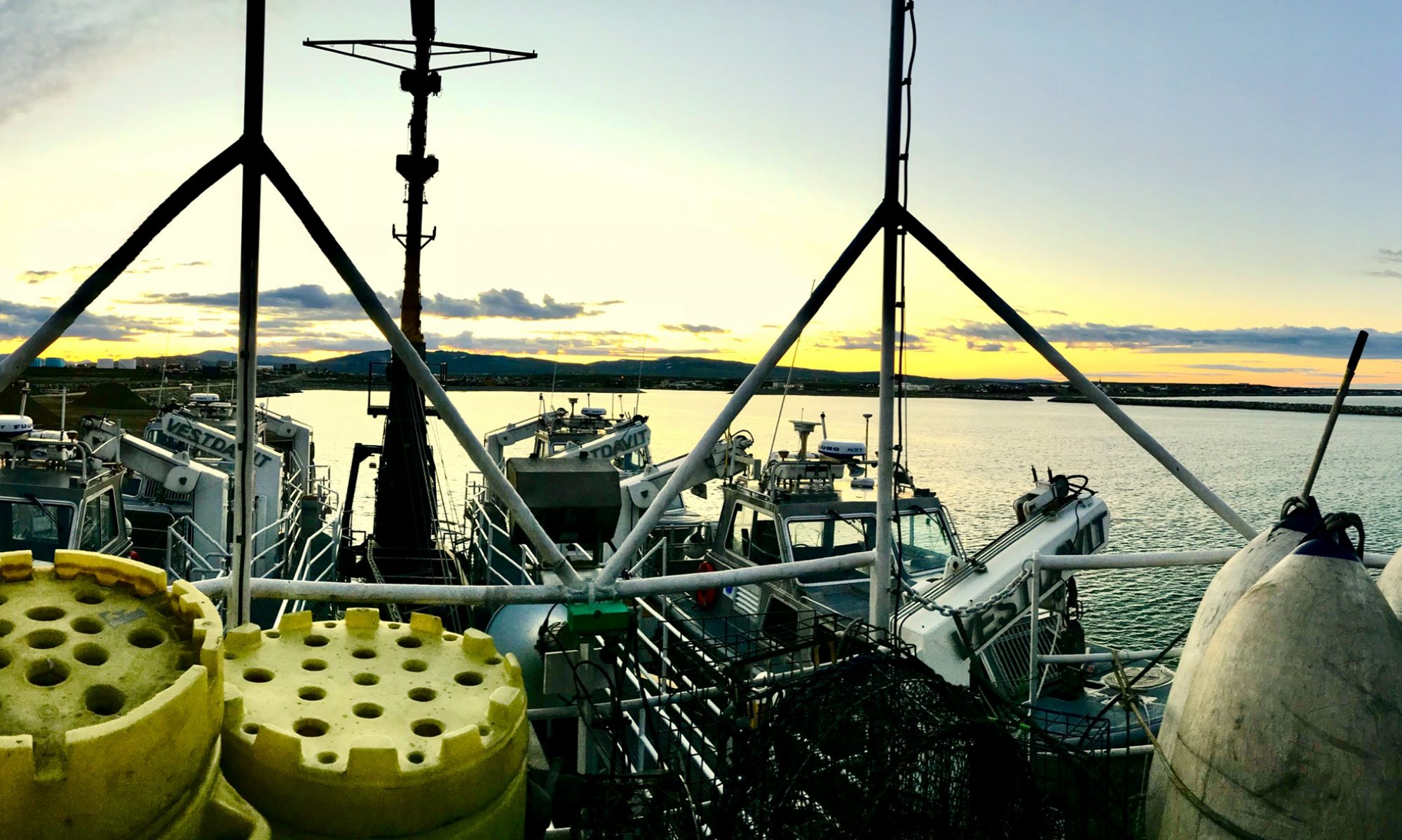
One of the gravity davits stands waiting for the return of its launch boat

Science and Technology Log 

Out to Launch! 

June 10: At 7:50 am CO Haines met with everyone involved in today’s launches to talk about the work, weather and safety. Acting FOO Smith covered the particulars of the survey work each launch boat would be conducting. Chief Boatswain Kruger briefly reminded us about safety and being in your positions at the right times, then the order in which the launches would depart from the ship. Very shortly after 8am, we climbed aboard RA-#4 (RAINIER launch boat #4) and were lowered into the water. All six launch boats are similar to each other in that they are about 30 feet long, have built-in diesel engines, a cabin, and a canopy over the coxswain’s wheel.  They are housed upon gravity davits, which are not the latest in technology, but very durable and reliable.  More modern davits use hydraulic systems and they require fewer deckhands to operate. It appears to me that each system has its advantages. Today, we mainly used the side scan sonar system on that boat to survey some of the rocky off shore areas of Biali Rock.

RA-4 leaves a trail as it speeds to the assigned survey site.

The weather was pretty good except that the waves were 6-7 feet tall, making it a little rough for the new guy. Amy Riley, Lead Survey Technician, invited me below deck to see the work she and Grant were doing. Basically, they had a computer with three monitors, showing the current GPS map of where we were, the scanning in real time and a 3-D image of the ocean floor as it was being processed. The job here for the technicians is to monitor the computers as they accumulate data that will later be processed. But this is not yet the end product.  The processed data is finally sent ashore where NOAA cartographers will create the actual charts used for navigation.  Even though quite a number of other things were going on in other smaller windows, I’m not above admitting I didn’t fully understand it all!  I was allowed to take the tech’s chair for a while and we did 4-5 passes with me in control of the system.  Somehow, I managed not to crash us into anything!

The two fishermen in their “Gumby Suits” wait to be rescued.  Their capsized fishing boat is in the foreground. Photo courtesy of Ian Colvert
The two fishermen in their “Gumby Suits” wait to be rescued. Their capsized fishing boat is in the foreground. Photo courtesy of Ian Colvert

Later, I sat in on the survey de-briefing in the wardroom.  This meeting takes place every day immediately after the last launch returns to the ship.  Everyone involved in the launches participates in this meeting.  While everyone is given an opportunity to speak about the day, the lead survey technician for each launch specifically makes an official report on accomplishments, areas of interest or concern, problems and/or issues that need to be addressed before the next set of launches departs. I found this part of the day just as interesting because it created a summary for the entire day’s mission.

Personal Log 

Drill or No Drill? 

NOAA personnel expertly pluck the stranded fishermen from the sea. Even as they suffered from shock, they thanked the rescue team profusely for being there.

While out on the launch, we were able to catch a little of the radio chatter.  It’s always good to listen to the radio, even when it doesn’t pertain to you.  It keeps you in the know and alert to possible hazards in your path. I’m adding “listening to the radio” as a rule on my “to do” list, and I’m about to give you a good example as to why.  As we listened, it sounded like a “Man Overboard” drill was taking place on the ship. Ha, ha.  Better them than us.  However, the more we listened, we began to realize we were really missing the event of the day.  Apparently, two fishermen were out on a fairly old boat when they began to sink. We don’t know the cause, just that it was going down fast. They were able to get out only one mayday call. However, RAINIER’s bridge was able to pick up on and respond to the call.

Despite the fact that much of the ship’s personnel were out on launches, a sufficient rescue team was mustered and conducted a flawless rescue mission.  The two fishermen were in their emergency immersion or “Gumby suits” and had not suffered too much when they were picked up.  After allowing them time to rest and somewhat recover from shock, they were taken to the nearest port.   I had read how NOAA vessels frequently play vital roles in various rescue missions, but being here when it happens makes a much bigger impression.  Today proved just how easily things can get hairy out here and  how important it is to know how to handle emergency situations.  Drills and safety meetings occur regularly on RAINIER, and once again, came in very helpful.

Ian Colvert, a NOAA Survey Technician was on board RAINIER when the rescue mission took place. He is credited for the rescue pictures.

Bald eagles are as abundant here as the crows are at home.

Not Yet a Salty Dog 
I have to diverge a little here.  Operating a computer on a wildly thrashing boat was indeed a new experience in and of itself, as well as a point of hilarity for the Lead Technician, Amy, who’s been doing this for a long time.  Just working the mouse was like riding Ferdinand the Bull after being stung by an unfriendly bee. Anyway, after an hour of this, I began to get seasick.  Yes, the new experiences just keep coming!  At the risk of using too many analogies in one paragraph, I will say sea sickness pretty much just feels as if you’ve been traveling in the back of a tired old Chevy Impala being driven through very hilly country roads by a driver who should’ve had his/her license taken away 35 years ago.  Basically, puke city. I had to return to the deck where I could see the horizon and let my brain make sense of things again.  Recovery was a slow process in 6-7 foot waves, but I did eventually manage and was normal again long before we returned to the relative steadiness of the ship.

Sailing/Nautical terms for all you land lovers:

  1. FOO – Field Operations Officer
  2. SONAR – SOund Navigation Ranging – technology which uses sound to determine water depth.
  3. Side scan SONAR – a category of SONAR that is used to create an image of a large area of the sea floor. This type of SONAR is often used when conducting surveys of the seafloor in order to create nautical charts for navigation.
  4. Gravity Davit – davit system which relies on the weight of the boat to lower it into the water.
  5. GPS – Global Positioning System – a mechanism which uses satellite systems to determine location.
  6. Coxswain the helmsman or crew member in command of a boat.
  7. Manual Floatation Device – any life jacket that must be activated by the wearer (usually a rip cord and air canister system) to make it buoyant.
  8. Positive Floatation Device – a life jacket that does not require manual activation and is designed to keep the wearer’s head above water.
  9. Immersion Suit – a full body suit which functions as a positive floatation device.  Used in emergency situations, such as abandoning ship.  The insulation and water proofing of these suits are important factors in colder waters.
  10. Muster – to gather.
  11. Bridge – sometimes called a pilot house, the place from which the ship is steered.  This is the heart of ship operations.

Animals Seen Today 
No new ones, but it was still exciting to see so many.  Even though the somewhat higher waves kept me busy with the challenge of standing up, I did notice a large colony of starfish hanging on some rocks in calm waters.

“Did You Know?” 

  • There are cold water corals which grow in the Alaskan waters.
  • The Gulf of Esquibel (pronounced “es-ki-bell”) was originally named by Fransisco Antonio Maurelle about May 22,1779 in honor of Mariano Nunez de Esquivel, the surgeon of the ship La Favorita.
  • Alaska itself was purchased by the United States from Russia in 1867.
  • Prior to its sale to the U.S., the Russians referred to it as “Russian America.”
Sea otters bathed and ate nonchalantly on their backs as we passed between the islands.

Beth Carter, July 10, 2007

NOAA Teacher at Sea
Beth Carter
Onboard NOAA Ship Rainier
June 25 – July 7, 2007

Mission: Hydrographic Survey
Geographical Area: Gulf of Esquibel, Alaska
Date: July 10, 2007

Weather Data from the Bridge
Visibility:  2 nautical miles
Wind direction:  125 degrees
Wind speed:  11 knots
Sea wave height: 0-1 feet
Swell wave height: none
Seawater temperature:  11.7 degrees C
Dry bulb temp: 12.8 degrees C; Wet bulb temp:  12.2 degrees C
Sea level pressure:  1021.0 mb
Cloud cover: 8/8, fog and drizzle

The NOAA ship RAINIER, also known as S221, at anchor in Alaska.
The NOAA ship RAINIER, also known as S221, at anchor.

Science and Technology Log

Yesterday, I went out on launch #6, which utilizes a sonar system called the “C3D,” that produces interferometric sonar, which is a combination of side scan and multibeam sonar, to produce bathymetry.  Interferometric sonar is the latest technological advance in hydrographic mapping. This is the third technology I’ve been able to observe at work. The RAINIER has two launches that use single beam technology ( June 29 log), three launches that use multibeam technology (June 28 log), and Launch 6 has the side scan sonar.  There are advantages and disadvantages to each. Erin Campbell, my Tarheel buddy who is a physical scientist from the Pacific Hydrographic Branch of NOAA, took the time to explain some of the features and limitations of side scan sonar. The greatest advantage to side scan is that it produces sound waves that can cover a much wider swath of ocean floor, with very good resolution. This means that NOAA can be more fuel-efficient with its launches and cover more floor in less time.  Side scan can form accurate 3-D images of rocks, wrecks, and features of concern and interest on the ocean floor.  Hydrographers say that the side beam enables them to “paint the ocean floor.”

Erin Campbell, physical scientist, and Beth Carter, Teacher at Sea…two Tarheels at a rainy beach party near Bushtop Island, Alaska.

The greatest disadvantage to side scan sonar is that it does not actually provide depths associated with those features.  In other words, the hydrographers can look at the side scan images and locate a downed plane accurately on the ocean floor, but not know the exact depth of the plane. Another disadvantage to use of side scan in Alaska is that the extreme angles of slope of the islands and landforms cause the sound waves to create shadows on the resulting data. This means that some features in the shadows are missed.  Side beam sonar is used with great success on the eastern coast of the U.S., where the sea floor is sandy, is more uniform, and has less slope than in Alaska. Therefore, NOAA uses side scan to cover wide areas of territory, and then examines the images collected.  If the technicians see rocks or other potential hindrances to navigation, they send out the multibeam sonar launches to collect more detailed information on the depths.  If the concern is in a really shallow area, they might send out the single beam launches, which can get into shoal areas more easily with less threat of damage to the sonar equipment.

The C3D sonar transducer on the hull of the launch

Side scan sonar is still evolving as a technology. NOAA provides valuable feedback and information to the makers of this technology, which enables the manufacturers to fine-tune and improve the technology. As I prepare to leave the RAINIER, I am impressed with the depth of knowledge of the Commanding Officer, the survey crew, and officers on the ship. They take very seriously their work, which is to take information gathered utilizing sonar, and to produce the most accurate bathymetric products possible.  The resulting charts and hydrographic maps are critical aids to shipping companies and fishermen, whose lives and safety and economic livelihood depend on the accuracy of the maps. I’ve also learned that NOAA hydrographers are called in to assist after hurricanes.  Erin, for example, was called upon to join a NRT (Navigational Response Team) after Hurricane Katrina.  There were many container ships and other ships waiting in the Gulf of Mexico for the hydrographers to survey the waters in order to locate hazards (debris in the water, wrecks, storm damage) in the water that were blocking the port and docks. NOAA has six such teams that assist when there are oil spills, wrecks, storms, etc.

Erin Campbell operating the C3D sonar aboard the launch.

Terms Used

Bathymetry:  the science of measuring ocean depths.  It is the underwater equivalent to altimetry, or measuring altitude of land forms.  Bathymetry is utilized to create DTM’s, or digital terrain models, or three-dimensional models of the ocean floor.

Hydrography: the study and science of ocean mapping.

Questions of the Day: 

  1. What kind of sonar would be best utilized in the search for a tugboat that sank unwitnessed, suspected to be in a deep harbor – vertical beam, multibeam, or sidescan sonar?
  2. To see an example of a chart created with interferometric sonar, take a look at this website.

Personal Log

I want to close out my last log with a few pictures, which definitely communicate the Alaska experience better than my words.  I also want to thank the entire crew of the RAINIER for its kind hospitality, for teaching me so much, and for reminding me what it feels like to not understand something.  I can empathize with my students so much better, as I have been in their shoes now for almost 3 weeks…struggling to understand technologies that were totally unfamiliar to me, feeling frustrated, feeling glimmers of hope when a few concepts dropped into place in my brain. Alaska is incredibly beautiful, incomprehensibly vast…I hope to return someday.

A humpback whale breaching… breathtaking sight!
A bald eagle on the fly above Alaskan waters.
Alaska…known for its snow-topped majestic mountains.
Alaska…known for its snow-topped majestic mountains.  

Maggie Prevenas, April 20, 2007

NOAA Teacher at Sea
Maggie Prevenas
Onboard US Coast Guard Ship Healy
April 20 – May 15, 2007

Mission: Bering Sea Ecosystem Survey
Geographic Region: Alaska
Date: April 20, 2007

Species Profiles

Bald Eagle: Haliaeetus luecocephalus

When I walked around the back of the hotel in Dutch, I surprised a big ‘ol bald eagle dumpster diving with three of

Bald eagle (Credit: Michele Brustolon)
Bald eagle (Photo by TAS Michele Brustolon)

his raven friends. Later I found out the ravens were not really his friends. They tricked him into surrendering his meal! Bald Eagles play an important role in this ecosystem. They are scavengers, not only in Nature, but out of garbage dumps too.

The eagle is called ‘bald’ because of white feathers on their heads. Its yellow eyes and beak stand in contrast to its dark brown body. Eagles can reach flight speeds between 35 and 44 miles per hour.

How big are bald eagles?

The bald eagle is 32 to 40 inches long with a wingspan of 6 to 8 feet. Males are smaller than females.

How many Bald Eagles are alive today?

80,000 to 110,000 eagles exist in the wild. There are 4,500 breeding pairs in the lower 48 states.

How long do they live?

Over 30 years in the wild. They live longer in captivity because they have a better diet and are protected.

Where do they live?

Bald Eagles live in Canada, Alaska and lower 48 states. They like to hang out in forests, valleys, mountain regions, lakes, rivers and along waters’ edge.

They build nests in the limbs of tall trees. Their nests are used year after year with new additions of mosses and sticks. Nests can reach 5 feet across, 2 feet high and weigh 4,000 pounds!

What do they eat?

Bald eagles eat fish, waterfowl, and small to medium mammals. They kill their prey with their talons (feet and claws) and use their beaks for tearing flesh. They are scavengers that will eat anything from dead fish, to road kill, and dumpster food.

How do they reproduce?

Bald Eagles often mate for life. Once paired, the female lays two eggs in the spring. After 35 days, one or two chicks hatch. If two are hatched, usually only the chick that is more aggressive, and takes most of the food, survives. At 15 weeks of age, the young permanently leaves the nest.

What threats do they have?

Bald Eagles have lost their homes to humans in many coastal areas. Since they scavenge (eat dead or decaying food) heavy metals and other poisons can concentrate in their body and kill them.

Did you know?

Bald eagles can swim! They use an overhand movement of the wings that is very much like the butterfly stroke.

Most all of the information for this creature feature was taken directly from:

http://www.kidsplanet.org/factsheets/bald_eagle.html Word for word, just copied and pasted. I’d like to credit them for writing and researching it. You can find lots more information there too! Make sure you give them credit if you are using this information for reference!

NOAA Ocean Explorer: Northwestern Hawaiian Islands 2002
Hawaiian Monk Seal, NOAA Ocean Explorer: Northwestern Hawaiian Islands 2002

Hawaiian Monk Seal: Monachus schauinslandi

Since I am going to be learning a lot more about ice seals, I thought that I’d do a creature feature on the Hawaiian Monk Seal so when the time comes, you will be able to compare and contrast them.

The Hawaiian monk seal has a streamlined body to aid in swimming. Their front and back limbs are flipper-like. The front flippers are smaller than the back flippers. The front flippers have five fingers. The hind flippers cannot be turned forward, so they must wiggle when on land. In the water, they propel themselves by moving the hind flippers and use their front flippers as rudders. They are dark gray on their backside and silvery gray on their stomachs.

How big are monk seals?

Males are approximately seven feet long and weigh about 400 pounds. Female Hawaiian monk seals are larger than males, up to 7.5 feet long and weigh up to 600 pounds.

How many monk seals are alive today?

The population is estimated around 1300.

How old do they get?

Hawaiian monk seals can live for up to 30 years.

Where does it live?

Once found all over the Hawaiian Islands, the Hawaiian monk seal is now found only in the remote Northwestern Hawaiian Islands. It likes to hang out in reefs, shallow lagoons, open ocean and beaches.

What do they eat?

Fish, eels and crustaceans.

monk seal and baby
Monk seal and baby


Do they have any special adaptations that allow them to survive in the very warm water of the Pacific Ocean?

These seals do not have special physical adaptations to deal with the warm climate in which they live. Instead, they remain inactive during the heat of the day, finding a resting spot with shade or wet sand. They are solitary animals. The Hawaiian monk seal evolved in an area without people or other land predators. Therefore, it did not learn to fear people and is easily approachable and disturbed.

How often do they reproduce?

A pregnant female gives birth to a single pup from mid-March to late May. Pups are about three feet long and weigh about 37 pounds when they are born. Pups stay with their mothers for 35 to 40 days while they nurse. During this time the mother gives the pup swimming lessons each day. While the pup is nursing, the mother fasts and may lose up to 200 pounds during this time. When the pup has been weaned, the mother returns to the sea and the pup must fend for itself.

What are the threats to the Monk Seal?

Humans; commercial hunting for skins, entanglement in fishing nets and long lines. They also die from disease.

Did you know?

A close relative of the Hawaiian Monk Seal, the Caribbean Monk seal, went extinct 10 years ago.

Most all of the information for this creature feature was taken directly from:

http://www.kidsplanet.org/factsheets/monk_seal.html

Word for word, just copied and pasted. I’d like to credit them for writing and researching it. You can find lots more information there too! Make sure you give them credit if you are using this information for reference!

Kim Wolke, August 7, 2006

NOAA Teacher at Sea
Kim Wolke
Onboard NOAA Ship Rainier
July 23 – August 11, 2006

Mission: Hydrographic Survey of the Shumagin Islands
Geographical Area: Alaska
Date: August 7, 2006

Weather from the Bridge
Skies:
Cloudy (CL)
Visibility:
  10 nautical miles (nm)
Wind Direction:
West (W)
Wind Speed:
10 knots
Waves:
0-1 foot
Sea Water Temp. (
°C): 11.1
Sea Level Pressure:
1010.0 millibars (mb)
Temp. (
°C): 12.2 (air temperature)

Moonrise in Porpoise Harbor, Nagai Island, AK…. after 11pm!
Moonrise in Porpoise Harbor, Nagai Island, after 11pm!

Science & Technology 

Today has been the absolute best weather we’ve had since we left Kodiak.  The skies were clear, the water was calm, and the temperature was perfect!  This is after having a beautiful moonrise last night.  At 0700 I joined three other crewmembers for a few hours of shoreline surveying in the Porpoise Harbor area.  Shoreline surveys are different from the work we were doing previously. We needed to go out an hour earlier during the low low tide since rocks, ledges, and other shoreline features are more exposed at this time.  The purpose of our survey today was to confirm or disprove the existence of certain shoreline features that could not be verified by the LIDAR, such as the existence of rocks or islets.  Prior to the RAINIER doing their survey work, planes flew over the area using a technology called LIDAR, which stands for LIght Detection and Ranging. The distance to an object or surface is determined by the time delay between the transmission of a laser pulse and the detection of a reflected signal. This information helps in forming a model of the area.  The laser uses shorter wavelengths than radar would, therefore, a higher resolution image is produced.

TAS Kim Wolke operating the echosounder on a hydrographic survey of the Shumagin Islands in Alaska

The survey boat we were using today was equipped with a single-beam sonar system since we were in very shallow water.  The deeper water we were surveying on the other boats used a multi-beam system.  The boat went to designated areas and slowly moved in a series of figure 8s to get readings from the transducer mounted on the hull (bottom).  In addition to the readings being recorded on the computer system, an echosounder created a visual image of the soundings being received, called a “paper trace”.  My job was to operate the echosounder when we were logging data. Once we returned back to the ship, the data needed to be processed, similar to the processing of the data taken from the line surveys to eliminate any “noise”.

An immature Bald Eagle (Haliaeetus leucocephalus) taking flight
An immature Bald Eagle taking flight

While we were out on the survey boat, we saw an immature Bald Eagle (Haliaeetus leucocephalus) perched on a log on the coastline. The distinctive white head and tail of the adult Bald Eagle are not seen for 4-5 years on the immature eagles.  Bald Eagles, which are the symbol of our nation, are the second largest raptor (bird of prey) in the state of Alaska, with a wingspan of up to 7 ••• feet (2.3 m) and weights of 8 to 14 pounds (3.6-6.4 kg).  The Stellar Sea Eagle is the largest. The Bald Eagle is more abundant in Alaska than anywhere else in the United States. Their largest nesting densities occur along the islands of Southeast Alaska.  Bald Eagle nests are usually built close to water.  They will often use and rebuild the same next each year.  The male and female eagle work together to build their nest in early April and two to three eggs are usually laid by late April.  Once the chicks hatch after 35 days of incubation, they stay in the nest for another 75 days to grow and develop. The main diet of Bald Eagles is fish such as herring, flounder, pollock, and salmon as well as waterfowl, small mammals, sea urchins, clams, crabs, and carrion.

TAS Kim Wolke hoisting up the anchor ball as NOAA ship RAINIER anchors in East Bight of Nagai Island, AK
Kim Wolke hoisting up the anchor ball as the ship anchors in East Bight of Nagai Island, AK

Personal Log 

We moved the ship to the other side of Nagai Island again, this time to East Bight.  Each time we anchor, we need to hang out an anchor ball over the bow of the ship as a signal to other ships that we are anchored.  I had the opportunity to be the person to hoist up the anchor ball today. Like other things on the ship, there are certain traditions.  I had to actually wait for the anchor to begin being dropped before I could hoist up the anchor ball.

What amazing scenery surrounds us!  In mid-afternoon I went kayaking again with the acting CO, CDR Julia Neander. We were able to get close to the shoreline and discovered that there were little caves that went under the rocks in front of us.  It was tempting to explore further, but my better judgment restrained me from doing so.   There are such incredible geological formations in these rocks! As we paddled, many puffins circled around us and floated in the water. Not only did we see the horned puffin (Fratercula corniculata) today but there were also tufted puffins (Fratercula cirrhata). One easily recognizable difference in the two birds is the yellow tuft of feathers on each side of the tufted puffins head. Every time I tried to get a photo they’d all fly away!

CDR Julia Neander, acting Commanding Officer of RAINIER, kayaking in East Bight of Nagai Island

Linda Armwood, April 25, 2006

NOAA Teacher at Sea
Linda Armwood
Onboard NOAA Ship Fairweather
April 25 – May 5, 2006

Mission: Hydrographic Survey
Geographical Area: Aleutian Islands, Alaska
Date: April 25, 2006

Weather Data from Bridge 
Visibility:  10 nautical miles (nm)
Wind direction:  340°
Wind speed:  2 kt
Sea level pressure:  1018.8 mb
Present weather: Partly cloudy
Temperature:  °C~ 6.0 dry/5.0 wet

Science and Technology Log 

I woke up in time for breakfast at 0700.  I was joined at breakfast by the Commanding Officer, the Executive Officer, and the Chief Electronics Technician.  The conversation centered around the different careers that exist on the ship.  In addition to the careers, discussion was had regarding the ship being analogous to a city.  The XO gave me a tour of the engine room.  Amidst all of the engines and associated technology it was clear that the engine room could represent a city public utilities department and waste management facility. The sea water is the readily available water source that is filtered through a distillation process to be used on the ship for all purposes. The idea that the engineers are responsible for treating the water that is used on the ship is a credit to their knowledge and stamina.

I attended the briefing meeting conducted by the Field Operations Officer and the Chief Survey Technician. Several handouts were given and explained in reference to guidelines for this field season: presurvey, data acquisition, processing and deliverables.  These guidelines were synonymous in its most simplistic form with what I have presented to my students in preparation for laboratory experiences. Acronyms were used throughout the meeting, but I was able to follow along with the language thanks to a survey technician’s thoughtfulness in providing me with three pages of acronyms and their meanings.  As a part of the meeting, the Senior Survey Technician presented CUBE software. This software completes data analysis to offer the user possible hypotheses.  The Chief Survey Tech informed the techs against simply relying on the hypotheses offered by CUBE.

After lunch, I spent a considerable amount of time on the bridge checking out the weather monitoring instruments and the navigation technology.  The weather log is manually completed every four hours while the ship is docked and every hour while at sea.  The weather monitoring instruments and navigation technology range from simplistically designed wet/dry bulb thermometers for temperature readings to more complex in form and function technology such as the ECDIS (Electronic Chart Display Information System.)  The ECDIS has the capability to overlay radar on in use charts and display information about specific ships within the VHF radio range.  For example, information about a 1500 ton ship that is within 40 miles of the FAIRWEATHER can be displayed on the ECDIS.

Personal Log 

During the early evening I went to Settlers’ Cove to visit the rain forest. A bald eagle and two river otters were spotted feeding in the water.  Lush foliage and trees created a moderately warm and moist environment in the midst of the surrounding cold temperature.

Question of the Day 

Geospatial Semester Students 

What is the functional difference that exists between global positioning system (gps) and differential global positioning system (dgps)?

Environmental Science Students 

Compare the FAIRWEATHER survey technicians’ field survey guidelines to the Richmond Public Schools model for experimental design.

Bonus Question 

Provide a possible explanation for the Settlers’ Cove rain forest environment within the relatively cold environment of Ketchikan.

Mrs. Armwood