Taylor Parker, April 21, 2009

NOAA Teacher at Sea
Taylor Parker
Onboard NOAA Ship Oscar Elton Sette
April 19-29, 2009 

Mission: Hawaii Bottom fish Survey
Geographical Area: South side of Oahu
Date: April 21, 2009

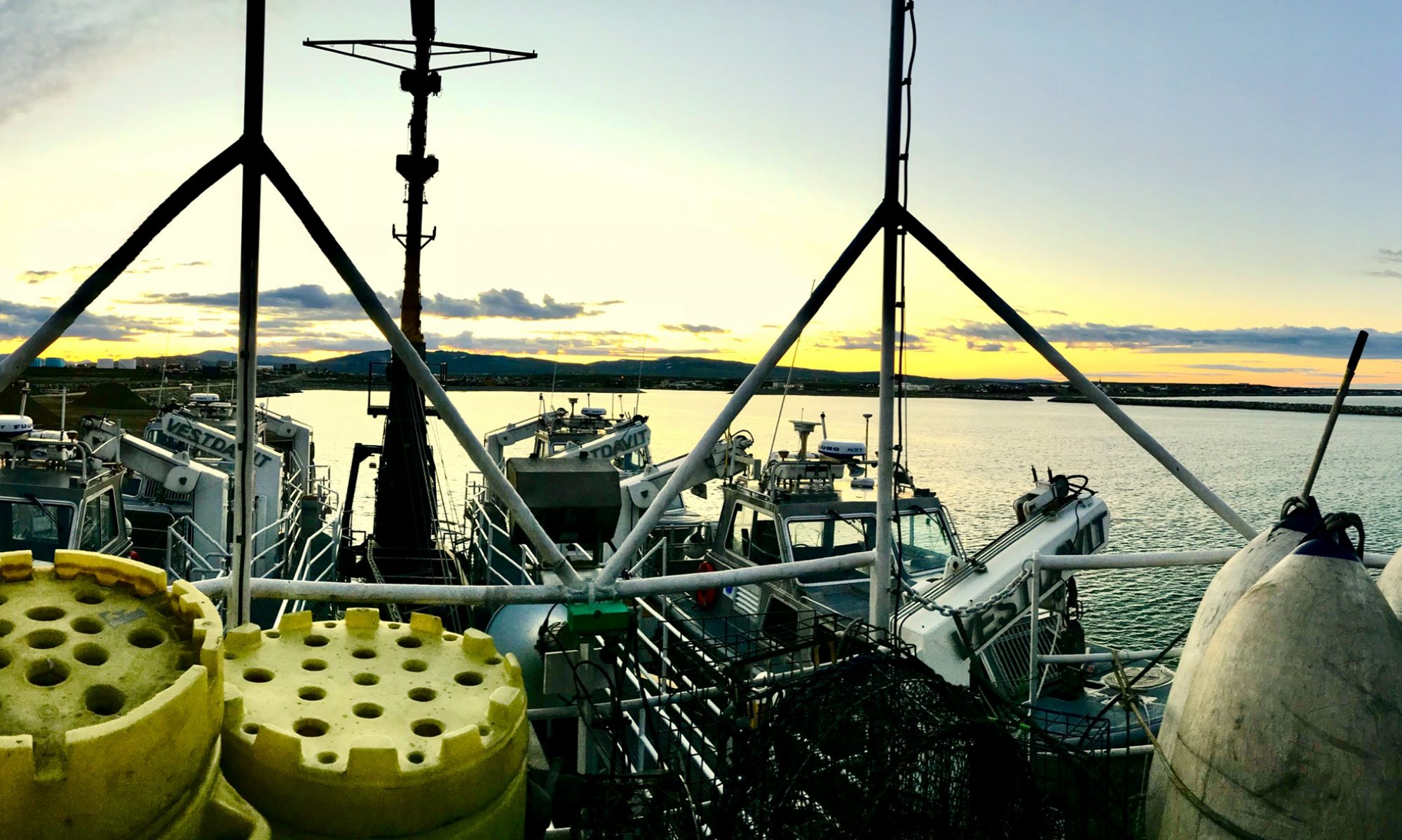
The crew does an incredible job of lowering these SAFE boats into the water with Kona coast in the background.

Weather Data 
Winds: 7-16 knots variable.
3-5 ft swells.
Water temp: 24 C.
Air temp: 70 F.

Science and Technology Log 

Oh man, I am so happy that we’re underway! The swells found us today and we’re finally rocking around – it is great! Today, the game-plan is that at 6am the 15ft SAFE boat runs out into the sapphire blue Hawaiian waters to study the slicks (areas of converging down-welling currents- the glassy parts in the ocean) while the 19ft boat tries to find juvenile bottom-fish. Good luck!

Retrieving the trawl

I, however, am helping three other scientists with trawling for billfish. We’re working with the Isaacs-Kidd trawl (I/K). This is a 10 meter long net with 5mm mesh that is connected to a detachable cod-end which collects the plankton. The I/K was named after the researchers from Scripps in La Jolla who developed the technology in the 60’s. We dropped the net bearing their names into the water by an A-Frame winch maintaining just below the surface for an hour. At this time the net is retrieved and the cod end is removed for study. It is replaced with a fresh end and the net is thrown back into the water for another hour.

The codend is replaced

The cod-end is brought into the hydro-lab and the contents are splayed out into a tray and analyzed. The marine organisms are then sorted, organized and labeled for any rare or special fish – my personal favorite is the long, skinny Lizardfish in the middle of the tray. The different fish in this photo are really interesting. The small one in the top left is a Slender Mola which as an adult lives in the open water, the longer Lizardfish lives on the bottom, the Blenny lives near shore in shallow water while the Lantern-fish grows up, lives in mid-water and develops light organs. As adults they grow into different sizes, scatter into different waters in the ocean and adapt accordingly. But as larvae they are all found together—in the slicks.

The contents of the cod-end are readied for analysis

The target specimens for this trawl are Marlin, Swordfish and other billfish larvae. And you know what? We caught a couple; the one pictured is a baby Swordfish. From this photo it is hard to believe this creature grows up to be the extremely muscular fish in the same sub-Order as the one Hemingway writes about, but it is true. Not much is known about the life histories of these fish, that is why we’re here, but it is believed that it takes many years to reach adult. The specimen were photographed and then placed in a 32oz plastic jar with ethyl alcohol for further analyzing later. We repeated this process 6 times throughout the day.

Personal Log 

My personal favorite, the lizardfish

The I/K collects a lot of very small marine organisms. It looks like gumbo. Luckily, this isn’t our dinner; we’re fed a lot better looking— and definitely tasting— food on this cruise. We collected numerous jellies, shrimp, fish larvae, debris, eggs, nudibranchs and crabs. All of it is relatively transparent so you don’t notice it while in the ocean. The I/K concentrates the gelatinous biota and truly illustrates what is in the water. And considering the warmer waters of the tropics are less productive than colder waters, this isn’t everything that could be there. Just don’t think about this when you open your mouth underwater!

A baby swordfish
A baby swordfish

The trawl was fun and definitely a new experience. It is truly incredible the amount of life that is in the water. Until you see you it pulled out, you don’t believe it. This is one of the paradigm-shifting results from being on this ship that I am only now beginning to realize. This entire vessel is designed to study the ocean; every facet of this boat is geared toward understanding the marine world. The researchers and crew on the Sette are actively embracing NOAA’s mission of stewardship.

Question of the Day 

"Gumbo" from the trawl
“Gumbo” from the trawl

Why are the fish we catch the colors they are—orange, yellow, red, etc? This was one of the questions I asked some of the expert marine biologists over dinner the other day and I was told that one of the reasons is that the colors makes the fish invisible. Red absorbs the spectrum of light that gets down around 100 fathoms and makes the fish look grey.

New Term/ Phrase/ Word 
New words: Vog –volcanic fog. Here the marine layer is normal condensation coupled with volcanic particulates. Kai – Hawaiian for the sea; Nalu – Hawaiian for waves; Kuliana— Hawaiian for responsibility. This can be responsibility for anything: your job, your family, etc. But as Ensign Norris says, it is also responsibility for the environment and it reminds us to protect what we have.

Animals Seen Today 
We saw a Laysan Albatross (Phoebastria immutabilis) today zooming the boat. It is a beautiful bird that I’ve never seen before and its wings were truly massive. We also caught a few billfish and fish larvae so tiny they look like they are just heads!

Elizabeth Eubanks, July 31, 2007

NOAA Teacher at Sea
Elizabeth Eubanks
Onboard NOAA Ship David Starr Jordan
July 22 – August 3, 2007

Mission: Relative Shark Abundance Survey and J vs. Circle Hook Comparison
Geographical Area: Pacific Ocean, West of San Diego
Date: July 31, 2007

Weather Data from the Bridge 
Visibility: 10 miles
Air temperature: 16.0 degrees C
Sea Temperature at 700m: 5 degrees C
Sea Temperature at surface: 19.2 degrees C
Wind Direction: 300 W
Wind Speed:  15 kts
Cloud cover: Clear –stratus
Sea Level Pressure: 1013.9 MB
Sea Wave Height: 4-5 ft
Swell Wave Height: 2 ft

Science and Technology Log 

Salt, Sodium, NaCl, Salinity. How much salt is in the ocean? How much salt is in me and you? Is there a difference between the amount of salt in from the Pacific to the Atlantic ocean? How much salt is in a fish or shark? Lots of questions about salt. I spent some time again with Dr. Jeff Graham and he showed me some nice diagrams to help me understand.

Percent of average salt content – salinity. ***The top of the box marks only 10%   scale subject to revision (due to lack of resources on board ship)
Percent of average salt content – salinity. The top of the box marks only 10% scale subject to revision (due to lack of resources on board ship)

Personal Log 

Yeah I added a new species to my list and yesterday I was able to get a photo of the Black Footed Albatross. While we were hauling our line he kept circling. He seemed to be very interested in the line. Some of the scientists were tossing bait to him from the hooks they were debating, but he didn’t seem that interested our old Mackerel.  Albatross are beautiful birds. They are the largest of seabirds and spend most of their time on the water. They have long, narrow wings as you can see from the photo below. One of the scientists on board was telling me that she read studies, indicating that they can travel 3,000 miles across the ocean, before they need to touch land.  Rarely does a person have the opportunity to view them from shore unless you are on some remote island when they are breading and nesting.

Black-footed albatross, tagged.

Look at the photo I took. You will notice a yellow band on left leg and a white one oh his right. I am told that to band these birds, you go to a remote island and just band them. They aren’t really afraid of people. – I would love to do that…. When is that cruise?  Nobody likes it when this happens, especially the sea lions. This is the only we caught this trip. They put up a huge fight and this one actually got off of the line. Hopefully, he will be fine. It is such a treat to see them out here. During this set we had a lot of half eaten bait, so we believe he was having a feast!

Steller sea lion hooked in the mouth

Question of the Day 

Salt is essential for all life. However too much salt can be toxic. Animals have special ways of regulating the salt in their bodies. How does the shark regulate its salt? Define these terms associated with salinity and adaptations an animal makes to an environment: Isosmotic,  Hypoosmotic, and  Hyperosmotic.

Question of the trip: Which hook, the J or Circle, will catch more sharks?

Please make a hypothesis. Utilize resources to justify your hypothesis. ———Yes, you get extra credit for this.  

Chris Monsour, July 7, 2007

NOAA Teacher at Sea
Chris Monsour
Onboard NOAA Ship Oscar Elton Sette
June 12 – July 12, 2007

Mission: Lobster Survey
Geographical Area: Northwestern Hawaiian Islands
Date: July 7, 2007

NOAA Teacher at Sea Chris Monsour demonstrates the proper technique for holding and releasing on of the many Grey Tipped Reef Sharks that were brought aboard OSCAR ELTON SETTE during the July 7th lobster trapping.
Chris Monsour demonstrates the proper technique for holding and releasing Grey Tipped Reef Sharks

Science and Technology Log

Today we finally got to get back to what brought us here, the lobster trapping. As mentioned several times before, the lobster population at Necker Island  seems to be smaller than Maro Reef.  Today this was evident when at one point we had pulled up more Grey Tipped Reef Sharks than lobsters. It was neck and neck with 20 apiece. I think at the end of the day we had more sharks. (As I am writing this the lab is finishing up the data). Some of the area where we were sampling is a sand bottom which is not the best habitat for the lobsters, so we pulled mostly hermit crabs and sharks out of the traps. That is not to say we did not catch any lobster. We caught a few Chinese slipper and a few spiny. The spiny that we did catch were large adults, with no juveniles.  There were several times that we would have an entire string of traps without any lobsters.

The number of sharks did surprise me and at first I was hesitant to handle the sharks, but the other cracker, Matt, showed me the proper way to get a shark out of the trap. I had to first grab the shark behind the head, near the gills and then grab near the tail. One has to grab the head first because a shark does not like to be grabbed as one could imagine and if the head is not grabbed first, it will bite you.  After I fumbled the first two, I had enough courage and the ability to take sharks out of the traps on my own.  At one point when I was taking a shark out I was called the “Shark Whisperer”.  By my estimate, I pulled 12 sharks out of the traps and tossed them overboard.  There were a few times when we would have 2 very large sharks in a trap. I have to wonder what would drive such a large animal into such a small space, for so little food.  Is the natural drive for food so strong in sharks that they would squeeze themselves into such a small space?  

Many grey tipped sharks were brought aboard during the lobster trapping.

There were also a few eels, Conger eels to be exact and these eels do not have the teeth or the mean disposition of the moray eels.  I did not know this at first, so the first time Matt tried to pick up a Conger eel and it slid out of his hands and ended up coming right at me! I was standing on the table in about 2 seconds, I didn’t know it wasn’t going to bite me.  The crew got a good laugh at me standing on the table. Eventually, I had the nerve to pick up the eels and was able to remove the last  eel of the day and toss it over the side of the ship safely.

We have only 5 days left, 3 of these will be trapping.  I am glad to be back to work.  The six days we were down were fun at first, but by Thursday I was getting cabin fever or boat fever. I am looking forward to the 3 days of work.  I will be a cracker again tomorrow, runner, and my last day I will be a stacker.

Aloha… Chris

Chris Monsour, July 3, 2007

NOAA Teacher at Sea
Chris Monsour
Onboard NOAA Ship Oscar Elton Sette
June 12 – July 12, 2007

Mission: Lobster Survey
Geographical Area: Northwestern Hawaiian Islands
Date: July 3, 2007

The reflection of NOAA Teacher at Sea Chris Monsour can be seen in one of the monuments to The Battle of Midway.

Science and Technology Log 

I have decided to just combine the logs because we have not had a chance to do any lobster trapping in the past seven days and really have not done a lot of science.  I have seen a lot science and ecology in action, but I have not participated in doing any research, so no science log today.  Last night at about 1:00 a.m., I watched as the air ambulance took off from Midway. I had the chance to ride in the ambulance to the airstrip and help with the final transport of the injured researcher.  Watching the plane take off was the culmination of my unexpected visit to Midway Atoll.  I must say, that I feel very fortunate to have had the opportunity to visit Midway and take in some of the history and nature of the island.  I spent the two days here relaxing on the beach, observing several thousand Laysan albatross, and just exploring a remarkable island. So this log will focus on Midway.  Most the information comes from the Northwestern Hawaiian Islands Multi-Agency Education project.

Midway Atoll is a circular-shaped atoll with three small islets (Sand, Eastern, and Spit) on the southern end of the lagoon. Midway is probably the best known location within the Northwestern Hawaiian Islands.  While the land area only covers about 1535 acres, the atoll has approximately 85,929 acres of reef.

NOAA Teacher at Sea Chris Monsour captured a Fairy Tern displaying its wings during his trip to Midway Atoll.

During World War II, Midway served as an important naval air station and submarine refit base. The atoll was attacked twice, first on December 7th 1941, and again during the pivotal Battle of Midway, June 4th-6th 1942. A successful American intelligence operation tipped the U.S. forces to the planned attack, and a small U.S. task force was able to surprise and defeat the Japanese invasion fleet bound for the atoll.  Many interpret this battle as the watershed moment in the tide of the Pacific War.  Though the major carrier-based actions took place to the north, a fierce air battle was waged above and on Sand and Eastern Islands. The atoll was designated as the National Memorial to the Battle of Midway in 2000.  Nearly two million birds of 19 species nest at Midway. The atoll has the largest Laysan albatross (also called goonie birds) colony in the world. Other birds include black-footed albatross, red-tailed tropicbirds, white terns, black and brown noddies, shearwaters, and Bonin petrels. The waters abound with dolphins, monk seals, and green sea turtles. More than 250 species of fish live in its waters, including hapu`upu`u, ulua (jack), kumu (goatfish), and sharks. Beyond the reefs are pelagic fishes such as tuna and marlin.

Teacher at Sea Chris Monsour captured this photo ofseveral Laysan Albatross resting in one of the fields onSand Island at Midway Atoll.
Chris Monsour captured this photo of several Laysan Albatross resting on Sand Island at Midway Atoll.

In 1996 the once strategic naval base was turned over to the U.S. Fish and Wildlife Service to be managed as Midway Atoll National Wildlife Refuge. A massive U.S. Navy clean up prior to their departure removed tons of debris, leaky fuel tanks, and lead paint, as well as rats. Today a fulltime Refuge staff administers a small visitor program, cares for its wildlife, restores native plant life, and protects historic resources.

It would be hard to not mention the Laysan Albatross when not mentioning Midway. Over seventy percent of the world’s population nests at Midway. In 1996, about 387,854 breeding pairs of Laysan Albatross nested on all three Albatross currently on the island, he stated around 400,000 breeding pairs.  We just happened to be at Midway when the chicks were beginning to fledge.  To get around on the island was at times difficult because the birds would not move when approached.  At times the streets were full of adults and chicks and one had to zigzag through the sea of birds. As one passes by an albatross and gets to close, it will snap. It was nothing for me to be walking to the North Beach and have a hundred of these birds snapping at me.  I have never seen the Alfred Hitchcock movie “The Birds”, but it was referenced several times as we made our way through the island.  It was especially eerie at night because it gets very dark on Midway and I forgot to bring a flashlight with me on the second night.  I walked along the beach back to the ship because I knew if I followed the roads back, I might step on an albatross.

Overall, I enjoyed the time at Midway Atoll.  We are currently on course back to Necker Island. We’ll have four more days of trapping, and then we’ll depart for Pearl Harbor.

Aloha… Chris

NOAA Ship OSCAR ELTON SETTE seems to be dwarfed by one of the huge fuel tanks on Sand Island at Midway Atoll.
NOAA Ship OSCAR ELTON SETTE is dwarfed by one of the huge fuel tanks on Sand Island at Midway Atoll.

Chris Monsour, July 1, 2007

NOAA Teacher at Sea
Chris Monsour
Onboard NOAA Ship Oscar Elton Sette
June 12 – July 12, 2007

Mission: Lobster Survey
Geographical Area: Northwestern Hawaiian Islands
Date: July 1, 2007

Science and Technology Log

Third week at sea and the course of the rest of the trip is still up in the air.  We are currently on our way to Midway. As you may know, Midway was an important sea battle during WWII and an important victory for the Allies in the Pacific Theater (I know this is supposed to be a science log, but history is just as important).  Yesterday we picked up two researchers from the island of Lisianski (see below).  We traveled from Necker Island to Lisianski, then off to Midway.  The Northwest Hawaiian Islands Education Project had some good information about Lasianski Island. Lisianski Island is 1.5 square kilometers (381 acres), about the size of Honolulu. Its highest point is a sand dune about 40 feet above sea level. Though the island is small, the reef area to the southeast, called Neva Shoals, is huge, covering 979 square kilometers (241,916 acres), an area nearly the size of O`ahu.

This map was part on an article found in the June 14th, 2006 edition of the New York Times.

A ship picking up survivors of a shipwreck introduced mice to the island in 1844. Rabbits were introduced later, and along with mice, they devastated the island’s ecology and are believed to have caused the demise of the Laysan rail. Feather collecting began on Lisianski about 1904. In response to public outcry about the feather trade, Theodore Roosevelt established the Hawaiian Island Bird Reservation, which included Lisianski, in 1909. An armed party landed on the island in 1910.

NOAA Teacher at Sea Chris Monsour takes in the sand and sun
Chris Monsour takes in the sand and sun

They arrested feather poachers and confiscated and destroyed about 1.4 tons of feathers, representing 140,400 birds. Today, Hawaiian monk seals and green sea turtles are common visitors to Lisianski’s sandy white beaches. Migratory shorebirds seen on the island include the kolea (golden plover), ulili (wandering tattler), and kioea (bristle-thighed curlew). Nearly three-fourths of the Bonin petrels nesting in Hawai`i make this island their home. In some years, more than a million sooty terns visit Lisianski.

An Albatross preens its young. Lisianski Island is an important nesting area for the Albatross as well as other seabirds.

The Hawaiian Monk Seal is an endangered marine mammal that is endemic to the warm, clear waters of the Hawaiian Islands. `Ilioholo-i-ka-uaua is how it is known to the indigenous people of Hawaii. The Monk Seal gets its common name from its round head covered with short hairs, giving it the appearance of a medieval friar. The name may also reflect the fact that the Hawaiian Monk Seal lives a more solitary existence, in comparison with other seals that in places collect in large colonies.

This photo of a mother Monk Seal with her cub was taken by NOAA Teacher at Sea Chris Monsour during a visit to Lisianski Island.
Chris Monsour captures this mother Monk Seal with her cub during a visit to Lisianski Island.