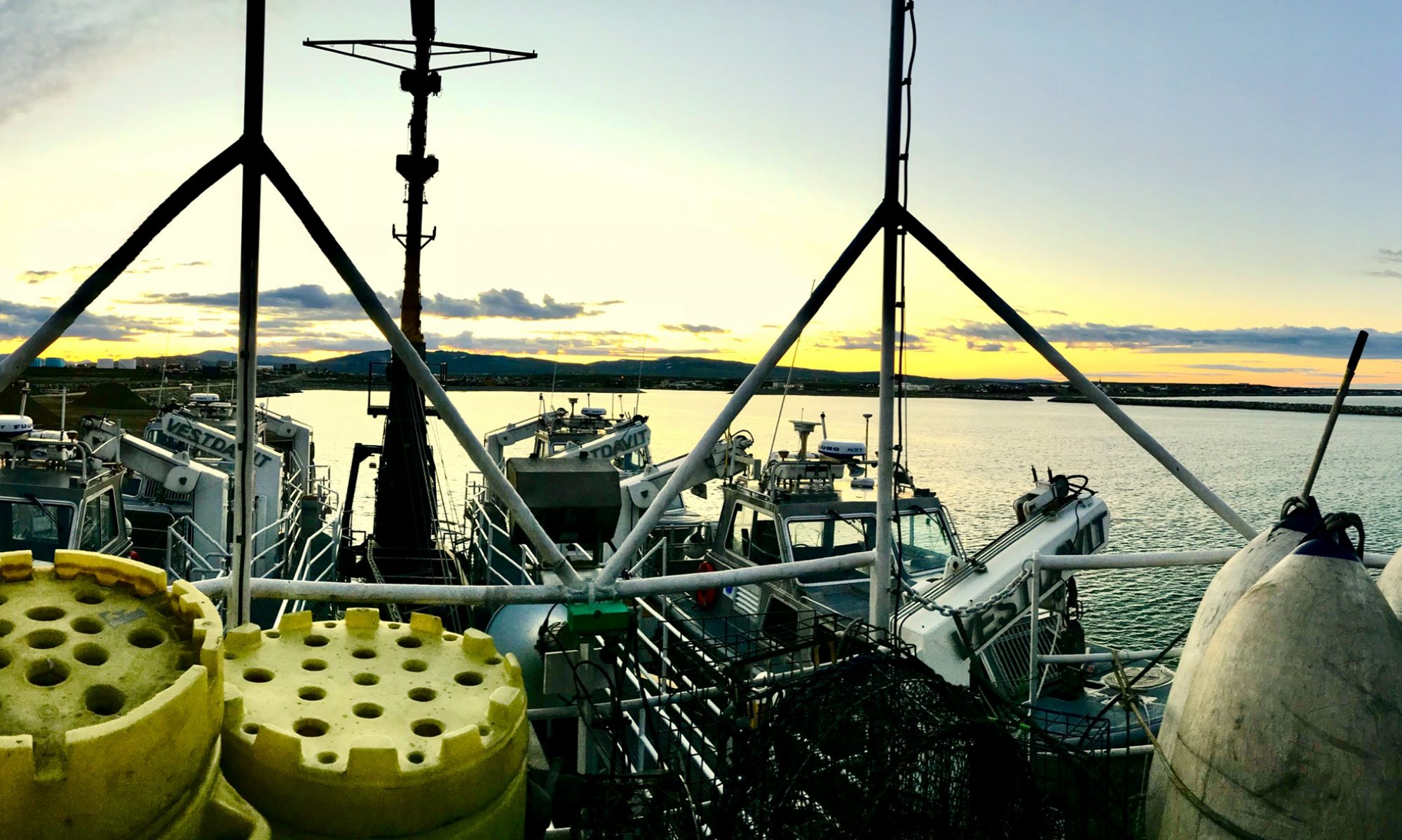
Rosalind Echols: Preparing for my adventures! June 23, 2013

NOAA Teacher at Sea

Rosalind Echols

Aboard NOAA Ship Rainier

July 8-25, 2013


Mission: Hydrographic Survey

Geographical area of cruise: Kodiak, Alaska

Date: June 24, 2013

Greetings from Philadelphia, almost 5,000 miles away from Kodiak, Alaska, where I will be meeting up with the NOAA ship Rainier in a few short weeks. A few years ago, one of my students made me an award that characterized my personality with the phrase, “I’m so excited!” and this is how I feel about my upcoming cruise with NOAA. Between the science, the opportunity to work with some amazing people, and the scenery, I can’t believe my good fortune in having this opportunity.

Rosalind in Alaska
Rosalind (right), NOAA Teacher at Sea during her last Alaskan adventure

My name is Rosalind Echols, and I teach students physics at the Science Leadership Academy in Philadelphia. I also coordinate our “Capstone” senior project program, and teach a ceramics elective. I like to stay busy, so in my “free time”, I coach ultimate Frisbee and cross country. One of the most exciting features of the school I teach it is that our whole curriculum is project based, meaning that all of the learning is contextualized and applicable to settings beyond the classroom. I am looking forward to being able to bring what I learn this summer on the Rainier back to my classroom in the form of new and exciting projects. Although Philadelphia is close to the now-infamous “Jersey Shore,” my students do not have a great deal of experience with the ocean, particularly in the realm of science, so I hope that this experience helps me identify ways to make oceanographic topics more relevant to their lives.

The main mission of the Rainier is a hydrographic survey, mapping the sea floor in coastal areas to support NOAA’s nautical charting program. This is particularly important because it allows chart-makers to identify areas of possible danger as well as safe shipping routes. If you are looking for more information right away, you can check out the Rainier’s homepage, but rest assured, I’ll be sharing plenty of information through this blog as I learn more about our mission! From reading about past missions, I have found that even in re-surveying areas previously charted, the ships sometimes find new features on the sea floor which, had they remained unknown, could have been dangerous to ships in the area. The Rainier does this research using a variety of sonar systems, both on board the Rainier itself and from several smaller boats it can launch.

Rainer
NOAA Ship Rainier at sea

I will be with the Rainier for 18 days, just shy of its 22-day endurance limit. During this time, we will be sailing around the Shumagin Islands and possibly other places on the Alaska Peninsula, starting and ending in Kodiak, Alaska. As a native Seattle-ite, I am particularly looking forward to the scenery and the weather in Alaska, as it should remind me of my home town. I also can’t wait to share what I see and learn with my students back in Philadelphia, most of whom have never been out in this direction.

Adam Renick, Getting To Know the Ocean – The Kona Ecosystem, June 16, 2013

NOAA Teacher at Sea
Adam Renick
NOAA Ship Oscar Elton Sette
June 12th – June 26th, 2013 

Mission: Kona Integrated Ecosystems Assessment http://www.pifsc.noaa.gov/kona_iea/
Geographical area of cruise: The West Coast of the Island of Hawaii
Date: Sunday, June 16, 2013

Current Air Temperature: 78° F
Sea Surface Temperature: 79° F
Wind Speed: 20 knots

Personal Log
 

Sunrise in Hawaii
Sunrise in Hawaii

All is well on the Sette! Skies have been clear, waters have been relatively calm and the mood onboard has been positive. With the cooperative work of the scientists, the crew’s expert ship handling and Clem and Jay’s fine cooking it has been a very interesting week for me. For years I have taught about physical oceanography with a focus on what we know, not necessarily how we know it. I had a sense of how things were done in general; using sonar and taking samples, but I never understood the details of how we can target specific locations to study in such a vast ocean to get a picture of it as a whole system. In just a few days aboard this research vessel I have been given a look at how ocean science is conducted and how our knowledge about the expansive oceans is built one piece of thoughtful data at a time. In the last week I have learned how a well-organized research plan is executed and have also learned about some of the difficulties of conducting science at sea as well.

 
Science and Technology Log – Night Trawling
 

The zones of life in the ocean.

One of my nightly tasks is to help a team of scientists conduct trawls of the mesopelagic zone to identify the organisms that live there. The mesopelagic zone (pictured) is also known as the twilight zone because it is where there is a small amount of sunlight that penetrates the water, but not enough for photosynthesis to occur. If you recall from my last blog, the Sette has an active acoustics team that is using active sonar to identify layers of organisms at specific depths in the water column. During the daytime this layer is too deep for our nets to catch them. But at nighttime this layer migrates up towards the surface allowing us catch them with in a net in a process called a trawl. We do two trawls each night. Before each trawl the acoustics team tells the trawl team the depth of the target layer. The deck crew then deploys a fairly large net down to that depth and drags it through the water to scoop up the organisms that we have targeted. Blog4 (1)After about an hour of doing this the net is pulled back up to the ship where all the creatures are collected in a bag called a “cod end”. It may sound fairly simple, but this process requires the coordination of many different people as the scientists need to communicate with the deck operations crew, and the deck crew has to work with the captain to ensure that the very long net line hits the target and does not get tangled or damaged in the process. Keep in mind that this is happening at 1:00am with 20 knot winds and 10 foot waves. It is a wonder to see and be a part of this operation.

Krill...
Krill…

Once we have collected all of the organisms we move on to sorting the catch. We separate the contents of the net into five main categories and then measure the number, mass and volume of each of the types. Perhaps the most commonly abundant of the groups that we classify are mesopelagic fish, which are dark in color and contain photophores to provide them camouflage in the night. Cephalopods (squid) are also quite common along with gelatinous creatures such as jellyfish and crustaceans over 4cm in length, such as shrimp. The final category of interest to us is the shore-fish, which are juvenile fish that will eventually move more towards the land or reefs once they are bigger. The shore-fish are typically the most beautiful looking of the catch.

Shore-fish sorting
Shore-fish sorting

Everything that is left over is then lumped into a general category called miscellaneous, which is mainly composed of krill. Some cool stuff we’ve gotten in the bag that don’t really have their own category have been two cookie-cutter sharks, a seahorse and two remoras.

Blog4 (4)
Examining a Cookie-Cutter Shark
Shark
Close-Up of Shark

So what does this all have to do with cetaceans? I have yet to mention them in my blogs. By studying the composition of the mesopelagic layer we can better understand the food chain and ecosystem that the whales and dolphins depend on. Next week when we begin actively searching for cetaceans we will be able to better understand their behaviors because we have background data on where their food is, what it is composed of and how it behaves. Hope all is well back on land…

 
Best,
Adam Renick
NOAA Teacher at Sea

Eric Velarde: Beginning Seafloor Dredge Tows, June 17, 2013

NOAA Teacher at Sea
Eric Velarde
Aboard R/V Hugh R. Sharp
Wednesday, June 13, 2013 – Monday, June 24, 2013

Mission: Sea Scallop Survey
Geographical Area: Cape May – Cape Hatteras
Date: June 17, 2013

Weather Data from Bridge
Latitude: 40.07°N
Longitude: 73.05°W
Atmospheric Pressure: 1025 mb
Wind Speed: 4.6 knots
Humidity: 85%
Air Temperature: 18.33°C
Surface Seawater Temperature: 18.46°C

Science & Technology Log

Suspending flight of the HabCam V4 & beginning the first of the seafloor dredge tows was the focus of work on June 17, 2013. In order for seafloor dredge tows to occur, the HabCam V4 is withdrawn from the sea to eliminate risk of accidental collision or entanglement.  After the science team raises the HabCam V4 to a safe depth, the engineering team assumes responsibility of HabCam V4 retrieval through winch operation on the loading deck. When not in operation, the HabCam V4 rests on the loading deck for cleaning & maintenance until seafloor dredge towing is complete. While being a delicate scientific recording instrument, the HabCam V4 also possesses the engineered fortitude to withstand the demands of oceanic scientific research.

HabCam V4 Withdrawal

Dredges aboard scientific vessels are 8’ wide, New Bedford style commercial scallop dredge frames, fitted with a ring bag and sweep on the bottom.  The ring bag is built from 2” interconnected metal facets.  Additionally, a 1.5” polypropylene liner is installed inside the ring to capture all sizes of Sea Scallops. In contrast, commercial vessels have two 15’ wide dredges with 4” rings so that younger, smaller scallops pass through the net. Once the dredge is lowered to the seafloor, it is dragged behind the vessel for 15 minutes at a speed of 3.8 knots before being lifted onto the vessel for sorting, categorization, and measurement. The engineering team assumes responsibility of lowering & raising the dredge while the science team dons foul weather gear for the messy, but detailed analysis of the catch.

Engineering Team Raising Dredge Tow

Once the dredge tow catch is aboard, collaboration between the science and engineering teams occurs so that the catch can be quickly, but accurately sorted into species. All dredge tows are focused on analyzing Atlantic Sea Scallop populations at predetermined points on the ships trajectory. In addition, fish, and sometimes sea stars and crabs require subsampling to assess their population as well. Sea Scallops must be weighed and measured en masse before being returned to their seafloor habitat. In addition, subsamples of Scallops are dissected so that the sex, gonad weight, and meat weight can be recorded.

Measuring Scallops with FSCS

All scientific analysis of captured specimens occurs in the scientific lab, which houses FSCS (NOAA Fisheries Scientific Computer system) which is a combination of touch-screen computer monitors, electronic measuring boards, and digital weight scales. The scientific lab is portable, loaded with scientific sampling equipment in Lewes, DE by the scientific team before being carefully loaded onto the vessel prior to departure. Working & cleaning in the scientific lab is nearly effortless due to its engineered design, allowing for streamlined operation.

Scientific Laboratory

Personal Log

One of my favorite aspects of the seafloor dredge tows is the dissection of the scallops. I enjoy dissection because it is slower than the rest of the operations that occur after the catch has been sorted, giving me time to observe and record the internal anatomy of the scallops. I also enjoy dissection as it grants me time to work in systematic symmetry with the luminous La’Shaun Willis, a Bennett College ’98 Alumnus. Her warming energy is radiant, making me feel as if I am back in Greensboro, teaching & learning alongside my students at The Early/Middle College at Bennett. Listening to her speak about her life journey causes me daydream about the scientific possibilities that await my students when I return to Greensboro, North Carolina with this newfound experience to fuel their continued character, leadership, and academic development. I am constantly filled with inspiration as she shares priceless nuggets of wisdom with me.

Scallop Subsampling
Scallop Subsampling

Following each seafloor dredge tow, the science and engineering teams work to shuck the largest of the scallops for closer analysis of meat weights when the science team returns to the lab in Woods Hole, Massachusetts. Admittedly, I am not very adept at shucking, but I am learning quickly from some of the most talented shuckers I have come into contact with. They transform shucking into a scientific art of speed, precision, and accuracy.

Shucking Scallops
Shucking Scallops

One of the benefits of working from Midnight-Noon is that I get to soak in the warmth of the rising sun, which, as expected, is breathtaking. Each new day has been filled with awesome scientific beauty, wonder, and energy. Several days of seafloor dredge tows will succeed today, eventually followed by the return of the HabCam V4 to the sea as the vessel makes its returning voyage to port.

Sea Sunrise
Sea Sunrise

Did You Know?

Atlantic Sea Scallops inhabit the seafloor from Cape Hatteras at their southernmost range, to Newfoundland at their northernmost range.

-Mr. V

Sue Cullumber: Drifting Away, June 21, 2013

NOAA Teacher at Sea
Sue Cullumber
Onboard NOAA Ship Gordon Gunter
June 5–24, 2013

Mission: Ecosystem Monitoring Survey
Date: 6/21/2013
Geographical area of cruise:  The continental shelf from north of Cape Hatteras, NC, including Georges Bank and the Gulf of Maine, to the Nova Scotia Shelf

Weather Data from the Bridge:  Time:  21.00 (9 pm)
Latitude/longitude:  3734.171ºN, 7507.538ºW
Temperature: 20.1ºC
Barrometer: 1023.73 mb
Speed: 9.6 knots

IMG_0878
Getting ready to launch the buoy – photo by Chris Taylor.
launchingdrifter
Launching the buoy from the ship’s stern – photo by Chris Taylor.

Science and Technology Log: 

This week we launched a Global Drifter Buoy (GDB) from the stern of the Gordon Gunter.  So what is a GDB? Basically it is a satellite tracked surface drifter buoy.  The drifter consists of a surface buoy, about the size of a beach ball, a drogue, which acts like a sea anchor and is attached underwater to the buoy  by a 15 meter long tether.

Drifter tracking: The drifter has a transmitter that sends data to passing satellites which provides the latitude/longitude of the drifter’s location. The location is determined from 16-20 satellite fixes per day.  The surface buoy contains 4 to 5  battery packs that each have 7-9 alkaline D-cell batteries, a transmitter, a thermistor to measure sea surface temperature, and some even have other instruments  to measure barometric pressure, wind speed and direction, salinity, and/or ocean color. It also has a submergence sensor to verify the drogue’s presence. Since the drogue is centered 15 meters underwater it  is able to measure mixed layer currents in the upper ocean. The drifter has a battery life of about 400 days before ending transmission.

buoy
Stickers from students at Howard Gray School.
decoratingdrifter
Attaching the stickers to the buoy – photo by Kris Winiarski.

Students at the Howard Gray School in Scottsdale, Arizona designed stickers that were used to decorate the buoy. The stickers have messages about the school, Arizona and NOAA so that if the buoy is ever retrieved this will provide information on who launched it.  In the upcoming year students at Howard Gray will be tracking the buoy from the satellite-based system  Argos that is used to collect and process the drifter data. You can follow our drifter here, by putting in the data set for the GTS buoy with a Platform ID of 44932 and select June 19, 2013 as the initial date of the deployment.

Why are drifter buoys deployed?

In 1982 the World Climate Research Program (WCRP) determined that worldwide drifter buoys (“drifters”) would be extremely important for oceanographic and climate research. Since then drifters have been placed throughout the world’s oceans to obtain information on ocean dynamics, climate variations and meteorological conditions.

IMG_0886
The Howard Gray School drifter on its ocean voyage.

NOAA’s Global Drifter Program (GDP) is the main part of the Global Surface Drifting Buoy Array, NOAA’s branch of the Global Ocean Observing System (GOOS).  It has two main objectives:

1. Maintain a 5×5 worldwide degree array (every 5 degrees of the latitude/longitude of world’s oceans) of the 1250 satellite-tracked surface drifting buoys to maintain an accurate and globally set of on-site observations that include:  mixed layer currents, sea surface temperature, atmospheric pressure, winds and salinity.

2. Provide a data processing system of this data for scientific use.

bongossunset
Bongo nets going out for the plankton samples.
meshsamples
Plankton from the different mesh sizes. The left is from the smaller mesh and contains much more sample. Photo by Paula Rychtar.

EcoMon survey: We are continuing to take plankton samples and this week we started taking two different Bongo samples at the same station. Bongo mesh size (size of the holes in the net) was changed several years ago to a smaller mesh size of .33 mm. However, they need comparison samples for the previous nets that were used and had a mesh size of about .5 mm.  They had switched to the smaller net size because they felt that they were losing a large part of the plankton sample (basically plankton were able to escape through the larger holes). We are actually able to see this visually in the amount of samples that we obtain from the different sized mesh.

dolphinflying
Common Dolphins were frequent visitors to the Gordon Gunter.

Personal Log:

It’s hard to believe that my Teacher at Sea days are coming to a close. I have learned so much about life at sea, the ocean ecosystem, the importance of plankton, data collection, and the science behind it all.  I will miss the people, the ocean and beautiful sunsets and the ship, but I’m ready to get back to Arizona to share my adventure with my students, friends and family. I want to thank all the people that helped me during this trip including: the scientists and NOAA personnel, the NOAA Corps and ship personnel, the bird observers and all others on the trip.

Did you know? Drifters have even been placed in many remote locations that are infrequently visited or difficult to get to through air deployment.  They are invaluable tools in tracking and predicting the intensity of hurricanes, as well.

Question of the day?  What information would you like to see recorded by a Global Drifter Buoy and why?

shipsunset-2
Another beautiful sunset at sea.

Marla Crouch: Cameras and the Shark, June 22, 2013

NOAA Teacher at Sea
Marla Crouch
Aboard NOAA Ship Oscar Dyson
June 8-26, 2013 
 

Mission:  Pollock Survey
Geographical area of cruise:  Gulf of Alaska
Date: June 22, 2013

Weather Data from the Bridge: as of 2000
Wind Speed 20.02 kts
Air Temperature 8.4°C
Relative Humidity 96.00%
Barometric Pressure 995.9 mb

Latitude:  55.86N   Longitude: 159.17W

Science and Technology Log

Cam Trawl, Critter Cam, Drop Cam, Trigger Cam (dubbed “the contraption”), and a camera that will be used on Acoustic Vessel of Opportunity (AVO) project, are different camera systems scientists are testing and using on this leg of the pollock survey to help monitor the biology in the region. Each camera is designed for a specific application.

Cam Trawl is attached immediately before the codend of a survey midwater trawl net, and takes pictures of the fish swimming by.  Cam Trawl allows scientists to look at what depth the fish were captured, and use this information to help identify specific fish echoes on the sonar graphs.  In one of our trawls, we were able to see pictures of a female Salmon Shark entering the net.  She was quickly measured and released.

Picture of a female Salmon Shark taken be the Cam Trawl camera.  Picture provided by NOAA
Picture of a female Salmon Shark taken be the Cam Trawl camera. Picture provided by NOAA

Critter Cam is attached to the survey net on the Oscar Dyson and takes pictures of little critters, like krill and different types of plankton, that are too small to be captured in a trawl net.

Pictured from left to right.  Macrozooplankton krill, ctenophores, small jellyfish, young of the year pollock,  juvenile smelt
Pictured from left to right. Macrozooplankton krill, ctenophores, small jellyfish, young of the year pollock,
juvenile smelt.  Pictures provided by NOAA.

The Drop Cam is a tethered stereo camera that is lowered to take pictures of the sea floor.  This instrument is going through a series of sea trials on this cruise, where the lights, exposure, and battery life are all being tested and fine tuning adjustments are being completed.  Battery life is a concern, as both the cameras and the lights require energy to operate, and the scientists want to maximize the amount of time data is being collected .  In order to conserve energy a depth sensor trip switch was added that turns the system on at 15 m depth. This addition allows the camera to continually take 10 pictures a second for a longer time on the sea floor.  After this cruise the Drop Cam heads west to help survey the coral reefs west of the Islands of Four Mountains were we started our pollock survey heading east.  Yes, there is coral in the cold waters of the Gulf of Alaska and the Berring Sea.

Octopus
Octopus picture provided by NOAA
Brittle stars
Brittle stars.  Picture provided by NOAA.
Juvenile Yelloweyed Rockfish
Juvenile Yelloweyed Rockfish.

Trigger Cam, which the Dyson’s crew has dubbed “the contraption”, is attached to an anchor and lowered to the sea floor.  The anchor we are using is a sablefish pot (a trap that is normally used to catch fish on the bottom), which has a buoy line attached, and the buoy marks the location of the camera on the surface.  There are six Trigger Cams in development; the concept is that the cameras are deployed in a series a few nautical miles apart and left for 3 to 4 hours before retrieving.  To conserve energy, this piece of equipment is designed with a motion sensor.  An infared camera (fish cannot see infared light) runs at very low resolution (produces a blurry picture, as the water is in constant motion). When something, such as a school of Pacific cod, swims by, the motion is detected, camera flashes are triggered and a high resolution (clear) picture is taken.  When the Trigger Cam system is fully operational, scientists hope to collect more in-depth evidence about the fish population in the deployment areas.

Deployment of the Trigger Cam.  AKA The Contraption.  Picture provided by NOAA.
Deployment of the Trigger Cam. AKA The Contraption. Picture provided by NOAA.
School of Pacific Cod taken by Trigger Cam.  Picture provided by NOAA.
School of Pacific Cod taken by Trigger Cam. Picture provided by NOAA.

The AVO Cam is designed to attach to a survey bottom trawl net and take picture of the fish passing through, without being caught.  There are two cameras (stereo) mounted so that field of vision intersects at a specific distance.  The two cameras and the point of intersection can be used in a process similar to triangulation that allows the length of the fish swimming through to be measured. The stereo photography process is the same technology that is used in the making of 3D movies. The AVO Cam will be used in a survey that is carried out onboard chartered commercial fishing vessels (“vessels of opportunity”).

Readying the AVO camera for sea testing.
The stereo camera data is input into measuring software, which calculates  the length of the fish in cm.  Screen shot provided by NOAA.
The stereo camera data is input into measuring software, which calculates the length of the fish in cm. Screen shot provided by NOAA.

Personal Log 

I enjoy listening to the various conversations that the scientists have about what they are seeing on the sonar displays and in the pictures, how the equipment is being used, when data are inconclusive the hypothesizing about the phenomena, and the time need to complete the different science studies.  There is only so much time.  Today’s conversation revolved around the need to hide from the weather!

An area of low air pressure is forecasted to kick up a gale force storm, and the safety of the ship, crew and science team is an important consideration in our travels.  With this in mind, the Commanding Officer of the Oscar Dyson and the science team are looking for areas of safe harbor where we are sheltered from the worst of the storm and can still do science work. I wonder will we be on the lee side of an island, in a bay or fjord?  Time will tell.

Did You Know?

To date we have traveled 2670.50 nmi since leaving Dutch harbor.