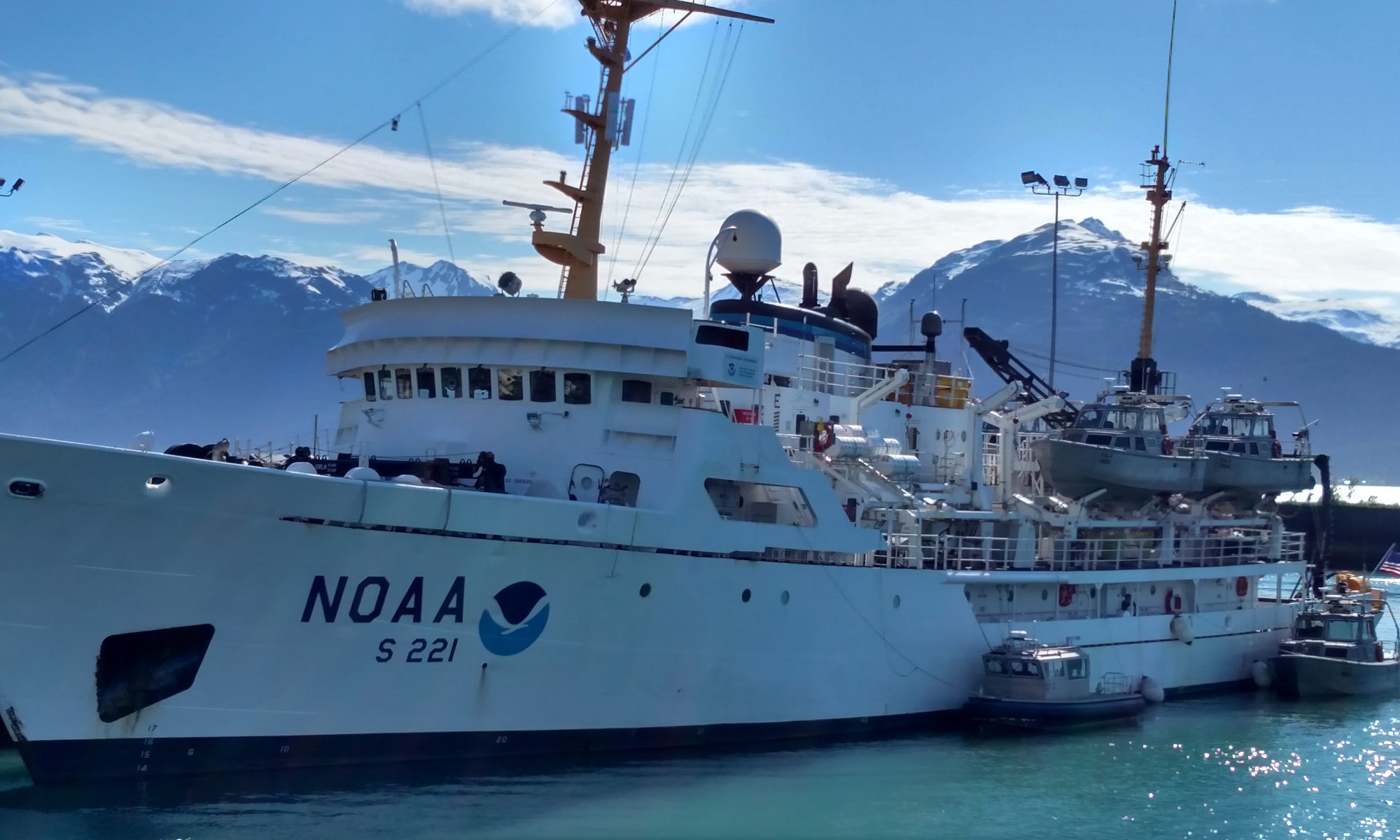
Mission: Atlantic Marine Assessment Program for Protected Species (AMAPPS)
Geographic Area of Cruise: North Atlantic Coast
Geographic Area of Cruise: Massachusetts to North Carolina
Date: January 7, 2025
I’m finally aboard! Other than a fishing boat that was just barely in the ocean for a couple hours, I’ve never been in a ship this large, for this long, out in the open ocean. This is definitely a new adventure and really putting me to the test with the rough waters.
Examples of some of the plankton we may see! Credit: Dr. D. P. Wilson/Science Source
There are four scientific teams on the board: marine mammal observations, seabird observations, hydrophone for marine mammals, and plankton assessments. Since this trip is 24 days long, I’ll be bouncing around groups to learn about what they are doing. I’m starting with the plankton group, but we weren’t able to deploy last night due to weather. I’ll share more about each of the groups when I finish that “rotation” and in between I’ll write about other cool things – like motion sickness!
I’m one of those people that being in a car, metro, airplane, and boats gets me quite nauseous. My brain is like “nu-uh, not today!”. And I’ll totally admit, that was one of my concerns about joining the Teacher at Sea program because being in a boat in the ocean, especially with less than great weather, was not going to go well. Although I do not like having motion sickness, I still find it fascinating and so I went down a rabbit hole to learn more about it.
The vestibular system in this picture refers to the parts of the inner ear that help your brain understand where it is in space. Your brain interprets how the fluid inside the inner ear is moving so it can understand what is going on physically with the body. Credit: Cleveland Clinic.
Our bodies use lots of senses to understand the world around us and make judgements to what is safe, normal, and okay. The main players in motion sickness are your brain, your inner ears, and muscles. Your inner ear has a fluid in it and as your body moves, the liquid moves a certain amount and direction within your ear and tells your brain how much you have moved. But, if you are looking at something stationary such as reading a book or typing on a computer, your visual processing system thinks you are sanding still. When you are in a vehicle, whether it be a car, train, boat, or bus, you become more likely to develop motion sickness because your brain is confused. This trip started off with some big weather causing the boat to rock a lot. My ears and body recognize this movement and send signals to the brain about what’s happening. However, my eyes are deceiving my brain. I’m staring at this screen which my eyes are interpreting that everything is still, which it communicates to the brain. Now the brain is just confused because it’s getting mixed signals and starts assuming the worst.
Anatomy of the brain; note the small area at the base showing the area postrema, the part of the brain responsible for making sense of the signals from the body. Credit: W. McGinnis, T Audhya, & S. Edelson
There’s a couple of theories behind what exactly is happening to cause nausea, but one in particular I found interesting was the Defense Against Poison hypothesis. There is a region in the brain called the area postrema that is responsible for deciphering between conflicts in what is seen versus what is felt and it is also the area that triggers vomiting when it detects a toxin (such as food poisoning). The hypothesis is that when your brain is getting mismatched signals, your brain thinks it’s hallucinating and wants to induce vomiting because it assumes it’s a toxin causing the mismatch. Essentially, our brain is smart but it can be such a diva if things aren’t perfect.
To help prevent or lessen the impacts of motion sickness, it’s best to sit in the front of the vehicle and look out the window so that your brain feels like it’s moving too. This also means avoiding reading while on the move since keeping your eyes fixated on something stationary is what caused the problem in the first place. This boat trip I was prescribed scopolamine patches to address my motion sickness and it’s worked so wonderfully. So wonderful in fact, I decided to write a poem singing its praises.
Ode to Scopolamine
by Kiersten Newtoff
The sticker behind my ear is none other than scopolamine.
I have to take it because these treacherous waters are mean.
Without it, misery would set in.
And I’d always have to be cautious of the nearest bin.
Inside our brains is a neurotransmitter, acetylcholine.
It likes to tell on us and make our body go green.
But scopolamine is here to save the day!
You need to put it on without delay.
It blocks those transmitters in the brain,
So even if mismatched, it can’t communicate and cause you pain.
So here’s to you, my friend, scopolamine,
You are making this trip so much more serene!
A view from this morning. The waves look deceptively small, but trust me — you will feel every dip.
Mission: Atlantic Marine Assessment Program for Protected Species (AMAPPS) Geographic Area of Cruise: North Atlantic Coast Departure Port: Newport, RI Arrival Port: Newport, RI
Date: December 18, 2024
I’m back! You may remember all the mishaps that happened that prevented me from sailing on the Oregon II in summer 2023. I’ve been incredibly fortunate that the Teacher at Sea program has been flexible and was able to place me on a new cruise with the NOAA Pisces, so named by a group of 7th grade students in a naming contest.
This cruise is focused on the AMAPPS protocol, or the Atlantic Marine Assessment Program for Protected Species. By collecting data on the species of marine mammals, turtles, and seabirds observed, scientists can create abundance maps that show where these species can be found year-round. We will also be using a hydrophone to record the calls and songs of cetaceans (whales, dolphins, and porpoises). In addition to the surveys, scientists will collect data to see how factors in the environment affect abundance and distribution. While there are many products from the research, one easily available tool to the public is the Marine Mammal Model Viewer. On this viewer, you can choose a marine mammal species and a time of year to see density maps of the species over time. This is a powerful tool as we learn about oceanic species and how a changing climate impacts their distribution.
A screenshot from the Marine Mammal Model Viewer. This map shows the abundance of Sperm Whales in the fall.
While I gave a lot of background in my first introductory post, there have been some fun updates. I am on sabbatical from Montgomery College to gain more experience in biological research to bring back to the classroom. Specifically, I have been focused on bird banding, which involves capturing birds and adding a metal identifying ‘bracelet’ to their leg. Each band has a unique identifier, so if someone else catches it they will be able to learn a lot about the bird’s ecology. In the banding process, we collect data such as age, sex, reproductive stage, wing length, tail length, amount of fat, and more. All this data can help us assess the health of the bird and draw conclusions about the species, bird migration, and changes over time. Banding birds requires a federal permit that I have applied for, so now I’m sitting and waiting to hear back — fingers crossed!
Kiersten (right) holds a Ruffed Grouse during banding operations in Montana. Another bander is taking a picture of the tail to analyze further after the bird is released. Bird banding can tell scientists about bird ecology and conservation.
Thank you again to the Teacher at Sea team and the crew of the Pisces for welcoming me aboard!
Geographic Area of Cruise: Northeast Atlantic Ocean
Date: October 1, 2024
Weather Data from Friday Harbor
Latitude: 48.52°N Longitude: 123.02637°W Wind Speed: N 0 MPH Air Temperature: 8°C(46°F)
Science and Technology Log
In reflecting on our 21-day mission, I have been amazed at the different roles needed to make these kinds of research trips a success. The depth of collaboration and cooperation required between departments and operations staff on a NOAA Vessel really is the ultimate examples of interdisciplinary learning and skills. The collaboration between these different positions was crucial to the success of the 182 trawls we conducted—a number that is staggering to look at in retrospect from the perspective of looking back at my time at sea. This blog will showcase some of those roles and give a bit of info about the groups present.
NOAA Corps Officers: The NOAA Corps officers are responsible for safely navigating the ship, ensuring that we reached each designated survey location. Onboard the Henry B. Bigelow, the officers work closely with the scientists to plan the timing and execution of each trawl. These officers, who are part of one of the nation’s seven uniformed services, manage the day-to-day operations of the ship, coordinate with the deck crew, and provide real-time decision-making, especially during difficult weather conditions. Check out their website for more information: https://www.omao.noaa.gov/noaa-corps
NOAA Corps officers in front of NOAA Ship Henry B. Bigelow. Image courtesy of NOAA Office of Marine and Aviation Operations.
Trawl Survey Technicians: The Trawl Survey Technicians serve as the bridge between the science team and the crew. They help to deploy the nets, monitor the equipment, and ensure that the sampling is conducted properly. These technicians oversee the mechanics of the trawl, making sure the net is deployed at the correct depth and for the proper duration, depending on the target species. Their work is essential in collecting accurate data and ensuring that each trawl adheres to the strict survey protocols. They manage CTD sampling and Bongo net sampling before each trawl and send that data off as it is collected.
Trawl Data Analysis
Trawl sites
Bongo Deployment
Deck Crew: The deck crew handles the heavy lifting—literally. They are responsible for deploying and retrieving the trawl nets, a physically demanding job that requires precise timing and coordination. During the rough weather we experienced, especially during the nor’easter, the deck crew worked tirelessly to ensure that operations continued safely. Their expertise in handling the gear and adapting to the elements was vital to keeping the mission on track. They are also in constant communication with the NOAA Corps officers on the bridge making sure that the ship is tracking correctly, at the proper speed and moving appropriately during trawls, deployments and recovery.
Trawl net on deck at night
Video of the deck crew hauling back a trawl. (No dialogue.)
Engineers: Behind the scenes, the engineers ensure that the ship’s engines and mechanical systems are running smoothly. On this mission, they faced a significant challenge when we experienced engine trouble early on. After a few temporary fixes while at sea, it became clear that the engine required more extensive repairs. The decision was made to make a brief stop in Norfolk, Virginia, to complete the necessary repairs. This stop not only allowed the engineers to fully resolve the issue but also gave us an opportunity to avoid the worst of the developing weather system offshore. Thanks to the engineers’ hard work and dedication, we were able to get back to the mission with minimal delay.
Scientists: The scientists onboard are the heart of the mission. Once the trawl nets are brought onboard, they immediately begin sorting through the catch, identifying and cataloging each species. They collect key data, such as species abundance, length, and weight, which are then entered into NOAA’s database for long-term monitoring and analysis. Their work helps inform fisheries management, conservation efforts, and the health of marine ecosystems. The scientists often work long hours, sometimes in challenging conditions, to ensure that the data is collected accurately and promptly.
Science team at work in the processing room.
Stewards: While it may not always be obvious, the ship’s Stewards play an essential role in keeping the crew and scientists fueled and ready for the long hours of work. The stewards are responsible for preparing meals and managing the galley. On a 21-day mission, where workdays are often long and exhausting, having nutritious meals prepared by the stewards helps boost morale and keeps everyone energized for the tasks ahead. The meals on the ship were amazing and there were some so good that it warranted waking up in the middle of my “night” in order to make sure I got to try it. Midnight to noon is a tricky shift were a 5PM dinner often didn’t fit into the exhaustion and sleep schedule.
One of the amazing menus served up on Henry Bigelow
Other Ship-Based Jobs: Beyond these key roles, there are additional positions aboard a NOAA ship that contribute to the smooth operation of the vessel. For example, the Electronics Technicians maintain the ship’s communication systems and scientific equipment, ensuring that data collection instruments are functioning properly. The Medical Officer ensures the crew’s well-being (helps with seasickness, bruises, bumps and other accidents) providing medical care when necessary. Each role, from maintenance to leadership, contributes to the overall success of the mission.
The collaboration between all of these positions made the mission a success. Every person on board had a vital role to play, and their teamwork was evident in the smooth operations despite the challenges we faced.
Personal Log
Life at sea is always full of surprises, and this voyage was no exception. Early in the mission, we encountered engine trouble that could have brought our progress to a halt. However, the engineering team on board worked tirelessly to resolve the issue, ensuring that we could continue our work with minimal delay. When it became clear that a more permanent solution was needed, we made a brief stop in Norfolk, Virginia, where the engineers completed the necessary repairs. This stop also allowed us to avoid the worst of the rapidly developing weather system offshore, including remnants of a hurricane and the beginnings of a nor’easter.
The weather was another challenge we had to navigate. Midway through the cruise, we encountered the remnants of a hurricane, which brought high winds and rough seas. Just as we thought things were calming down, we were hit with a nor’easter, creating a whirlwind of rapidly changing conditions. The storms tested not only the ship but also the crew’s adaptability. Despite the rough weather, the team continued working, ensuring that our safety was always the top priority while still pushing forward with our science objectives.
Some of the seas starting to intensify during operations
The collaboration and resilience I witnessed over these 21 days left a strong impression. Whether it was the engineers fixing mechanical issues, the deck crew handling the nets in rough seas, or the scientists analyzing samples during long hours in the lab, everyone worked together seamlessly. It was a true display of teamwork in action, and it gave me a deeper appreciation for what it takes to conduct oceanographic research at sea.
Personal Log
I am deeply grateful to the NOAA Teacher at Sea program for giving me the incredible opportunity to return to sea and experience firsthand the fascinating science of the Northeast Trawl Survey. After spending 10 years working with the Ocean Exploration Trust, returning to a science vessel felt both familiar and exciting. I was struck by the many similarities between trawl research and the ROV (Remotely Operated Vehicle) operations I’ve been a part of, but also by the distinct differences that make each type of research so unique.
Both environments rely heavily on teamwork, precise coordination, and the ability to adapt to changing conditions at sea. However, trawl research is much more hands-on, involving direct interaction with marine life, compared to the often remote observation of ecosystems through ROV cameras. Seeing these differences firsthand opened my eyes to the various career paths available within the field of marine research. It also made me incredibly excited to share these insights with my students and help them explore the vast opportunities that exist in NOAA and other marine research organizations.
The experiences I’ve gained aboard NOAA Ship Henry B. Bigelow will serve as valuable tools to inspire my students. I look forward to introducing them to the different roles I saw in action—from NOAA Corps officers and marine scientists to engineers and trawl survey technicians. I am excited to help them see the wide range of careers that are available in oceanography, marine biology, and environmental science, particularly within the NOAA research space. Programs like NOAA Teacher at Sea not only deepen my own knowledge but also open doors for my students, offering them a window into potential futures in scientific research and marine conservation. This journey has been an incredible one, and I hope to guide my students toward similar paths of discovery and contribution to the field.
I’m incredibly thankful to NOAA for this opportunity, and I encourage other educators to consider participating in the Teacher at Sea program. It’s an invaluable experience that enriches classroom teaching and ignites students’ curiosity about real-world science. This program will undoubtedly shape the way I teach and how I help students explore careers in ocean science and research for years to come.
Did You Know?
The trawl survey captures data on more than 200 species of fish and invertebrates, from commercially important species like Atlantic cod and haddock to lesser-known species like the deep-sea skate.
NOAA Teacher at Sea Tonya Prentice Aboard NOAA Ship Henry B. Bigelow August 8 – August 24, 2024
Mission: Northeast Ecosystem Monitoring Survey
Geographic Area of Cruise: Northwest Atlantic Ocean
Date: September 20, 2024
Weather Data from Bass Harbor, Maine Latitude: 44.253636º N Longitude: 68.34944º W Wind Speed: 14 mph Air Temperature: 15° Celsius (59° F)
Science and Technology Log
Tremont Consolidated School’s Drifter Buoys: Exploring Ocean Data in Real-Time!
I was so thrilled to learn that Tremont Consolidated School (TCS) had been given two drifter buoys, allowing our students to participate in a cutting-edge, real-world scientific endeavor. Through the National Oceanic and Atmospheric Administration (NOAA) Global Ocean Monitoring and Observing Program, our students will track these buoys as they gather crucial data from the ocean. This is a hands-on, dynamic opportunity that infuses real-time ocean observing system data into our science curriculum! NOAA Adopt a Drifter Program
What’s a Drifting Buoy? A drifting buoy, also called a drifter, is a floating data collection device that travels with ocean currents. These drifters are equipped to record various ocean parameters such as sea surface temperature, salinity, and wave height, all while transmitting this data hourly via satellite. The buoys provide valuable insights into oceanic conditions that impact weather forecasts, climate models, and even search and rescue operations.
Why Deploy One? The data collected by drifters offers key information that supports a wide range of scientific and practical applications. This data helps scientists understand how the ocean circulates, predict the movement of marine debris or oil spills, and make better weather predictions. By tracking our adopted drifters, TCS students will gain firsthand experience in how this scientific data is used to analyze the ocean and its far-reaching impacts.
Bringing Science to Life for TCS Students At TCS, students in our science classes will be tracking and recording the drifter buoys’ locations and analyzing the data collected. They will plot coordinates on maps, explore ocean currents, and make connections between the data they collect and global environmental patterns. This interactive project brings abstract science concepts into a tangible experience, encouraging inquiry, problem-solving, and environmental stewardship.
Me deploying the first drifter buoy.Drifter Buoy #1 David Richardson (right), NOAA Research Fishery Biologist, and me (left) deploying drifter buoy #2.Drifter Buoy #2Chris Melrose (right), NOAA Research Oceanographer, and me (left) deploying drifter buoy #2.Chris Melrose (right), NOAA Research Oceanographer, and me (left) deploying drifter buoy #2.
Personal Log
Sailing into New Horizons: A Farewell as a NOAA Teacher at Sea
As I sit here reflecting on my time aboard the NOAA research vessel, it’s hard to believe this chapter has come to an end. When I first applied to the NOAA Teacher at Sea program, I knew I would embark on a unique adventure, but I could never have imagined the profound impact this journey would have on me, both as an educator and as a person.
The early mornings watching the sunrise over the open ocean, the long hours of data collection, and the camaraderie of working alongside scientists and crew members—each moment has left an indelible mark. One of the highlights was observing the way oceanographic data is collected in real-time. Deploying CTDs, collecting plankton samples, and witnessing firsthand the vastness of our oceans reinforced the importance of understanding and protecting these ecosystems.
The lessons I’ve learned during this voyage are invaluable. I can’t wait to bring the excitement of real-world science into my classroom, showing my students that science isn’t just something they read about—it’s something they can experience. From tracking ocean currents to analyzing marine species, my students will have the opportunity to become oceanographers themselves, right in the classroom. I know the drifter buoy project, in particular, will captivate their imaginations.
This journey has rekindled my passion for inquiry-based learning and has reminded me that we, as educators, are lifelong learners. I’ve also come to understand the deep responsibility we have to educate the next generation about the importance of our oceans and the need for sustainable practices.
Of course, this experience would not have been possible without the incredible support of NOAA and the crew of the research vessel. Thank you to the scientists who patiently answered my endless questions and to the crew members who made me feel like part of the team. Your dedication to ocean science is inspiring.
As I sail back toward the shores of Maine, I’m filled with excitement for what lies ahead. I look forward to integrating what I’ve learned into my 7th and 8th-grade curriculum, empowering my students to become stewards of the environment. I also hope to encourage more teachers to take part in this incredible program.
Though this chapter is ending, I know it’s just the beginning of a deeper connection with the ocean and its mysteries. As Jacques Cousteau once said, “The sea, once it casts its spell, holds one in its net of wonder forever.” And I, for one, am happily caught in that net.
The Henry B. Bigelow Northeast Ecosystem Monitoring Survey Crew!
.
ENS Danielle Remigio (left) teaching me how to drive the ship.Me spraying down the Bongo Nets.Me trying on my cold water immersion suit.
Chris Melrose (back), NOAA Research Oceanographer, and me (front) monitoring the CTD.
Geographic Area of Cruise: Northeast Atlantic Ocean
Date: September 20th, 2025
Weather Data:
Latitude: 35°31’43.1″N
Longitude: 75°16’18.3″W Wind Speed: N 14.68 kt Air Temperature: 22.9°C (73°F)
As a participant in NOAA’s Teacher at Sea program, I’ve had the incredible opportunity to see first-hand the innovative tools scientists use to study marine life. One such tool that has become indispensable is the Fisheries Scientific Computing System (FSCS), a specialized software developed to help scientists efficiently process the specimens brought up in trawl nets during research surveys. In this blog, I’ll take a closer look at how the FSCS software guides scientists through the complex task of collecting, analyzing, and recording biological data from the sea’s many inhabitants.
Trawl Monitoring Software lets the Watch Leaders see if the parameters for a successful trawl were met. Photo Credit: Sam Garson
What is FSCS? The Fisheries Scientific Computing System (FSCS) is a powerful, custom-built software that NOAA scientists use to manage the massive amount of data gathered during trawl surveys. Every time a trawl net is brought aboard, scientists are faced with a diverse haul of marine specimens that need to be sorted, identified, measured, and cataloged. FSCS streamlines this entire process, ensuring that data are collected accurately and consistently across multiple surveys and locations.
FSCS begins with the pair of scientists logging in with their roles of cutter or recorder. Photo Credit: Sam Garson
The FSCS software is designed specifically for the high-paced environment aboard research vessels, where time is of the essence. There are times during a busy string of trawl operations that a net’s worth of samples will barely be complete before the next net is already onboard ready to be dumped into the checker. It operates as a centralized platform, allowing scientists to record and track a variety of biological data, including species identification, lengths, weights, and even environmental conditions like water temperature and depth. By digitizing the data collection process, FSCS not only improves accuracy but also allows the information to be instantly accessible for analysis.
The Trawl Processing Workflow with FSCS Once a trawl is hauled aboard, the real work begins. First, the catch is emptied into a sorting table called “the checker” where the catch is fed in manageable amounts onto the first conveyor belt and brought up into the sorting table. In the past, this sorting process involved manually recording data on paper, but FSCS has helped this step by providing real-time data entry directly into the system via rugged, waterproof touchscreens and computers.
Once the catch has moved down the sorting table it is processed by the Watch Leader into the system and then fed down the last conveyor belt to the 3 cutting stations. The Watch Leader is responsible for:
Species ID: Using guides and reference materials, scientists identify each species brought up in the trawl. This is important because in the paper log days, each container would be re-identified by the cutting team, and mistakes could be made with look-alike species. The system now removes this source of error.
Integrated scales and length measuring allow the team to move quickly and efficiently. Photo Credit: Sam Garson
From there, the specimens are processed one by one. For each fish or invertebrate species, scientists enter:
Length and Weight: FSCS is connected to precision scales and measuring boards, allowing data to be automatically uploaded into the system.
Sex and Maturity: For certain species, scientists may record sex and reproductive status to assess population dynamics.
Stomach Contents: For certain species the stomach volume and contents are examined and identified
Freeze Sample: Based on the research needs of scientists ashore and programs supported by the trawl, certain species are collected, bagged and frozen for further processing back ashore.
FSCS’s intuitive interface helps guide scientists through this complex process, ensuring no key steps are missed. It also automatically flags any anomalies, such as unusually large or small specimens, prompting scientists to re-check measurements for accuracy.
Sometimes there is a LOT of processing to do! Photo Credit: Sam Garson
Why FSCS is Important for Marine Research The FSCS software plays a critical role in ensuring the consistency and accuracy of data collection across NOAA’s bottom trawl surveys. Since the same software is used across different vessels and surveys, it standardizes the way data are collected, which is essential when comparing long-term trends in fish populations and marine ecosystems.
Furthermore, FSCS dramatically reduces the risk of human error, which can be a challenge when processing hundreds or even thousands of specimens in a single day. By integrating measurement devices directly into the software, FSCS ensures that all data are automatically logged without the need for manual entry, reducing errors and speeding up the overall workflow.
This efficiency is particularly important for scientists working in the field, where time is often limited. With FSCS, scientists can process specimens more quickly and move on to analyzing the data, which helps them make faster, more informed decisions about the health of fish populations and ecosystems. The software also allows for real-time data transfer, meaning that the data collected can be immediately uploaded to NOAA’s central databases for use in managing fisheries and conservation efforts.
FSCS and Data-Driven Decisions The data collected through FSCS are vital for the sustainable management of marine resources. By providing real-time, high-quality data on fish populations, FSCS helps inform decisions about fishing quotas, endangered species protections, and ecosystem conservation measures. The software ensures that scientists have access to accurate, up-to-date information, which is crucial for making data-driven decisions that can have long-lasting impacts on the health of our oceans.
NOAA uses the data collected through FSCS to assess the status of important commercial fish species like cod, haddock, and flounder. These assessments along with commercial catch data form the basis for setting annual catch limits and developing regulations to prevent overfishing and ensure that fish populations remain healthy for future generations.
Personal Log
During my time aboard the NOAA Ship Henry Bigelow, I have had the opportunity to observe the close collaboration between scientists and crew members during trawling operations. Each person, from the captain navigating the ship to the scientists analyzing the catch, contributes their expertise to ensure the success of each trawl. It’s evident that communication and coordination are at the core of every operation, with everyone knowing their role and adapting as needed to changing conditions.
What stands out most is how the team handles the demanding work involved in trawling. The deck crew efficiently deploys and retrieves the nets, often under challenging conditions, while the scientists are quick to sort, measure, and record data on various species. The entire process is a well-practiced routine, yet there is constant attention to detail and safety. This level of cooperation is not just about completing the task but about ensuring that the data collected is reliable and valuable for ongoing research.
Watching the crew and scientists work together has given me a deeper understanding of the complexities involved in marine research. It’s not just the technical skills that matter but the ability to work as a cohesive team, problem-solve on the spot, and maintain a shared focus on the mission. This experience has been an eye-opening look at the dedication and collaboration required to conduct scientific research at sea.
What coding language does a fish use?
Sea++
Did You Know?
A fun fact about sea robins is that they have “legs” and “wings”! While they don’t actually have legs, sea robins possess spiny, modified pectoral fins that look and act like little legs, allowing them to “walk” along the ocean floor. These fins are used to feel for prey like crabs, shrimp, and small fish. Additionally, their large, wing-like pectoral fins can be spread out like a fan, making them look like they’re flying underwater—adding to their unique and quirky appearance!
Northern Sea Robin Photo Credit: Harvard Museum of Comparative Zoology