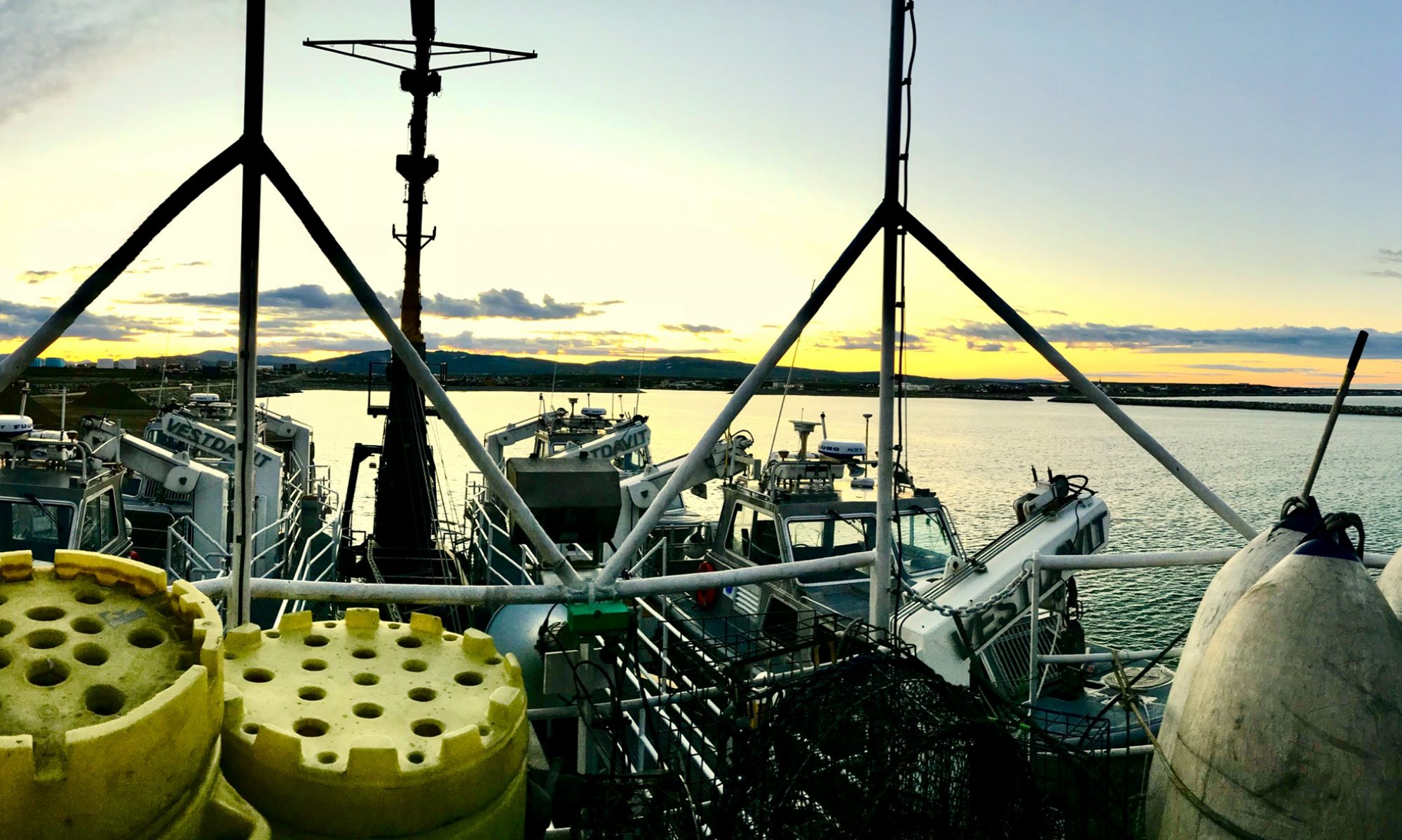
Amy Orchard: Day 1, 2 and 3 – Cool Scientists, Multibeam, Setting Traps, Cetaceans, September 16, 2014

NOAA Teacher At Sea
Amy Orchard
Aboard NOAA Ship Nancy Foster
September 14 – 27, 2014

Mission: Fish Tagging
Geographical area of cruise: Riley’s Hump: Tortugas Ecological Reserve South
Date: September 14, 15, 16, 2014

Weather: September 16, 2014 20:00 hours
Latitude 24° 30’ 30’’N Longitude 83° 09’ 9’’W
Few clouds, clear.  Humidity 10%.
Wind speed 7 knots.
Air Temperature: 28° Celsius (83° Fahrenheit)
Sea Water Temperature: 30.4° Celsius (86.7°Fahrenheit)

SUNDAY:

Getting to Know the Nancy Foster

Scott Donahue, Science Coordinator for Florida Keys National Marine Sanctuary and Chief Scientist for this cruise, brought me aboard and gave me a tour of the Nancy Foster early in the day.  Also there was Tim Olsen, Chief Engineer, who I had met on the plane from Atlanta to Key West.  I was overwhelmed with the capacity of the ship.  It is huge and fully equipped for a wide variety of scientific endeavors, diving, mapping, surveying, launching large equipment etc.  I feel lucky to be a part of what is going on.

Click on these two photos for more information

Short Jaunt into Key West

After taking some time to see Key West, I headed back to the ship where I met Cammy Clark from the Miami Herald who will be with us for one week reporting on our experience. Cammy and I spent the night on the ship awaiting the science team to arrive early tomorrow morning.  The ship is in dock so I can’t yet be sure if I will suffer from sea sickness.  However, I hear that there is 100% survival rate if it does occur!

Click on these two photos for more information

MONDAY:

Meeting the Scientists

During the two weeks aboard, I will be working with 10 scientists from the Florida Fish and Wildlife Conservation Commission (FWC), 7 NOAA Florida Keys National Marine Sanctuary scientists and 2 ROV pilots from the University of North Carolina at Wilmington.  I am excited to be a part this interagency collaboration.  Seems like an efficient way to communicate and share experiences.

Guess which photo shows the scientists I will be working with…

Answer:  PHOTO ON THE RIGHT.  FWC scientists from left to right: Mike McCallister, Jeff Renchen,Danielle Morley, Ariel Tobin (in front), Ben Binder, Paul Barbera.  Not as reserved or stodgy as you might picture a group of scientists, but they are incredibly knowledgeable and dedicated to their work.  They are unbelievably cool people!  They have amazing stories to tell, are easy-going and love to have a good time.  I want to be like them when I grow up!

Preparing to Do Science

One of the many things we will do this week is tagging fish.  To do this, we will travel away from the ship on small boats to set fish traps.  Once the right fish are contained, the dive team will surgically insert an acoustic tag which will allow them to monitor the fish’s movements throughout different reaches of the sanctuary.  This information is important to see the effectiveness of protected areas vs. non-protected areas.

The divers perform this surgery underwater (usually at depths of 95-110 feet) in order to reduce stress on the fish and to avoid air bladder expansion.

Today the divers went out to practice their diving skills before the intense work begins.  I got to travel with them in the small boat.  Even though I am certified to SCUBA dive, only American Academy of Underwater Sciences divers and other divers with official reciprocity are allowed to dive off NOAA ships.  (reciprocity is the word of the day – look it up!)  The diving these scientists do is much more technical than the recreational diving I do in Mexico, but they enjoy it just as much.

Best note of the day:  No sea sickness!  (yet)

dive boat being lowered
The 4 small boats sit on the back deck of the ship and are lowered over the side with a large crane. Once the boat is on the water, we climb down a rope ladder (which is swinging ferociously in the waves!)
me on the small dive boat
The Nancy Foster has four small boats. Three for dive operations and one reserved as a rescue boat. It was exciting to have a different perspective and to see the Nancy Foster out at sea from the small boat. Photo by Linh Nugyen

TUESDAY:

Multibeam Sonar

Last night was the first night I slept on the ship while it was out to sea.  I had a really hard time sleeping as I would awaken every half hour feeling as if I were going to roll over and fall out of my top bunk!  This movement was due to the fact that science is being done aboard the Nancy Foster 24 hours a day.  During the night time, Nick Mitchell and Samantha Martin, the Survey Technicians, are running the Multibeam Sonar which determines ocean depth and creates a map of the sea floor contours.  Using 512  sonic beams, sound is emitted, bounces off the sea bed, then returns to the ship.

See these videos for more information:  http://www.nauticalcharts.noaa.gov/staff/education_animations.htm

The ship would travel out about 3 miles, then turn 180° to make the next pass.  Cruising at about 1 mile every 10 minutes (walking speed) we were turning about every 30 minutes, explaining my rockn’ night!

More on MSB in upcoming posts.

Click on these two photos for more information

Setting Fish Traps

I joined the divers on the small boat to set out the first two traps.  We used cooked and peeled shrimp as bait.  The traps were still empty late afternoon.  Let’s hope they take the shrimp so the tagging can begin!

modified chevron trap
Here sits the modified chevron trap Ben and I will be deploying from our small boat. Divers on a second small boat will follow us, dive down and be sure the trap sits on the ocean floor upright and will set the bait.
trap over board
I am making sure the rope which attaches the float buoys to the trap doesn’t get caught on the boat as the fish trap is deployed into the water. Photo by Nick Mitchell
Here Ben Binder & Survey Technician, Nick Mitchell, record the exact Latitude and Longitude where the trap was set.  Can you figure out the general GPS coordinates for the Tortuga South Ecological Reserve?
Here Ben Binder & Survey Technician, Nick Mitchell, record the exact Latitude and Longitude where the trap was set. Can you figure out the general GPS coordinates for the Tortuga South Ecological Reserve? Need help? Go to http://shiptracker.noaa.gov/

We are focusing on two species during this trip: the Black Grouper and the Cubera Snapper.  These two were selected because they are commercially and recreationally important species.  The FWC’s aim is to monitor the seasonal movement of these species to better understand how the fishes are utilizing the protected areas, as well as those outside of the reserve, so they can make the best management decisions.

I will attach photos of each species that will be taken from the Remotely Operated Vehicle (ROV) in my next blog since this one is getting long…

Challenge Your Understanding

Identify this animal.

I took this photo and video on day 1.  We have seen them each day since!

cetaceans jumping
Am I a porpoise, dolphin or vaquita?

The species in my photo/video is part of the Order Cetacea and the suborder Odontoceti (or toothed whales) which includes the porpoises , dolphins, vaquitas, narwhals and killer whales (to name only a few – there are 67 species in this suborder.)

Go to this website to help you find the correct answer

http://www.nmfs.noaa.gov/pr/species/mammals/cetaceans/


Bonus Points – make a COMMENT and share some information you have found about the VAQUITA.

Cool fact – all members of Odontoceti can echolocate.

Junior Docents – add that to your bat interpretations!

The question from my last post about the relationship between Tucson and the Sea of Cortez could be answered with all of the first four answers.  Glad NO ONE chose the last answer!  The sea is an integral part of our lives no matter how far we live from it.

Sue Zupko, Diversity, September 13, 2014

NOAA Teacher at Sea
Sue Zupko
Aboard NOAA Ship Henry B. Bigelow
September 7-19, 2014

Mission: Autumn Bottom Trawl Leg I
Geographical Area of Cruise: Atlantic Ocean from Cape May, NJ to Cape Hatteras, NC
Date: September 13, 2014

Weather Data from the Bridge
Lat 35°38.1’N     Lon 074°50’W                    

Present Weather PC       
Visibility 10 nm
Wind 220° 5kts

Sea Level Pressure 1016.6
Sea Wave Height 1-2 ft
Temperature: Sea Water 27.2°C
Air 28.4°

Science and Technology Log

If you want to learn about biodiversity, come on a NOAA Fisheries Cruise. We hear about the numerous fish in the ocean, but nothing really makes it come alive as does seeing it. There are pockets of animals in each of the strata. Different depths have different temperatures, bottom type, plants, etc. Let me explain a bit about my watch and what we are doing.

I was amazed by the diverse sounds. A crow. A jaguar screaming. A frog croak. Sloshing. Thumps. “Fine”. A ringing telephone. A whip cracking. A waterfall. Thunder. A pinball machine. Music playing. Some people singing along. Laughter. Chatter. The list is seemingly endless.

There are platforms we each stand on along the conveyor belt which brings the fish in to be processed from the checker on the deck. The first person in line and pulls out fish which might be harmful such as electric rays and large sharks. Hope she gets the Lionfish as well. Don’t want to be stuck by those spines. As the animals come down the line we sort them based on the instructions of the watch chief who has been outside to see the catch, comparing what we have.

Heath, our watch chief, programming our catch

Heath is my watch chief. So, he suits up in his PFD (life jacket–personal flotation device) and hardhat(helmet) to see what was put in the catcher and then tells us what to leave on the conveyor belt as it goes by. That is usually what is most numerous. Sometimes it’s trash, such as starfish and jellies , other times it’s Loligo squid One night we had a huge amount of scallops so a seemingly endless stream of scallops passed us by. I love eating scallops. It is amazing to view them up close. They have numerous eyes lining the inside of the shell.

Containers Small, Gallon, 10 Gallon, 1.47 Cubic Feet Baskets

Once the animals are sorted by species into containers, they then make their way down the conveyor to Heath. Heath scans the container which makes a telephone ringing sound. He enters/selects the name of the animal on his monitor (crow caws–actually except for animal id every time he does something his “ok” sound is a crow), checks our work to be sure the animals in the container are all the same, weighs the catch of that entire species, and sends the container on its way down the conveyor belt.

There are three processing stations along the conveyor. I have mostly worked with Nicole this week so far. She is a fabulous teacher. Very patient with my inexperience and points out when I do something correctly. That way I will repeat things the correct way. She also suggests better ways when I struggle. Heath explained that we process the containers with the most organisms in them first so no one is stuck at the end of the line doing a large container of animals when others are cleaning up. Some containers might just have one animal. This system works pretty well since everyone seems to finish at the same time.

1 Gallon Container
1 Gallon Container

There are two people at each of the three stations. One person is the fish processor and the other is the recorder. First, the processor scans the container. It buzzes and identifies the container and what the animal is. I was very proud of myself today. I have been assigned to work with Larry now. He left me on my own to process (though he was watching from across the conveyor). When I checked to see how to measure the fish I was working with, it said to measure the width of the carapace. Carapaces are found on turtles or crabs. It is their hard shell. I had a tiny fish. On a rocking ship, it is easy to push a wrong button on a screen and this container had the wrong name on it. Easy fix. Sent it back for reassigning a species and I picked it up when it came by again. “Nice catch on that,” Larry said. Made me feel proud that I recognized how to use the equipment, recognize certain species, and fix the problem. Nicole said if we make a mistake, it can always be fixed. Remember, we learn from mistakes. That’s what we stress in my classroom. Try it. If you fail, learn from the mistake and redo. That works with adults as well.

My favorite sound is the pinball machine that says the weight has been recorded. If the animal needs more processing than just being weighed, there is a sound (a jaguar scream or a whip cracking) to tell the team what to do. Sometimes we need to put the animal in a jar to be preserved. )

Other times we need to take a photograph, or it will ask what the animal’s sex is. We have had a lot of requests for fish to be frozen for study back in the lab. These are bagged and put into a large freezer  for the requesting scientist. The most common seems to be getting the otolith, the part of a fish that aids it in orientation, balance, and sound detection. These are tiny in most fish and require a little manila envelope that we put a sticker on identifying it. These special requests from the computer are all preset requests from scientists working in a scientific area back on shore.


The sound of the waterfall is the constant stream of salt water running down a shoot onto the floor. This picks up animals and trash that have dropped and washes them down drains or out the scuppers (small rectangular openings on the bottom of the wall at the floor which opens to the outside) on the sides of the room. The water is very warm and I’ve noticed that the sea water has been warmer than the air temperature. Another sound is the water sloshing around, similar to the sound in a bathtub when you move the water.

Saltwater helps keep the floor clean in the wet lab.

When I began this blog I was sitting on the O2 deck at a small table under the stairs. We kept changing direction at relatively slow speeds. I have learned that we were using the multi-beam sonar to look at the bottom to find an acceptable spot to trawl. I was excited to sit outside to work and gaze out over the ocean. During that time I spotted three pods of dolphins swimming. John Galbraith, our chief scientist, and I discussed last night how if you aren’t spending time observing something you will miss many things. So true. If I wasn’t observing the ocean frequently, what are the odds I would see a whale?

Meet Scientist Nicole Charriere 

Nicole with Slender Snipe Eel

Nicole has been my mentor for the past week. She is a sea-going biological technician, sailing about 130 days out of a year. She usually is on scallop surveys, but seems pretty expert in fish, shrimp, and clams as well. Her job on this cruise is to help provide leadership. There are several volunteers on this cruise, me included, and some are novices just learning about fish. She explains about the protocols (a formal set of rules and procedures to be followed during a particular research experiment).

What Nicole likes about her job is she isn’t in an office all the time. Trawls are different every day. No two tows are the same, and there are a huge variety of species. She really enjoys the diversity of people she gets to work with. There are different scientists and crew members to meet each time. She is a scuba diver and knew she wanted a career with NOAA when she graduated college. She had a job on a commercial fishing vessel and was contacted by NOAA. Someone probably noticed her great work and let someone hiring at NOAA know.

There is something very ironic about Nicole working on a fishing vessel. She doesn’t like sea food. She recognizes its importance and that it is important for the world to have a reliable food source, but it isn’t her favorite.

Nicole’s advice to my students is to talk to everyone and learn. Make connections about what you learn. Work hard, since working hard and getting along with people on a team gets you noticed and when a job comes available, guess who gets hired? Not the person who is difficult to work with and is late constantly.

Nicole has an active lifestyle. In addition to scuba diving, she roller blades, plays guitar and keyboard, and plays soft ball and soccer. She knows a lot of people who are still looking for the perfect career for them. Nicole is thrilled to have found her dream job so early in her life. I am grateful to have had the opportunity to work with this eloquent, interesting, and fun scientist.

Personal Log

Yeah! The captain put out an all-call and said there were pilot whales off the port side. We had just finished our watch and I headed out to the port side. There they were. I said, “They look like dolphins.” Both are cetaceans, both hunt fish, both are smart, both have a dorsal fin that sticks up out of the water. I believe I saw some earlier. One remained in one place with a huge fin sticking up. I hadn’t seen a dolphin do that before. They might swim in a circle going after a fish, but this behavior was a bit unusual.  At the time I just thought how big that dolphin was. Now, upon reflection, I believe that was a Pilot Whale.   That was so kind of the captain to announce the whales’ presence. The XO, Chad Cary, told me that Pilot Whales got their name since they are indicators of where the fish were. The fisherman just piloted their boats to where those whales were. Interesting way to get a name. Obviously, I’m pretty excited. Did you say I would see a whale on that poll?

Did You Know?

Deploying CTD
Deploying CTD

CTD stands for conductivity, sea water temperature, and depth (of where measurements are taken).

According to NOAA, salinity measurements can be used to determine seawater density which is a primary driving force for major ocean currents which help drive the Earth’s climates. This seems analogous (similar) to the causes of wind when air moves from warm air to cold and back again.

Question of the Day

The CTD protocol states that it must stop 5 meters from the bottom to take its measurements. If the CTD descends at 37 m/s, how long will it take for the CTD to get in position to measure its readings and return to the surface if the bottom is 338 m from the surface?

Vocabulary

Salinity: The percentage of salt in the water. Think of it as if you had 1000 grams of water and mixed one gram of salt into it. This would be 1 ppt salinity. Our ocean averages about 35 ppt salinity. Our CTD found that the ocean’s salinity where we tested today was 34 ppt.

Something to Think About

We actually let out 361 m of wire with the CTD, but the bottom was only 338 m. Why did we let out more wire than the distance to the bottom when we dropped the CTD?

Animals Seen Today

Janelle Harrier-Wilson: T-8 Days and Counting – It’s Almost Time to Set Sail! September 14, 2014

NOAA Teacher at Sea
Janelle Harrier-Wilson
(Soon to Be) 
Onboard NOAA Ship Henry B. Bigelow
September 23 – October 3, 2014 

Mission: Autumn Bottom Trawl Survey Leg II
Geographical area of cruise: Atlantic Ocean from the Mid-Atlantic Coast to S New England
Date: September 15, 2014

Personal Log

Janelle Harrier-Wilson with husband, Neil, and golden retriever, Devon, as a puppy.
With my husband, Neil Wilson, and my dog, Devon. He was a puppy at the time and graduating from training classes.

Hello and welcome! I am so excited to be a part of the NOAA Teacher at Sea experience. I currently teach chemistry, engineering, and technology at Lanier High School in Sugar Hill, GA (outside of Atlanta). I am part of an awesome project based learning (PBL) program called CDAT (Center for Design and Technology), which focuses on science, technology, engineering, and math (STEM). Lanier High School opened in 2010, so this is our fifth year as a school; however, this is my first year teaching here. Before transferring to Lanier High School, I taught sixth grade Earth science at Lanier Middle School for eight years. Now, I have the awesome privilege of teaching many of my students a second time. It’s really fun to see how much they have grown up and matured since they were sixth graders.

I am looking forward to sharing what I learn with my students as I think my engineering students will gain insight into shipboard careers they may have never considered, especially as it relates to engineering. I think my technology students will get a chance to see how scientists collect and organize data using technology tools.

Although I teach chemistry and this research cruise is focusing on fisheries, I know my students will gain a new understanding of our oceans. Sampling the health, age, and quantity of different fish species with the NOAA scientists help us to measure the health of the oceans. Some of the big issues with the health of our oceans concern overfishing, human pollution, and ocean acidification. Ocean acidification refers to how the oceans take some of the extra carbon dioxide from the air and dissolve it into the water. This lowers the pH of the water making it more acidic, which can affect the health of the ocean’s inhabitants.

I applied to be a NOAA Teacher at Sea so I could learn more about our oceans in order to share this knowledge with my students. I have always been a hugely passionate about space and space exploration. I’ve had so many cool space opportunities like seeing shuttles and rocket launches, going to Space Camp, floating in microgravity, and most recently, helping our students talk to Reid Wiseman on the International Space Station via amateur radio.

Space is awesome and amazing, but we have an equally amazing frontier right here on own planet, our oceans. I want to be able to share with my students about the oceans with as much confidence and enthusiasm as I do about space, so I am extremely happy to be a Teacher at Sea so I can begin to glimpse all the science our oceans entail. I was also inspired to apply after hearing the stories from two Teacher at Sea Alumni Jennifer Goldner and Kaci Heins, who I met at Advanced Space Camp and now call dear friends.

Experimenting in microgravity with Kaci Heins photo from NASA
Janelle Harr-er-Wilson on the water in Florida as a child
Me as a child in Florida

I grew up on the west coast of Florida near the Gulf of Mexico. Just two miles from my house was a tiny commercial fishing village, Cortez. My childhood best friend lived in Cortez, so I spent many days running up and down the docks and sampling the fresh caught seafood. (Fresh smoked mullet was my absolute favorite!) This gave me a unique look at the importance of fishing to a community. I even had a chance to go out on a small boat with a commercial fisherman and a few of my friends one night and catch fish via nets. So even though space has always been my passion, I feel a connection to the ocean as well.

Teacher at Sea goodies

My cruise is on the Henry B. Bigelow, a NOAA ship outfitted for fisheries research. You can take a virtual tour of the Henry B. Bigelow including the science labs, and track the ship here.

I am part of Leg II of the Autumn Bottom Trawl. We will be taking samples of fish and other species of marine animals from the Mid-Atlantic to Southern New England to measure the abundance, health, and age of certain fish species. As part of the science team, I will work a twelve hour shift everyday – either from noon to midnight (day shift) or from midnight to noon (nigh shift). I will find out my assigned shift when I arrive to the ship.

Right now I am working on getting everything I need ready and thinking about packing. Since space on the ship is very valuable, I am trying to pack as lightly as possible. Some of the things I plan to bring with me are earplugs (I hear the engines are loud so it’s good to have these while sleeping), anti-nausea aids so I don’t get seasick, and cameras to document my trip. A couple of weeks ago, I received this cool package of items from the Teacher at Sea program. I’ll definitely be bringing the water bottle, shirt, and hat with me. The good thing is there are laundry facilities on board, so I don’t have to pack too many outfits. I also plan to bring a companion along with me. At my school, we are the Lanier Longhorns, so I will be bringing one of the plush longhorns along with me for this adventure. My question for you is which one? Toro or Tyson? You get to decide!

Who should join me at sea: Toro or Tyson?


At Lanier, our motto is Learn.Lead.Succeed. I cannot wait to learn new things on this trip and share them all with you! What things to you hope I will learn and share with you? Please leave your ideas in the comments. Until next time!

Laura Guertin: TJ at the Connecticut Maritime Heritage Festival, September 15, 2014

NOAA Teacher at Sea
Laura Guertin
Onboard NOAA Ship Thomas Jefferson
September 2 – September 19, 2014

Mission: Hydrographic Survey
Geographical area of cruise: North Atlantic Ocean
Date: September 15, 2014
Location of ship (at Fort Trumbull Coast Guard pier): 41o 20.698′ N, 72o 05.432’W

There is no Science and Technology Log for this blog post, as the ship made a detour for a special event – the Connecticut Maritime Heritage Festival in New London, CT. This annual festival was happening for its second year, and the organizers asked NOAA if they would have a ship in the area to participate. Fortunately for them (and for NOAA), we were able to have our ship docked for the weekend activities but still send out our launch (HSL 3101) to continue with the hydrographic surveys.

The weekend had quite a schedule of events for the fan of maritime history. Connecticut TV stations Channel 3 and Channel 8 came and recorded a promo of the event (you can see a brief interview with my Commanding Officer in the Channel 3 video!). On Thursday evening, myself and others from the ship went and listened to sea shanty singing (you can listen to examples of sea shanties on the Smithsonian Folkways website). The evening concluded with a screening of a film titled Connecticut & The Sea, a look at how Connecticut’s identity has been shaped by its maritime heritage.

On Friday, there was an official welcoming ceremony for the festival with Lt. Governor Wyman, Senator Blumenthal, the mayor of New London, Mayor Finizio, and other state officials. There were many speeches, including a reading of a proclamation from last year that annually establishes the second week of September as the Connecticut Maritime History and Heritage Week.  I was pleased to hear that this annual celebration has a strong education mission written in the proclamation, focusing on using schooners as learning tools for youth. Senator Blumenthal specifically mentioned that, “more importantly than the money going in to this [festival] will be what people will learn, especially about our heritage. We are rooted in the sea.” I also learned about a maritime heritage history guide being developed for elementary grades in Connecticut, and another social studies and science guide for middle/high school students on maritime history, transportation, and maritime technology. Sounds like fun topics to teach, and so relevant to students and their geographic location.

Then, we started with ship tours! For two hours, we allowed visitors to come on board for a guided 15-minute tour of the Thomas Jefferson. Below are images of what the visitors were shown.  Images from other areas, such as the mess deck and lounge, can be viewed at my Life on the Thomas Jefferson post.

This slideshow requires JavaScript.

Friday evening was the lighted boat parade, with the judges coming on board our ship to view and judge the boats that went by. (Personal commentary… UConn Avery Point – your boat should have won! Any boat with a college mascot on it is a winner in my book!)

UCONN - Avery Point R/V
The UCONN – Avery Point research vessel, filled with lights for the lighted boat festival!

On Saturday, we opened the ship for five hours, having as many as four tour groups on board at once! It was a huge effort in coordination, but as always, I am amazed by this amazing team on the Thomas Jefferson that was able to educate visitors on NOAA, its mission, and hydrographic surveying. The comments when the people came off the ship were so positive and wonderful to hear, and the smiles on the kids’ faces really summed up their experience.

We were pretty much all exhausted on Saturday evening – after all, we hosted 514 visitors on board during the festival! But there was little time to sit back and relax, as we had to be ready to set off our launch at 0800 and pull out of City Pier by 0900 the next morning.

Tour line for TJ
The line was long at times, but as many visitors told us, the tour was well worth the wait!

Personal Log

As an educator heavily involved in outreach, I was thrilled to be able to participate as a NOAA Teacher at Sea in this event. I proudly wore my TAS t-shirt and hat, and when I went over to the Education Exhibits at the festival, I was able to speak to some educators about this NOAA program and the wonderful opportunity it offers. I can’t wait to continue sharing my TAS experiences after this cruise, with my students, other K-12 teachers I work with, and the general public.

And it was fascinating for me to see everything involved in getting ready for the ship’s participation in the festival. The crew worked incredibly hard for several days, generating the posters for displays, cleaning the ship from top to bottom, and painting everything from the handrails to the decks. While at dock, we “dressed the ship” with signal flags – we looked good!

Another personal note is the delight I had being able to reconnect with my Connecticut roots!  I grew up in Plainville, CT, and we made several trips down to Mystic to visit Mystic Seaport and the Mystic Aquarium.  It was interesting to see this pride in Connecticut’s maritime history extend beyond Mystic, especially in New London with the Custom House Maritime Museum and current docking location of the recreated ship Amistad.

I would have to say that the most-unexpected-yet-equally exciting part of the weekend was seeing more than one submarine heading up the Thames River towards the Naval Submarine Base in New London (at least I believe that is where they were heading!). Each submarine is escorted by three smaller U.S. Navy boats with lots of protection on board. When a submarine comes through, all boat traffic stops in the immediate area. The submarines move very slow during transit in the river, so I was able to watch them for quite some time. Even though I recently toured the U.S.S. Bowfin submarine (a WWII sub), these submarines seemed much longer and more impressive in the water!

This slideshow requires JavaScript.


OK GEOSC 040 students at Penn State Brandywine, here is your next round of questions. Please answer these TWO questions online in ANGEL in the folder “Dr. G at Sea” in the link for Post #8. Only enter responses in the boxes for Question #1 and Question #2. You can refer to the NOAA Education Strategic Plan 2009-2029 for additional background information.  I also encourage you to think back to some of the previous questions you have answered about the role and purpose of hydrographic surveying…

1)  Please read NOAA’s Education Mission below. Why was it important for NOAA to participate in the CT Maritime Heritage Festival (in the context of NOAA’s education mission)? How did the Thomas Jefferson help support this mission statement?

NOAA’s Education Mission — To advance environmental literacy and promote a diverse workforce in ocean, coastal, Great Lakes, weather, and climate sciences, encouraging stewardship and increasing informed decision making for the Nation.

2)  Please read NOAA’s Education Vision below. Why was it important for NOAA to participate in the CT Maritime Heritage Festival (in the context of NOAA’s vision)? How did the Thomas Jefferson help support this vision statement?

NOAA’s Vision — An informed society that uses a comprehensive understanding of the role of the ocean, coasts, and atmosphere in the global ecosystem to make the best social and economic decisions.


Random Ship Fact!

While NOAA Ship Thomas Jefferson does not have the historic record of the ships docked in New London this past weekend, the Thomas Jefferson has certainly made some significant contributions that will go down in this ship’s history. Here are some of the impressive activities of the TJ, beyond its day-to-day hydrographic survey activities:

  • When Hurricane Sandy hit the northeast in 2012 and New York Harbor was closed to ship traffic, the U.S. Coast Guard requested assistance from NOAA for immediate assistance with charting. It was the Thomas Jefferson that was sent in to survey the waterways. The Thomas Jefferson and her two launches charted approximately 20 square nautical miles with side scan sonar and multibeam echo sounder, mapping shipping lanes and channels, identifying numerous hazards to navigation, and locating many lost containers throughout New York Harbor and the approaches” (see NOAA PDF). In essence, it was the work of the TJ that deemed the area safe and reopened the Harbor. See NOAA’s summary Response to Hurricane Sandy and read about the Updates to the New York Harbor nautical chart.
  • The Thomas Jefferson was involved in a search and rescue of two divers on August 26, 2012. The TJ was off of Block Island conducting its hydrographic survey work, and responded to an emergency call broadcast by the U.S. Coast Guard. The crew of the TJ spotted the divers and were able to direct a Coast Guard rescue vessel to their location (see NOAA article).
  • When a plane crashed in the ocean near Key West on August 14, 2010, the Thomas Jefferson was the first on site to respond. Within five minutes, and in the dark, the TJ crew rescued the pilot from the plane (see NOAA article).
  • On June 3, 2010, the Thomas Jefferson embarked on a research mission to investigate the area around the Deepwater Horizon/BP spill site. Specifically, the TJ utilized sophisticated acoustic and water chemistry monitoring instruments to detect and map submerged oil in coastal areas and in the deep water surrounding the BP well head. See the following NOAA articles:
    • NOAA/NOS Deepwater Horizon Incident (website)
    • Initial observations from the NOAA Ship Thomas Jefferson (NOAA News)
    • NOAA Ship Thomas Jefferson Continues Deepwater Horizon Spill Study Mission (NOAA News)
    • Deepwater Horizon Response Mission Report (PDF)
  • From April-June 2004, the Thomas Jefferson conducted a joint hydrographic survey with Mexico along the approaches to the Mexican ports of Altamira and Tampico as part of a cooperative charting agreement under the International Hydrographic Organization / Meso-American-Caribbean Sea Hydrographic Commission.
  • And let’s not forget the other contributions the Thomas Jefferson has made to marine archaeological surveys (Virginia Capes Wrecks, USCS Robert J. Walker, etc.)

One final point I’ll mention is from May 2007, when the Thomas Jefferson was recognized with the U.S. Department of Commerce Bronze Medal Award “for superior federal service for mapping efforts which identified areas of shoaling and obstructions caused by Hurricanes Katrina and Rita and allowed for nautical charts to be quickly updated and used by deep draft vessels entering ports.”  This ship will certainly go down in the history books of the NOAA fleet!

TJ with flags
The NOAA Ship Thomas Jefferson, with her flags out for the Connecticut Maritime Heritage Festival

Sue Zupko, Sing it, Willie–On the Road Again, September 10, 2014

NOAA Teacher at Sea
Sue Zupko
Aboard NOAA Ship Henry B. Bigelow
September 7-19, 2014

Mission: Autumn Bottom Trawl Leg I
Geographical Area of Cruise: Atlantic Ocean from Cape May, NJ to Cape Hatteras, NC
Date: September 10, 2014

Weather Data from the Bridge
Lat 37°38’N
Lon 075°15.8W
Present Weather CL
Visibility 10 +nm
Wind 025° 10kts

Sea Level Pressure 1016.2
Sea Wave Height 3-4 ft
Temperature: Sea Water 26.6°C
Air 24.8° C

Science and Technology Log


We are now “on the road again” trawling. The nets were lowered at about 7:30 am. I was surprised by how small our catch has been. The scientists are not at all surprised. They said because of the time of year, many fish are in the estuaries spawning (reproducing). Today we have been on the edge of the continental shelf off the coast of Delaware and Virginia. When we get in closer, the scientists say we will have a lot more fish in our net.

It is fascinating how they are selecting sites for sampling.The sea floor needs to be fairly flat to pull a net across. We learn what the bottom is like using sonar. A multi-beam sonar on the bottom of the hull is in the center of the ship. There is also a single-beam sonar there. They serve two different purposes. The single-beam looks straight down the water column. It is like a really bright penlight. This shows what is in the water column such as fish and plankton. It also can reach greater depths since its light is stronger. The multi-beam is more like a floodlight. It spreads out over the bottom revealing all the different levels of the ground. These sonar beams bounce off the bottom and send the ship information. The crew  watches the sonar information and scouts for a good area to drop our nets. Of course, there are certain areas where samples need to be taken. They are trying to repeat a tow at the same time every year within a strata area. “So what is a strata?” I asked.

Geoff Shook, our survey technician, reads the information on the display

Strata lines are like lines on a topographic map on land. It is called a bathymetric map underwater. The lines on a bathymetric map are called strata lines. These are based on the different depths. The net needs to be pulled within the same strata at the same time each year. As long as a tow is within the strata the habitat is about the same. In order to get accurate population information, they must make at least two tows within a strata. Some of the strata are hundreds of square miles. Strata are the same depth range and habitat. Closer to the continental shelf, the strata are much narrower. Closer to shore, they are much wider. For example, strata 70 is 281 square nautical miles (nm). It is 55-110 m deep and is next to the shelf. However, strata 73 is closer to shore, is 2145 sq. nm, and is 27-55 m deep. Their habitats are different so random samples need to be taken within each.

So, I think of it like a chess board within a strata. If we want a random sample, we could drop a piece of soft clay from about a 1/2 m above the board. Where it hits is where we tow in that strata. Our first tow is at D5. The second piece of clay could fall on H2. So, there is where we would sample.

Then, when the ship is over top of the strata we will sample, it must find a safe area to tow which won’t tangle or break the net. You can’t get a sample with a broken net.

Notice the wires on the spools which haul the nets. On the first one the wire is tightly wrapped. On the second one the wire has a gap. This could lead it to break or more easily tangle. We are doing a deep tow tonight outside of the “normal” range of 366 m deep. However, it will not only give us new information, but will, hopefully, help rewrap the wire on the second spool so it will be tight. Have you ever tangled a loose fishing line on your reel? It is somewhat similar to that so we are trying to prevent this from happening later.

So, what have I been doing while waiting for a tow to complete? It depends. One time I told jokes with the scientists. Another I had a snack. Once I ate dinner. Right now, I’m working on my blog. Nap is not an option. I’ll explain that later.

It was a Win-Win Wednesday. We got some great fish by going deep, we explored some very deep water, the wire was rewound properly onto the spool, and we will have a shrimp fest tomorrow.

Meet the Crew

Luke Staiger, 2nd Cook

The old adage “an army runs on its stomach” holds true for a research vessel. Meet Luke Staiger, our 2nd cook. Luke is with the Bigelow on temporary assignment from the Reuben Lasker  in San Diego. NOAA members get moved around short term as needed. Luke has been with NOAA for 12 years. He has been cooking since he was a kid. His most important tool is an 8″ all purpose knife. It must be sharp and long-handled. If he could invent the perfect tool for the job, what do you suppose it would be? That’s right, a knife that is comfortable to hold all day.

Luke worked in a buffet restaurant so this is the perfect situation for him since it’s all buffet. He worked his way up to cook after doing other jobs at the restaurant. I’m looking forward to a breakfast that he prepares since cooking breakfast is his favorite.

Luke recognizes how important the work is that NOAA does. We need to preserve our resources, such as water, he says. NOAA keeps an eye on things so we don’t lose sight of what matters. When not on a boat, Luke enjoys fixing up cars, especially adding stereo systems. Luke has an easy going personality and a ready smile, making it pleasant to work with him.

How did he find NOAA? Similar to others that I have interviewed, he looked online. NOAA has good benefits, you get to travel, and the experience is good. His advice to my students is to gain lots of experience in your field, even if it’s just volunteering. You will find work if you do a good job and have a lot of experience.

Personal Log

Remember I said I won’t get a nap during my 20 minutes between tows? It is interesting how our stateroom (cabin/bedroom) works. There are four of us in our stateroom. When I leave to go to work, I cannot go back until the end of my watch. I carry everything with me so it is like the private room for two other women. Then I only have one room mate. We get the room for 12 hours. There are curtains around our beds and we wear earplugs. I hardly know that the other scientist on my watch, Lacey, is even there. All I do is check to see if her curtain is closed. That means, “I’m asleep.”

Did You Know?

Did you know that there is an anchor-cleaning device onboard the ship? It sprays salt water at 150 psi (pounds per square inch). The anchor gets pretty dirty sitting on the ocean floor when we are at anchor. They don’t want all that dirt on the ship in the anchor locker, so it gets cleaned. A clean ship is a happy ship.

Question of the Day

Why would different depths affect which fish live there?

Vocabulary Word

Sonoluminescence. This is short bursts of light from imploding bubbles in water (or in a liquid) when excited (moved around) by sound. A mantis shrimp is capable of sonoluminescence because the high speed of its front legs is capable of creating and rapidly shrinking air bubbles. The bubble looks like a spark underwater with no fire.

Something to Think About

If we don’t preserve our fisheries, which is what NOAA is researching, soon there won’t be any fish.

Challenge Yourself

We used a deep-water protocol, which is between 183 and 366 m. If you are fishing in a strata that is 200 feet deep, would you fall in the deep-water protocol?

Animals Seen Today

Here are pictures of what we saw today in our really deep water trawl.