Paige Teamey: November 6, 2011

NOAA Teacher at Sea
Paige Teamey
Aboard NOAA Ship Thomas Jefferson
October 31, 2011 – November 1, 2011

Mission: Hydrographic Survey
Geographical Area: Atlantic Ocean, between Montauk, L.I. and Block Island
Date: November 6, 2011


Weather Data from the Bridge

Clouds: Clear
Visibility: 10 Nautical Miles
Wind: SE 9 knots
Temperature 14.3 ° Celsius
Dry Bulb: 11.5 ° Celsius
Wet Bulb: 8.9 ° Celsius
Barometer: 1030.0 millibars
Latitude: 41°10’59″ ° North
Longitude: 072°05’63″ ° West

Current Celestial View of NYC:

Current Moon Phase:

Current Seasonal Position (make sure to click on “show earth profile):

http://www.astroviewer.com/ http://www.die.net/moon/ http://esminfo.prenhall.com

OR

http://www.learner.org/

Science and Technology Log

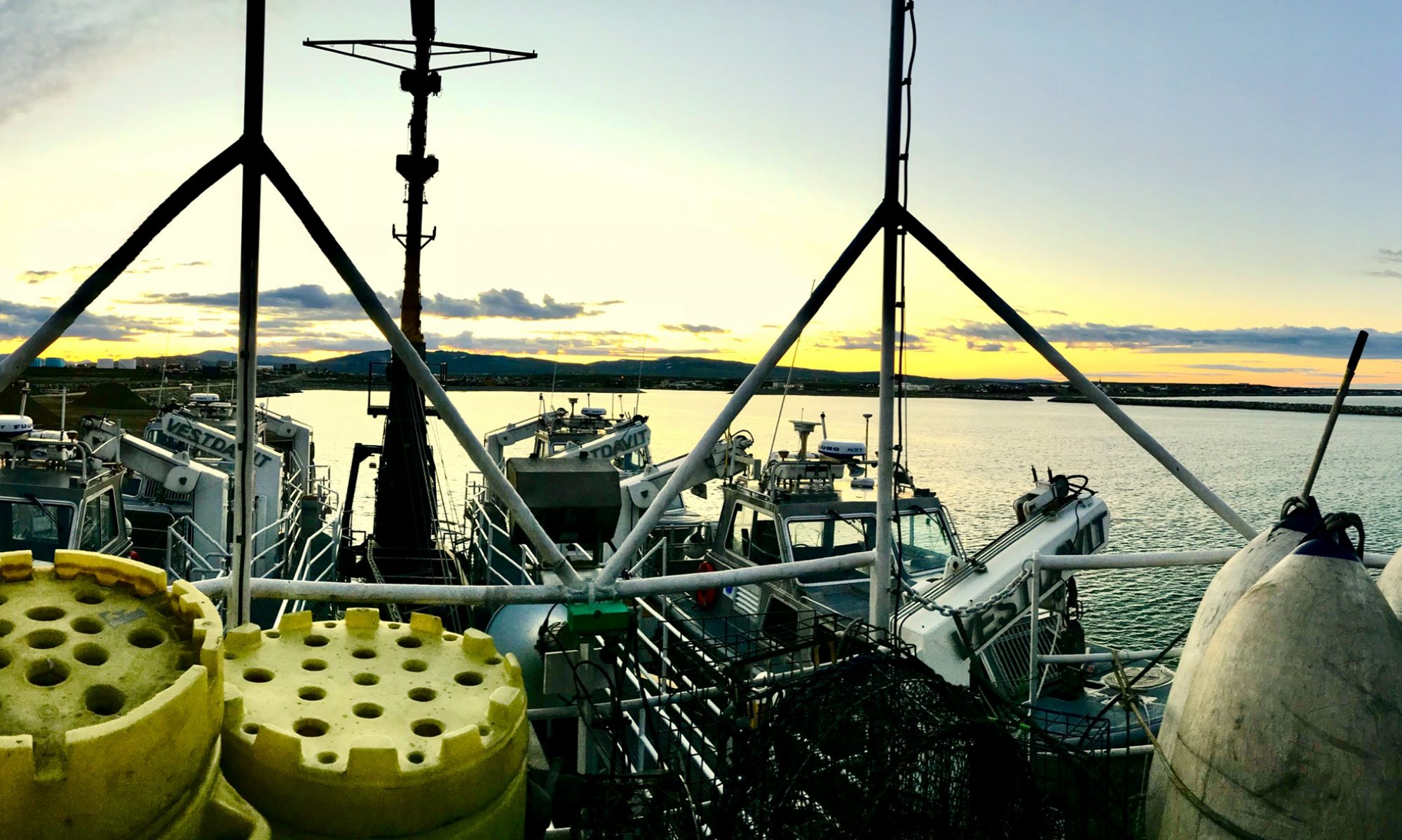
Sunset on either Thursday, Saturday, or....two months ago :).

Frank said an interesting thing today that resonated with a feeling that I have been unable to define. He said that when you are working at sea, every day is a Monday. This specific survey trip is 12 days long, which translates to 11 Monday’s and one Friday. That means there are no weekends, time is not longitudinal, rotational, or accompanied by changing scenery (going from home to the subway to school…all different backdrops). One day drips into the next, sparked by small things that you note as change and reference with a new day. We even had to vote on whether to observe daylight savings this weekend, or pretend it did not exist until we landed in New London on Friday.

Time at Sea.

I awoke yesterday and had the same breakfast I have had for the past week (still tasty, thanks Ace!!); however, there was nothing to punctuate why this day was indeed Saturday and not Friday. Mike the E.T. sat at the same table he had the day before and piled one condiment after the next onto his breakfast until perfection was reached, just as he has done each prior day. I smiled and laughed and told jokes with each of the crew members just as I have each day since I arrived.

Mike: Perfection in every bite.

The mess hall is like an accordion. It acts as a center piece that brings all of us together. After each meal the crew disappears back to the their stations. In this 208ft ship 36 members find their space and focus moving back to our stations to perform our individual duties. When meals begin anew we are pulled back together to resonate until we move away yet again. This center piece is essential otherwise we would continue with our duties whether it be Tuesday evening or Sunday morning. I enjoyed thinking about Frank’s sentence. This idea spoke of time not in hours or minutes, but as a continuum. Time on the TJ is marked with very simplistic relatively small changes that many of us would not pay attention to in our regular New York lives. A small conversation that sparks ideas, or subtle nuances that you begin to discover in an individual especially while sharing silence together, or a new smell that is adrift in the air that allows you to remember Tuesday from Friday (remember Tuesday when we smelled…). A series of simplistic small moments allows you to mark one day from the next.

Brilliant Tom prepping 3102 for a secure departure from the TJ.

There is a lovely gentleman named Tom who has been on numerous ships for over 30 years. He told me his line of work suits him best because he likes being able to keep to himself and if he was unable to work on ships he would be a hermit high on a hill (just a little joke). He has marked time by haircuts or noticing his shirt is slowly falling apart, or having to shave. He does not speak in days, just marked events. His longest time at sea without seeing land was 167 days…

Rock dove...can you find him?

Yesterday, Saturday…I mean Sunday, was marked by a small rock dove staring at me from the deck while I was standing on the bridge as I normally do with Joe and Tony during the 4-8 shift. The dove landed on the steal guard rail and then nestled in an incredibly small nook located in the bow next to the front mast and remained with the ship for the next two hours. It puffed its feathers to a measurable extension and settled in with the rest of the TJ crew. This dove punctuated my day and allowed me to differentiate time from Saturday.

"It's the people that make you happy--that is why I continue. Without people it is like having one shoe," says Tom.

There is constant conversation involved with seeing family, returning home, having creature comforts in hand’s reach, and kissing a wife, husband, or missed child. However many of the crew have also spoken of how even though time away from the ship is welcomed, after a while, they miss these days. Working with and on the ocean takes a certain kind of someone. These individuals tend to have patience, perseverance, and motivation to live on a ship and continue with focus each Monday. Each crew member on the TJ seems very much at ease and almost in a Zen-like state. From what I have observed there is no bitterness or disgruntled workers roaming the ship. Everyone here has served on multiple ships and is self-contained. Silence marks most of the day and conversations occur naturally when the tides are right.

For the last three days I have spoken with every surveyor on the ship at length to understand each stage of the nautical chart making process. I want to know the history, the importance, and most importantly the science. There are many stages and processes that go into the eventual updated chart (this process can take upwards of 1.5 years depending on the layout, and how well the data was accurately retrieved). I have been learning about this information and shooting videos bit by bit in order to make an introduction to hydrographic surveying for those that are following (thanks mom). November 3-5 have been my devoted days to understanding these new ideas. I will hopefully finish with the editing and have the video published soon.

Until then, smooth sails with no gales.

Personal Log

Meals:

Breakfast: Scrambled eggs with cheese and two pancakes (coffee of course!)

Lunch: Grey noodles…no seriously

Dinner: Spicy noodles with green beans (YUM)

Kristin Joivell, June 26, 2009

NOAA Teacher at Sea
Kristin Joivell
Onboard NOAA Ship Fairweather
June 15 – July 1, 2009 

Mission: Hydrographic Survey
Geographical area of cruise: Shumagin Islands, Alaska
Date: June 24-26, 2009

I found lots of seagull nests on Herendeen Island.  Every nest that I saw contained three eggs.
I found lots of seagull nests on Herendeen Island. Every nest that I saw contained three eggs.

Weather Data from the Bridge   
Position: Northwest Harbor
Clouds: Mostly Clear
Visibility: 10+ miles
Wind: variable and light
Waves: less than 1 foot
Temperature: 11.5 dry bulb
Temperature: 10.0 wet bulb
Barometer: 1011.5

Science and Technology Log 

Keeping time on the ship isn’t the same as keeping time at home.  First of all, all of the day to day operations on the ship take place based on the 24 hour time system.  The day is divided into 24 hours, numbered from 0 for 12:00am to 23 for 11:00pm.  The diagram below helps to visualize the 24 hour clock; it can be found on this website.  This website also has some really great conversion charts and problems to solve using the 24 hour clock.

Fairweather ship operations are based on the 24 hour clock.  Diagram courtesy of the Math Is Fun website.
Fairweather ship operations are based on the 24 hour clock. Diagram courtesy of the Math Is Fun website.

The change from am and pm to the 24 hour clock seems difficult enough, but there is another type of time you need to know when traveling on the Fairweather. Data collection takes place using UTC, or Coordinated Universal Time.  This is also a 24 hour clock, but the problems encountered with traveling through different time zones are cancelled out by using UTC.  If you want to figure out what your UTC is at the current moment, you either add or subtract a certain amount of hours from your time based on your location.  So, since I live in Pennsylvania, our local time zone is Eastern Standard Time (EST).  To get the UTC for my time zone, I just need to add five hours to my local time.  All of the data collection done on the ship takes place in UTC. That way, there is no problem knowing what time the data was taken, especially since the ship travels through different time zones sometimes while in the process of acquiring data.

TAS Joivell relaxes on Little Koniuji Island at about 11:00pm.  As you can see, it is still daylight out.  I called this area “Dinosaur Egg Beach” because of the shapes, textures, and colors of the rocks.
TAS Joivell relaxes on Little Koniuji Island at about 11:00pm. As you can see, it is still daylight out. I called this area “Dinosaur Egg Beach” because of the shapes, textures, and colors of the rocks.

Of course, all of this time conversion is even crazier at our location in the Shumagain Islands because sunrise is at about 6:00am and sunset is at about 11:30pm.  This makes going to sleep at a reasonable time confusing because your body wants to stay awake since it’s daylight. If that’s not confusing enough, another type of time that is used on the Fairweather is the Julian Calendar. In this calendar, each day of the year is assigned a number; months are not used at all.  So, since today is June 25, 2009 that converts to day number 176 on the calendar used for Julian time.  This is important again for data acquisition because it prevents misunderstandings based on time zones and is easier to save and input data using three numbers instead of a month, day, and year. With all the data processing taking place on board, anything that can help with the organization of the system is welcome. All of this time takes some getting used to, but by now I am already thinking in the 24 hour clock. When I got up today, I didn’t know what day of the month it was, but I knew that all the data acquisition would be labeled with the number 176.  I guess I’m beginning to think like a scientist!

Personal Log 

TAS Joivell takes a break at the summit of Herendeen Island. Note the matted vegetation on the ground. It looks flat, but it is not so easy to hike through.

Time to go for a hike is always welcome on the ship.  Sometimes the monotony of rocking from side to side gets tiring and it’s nice to put your feet on solid ground.  Even after a day of hard work, you somehow always still have energy left for a trip ashore. A group of us hiked to the summit of Herendeen Island.  As the island got closer and closer, I could see that it wasn’t going to be easy.  At first, the terrain looked smooth, but when I began to travel up the slope, it was pretty rough going. First of all, the ground is covered with long grasses and tangled brush. All of this vegetation weaves together to make a mat on the ground.  However, there are little holes under the grassy mat that you sink into as you go.  It’s kind of like walking through deep snowdrifts.

Herendeen Island is approximately 750 feet tall, but it seems much taller.  The views from the top really show how alone we are out here. No ships are in the water as far as I could see except the Fairweather. You can’t see any houses, power lines, roads, billboards, or any other signs of human life either.  I thought that Kodiak was remote, but the Shumagins are even more isolated. 

Create Your Own NOAA Experiment at Home 

You can tell time like the scientists on the NOAA ship.  Find some clock and date conversion websites. Can you determine what time it is on the 24 hour clock?  How about the UTC for your location?  What Julian Day is it?  Try to figure out times for your school schedule based on the 24 hour clock. You can even convert your birthday into a Julian Date.  Mine is day number 350!