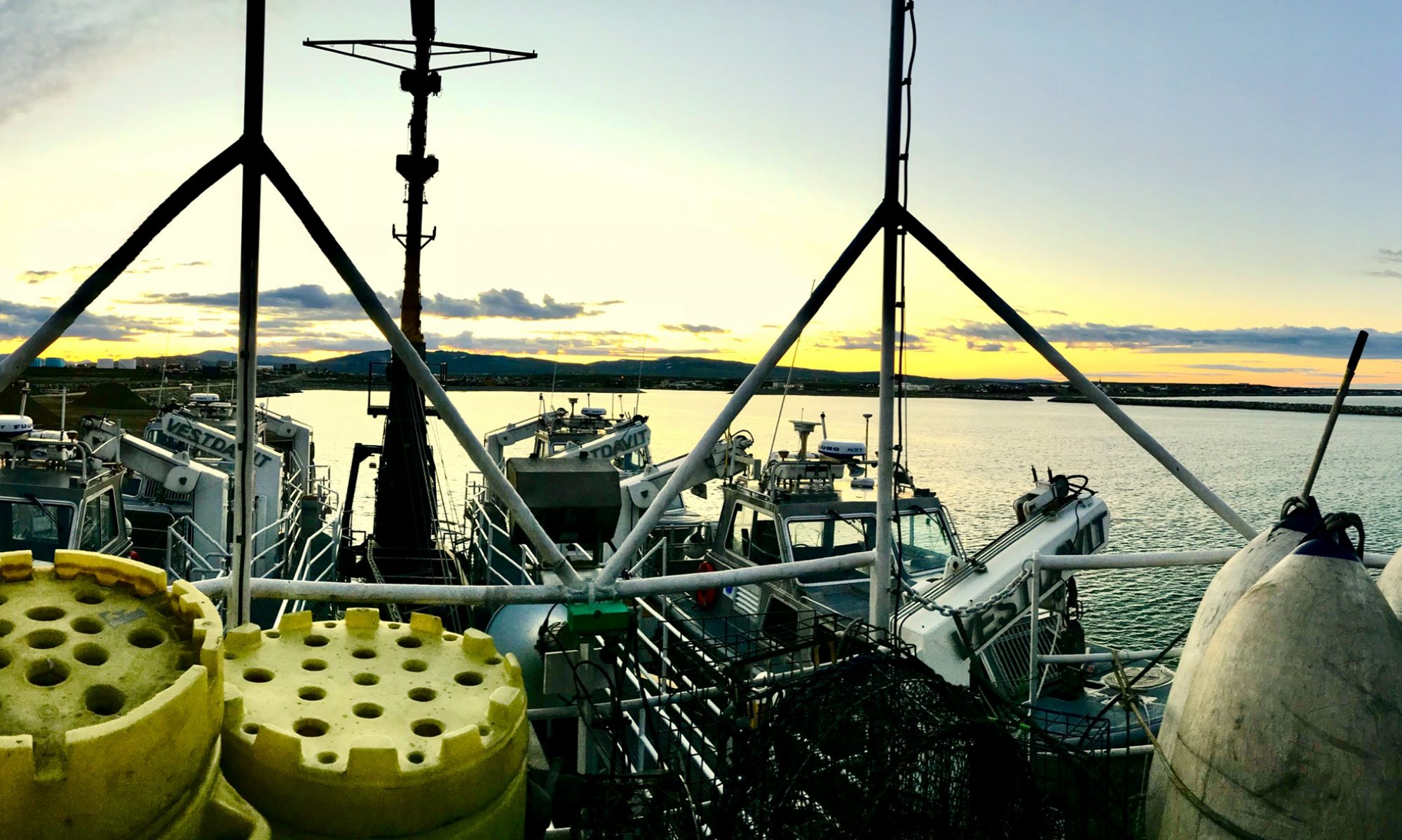
Laura Grimm: Shipwrecks and the War of 1812, July 28, 2022

NOAA Teacher at Sea

Laura Grimm

Aboard NOAA Ship Thomas Jefferson

July 4 – July 22, 2022

Mission: Hydrographic Survey of Lake Erie

Geographic Area of Cruise: Lake Erie

Date: July 28, 2022

Weather Data from my home office in Dalton, Ohio

Latitude: 40 45.5’ N

Longitude: 081 41.5’ W

Sky Conditions: Overcast

Visibility: 10+ miles

Wind Speed: 9 miles per hour

Wind Direction: SW

Air Temperature: 74 F (23 C)

Relative Humidity: 88%

Future Weather Forecast: Showers likely and 70% possibility of afternoon thunderstorms

Science and Technology Log – and a Little History

Shipwrecks & Sonar

Lake Erie has an astonishing 2,000-plus shipwrecks which is among the highest concentration of shipwrecks in the world.  Nobody knows the exact number of shipwrecks that have occurred in Lake Erie, but estimates range from 500 to 2000.  Only about 400 of Lake Erie’s wrecks have ever been found. There are schooners, freighters, steamships, tugs and fishing boats among them.

So why does Lake Erie have more known shipwrecks per square foot than most any other body of water – with the possible exception of the English Channel?  At its deepest point, Lake Erie is only 210 feet.  Its shallowness is one of the reasons so many ships have sunk. 

a simple political map of the portion of Lake Erie around Presque Isle, which is off of Erie, Pennsylvania. 21 red dots in the water mark the locations of known shipwrecks.
The red dots on the map above show known shipwrecks off the coast of Presque Isle.

Hydrographers have found their share of ships over the years!  I am unable to identify where, however, the TJ found a shipwreck recently.  The following shows various multibeam echo sonar images of items found on the seafloor.  Not all have been found in Lake Erie.  😊

Side scan sonar is a specialized sonar system for searching and detecting objects on the seafloor. Like other sonars, a side scan sends out sound energy and analyzes the return signal (echo) that bounced off the seafloor or other objects. Side scan sonar typically consists of three basic components: a towfish, a transmission cable and the topside processing unit. In a side scan the energy that is sent out is in the shape of a fan.  This fan of energy sweeps the seafloor from directly under the towfish to either side.  The width of the fan is about the length of a football field. 

line diagram of a ship surveying seafloor features using both multibeam bathymetry (with lines depicting the sonar emanating from beneath the ship) and side scan sonar (towed behind)
Side Scan Scan (SSS) and Multibeam Echo Sonars (MBES) are often used simultaneously.  Thomas Jefferson did not use a SSS while I was aboard due to the depth of water we were surveying.

The strength of the return echo is recorded creating a “picture” of the ocean bottom. For example, objects or features that stick out from the seafloor create a strong return (creating a light area) and shadows from these objects create little or no return signal (creating a dark area).

illustrated diagram of side scan sonar. the sonar is towed behind the ship. a fan of sonar beams emanates from the sonar. they do not reach beyond a feature sticking up from the seafloor, creating an acoustic shadow beyond that object
This diagram illustrates how SSS technology produces images and acoustic shadows of objects.

NOAA hydrographic survey units use side scan sonar systems to help find and identify objects.  The shape of the seafloor and objects can be seen well with a side scan sonar.  This technology, however, does not give scientists information with respect to how deep the object is.  That is why the side scan sonar is often used along with the multibeam echo sonar. 

Four scans of the same shipwreck in Stratford Shoals, surveyed by NOAA Ship Rude in different years with different equipment. The top two images are side scan sonar images, created by the EG&G 272 (in 2001) and the Klein 5000 (2002). The bottom two images are multibeam sonar images, created by the RESON 9003 (in 2001) and the RESON 8125 (in 2002.)
Comparison of side scan (black and white) and multibeam sonar (colorful) images of the same shipwreck surveyed by NOAA Ship Rude using different methods and different kinds of equipment.

NOAA Ship Thomas Jefferson field work is focused in the Great Lakes for the 2022 field season.  Thomas Jefferson’s hydrographers are surveying the floor of Lake Erie in the vicinity of Cleveland, South Bass Island and Presque Isle, PA.  They are identifying hazards and changes to the lake floor and will provide this data to update NOAA’s nautical charts to make it safe for maritime travel.  

So why did NOAA decide to focus on this part of Lake Erie?  “The Port of Cleveland is one of the largest ports on the Great Lakes and ranks within the top 50 ports in the United States. Roughly 13 million tons of cargo are transported through Cleveland Harbor each year supporting 20,000 jobs and $3.5 billion in annual economic activity.”  The Office of Coast Survey continues to explain that “most of this area has not been surveyed since the 1940’s, and experiences significant vessel traffic.”

a nautical chart of the area of Lake Erie around South Bass Island. overlaid on the chart are polygons of lines showing completed survey work.
Hydrographic survey work completed in the vicinity of South Bass Island prior to me coming aboard Thomas Jefferson.

A Little Bit of History – Have you ever been to Put-in-Bay, South Bass Island?

Our National Anthem, a naval officer with the middle name “Hazard”, the War of 1812, and Lake Erie have connections. 

So, what does all of this have to do with Lake Erie?  In 1812, America found itself at war with Britain.  They were at war for three reasons: 1) The British were trying to limit U.S. trade, 2) they were also capturing American seamen and making them fight for the British (this is called impressment), and 3) they did not like the fact that America wanted to expand its territory.  Both the British and the Americans were anxious to gain control of Lake Erie.  Late in the summer of 1813, American troops were moved into Put-in-Bay on South Bass Island, Lake Erie.   They hoped to cut off the supply routes to the British forts.

On the morning of September 10, 1813, British naval forces attacked. Commander Oliver Hazard Perry was on his flagship (a flagship is the ship that carries the commanding officer), the USS Lawrence.  (Isn’t “Hazard” a great middle name for someone in the Navy!)  He directed his fleet into the battle, but because of light winds, the sailing ships were slow to get into a position where they could fight.  His ship suffered heavy casualties.  Perry’s second flagship, the USS Niagara, was slow to come into range to help.  Four-fifths of Perry’s crew were killed or wounded.  He made the decision to surrender his ship, the USS Lawrence, and move his remaining crew and battle flag to the USS Niagara.  He was rowed half a mile under heavy fire, bearing his now-famous blue and white battle pennant with the words “Don’t Give Up the Ship.” 

  • photo of a flag that reads "DON'T GIVE UP THE SHIP"
  • image of a painting of a naval commander in a rowboat filled with sailors. the rowboat flies the American flag and the pennant reading "Don't Give Up the Ship." In the backgorund, warships under sail fire on one another.
  • painting of Oliver Hazard Perry

The British thought Perry and the rest of the American fleet would retreat after the surrender of the USS Lawrence.  Perry, however, decided to rejoin the battle.  At 3:00 pm, the British fleet surrendered, marking the first time in history that an entire British naval squadron had surrendered to an American vessel.  Huzzah!!  Huzzah!!

Perry wrote to General William Henry Harrison (who eventually became the 9th President of the United States):

Dear General:

We have met the enemy and they are ours. Two ships, two brigs, one schooner and one sloop.

Yours with great respect and esteem,
O.H. Perry

a painting of ships on the water, a sketch of Oliver Hazard Perry, and the quote: "We have met the enmey [sic] ad they are ours...." O. H. Perry
A great victory against the British

Oliver Hazard Perry was awarded the Congressional Gold Medal in 1814 for his actions in the Battle of Lake Erie and the War of 1812.  You can visit Perry’s Victory and International Peace Memorial on South Bass Island, Lake Erie.

  • view of memorial from a distance, at sunset. the memorial includes a tall Doric column on a small spit of land, surrounded by trees.
  • a view of the memorial from farther away, with the surrounding town area and water visible. the memorial is a tall Doric column.

“Perry’s Victory and International Peace Memorial commemorates the Battle of Lake Erie that took place near Ohio’s South Bass Island, in which Commodore Oliver Hazard Perry led a fleet to victory in one of the most decisive naval battles to occur in the War of 1812.” (Wikipedia)

This video gives you a nice overview of the War of 1812:

Overview of the War of 1812

Oh, so you might be wondering what all of this has to do with our National Anthem?  The poem that eventually became our National Anthem was written during the War of 1812.  It was written in 1814 by a young lawyer named Francis Scott Key during the battle of Fort McHenry. 

Watch this video for information about Mr. Key and our National Anthem:

The History of the “Star-Spangled Banner”
Oh, say can you see, / By the dawn's early light, / What so proudly we hailed, / At the twilight's last gleaming? / Whose broad stripes and bright stars, / Through the perilous fight, / O'er the ramparts we watched, / Were so gallantly streaming. / And the rocket's red glare, / The bombs bursting in air, / Gave proof through the night, / That our flag was still there. / Oh say does that / star spangled banner yet wave, / O'er the land of the free, / And the home of the brave?
The National Anthem of the United States of America

Did you know that our National Anthem actually has four verses, but most of us only know the first one?  Look it up!

I’ve been part of the mission leg that is surveying off the coast of Presque Isle – as the survey around South Bass Island had been completed prior to me coming aboard.  The area around Presque Isle also has important historic roots.

Presque Isle State Park is a 3,200-acre sandy peninsula that arches into Lake Erie and is 4 miles west of Erie, PA.  According to a tourist website, “As Pennsylvania’s only “seashore,” Presque Isle offers its visitors a beautiful coastline and many recreational activities, including swimming, boating, fishing, hiking, bicycling, and in-line skating.” Recorded history of Presque Isle began with the Erielhonan, a Native American tribe who gave their name to Lake Erie.  Erielhonan is the Iroquoian word for “long tail”.  The French first named the peninsula in the 1720s; presque-isle means peninsula or “almost an island” in French. It served as a base for Commodore Oliver Hazard Perry’s fleet in the War of 1812.

monument on Presque Isle
The Perry Monument on Presque Isle commemorates the U.S. naval victory on Lake Erie in the War of 1812.

In the 19th century, Presque Isle became home to several lighthouses and what later became a United States Coast Guard station.  In 1921, the peninsula became a state park.  The Presque Isle peninsula formed because of glaciation and is constantly being reshaped by waves and wind. Since 1967, the park has been named one of the best places in the United States for watching birds.

  • Aerial view of Gull Point and Presque Isle State Park from the east.
  • Aerial view of Presque Isle State Park from the west.
  • aerial view showing breakwaters along the shore of Presque Isle
outlines of the shape and location of Presque Isle relative to the Pennsylvania coast line in 1790, 1818, 1837, 1866, 1903, 1968, 1971
Migration of Presque Isle from 1790 to 1971 – No wonder it is important to survey these waters!

During the War of 1812, Presque Isle played a part in the victory over the British in the Battle of Lake Erie.  Oliver Hazard Perry, commander of the American fleet, made strategic use of the bay as a place to construct six of the nine ships in his fleet.  The “Little Bay” near the tip of the peninsula where the ships sheltered was later named “Misery Bay” because of the hardships during the winter of 1813–1814, after the men returned there from battle. Many men suffered from smallpox and were kept in quarantine near the bay. A great many infected men died and were buried in what is now called Graveyard Pond.

map of Presque Isle showing Presque Isle Bay, Misery Bay, Gulf Point
Misery Bay

After the Battle of Lake Erie on September 10, 1813, Perry’s two largest ships, the USS Lawrence and USS  Niagara, were badly damaged, and intentionally sunk in Misery Bay. Both ships were eventually raised.  The Lawrence burned while on display at the 1876 Centennial Exposition and parts of the Niagara were eventually used to build a replica of the current Niagara, based in Presque Isle Bay.

USS Niagara, a tall ship replica, under sail on Lake Erie, visible at a distance
We sailed past the USS Niagara in early July.
an old political cartoon captioned, "Queen Charlotte and Johnny Bull got their dose of Perry." A woman with a fancy dress and hat hands a bottle labeled "Perry" toward a King, seated with a crown and robes, who holds up his hand to refuse it. The bottle, uncorked, splashes upward, and in the splash are the names of battle locations. The woman says: "Johnny, won't you please take some more Perry?" the man says: "Oh! Perry!!! Curse that Perry! - One disaster after another - I have - I have not half recovered of the Bloody-nose I got at the Boxing Match!"
The British really did not appreciate Commodore Perry!

Personal Log

For the Little Dawgs . . .

Q: Where is Dewey?  Hint: This controller is used to move a heavy object.

Dewey the beanie monkey sits on a control panel.
What do all those controls do, Dewey?

A: Dewey is sitting on the piece of technology that is used to control the davits.  Davits are hydraulic machines that take the small boats on and off the ship.

AB Thompson, wearing a face mask, beanie, and gloves, stands at the controls for the davits. Another engineer connects wires in the background.
Able Bodied Seaman (AB) Thompson uses the davit controller to lift the boats

This time-lapse video shows the crew using the davits to pick up and then redeploy one of the small boat launches. (Video taken by Physical Scientist Dan Garatea)

This time-lapse video shows the crew using the davits to pick up and then redeploy one of the small boat launches. (Video taken by Physical Scientist Dan Garatea)

Human-Interest Poll (HIP)

Miss Parker makes a lot of yummy desserts!  I recently asked the crew to list their favorite.

a pie chart labeled: TJ Crew's Favorite Dessert Made by Miss Parker. Apple Pie, Sweet Potato Pie, Cookies, Strawberry Shortcake, Bread Pudding, Banana Pudding, and Blueberry Loaf received 11.1% of the vote each. Peach Cobbler received 22.2%.
It looks like Peach Cobbler is the crew’s favorite dessert made by Miss Parker!  It is made using one of her mother’s recipes.

Meet the Crew

  • two surveyors pose for a photo on deck; one wears a hardhat and holds a line
  • two NOAA Corps officers, wearing hard hats and life vests and NOAA Corps uniforms, pose for a photo on the deck of NOAA Ship Thomas Jefferson. The satellites and the penants are visible behind them.
  • AB Kinnett poses for a photo in front of a window, on which he has written electrical terms: resistance, Ohms, Current, Amps, Voltage, Volts. through the window we see the deck, the alidade, the ocean.

Dan Garatea and Surafel Abebe are physical scientists (PS) who work in Silver Spring, MD for NOAA’s Office of Coast Survey (OCS) where they plan hydrographic surveys for chart updates.  They research and develop the plans and instructions for NOAA ships, contractors, other governmental agencies, and other interested parties to develop hydrographic priorities.  When on board during a survey, they manage and provide guidance for the surveys in the field.

two scientists pose for a photo in front of a railing on NOAA Ship Thomas Jefferson. PS Garatea, on the left, wears a life jacket and hard hat.
PS Dan Garatea and PS Surafel Abebe enjoy another beautiful day aboard Thomas Jefferson

It is nice being home. I do, however, miss the crew aboard Thomas Jefferson. They are now back out surveying on the Lake Erie after a much needed shoreleave. I am having fun thinking about how I will use what I learned during this adventure to enrich the K-8 STEAM curriculum of the Dalton Local School District.

Oktay Ince: Driving the NOAA Ship Thomas Jefferson and Seasickness!, June 26, 2022

NOAA Teacher At Sea

Oktay Ince

Aboard NOAA Ship Thomas Jefferson

June 20- July 1, 2022

Mission: Hydrographic Survey

Geographic Area of Cruise: Lake Erie

Date: Sunday, June 26, 2022

Latitude: 41° 31.9′ N
Longitude: 81° 57.3′ 00 W
Altitude: 138 m

Weather Data from Bridge

Wind Speed: 8 kts
Surface Water Temperature: 23 °C
Air Temperature (Dry Bulb Temperature): 25 °C
Wet Bulb Temperature: 21 °C
Relative Humidity: 78 %
Barometric Pressure: 1014 mb

Science and Technology Log

Today, I am going to talk about anchoring the ship in Lake Erie, and some multibeam and side-scan images that NOAA Ship Thomas Jefferson obtained a while ago from different assignments. 

The ship is mostly done scanning offshore portions of Lake Erie (2-7 nautical miles) from Lorain to Cleveland, OH, except near the shoreline. Waters near the shore are harder to scan for a ship like Thomas Jefferson because the water is shallower towards the coastline. Therefore, the ship decided to anchor closer inshore and launch its two boats to scan those areas. As I said before, the same multibeam and side-scan sonar beam technology is also in these boats. For the next couple of days while the ship is anchored, the boats will collect nearshore bathymetric data outside of Cleveland, OH. 

The anchor is made of metal and is attached to the ship by a metal chain. First, it is important to decide where to anchor by looking at the chart. It’s usually preferred to anchor in sandy locations for stronger holding of the ship. However, most of the area we are surveying has a mud bottom, which is also okay for holding the anchor. The weight of the anchor is 3,500 lbs.!  Once the ship was anchored, it swung around the chain due to the wind. The engine was off and we stayed there for about 4 days. Even though the engine was off, the generators were on. I will talk more about engines and generators in my next post. 

Okay, let’s go back to multibeam and side-scan sonar. When the multibeam sonar scans to evaluate the depth of the water, the results can be shown in color schemes based on depth ranges.  For example, during data acquisition we determined that 0-3.5 meters is black, 3.5- 5 meters is red, 5-10 is green and so on and so forth. This color coding is arbitrary as long as we have a legend at the bottom of the image that shows the depth of each color. 

a computer screen displays depth data
Scanning the water (color-coded legend on the left). The depth of water is not less than 5m.

There was one interesting thing I learned today. Side-scan sonar can also show the presence of fish. During our data collection, we found schools of fish that are both small and big. How do we know the object we found is a school of fish? Well, often the shadow of an object in a sonar image can tell more information than the image of the object itself. If the object’s image has a shadow that is not attached to the object then it may be fish. Since the fish is swimming in the water, its shadow would look unattached in the image. We not only found a school of smaller fish, but also found a school of bigger fish. How do we know that they are big?  The shadow can tell you!  When looking at the image, we can identify individual fish as a dot, and the shadow can be measured to determine the size. 

photo of a computer screen showing side scan sonar image when no objects are detected; the lake bottom looks grainy orange
Scan scan sonar image- There is no object detected. Use this image as a reference to interpret the following side scan images.
a side scan sonar image with specks of light and specks of shadow, offset to the right. theses objects and their shadows are highlighted in a blue rectangle. an additional caption reads: "Larger fish - can see individual bright spots and individual shadows"
Side scan sonar image shows larger fish presence in Lake Erie (Credit: NOAA Ship Thomas Jefferson).
a side scan sonar image with two objects that look like balls of light, and their offset shadows. caption reads: "Schools of small bait fish"
Side scan sonar image shows schools of small bait fish presence in Lake Erie. (Credit: NOAA Ship Thomas Jefferson)
side scan sonar image of shipwreck, multibeam bathymetry model of shipwreck
Both side scan and multibeam sonar imagery of a ship wreck from PREVIOUS mission of NOAA ship Thomas Jefferson. (Credit: NOAA Ship Thomas Jefferson)
comparison of sidescan and multibeam sonar imaging of lake bottom
Both side scan and multibeam sonar imagery of bottom near Rocky River, Ohio during our this leg of acquisition. (Credit: NOAA Ship Thomas Jefferson)

Personal Log

I am almost halfway through my expedition in Lake Erie. When I say I am learning, I do not mean that I am listening and observing what others say, and jotting down what I heard. I mean that I am hands on, doing what others do on the ship. My title on the small boat is “Crew-IT,” meaning crew in-training, and they teach me everything that I need to know. I was even on the deck (ship control center) navigating the ship for about 10 minutes. It wasn’t that complicated to navigate a 208 ft long NOAA ship after all! 

Oktay stands at the helm of NOAA Ship Thomas Jefferson; three other crewmembers on bridge
Driving NOAA Ship Thomas Jefferson
Oktay stands at a navigation table on the bridge, looking over a clipboard; water visible out the bridge windows
Checking ship’s daily logs

I am not the only one who is training. There are many others, too: NOAA Corps officers, technicians, visitors, etc. The ship is not only completing its mission, but is constantly a training ground for others. 

Okay, let me talk about my first time being sea sick. Except, I didn’t know what it was until somebody told me so the next day. So, I woke up earlier than usual that morning around 6 am. Because I had a full day boat assignment, I had to be fully ready. I packed a book to read, my camera, selfie stick and my notebook. I put on my sunscreen, and of course, my long pants. After eating my scrambled eggs with light roasted coffee, I quickly went down to my state room to brush my teeth to make sure I was on time for the 8 am safety briefing in the survey room. A safety briefing happens every day the small boats go out. We go over what work needs to be done for the day (general overview), what the weather will be like, and what the following days will look like. It takes about 15 minutes. At 8:15 am, we put on our safety gear (always confused whether to wear a crash helmet or hard hat), and lined up to be boarded. In about 10 minutes, we were on the boat, did routine safety checks, and started to survey. The weather was so hot and the bugs were of course in full bloom. Besides the hot “bug-gy” weather, the Lake was churning so bad that I couldn’t stand still. I had to either sit or stand while holding onto something. On that day, we were out until 7 pm. When we got back on the ship, I was so hungry but also so tired that I could not eat much. When people are late for the dinner which is eaten between 4:30pm to 5:30 pm, you make your orders before you leave for the boat, and they prepare your plate and put it in the fridge. I couldn’t eat anything that I ordered. Instead I ate an apple and went straight to bed. 

I started to have a headache that I knew would eventually turn into a migraine. It was 10 pm, and my headache turned into a migraine. My migraine was so bad that my lids became so heavy that I could not open it. I was constantly turning in the bed, thinking that it would eventually go away once I slept. Nope! Nothing worked. I woke around 2 in the morning, took a shower and decided to take some ibuprofen. The medicine kicked in quickly and the next thing I remember was waking up at 7:30 am. I talked to my friend Justin that morning about what happened to me last night. He said that some people experience sea sickness in the form of a headache and suggested that I take the seasick medicine and eat a good, solid breakfast next time. I guess this is what I am going to do from now on when I have a boat assignment! 

Did you know?

  • NOAA Ship Thomas Jefferson is holding about 130,000 gallons of fuel which could last about 45 days. The ship has 33 tanks across the ship that includes fuel, drinking water, sewage, dirty water, etc. 
  • There is a “speed limit” on waterways? For example; Canada allows speed limit of 10 knots (11.5 miles/18.5 kilometers) in areas where the North Atlantic right whale have been reported in Gulf of Saint Lawrence which connects the Great Lakes to the Atlantic Ocean. The North Atlantic right whale, which is much larger than a humpback or a gray whale, is one of the most endangered whale species. More information about the species can be found here. Lake Erie doesn’t have speed regulation on open water unless there is a violation of marine laws or criminal activity.
illustration of a North Atlantic right whale
The North Atlantic right whale (Credit: NOAA fisheries)

Oktay Ince: Happy Summer Solstice Day and World Hydrography Day! June 21, 2022

NOAA Teacher At Sea

Oktay Ince

Aboard NOAA Ship Thomas Jefferson

June 20- July 1, 2022

Mission: Hydrographic Survey

Geographic Area of Cruise: Lake Erie

Date: Tuesday, June 21, 2022

Latitude: 41° 31′ 52 N

Longitude: 82° 12′ 00 W

Altitude: 138 m

Weather Data from Bridge

Wind Speed: 21 kts

Surface Water Temperature: 22 °C

Air Temperature (Dry Bulb Temperature): 23.5 °C

Wet Bulb Temperature: 22.9 °C

Relative Humidity: 55 %

Barometric Pressure: 25.5 in

Science and Technology Log

Learning is in full swing on NOAA Ship Thomas Jefferson. Previously, I talked about the multibeam sonar that the ship uses to map the bottom of Lake Erie. I also talked about how this technology related to other real-world applications. I hope I inspired you there. 

Now, I am going to talk about another technology that Thomas Jefferson uses- side scan sonar. The technology basically detects and creates images of objects on the lake/ocean floor. The ship concurrently uses both technologies. Side scan sonar technology takes images of the bottom of Lake Erie and multibeam sonar records the depth;  the seafloor/lakebed data is also known as bathymetry. For instance, if there is a big obstacle or a shipwreck in Lake Erie, side scan sonar would show an image.  Then, multibeam sonar  would be used to get the  depth of the obstacle. 

How does side scan sonar work differently than multibeam sonar?

If you remember from my previous post, multibeam sonar sends sound waves down towards the lake bottom. Side scan sonar also sends out sound waves, but from both sides of its transducer, sweeping the seafloor like a fan-shaped beam of a flashlight. So, the data needs to be composed of both the image and depth which allows a more comprehensive map of the seafloor. 

A third technology used with the multibeam and side scan sonars is called “moving vessel profiler (MVP)”. The MVP is similar to a conductivity, temperature, depth (CTD) cast as it collects electrical conductivity, temperature, and pressure (to get depth) of water. The benefit of the MVP is that the ship can continue moving and receive sound speed information, rather than coming to a complete stop to deploy a CTD. This improves efficiency, allowing the ship to collect more data. 

The MVP is a metal structure that looks like a big fish- also known as a towfish-  located at the tail of the ship. As the ship moves, the instrument trails behind it, about a meter below the water’s surface. Sensors to collect sound speed information are located inside the towfish. When the MVP is deployed, the towfish free falls to the lake/sea bottom, before being automatically brought to the surface by the ship’s winch.  Then, the ship receives a profile of the water column’s salinity and temperature, and can apply the sound speed measurements to the multibeam data. This information is critical for ensuring acquired depth measurements are in the proper location on the lakebed/seafloor. For the sake of Thomas Jefferson’s mission, CTD data is enough to process multibeam. However, other research vessels could have additional sensors within the MVP including some that measure chemical and biological parameters such as dissolved oxygen and chlorophyll fluorescence, etc. 

The MVP Training; Deployment of Towfish

  • Oktay, in a hard hat and life vest and Teacher at Sea shirt, poses for a photo on deck as other crewmembers stand around in the background
  • Oktay and other crewmembers stand around on deck
  • Oktay, wearing hard hat and life vest, stands at a control panel; other crewmembers look on
  • Oktay, wearing hard hat and life vest, operates a lever on a control panel on the back deck of NOAA Ship Thomas Jefferson
  • Oktay, wearing hard hat and life vest, speaks into a radio

Let’s elaborate a few science concepts here. Conductivity is a measure of water’s capability to pass electrical flow. It does that based on how many ions are in the water. Therefore, the more ions present, the higher the conductivity of water. Ions are mainly coming from dissolved salts and inorganic materials such as alkalis, chlorides, sulfides, and carbonate compounds. These ions (positive/negative charges) in the water create electric current, so it conducts electricity. 

Using the concept of electrical properties of dissolved salts, scientists measure the electrical conductivity of water so that they know the amount of salt present in the water (salinity). As you would expect, Lake Erie is freshwater so salinity is essentially zero. 

Conductivity is one of the most useful and commonly measured water quality parameters. Knowing changes of dissolved solids in the water is an indicator of change in a water system. Different life forms adapted to different salt concentrations in the water. Even a slight change to this parameter could have a disastrous effect on life forms in water which creates a cascade of effects in other systems. 

Personal Log

It was my second day on ship, and also the summer solstice. Today, sunrise was at 5:55 am and sunset was at 9:07 pm. It was the longest day for Lake Erie, indeed! It was also World Hydrography Day, yay! I am honored and humbled to be a part of Thomas Jefferson’s crew and to be the first Teacher at Sea on Great Lakes, especially on the longest day of the year and on World Hydrography Day in Lake Erie!

After eating my breakfast, I headed to MVP training. It sounded complicated but once I was on it, it was easy to navigate the instrument at sea. Then, I was called for my first boat ride. The ship has several “small” boats to assist in data collection, and they are beneficial for transiting and collecting bathymetry in more shallow places on the water. We had three people on the boat, doing side scan data collection closer to the shorelines. We also did several CTD casts, for nearshore sound speed profiles! On the ship the MVP can collect CTD data more frequently, whereas on the boat, we had to manually put it in the water every 4 hours. The boat was amazing, and I felt like I was on a private vacation boat! However, in this case, I was not only having fun, but also doing citizen science. I learned so much about the side scan, why it is used, and how the data helps the overall mission of Thomas Jefferson

Deployment of our launch vessel
Recovery of our launch vessel

In this personal blog, instead of just including all the cool things I have done on the ship, I want to share some of my opinions about what I feel about my experience so far. 

I would say about one-third of the crew on the ship are women  in their twenties and thirties. Many of them are NOAA Corps officers and survey technicians/scientists. What an inspiring environment for women in STEM! They are involved in everything from navigating the ship to collecting data, from driving the boat to doing hands-on activities. I strongly believe that our female crew members are such an inspiration for future generations who will make things better!

Another feeling I have is how people are passionate about what they do. For example, I never thought a Commanding Officer (CO) and Executive Officer (XO) would be so friendly and approachable . I’m glad Thomas Jefferson has a great executive team. I’ve been having great conversations during lunch or any place I go on the ship. In one of our lovely conversations, both CO and XO strongly encouraged me to bring my students to visit the ship to give a tour. I said “This is exactly what I am here for!” I want to bring back my experiences to my school and community, and I can’t wait to bring them to the ship! They will absolutely love it. 

In my last note, I should say that people who choose their careers based on their passion, are the ones who are successful, and also constantly inspire others to follow their footsteps. I have seen this in many professions across different fields. It is especially obvious when you have a public service job like educators, officers, doctors… You always have to do more than what your job asks you to do. If this is not something you are passionate about then the job becomes torture rather than enjoying. 

Here, on Thomas Jefferson, seeing these men and women on a research vessel, working tirelessly around the clock, collecting data, once again proved to me that you have to be passionate about what you do. 

Anyway, I think it is enough for me to stop talking about what I feel. But, you should know this – always follow your passion. That’s when you will find your real purpose in life. 

Do you know?

  • The National Oceanic and Atmospheric Administration Commissioned Officer Corps, known as the NOAA Corps, is one of the eight federal uniformed services of the United States. Those officers are made up of scientifically and technically trained officers. It is one of two U.S. uniformed services (the other being the U.S. Public Health Service Commissioned Corps) that consists only of commissioned officers, with no enlisted or warrant officer ranks. 
  • To become a NOAA Corps officer, applicants must hold a baccalaureate degree, preferably in a major course of study related to NOAA’s scientific or technical activities. When selected for appointment, officer candidates must satisfactorily pass a mental and physical examination. For more information check out NOAA Corps eligibility requirements here.

Hayden Roberts: Playing Hide and Seek with Sonar, July 16, 2019

NOAA Teacher at Sea

Hayden Roberts

Aboard NOAA Ship Oregon II

July 8-19, 2019


Mission: Leg III of SEAMAP Summer Groundfish Survey
Geographic Area of Cruise: Gulf of Mexico
Date: July 16, 2019

Weather Data from the Bridge
Latitude: 28.51° N
Longitude: 84.40° W
Wave Height: 1 foot
Wind Speed: 6 knots
Wind Direction: 115
Visibility: 10 nm
Air Temperature: 30.8°C
Barometric Pressure: 1021 mb
Sky: Clear


Science Log

In my previous blog, I mentioned the challenges of doing survey work on the eastern side of the Gulf near Florida. I also mentioned the use of a probe to scan the sea floor in advance of trawling for fish samples. That probe is called the EdgeTech 4125 Side Scan Sonar. Since it plays a major role in the scientific research we have completed, I wanted to focus on it a bit more in this blog. Using a scanner such as this for a groundfish survey in the Gulf by NOAA is not typical. This system was added as a precaution in advance of trawling due to the uneven nature of the Gulf floor off the Florida Coast, which is not as much of a problem the further west one goes in the Gulf. Scanners such as these have been useful on other NOAA and marine conservation research cruises especially working to map and assess reefs in the Gulf.

deploying side scan
Preparing to put the side scan over board.

Having seen the side scanner used at a dozen different research stations on this cruise, I wanted to learn more about capabilities of this scientific instrument. From the manufacturer’s information, I have learned that it was designed for search and recovery and shallow water surveys. The side scanner provides higher resolution imagery. While the imagining sent to our computer monitors have been mostly sand and rock, one researcher in our crew said he has seen tanks, washing machines, and other junk clearly on the monitors during other research cruises.

This means that the side scanner provides fast survey results, but the accuracy of the results becomes the challenge. While EdgeTech praises the accuracy of its own technology, we have learned that accurate readings of data on the monitor can be more taxing. Certainly, the side scanner is great for defining large items or structures on the sea floor, but in areas where the contour of the floor is more subtle, picking out distinctions on the monitor can be harder to discern. On some scans, we have found the surface of the sea floor to be generally sandy and suitable for trawling, but then on another scan with similar data results, chunks of coral and rock have impeded our trawls and damaged the net.

Side scan readout
Sample scan from monitor in the computer lab. The light areas are sandy bottom. The dark is either seaweed or other plant material or rocks. The challenge is telling the difference.


Did You Know?

In 1906, American naval architect Lewis Nixon invented the first sonar-like listening device to detect icebergs. During World War I, a need to detect submarines increased interest in sonar. French physicist Paul Langévin constructed the first sonar set to detect submarines in 1915. Today, sonar has evolved into more sophisticated forms of digital imaging multibeam technology and side scan sonar (see https://oceanexplorer.noaa.gov/explorations/lewis_clark01/background/seafloormapping/seafloormapping.html for more information).


Personal Log

When I first arrived aboard Oregon II, the new environment was striking. I have never spent a significant amount of time on a trawling vessel or a research ship. Looking around, I took many pictures of the various features with an eye on the architectural elements of the ship. One of the most common fixtures throughout the vessel are posted signs. Lamented signs and stickers can be found all over the ship. At first, I was amused at the volume and redundancy, but then I realized that this ship is a communal space. Throughout the year, various individuals work and dwell on this vessel. The signs serve to direct and try to create consistency in the overall operation of the ship and the experience people have aboard it. Some call the ship “home” for extended periods of time such as most of the operational crew. Others, mostly those who are part of the science party, use the vessel for weeks at a time intermittently. Before I was allowed join the science party, I was required to complete an orientation. That orientation aligns with policies of NOAA and the expectation aboard Oregon II of its crew. From the training, I primarily learned that the most important policy is safety, which interestingly is emblazoned on the front of the ship just below the bridge.

Safety First!
Safety First!

The signs seem to be reflective of past experiences on the ship. Signs are not only reminders of important policies and protocols, but also remembrances of challenges confronted during past cruises. Like the additional equipment that has been added to Oregon II since its commission in 1967, the added signs illustrate the history the vessel has endured through hundreds of excursions.

Oregon II 1967
Bureau of Commercial Fisheries Ship Oregon II (1967), which was later transferred to NOAA when the administration was formed in 1970.
Oregon II 2017
NOAA Ship Oregon II in 2017 on its 50th Anniversary.

Examples of that history is latent in the location and wording of signs. Posted across from me in the computer lab are three instructional signs: “Do not mark or alter hard hats,” “Keep clear of sightglass do not secure gear to sightglass” (a sightglass is an oil gauge), and “(Notice) scientist are to clear freezers out after every survey.”

signs collage
A collage of four signs around NOAA Ship Oregon II
more signs
Another collage of four signs around NOAA Ship Oregon II
even more signs
Another collage of signs around NOAA Ship Oregon II

Author and journalist Daniel Pink talks about the importance of signs in our daily lives. His most recent work has focused on the emotional intelligence associated with signs. Emotional intelligence refers to the way we handle interpersonal relationships judiciously and empathetically. He is all about the way signs are crafted and displayed, but signs should also be thought of in relation to how informative and symbolic they can be within the environment we exist. While the information is usually direct, the symbolism comes from the way we interpret the overall context of the signs in relation to or role they play in that environment.

Jeff Peterson: The Work in the Eastern Gulf, July 19, 2018

NOAA Teacher at Sea

Jeff Peterson

Aboard NOAA Ship Oregon II

July 9 – 20, 2018


Mission: Summer Groundfish Survey

Geographic Area of Cruise: Gulf of Mexico

Date: July 19, 2018


Weather Data from the Bridge

Date: 2018/07/19

Time: 16:34:47

Latitude: 29 57.6 N

Longitude: 087 02.60 W

Speed over ground: 7.3 knots

Barometric pressure: 1014.49

Relative humidity: 84%

Air temperature: 26.8 C

Sea wave height: 1 m


Science and Technology Log

We arrived off the coast of Florida on the evening of Sunday, July 15, and sampled stations in the eastern Gulf until the afternoon of Thursday, July 19. We used the same fishing method during this part of the cruise (bottom trawling), but added a step in the process, deploying side scan sonar in advance of every trawl. This measure was taken both to protect sea life on the ocean floor (sponges and corals) and to avoid damaging equipment. The sea bottom in this part of the Gulf—east of the DeSoto Canyon—is harder (less muddy) and, in addition to coral and sponge, supports a number of species markedly different than those seen in the western Gulf.


Side Scan Sonar

In contrast to single-beam sonar, which bounces a single focused beam of sound off the bottom to measure depth, side scan sonar casts a broader, fan-like signal, creating nuanced readings of the contour of the ocean floor and yielding photo-like images.

Towed Side Scan
How side scan sonar works: The harder the object, the stronger the image returned. See: https://oceanservice.noaa.gov/education/seafloor-mapping/how_sidescansonar.html#


Side scan sonar device
Side scan sonar device in its cradle.


Rigged and ready for deployment.
Rigged and ready for deployment. Signals from the sonar are conducted up the cable and picked up by the electrically powered lead on the block.


on its way in
Side scan sonar on its way in astern.


descending
Side scan sonar just beneath the surface & descending.


When we arrive a station in this part of the Gulf, we begin by traversing, covering the usual distance (1.5 miles), but then turn around, deploy the side scan sonar, and retrace our course. Once we’ve returned to our starting point, we recover the sonar, turn around again, and—provided the path on the sea bottom looks clear—resume our course through the station, this time lowering the trawl. If the side scan reveals obstructions, it’s a no-go and the station is “ditched.”


Coming about
Coming about before deploying the side scan sonar.


And Now for Something Completely Different . . . Fish of the Eastern Gulf

Panama City, Florida
Off Panama City, Florida – Tuesday morning, July 17, 2018

We spent the first half of this leg of the survey in the western Gulf of Mexico, going as far west as the Texas-Louisiana border. The second half we’re spending in the eastern Gulf, going as far east as Panama City. From here we’ll work our way westward, back to our homeport in Pascagoula.

Thanks to different submarine terrain in the northeastern Gulf—not to mention the upwelling of nutrients from the DeSoto Canyon—it’s a different marine biological world off the coast of Florida.

Here’s a closer look at the submarine canyon that, roughly speaking, forms a dividing line between characteristic species of the western Gulf and those of the eastern Gulf:

Bathymetric map of the Gulf of Mexico
Bathymetric map of the Gulf of Mexico, with proposed dive sites for Operation Deep-Scope 2005 indicated by red arrows and yellow numbers. Site #1 is on the southwest Florida Shelf in the Gulf of Mexico, where deep-water Lophilia coral lithoherms are found. #2 is DeSoto Canyon, a deep erosional valley where upwelling of deep nutrient rich water means greater animal abundances. #3 is Viosca Knoll, the shallowest site, where spectacular stands of Lophelia provide abundant habitat for other species. See: https://oceanexplorer.noaa.gov/explorations/05deepscope/background/geology/media/map.html


And here’s a selection of the weird and wonderful creatures we sampled in the eastern Gulf. As this basket suggests, they’re a more brightly colored, vibrant bunch:

Basket of catch
A basket of fish. Upper right: Lane Snapper, Lutjanus synagris. On the left: Sand Perch, Diplectrum formosum. The plentiful scallops? Argopecten gibbus.


Sand Perch, Diplectrum formosum

Razorfish, Xyrichtys novacula

A basket of Xyrichtys novacula


Angelfish, Holacanthus bermudensis

Angelfish closeup
Holacanthus bermudensis details: tail fins (front specimen), pectoral fin & gill (behind)


Jackknife Fish, Equetus lanceolatus

Lined Seahorse, Hippocampus erectus


Argopecten gibbus
Argopecten gibbus (all 2,827 of them)

Pink Shrimp, Farfantepenaeus duorarum.
Pink Shrimp, Farfantepenaeus duorarum. Note the signature “pink” spot by my thumb.


Calamus
Calamus


Lionfish, Pterois volitans
Invasive scourge of the Gulf: Lionfish, Pterois volitans

Lionfish, Pterois volitans


Burrfish, Chilomycterus schoepfii


Scorpionfish (aka Barbfish), Scorpaena brasiliensis


Southern Stargazer, Astroscopus y-graecum (juvenile)


Ocellated Moray Eels, Gymnothorax saxicola


Trumpetfish, Aulostomus maculatus


Video credit: Will Tilley


debris
Mysterious debris: A bottom-dwelling payphone?


Personal Log

Our move into the eastern Gulf marks the midpoint of the cruise, and we’ll be back to Pascagoula in a few short days. The seas haven’t been as serenely flat as they were in the eastern Gulf, nor has the sky (or sea) been its stereotypically Floridian blue, but I’ve found life aboard ship just as pleasurable and stimulating.

storm
A squall on Monday morning, July 16, 2018. Off the stern there to starboard, Blackfin Tuna were jumping.


In my final blog post, I’ll have more to say about all the great folks I’ve met aboard NOAA Ship Oregon II—from its Deck Department members and Engineers, to its Stewards and NOAA Corps officers and inimitable Captain—but here want to reiterate just how thoughtful and generous everybody’s been. The “O2” is a class act—a community of professionals who know what they’re about and love what they do—and I couldn’t be more grateful to have visited their world for a while and shared their good company.

Busy as we’ve been, I haven’t had much time for sketching during this part of the cruise, and, as the selection of photos above suggests, I’ve concentrated more on taking pictures than making them. Still, I’ve begun a small sketch of the ship that I hope to complete before we reach Pascagoula. It’s based on a photograph that hangs in the galley, and that I’m going to attempt to reproduce actual size (3 3/8” x 7”) . Here’s where things stand early on in the process:

IMG_8230 2.jpg
Work in progress: sketch of NOAA Ship Oregon II


Did You Know?

Any of the western Gulf fish in the basket from my last blog post? Here it is again:

Basket of Fish from Western Gulf

And here is a visual key to the four species I was fishing for, each figuring prominently in my blog post for July 15:

Basket of fish revision
Basket of Fish from Western Gulf: now color-coded

1: Red Snapper, Lutjanus campechanus

2: Longspined Porgy, Stenotomus caprinus

3: Gulf Butterfish, Peprilus burti

4: Brown Shrimp, Farfantepenaeus aztecus

A few Stenotomus caprinus and Peprilus burti have been left unhighlighted. Can you find them?