Terry Maxwell: Making Models and Memories, June 20, 2017

NOAA Teacher at Sea

Terry Maxwell

Aboard R/V Hugh R. Sharp

June 6 – 21, 2017

Mission: Sea Scallop Survey
Geographic Area of Cruise: Northeast Atlantic Ocean
Date: June 20, 2017

Weather Data from the Bridge
Latitude: 41 18.06 N
Longitude: 68 42.35
Wind Speed: 20.3 knots
Air Temperature: 15.3 C

Science and Technology Log

I’ve had a lot of people ask “So what is the purpose of this trip?”  I thought it would be fitting to answer that question in this last blog from sea.  I’ve explained the process of collecting the data out here at sea.  I’ve explained the technology and methods we’ve used to collect it.  But the logical question now is, what happens once this data has been collected?

I’ve had the pleasure serving on the second half of this trip with NOAA Mathematical Biologist, Dvora Hart.  Dvora is the lead scientist for the scallop fishery.  She is well known in the New England area for her work with scallop fisheries.  To many of you in the Midwest, scallops may not seem like a big deal, but did you know that scallops are the second largest commercial fishery market in America?  In 2016 scallops were a 485 million dollar industry.  They are second only to the lobster market in terms of commercial fisheries value.

NOAA has been completing scallop surveys with lined dredges since 1978.  The methods have changed over the years as the technology and research methods have advanced, and these methods have yielded success.  However the scallop fisheries have not always been as plentiful as they are now.  In 1994 several measures were put in place to help a struggling scallop fishery.  The changes were larger dredge rings so smaller scallops would pass through, less crew members on board a vessel, and sections of one of the most productive fisheries in the Atlantic, Georges Bank, would be closed for portions of time to scallop fishermen.

These kind of changes come from a Regional Fisheries Management Council.  This council has appointed members from the governors of the New England states involved, head of NOAA Greater Atlantic Fisheries gets a seat, and then 3 more members from each state are nominated.  The end result is 19 members who make up this council to decide how to best run a variety of commercial marine organisms in the Northeast Atlantic.  There is also a technical committee, which advises this council.   This is where Dvora Hart and the data from the scallop survey come in.

habcam survey charts
Data from the HabCam surveys are very effective at adding a layer of depth to the knowledge of the population of scallops in the Northeast Atlantic Ocean.

The scallop survey, which started May 16th, has been meticulously planned out by NOAA Fisheries.  The area where the scallop survey has been preformed has been broken up into regions called strata.  These strata areas are determined by their depth and their general geographical area.  Once scallops are collected in a strata, a weighted mean, a size frequency, shell heights, and a mean number of scallops of each size category are taken.  From the meat weights that were collected, a total biomass of scallops for the area is taken.  There is a relationship between the meat weight and the shell height which gives researches an idea of the total biomass of scallops in the area.  At any given depth there is a conversion of shell height to meat weight.  These numbers can be plugged into software which can model the biomass for an area.

biomass
Scallop biomass modeling from the 2016 survey.

All of the data collected during the NOAA scallop survey is combined with the Virginia Institute of Marine Science (VIMS) scallop survey.  Dvora and the NOAA scientists created forecasting models for 19 different areas in the Northeast Atlantic.  Forecasts are made using the predicted biomass for the strata areas, by aging the samples of scallop shells collected, fishing mortality (amount of caught by fishermen), and natural mortality rates.  Models are then created to forecast 15 years out to predict the consequences of fishing an area heavy.  Dvora is part of a technical team that advises the Regional Fisheries Management Council using the data collected in this survey and the models her and her team have created.  Scallop fisheries are very healthy currently due to the data collected, data interpreted, and models created by NOAA scientists, commercial fishermen, and Regional Fisheries Management Council.

Personal Log
These 16 days have been quite an experience.  I’d like to share just 5 of the more memorable moments from this trip.

5. Amazing sites of nature.  What a unique experience to be out only surrounded by the vast Atlantic Ocean for over two weeks.  I’ve seen so many awe inspiring moments.  Sun rises, sun sets, full moons over the ocean in a clear sky, rainbows that span the horizon, thousands of stars in the sky, and thick ominous fog which lasts for 24 hours.  Truly once in a life time sights.


4. The 12 hour shifts.  Whether it was running the Habcam and joking around with the crew while we watched computer screens for 12 hours or working the dredge station in all kinds of conditions, the work was fun.  Being out on the deck working the dredge was my favorite type of work.  To be out in the open air was awesome regardless of how hard the work was.  The last day the waters were crazy as we worked on the deck.


3. The awesome animals that came up in the dredge.  Too many pictures to post here, but my favorite animal was the goosefish.  That fish looked like it wanted to take a bite out of your arm even if it was out of water.  Such an awesome animal.

IMG_0407
Seeing these goosefish come out of the dredge never got old.  Such an amazing fish.

2. The awesome animals that would come near the boat.  Crew members saw whales, dolphins, sharks, sunfish, and mola mola.  Though my favorite was my first day out when the humpback whales surrounded the boat, the dolphins riding by the boat is was a close second.

IMG_0518
One of our last days a group of about 4 dolphins followed the ship for about 10 minutes.

1. General life about the Hugh R. Sharp.  What a great group of people to be with for 16 days.  I felt accepted and looked out for the whole time I was here.  Mike Saminsky dropping what he was doing the first day I got to the ship to show me around and grab some dinner, TR sharing his hidden stash of snacks with me, a variety of crew members trying to help me through my sea sickness, and every body on the cruise allowing me to ask questions and interview them.  Just the general down time and laughs had will be very memorable.

IMG_0360
General life aboard the Hugh R. Sharp will be a lasting memory for me.

Thank you to the people of NOAA, the Hugh R. Sharp, my wife and kids (Hannah you are amazing for shouldering the extra load at home!), and family, friends, and students that followed the blog at home.  This has been an experience of a lifetime, and I’m grateful to all of you who made it possible.  Specific thanks to my work crew chief Nicole Charriere who was an awesome leader during this cruise.  I learned a lot about how to lead a group watching her.  Thank you to Larry Brady and Jonathan Duquette the Chief scientists for this cruise.  Their organization and decision making made this a smooth experience for me.  Thank you to Katie Sowers, Emily Susko, Jennifer Hammond, and Huthaifah Khatatbeh for help with the trip arrangements and all of my blog questions, you all made this experience much easier.

Did You Know?

I will travel over 1,000 miles to go home today.  Yes that’s crazy to me.  But I have traveled over 1,000 nautical miles on the Hugh R. Sharp since this cruise has began.


Terry Maxwell: Time is Not On Our Side, June 14, 2017

NOAA Teacher at Sea

Terry Maxwell

Aboard R/V Hugh R. Sharp

June 6–21, 2017

Mission: Sea Scallop Survey
Geographic Area of Cruise: Northeast Atlantic Ocean
Date: June 14, 2017

Weather Data from the Bridge
Latitude: 41 31.54 N
Longitude: 70 40.49 W
Wind Speed 10 Knots (11.5 mph)
Air Temp 20.2 C (68.4 Fahrenheit)

Science and Technology Log

Contrary to the popular Rolling Stones song “Time is on my Side,” time is not on our side while we are taking survey of the scallop population in the Northeast Atlantic Ocean. This survey has been meticulously planned for months leading up to the actually event. There is no time budgeted to sit at a dredge station longer than you have to.

track
The Nobeltec Cruise Track for the 2nd and 3rd legs of the 2017 Scallop Survey.  You can see this survey has covered 1000’s of nautical miles, and stopped at over 100 dredge stations.

For seven days our noon to midnight science crew has been working at a blistering pace to dredge the ocean floor or take pictures with the underwater camera, HabCam.  We are on a tight schedule, and in a twelve hour period we are able to work through 10 dredge stations.  There has been little down time, and because some of the dredge stations are so close together, there is no time to be unproductive while we are at a station.  Because of this, there are often stations where we simply are not able to individually count all the organisms we collect.  There are many situations where our crew must use the method of subsampling.

For you in the Midwest, imagine you wanted to know how many dandelions were in your yard.  Now if you are anything like me, you have way too many to count.  If you went to count them all individually, it would literally take you all day if not more.  It is just not time efficient to do such a thing.  But if we took a population sample of some random areas in the yard, we could come up with an answer of how many dandelions were in the yard, and get a very close answer to actually counting them individually.

A similar example I can give you is with a recent dredge catch that was full of sand dollars.  In one of our massive dredge catches composed of about 99.5% sand dollars, I completed an estimate sand dollars in a similar manner.  I filled 2 liter pail full of sand dollars.  My count for that pail was 188 sand dollars per 2 liters.  In this catch we had 46 baskets each with a volume of 46 liters.  So at 94 sand dollars per liter with there being 2,116 liters total, you can estimate there are about 198,904 sand dollars in that dredge catch.

sand dollars
A dredge catch that was almost 100% sand dollars.  These sand dollars are dripping with a green algae and cover our buckets and wet gear in a green coating.

We are faced with similar tasks while sorting through the dredge.  When we face those situations, we turn to the method of sampling, and we take a representative sample of our catch.  At most stations we are taking count of sea stars, crabs, waved whelks, all fish, and scallops.  When we collect the dredge, most of the time it would not be time efficient to totally count up all the sea stars, so we turn to subsampling.

Here’s how subsampling works.  Once we have sorted our dredge catch into various pails, we count up our specimens.  For sea stars however we always take a subsample.  To do that our watch-chief takes a scoop full of whatever is in our discard pails, and she does this randomly.  She puts the random sample in a 4.5 liter pail.  From here, she can begin to estimate the number of sea stars in our dredge catch.  For example, if she goes through the 4.5 liter pail and finds six sea stars, and she knows there are four 46 liter pails of discard from the dredge, with a little math work she can figure out how many stars are in the dredge.  If there are four 46 liter pails of discard, then there is a total of 186 liters of discard.  She knows from her random sample that there are 6 sea stars per 4.5 liters which would come out to 1.3 sea stars per liter.  By multiplying that number by 186, you can determine that an expanded estimate for the sea stars in the dredge collection would be 242 sea stars.

Bucket
An example of our discard baskets from our dredge catches.  This catch was sea star heavy, and this shows it would have taken too much time to count each sea star individually.  Since many sea stars are predators of scallops, a count needs to be recorded.

We also use this method when we have a large catch of scallops.  When we have an overly large scallop catch on the dredge, we are not able to count and measure every single scallop from the catch.  In these cases we use a representative amount.  In one case we caught 24 baskets of scallops, each basket able to hold 46 liters.  If we were to measure all of those scallops we would be at that station far too long to move onto the next dredge.  When we caught enough scallops to fill 24 baskets, we used 3 baskets of scallops as a representative amount.  All of the scallops in the 3 baskets were measured for their shell height.  We would then take a mean average from these scallops to represent the 21 other baskets.  We are also able to estimate the number of scallops in the 24 baskets the same way I estimated the number of sand dollars in a dredge catch.

scallop baskets
A large catch of scallops from one of our dredge stations.  In this case a representative sample of shell heights was taken.


Representative samples and population estimations through sampling are valuable tools that scientists use to collect a lot of data in a more efficient amount of time.  From this data, mathematical models and predictions are developed.  By implementing these methods, we are able to get more data from more locations.

Personal Log

It has been 9 days since I arrived in Woods Hole, Massachusetts to be a part of this journey.  As I shared in my last blog, it is hard to be away from home, but many of the people here are gone more than 100 days per year.  There is one thing that makes that time away easier….eating!  Here on the Hugh R. Sharp, I would imagine I’ve put on some extra pounds.  Most days I feel like a cow grazing.  There are so many snacks on board, that it is so easy just to walk by the galley and grab a mini candy bar, chips, pop, or ice cream.  I have discovered there is no better candy bar than a Baby Ruth.  On top of the snacks and sweets, the cook, Paul, cooks up some mean dinners.   Though I miss my wife’s home cooking, Paul’s cooking is a good substitute.

paul and candy
Lots of candy and snacks and some good dinners is probably leading to some extra poundage!  There are two drawers always full of candy, and a freezer always full of ice cream.  Pictured on the left is the ship’s cook, Paul.

Outside of eating, there is not much recreational time on the ship.  I do try to get up a couple hours before our shift begins to just enjoy being out on the ocean.  I haven’t been able to make myself get up yet for sunrise at 5:05 AM.  After working a twelve hour shift sorting dredge catches, there’s not much you want to do but sleep.  Sleeping on the boat has been good.  Probably some of the deepest sleep I’ve had since our kids were born.  I’ve gotten used to the motion of the boat, the sound of waves hitting the bow, and the boat stabilizers which sound like a giant snoring.  I’m a sleep walker, so that was a concern coming in that I would find myself on deck, sleep walking.  But I’m sleeping so sound, I don’t think it’s possible.  However I did warn my roommates to stop me if they saw me up in the middle of the night.
Part B of the survey has started, and with that most of my crew got off the ship, and I will have a new crew starting today.  It was a great group of people to work with.

crew
Part A of the survey the day crew from left to right: Crew chief Nicole, myself, Dylan, Sue, and Nancy.  Then the night crew of Lauren, John, Jill, Han, and crew chief Mike.


Did You Know?

Living in Illinois, there are not many times where knowing your parts of a ship come in handy.  However, as I have been living on the Hugh R. Sharp for over a week now I have picked up some terms.  I did not know many of these coming on, so this is a “Did you know?” moment for me.

Front of the ship: bow
Back of the ship: stern
Moving to the front of the ship: forward
Moving to the back of the ship: aft

bow
The left of this picture is port, and the right is starboard.  It took me awhile to figure out what our turn would be like if we were making a turn to starboard.

If you were on the bow, your left would be the: port
If you were on the bow, your right would be the: starboard
Fathom: 6 feet
A heading of zero: North, a heading of 90: East, a heading of 180: South, a heading of 270: West
Heading to a location quickly: steam
Kitchen (where I constantly graze in between dredge stations): galley
Location of the ship’s navigational equipment is: bridge
Bathrooms: the head

Not much use for these terms in the Midwest!


Terry Maxwell: Scallop Pails and Humpback Whales, June 7, 2017

NOAA Teacher at Sea

Terry Maxwell

Aboard R/V Hugh R. Sharp

June 6 – 21, 2017

Mission: Sea Scallop Survey
Geographic Area of Cruise: Northeast Atlantic Ocean
Date: June 7, 2017

Weather Data from the Bridge
Latitude: 41 30.90 N
Longitude: 69 18.76 W
Air Temp 14.1° Celsius ( 57.3° Fahrenheit)
Wind speed 4.7 Knots (5.4 mph)

Science and Technology Log

Due to the poor weather delay on the 6th, June 7th was our first day out for the crew I am working with. Our ship is divided into two crews so we can work our operations around the clock.  The crew I am working with works from noon to midnight, while the other crew works midnight to noon.  On the 7th, were able to drop the dredge and attempt to collect scallops to assess the health, size, and population of those organisms.

img_02302.jpg
Sometimes the dredge brings up more than scallops!  This goosefish uses it’s illicium which act like fishing lures to attract fish close enough to be gulped by its large mouth.

We work those hours mainly using the collection process of dredging the ocean floor for scallops, but along the way, several other bottom dwelling ocean creatures are caught in the dredge.

A crane operator with the help of two deck workers lowers the dredge into the water.  Once the dredge is in place to go into the water the crane operator releases cable until the dredge reaches the ocean floor.  Depth readouts are calculated beforehand to determine how deep the dredge will need to drop.  With this information the dredge cable is let out at a 3.5:1 ratio, meaning for every meter of ocean depth we are in, 3.5 meter of cable is let out.  With this ratio the dredge is dropped with an angle that keeps it flat to the ocean floor.  The crane operator is also reading a line tension readout in the crane booth to determine when the dredge has hit the ocean floor.  We are typically in 200–350 ft of water when these dredges occur.  The dredge travels behind the boat for 15 minutes, and is then pulled in.

On the dredge is a sensor called the “Star-Oddi.” This sensor detects the pitch and roll to make sure it was lying flat on the bottom of the ocean.  The Star-Oddi also collects temperature and depth information as the dredge is traveling.  The sensor is taken out of the dredge once it is brought up so watch-chief can see if the dredge was functioning properly throughout the tow.

img_02111.jpg
University of Maine student Dylan Benoit is taking out the Star-Oddi after a dredge.

Once the dredge is hauled up, it is dumped onto a large metal table that the science crew stands around.  Two of the Hugh R Sharp’s vessel technicians then scoop the collected haul to an awaiting science crew.

IMG_0215
The dredge is unloaded with a good haul of scallops.

The science crew will then divide the haul into several different collection pails.  The main objective of this crew is to collect scallops.  Scallops collected are organized into different sizes.  Fish are also collected and organized by a NOAA scientist who can properly identify the fish.  At some of the dredge stations we collect numbers of crabs, waved whelks, and sea stars as well.

img_0169.jpg
This dredge was especially sandy.  In a typical day we reach around 6-8 dredge stations during our twelve hour shift.  Here I am sorting through the sand looking for scallops, fish, crabs, and wave whelks.

Once the haul is collected and sorted, our science team takes the haul into a lab station area.  In the lab, several pieces of data are collected.  If we are at a station where crabs and whelks are collected, then the number of those are recorded as well.  Fish taken from the dredge are sorted by species, some species are weighed and measured for length. Some of the species of fish are measured and some are counted by NOAA scientists.

IMG_0198
In the dry lab the midnight to noon science crew takes measurements and records data.


Also in this lab station, all of the collected scallops are measured for their shell height.  A small sample of scallops are shucked (opened) to expose the meat and gonads, which are individually weighed and recorded.  Once opened we also identify if a scallop is diseased, specifically looking for shell blisters, nematodes, Orange-nodules, or gray meats.

img_02421.jpg
Scallop disease guide posted in the dry lab.

Also at this station, the gender of the scallop is identified.  You can identify the gender by the color of the gonad.  Males have a white gonad, while a female’s looks red or pink. Finally at this station, commensal organisms are checked for.  A common relationship we have seen during this trip is that of the scallop and red hake.  The red hake is a small fish that is believed to use the scallop shell as shelter while it is young.  As they get older, red hake have been identified to be in the depression around the scallop, still trying to use the scallop for shelter, even though it can no longer fit inside.

IMG_0241[1]
A shucked clam that had a red hake living inside of it when it was collected in the dredge.

After that has happened the shells are cleaned and given an ID number.  These scallop shells are bagged up, to be further examined in NOAA labs by a scientist that specializes in scallop aging.

IMG_0232
These scallops have been shucked, and now their shells will be researched by a scallop aging expert at NOAA.  My job is to be the recorder for the cutter.  I do the final cleaning on the scallop shells, tag them, and bag them.

If you’d like to know how this process works, watch the video below.   The watch-chief, Nicole Charriere, of the science crew members I work with, explains the process in this short clip.


Transcript:

(0:00) Nichole Charriere. I’m the watch chief on the day watch, so working with Terry. I’ve been working at the Northeast Fisheries Science Center for about 6 ½ years. When we’re out here on deck, basically, we put a small sensor on the dredge that helps monitor the pitch, the roll, and kind of whether the dredge is fishing right side up or upside down. And we offload that sensor after every tow, put a new one on, and that sensor will tell us basically how that dredge is fishing, because we always want the dredge to be in contact with the bottom, fishing for the entire 15 minutes if we can.

(0:45) The dredge is deployed 15 minutes for the bottom and then it comes back up and then the catch is dumped on the table. Then depending on how far away the next station is, sometimes we take out crabs and whelks, and we account for the amount of starfish that are in each tow because those are predators of scallops. So we want to make sure that we’re kind of tracking the amount of predation that’s in the area. And you usually find if you have sometimes a lot of starfish, a lot of crabs of certain sizes, you’ll find less starfish. I mean you’ll find less scallops. 

(1:22) After the entire catch is sorted, we’re bringing it to the lab. We have scallops, we have scallops “clappers,” which are dead scallops that still have the hinge attached, and that’s important for us because we can track mortality. Once the hinge kind of goes away, the shell halves separate. Can’t really tell how recently it’s died. But while that hinge is intact, you can tell it’s basically dead recently. So you kind of get a decent idea of scallop mortality in that area like that.

(1:52) Scallop, scallop clappers, we kind of count fish, we kind of measure usually commercially important ones as well. Then we take scallop meat weights, so we open up the scallop– Terry’s been doing a lot of that too– open up the scallop, we kind of blot the meat weight so it’s like a dry meat weight, and we measure, we weigh the gonad as well, and that kind of tracks the health of the scallop.

(2:21) And then the rest of us are doing lengths of the scallop, and that’s so that we get a length frequency of the scallops that are in the area. Usually we’re looking for about… if you look at the graph it’s like a bell curve, so you kind of get an average, and then you get a few smaller scallops and a few larger scallops. And that’s pretty much it. We’re taking length frequencies and we’re looking at the health of the scallops. 


Personal Log

From the time I woke up on Tuesday till about the time I went to bed that night, sea-sickness was getting the best of me.  I listened to the advice of the experienced sailors on board, and kept working through the sickness.  Even though I felt sick most of the day, and I just wanted the day to end at that point.  However, I was rewarded by sticking it out, and not going to my room to lay down, by one of the most incredible sites I’ve ever seen.  From about 4pm til about 8pm, many humpback whales were all around our boat.  We had a little down time waiting to get to the next dredge spot, so I was watching the horizon just trying to get my sea-sickness in check.  As I was sitting by the side of the boat, I saw a whale towards the bow of the ship.  I got out my camera and was in the right place at the right time to get a video of it.   It was one of the most amazing sites I’ve ever seen.


Video of a humpback whale diving near R/V Hugh R. Sharp

IMG_0190
Fluke of a humpback whale diving next to R/V Hugh R. Sharp

Did You Know?

The typical bleached white sand dollars that most people are accustomed to seeing as decorations are not the actual look of living sand dollars.  In one of our dredge catches, we collected thousands of sand dollars, and only a couple were bleach white in color.   Sand dollars are part of the echinoderm family.  They move around on the ocean floor, and bury themselves in the sand.  The sand dollars use the hairs (cillia) on their body to catch plankton and move it towards their mouth.  The bleached white sand dollars that most people think of when they think of a sand dollar is just their exoskeleton remains.

IMG_0171
Sand dollars brought up in the dredge


Terry Maxwell: An Incomparable Experience Approaches, May 30, 2017

NOAA Teacher at Sea

Terry Maxwell

Preparing to board R/V Hugh R. Sharp

June 5 – June 21, 2017

Mission: Sea Scallop/Integrated Benthic Survey
Geographical Area of Cruise: Northeastern U.S. Atlantic Coast
Date: May 30, 2017

Personal Log

How do you prepare yourself mentally for something to which you have no comparison? I, Terry Maxwell, have wrestled with this question since I was notified on February 1st, 2017 that I would be a part of a research cruise in the NOAA Teacher at Sea Program.  Do not get me wrong, the people at NOAA have been awesome in answering my questions and providing resources to interact with to prepare for this mission.  However, I have lived my whole life in the flat land of Illinois.  I am used to seeing for miles in all directions, but cannot imagine the views out on the ocean.  I have taught science now for 13 years, but have never had an opportunity to work with scientists doing actual fieldwork and research.  My mind is trying to process this upcoming incomparable experience right now.

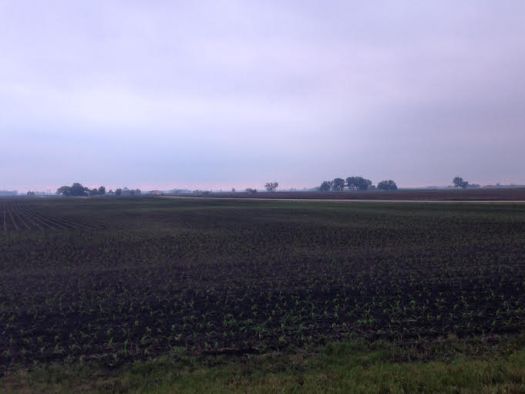
field
My flat land views will soon be exchanged for a view from the Hugh R Sharp.

About Me

I am a science teacher at Seneca High School in Seneca, Illinois.  I will be starting my 6th year at Seneca High School next year, and going into my 14th as an educator.  I mainly teach freshman physical science, but occasionally get the opportunity to teach a junior/senior environmental science class.  Along with teaching I also am an assistant

football
Teaching and coaching leads to a full year.

football coach, assistant track coach, science club sponsor, and FCA (Fellowship of Christian Athletes) huddle leader.  I wear many different hats throughout the year, and have the support of an awesome family at home.  It will be difficult to be away from my family for a couple weeks after a busy school year, but this is an amazing opportunity I had to apply for.

fishing
It will be hard to leave my wife and kids for a couple weeks, but they have been supportive.  In the background, you can see the type of “vessels” I am used to!

Why did I apply for Teacher At Sea?

I attended a NOAA workshop at Shedd Aquarium in Chicago, Illinois titled “Why and How We Explore the Deep Ocean.”  I went to the workshop to see if there was any ocean content I could work into my Integrated Physical Science class.  At the workshop, I discovered the amount of ocean content that fits in with the physics and chemistry content I currently teach is numerous.  The workshop was fantastic (if you are a teacher reading this I highly recommend you attend this workshop if it is available at a nearby location).  Towards the end of the workshop, the presenter discussed the Teacher at Sea opportunity.  I instantly knew I wanted to apply.  I came home from the workshop and told my family, “I’m going to apply to go on a research vessel with NOAA this summer.”  To which my wife (who has heard so many crazy ideas come out of my mouth) said, “Uh huh…okay.”  My oldest daughter responded, “Only if I can go with you.”  My son responds, “As long as it’s not over my birthday.”  My youngest just put the free NOAA bag from the workshop on her head like a helmet, and ran around the room.  So, with the obvious support of my family, I applied.

I had never felt so strongly about something.  I wanted to be a part of this experience for many reasons.  A) I wanted an experience working on an actually research mission.  I consider this extremely valuable for my classroom moving forward.  I envision taking research methods I learn from this trip and emulating them in my classroom.  B) I seek to strengthen my weaknesses.  My knowledge of ocean ecosystems is weak.  Part of this is being land locked in Illinois.  What better way to gain knowledge and appreciation for ocean ecosystems than to be a part of a team researching them?  I think when you lack understanding about something it is much easier to disregard it.  Ocean ecosystems are far too important to give little attention to them.  C) Being about a 1/3rd of the way into my teaching career I am looking for an experience that can ignite new ideas, and help me grow as an educator.  I am motivated and inspired by all kinds of simple things; I cannot imagine what this opportunity could do for me.  D) I like fish.  Simple I know, but its true.  The science club I run is called Conservation in Action (yes the CIA), and one of the projects we currently have running is keeping cichlids that are endangered or threatened in the wild, in our classroom.

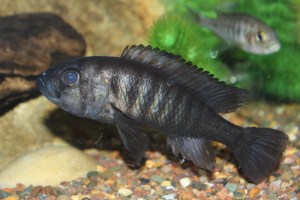
IMG_0768
A male Lipochromis melanopterus that is housed in an aquarium in my classroom and cared for by members of our science club.

We currently have about 15 aquariums that some of our club members maintain with the goal of informing people of the plight of the Lake Victorian cichlids and other endangered fish, and keeping their population numbers in captivity healthy.


How can you prepare with me?

I would like to leave you with some resources that you can prepare for this trip with me.  There have been several sources given to me by NOAA, and some others I have found to be valuable as well.

A) What ship will you be on?  I will be on the Hugh R Sharp.  You can find out more about this vessel here.  This site from the University of Delaware even includes a video tour of the ship.  This will answer a lot of questions about what day to day life may be like for me on the trip, though I will be posting more about that in the coming weeks.

B) What is a scallop survey?  From what I understand, we will be collecting large amounts of samples from the ocean floor through dredging.  The samples would be brought on board and counted.  A record of overall population and populations at different life cycle stages is taken.  A report from a past survey is found on the NOAA website, and that is linked here.  This report by Dvora Hart is a great look at some of the technology and methods that may be used on this upcoming mission.

Did you know?

NOAA is predicting a more active than normal hurricane season in the Atlantic in 2017.

FINAL 0523 Hurricane Graphic_pie chart-700x400
Always a good article to read right before heading out for a couple weeks into the Atlantic Ocean!  However, I am not worried by this because I am in the hands of experts.  It is always good to be prepared and aware though.  The article is a good read with lots of links about NOAA’s weather predicting capabilities.
Above-normal Atlantic Hurricane Season is Most Likely This Year


Donna Knutson: Last Leg of Leg III Atlantic Sea Scallop Survey 2016, June 24, 2016

NOAA Teacher at Sea Donna Knutson
Aboard the Research Vessel Sharp
June 8 – June 24, 2016

2016 Mission: Atlantic Scallop/Benthic Habitat Survey
Geographical Area of Cruise: Northeastern U.S. Atlantic Coast
Date: June 24, 2016

Last Leg of Leg III Atlantic Sea Scallop Survey 2016

Mission and Geographical Area: 

The University of Delaware’s ship, R/V Sharp, is on a NOAA mission to assess the abundance and age distribution of the Atlantic Sea Scallop along the Eastern U.S. coast from Mid Atlantic Bight to Georges Bank.  NOAA does this survey in accordance with Magnuson Stevens Act requirements.

Science and Technology:DSCN7770 (2)me best

Latitude:  41 29.84 N

Longitude:  070 38.54 W

Clouds:  partly cloudy

Visibility: 5-6 nautical miles

Wind: 3.58 knots

Wave Height: 6 in.

Water Temperature:  53  F

Air Temperature:  67 F

Sea Level Pressure:  30.0 in of Hg

Water Depth: 26 m


It has been an action packed two weeks.  The men and women who dedicate themselves to the scallop survey are extremely hard working scientists.  It is not an easy job.  The sorting of the dredged material is fast and furious, and it needs to be in order to document everything within the catch before the next one comes in.  The baskets are heavy and it takes a strong person to move them around so quickly.

DSCN8159 (2) dredge team
Han, Jill, Mike, Vic, Me and Ango

In small catches every scallop is measured.  In dredges with many baskets of scallops, a percentage is measured.  It is a random sampling system, taking some scallops from each of the baskets to get a general random sample of the whole.  Mike led an efficient team, he told us what to look for and oversaw the measuring.

DSCN7780 (2)mike and nicki
Mike and Nikki

He often set samples aside to show me later, when we were not as busy. A few examples were how to tell the difference between the red and silver hake or the difference between the Icelandic and Atlantic sea scallop.  He showed me how the little longhorn sculpin fish, “buzz bombs” known to fisherman, vibrate when you told it in your hand.

DSCN8008 (2)buzz
Longhorn sculpin

Mike even took the time to dissect some hake and to show me the differences in gonads, what they were feeding on by opening their stomach, and the otolith within the upper skull.  The otolith is a small bone in the inner ear that can be used to identify and age the fish when in a lab looking through a microscope.  Mike answered my many questions and was always eager to teach me more.

Another helpful team member was Vic.  Vic taught me how to run the HabCam.  He has been involved in the HabCam setup since it started being used four years ago.  There is a lot of work to do to set up the multiple monitors and computers with servers to store all the images collected by the HabCam.  Vic overlooks it all from the initial set-up to the take down.  I admire Vic’s work-ethic, he is always going 100% until the job is completed.  Sometimes I just needed to get out of his way, because I knew he was on a mission, and I didn’t want to slow him down.

DSCN8132 (2) monitors
Control center for Habcam and Dredging

When we weren’t dredging, but rather using the HabCam, there was a pilot and copilot watching the monitors.  The HabCam, when towed behind the ship, needs to be approximately 1.7 m off the ocean floor for good resolution of the pictures, and keeping it at that elevation can be a challenge with the sloping bottom or debris.  There is also sand waves to watch out for, which are like sand bars in a river, but not exposed to the surface.

When not driving HabCam there are millions of pictures taken by the HabCam to oversee.  When you view a picture of a scallop you annotate it by using a measuring bar.  Fish, skates and crabs are also annotated, but not measured.  It takes a person a while to adjust to the rolling seas and be able to look at monitors for a long period of time.  It is actually harder than anticipated.

DSCN7768 (2)skate
HabCam Picture of a skate.

Han was making sure the data was collected from the correct sites.  She works for the Population Dynamics branch of NOAA and was often checking the routes for the right dredges or the right time to use the HabCam.  Between the chief scientist Tasha and Han, they made sure the survey covered the entire area of the study as efficiently as possible.

DSCN7839 (2)tash han mike
Tasha, Han and Mike discussing the next move.

Dr. Scott Gallager was with us for the first week and taught me so much about his research which I mentioned in the previous blogs.  Kat was with us initially, but she left after the first week.  She was a bubbly, happy student who volunteered to be on the ship, just to learn more in hopes of joining the crew someday.  Both vacancies were replaced by “Ango” whose real name in Tien Chen, a grad student from Maine who is working on his doctoral thesis, and Jill who works in Age and Growth, part of the Population Biology branch of NOAA.  Both were fun to have around because of their interesting personalities.  They were always smiling and happy, with a quick laugh and easy conversation.

DSCN8131 (2)the three
Jill, Ango and Han after dredging.

The Chief Scientist, Tasha, was extremely helpful to me.  Not only does she need to take care of her crew and manage all the logistics of the trip, plus make the last minute decisions, because of weather or dredges etc, but she made me feel welcome and encouraged me to chat with those she felt would be a good resource for me.  On top of it all, she helped me make sure all my blogs were factual.  She was very professional and dedicated to her work, as expected from a lead scientist leading a scientific survey.

DSCN8146 (2)tash and jim
Evan, Tasha and Jimmy discussing route.

I spent as much time as possible getting to know the rest of the crew as well.  The Master, Captain James Warrington “Jimmy” always welcomed me on the bridge.  I enjoyed sitting up there with him and his mates.  He is quick witted and we passed the time with stories and many laughs.  He tolerated me using his binoculars and searching for whales and dolphins.  There were a few times we saw both.

He showed me how he can be leader, responsible for a ship, which is no small feat, but do so with a great sense of humor, which he credits he inherited from his grandmother.  The other captains, Chris and Evan, were just as friendly.  I am sure all who have been lucky enough to travel with them would agree that the RV Sharp is a good ship to on because of the friendly, helpful crew and staff.

DSCN7785 (2)KG
KG, oceanic specialist, helped with dredges.

Because this was my second experience on a survey, the first was a mammal survey, I have really come to appreciate the science behind the study.  It is called a survey, but in order to do a survey correctly, it takes months of planning and preparation before anyone actually gets on a ship.

There is always the studying of previous surveys to rely on to set the parameters for the new survey.  Looking for what is expected and finding, just that, or surprising results not predicted but no less valued, is all in a scientist’s daily job.  I admire the work of the scientist. It is not an easy one, and maybe that is why it is so much fun.  You never know exactly what will happen, and therein lies the mystery or maybe a discovery to acquire more information.

DSCN8127 (2)big goose
I had to hold the largest goose fish we caught!

It was a challenging two weeks, but a time I’m so glad I had the opportunity to have with the members of Leg III of the 2016 Atlantic Sea Scallop Survey.