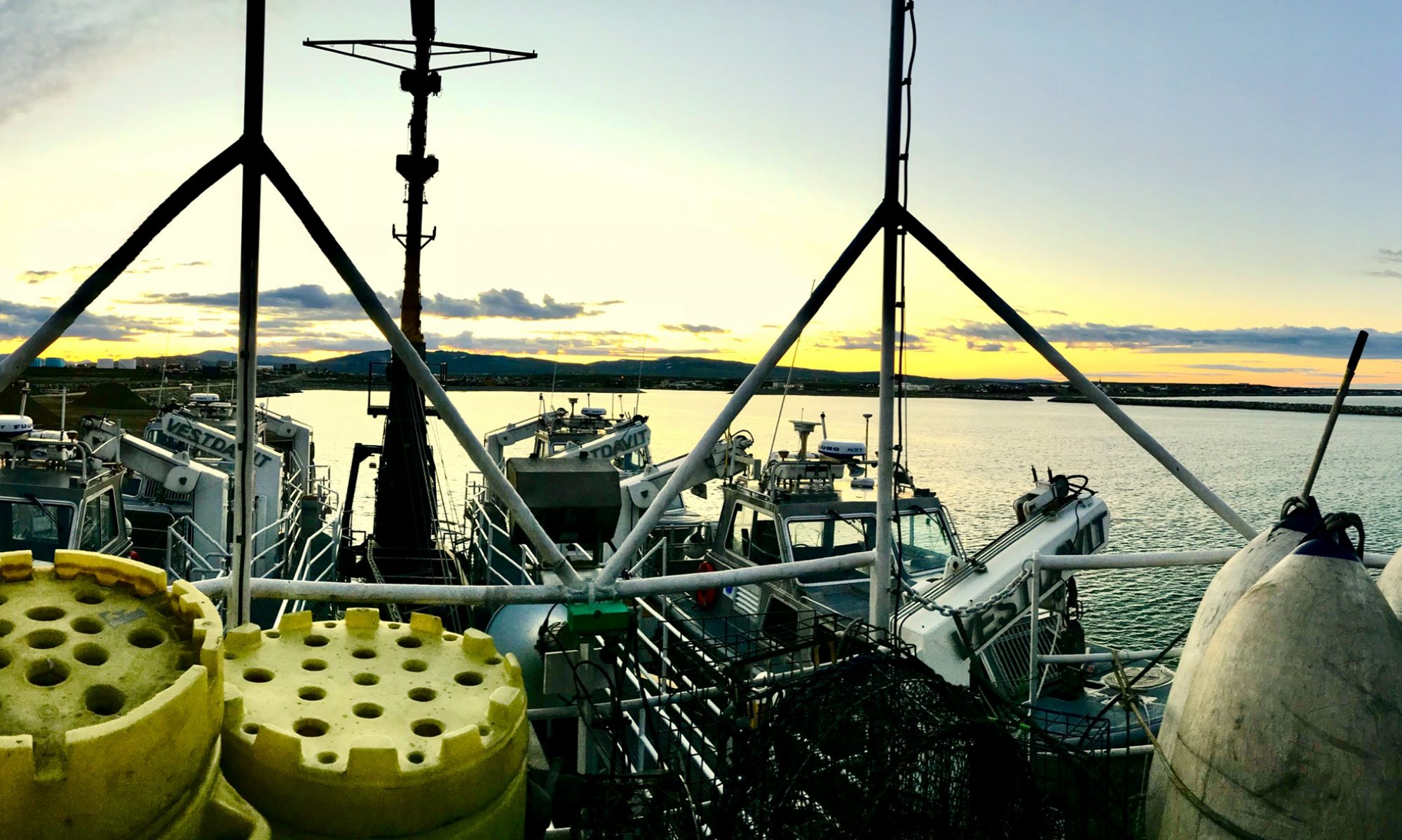
Today I worked my first watch from 08:00 to 12:00. I was responsible for being present in the main science lab and monitoring our position and being aware of where the first deployment of instruments will occur. Since we are not yet allowed to deploy any instruments, it was a fairly slow day. We did receive training from Sergio Pezoa on how to calibrate and activate radiosondes. These are the instrument packages that send back information on its position, temperature, atmospheric pressure, and relative humidity. These instrument packages carry a water-activated battery and are attached to a helium balloon. They are released into the atmosphere at prescribed times and send back by radio the information they gather to the receiving unit. This continues until the balloon fails and the instrument package tumbles to earth. Radiosondes are the basis for most of the information about conditions in the upper troposphere. I’ll be working on the team that launches the weather balloons carrying these instrument packages.
NOAA Teacher at Sea
Eric Heltzel
Onboard NOAA Ship Ronald H. Brown September 25 – October 22, 2005
Sailing through the Canal
Mission: Climate Observation and Buoy Deployment Geographical Area: Panama Canal Date: October 2, 2005
Science and Technology Log
We’ve been in port at Panama City. The whole idea of sailing from the Atlantic basin across part of the continent to the Pacific basin seems rather amazing. Seeing the locks in operation was fascinating. A tug helped us get into the correct position then four cables were attached, two forward and two aft. These cables were each fed out from a winch on railroad switch engines which were on tracks on either side of the lock.
The engines moved with us and kept tension on the cables so our ship stayed in the center of the lock. The locks are 1000 feet long so our 274’ vessel could fit in with another ship. Once we were in, the lower gate closed and water started to flow in from the base of the sidewalls of the lock. I was surprised at how rapidly the lock filled with water. The water largely flows in by gravity so little has to be pumped. Once we finished going through the three locks we were lifted to the level of the natural lake that acts as a critical part of the passage. This lake, which is filled by the abundant rainfall, provides water to fill the locks and has a navigable channel dredged across. On the western side is the infamous cut. Here the canal looks like it is a river going through a canyon although it has no current and the canyon is man-made. The ship descended through locks on the Pacific side and we docked at Panama City.
A closed lock inside the Panama Canal
When I awoke on Saturday the deck crew and engineers were preparing to take on fuel. This is a ticklish business that requires a lot of attention. It’s the same principle as pulling into the local gas station except the hoses are 8” in diameter and get bolted together then bolted to the ship. We took on 80,000 gallons of diesel fuel which we will need for the next leg of our voyage to Arica, Chile. The RON BROWN can hold about 120,000 gallons of fuel. I was pleased that this wasn’t billed to my account.
This morning I went out for a walk around the compound where our ship is docked. This is a military compound with nicely kept grounds but around the edges the indigenous vegetation is showing itself. There were several pathways up into the trees where I got a sense of what the forest in Panama is like. “Green” and “busy” are two operative descriptors. In areas along the edge there were several beautiful plants in bloom. I also got to watch leaf-cutter ants carrying there booty back to their nests. These guys travel back and forth along the same path from the tree they are carving leaves from to their residence. It always reminds me of a safari through the jungle. I also saw an Agouti in an opening. I had only seen photos of this large rodent and I was excited to see one in the field. It was in the 80’s and very humid so I returned to the ship very damp.
Tropical flowers
We are preparing to depart on the next leg of the cruise. We expect to pull away about 17:30 after the Pilot comes on board. Twelve more members of the scientific team arrived yesterday so we now have our full complement. I have assigned my first “watch” tomorrow from 08:00 to 12:00. We will be trained on deployment of drifters and ARGOS buoys this evening. I also will be helping the meteorological team by launching weather balloons. We’re going to begin the scientific research tomorrow. Wow!
Things to pursue: Design of the Panama Canal, History of the Panama Canal, and Plants and animals of Panama
NOAA Teacher at Sea
Eric Heltzel
Onboard NOAA Ship Ronald H. Brown September 25 – October 22, 2005
Mission: Climate Observation and Buoy Deployment Geographical Area: Panama Canal Date: September 30, 2005
Science and Technology Log
At 12:00 local time, we are sailing south towards the Panama Canal. To portside, mountains rise up directly from the ocean. Ahead is the isthmus lying low just above the horizon. As I watch the distant skyline, Captain Wright appears on the deck below. As he walks the decks of his ship, he stops to make sure that I am armored against the tropical sun. He sees that I am wearing long sleeves, a sun hat, and gloves and asks if I have on sunscreen, which I do. He then comments, “we don’t have to worry about looking good at our age.” He looks sharp in his khaki uniform, and those of you who have seen me in my sun clothes know what prompted his comment. Oh well.
As I scan the sea southward I can tell when the Canal begins because of the silhouettes of numerous ships. All through the morning we have seen other ships traveling headings that converge on the Canal. Captain Wright says that usually ships go through in convoys of four or five and the trip takes about twelve hours. We will be starting about 16:30 so most of our passage will be at night.
I’m sitting on the deck just below the bridge. This affords me a good view of where we are going. It’s the rainy season in Panama and there are banks of cumulonimbus clouds over the land. Captain Wright cautions that I should be prepared for sudden downpours. Going through the Panama Canal is an experience I never expected having. I’m very excited.