Angela Hung: The First Day of Summer, June 12, 2018

NOAA Teacher at Sea

Angela Hung

Aboard NOAA Ship Oregon II

June 19-July 5, 2018


Mission: SEAMAP Summer Groundfish Survey

Geographic Area of Cruise: Gulf of Mexico

Date: June 12, 2018


Weather Data from Prairie State College

Conditions at 1510

Latitude: 41.45° N

Longitude: 87.53° W

Temperature: 26° C

Wind Speed: S 6mph


Science and Technology Log

How did we decide that June 21 is the first day of summer? Is this the day the pool opens? Is it the hottest day of the year? The critical date when students have de-stressed from the last school year and the next still seems far away?

In fact, the first day of summer says a lot about planet Earth’s annual journey around the sun. June 21 (sometimes June 20) is also called the Summer Solstice—the longest day of the year in the Northern Hemisphere. Because Earth rotates on a tilted axis, this is the day that the North Pole is most directly pointed at the sun. From our view on the ground in Chicago Heights, the sun appears farthest north in the sky.

The seasons are a result of the Earth's tilted axis as it travels around the sun. Summer Solstice occurs between June 20-22 when the North pole is tilted towards the sun.
The seasons are a result of the Earth’s tilted axis as it travels around the sun. Summer Solstice occurs between June 20-22 when the North pole is tilted towards the sun. Image credit: NOAA National Weather Service, https://www.weather.gov/cle/seasons

Conversely, winter begins on a solstice as well—the shortest day of the year when the planet is leaning away from the sun. In between, Spring and Fall correspond to “equinoxes”, the days when night and day are “equal” or roughly the same lengths.

It follows that in the Southern Hemisphere, the seasons are reversed. On June 21 while the North Pole is soaking in the sun, the South pole is in the shadows for the longest night of the year. A common misconception is that summer is when the entire Earth is close to the sun in an elliptical orbit and winter is when the planet is far away. If this was true, the Northern and Southern hemispheres would experience winter and summer at the same time. Actually, Earth’s orbit is fairly circular and the planet as a whole remains the same distance all year. Only the poles change their relative positions to the sun.


Introductory Personal Log

June 21 is a bittersweet day for me. As an avid gardener, the flip side of the Summer Solstice is that the days begin to get shorter and shorter until December 21. I start accounting foot by foot around the yard where “full sun” areas disappear and the infamous Chicago winter looms ahead. But this year, the Solstice brings a new excitement. Next week, Earth’s and my summer officially begins with a trip to Pascagoula, Mississippi to begin the second leg of the SEAMAP (Southeast Area Monitoring and Assessment Program) Summer Groundfish Survey aboard NOAA Ship Oregon II. Oregon II is a research ship that surveys various types of marine life in the Gulf of Mexico, Atlantic Ocean and Caribbean Sea. I can’t think of a better way to spend summer in these bodies of water.


How would I know about the Gulf, Atlantic and the Caribbean? I’ve lived in a few places around the U.S. My early childhood was spent in northern Virginia before moving to Florida where I stayed until I left for graduate school. That took me to New Mexico (truly enchanting!) and my current position brought me here to the south suburbs of Chicago, Illinois. My parents still live in Florida by the Indian River on a barrier island in the Atlantic Ocean. My bachelor’s degree is from New College of Florida which sits on a bay in the shimmering Gulf of Mexico. I haven’t had the pleasure of living in the Caribbean, but I have visited a couple of times.


[Break to answer the burning questions on everyone’s minds]

Florida its has drawbacks to beaches, such as the crushing summer humidity, hurricanes, mosquitoes, giant spiders–it’s not that hard to leave.

New Mexico is amazingly beautiful, boasting the best sunsets in the country. There are more plants, less oxygen and colder winters than you think. The elevation in Albuquerque is over 5,000 feet rising to 10,000 feet in the Sandias Mountains that border the city. I learned to ski here.

I like Chicago, the native wildflowers are the most impressive I’ve ever seen. The cold, dark winter, which aren’t terribly worse than Albuquerque, is balanced by fall leaves and an invigorating appreciation for spring as everything seems to rise from the dead. Hence the keen interest in solstices and equinoxes. Finally, Northeast Illinois is strongly nostalgic. The climate, plants and animals are very similar to Virginia so I actually often feel like a kid again.

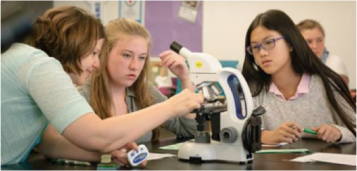
I’m a biology professor at Prairie State College. We are a community college located 30 miles south of Chicago. While my educational background is in animal behavior and ecology, my graduate research spanned genetics, cell biology and immunology. Biologists often say they prefer cells or organismal biology over the other, but it is important to study the parts and the whole of any study organism, both of which respond to the ecological context. I typically teach Organismal Biology, which surveys the diversity of life on Earth with an introduction to ecology and evolution, and Environmental Biology. This fall, Cell and Molecular Biology will be added to my regular course rotation.

Community colleges are dedicated teaching institutions. However, Prairie State College supports faculty who engage with students outside of the classroom through research. I teach full time but I sometimes have the privilege of mentoring a research student. This past spring, my mentee won First Place in the STEM (Science, Technology, Engineering and Math) Skyway Poster Competition! Community college students in the region present their original projects which are judged by scientist volunteers from Argonne National Lab.

Tylar tested different types of alternative plant growing systems such as hydroponics and aeroponics to grow lettuce. He is committed to developing and promoting practices that reduce the environmental impact of industrial agriculture while meeting the needs of a growing world population. My experience as a Teacher at Sea in the Gulf of Mexico is timely because agriculture in Illinois generates pollution that ultimately impacts the marine ecosystems of the Gulf. Additionally, his project is now a teaching tool that I can use in each of my classes along with what we learn on Oregon II.


Let’s get summer started!

Melissa Barker: Reflections from Land, July 20, 2017


NOAA Teacher at Sea

Melissa Barker

Aboard NOAA Ship Oregon II

June 22 – July 6, 2017


Mission: SEAMAP Groundfish Survey

Geographic Area of Cruise: Gulf of Mexico

Date: July 20, 2017

Weather Data from the Bridge: I am now back in Longmont, Colorado

Latitude: 40 08.07 N

Longitude: 105 08.56 W

Air temp: 31.1 C


Science and Technology Log

One of the major questions I had before my Teacher at Sea voyage was how the level of oxygen in the water will affect the species we collect. Typically, in the summer, a dead zone forms in the Gulf of Mexico spreading out from the mouth of the Mississippi river. You can see an image of the dead zone from 2011 below.

Hypoxia2011
Bottom Dissolved Oxygen Contours, Gulf of Mexico, 2011

Phytoplankton, or microscopic marine algae, are the base of the marine food web. There are two main classes, diatoms and dinoflagellates, which are both photosynthetic and typically live towards the top of the water column. We did not sample plankton on our leg of the cruise, but if you want to learn more you can check out this site: https://oceanservice.noaa.gov/facts/phyto.html. In the summer, phytoplankton and algae can build up due to excess nutrients in the water that are running off from urban areas, agriculture and industry. Much of our sampling was near the mouth of the Mississippi River, which is a significant source of excess nutrients. The extra nitrogen and phosphorus in the runoff cause the excess growth of photosynthetic organisms which leads to a buildup of zooplankton (heterotrophic plankton). Once the phytoplankton and zooplankton die and sink to the bottom they are decomposed by oxygen consuming bacteria which deplete the oxygen in the water column. According to NOAA, hypoxia in aquatic systems refers to an area where the dissolved oxygen concentration is below 2 mg/L. At this point, most organisms become physiologically stressed and cannot survive.

4911433052_f535276bdf_b
How The Dead Zone Forms: Infographic by Dan Swenson, NOLA.com/The Times-Picayune

Tropical Storm Cindy, which kicked up just as I was arriving in Galveston, brought significant freshwater into the gulf and mixed that water around so we did not see as many low oxygen readings as expected. While I was talking with Andre about hypoxia when we were on the ship, he used the analogy of stirring a bowl of soup. There is a cool layer on top, but as you stir the top layer and mix it with the lower layers, the whole bowl cools. Similarly, the oxygen rich freshwater from the storm is mixed around with the existing water, reducing the areas of low oxygen. You can see in the map below that we had fewer hypoxic areas than in 2011.

2017-hypoxia-contours
Bottom Dissolved Oxygen Contours, Gulf of Mexico, 2017

We used the CTD to obtain oxygen readings in the water column at each station. In the visuals below you can see a CTD indicating high oxygen levels and a CTD indicating lower, hypoxic, oxygen levels. The low oxygen CTD was from leg one of the survey. It corresponds with the red area in the hypoxia map above.

Non Hypoxic station copy
CTD for a non-hypoxic station
Hypoxic Station copy
CTD of a hypoxic station

 Personal Log and Reflections

P1030035
Final sunset over the Gulf of Mexico

When I arrived back on land I still felt the rocking of the Oregon II. It took two to three days before I felt stable again. As friends and family ask about my experience, I find it hard to put into words. I am so grateful to the NOAA Teacher at Sea program for giving me this incredible experience and especially thankful to Science Field Party Chief Andre Debose and my day shift science team members, Tyler, David and Sarah, for teaching me so much, being patient and making my experience one that I will never forget.

The ocean is so vast and we have explored so little of it, but now, I have a strong understanding of how a large scale marine survey is conducted. Being an active participant in fisheries research was definitely out of my comfort zone. The experience helped stretch me and my learning and has giving me great insight to bring back to share with my students and school community. The map below shows our journey over the two weeks I was on the ship traveling along the Texas, Louisiana, Mississippi and Florida coasts.

Summer GroundfishLEG2 Oregon II ALL
The blue line maps our route on the Oregon II

My experience on Oregon II has also re-engaged me with the ocean. As a child, I spent time each summer on an island off the coast of Maine and even got to go fishing with my Dad and his lobsterman buddies. But for the last 20 years or so, my exposure to the ocean has been limited to just a few visits. My curiosity for the marine world has been reignited; I look forward to bringing more fisheries science and insight into my classroom.

P1030010 (1)
Brown shrimp (Penaeus aztecus) on the left Pink shrimp (Penaeus duorarum) on the right

I mentioned in a previous blog that our shrimp data was sent daily to SEAMAP and made available to fisheries managers and shrimpers to allow them to make the best decisions about when to re-open the shrimp season. According to Texas Parks and Wildlife (TPWD), the commercial shrimp season for both the state and federal waters re-opened just after sunset on July 15, 2017. TPWD said, “The opening date is based on an evaluation of the biological, social and economic impact to maximize the benefits to the industry and the public.” It is satisfying to know that I was part of the “biological evaluation” to which they refer.


Finally, I took some video while out at sea and now with more bandwidth and time, I’ve been able to process some of that video to shed additional light on how fisheries research is conducted. I’ve added two videos. The first one shows the process of conducting a bottom trawl and the second one show the fish sorting and measuring process. Enjoy!


Did You Know?

You can use the following sites to help you make smart sustainable seafood choices:

FishWatch (http://www.fishwatch.gov)

Monterey Bay Aquarium (http://www.seafoodwatch.org). There is also a free app you can put on your phone so you can do a quick look up when you are at a restaurant, the grocery or a fish market.


The largest Gulf of Mexico dead zone recorded was in 2002, encompassing 8,497 square miles. The smallest recorded dead zone measured 15 square miles in 1988. The average size of the dead zone from 2010-2015 was about 5,500 square miles, nearly three times the 1,900 square mile goal set by the Hypoxia Task Force in 2001 and reaffirmed in 2008.

(source: http://www.noaanews.noaa.gov)


Dawson Sixth Grade Queries

Thank you to the Dawson sixth graders (now seventh graders!) for your great questions. I look forward to speaking with you all when school starts in a few weeks.

What is at the bottom of the low oxygen part of the ocean? (Allison)

There is a lot of accumulated dead organic matter that is decomposed by oxygen consuming bacteria.

What do you find in the dead zone? Do less animals live there? (Leeham, Mae, Shane, Alfie, Bennett)

Typically, trawls are smaller and the diversity of organisms decreases in the low oxygen areas. Often you will find resilient organisms like croaker. There is a lot of research looking at which organisms can live in dead zones and how these organisms compensate for the low levels of oxygen.

Is there any way to fix the dead zone? What can we do about the dead zone? (Isaac, Owen, Ava)

It is estimated that seventy percent of the excess nitrogen and phosphorus that runs off into the Gulf of Mexico comes from industrial agriculture. Reducing the amount of fertilizer used to grow our food would help decrease the extent of the dead zone area. Perhaps one of you will come up with a way to feed our communities in a more sustainable way or a technology that can remove these excess nutrients before the water reaches the Gulf.

Thanks for reading my blog!

img_3346.jpg
Safety first on the Oregon II.


Anna Levy, Getting Underway! July 11, 2017

NOAA Teacher at Sea

Anna Levy

Aboard NOAA Ship Oregon II

July 10 – 20, 2017


Mission: Groundfish Survey

Geographic Area of Cruise: Gulf of Mexico

Date: July 11, 2017


Weather Data from the Bridge

The weather and waves have been pretty calm as we head down the Pascagoula River out to the Gulf of Mexico.


Latitude: 30.37 degrees North

IMG_0998
Today’s sky!

Longitude: 88.54 degrees West

Air temp: 30.0 degrees Celsius

Wind direction: light and variable

Wind speed: light and variable

Wave height: 1 foot (about 0.3 meters)

Sky: clear


Science and Technology Log

NOAA scientists and staff waved from the dock as we got underway this afternoon!

IMG_0992edit
NOAA scientists and staff see us off.

While we motored out of port in Pasgacoula, Mississippi, Andre DeBose, the chief scientist met with the science team to give us more details about our mission. We will be visiting the 48 remaining survey stations, all of which are in the eastern Gulf, off the west coast of Florida. The survey protocol is a little different in this area than it was in the western Gulf. Each station will take longer because, before we can begin trawling, we will use several different pieces of equipment to observe the ocean floor to avoid disrupting the sensitive coral reefs which are more widely spread in this area. So, we will not cover as much distance as other legs of the survey have.

In the meantime, we have 12 hours of “steaming,” or traveling, before we reach our first sampling location. There’s not much for us on the science team to do during this time, so I’ve been trying to get to know others on my team. Besides Andre, there are three other senior scientists aboard from NOAA. The rest of the science team is composed of volunteers, most of who are graduate students (including one from Australia and another from Brazil.) Some of them are collecting samples for their own projects and I’m looking forward to learning more about the research that each of them conducts.

IMG_1001
The ship’s crew

Also on board are 1 Civilian Master and 4 NOAA corps officers who navigate and command the ship, 5 engineers who keep the engines and ship running smoothly, 6 experienced deckhands / fishermen who operate all of the fishing gear and equipment on deck (like the trawl we will be using), 2 stewards who cook all meals and help to make everyone on board comfortable, and 1 electronic technician to make sure scientific equipment and ship electronics are in working order.

I’m struck by the way in which all of these individuals, and their diverse skill sets, come together to make this work happen. There were so many details to consider to bring this group together – we each had travel arrangements, medical and security clearances, berthing (rooming) assignments, shift schedules, emergency roles, safety trainings, and more to consider. Each state we will be passing through had to grant permission to work in their waters and all laws restricting fishing and protecting endangered species had to be followed. When I think about what it’s like to be a scientist, I usually imagine a person spending a lot of time thinking about the science involved in project itself, but a huge part of the work of any scientist is logistics – working to bring together all of the right people and materials are in the right place at the right time!


Personal Log

I arrived Monday evening and spent last night on the boat. It was nice to have the time to get settled and look around before most of the rest of the crew and science team arrived today. I was told that one or two crew members were aboard, but I did not bump into them, so it felt a little strange to be there mostly alone. I took my motion sickness medicine and then passed the time reading and calling home to talk to my family. My room and bunk are small, so I was a little worried that things might feel claustrophobic, but the time was surprisingly peaceful. It reminded me of being in a tent while camping.

IMG_0021
The stateroom my roommate and I share.

In fact, I’m amazed at how homey the whole ship feels. There are three levels (decks) of inside living space, most of which is berthing (crew rooms, bathrooms, showers, etc.). There is even a set of full size washing and drying machines. The inside space also includes a galley (kitchen/dining area) that seats 12 and a lounge which seats about 8. The lounge is a nice area – it contains a large TV and a binder of about 800 movies (including movies currently in theatres, courtesy of the US Navy!). There is also 1 main level of outside work space, plus a flying bridge (an outdoor area above the bridge) that is the highest deck on the ship. There is exercise equipment scattered in nooks throughout the ship. It’s amazing how efficiently space is used!

IMG_0019
The ship’s lounge.

Everyone is free to move about the ship. The only restrictions are that non-essential persons cannot be on the bridge during busy times or weather and cannot go down to the engine room. However, even with all the freedom, there is always someone sleeping, and most of the outside areas are jam-packed with scientific and fishing equipment, and it is very easy to unintentionally disturb or get in the way of others.  We all have to be constantly aware to keep ourselves safe and be considerate of the people around us. Fortunately, everybody I’ve met is so friendly and thoughtful – there’s definitely a feeling that we’re all on the same team.

The science team and some crew on the ship work either the day shift (from noon until midnight) or the night shift (from midnight to noon). I lucked out to be on day shift, so I won’t need to alter my sleeping schedule drastically.

The tight space and 24 hour schedule does make it a

IMG_0017edit
The ship operates on military time.

bit difficult to know what to do with oneself during down time, especially since your roommate is typically sleeping while you’re awake. I’m finding that I really enjoy standing outside, along the side of the ship and looking out at the open water, or holing up in a corner of the lounge with my computer or book. Once I start my first shift, I’m sure I’ll be glad to have the time just to rest. There aren’t too many opportunities for socializing as everyone is either working or sleeping most of the time, but everyone seems to laugh and joke around when they are able.

I’m feeling great (no seasickness so far!) and am looking forward to getting into a daily routine. I just ate my first meal – a delicious dinner of fish, mashed potatoes, steamed broccoli, and peach cobbler. There is also a salad bar with each meal and snacks and ice cream available 24/7. (We will definitely not go hungry.)

Tomorrow, I’ll start my first shift and should see some fish!


This slideshow requires JavaScript.

Did You Know?

It’s amazing how self-sufficient and self-contained Oregon II is. For example:

The freshwater used aboard for drinking, showering, etc. is drawn directly from the ocean. The saltwater is filtered with equipment using a process called reverse osmosis, where high pressure separates particles resulting in freshwater.

Several of the fishing crew and officers are also trained MPIC’s (medical person in charge). They are medically trained to respond and provide emergency care. In the event of a more serious illness or injury, they are able to contact doctors on land and implement their instructions.

All sewage on board is broken down by bacteria. Once processed through a marine sanitation device (MSD), this treated water is safer for the environment. Following the appropriate maritime regulations, it can then be released into the ocean.


Questions to Consider:

Reflect: Scientific fieldwork, even work on land, often requires travel and adapting to unusual circumstances. How would you handle living and working in unusual, sometimes extreme, conditions?


Anna Levy: Preparing to Embark! July 7, 2017

NOAA Teacher at Sea

Anna Levy

Soon to be Aboard the Oregon II

July 10-20, 2017

Mission: Groundfish Survey

Geographic Area of Cruise: Gulf of Mexico

Date: July 7, 2016


Weather Data

I’m currently at home in Broomfield, Colorado (a suburb of Denver and Boulder). It’s a typical, hot and dry summer day at 27 degrees C (81 degrees F) at 10:30am. I’m about 1,400 miles away from Pascagoula, Mississippi, where I will be joining the team on our ship, The Oregon II, in just a few days!


1 - Oregon II
The Oregon II Photo Credit: NOAA
Latitude: 39.9919 N
Longitude: 105.266 W
Elevation: 1624 meters (5,328 feet) above sea level
Air temp: 27 C (81 F)
Water temp: N/A
Wind direction: From Northeast to Southwest
Wind speed: 7 knots (8 mph)
Wave height: N/A
Sky: Clear


Science and Technology Log

Once on board, I will be assisting with the third and final leg of the SEAMAP Summer Groundfish Survey.

SEAMAP stands for the Southeast Area Monitoring and Assessment Program. Since this program began in 1981, scientists from NOAA and other organizations have been collecting data about the number, types, and health of fish and other marine organisms, as well as the characteristics of the water in of their ocean homes throughout the Gulf of Mexico, Caribbean and parts of the Atlantic Ocean. This information helps us not only to understand how these ecosystems are changing over time, but also to make informed decisions about how we humans are using valuable ocean resources.

As you can imagine, the ocean is a large and complex environment, so collecting all of that information is a big task! To make it more manageable, SEAMAP is broken down into many smaller projects, each of which focuses on specific regions or aspects of the area. The Groundfish Survey focuses on monitoring fish and other organisms that live near the ocean floor. (This includes some species that we humans catch and eat, like shrimp, halibut, cod, and flounder.)

The Oregon II is equipped with a variety of scientific and fishing equipment.   Because our mission is focused on groundfish, I expect that we will be using a lot of the Oregon II’s fishing gear, especially its trawls. A trawl is a type of weighted net that can be pulled along the floor of the ocean. (Check out this video of how a bottom trawl works.)

After we bring our catch aboard, I imagine that most of my time will be spent helping to identify, describe, count, and catalogue all of the fish and other marine species that we encounter. I can’t wait to get on board, see some new species, and learn more about the methods we will use to collect all of this data in a scientifically rigorous way.

1 - MB Measure Fish
Teacher at Sea, Melissa Barker, measures a fish on a recent groundfish surveyPhoto Credit: Melissa Barker

I will be the third Teacher at Sea to work on the SEAMAP Summer Goundfish Survey this year, so I have been lucky to learn a lot from the two teachers who have already been to sea. Check out their blogs to see how the project is going so far:

  • Chris Murdock from Iowa City, Iowa was on the first leg (June 7 to 20, 2017).
  • Melissa Barker from Lafayette, Colorado was on the second leg (June 22 to July 6, 2017).


Personal Log

1 - PRA
The school where I teach in Broomfield, Colorado.  Photo Credit: Prospect Ridge Academy

I am honored to have been accepted into the Teacher at Sea program. It was my love of learning that led me to a career in teaching in the first place, so I really appreciate the opportunity immerse myself in a new scientific adventure, and I can’t wait to share the experience with my 9th grade biology students when I get home. I hope that they will be as inspired as I am by the real work that scientists do. There is so much still to learn about the world around us, especially in new frontiers like our oceans – the skills and concepts we learn in class are only the beginning!

1 - In Class
In class with two of my former students.  Photo Credit: Prospect Ridge Academy

Like most of my students, I have always lived in landlocked states. I’ve visited a few beaches, collected some shells, and splashed in the waves, but have very little experience with the ocean beyond that. I’ve definitely never been on a ship like the Oregon II before, so I’m curious to see what challenges await aboard. I think the most difficult part will be adjusting to the sounds, smells and motion of a fisheries ship. I’m expecting tight quarters, loud engines and fishing equipment, stinky fish, and probably some seasickness. We’ll see if that turns out to be true…

Back home in Colorado, I enjoy hiking, biking, gardening, cooking and exploring the amazing outdoors with my wonderful husband, Mike, and our hilarious two-year old daughter, Evie.

1 - Family Hike
My family out for a hike in the beautiful Colorado mountains
1 - Family Bday
Me, My husband, Mike, and our daughter, Evie


Did You Know?

The SEAMAP program has been going on for over 35 years and makes all of the data it collects freely available to other scientists, government agencies, the fishing industry, and the general public.

The Teacher at Sea program was established in 1990 and has sent over 700 teachers to sea!


Questions to Consider:

Research: How has all of the data collected over the years through SEAMAP been used?

Reflect: What might have happened if this data was not available?

Predict: What types of things do you think we will do while on the Oregon II to make sure that our data is collected in a “scientifically rigorous” way?


Melissa Barker: Breaking the Land Lock, June 14, 2017

NOAA Teacher at Sea

Melissa Barker

Aboard NOAA Ship Oregon II

June 22 – July 6, 2017

Mission: SEAMAP Groundfish Survey

Geographic Area of Cruise: Gulf of Mexico

Date: June 14, 2017

Weather Data from the Bridge

Here in Longmont, Colorado where I live, we are settling into warm summer days often topping out in the high 80’s to 90’s F and typically with low humidity. In Galveston, Texas, where I’ll board the ship it is in the 80’s F this week with 90% humidity. I’ll have to get used to that humid air.

Science and Technology Log

NOAAS_Oregon_II_(R_332)
NOAA Ship Oregon II. Photo courtesy of NOAA.

I will spend two weeks aboard the NOAA fisheries research vessel Oregon II, in the Gulf of Mexico, working on the SEAMAP (Southeast Area Monitoring and Assessment Program) Summer Groundfish Survey. The objective of the survey is to monitor the size and distribution of shrimp and groundfish in the Gulf of Mexico.

gfmexico
The Gulf of Mexico. Photo from world atlas.com

What are groundfish, you ask? These are the fish that live near or on the bottom of the ocean. This survey is conducted twice per year; the data help scientists monitor trends in shrimp and fish abundance as well as changes over time. We will also be collecting plankton samples and environmental data at each site. The second leg of the groundfish survey works off of the Louisiana coast and the outlet of the Mississippi River where a “dead” or hypoxic zone forms in the summer. I am very interested to see the what we pull up in this area.

Personal Log

IMG_3082
I’m all geared up and ready to go!

When the NOAA Teacher at Sea email arrived in my inbox in February, I held my breath as I opened and read it as fast as possible. I was accepted! I was going to sea! I am honored to be a part of the National Oceanic and Atmospheric Administration Teacher at Sea program.

I teach Biology and direct the Experiential Education program at the Dawson School in Lafayette, Colorado. I love sharing my passion for learning about the biological world with my students and engaging my students’ curiosities. Many of my favorite teaching moments have been times when I can take students outside to observe and explore their surroundings.

P1070391
My classroom for a week in the San Juan Mountain Range, CO. March 2017. Photo credit Pete Devlin

I’ve lived in Colorado for about 17 years and love to play in the mountain environment on foot, ski or bike. Having lived land locked for most of my life, I can’t wait for the opportunity to explore the ocean ecosystem this summer. As a child, I spent short amounts of time exploring tide pools in Maine and beaches in Florida and was always intrigued by the vastness and mystery of the ocean.

IMG_3086.JPG
Tending my garden to grow delicious food

Now, I’m heading out to sea for two weeks to dive right into (not literally) learning about the ocean. Like my students, I learn best by doing, so I am thrilled to be working with the NOAA Fisheries team.

Did You Know?

Did you know that June is national ocean month? Celebrate the ocean this month.Check out this great video from NOAA and visit NOAA’s Celebrate the Ocean page for more information.

Dawson Sixth Grade Queries

Just before the end of the school year, I visited the Dawson sixth graders to talk about my NOAA Teacher at Sea expedition. We learned about the importance of the ocean, even for us here in Colorado, and the sixth graders wrote questions for me to answer while I’m at sea. Look for this section in my blog where I will answer some of those questions.

IMG_2782
Dawson School sixth grade. Photo by RuthAnne Schedler.

-What do you think the most common organism is that you will find? (from Allison)

One of the main goals of the Groundfish survey is to collect data on the abundance and distribution of shrimp, so I think I’ll be seeing a lot of shrimp in our net. I’ll be sure to post photos of what we find.

 -Are you going to scuba dive? (from Gemma, Emma and Margaret)

I will not be scuba diving on my trip. I am not certified and the Teacher at Sea program does not allow teachers to scuba (even if they are certified). Instead I will be learning from above the water’s surface and pulling up samples to learn about what lives deep below.

Now it’s your turn to ask the questions…

What are you curious about? Maybe you are interested to know more about what we haul up in our nets or how to become a NOAA scientist. You can write questions at the end of any of my blog posts in the “comments” section and I’ll try to answer them.