Jennifer Widdig: Readying for Life Aboard a Research Vessel, June 2, 2026

NOAA Teacher at Sea
Jennifer Widdig
Aboard NOAA Ship Thomas Jefferson
June 17 – June 30, 2026

Mission: Hydrographic Survey 

Geographic Area of Cruise: Lake Erie and Lake Ontario

Date: June 2, 2026

A New Adventure Begins

Welcome! My name is Jen, and I call the small town of Minford, Ohio, home. For the past decade, I have had the privilege of teaching a variety of life science courses at Pickaway-Ross Career & Technology Center in Chillicothe, Ohio. While environmental and animal sciences have been at the heart of my teaching career, I am now preparing for a brand-new chapter that is as exciting as it is unfamiliar.

This upcoming school year, I will be stepping into a role that is not only new to me but also new to our school. My focus will be supporting students through online coursework across multiple subject areas while helping ensure they earn the credentials necessary for graduation. It is a unique opportunity to combine education, technology, and student success in ways I have never experienced before, and I am eager to see where this path leads.

One thing I have learned throughout my career is to embrace opportunities that challenge me to grow. That mindset has taken me far beyond the walls of a classroom. Over the years, I have had the incredible opportunity to travel to Belize, Tanzania, Malaysia, and Peru. These experiences allowed me to collaborate with educators and researchers, participate in meaningful projects, volunteer in communities around the world, and gain perspectives that continue to influence both my personal and professional life.

  • Jen, wearing a safari hat and a backpack, takes a selfie at one end of a narrow wooden bridge suspended over a valley
  • Jen, wearing an orange life jacket, holds up a string of fish hooked by their mouths; she sits on a boat next to other people
  • Jen and two other women sit in chairs in a classroom. Jen is speaking, using her hands to gesture something, while the two women look on.
  • Jen takes a selife from the front of a large canoe containing at least six other adults. they are on a brown river in a tropical setting. across the river, along the shore, are buildings with large wooden balconies extending over the water
  • Jen, wearing a headlight and a backpack, poses for a photo in front of a wooden walkway extending into a large cave
  • four people, facing away from the camera, make their way through dense jungle
  • Jen helps a child look at a photo on a digital camera. beyond, we can see dusty ground, a bus pulling up behind a large tree, and a village.
  • Jen helps two children look at a photo on a digital camera.
  • view of a classroom containing furniture but no people
  • a wooden footbridge suspended over a ravine

Now, I am preparing for an entirely different kind of adventure.

For two weeks, I will be living and working aboard a research hydrography vessel on Lakes Erie and Ontario. Unlike my previous international experiences, this opportunity will immerse me in the daily life of a scientific research crew as they collect data, map underwater features, and contribute to our understanding of the Great Lakes. It is a chance to experience science in action, learn from experts in the field, and gain firsthand knowledge of the technology and research that support navigation, environmental monitoring, and resource management.

As someone who has spent years teaching science, I am excited to step into the role of learner once again. There is something humbling and inspiring about leaving your comfort zone and diving into an entirely new environment especially when that environment happens to be a research vessel floating across two of North America’s most significant freshwater ecosystems.

As I prepare to trade lesson plans for lake charts and classrooms for the deck of a research vessel, I am reminded that some of the best learning happens when we step into unfamiliar territory. This blog will serve as a real-time account of that experience. I’ll share the sights, the science, the challenges, and the unexpected moments that come with living aboard a hydrographic survey vessel. From learning the day-to-day operations of the crew to exploring the technology used to map the lake floor. I hope you’ll join me as I navigate life aboard the Thomas Jefferson, explore the science of the Great Lakes, and embrace this adventure one day at a time. 

Mapping the Ocean with NOAA’s Teacher at Sea Program 

Before embarking on my adventure, I want to share some information about the agency, program and vessel. 

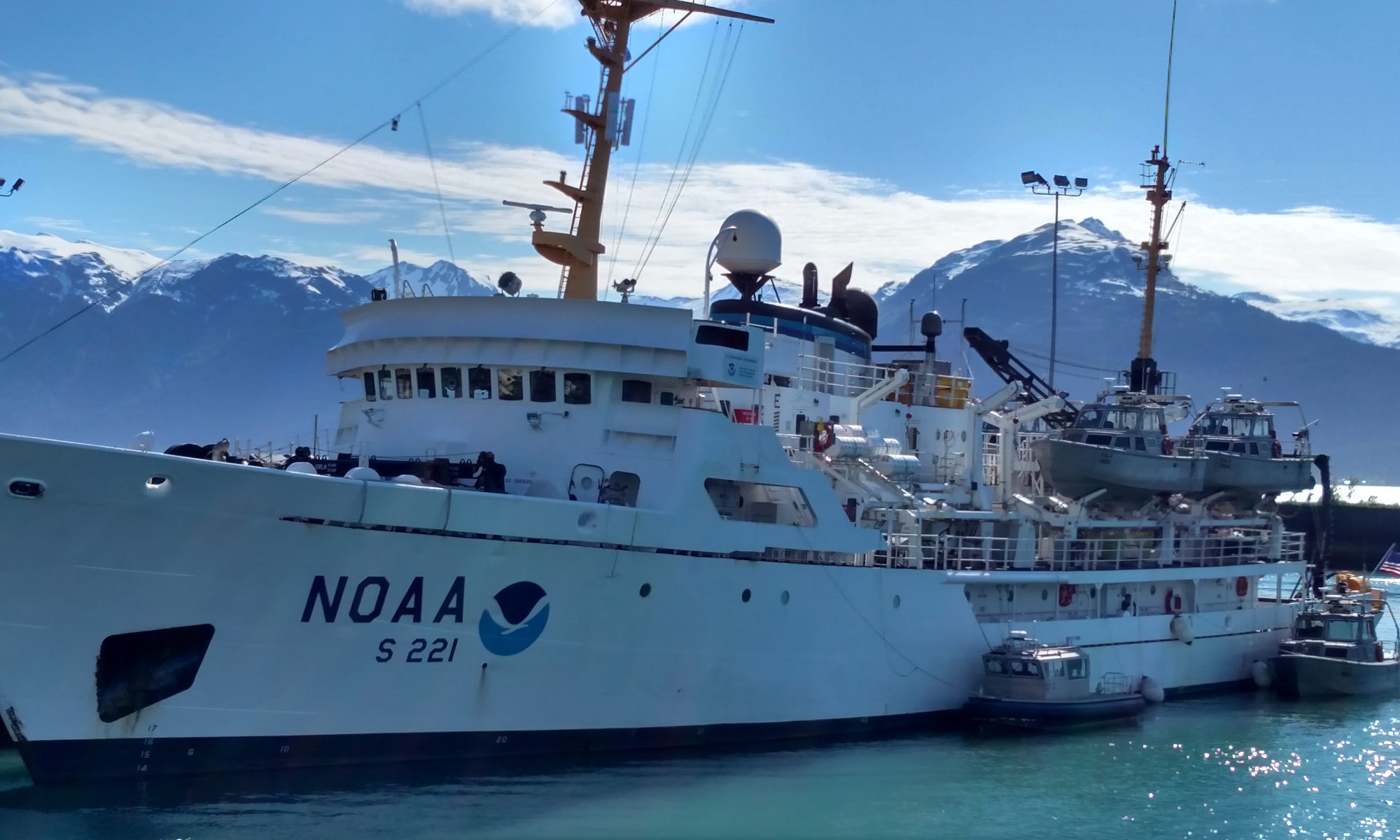
NOAA Ship Thomas Jefferson, a large white ship, underway. we can see the NOAA logo, the letters N O A A, and the ship's number, S 222, on the hull. the sky is cloudy and gray, and the water is calm and gray.
NOAA Ship Thomas Jefferson (Credit: NOAA)

NOAA’s Teacher at Sea Program is an exciting opportunity that allows educators to step out of their schools and onto research vessels to experience real-world science firsthand. The organization behind this adventure is NOAA, the National Oceanic and Atmospheric Administration. NOAA is a federal agency within the U.S. Department of Commerce that studies and protects our oceans, atmosphere, weather, climate, and coastal resources. From forecasting hurricanes and tracking marine life to mapping the ocean floor, NOAA’s mission is to better understand our planet and help keep people safe.

Since 1990, more than 850 teachers have participated in NOAA’s Teacher at Sea Program, joining scientists aboard research vessels and bringing their experiences back to classrooms across the country. Teachers become part of the science team, helping collect data while sharing photos, blogs, and lessons that connect students to real scientific discoveries.

Teachers selected for the program observe and actively participate. Depending on the mission, they may deploy equipment, record scientific observations, monitor instruments, assist with data collection, and take part in safety drills. Research operations run 24 hours a day, and teachers often work alongside scientists during 12-hour shifts.

For my mission, I will be aboard NOAA Ship Thomas Jefferson, a hydrographic survey vessel. The 208-foot ship can travel nearly 19,200 nautical miles and remain at sea for up to 45 days. The Thomas Jefferson is essentially a floating science laboratory. Its mission is to map the seafloor, support maritime commerce, improve coastal resilience, and provide data used to update the nation’s nautical charts. These charts help ships navigate safely through coastal waters and busy ports.

Hydrography is the study and measurement of underwater features and navigable waterways. Just as cartographers create maps of mountains and rivers on land, hydrographers map the hidden landscape beneath the water’s surface. Their work helps identify shallow areas, underwater hazards, shipwrecks, and other features important to safe navigation.

To “see” underwater, the Thomas Jefferson uses advanced technology. Side-scan sonar sends sound waves across the seafloor to create detailed images of underwater objects. Multibeam echo sounders measure water depths with incredible precision and create three-dimensional maps of the ocean floor. The ship also carries smaller survey boats that can reach shallow areas inaccessible to the larger vessel.

Hydrographic data has many uses beyond navigation. Scientists use it to study marine habitats, determine whether the seafloor consists of sand, mud, or rock, support dredging and construction projects, and assist with routing underwater cables and pipelines.

As I prepare to step aboard the Thomas Jefferson, I can’t help but feel a mix of excitement, curiosity, and gratitude. This experience is so much more than a professional development opportunity. I get a chance to become a student again, learning directly from scientists and crew members who dedicate their lives to exploring and understanding our oceans. I’ll have the opportunity to see hydrography in action, witness cutting-edge technology mapping parts of the seafloor, and experience life aboard a NOAA research vessel firsthand. Most importantly, I’ll be able to bring these experiences back to my students, sharing not only the science but also the adventure, teamwork, and discovery that happen beyond the walls of a classroom. 

Laura Grimm: Happy World Hydrography Day! June 21, 2022

NOAA Teacher at Sea

Laura Grimm

Aboard NOAA Ship Thomas Jefferson

July 4 – July 22, 2022

Mission: Hydrographic Survey of Lake Erie

Geographic Area of Cruise: Lake Erie

Date: June 21, 2022

Current Location: Dalton, Ohio

Latitude: 40ᵒ 47’57” N
Longitude: 81ᵒ 41’49”” W
Elevation: 1102 ft.

Weather in Dalton, Ohio – Finally Summer!  Hot, humid, and a chance of afternoon thundershowers.

Personal Log

Did you know that every year on June 21 people across the world celebrate World Hydrography Day?  So just what is hydrography and why am I excited about it?

Greetings from Dalton, Ohio!  My name is Laura Grimm, and I am the STEAM (Science, Technology, Engineering, Arts and Math) teacher for all the wonderful, enthusiastic students in kindergarten through 8th grade at Dalton Local Elementary and Middle School. Dalton is a rural village in Wayne County in Northeast Ohio.  Our school district is small (less than 900 students), yet mighty!  We serve the Dalton and Kidron communities and are fiercely proud of our students. Bulldog Pride district wide! 

I have always “yearned to learn”. So, in the fall 2019, I applied to be a Teacher at Sea (TAS) with the National Oceanic and Atmospheric Administration (NOAA). NOAA has been sending teachers to sea for 30 years! 

Why does NOAA send teachers to sea?

I was accepted to be a TAS and was assigned to a fisheries expedition in the Gulf of Maine in April 2020.  Do we all remember what happened in the spring of 2020?  Yes, COVID caused this plan to be postponed . . . twice.  I was very disappointed, yet I remained optimistic for the future.

In late April this year, I got the news that I would be sailing on NOAA Ship Thomas Jefferson to help scientists do a hydrographic survey of Lake Erie! 

NOAA Ship Thomas Jefferson with the Statue of Liberty in the background
NOAA Ship Thomas Jefferson

Go to this link if you would like to learn more about NOAA Ship Thomas Jefferson.

I will be helping scientists (hydrographers) map the floor of Lake Erie in the vicinity of Cleveland, South Bass Island and Presque Isle, PA.  The survey will identify hazards and changes to the lake floor and provide data for updating NOAA’s nautical charts to make it safe for maritime travel.  

Watch this video to learn more about the science of hydrography.

I grew up only 20 miles from the Port of Cleveland.  As a child, my family spent a week each summer on Middle Bass Island where I learned to swim and fish for walleye and perch.  My daughter and I vacationed on Kelleys Island for many summers.  I even took an oceanography class on Gibraltar Island.  These islands are in Lake Erie and are close to South Bass Island which will be included in this summer’s hydrographic survey.  I am very excited to learn more about the Lake of my childhood. 

While I am “at sea” – actually, on the lake – I will post 2 to 4 blogs per week.  My blogs will include information about the science and technology I am learning and what it is like to live on a NOAA research vessel.  I will pose questions, define new terms, and give you things to think about.  I encourage you to communicate with me via email (lgrimm@daltonlocal.org).  I will be very busy on the ship and the internet may be spotty, so be patient with me; I will try my best to post answers to your questions on my next blog.

I couldn’t be more excited!  I have so much to learn.  It looks like I will be more of a student this summer than a teacher! Connecting children with nature, promoting STEAM education, and being a lifelong learner are three of my life goals.  This research opportunity will check all three boxes.  I am more than ready to board NOAA Ship Thomas Jefferson!  May the learning begin!

P.S. Happy World Hydrography Day!

Oktay Ince: An Introduction, June 16, 2022

NOAA Teacher At Sea

Oktay Ince

Anticipating Departure on NOAA Ship Thomas Jefferson

June 20- July 1, 2022

Mission: Hydrographic Survey

Geographic Area of Cruise: Lake Erie/Lake Michigan

Date: June 16, 2022

Introduction

Greetings from Beavercreek, Ohio. My name is Oktay Ince, and I will be posting here over the next couple of weeks about my experiences from NOAA’s research vessel, Thomas Jefferson, as an educator conducting a hydrographic survey of Lake Erie/Lake Michigan! I’ll drive up to Cleveland on June 19, which will take about 3.5 hours from where I live now. My official work will start on June 20th, though. I can’t wait to have this once in a lifetime opportunity and share them all with you! Stay tuned …

Long Awaited Journey!

Back on January 27, 2020, I received a congratulations email from the NOAA Teacher at Sea Program.  “ Dear Applicant, On behalf of the National Oceanic and Atmospheric Administration’s (NOAA) Teacher at Sea Selection Committee, we are pleased to inform you that you were selected to be a finalist for the 2020 season”. At first, I was confused about what it means to be a finalist in this incredible program. Was I selected? Was I on the waiting list or did I have to meet certain criteria to be fully eligible to participate? The answer came later in the letter. I have to be medically cleared in order to sail. That includes a Tuberculosis (TB) test prior to sail. 

After completing all the necessary documents, I received an email on February 20 stating that I was medically cleared to sail and able to participate in the 2020 NOAA Teacher at Sea Program! Yay!!! We then had our first informational meeting on March 3.

A week after that, on March 10, a disappointing email came in! Due to the nationwide spread of Covid-19, our sailing season was canceled! However, there was a positive note at the end, “ We are planning to keep each of you in finalist status for our 2021 season.” I thought, well at least we are sailing the following year in 2021, not thinking that the pandemic would stay with us for two LONG years. 

By December 14, 2021, there was a hope to sail in the 2022 season. After confirming my interest in sailing and TB test (yes, again!), I received another congratulatory email on March 11, 2022 stating that I would be one of the teachers who will sail in the 2022 season! On April 28, I learned that I’ll be sailing NOAA Ship Thomas Jefferson on June 20- July 1, 2022 on the Great Lakes conducting a hydrographic survey of Lake Erie!

And here was the most exciting part: I will be the FIRST NOAA Teacher at Sea on the Great Lakes!

About Me

Destiny favors prepared minds” 

– once said Louis Pastor, a famous 18th century French microbiologist who invented the process of pasteurization and pioneered many scientific discoveries that we use today. 

Whether Pastor said or not, this quote well defines my philosophy in life. As a little boy from the hills of central Anatolia, I dreamed of going places I’d never been before and learning as much as I could to help to make the world a better place. I always seek to learn, meet new people, and have new experiences. 

Studying Biodiversity at Acadia National Park, Maine 2021

Here I am, about to explore the largest group of freshwater lakes on Earth, Great Lakes, by total area and second-largest by total volume.

I am entering my 8th year in the field of education with my new position as an assistant principal of academics at the Horizon Science Academy High School in Columbus, Ohio. I taught various science subjects including biology, chemistry, and genetics; and health science pathway courses including health science and technology, medical terminology, patient care and pharmacy technician in the career technical education program in our school. 

What am I going to do on NOAA Ship Thomas Jefferson?

NOAA Ship Thomas Jefferson is a hydrographic survey ship, meaning it collects bathymetric data (i.e. map the seafloor) to support nautical charting, modeling, and research, but also collect other environmental data to support a variety of ecosystem sciences. In this research assignment, Thomas Jefferson will collect data from the Cleveland, Ohio area as well as the vicinity of South Bass Island and Presque Isle. At the end of the project, the data will allow us to identify hazards and changes to the seafloor, provide critical data for updating NOAA’s nautical charting products, and improve maritime safety. 

I am anticipating assisting with the acquisition of survey data on survey launches, scanning data to assist with the final processing of data, and riding on small support boats to help with the installation of shore positioning stations and tide gauges. 

My Goals while in the  NOAA Ship Thomas Jefferson

Through this program, I hope to accomplish the following objectives: 

  1. Learn how NOAA’s scientists map ocean/lake floor and how they communicate their data with related stakeholders. The process of collecting ocean/lake data, analyzing and communicating this vital information with the public is something I am interested in to bring back to my school. 
  2. Explore ocean related careers and interview with those who are interested in sharing their experiences within their career journey. Presenting those careers to our students through PBL projects, or career exploration days will increase ocean-related careers within our school building. 
  3. Increase my knowledge on the Great Lakes and its significance locally and globally. This is significant because Ohio’s streams flow into either the Ohio River or Lake Erie, and eventually both release their water into the Atlantic Ocean. I want to make sure our students know their local water systems well and how they connect globally. 

About NOAA

The National Oceanic and Atmospheric Administration (NOAA) is a scientific and regulatory agency within the Department of Commerce. Its mission is “to understand and predict changes in climate, weather, ocean, and coasts, to share that knowledge and information with others, and to conserve and manage coastal and marine ecosystems and resources”. 

NOAA’s products and services support economic vitality and affect more than one-third of America’s gross domestic products. Source: NOAA’s Official Website

About NOAA’s Teacher At Sea Program

The NOAA’s Teacher at Sea (TAS) Program provides once-in-a-life time opportunity for educators by sending teachers to sea aboard NOAA research and survey ships to work under the world renowned NOAA’s scientists, officers and crew. Teachers will then share what they learn with their students, districts and communities. For more information, check out their official website

About NOAA Ship Thomas Jefferson
NOAA Ship Thomas Jefferson is hydrographic survey vessel that maps the ocean to aid maritime commerce, improve coastal resilience, and understand the maritime environment. The ship officially entered the NOAA fleet in 2003 (formerly the U.S. Naval Ship Littlehales) and was renamed for President Thomas Jefferson. You may find more information about NOAA Ship Thomas Jefferson here.