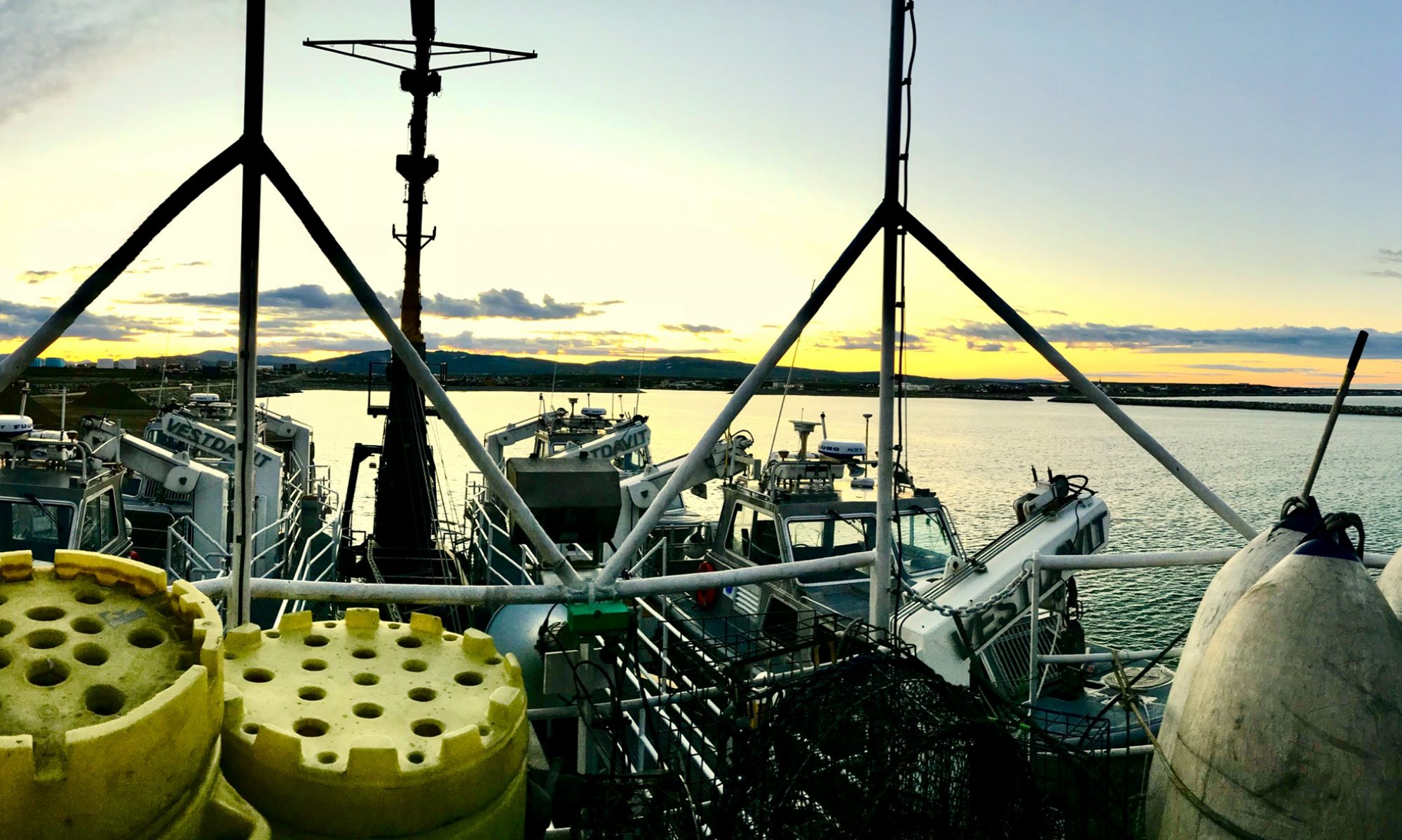
Jacqueline Omania: Flower Garden Banks NMS, Coral Lab and More! June 18, 2024

NOAA Teacher at Sea

Jacqueline Omania

Aboard NOAA Ship Thomas Jefferson

June 17 – June 28, 2024

Mission: Hydrographic Survey of the Northern Gulf of Mexico

Geographic Area: Galveston , Texas

Date: June 14-18, 2024

Weather Data: 

Latitude: 29.29979 º N”
Longitude: 94.79312 º W
88º Fahrenheit
Clear Skies, Sunny

Galveston Island, Texas

Galveston Island is a barrier island on the Texas Gulf Coast. It is about 50 miles southeast of Houston and is 27 miles long and only 3 miles wide at its widest point. It has 32 miles of beaches! The main strip is the Galveston Seawall which is the longest contiguous sidewalk in the U.S. at 10.3 miles long! You can walk forever with the ocean rolling right next to you. The tan sand is soft like powder. The water these days has a brown color due to run off from the Mississippi River. It is warm like a bathtub, which makes it very enjoyable to swim in. I learned later, however, that such an ocean temperature is actually a danger sign for a possible coral bleaching event. 

This is my first visit to Texas ever and the differences are remarkable to me. The price of gas is $2.67 a gallon compared to the near $5 we pay in California. Consequently, there are many more large pickup trucks on the road. In the drive from Houston to Galveston, I passed oil refineries so large they seemed like cities in themselves. I’d seen images in movies, but this was my first real experience.

a view of a beach at sunset; the sky is reflected on the wet sand
Galveston Beach along the sea wall

The Thomas Jefferson is docked in Galveston and I am spending Friday meeting the folks at Flower Garden Banks National Marine Sanctuary and NOAA Fisheries, both of which are housed in the NOAA headquarters in Galveston.

My Orientation: Flower Garden Banks National Marine Sanctuary Foundation (FGBNMS) and NOAA Fisheries

Flower Garden Banks National Marine Sanctuary (FGBNMS) is located 80-125 miles off the coast of Texas and Louisiana and is the only sanctuary in the Gulf of Mexico. It was designated in 1992. Although there are some visible coral reefs at divable depths, most of the sanctuary exists 130-725 feet below the surface in the twilight (mesophotic) zone. The sanctuary contains some of the healthiest coral reefs in the contiguous United States. Their work focuses on preserving and restoring the marine environment in the Gulf of Mexico.

an illustrated poster titled Flower Garden Banks National Marine Sanctuary, featuring a manta ray swimming prominently in the center above a coral reef; a small remotely operated vehicle is visible in the background
Flower Garden Banks National Marine Sanctuary poster

Thanks to the efforts of Kelly Drinnen and Taylor Galaviz, the Education and Outreach team at FGBNMS, I was able to meet the staff at the Sanctuary and the NOAA Labs and get  a glimpse of their work. I arrived at the end of a staff meeting to hear Dr. Michelle Johnston, the Sanctuary Superintendent, present her work encouraging a plan for the fishing of Wahoo in the Gulf of Mexico. Currently the practice is unmanaged. This discussion of balancing the actions of local fishers with environmental sustainability is one that I am familiar with. As a teacher, I wonder: are they teaching about ecosystems in kindergarten? To create a collective mindset where individuals understand how to balance their needs with that of nature, we must begin in the schools.

These questions were answered in my next meeting with Rebecca Smith (NOAA fishery and outreach educator). She shared a workbook, Habitat! It’s Where It’s At, which explains the local ecology and conservation. I am excited to use her resources with my students. 

three NOAA-produced workbooks in a row titled: Shrimply Fun! The Shrimp Fishery in the Gulf of Mexico: Activity and Coloring Book, Habitat! It's Where It's At!, and Sea Turtle Activity and Coloring Book.
Workbooks from NOAA Fisheries

I also met Keith Roberts, a data scientist from NOAA Fisheries, who shared about his work collecting fish data. He gifted me an otolith and explained how you can tell the age and gender of the fish from a particular inner ear bone. The otolith works like a tree with rings, and by counting the ridges on the bone you know the age. It is made of calcium carbonate like our fingernails. 

close-up view of a single otolith resting on a foam pad in a small display box
Otolith

Besides learning about the sanctuary, we had some time to discuss entry points into marine science careers. I love to support my past students in achieving their dreams, and our conversation gave me new resources to do so. I learned about opportunities at the Island School and Cape Eleuthera Institute in the Bahamas, and the Sea Turtle Rescue and Rehabilitation Center (Surf City, NC) which has internships for students in their junior year of high school. There is also a dolphin research center in Marathon Key (FL) and possibilities at Disney’s Epcot Center Aquarium. Several of the staff had entered their field through early internships at zoos and aquariums- and even by doing work with something as unusual  as Attwater’s Prairie Chickens (an endangered species of grouse native to Houston). Since access to environmental science careers is a topic I am passionate about, I was also happy to learn that NOAA has scholarship programs to support youth from underserved communities.

Mapping and the National Marine Sanctuary Foundation

In the afternoon, I was connected with the wonderful Sasha Francis, who works for the National Marine Sanctuary Foundation as the Gulf Restoration Education and Outreach Manager. She supports the projects focused on restoring the mesophotic and deep benthic communities (MDBC) that were injured by the Deepwater Horizon oil spill in April of 2010. Mesophotic and deep benthic communities are vast and complex ecosystems of coral, sponges, fish, and more along the ocean floor that are a foundation of Gulf of Mexico food webs.

Sasha, along with Kris Benson and Kelly Martin, NOAA Project Managers for this restoration work, helped me understand in detail how the mapping data we would be collecting with the Thomas Jefferson would be used. It is often combined with ROV (remotely operated vehicles) video and photo data to give us detailed information on deepwater features. If the maps show the deep ocean seafloor to be hard and highly reflective of sound beams, then it is likely that area has surfaces coral like to attach to. Areas having relief and variety can also be good for coral growth. Finding seafloor features like this helps restoration experts predict the presence of deep-sea coral communities and locate them for data collection and restoration. The expedition on the Thomas Jefferson is one of the many focused on creating higher-resolution maps of the Gulf than ever before to help with the restoration. 

a model of seafloor features, with depth depicted in a gradient of colors. the left side of the image is a lower resolution gradient than the right.
Side by side comparison showing how much more seafloor detail the new, higher-resolution maps provide. Credit: NOAA

NOAA and the other partners for this restoration work are working with FGBNMS as a reference site to better understand healthy deep-sea communities in the Gulf so they know how best to restore injured species in similar habitats across the Northern Gulf. 

Overall, seafloor mapping provides important information for restoration and which locations should be explored with greater detail. The mapping data supports MDBC restoration and protection efforts, such as finding ideal locations to place coral fragments for new colonies to grow and  mooring buoys that  prevent damage by anchors The mapping also provides data that can  inform management decisions in the Gulf. For example,companies drilling for oil can identify  areas where there is a large expanse of sediment rather than locations with a high diversity of fish, coral, and other sea life. Finally, it gives vital information that can support expanded or a greater number of marine protected areas in the Gulf of Mexico.

underwater image of corals, feathery crinoids, a larger fish like a snapper and some smaller fish staying close to the coral
Mesophotic corals and crinoids on Bright Bank, near the Flower Garden Banks National Marine Sanctuary. Credit: Marine Applied Research and Exploration, NOAA

The education and outreach initiatives for the MDBC restoration projects include high-resolution images of the various deep ocean zones so that students can see the rich variety of marine species that thrive there. As Sasha showed me large posters that represent the seafloor as you go deeper in the Gulf, from the mesophotic zone (about 160 ft to 980 ft) through the transitional Lophelia zone (about 980 ft to 2600 ft) and into the deep zone (less than 1% light), we searched for creatures like the Spotted moray eel and Dumbo octopus and colorful corals, too. I hope to use the images with my 5th graders to foster knowledge of the deep sea; I also plan to have them share their learning with their kindergarten buddies and so foster cross-age learning as students search for deep sea species together. Another excellent visual resource is The Deep Sea.

a woman crouches on the floor next to a stack of large posters unrolled on the carpet
Sasha Francis pointing out one of the species in the Lophelia zone poster

The Coral Lab

The Galveston MDBC Coral Lab is run by aquarists Shannon Ainsworth (“the coral gardener”) and William Daily, and managed by Ben Higgins, who referred to himself humbly as “the plumber.” Ben is a NOAA research fishery biologist and the well known manager of the sea turtle program that was housed where the coral lab is now. He has built and manages all equipment in the MDBC Coral Lab. This lab is raising mesophotic corals that have never been kept in human care before and learning important information about their life history and reproduction. The small coral colonies carefully collected from the Gulf are  stunning colors of bright orange, purple, white, and yellow with fascinating names like Swiftia exserta and Muricea pendula. It is mesmerizing to watch them sway in gentle current in their tanks. Shannon shows the coral babies, which at just 2 years old are the size of alfalfa sprouts. She explains how the lab prepares the coral food by adding nutrients to brine shrimp and we have a chance to feed the coral. It is simply beautiful, and witnessing the coral work in the lab gives me so much hope for our ability to restore our ocean.

Swiftia exserta being fed by aquarists at NOAA’s Galveston Lab. Credit: NOAA
Young Swiftia exserta polyps feeding. Credit: NOAA, USGS

Final Stop: Moody Aquarium

Moody Gardens in Galveston is shaped on the outside like the three pyramids at Giza. One is an aquarium, another a rainforest and the third, a science discovery museum. The Moody Aquarium, a 1.5 million gallon aquarium, is one of the largest in the Southwest. It has a special focus on the Gulf of Mexico as well as exhibits from the South Atlantic, the North Pacific, the South Pacific and the Caribbean.

With Sasha Francis from the National Marine Sanctuary Foundation as my guide, I was in great hands. Sasha had worked as penguin and seal biologist and diver in the Moody Aquarium for 5 years, and was even responsible for transporting penguins and a sea lion to  the exhibits. She knew the penguins well and shared the details of her work with them. With her as my guide, I was even able to learn about the Sub-antarctic penguins which due to winter in the Antarctic region were in completely dark exhibits. A few highlights of the museum were: the Coral Rescue Lab, the reef under the oil rig, and the underwater tunnel. A huge thanks to Sasha for being such an excellent host!

Personal Log: The Unexpected

Unfortunately, I began to feel sick that evening. The body aches continued into the next day and out of caution I decided to do a Covid Test. I tested positive. It is actually my first experience with Covid. I am not sure how I have stayed well for years teaching in the pandemic, only to have a positive test days before an experience that means so much to me. Thus, I was not able to sail on the Thomas Jefferson. I do thank NOAA for the life changing opportunities in Galveston that I was able to have. I do hope to be a Teacher at Sea in the future.

Thanks for following my blog and sorry for the unexpected ending.

Jacqueline Omania: Introduction, June 11, 2024

NOAA Teacher at Sea

Jacqueline Omania

Aboard NOAA Ship Thomas Jefferson

June 17 – June 28, 2024

Mission: Hydrographic Survey of the Northern Gulf of Mexico

Geographic Area: Galveston, Texas

Date: June 8, 2024

Weather Data from the “Bridge” (My Deck): 

Latitude: 37.8715 º N”
Longitude: 122.2730 º W 
65º Fahrenheit
Wind: 11 kn, Wind direction: SW
Air pressure: 1011 hPa
Humidity: 70%, Sunny 
Rainfall: 0 mm

Introduction

Hello! My name is Jacqueline Omania and I am preparing to join a hydrographic project on NOAA Ship Thomas Jefferson originating out of Galveston, Texas on June 17th.

I am a fifth grade teacher at Oxford Elementary School in Berkeley, California. This coming year will be my 20th year teaching. I have a masters degree in Environmental Education and teach with a strong emphasis on outdoor education in my curriculum. Prior to being in the classroom, I founded the first school Farm and Garden Program in our district. Now, every school in our district has a school garden program staffed by a garden teacher. I am known at school as the teacher who takes her students on the most field trips; we go sailing, cycling, hiking, climbing, camping and dragon boating. Since my students do not all have the same access to outdoor experiences, I believe it is essential to experience the natural world as part of school. My  goal is for students to fall in love with nature and, thus, be inspired to work together to protect it.

A group of 18-20 students sit, stand, and jump on a hillside by the ocean at sunset. The students are facing away from the camera. Most are mid-leap, with their hands in the air. They cast long shadows on the grass at this time of day.
Pacific Coast, NorCal / Photo credit: Jacqueline Omania

One special feature of my class is our success as a Zero Waste Classroom. For most of the last 9 years, we have made less than a quart of landfill waste for the entire school year. I weave a theme of sustainability into all the academic content areas all year. My students learn to be activists and to use their studies to make a difference. Recently (after 3 years of activism) my students have successfully persuaded our school district to switch from throwaway paper and plastic foodware to reusable foodware for school meals.

Landfill Waste for the ‘23-’24 School Year  Photo credit: Jacqueline Omania;
student photos courtesy of Oxford Elementary

Outside of teaching in the classroom, I run a local chapter of a youth group called Heirs to Our Ocean through which I continue to mentor my former elementary students in their middle and high school years. Currently, I have two students on our city’s Climate Commission, occupying the first-ever youth seats.

In my free time, I am learning sailing (started in 2022)—both locally in the San Francisco Bay and in the Caribbean, where I have roots. I am also fascinated by Polynesian wayfinding and the journey of Hokulea (a Polynesian double-hulled voyaging canoe which is circumnavigating the Earth to raise awareness of the importance of the ocean) and have been eagerly reading to learn more. I will definitely be working on knots and the star compass while at sea. Besides sailing, I love to be outdoors and enjoy long walks, gardening and trips to local beaches. I have two grown children—Mehrnush (PhD student in Geography at UCLA) and Farhad (working in a restaurant and reflecting on his next steps); I enjoy being a mother of grown children. 

Caribbean Sea/ Photo credit: Jacqueline Omania;
Hokulea photo Polynesian Voyaging Society
Farhad and Mehrnush

Personal Log:  Why am I doing this?

I love being at sea. I was fortunate to spend 100 days on Semester at Sea in my second year of college, sailing on the SS Universe from Seattle, Washington around the world to return to Ft. Lauderdale, Florida. This experience gave me a strong experience in shipboard life, a deep respect for the ocean and a glimpse at many diverse cultures around the world. I continue to love exploration and marine science and work to weave ocean literacy into my classroom curriculum to cultivate students who will be inspired to learn more and care to protect our ocean.

I am excited to be selected for the Teacher at Sea program and have the opportunity to assist with hydrographic research, as well as learn about marine science careers.  I can’t wait to share all that I learn with my students. They will be interested in how hydrographic surveys work, since we already study charts of the SF Bay. They will also be interested in jobs at sea since many absolutely love our class sail on the Pegasus and want to know more about ways to be at sea. Thank you to NOAA for giving me this opportunity to experience work in marine science in the Gulf of Mexico. This part of the world is new to me and I am very curious about what wildlife I will see.

 Science and Technology Log

NOAA Ship Thomas Jefferson is a 208 ft. long hydrographic survey ship that maps the ocean floor to help maritime commerce, to preserve the coastline and to better understand the marine environment. It uses side scan sonar to create images of the seafloor that help locate marine hazards as well as multibeam echo sounders to find accurate depths and create detailed images of the sea floor. The ship became part of the NOAA fleet in 2003 and was named after President Thomas Jefferson because he created the Survey of the Coast in 1807. NOAA Ship Thomas Jefferson has also responded after hurricanes—as well as after other catastrophic events like the Deep Horizon oil spill—to determine when it is safe again for ships to travel.

NOAA Ship Thomas Jefferson, seen from the port side as it sails past the Statue of Liberty
NOAA Ship Thomas Jefferson. Photo courtesy of NOAA.

Please write if you have comments and questions and I’ll respond to you!

Oktay Ince: Farewell to NOAA Ship Thomas Jefferson, for now! August 8, 2022

NOAA Teacher At Sea
Oktay Ince
Aboard NOAA Ship Thomas Jefferson
June 20- July 1, 2022

Mission: Hydrographic Survey
Geographic Area of Cruise: Lake Erie
Date: Monday, August 8, 2022

Latitude: 40.08°N
Longitude: 83.08°W
Elevation: 902 ft

Columbus, OHIO Weather
Humidity:
74%
Wind Speed: SW 8 mph
Barometer: 30.06 (1017.0 mb)
Dewpoint: 72°F (22°C)
Visibility: 10.00 mi
Heat Index: 85°F (29°C)

Science and Technology Log

65% of children entering primary school today will ultimately end up working in completely new job types that don’t yet exist (World Economic Forum).”

I can’t help but wonder what types of careers and jobs will be available for our students. However, I can speculate that marine science would have a huge piece on this “never-before-existed” future job pool when you consider seventy percent of our Earth’s surface is covered with ocean and among it eighty percent of it unmapped, unobserved and unexplored, according to NOAA. There are many different careers available within NOAA and I believe there will be many more new careers available for the future generations. 

You may wonder and ask why oceans are still unexplored. One answer comes from Dr. Gene Carl Feldman, an oceanographer at NASA’s Goddard Space Flight Center. He states that one of the biggest challenges of ocean exploration comes down to physics. In the depth of the ocean, there is zero visibility, extremely cold temperatures, and crushing amounts of pressure. He also states that “ In some ways, it’s a lot easier to send people into space than it is to send people to the bottom of the ocean”. It is hard to fathom what it looks, and feels like under the water, at least for me as a non-swimmer. 

With technological advancements, who knows what mysteries will be solved in the world of oceans in the future? I think it is important to show our students to know the unknown world of oceans and inspire them to take careers related to marine science so that we can know more about our blue planet. Without knowing our oceans, there would be no future for our own existence. 

Personal Log

Oktay, in his Teacher at Sea hat and t-shirt, poses for a photo on the flying bridge of NOAA Ship Thomas Jefferson at sunset
Last Day at the NOAA’s Ship Thomas Jefferson

It’s been a great learning experience while at sea for 12 days. I have learned so much, met incredible women and men, and made awesome friends. 

As a STEM educator, the reason I wanted to apply for this opportunity is because I wanted to bring marine science into my school and community. By training, most of the time I spent time in various labs focusing on genetic studies using many biotechnological tools during my graduate study. But, it wasn’t until my NOAA experience to involve marine science research in the field. Much of my marine science knowledge comes from theory, reading books/ articles, or watching documentaries. This lack of experiential knowledge put me in a position where my students are also learning it from textbooks. However, now thanks to the NOAA Teacher at Sea program, I am confidently bringing any resources or tools related to the ocean, and atmosphere to my students. My plan is to create interdisciplinary project-based learning opportunities that involve challenging questions related to marine science. 

Thank you NOAA Teacher at Sea Program for allowing me to participate once-in-a-lifetime opportunity and thank you NOAA Ship Thomas Jefferson crew for hosting me with great hospitality, and allowing me to learn more about marine science. 

Did you know?

Sometimes NOAA’s ships are open to the public for tours. In fact, I am planning to take my students to NOAA Ship Thomas Jefferson sometime in September while it is still in Great Lakes.

Laura Grimm: What Makes the Great Lakes So Great?, August 3, 2022

NOAA Teacher at Sea

Laura Grimm

Aboard NOAA Ship Thomas Jefferson

July 4 – July 22, 2022

Mission: Hydrographic Survey of Lake Erie

Geographic Area of Cruise: Lake Erie

Date: August 3, 2022

Weather Data from my home office in Dalton, Ohio

Latitude: 40 45.5’ N

Longitude: 081 41.5’ W

Sky Conditions: Partly Cloudy

Visibility: 10+ miles

Wind Speed: 9 mph with gusts up to 23 mph

Wind Direction: SW

Air Temperature: 87 F (31 C)

Heat Index: 92 F (33 C)

Relative Humidity: 57%

Science and Technology Log

What is under all that water? 

Have you ever wondered what the seabed (lakebed) made of?  This information is important for several reasons: knowing where to anchor, pipeline &/or structure construction, habitat, dredging, etc.  Information about the sediments can be found on navigational charts.  Periodically, hydrographers need to take bottom samples to update these charts.  To do this, they bring the ship to a halt and drop a spring-loaded sampler to the seafloor.  The sampler snaps shut, capturing a sample of the bottom substrate.  The sediments that are brought aboard are analyzed according to grain size which range from clay (< 0.002 mm) to stones (4.0 mm and larger).

  • a spring-loaded trap attached to a rope, resting on deck
  • two scientists wearing hard hats and life vests prepare to lower the bottom sampler. one is holding on to the rope attached to the sampler, while the other directs the sampler with a pole or a hook
  • Laura, wearing a hard hat and life vest, pulls on the rope attached to the bottom sampler (strung over a pulley)
  • On the top of the chart is a ruler measuring 0-100 millimeters. 0-4 mm is classified as "granules," 4-8 mm as "small pebbles," 8-16 mm as "medium pebbles," 16-32 mm as "large pebbles," 32-64 mm as "very large pebbles," and 64-100 mm as "small cobbles." An inset box notes that 128-256 mm is classified as "large cobbles" and anything larger than 256 mm are "boulders." In the lower part of the chart, there are nine boxes with photos of grains of different sizes, topped by a scale ranging from 0-2000 micrometers. At the low end of the range, 0-125 micrometers is classified as "very fine sand," 125-250 micrometers as "fine sand," 250-500 micrometers as "coarse sand," 1000-2000 micrometers as "very coarse sand." and inset box notes that 3.9-62 micrometers is classified as "silt."
  • Bottom Sample Sediment Classification Tables. Sediment Size Classification, with Grain Size in millimeters: Clay - < 0.002 mm. Silt - 0.002-0.0625 mm. Sand (fine) - 0.00625-0.25 mm. Sand (medium) - 0.25-0.5 mm. Sand (coarse) - 0.5-2.0 mm. Gravel- 2.0-4.0 mm. Pebbles-4.0-64.0 mm. Cobble-64.0-256.0 mm. Boulder- >256.0 mm. Stone - 4.0-256.0+

What is it called to drive a ship?  The action of driving a ship is probably most often called piloting the ship. You may also hear people use the words steer, navigate, guide, maneuver, control, direct, captain, or shepherd.  Whatever you want to call it – I was super excited to pilot the ship.  I was also a bit nervous because it is so big!  Maneuvering a 208’ vessel seemed a bit daunting.

I first got some excellent tutoring by Helmsman AB Kinnett and Conning Officer ENS Brostowski.  All I needed to do was to make a 180ᵒ turn.  How difficult could it be?  I needed to take the ship out of the navigation system (commonly called, Nav Nav), go from autopilot to manual steering, follow the Conning Officer’s rudder directions, do some fine tuning, switch from manual steering to autopilot, and turn on the Nav Nav system.  Easy shmeezy! 

My legs were shaking just a bit.  I guess I did okay.  Someone did call up from the plot room and ask, “Just who is driving the ship?”  Haha.  They calmed down once they learned it was just “the teacher”. 

  • Laura, wearing a Teacher at Sea hat, stands at the helm of NOAA Ship Thomas Jefferson. To her right is AB Kinnett. To her left is ENS Brostowski pointing at a screen.
  • Laura at the helm (now we can see the wheel.) AB Kinnett and ENS Brostowski look on.
  • Laura stands at the helm (the wheel is out view.) ENS Brostowski, standing behind her with arms folded, issues instructoins.
  • Laura, at the helm (wheel visible), looks upward and reaches for something (out of frame) with her right hand. AB Kinnett stands in the background but looks directly at the camera.
  • screenshot of a navigation screen that displays the recent track of NOAA Ship Thomas Jefferson as lines on a nautical map

Parallel Parking

We came into the Port of Cleveland on July 22.  The crew did a super job of parking!  (I am sure “parking” is not the correct term.)  They used the windlass and ropes to secure the ship to the port (on the starboard side) and then put the gangway in place.  Don’t forget to take out the garbage!

  • view of Cleveland over the bow of NOAA Ship Thomas Jefferson
  • the interior of the ship is mostly dark in this photo, but we can see the lighthouse through the circle of porthole.
  • view of the stadium from the water
  • view over the bow of NOAA Ship Thomas Jefferson. three crewmembers, wearing hard hats and life vests, prepare to throw ropes over the rail as the ship pulls up alongside a dock. tall buildings of downtown Cleveland are visible in the background.
  • three crewmembers, wearing hard hats and life jackets, operate the windlass on the bow deck of NOAA Ship Thomas Jefferson.
  • a crane swings the gangway (a ramp with railings) over the side of the ship, ready to lower it into place.
  • crane lowers the gangway into place; crewmembers wearing hard hats and life jackets pull on ropes to help maneavuer it
  • gangway, still attached to crane, in place, connecting the deck of NOAA Ship Thomas Jefferson to the dock.
  • crane lifts a set of six steps, with railings, in the air. a davit of NOAA Ship Thomas Jefferson is visible in the background.
  • the steps lead up from the deck to the top of the gangway, which then ramps down to the dock. the fast rescue boat (stowed on board) is visible in the background.
  • crane lifting a crate filled with blue and black trash bags
Laura, wearing a Teacher at Sea hat, and four crewmembers, wearing hard hats, pose for a photo on the dock, in front of stacks of large coils of metal wiring
On dry land after 19 days!  This crew was amazing!  From left to right: 1AE Perry, ENS Castillo, TAS Grimm, BGL Bayliss, AB Thompson. 

Personal Log

In late April 2022, I was informed by the NOAA Teacher at Sea office that I would sail aboard NOAA Ship Thomas Jefferson on a hydrographic survey of Lake Erie in July.  Truthfully, I didn’t know what hydrography entailed – but I was familiar with Lake Erie.

I grew up only 20 miles from the Port of Cleveland.  As a child, my family spent a week each summer on Middle Bass Island where I learned to swim and fish for walleye and perch.  I was a sun-kissed, towheaded child that liked to catch frogs and talk with insects.  My daughter and I vacationed on Kelleys Island for many summers.  I even took an oceanography class on Gibraltar Island.  I was very excited to learn more about the Lake of my childhood.

  • a satellite map of the Great Lakes, with each lake labeled. no other political features are labeled.
  • a political map of the Great Lakes showing the lakes and the surrounding states and provinces. A dashed white line through Lakes Superior, Huron, Erie, and Ontario marks the division between U.S. and Canadian waters.
  • a political map of the Great Lakes, with the outline of the Great Lakes' watershed superimposed.
  • shapes and positions of Great Lakes superimposed on satellite map of Central Europe. Lake Superior reaches west to the Netherlands, and Lake Ontario east of Budapest.
  • shapes of the 25 largest lakes, to scale, all arranged near one another for comparison.

So, why are the Great Lakes so Great? 

The following video will help you get an idea of why these lakes are so significant.  See if you can answer the following questions while watching the video.

  1. How many lakes make up the Great Lakes?
  2. Why is the word “HOMES” a good way to remember the names of the lakes?
  3. How many states border the Great Lakes?
  4. What country is north of the Great Lakes?
  5. Geologically speaking, how did the Great Lakes come to be?
  6. How much of the world’s fresh surface water is in the Great Lakes?
  7. Which lake is the deepest, coldest, and contains ½ of the water in the Great Lakes system?
  8. Which two lakes are “technically” one lake?  Why?
  9. Which lake has the longest shoreline?
  10. Which lake is the warmest and shallowest?
  11. How does water get from Lake Erie to Lake Ontario?
  12. How does water that starts in Lake Superior finally get to the Atlantic Ocean?
  13. List three reasons why the Great Lakes are so great!
  14. List a few things that are causing problems for the Great Lakes.
  15. What effect is climate change having on the Great Lakes?
  16. How are people and governments trying to protect this GREAT resource?
What is so great about the Great Lakes?

When I travel, I like to read books that have a connection to my experience.  While on Thomas Jefferson, I read The Death and Life of the Great Lakes by Dan Egan.  It outlines the vast resources provided by the Great Lakes.   Not only do they hold 20% of the world’s supply of surface fresh water, they also provide food, transportation, and recreation to tens of millions of Americans and Canadians.   The Great Lakes are so very lifegiving, however, they are in trouble.  They are under threat as never before.  They need our help. 

In his book, Egan describes how invasive species – like the sea lamprey, zebra and quagga mussels – have colonized the lakes, issues associated with these invasions, and what has been done to mediate and prevent the arrival of future invasive species.  He also discusses the massive biological “dead” zones caused by outbreaks of toxic algal blooms.  Lake Erie Harmful Algal Bloom (HAB) Forecasts are a regular part of the NOAA weather forecast for the western basin of Lake Erie.  Human-made climate change, dredging of shipping channels, and threats to siphon off Great Lakes water to be used beyond the watershed boundaries all pose threats to this incredible resource.  He ends the book with what was being done in 2017 (publication date) to “chart a course toward integrity, stability and balance” of the Great Lakes.

All in all, it was a pretty depressing book.  It caused me to reflect, however, on what I can do as an educator to bring this knowledge to my students.  Even more importantly, how can I have students experience and eventually love the lakes and all they represent?  How can I get them to become familiar with and care for the nature in their backyard?  My work is cut out for me.

“We cannot protect something we do not love, we cannot love what we do not know, and we cannot know what we do not see. Or hear. Or sense.”

— Richard Louv

The week before leaving on my “Grand NOAA Adventure”, I was nervous and started to doubt my own abilities and why I had applied to Teacher at Sea in the first place.  Was I cut out to be a successful Teacher at Sea?  Did I have the knowledge, skills, and fortitude to thrive at sea?  What happens if my technology crashes?  What if I am seasick for 19 days? 

Four things happened to help me move forward. 

  1. My husband – my chief cheerleader – gave me many doses of encouragement.  If he believed I could do it – I knew I could.
  2. I came across a saying on a tea bag (of all places) that gave me great strength, “Personal growth lies within the unknown; courage permits you to explore this space.”  This experience would take courage.  I am courageous.
  3. My daughter reminded me of a poem by Mary Oliver.  The last lines of which, “What are you going to do with your one wild, precious life?”  That’s right!  You only go around once.  Take the bull by the horns – so to speak.  Jump on and hold tight.  Life is short, and the world is wide.
  4. NOAA and NOAA’s Teacher at Sea Program believed in me enough to provide me with this awesome opportunity.  They have seen many a teacher come and go.  They believed I had what it took to be successful.  I chose to believe them. 

NOAA TAS stresses the 3 Fs: Flexibility, Following Orders, and Fortitude.  These are words to live by. 

  • Flexibility = Everything doesn’t always turn out as planned.  Be flexible.  Those who are not flexible, break. 
  • Following Orders = On a ship, this is essential.  In life, rules are made for a reason.  Follow them.  If you believe that the rules are unjust, work to change them.
  • Fortitude = Have courage.  Be strong – physically and in your convictions.  Be tenacious and believe in yourself.

I wish to thank NOAA TAS program and all the people who live and work aboard NOAA Ship Thomas Jefferson.  Thank you for the long conversations and my seemingly endless questioning.  My curiosity is insatiable.  Thank you for checking my blog for accuracy – it needed to be “ship shape”!  Thank you for brainstorming with me inventions that could be created to make hydrographic technology easier if there were no budgetary restrictions.  Thank you for opening my eyes to a world of science, technology, and research that I previously did not know existed.  Thank you for teaching me what it meant to be part of the crew. 

This experience has taught me many things about science and technology, career possibilities, what it is like to live on a ship, relationships and work culture, and the power of reflection.  I learned so much more than is represented in my blog posts.  I am looking forward to sharing my experience with my students and the community. 

All my best to my new friends.  May you continue to have fair winds and following seas.

Sincerely,

Laura Grimm

Dalton STEAM & NOAA Teacher at Sea

a bandanda with a pen or marker drawing of NOAA Ship Thomas Jefferson in the center. underneath reads "NOAA Ship Thomas Jefferson Teacher at Sea 2022." surrounding the illustration are handwritten messages from the crew in different colors of ink.
Hand-made bandana signed by the crew of Thomas Jefferson

For the Little Dawgs . . .

Q: Where is Dewey?  Hint: He was getting ready to come home.

  • Dewey the beanie monkey sits on top of a life preserver mounted on NOAA Ship Thomas Jefferson's rail.
  • Dewey the beanie monkey sits on top of a life preserver mounted on NOAA Ship Thomas Jefferson's rail. Setting sun visible in the background.
  • Dewey the beanie monkey peaks out of a black backpack.
  • Dewey the beanie monkey peaks out of a black backpack on the desk in Laura's stateroom. Her Teacher at Sea hat is on the desk next to the backpack.
  • Dewey the beanie monkey sits next to a whiteboard displaying a drawing of a

Laura Grimm: Shipwrecks and the War of 1812, July 28, 2022

NOAA Teacher at Sea

Laura Grimm

Aboard NOAA Ship Thomas Jefferson

July 4 – July 22, 2022

Mission: Hydrographic Survey of Lake Erie

Geographic Area of Cruise: Lake Erie

Date: July 28, 2022

Weather Data from my home office in Dalton, Ohio

Latitude: 40 45.5’ N

Longitude: 081 41.5’ W

Sky Conditions: Overcast

Visibility: 10+ miles

Wind Speed: 9 miles per hour

Wind Direction: SW

Air Temperature: 74 F (23 C)

Relative Humidity: 88%

Future Weather Forecast: Showers likely and 70% possibility of afternoon thunderstorms

Science and Technology Log – and a Little History

Shipwrecks & Sonar

Lake Erie has an astonishing 2,000-plus shipwrecks which is among the highest concentration of shipwrecks in the world.  Nobody knows the exact number of shipwrecks that have occurred in Lake Erie, but estimates range from 500 to 2000.  Only about 400 of Lake Erie’s wrecks have ever been found. There are schooners, freighters, steamships, tugs and fishing boats among them.

So why does Lake Erie have more known shipwrecks per square foot than most any other body of water – with the possible exception of the English Channel?  At its deepest point, Lake Erie is only 210 feet.  Its shallowness is one of the reasons so many ships have sunk. 

a simple political map of the portion of Lake Erie around Presque Isle, which is off of Erie, Pennsylvania. 21 red dots in the water mark the locations of known shipwrecks.
The red dots on the map above show known shipwrecks off the coast of Presque Isle.

Hydrographers have found their share of ships over the years!  I am unable to identify where, however, the TJ found a shipwreck recently.  The following shows various multibeam echo sonar images of items found on the seafloor.  Not all have been found in Lake Erie.  😊

Side scan sonar is a specialized sonar system for searching and detecting objects on the seafloor. Like other sonars, a side scan sends out sound energy and analyzes the return signal (echo) that bounced off the seafloor or other objects. Side scan sonar typically consists of three basic components: a towfish, a transmission cable and the topside processing unit. In a side scan the energy that is sent out is in the shape of a fan.  This fan of energy sweeps the seafloor from directly under the towfish to either side.  The width of the fan is about the length of a football field. 

line diagram of a ship surveying seafloor features using both multibeam bathymetry (with lines depicting the sonar emanating from beneath the ship) and side scan sonar (towed behind)
Side Scan Scan (SSS) and Multibeam Echo Sonars (MBES) are often used simultaneously.  Thomas Jefferson did not use a SSS while I was aboard due to the depth of water we were surveying.

The strength of the return echo is recorded creating a “picture” of the ocean bottom. For example, objects or features that stick out from the seafloor create a strong return (creating a light area) and shadows from these objects create little or no return signal (creating a dark area).

illustrated diagram of side scan sonar. the sonar is towed behind the ship. a fan of sonar beams emanates from the sonar. they do not reach beyond a feature sticking up from the seafloor, creating an acoustic shadow beyond that object
This diagram illustrates how SSS technology produces images and acoustic shadows of objects.

NOAA hydrographic survey units use side scan sonar systems to help find and identify objects.  The shape of the seafloor and objects can be seen well with a side scan sonar.  This technology, however, does not give scientists information with respect to how deep the object is.  That is why the side scan sonar is often used along with the multibeam echo sonar. 

Four scans of the same shipwreck in Stratford Shoals, surveyed by NOAA Ship Rude in different years with different equipment. The top two images are side scan sonar images, created by the EG&G 272 (in 2001) and the Klein 5000 (2002). The bottom two images are multibeam sonar images, created by the RESON 9003 (in 2001) and the RESON 8125 (in 2002.)
Comparison of side scan (black and white) and multibeam sonar (colorful) images of the same shipwreck surveyed by NOAA Ship Rude using different methods and different kinds of equipment.

NOAA Ship Thomas Jefferson field work is focused in the Great Lakes for the 2022 field season.  Thomas Jefferson’s hydrographers are surveying the floor of Lake Erie in the vicinity of Cleveland, South Bass Island and Presque Isle, PA.  They are identifying hazards and changes to the lake floor and will provide this data to update NOAA’s nautical charts to make it safe for maritime travel.  

So why did NOAA decide to focus on this part of Lake Erie?  “The Port of Cleveland is one of the largest ports on the Great Lakes and ranks within the top 50 ports in the United States. Roughly 13 million tons of cargo are transported through Cleveland Harbor each year supporting 20,000 jobs and $3.5 billion in annual economic activity.”  The Office of Coast Survey continues to explain that “most of this area has not been surveyed since the 1940’s, and experiences significant vessel traffic.”

a nautical chart of the area of Lake Erie around South Bass Island. overlaid on the chart are polygons of lines showing completed survey work.
Hydrographic survey work completed in the vicinity of South Bass Island prior to me coming aboard Thomas Jefferson.

A Little Bit of History – Have you ever been to Put-in-Bay, South Bass Island?

Our National Anthem, a naval officer with the middle name “Hazard”, the War of 1812, and Lake Erie have connections. 

So, what does all of this have to do with Lake Erie?  In 1812, America found itself at war with Britain.  They were at war for three reasons: 1) The British were trying to limit U.S. trade, 2) they were also capturing American seamen and making them fight for the British (this is called impressment), and 3) they did not like the fact that America wanted to expand its territory.  Both the British and the Americans were anxious to gain control of Lake Erie.  Late in the summer of 1813, American troops were moved into Put-in-Bay on South Bass Island, Lake Erie.   They hoped to cut off the supply routes to the British forts.

On the morning of September 10, 1813, British naval forces attacked. Commander Oliver Hazard Perry was on his flagship (a flagship is the ship that carries the commanding officer), the USS Lawrence.  (Isn’t “Hazard” a great middle name for someone in the Navy!)  He directed his fleet into the battle, but because of light winds, the sailing ships were slow to get into a position where they could fight.  His ship suffered heavy casualties.  Perry’s second flagship, the USS Niagara, was slow to come into range to help.  Four-fifths of Perry’s crew were killed or wounded.  He made the decision to surrender his ship, the USS Lawrence, and move his remaining crew and battle flag to the USS Niagara.  He was rowed half a mile under heavy fire, bearing his now-famous blue and white battle pennant with the words “Don’t Give Up the Ship.” 

  • photo of a flag that reads "DON'T GIVE UP THE SHIP"
  • image of a painting of a naval commander in a rowboat filled with sailors. the rowboat flies the American flag and the pennant reading "Don't Give Up the Ship." In the backgorund, warships under sail fire on one another.
  • painting of Oliver Hazard Perry

The British thought Perry and the rest of the American fleet would retreat after the surrender of the USS Lawrence.  Perry, however, decided to rejoin the battle.  At 3:00 pm, the British fleet surrendered, marking the first time in history that an entire British naval squadron had surrendered to an American vessel.  Huzzah!!  Huzzah!!

Perry wrote to General William Henry Harrison (who eventually became the 9th President of the United States):

Dear General:

We have met the enemy and they are ours. Two ships, two brigs, one schooner and one sloop.

Yours with great respect and esteem,
O.H. Perry

a painting of ships on the water, a sketch of Oliver Hazard Perry, and the quote: "We have met the enmey [sic] ad they are ours...." O. H. Perry
A great victory against the British

Oliver Hazard Perry was awarded the Congressional Gold Medal in 1814 for his actions in the Battle of Lake Erie and the War of 1812.  You can visit Perry’s Victory and International Peace Memorial on South Bass Island, Lake Erie.

  • view of memorial from a distance, at sunset. the memorial includes a tall Doric column on a small spit of land, surrounded by trees.
  • a view of the memorial from farther away, with the surrounding town area and water visible. the memorial is a tall Doric column.

“Perry’s Victory and International Peace Memorial commemorates the Battle of Lake Erie that took place near Ohio’s South Bass Island, in which Commodore Oliver Hazard Perry led a fleet to victory in one of the most decisive naval battles to occur in the War of 1812.” (Wikipedia)

This video gives you a nice overview of the War of 1812:

Overview of the War of 1812

Oh, so you might be wondering what all of this has to do with our National Anthem?  The poem that eventually became our National Anthem was written during the War of 1812.  It was written in 1814 by a young lawyer named Francis Scott Key during the battle of Fort McHenry. 

Watch this video for information about Mr. Key and our National Anthem:

The History of the “Star-Spangled Banner”
Oh, say can you see, / By the dawn's early light, / What so proudly we hailed, / At the twilight's last gleaming? / Whose broad stripes and bright stars, / Through the perilous fight, / O'er the ramparts we watched, / Were so gallantly streaming. / And the rocket's red glare, / The bombs bursting in air, / Gave proof through the night, / That our flag was still there. / Oh say does that / star spangled banner yet wave, / O'er the land of the free, / And the home of the brave?
The National Anthem of the United States of America

Did you know that our National Anthem actually has four verses, but most of us only know the first one?  Look it up!

I’ve been part of the mission leg that is surveying off the coast of Presque Isle – as the survey around South Bass Island had been completed prior to me coming aboard.  The area around Presque Isle also has important historic roots.

Presque Isle State Park is a 3,200-acre sandy peninsula that arches into Lake Erie and is 4 miles west of Erie, PA.  According to a tourist website, “As Pennsylvania’s only “seashore,” Presque Isle offers its visitors a beautiful coastline and many recreational activities, including swimming, boating, fishing, hiking, bicycling, and in-line skating.” Recorded history of Presque Isle began with the Erielhonan, a Native American tribe who gave their name to Lake Erie.  Erielhonan is the Iroquoian word for “long tail”.  The French first named the peninsula in the 1720s; presque-isle means peninsula or “almost an island” in French. It served as a base for Commodore Oliver Hazard Perry’s fleet in the War of 1812.

monument on Presque Isle
The Perry Monument on Presque Isle commemorates the U.S. naval victory on Lake Erie in the War of 1812.

In the 19th century, Presque Isle became home to several lighthouses and what later became a United States Coast Guard station.  In 1921, the peninsula became a state park.  The Presque Isle peninsula formed because of glaciation and is constantly being reshaped by waves and wind. Since 1967, the park has been named one of the best places in the United States for watching birds.

  • Aerial view of Gull Point and Presque Isle State Park from the east.
  • Aerial view of Presque Isle State Park from the west.
  • aerial view showing breakwaters along the shore of Presque Isle
outlines of the shape and location of Presque Isle relative to the Pennsylvania coast line in 1790, 1818, 1837, 1866, 1903, 1968, 1971
Migration of Presque Isle from 1790 to 1971 – No wonder it is important to survey these waters!

During the War of 1812, Presque Isle played a part in the victory over the British in the Battle of Lake Erie.  Oliver Hazard Perry, commander of the American fleet, made strategic use of the bay as a place to construct six of the nine ships in his fleet.  The “Little Bay” near the tip of the peninsula where the ships sheltered was later named “Misery Bay” because of the hardships during the winter of 1813–1814, after the men returned there from battle. Many men suffered from smallpox and were kept in quarantine near the bay. A great many infected men died and were buried in what is now called Graveyard Pond.

map of Presque Isle showing Presque Isle Bay, Misery Bay, Gulf Point
Misery Bay

After the Battle of Lake Erie on September 10, 1813, Perry’s two largest ships, the USS Lawrence and USS  Niagara, were badly damaged, and intentionally sunk in Misery Bay. Both ships were eventually raised.  The Lawrence burned while on display at the 1876 Centennial Exposition and parts of the Niagara were eventually used to build a replica of the current Niagara, based in Presque Isle Bay.

USS Niagara, a tall ship replica, under sail on Lake Erie, visible at a distance
We sailed past the USS Niagara in early July.
an old political cartoon captioned, "Queen Charlotte and Johnny Bull got their dose of Perry." A woman with a fancy dress and hat hands a bottle labeled "Perry" toward a King, seated with a crown and robes, who holds up his hand to refuse it. The bottle, uncorked, splashes upward, and in the splash are the names of battle locations. The woman says: "Johnny, won't you please take some more Perry?" the man says: "Oh! Perry!!! Curse that Perry! - One disaster after another - I have - I have not half recovered of the Bloody-nose I got at the Boxing Match!"
The British really did not appreciate Commodore Perry!

Personal Log

For the Little Dawgs . . .

Q: Where is Dewey?  Hint: This controller is used to move a heavy object.

Dewey the beanie monkey sits on a control panel.
What do all those controls do, Dewey?

A: Dewey is sitting on the piece of technology that is used to control the davits.  Davits are hydraulic machines that take the small boats on and off the ship.

AB Thompson, wearing a face mask, beanie, and gloves, stands at the controls for the davits. Another engineer connects wires in the background.
Able Bodied Seaman (AB) Thompson uses the davit controller to lift the boats

This time-lapse video shows the crew using the davits to pick up and then redeploy one of the small boat launches. (Video taken by Physical Scientist Dan Garatea)

This time-lapse video shows the crew using the davits to pick up and then redeploy one of the small boat launches. (Video taken by Physical Scientist Dan Garatea)

Human-Interest Poll (HIP)

Miss Parker makes a lot of yummy desserts!  I recently asked the crew to list their favorite.

a pie chart labeled: TJ Crew's Favorite Dessert Made by Miss Parker. Apple Pie, Sweet Potato Pie, Cookies, Strawberry Shortcake, Bread Pudding, Banana Pudding, and Blueberry Loaf received 11.1% of the vote each. Peach Cobbler received 22.2%.
It looks like Peach Cobbler is the crew’s favorite dessert made by Miss Parker!  It is made using one of her mother’s recipes.

Meet the Crew

  • two surveyors pose for a photo on deck; one wears a hardhat and holds a line
  • two NOAA Corps officers, wearing hard hats and life vests and NOAA Corps uniforms, pose for a photo on the deck of NOAA Ship Thomas Jefferson. The satellites and the penants are visible behind them.
  • AB Kinnett poses for a photo in front of a window, on which he has written electrical terms: resistance, Ohms, Current, Amps, Voltage, Volts. through the window we see the deck, the alidade, the ocean.

Dan Garatea and Surafel Abebe are physical scientists (PS) who work in Silver Spring, MD for NOAA’s Office of Coast Survey (OCS) where they plan hydrographic surveys for chart updates.  They research and develop the plans and instructions for NOAA ships, contractors, other governmental agencies, and other interested parties to develop hydrographic priorities.  When on board during a survey, they manage and provide guidance for the surveys in the field.

two scientists pose for a photo in front of a railing on NOAA Ship Thomas Jefferson. PS Garatea, on the left, wears a life jacket and hard hat.
PS Dan Garatea and PS Surafel Abebe enjoy another beautiful day aboard Thomas Jefferson

It is nice being home. I do, however, miss the crew aboard Thomas Jefferson. They are now back out surveying on the Lake Erie after a much needed shoreleave. I am having fun thinking about how I will use what I learned during this adventure to enrich the K-8 STEAM curriculum of the Dalton Local School District.