
NOAA Teacher at Sea
Alexa Helm
Aboard R/V Tiĝlax̂
September 10-20, 2024
Mission: Northern Gulf of Alaska Long Term Ecological Monitoring Project
Geographic Area of Cruise: Northern Gulf of Alaska – Seward Line
Date: September 15, 2024
Weather Data from the Bridge
Time: 1100
Latitude: 58.414°N
Longitude: 148.138°W
Wind: SW 30 knots
Air Temperature: 55°F
Air Pressure: 1003 millibars
Seas 12-15 feet
Science and Technology Log
I feel like any time I cook a meal that I’m really excited about, I manage to use just about every single thing in the kitchen. I never totally notice until it’s time to clean up, but then suddenly I find myself washing pots, pans, cutting boards, baking sheets, measuring cups, ladles, spatulas, mixing bowls, knives, the food processor and just about every spoon in the drawer. And it’s always fully worth it because skipping any one of those steps just to save on a couple minutes of cleaning would make the end result just slightly less spectacular.
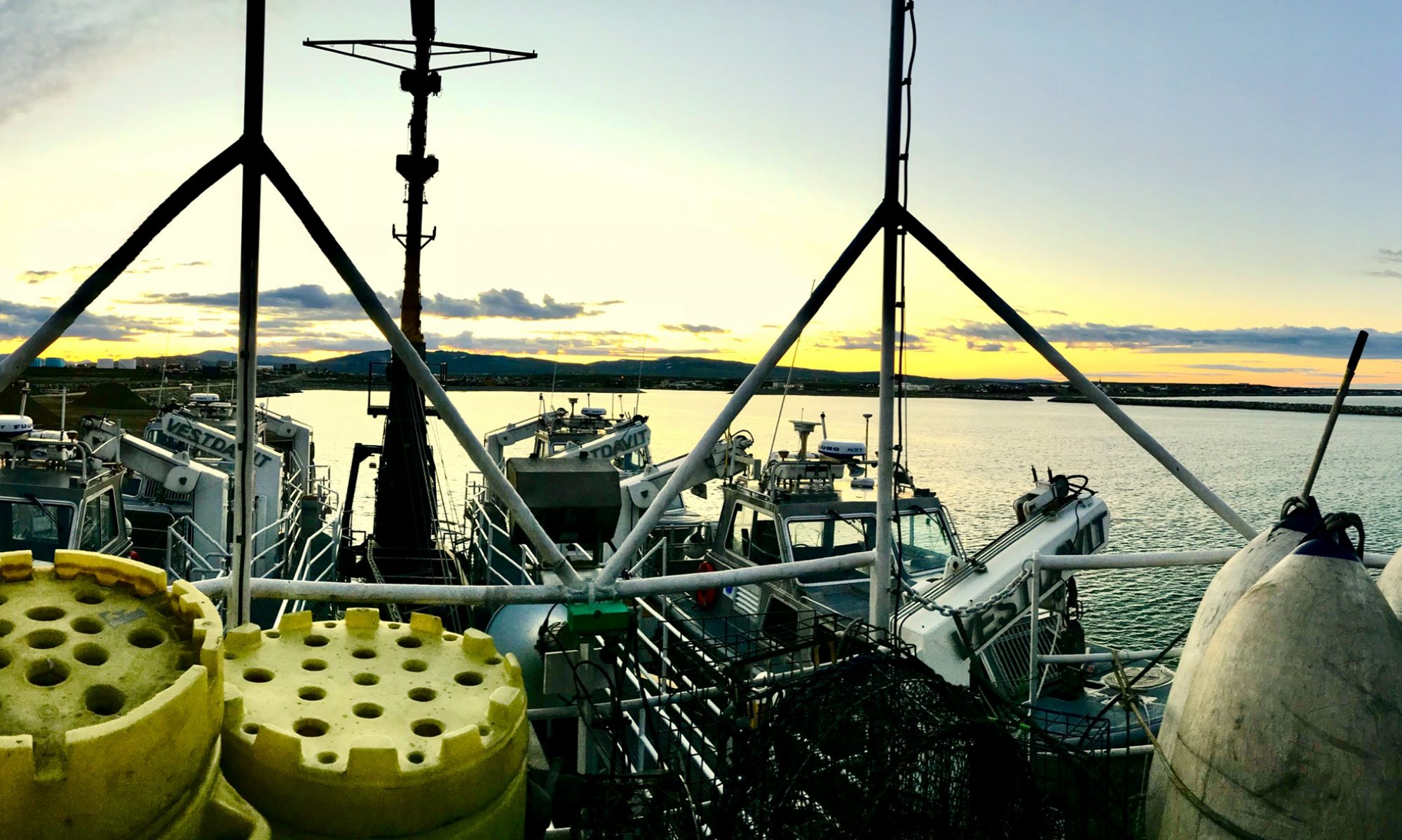
This was the thought that kept going through my head while we were mobilizing at the Seward Marine Warehouse and started unpacking gear as it was loaded onto U.S. Fish & Wildlife’s R/V Tiĝlax̂. We had to bring everything aboard in waves because there wasn’t space for it all at once. It was pretty incredible to see all of the supplies, gear and instruments that would be needed throughout the 10-day cruise, and my brain was spinning as I tried to imagine what all of it would be used for.

The more we unpacked and got everyone settled into their stations, the more it really sunk in that not only is all of this gear fascinating and cool (and maybe just a little heavy), but it is all extremely critical for the multifaceted research that the NGA LTER team is conducting. As I mentioned in my last post, there are many different disciplines that are being represented by the researchers aboard the ship, including productivity and phytoplankton, zooplankton, nutrients, dissolved oxygen, particulate matter, inorganic carbon, seabird and marine mammal surveys and physics. All of these pieces are important to take into consideration in order to paint a full picture of the NGA ecosystem’s richness and resiliency. Kind of like how deciding not to sauté your veggies before adding them to a soup will change the entire flavor profile, something would seriously be missing if any one of these disciplines and researchers were to not be a part of the NGA LTER project! I know, it’s definitely a stretch to compare making soup to the research happening aboard the ship, but it’s a fun comparison to make.
Every year, R/V Tiĝlax̂ usually travels 15,000 – 20,000 nautical miles and keeps a pretty busy schedule. It’s primarily used by the Alaska Maritime National Wildlife Refuge to sail out to the Aleutian Islands, and will also head to Southeast Alaska, the Bering Sea, and the Gulf of Alaska depending on the particular mission and what other institutions are also using it for research.
This past winter, R/V Tiĝlax̂ went through a big ole upgrade to keep up with its busy schedule and make sure everything is staying in top shape, so there were a couple of things that needed to get sorted out and tested before we could get going. In addition to the new A-Frame (more on that later), the ship essentially got an entirely new wheelhouse complete with brand new systems and instruments. So new, in fact, that the research equipment had a hard time connecting to them! Eventually the crew and science team got it all figured out, and the cable we were waiting on for the winch came in, which meant it was time to head to a nearby station called RES 2.5 out in Resurrection Bay the evening of September 11th.

It didn’t take long to get to the station, and once we arrived it was time to start the full round of sampling and try out the ship’s brand new hydraulic A-Frame. This was the part that everyone was most excited (and maybe a little nervous) about, as this is how the nets and CTD are moved between the deck and the water. Previously, R/V Tiĝlax̂ had a fixed line that hung off the stern that sometimes made deploying and retrieving equipment a little tricky, so this new A-Frame seems like it’s quite the game changer. It’s all really exciting, but there’s also a certain degree of uncertainty surrounding just how it’s going to work since it is brand new. Plus the A-Frame and winch are controlled separately, so there’s also a piece of wondering what it will be like to maneuver both things at the same time.

And the whole process went swimmingly! The crew and researchers worked together to get the CTD off the ship and into the water smoothly and safely. And then the CTD was off to start collecting data and samples at the first station of the cruise.
I’ve mentioned the CTD a couple times so far, but haven’t actually explained what it is yet. Every instrument on the ship is cool and important, but the CTD is really cool and important – without it, we wouldn’t be able to collect water samples and get real-time readings of all sorts of physical oceanography-related data points. So without further ado, I’d like to introduce you to a new friend of mine: the CTD!

This whole thing is called the CTD, but the CTD device itself is only a piece of it. The rosette is the metal frame that holds everything together, and the gray cylinders are all Niskin bottles, which are used to take a sample from a super specific spot in the water column by closing off both ends of the bottle at the click of a button. At the bottom, there are a bunch of different instruments that measure all sorts of things as the unit moves through the water column. And then get this: the CTD gets hooked up to a cable that’s run through the winch, which is connected to another cable that comes down into the lab and to a computer. Meaning all of the readings taken by the instruments are transmitted instantly to the computer system in the lab!
CTD stands for conductivity (or salinity), temperature, and depth, which are some of the many readings this device collects as it moves through the water column. Isaac Reister is a researcher involved with the project, and once the CTD is deployed, he’s usually the one at the computer watching data come in from the CTD. He was kind enough to answer my never-ending list of questions about the CTD, and he showed me which instruments are responsible for collecting which data during casts.

This is what Isaac’s screen looks like as the CTD moves through the water column. As you can see, there’s a lot going on! The graph on the far right shows how temperature, salinity, dissolved oxygen, and fluorescence change based on depth. The middle top shows nitrate levels and water density, and the one below shows photosynthetically active radiation (PAR) and beam transmission. Isaac explained that PAR is basically measuring the specific wavelength of light that phytoplankton can use to photosynthesize, and basically tells us how deep the photic zone goes. And then the beam transmission scans for particles in the water and tells us how turbid, or cloudy, the water is.

All of the data that the CTD collects is important for contextualizing the water samples taken from the Niskin bottles. Physics, biology, and chemistry are three broad disciplines that all go hand in hand when studying the NGA and the marine environment in general. The CTD collects a bunch of information about how physics and chemistry change throughout the water column, which can then be used to inform what’s happening on the chemical and biological levels. Without the CTD’s data-collecting superpowers and the Niskin’s ability to collect water samples from specific depths, this research would look WAY different!
Personal Log
I feel like I’m settling in quite nicely to life aboard R/V Tiĝlax̂. We’ve hit a solid stride of collecting samples at three or four stations every day, and I’m finding that I really love the feeling of getting rocked to sleep by the waves. I don’t love the rocking while I’m trying to shower, but at least it’s helping me laugh at myself a bit. I’m also learning I have a lot more tiny muscles in my ankles and feet than I previously thought, and boy are they getting a lot of use as I try to keep myself stable while the boat rocks in the waves.
The science team and ship crew are all so unbelievably knowledgeable, kind, and welcoming, and have been so patient with me while I ask millions of questions. It’s pretty incredible to have so many people who are all so passionate about what they do together in the same space, and I’m thankful they don’t mind taking time to share what they’re doing with me. I can’t wait to keep learning from them for another week!
Did you know?
There are three species of albatross that can be found in the Gulf of Alaska, and yesterday we saw all three! They are the Black-footed Albatross, the Laysan Albatross, and the Short-tailed Albatross, with the Short-tailed being the least common; their global population is only around 4000 total. The shelf break in the Gulf is an especially important feeding ground for these large seabirds, as well as for many other animals that call these waters home. This is because the shelf is an area of upwelling, where nutrient-rich waters from the deep rise up to the surface and become accessible to all of the life up top.


