Lauren Wilmoth: Get Ready! October 2, 2014

NOAA Teacher at Sea
Lauren Wilmoth
Aboard NOAA Ship Rainier
October 4 – 17, 2014

Mission: Hydrographic Survey
Geographical area of cruise: Kodiak Island
Date: October 2, 2014

Introduction 

My name is Lauren Wilmoth, and I have been teaching biology at Jefferson County High School in Dandridge, TN for 3 years.  Prior to teaching in Jefferson County, I conducted research on pipevine swallowtail (Battus philenor) caterpillars in East Tennessee as a part of my master’s thesis at the University of Tennessee Knoxville.  My research involved a lot of hiking in the woods and catching butterflies with my net.  Who wouldn’t enjoy that?  I learned a lot about how science works while obtaining my master’s degree, and now, as a teacher, I get to share my fascination with nature and my expertise with my students!

Portuguese Man-of-War
A Portuguese Man-of-War (Physalia physalis) like the one I saw as a child. Photo courtesy of NOAA.

I grew up in Alabama, and like many families in Alabama, mine spent many spring breaks at the beach.  We camped every year at state parks on the Florida panhandle.  It was on these trips that I began to appreciate the ocean as a fun and interesting place.  We enjoyed the dune trails and the peculiar dune ecosystems.  We even went deep sea fishing one time, and I didn’t get seasick!  (Hopefully, I will be able to say the same after this trip).  I distinctly remember one time when a Portuguese Man-of-War jellyfish (Physalia physalis) washed ashore.  It was the highlight of my trip to see this strange creature I had never even heard of! Although I grew up enjoying the ocean and it’s bounty (crab and shrimp are my favorites), I didn’t start to understand its importance until I became a biology major in college (oddly enough in the landlocked state of Arkansas).  No matter where you live, you are connected to the ocean through its role in our climate, our water cycle, and as the main source of oxygen on our planet among other things.  The ocean intrigues me with its mystery, and that is the reason I applied to be a part of this NOAA (National Oceanic and Atmospheric Administration) Teacher at Sea Program. I am thrilled about this once in a lifetime opportunity to help with hydrographic research off of the coast of Alaska this fall.  In fact, I learned the news of which cruise I would be on while at Dublin Airport after an amazing vacation with my husband in Ireland.  I checked my e-mail and let out an audible shrill of excitement.

Ireland
My mother-in-law and me at the Cliffs of Moher in Ireland earlier this summer.

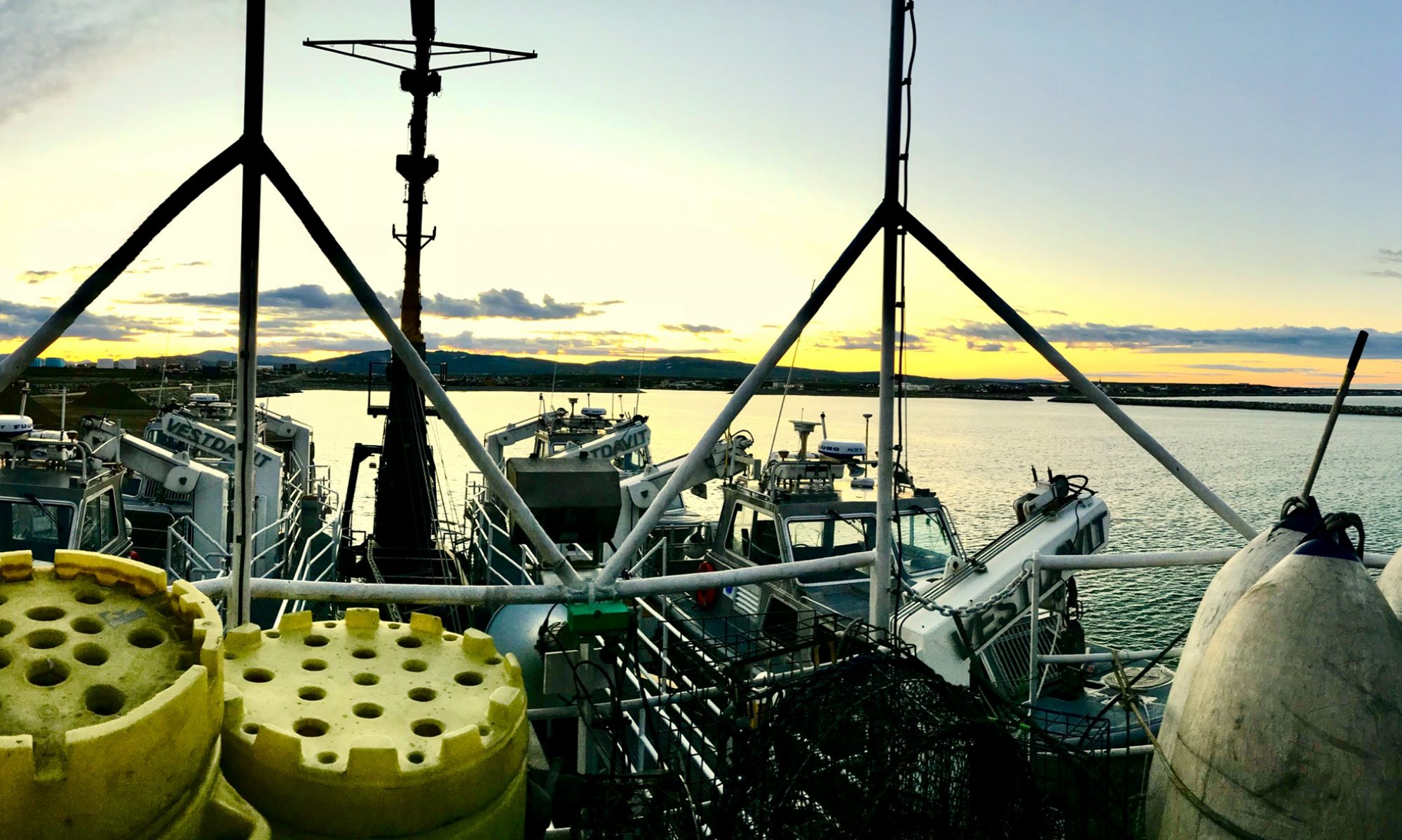
I have never been to Alaska, and I know very little about hydrographic research.  This cruise excites me, because I will have the opportunity to learn something complete new, and after the cruise, I will be able to share what I learned with my students and colleagues! In case you were wondering, hydrographic research involves mapping the ocean floor which is particularly important for safe navigation in these waters.  Also, hydrographic research can involve determining the composition of the seafloor.  If you want to learn more about hydrographic surveys, click on the link.  Of course, you can also learn more about our hydrographic survey by continuing to read my blog during my trip. To complete this hydrographic research, I will be working with the NOAA team aboard the NOAA Ship Rainier.  It contains a lot of fancy equipment used to complete these surveys that I hope to gain a better understanding of on this trip.  This is a large ship.  It is 231 feet long and is equipped with a dining area and 8 smaller boats!  To give you some perspective on its size, it would reach from the end goal line on a football field to the 23rd yard line on the opposite side of the field!  To learn more about NOAA ship Rainier click the link.  Stay tuned to my blog to hear firsthand what life aboard NOAA Ship Rainier is like.

Rainier through an iceberg. Photo courtesy of NOAA.

Cassie Kautzer: Survey Methods! August 22, 2014

NOAA Teacher at Sea
Cassie Kautzer
Aboard NOAA Ship Rainier
August 16 – September 5, 2014

Mission: Hydrographic Survey
Geographical Area of Survey: Woody Island Channel, Kodiak, Alaska
Date: August 22, 2014

Temperature & Weather:  11.5° C  (53° F), Cloudy, Rainy

Science & Technology Log

Today was ‘Day 4’ of surveying in the Woody Island Channel next to Kodiak, Alaska.  The Woody Island Channel is a very busy waterway leading ships, boats, and vessels of all sizes into Kodiak.  The problem at the moment is that much of the Woody Island Channel has shoals (shallow areas) and rocks.  This can be very dangerous, especially since the channel has not been surveyed or mapped since the 1940’s!  At that, in the 40s, surveyors were using Lead Lines to map the ocean floor.  Lead Lines were long ropes, marked with measurements, and with a weight at the end, that were thrown out to measure the depth of the water.  Lead Lines were considered very accurate for their time.  The problem with Lead Lines is that there was no way for surveyors to map the entire ocean floor–the lead line only gave a measurement of depth in one location (point) at a time.

Drawing of Lead Line Survey, formerly used to survey water depths one point at a time.

Today, NOAA Hydrographers use Multibeam Echosounders.  A Multibeam Echosounder uses sonar to send out hundreds of sound pulses and measures how long it takes for those pulses to come back.  The multibeam echosounder is attached to the hull, or bottom, of the survey launches.  To find out how deep the ocean floor is in an area, depths are generated by measuring how much time it takes for each of hundreds of sound pulses to be sent out from the echosounder, through the water to the ocean floor and back again.  The sound pulses are sent out from the echosounder in an array almost like that of a flashlight.

Image shows swath of echosounding from the hull of the launch.  Different colora represent different depths. (Courtesy of NOAA)
Image shows swath of echosounding from the hull of the launch. Different colors represent different depths. (Courtesy of NOAA)

The deeper the water, the wider the swath (band of sound pulses).  The more shoal (shallow) the water, the smaller the swath.  Basically, a wider area can be surveyed when the water is deeper.  This means that surveying near shore, near rocky areas, and near harbors can be very time consuming.  These surveys do need to be completed, however, if they are in navigationally significant areas, like the Woody Island Channel that Rainier is surveying right now.

Image of hydrographic survey methods as they've changed over time.
Image of hydrographic survey methods as they’ve changed over time.

Technological advances over the years have made it more efficient and more accurate to survey the oceans.

Using multibeam sonar, the Rainier has surveyed thousands of linear nautical miles of ocean in the past couple of years.  In 2012 the Rainier was away from its home port in Newport, Oregon for 179 days–surveying 605 square nautical miles and 9,040 liner nautical miles.  In 2013 Rainier was away from its home port for 169 days – surveying 640 square nautical miles and 7,400 linear nautical miles.  It is NOAA’s goal to get 10,000 linear nautical miles surveyed each field season between all four of its Hydro ships: Rainier, Fairweather, Thomas Jefferson, and Ferdinand R. Hassler.  Several years, the Rainier has come close to this on its own!

Personal Log

I have spent the last four days out on the survey launches, gathering data, with a bunch of amazing people.  I have had the opportunity to drive a launch several times, with skilled Coxwain and Able Seaman Jeff Mays supervising me and helping me adjust to the differences in driving/steering a heavy boat versus driving my car at home.  Jeff always took back over when we got to a rocky area or area that was shoaling up quickly.  I am grateful to him, however, for the opportunity.  As with any skill that needs to be practiced, I got a little better each time I drove.  (Trying to steer in a straight line/path on the water when dealing with wind, water currents, waves, wakes from other boats, and the boats themselves is tough! At least for me.  Coxwains Dennis Brooks and Jeff Mays make it look easy, and always kept me feeling safe aboard the launch boats!)

Me, at the wheel of a survey launch.  (Photo courtesy of HST Jackson Barry)
Me, at the wheel of a survey launch. (Photo courtesy of HSST Barry Jackson )

For My Students

Below is an update on my Alaskan Wildlife sightings.  Remember, these are all animals I have been within 20 feet of (except for the bear).  Along with the wildlife in the graph below, I have also seen hundreds of birds from a distance and several romp of otter (large groups).

Wildlife I have seen thus far, graphed using Create A Graph (nces.ed.gov/nceskids/createagraph)

Can you help me identify the pictures below?  It can be quite difficult to identify creatures and “stuff” in the dark ocean waters.

IMG_0129IMG_0138

What is it?
What is it?

Dana Clark : Alaska in 3D, June 30, 2014

NOAA Teacher at Sea

Dana Clark

Onboard NOAA Ship Fairweather

June 23 – July 3, 2014

Mission: Hydrographic Survey

Geographical area of cruise: South Coast of Kodiak Island

Date: June 30, 2014

Weather Data: Latitude – 56° 34.74′ N, Longitude – 154° 02.21′ W, Sky Condition – 1/2 clouds, Present Weather – clear, Visibility – 10+ nautical miles, Wind – 15 knots, Temperature – 10° C

Science and Technology Log

I had a great day yesterday on the launch gathering more hydrographic survey data. We had a pretty, sunny day with calmer waves until the afternoon. Then the wind and waves picked up and we were tossed around a bit. It didn’t help that we had to survey an area called Whirlpool Point that is nicknamed “the washing machine”! Here is an 18 second clip as we entered the washing machine until I had to turn off the camera so I could hold on with both hands. Note that at the beginning, she says she’s stopping logging the data and you’ll see why!  


Dana Clark and CTD
Dana Clark getting ready to deploy the CTD

In this top picture you can see me getting ready to lower the CTD (Conductivity, Temperature, and Depth) into the water. After about 5-7 minutes the CTD is raised and then connected to the launch’s onboard computer which uses special software to download the data from the cast. In the picture below you can see Pat Berube showing me how to connect it to the computer. Once we gather this along with the multi-beam sonar data, the day’s work is saved to a hard drive and turned in to the evening processing crew.

Pat Berube showing Dana Clark CTD connection
Pat Berube showing Dana Clark how to connect the CTD for data download

They take the raw data from the launches hard drive, copy it to the ship’s network, and convert it to a format that is readable by the mapping software. They apply correctors like sound velocity from the CTD, tide, and the vessel’s motion data to correct the multi-beam soundings in processing. Let me show you what some of their digital terrain models (DTM) look like. When you have a DTM of the seafloor, it shows the morphology of the seafloor in a range of colors and shows features like rocky areas, sand waves, and seismic faulting. These are statistical representations of all the multi-beam sonar soundings.

Below you will see two examples of the the seafloor generated by Pat Berube, a NOAA hydrographer, that show a 3D base surface. The first one just has the 3D multi-beam base surface. The second one is the same but it also has a chart draped over it. The chart ends up being the final product with the new soundings shown on it. Look at the bottom left model and you will see a reef in the bottom right, a green trench with rocks in it in the middle and at the top yellow area are sand ripples. The large round black spot in the middle is an island and the smaller black circle to the right of it is a small group of rocks. There is also another trench on the left in blue. The colors are added to see the features better. The numbers on the chart on the right are fathoms, which show the depth. Click on each to bring up a larger high resolution picture.

3D model of the seafloor
3D model of the seafloor, NW of Aiaktalik Island, Alaska. Photo courtesy of Pat Berube and NOAA
3D model of seafloor with chart
3D model of seafloor with chart overlay, NW of Aiaktalik Island,  Alaska. Photo courtesy of Pat Berube and NOAA


In the two pictures below it shows the actual land features of the island that is the black circle in the 3D map above and the rock outcropping that is represented by the small black circle to the right. These pictures show how what we see when surveying transfers to what we see on the charts.

Small island
Small island NW of Aiaktalik Island, Alaska


Rock outcropping
Rock outcropping NW of Aiaktalik Island, Alaska.


Scientist of the Day

Today I would like you to meet Cathleen Barry, a Cartographer for NOAA who is currently aboard the Fairweather. Cathleen is someone who makes maps, more specifically, navigational charts. And she fell into this field of work in the most unusual way. She was a recent graduate of California State University, Northridge, with a BS in Earth Science. She has loved maps since she was a child, but little did she know then that she would end up drawing maps for a living! Working as a beginning Cartographer in the Marine Geophysics department on campus, her professor tasked her with making a poster to advertise a NOAA expedition to the Arctic.

Cathleen Barry, NOAA Cartographer
Cathleen Barry, NOAA Cartogropher aboard the Fairweather, 2012. Photo courtesy of Cathleen Barry

The Marine Geophysics department was looking for graduate students to participate in a geophysical cruise to the Bering Sea aboard the NOAA Ship Discoverer, a 100 meter oceanographic research vessel. When the poster was complete she drew ten lines on it for sign-ups, and after thinking about it, she decided to put her name on the first line. They needed a cartographer to map during this trip and a career was born!

This career has sure evolved over the years. When Cathleen started out, cartographers drew with pen and ink on drafting paper and now it’s all computer generated. Her job is to use the bathymetric and features data collected to update America’s nautical charts. Earth’s crust is very dynamic and the seafloor changes all the time! When she retires, maybe around 2020, she will say goodbye to a field she has loved for over 30 years.

Personal Log

I have to tell you, typing a blog while my body gently sways from one side to the other is very strange. My abdominal muscles, gluteus maximus, and quadriceps are getting a workout as my muscles tighten to help me to to stay put! I do need the mini workout since the cooks here keep us well fed!

The weather here is so variable. The temperature on my last blog was 21° C and today it was 10° C with cold winds. I was glad I was not out on the launches today and was interested in working with the mapping on the ship until I heard and saw video of what was in the water today. The launches saw a large pod of about 40 orca whales playing about right by their boats! I was so bummed I missed it. Maybe tomorrow?! Then again, tomorrow I will be in a launch that is going to survey a section of the seafloor that has a possible shipwreck in it. Sunken treasure anyone?

Question: Which picture do you like better, the daytime picture of Joe and me on the crest of Cape Kaguyak (note the orange Ambar boat to the left and the white ship Fairweather anchored to the right) or the nighttime picture of the sunset from the flybridge of the Fairweather? You can click on pictures in my blogs to see them full size. Vote in the poll below!

Dana Clark, Cape Kaguyak, Alaska
Dana Clark and ENS Joe Brinkley atop Cape Kaguyak, Alaska
Sunset from the Fairweather
Sunset from the NOAA ship Fairweather, June 28, 2014

Dana Clark: Alaskan Launches, Tides and Bears, Oh My! June 28, 2014

 NOAA Teacher at Sea

Dana Clark

Onboard NOAA Ship Fairweather

June 23 – July 3, 2014

Mission: Hydrographic Survey

Geographical area of cruise: South Coast of Kodiak Island

Date: June 28, 2014

Weather Data: Latitude – 51° 12.83′ N, Longitude – 152° 29.54′ W, Sky Condition – 1/8 clouds, Present Weather – clear, Visibility – 10 nautical miles, Wind – 8 knots, Temperature – 21° C

Science and Technology Log

Dana Clark with Primary Antenna
Dana Clark with Ens. Joe Brinkley repairing horizontal control station, Cape Kaguyak, Alaska

Each day when I participate in hydrographic surveys I always tell the boat that today we need to see a bear. Recently, one launch survey crew saw a bear swimming in the water and it stopped and looked at them before swimming off to the land. This was my ideal situation. So yesterday I participated in a hydrographic survey and the driver got real excited for me when in the middle of a transit, he yelled that he thinks he sees two bears on the shore. As we use binoculars to see them we confirm that we have now seen…two horses! This sighting was by all accounts very interesting to the crew since no one knew that there would be wild horses on an island in Alaska. However, the day’s sightings of wild cows and horses did nothing for this Texan.

Bear chewed solar panels
Bear chewed solar panels, Cape Kaguyak, Alaska

Today, I did something different. I went with a survey group out in an orange work boat called an Ambar. This boat is different than the launches because it is a jet boat, which means it has an impeller versus an exposed propeller. This way, it can bring us right up to shore.

We had a two-fold purpose, first to repair a horizontal control station, HorCon for short, and then to make tide observations. The HorCon station logs GPS (Global Positioning System) data. The station has a GPS atenna and recording unit, radio modem antenna for remote communications, car batteries to power everything, and solar panels to charge the batteries.The antennas are on a fixed tripod. For this piece of equipment, the higher the better! It allows us to achieve better horizontal and vertical positioning for our multi-beam data. It tracks the satellites overhead, the same as our survey launches do, but since it is in a known position we can use these data to remove any atmospheric interference.

We hike a large cliff and at the top is the HorCon station. As we crest the hill, it is Joe in the lead, then Joy, then me. Joe says stop, there’s a bear on the ridge, and it’s only about 200 feet away! We quickly gather together to look bigger to the bear and it decides to amble away over the ridge. Then, two baby cubs that we hadn’t seen go following behind her! My day is made perfect. When we get to the horizontal control station we find out it wasn’t working because the bear had chewed the solar panels and pulled a cord out of the primary antenna. Check out the huge bite mark in the picture above! Joe repaired the cord, made sure the other solar panels were still connected, and we had the station up and communicating.

Dana Clark Tide Observations
Dana Clark reading water level off the tide staff, Japanese Bay, Alaska

First mission accomplished then off to do tide observations. Mostly, this consist of sitting on the beach and recording the current water level every six minutes. It was a beautiful sunny day and Japanese Bay, Alaska was the ideal place to be. On shore there is a gauge, tripod and antenna with a wire that attaches to an orifice underwater. There also is a staff in the water with measurements on it. A constant flow rate of air is maintained in the orifice underwater so we can measure the pressure of the water column. More pressure = higher tide. Just think, at higher tide there is more water pushing down on it, hence more pressure. The gauge correlates pressure values with how much tide we are actually seeing. So we take staff observations over two hours and every six minutes we take a minute of readings of how high the water is on the staff. We then download the data from the gauges and compare it to our visual data. It’s important to go out every week to get readings and make sure no bear or storm has bothered it.

Why do tide observations every week? The scientists here often see tide ranges in Alaska from -5 feet to +25 feet. They need to know the correct tidal effects so when they take depth readings with the multi-beam sonar they can adjust those depths to remove tide and chart the soundings at MLLW (Mean Lower Low Water), which is the chart datum. This is because the water level is changing every day with tides and they need to be accurate. This is real important in shallow areas.

Scientist of the Day

Tami Beduhn
Tami Beduhn in Barrow, Alaska, 2012. Photo courtesy of NOAA Fairweather

Today I would like you to meet Tami Beduhn, a Chief Survey Technician for NOAA who is currently aboard the Fairweather. She is the head of the whole hydrographic  survey department here on the Fairweather! She is not in NOAA Corps but is a wage mariner, which means she is getting sea time assigned to the Fairweather in order to get her Able Seaman credentials and she is not part of the uniformed services.

She’s here because she wants to be on this ship doing the work she does and her CO, CDR Zezula, sure is glad she’s here. He says, “Tami is technically outstanding, incredibly dedicated, and has a strong work ethic. She is the bedrock of the science, especially with a lot of new people this year, and I rely on her leadership to guide and mentor as well as maintain the high quality Fairweather is known for.”

As the chief survey technician, she manages the survey department and is responsible for quality assurance and control of hydrographic data aboard the ship. The highlight of her job is training the new recruits. Tami believes the key to a good hydrographer is having a good attitude, good computer and math skills, and a willingness to learn. And they must enjoy teamwork since living on a ship is like having a family that works together. Tami graduated from North Carolina State University with a BS in Marine Science and a Concentration in Geology and came straight to NOAA. Here’s a woman who’s at the forefront of her field, all at the age of 27 years old!

Personal Log

What a great day I had today! I saw a bear with her two cubs, two orcas, and three bald eagles! Here is a poor quality shot of the bear with her cubs below her and a little to the left. Below that is a bald eagle. The third picture  is me on top of the hill after fixing the HorCon station. You can click on any picture in my blogs to see it full size. And after checking out the pictures, make sure to vote in the poll below. The weather is perfect and I even got a little sunburned today. Life is good being a hydrographer in Alaska in the summertime!

Brown bear and her cubs
Brown bear and her cubs, Cape Kaguyak, Alaska


Cape Kaguyak
Bald Eagle, Cape Kaguyak, Alaska
Dana Clark Cape Kaguyak, Alaska
Dana Clark on top of Cape Kaguyak, Alaska


Question: What is this? Plant or animal? Answer in the poll below.

Japanese Bay, Alaska

Dana Clark: Alaska’s Rocky Seafloor, June 26, 2014

NOAA Teacher at Sea

Dana Clark

Onboard NOAA Ship Fairweather

June 23 – July 3, 2014

Mission: Hydrographic Survey

Geographical area of cruise: South Coast of Kodiak Island

Date: June 26, 2014

Weather Data: Latitude – 56° 45.40′ N, Longitude – 154° 9.99 W, Sky Condition – 7/8 clouds, Present Weather – clear, Visibility – 10 nautical miles, Wind – 3 knots, Temperature – 14° C

Science and Technology Log

Dana Clark on the fantail
Dana Clark on the fantail of the Fairweather

Each morning there is a meeting of the launch crew on the fantail, which is aft, which means the back deck of the boat. You need to wear your hard hat and your PFD which stands for Personal Flotation Device. It is really great that the life-jacket is embedded into the jacket. Wednesday I went out on a launch, a 28 foot boat, and attempted to collect hydrographic data. However, the weather did not cooperate. We were tossed around by winds of 30 knots, which is approximately 34.5 mph, and 5 foot swells and waves. I found out that swells are large scale rollers of water and waves are choppy. Swells have more amplitude, a lot of energy, are larger, and are driven by far off (can be thousands of nautical miles away) weather storms or very high or low pressure systems. Waves are surface wind driven, choppy, smaller, and have more pitch. You can have either one by itself or you can have both together, either going the same direction or cross-ways. Well, we had both swells and waves from different directions at the same time! The waves had whitecaps and the swells were just big! I couldn’t even get out my camera to take a picture because I was holding on to the rail in the cabin with both hands, trying not to fall or get in the way of the scientists as we pitched about. And, can you believe, no seasickness! We were called back to the ship after the current we measured registered at 5 to 5.5 knots, much too fast for us to put our CTD (Conductivity, Temperature, and Depth) into the water. The professionals aboard the Fairweather put a premium on safety and knew it was time to call an inclement weather day and have the launches return. By the way, the picture at the left was taken on another day. How quickly the weather can change!

Mark Bradley NOAA Fairweather
Mark Bradley using multi-beam sonar 3D imaging to confirm uncharted rock in navigational waters

Today, it was wisely decided that I would be exposed to the science on the ship while the launches went out and the weather system finished passing through. I was able to learn from Mark Bradley who is a hydrographic survey technician. Some days he goes on the launches and uses the multi-beam echo sounder to map sections of the seafloor. Other times he works on the ship processing the data that has been collected and preparing the descriptive report. Today he was comparing old charts to the new survey soundings that a launch had previously recorded while they were picking up holidays during a low tide. Remember, holidays are where there are gaps in the data. While resurveying this holiday they saw a rock sticking out of the water so they came back later in the day during high tide and used the multi-beam sonar to get a depth measurement for the top of it. Mark then took this data and compared it to the old charts. The old charts didn’t even have this rock recorded! He used his 3D imaging and measured the rock at 83 meters wide and 30 meters tall. It was huge! At low tide, it stuck a meter out of the water. This rock was in navigational water and easily could have damaged or sunk a boat. Mark confirmed another nearby rock was 3 feet under the surface so if you were in a boat you wouldn’t see it. This second rock was a known rock; however, on the old chart it was at 42 feet below the surface, not 3 feet! So there is a great need to update our navigational charts since the old ones can be over 100 years old. Eventually, this chart he’s updating will be revised and published by NOAA Charting Division.

Kristin Golmon NOAA Fairweather
Kristin Golmon on the bridge of the Fairweather

Scientist of the Day

Today I would like you to meet Kristin Golmon, a Junior Officer for NOAA who is currently aboard the Fairweather. This Texan is a woman who is in charge! She is an ODD which stands for Officer of the Deck. Because the CO, the Commanding Officer cannot be on the bridge (the space that you command the ship from) all the time, an OOD directs the bridge when he is below, and is the direct representative of the CO. She drives the ship, does survey work, does administrative duties and currently she’s also working towards her coxswain qualification. Today she is in charge of the bridge, working on charts, communicating with the hydrographic survey launches, and recording the weather. Kristin has always been curious about how stuff works. In elementary school she invented a t-shirt folding machine out of cardboard. You would put a t-shirt on it and it would fold the shirt and you would pull the cardboard out! She always did well in math and science and had her parents, a geologist mom and a mathematician dad, as her role models. She attended Trinity University in San Antonio, Texas and earned a BS in Engineering Science, a minor in Mathematics and another minor in Environmental Studies. She was a senior in college when she heard about NOAA Corps and liked their science mission. She also liked the idea of serving her country in a uniformed service.

Casey Marwine polar bear
Polar bear mom and her two cubs, Artic Ocean, 2012.
Photo courtesy of Casey Marwine.

Being a woman in charge has its challenges when working in a male dominated field but she has the respect of her peers and the CO. Currently, the head of NOAA is Dr. Kathryn Sullivan, a geologist and an astronaut who was the first American woman to walk in space. When asked what she liked best about her job, Kristin said that it’s a pretty cool experience being in charge of a ship, especially when going through narrow passages that take a lot of planning like the Inside Passage in Alaska. She also loved seeing polar bears, a mom and two cubs, while doing the Arctic Reconnaissance Survey!

Personal Log

Dana Clark Fairweather room
Dana Clark working in her stateroom on the Fairweather

Check out where I live on the ship.  This is my room, or as we call it aboard ship, my stateroom. Notice the hard hat and survival suit above the bed and the life jacket above the television! I also have a desk that folds up when I don’t need it.  It was a treat to have my own room. The shower and the head (what they call the bathroom) is across from my room. Also on the ceiling of the hallway outside my bedroom is an escape hatch! Then in the floor above is another hatch. This way I can safely get up to the upper decks if my hallway gets blocked or flooded.

Dana Clark Escape Hatch
Escape hatch in the hallway ceiling on the Fairweather


Question (or Answers): Today’s question will actually be answers! And speaking of polar bears, remember my question from my first blog when I asked you the question of what were the odds that I would see a polar bear? Well, the answer is none. The polar bears are much farther north and are found in the Artic region of Alaska, Canada, Greenland, and Russia. Unfortunately, I will not be seeing any polar bears. My poll last blog asked you to identify a picture as plant or animal. Many of you voted and it was a pretty split vote between the two! The picture is of bull kelp, a plant, and its scientific name is nereocystis. It can grow huge and I have seen some big ones here in Alaskan waters.

I will leave you with this shot of beautiful Kodiak, Alaska that I took from the ship. This is where we are anchored this week.

Kodiak, Alaska
Kodiak, Alaska, June 2014