Clare Wagstaff, June 9, 2008

NOAA Teacher at Sea
Clare Wagstaff
Onboard NOAA Ship John N. Cobb
June 1-14, 2008

Mission: Harbor seal pupping phenology and critical habitat study
Geographical Area: Southeast Alaska
Date: June 9, 2008

CO of the COBB and a NOAA diver heading down to explore the hull of the  COBB. They took knifes with them expecting to find netting caught, but no such luck.
Divers heading down to explore the hull of the COBB. They took knifes with them expecting to find netting caught, but no such luck.

Final Log 

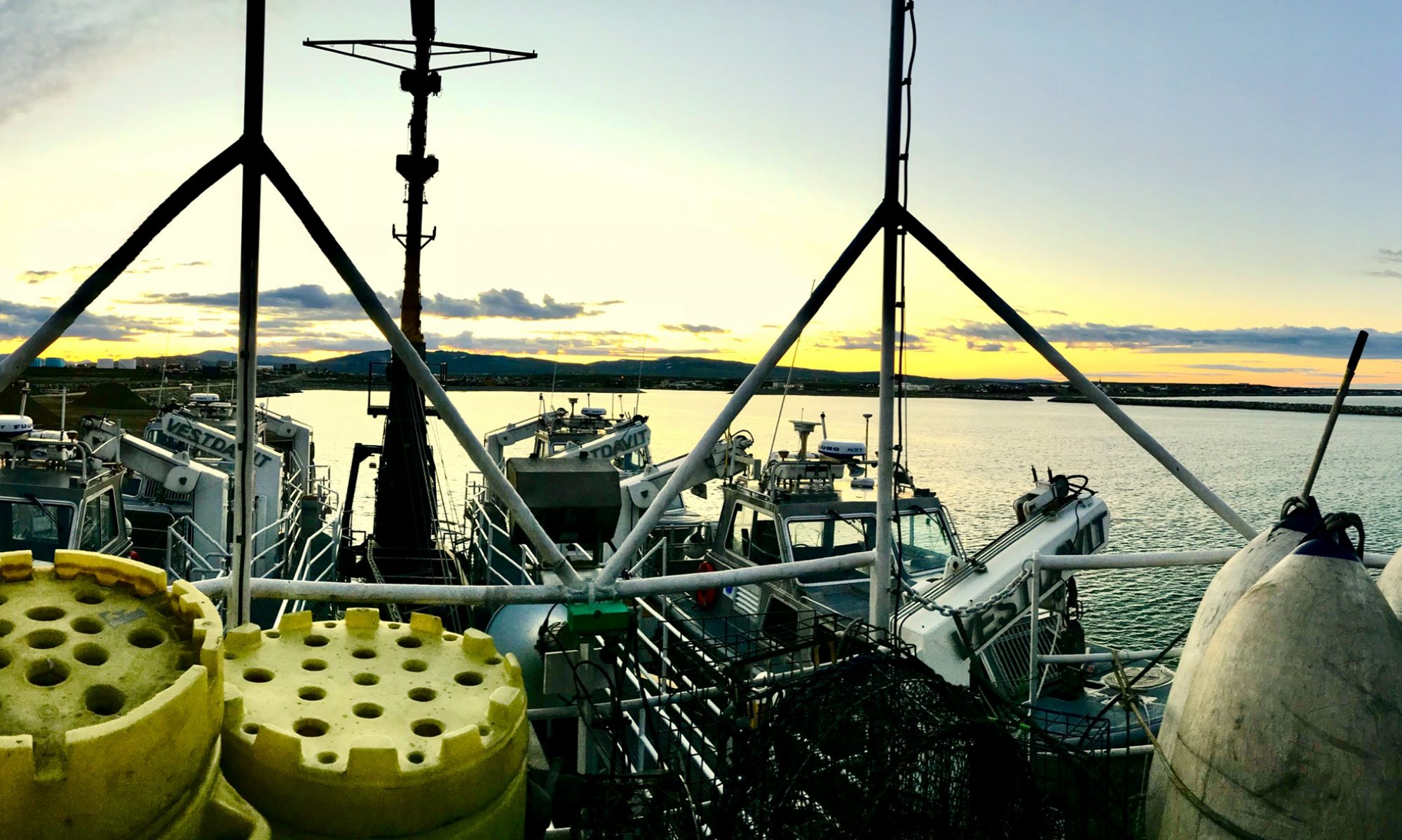
I write this last log sat at the dinning table in the galley of the JOHN N. COBB. The last few days have been difficult here on the ship. Unfortunately the mechanical difficulties that the vessel suffered on June 3, have proven to be a little more serious than was originally hoped. The initial diagnosis was of some sort of obstruction, probably fishing line from a trawler, caught in the propeller. After the final leg of our journey, being towed by a much larger NOAA ship, the Rainier, and then finally the last mile by a tug boat, the COBB limped into port in Juneau. Here, the CO and two experienced NOAA divers explored the hull of the ship but unfortunately found nothing obviously wrong to report. With external problems to the ship ruled out, the crew looked internally into the ship’s engine. The engine on the COBB is 59 years old. Similar types where used in the past in trains and submarines. This engine is massive, about 20ft long by 4ft wide. In fact the ship was actually built around the engine, meaning any serious problems with it are extremely difficult to get to and fix. After closer inspection by Sam and Joe, the COBB’s engineers, they discovered that the crankshaft had a large fracture in it. With only two engines of this type known to still be in use, the COBB being one of them, finding a spare crankshaft to replace it is likely to be difficult. It seems as if the COBB may have sailed for the last time under her own power.

A huge crack in the crankshaft, which is essential as it connects all the cylinders of the engine together and makes them rotate.
A huge crack in the crankshaft, which connects all the cylinders of the engine and makes them rotate.

One of the biggest aspects of our cruise was meant to be the last week: studying the haulout sites in two large glacial areas in Tracy Arm and Endicott Arm. With the COBB out of action, I decided to jump onboard a tourist cruise that took a small group of us to the Tracy Arm fjord. It has two picturesque tidewater glaciers are set at the end of this long fjord. Along the journey down the fjord, the step cliff face rises vertically out of the water.  The captain maneuvers the small boat around massive icebergs, with the thought of the Titanic always in the back of my head, I am pleased he goes so slowly. These massive chunks of ice that have broken off a glacier and can float for many miles down stream and out to open water. They can be made of ice, possibly a thousand years old, and are very impressive floating ice blocks with an intense, bright blue color. Light is made up of many colors, all blended together. When light hits an object, some of its colors are absorbed, while others pass through it. Which colors are absorbed depends on the composition of the object: what it is made up of. In this case, the densely packed ice is thick and absorbs red and yellow light, leaving only blue light to be seen. Thinner ice appears white as all light passes through it.

A massive floating iceberg located in Tracy Arm fjord.
A massive iceberg located in Tracy Arm fjord.

As we got closer to the North Sawyer glacier: seal pups galore! It seemed every direction I looked there was a mother and her pup! Dave had spoken about this area to me and pointed out things to look for. Some distance off from our boat, I could see two juvenile bald eagles sat on the ice in very close proximately to a larger seal. Apparently the afterbirth leaves pinkish / red stains visible on the ice, is a tasty meal for these birds, and they were sat there waiting for the opportune moment to enjoy it! There was though one seal that stood out for all the hundred of others. This seal had a transmitter attached to the top of his head and what I later found out to be, a heart rate monitor around its chest! The seal did look a very strange sight and was easily spooked back into the safety of the water. Earlier this season, Dave had been helping the Alaskan Fish and Game department tag seals in the Endicott Arm area, some 40 miles from here so this seal had traveled some distance. The transmitter attached to its head relays information of its location and details from its heart rate monitor. Measuring the heart rate of the seal is used to study the stress placed on the animal in regards to cruise boats and their close proximity. A seal under stress will expel more energy as it swims away from the danger. Being in the water also means that more energy is expelled in thermoregulation to maintain its body temperature. From this sighting Dave was able to report back to the Fish and Game department that this seal had been spotted, alive and well!

Just one group of many of the seals present in Tracy Arm.
Just one of many of the seals in Tracy Arm.

Although this seal did look quite funny to the human observers, it should think it lucky that it was just a little bigger; otherwise a video camera would have been attached too! Not to worry though. As the seal molts, as they do each year, the transmitter and heart rate monitor, which is glued onto the seal’s fur, will come off! While the boat was sat stationary in the water near the South Sawyer glacier, there was a loud cracking sound. This signaled a carving of the ice from the face of the glacier. It sent ice crashing into the water with some force and in turn a wave was created that sent our boat rocking. Over the 45 minutes we were there, this braking up of the glacial ice happened four times. Looking out to the seals on the ice in this area, I wondered why they would stay on the ice so close to where this was happening, as it couldn’t be a pleasant ride with all the rocking. As it happens, these seals love this area, for exactly that reason. As the ice hits the water, it mixes the water below, sending the seal’s food source such as shrimp, closer to the surface. Basically the carving action brings dinner just one step closer to them – buffet service with a great view!

A tagged harbor seal with a transmitter attached to its head and a heart rate monitor to its chest.
A tagged harbor seal with a transmitter on its head and a heart rate monitor on its chest.

I have had just the best time onboard the JOHN N. COBB. Although my cruise was much shorter than I had expected, I saw many wonderful things that I had never done so before. I think that if you have to be stranded anywhere for a week, Alaska seems like a pretty good option to me!

Teacher at Sea, Clare Wagstaff in front of South Sawyer glacier.

Clare Wagstaff, June 5, 2008

NOAA Teacher at Sea
Clare Wagstaff
Onboard NOAA Ship John N. Cobb
June 1-14, 2008

Mission: Harbor seal pupping phenology and critical habitat study
Geographical Area: Southeast Alaska
Date: June 5, 2008

NOAA Teacher At Sea Clare Wagstaff, Jon and Dave getting ready to depart the COBB in the JC-1.
NOAA TAS Clare Wagstaff, Jon and Dave getting ready to depart the COBB

Weather Data from the Bridge 
Weather: Overcast
Visibility (nautical miles): 10
Wind Speed (knots): 6
Wave Height (feet): 0
Sea Water Temp (0C): 8.8
Air Temp (0C): 11

Science and Technology Log 

We are still anchored just outside of the native Alaskan village of Kake. Apparently another NOAA ship, the Rainier, is on its way to tug us back to Juneau late tonight. There was good news though! Dave knew of some haulout sites that he had observed and recorded data from in 2004. They were within approximately seven miles of where John N. COBB was located. So once again, we boarded the JC-1 and off we went!

Equipment on the Skiff 
The skiff is only a small-motorized boat but it can safely carry seven people and is essential in getting scientists to places unreachable by the COBB. The JC-1 is equipped with GPS, which also includes a Fathometer and depth gauge. Other basic equipment includes a magnetic compass and tachometer. Essential to any mission in the skiff is a console mounted and handheld radio so that we can stay in communication with the COBB. The operator of the skiff is required to have radio contact with the ship every hour and state our location for safety reasons. Flares, line bags and a first aid kit, all mean that our expeditions out on the JC-1 should be safe and enjoyable!

Seal Observations    
Although we saw lots of seals today, none of them from a distance of less than 200 meters. It seems these seals where much more skittish than at other areas we had previously visited and for good reason. Today’s haulout sites were within a few miles of a local village. Here, native Alaskan’s are still allowed to hunt seals. The seals we observed today seemed fully aware of their possible fate if they allowed us to get to close. On a more positive note, I am getting better at making estimates of numbers from a distance and spotting the pups in a large group. When they retreat to the water it is quite easy to spot mother and pup, as they tend to be very close together, with one head much larger than the other!

Harbor seals near Kake.

Recording the Data 

Dave Withrow uses the GPS to record new sites as well as plot routes to old sites.

So what happens to all the data that we collect out at sea? Dave processes all the results we collect into a spreadsheet. Here the data is organized by ‘waypoint’ (name of location and/or latitude and longitude); it also displays the number of adult seals and pups, a long with environmental data such as tide height. Through some fancy GPS work, Dave can also record and download the route we took in the skiff, our speed and time. Plotting all this information together, gives a clear picture of patterns in the results collected. With his digital camera, Dave can also download the photos he has taken of the seals and through the wonders of modern technology synchronized them with the GPS information. This then links pictures taken at a specific site electronically to the recorded data.

In the past five years of this study, the proportion of adult seals present with a pup has remained approximately the same: 25% on rock substrate and approximately 70% on ice. Unfortunately because we have been unable to study many sites this season, the data we collected is inconclusive. However, with the effects of global climate change it seems unlikely that these percentages, particularly of pups on ice haulout sites, will continue to be as high. Adding to this data over the preceding years seems an absolute necessity for scientists to get a greater picture of the harbor seal population and its relating habitat.

A sea squirt? I will have to look it up when I get home.

Personal Log 

For the first time on the COBB, I slept through the night and well past my usual 04:00! I think I am starting to get used to this way of life. The crew on board the ship are light hearted, yet committed to their jobs: a good combination to be around onboard a ship like the COBB. Yet being stuck in Kake is really frustrating. Breaking down out at sea is not quite the same as doing it in a car: things take a lot longer to happen out here! Knowing that I will probably not get to see the glaciers, being so close is pretty heartbreaking. I’m keeping my fingers, toes and anything else crossed that the COBB gets fixed and ASAP!

“Animals Seen Today” 

While Dave and I were exploring the tidal pools on one of the small islands around Kake, we found this interesting creature. Partially buried in water, Dave dug it out to expose a rather funny shaped animal that ejected water from one end!

The bald eagle, majestic and beautiful!
The bald eagle, majestic and beautiful! 

Clare Wagstaff, June 4, 2008

NOAA Teacher at Sea
Clare Wagstaff
Onboard NOAA Ship John N. Cobb
June 1-14, 2008

Mission: Harbor seal pupping phenology and critical habitat study
Geographical Area: Southeast Alaska
Date: June 4, 2008

Weather Data from the Bridge (information taken at 1200) 
Weather: Overcast and light rain
Visibility (nautical miles): 10
Wind Speed (knots): 16
Wave Height (feet): 1 – 2
Sea Water Temp (0C): 8.2
Air Temp (0C): 12

Day 4 

Oh what a rough night! Our anchor site was in a rather exposed channel just east of Warren Island and the ship was definitely rolling. So much so, I found the best way to secure myself in bed was to wedge my body in between the mattress and the woodened bed frame! At approximately 02:00 this morning the U.S. Coast Guard (USCG) cutter, the Anacapa, arrived from Juneau to tow us part of the way back to port. The USCG boarded the 250-ton COBB around sunrise and secured a towing line for the long return journey.

USCG Cutter Anacapa. It towed us from Warren Channel (55054’N 133049’W) to Kake (56057’N 133056’), 90 nautical miles to Juneau!
USCG Cutter Anacapa. It towed us from Warren Channel to Kake, 90 nm to Juneau!

Disappointed that this might signal the end of the cruise, Dave and I were left with little to do but read, listen to music and partake in a few hours of whale watching as the Anacapa pulled us along at approximately seven knots. At around 18:00 the USCG left us for another mission and the COBB was once again anchored down for the night near the small town of Kake. From the ship this native Alaskan town appears very small and quite rundown, although I did see a very new looking building that said ‘High School’ on it. Now once again stranded, the responsibility falls on the CO and XO to find us another tow the last 90 nautical miles back to Juneau. But with tugboats in the area all already with a full schedule and being astonishingly expensive, it seems unlikely that the journey home will be a quick or cheap one! However, the crew and I do get cell phone reception here, so all is not lost. A quick phone call back to our loved ones helps us all feel a little better about the day’s events.

Science and Technology Log – Whale Identification 

Although Dave and I were not able to venture out in the skiff today, I was able to observe, at a great distance, a number of humpback whales. But identification of these marine mammals is not as easy as it seems. Whales are mammals in the order Cetacea, along with dolphins and porpoises. Cetaceans spend their entire life in water: feeding, mating, giving birth and raising their young in this aquatic environment. They have adapted to breathe through a blowhole on the top of the head. The species we will most commonly observe during our cruise fall into two suborders: toothed whales (Odontoceti) and baleen whales (Mysticeti).

For the huge mass that a whale occupies, rarely do you see the majority of its body for identification. To accurately identify the correct species you need to make a number of observations regarding three main areas. Identification starts with observations of the whale’s blow (expelled air), in regards to the shape, height and angle. Baleen whales have two nostrils and toothed whales have one, which influence the pattern created by the blow. If observed head on, this is a simple way to distinguish between the two suborders. So far on this cruise though our observations have been from such a great distance away (minimum of half a mile away) that it has been difficult for me, a beginner, to make any accurate observations.

Screen shot 2013-04-19 at 9.01.39 PM

The next observation to make is of a whale’s dorsal fin that is located on its back and displayed, if present, when it surfaces and/or dives. If present, its size, shape and location should be recorded. The last basic observation is of a whale’s fluke and its shape. The most common whale seen in the southeast Alaska is the humpback. Protected from commercial harvest since 1966, it is still endangered and so seeing it is a very special occurrence. A humpback whale’s general characteristics are a two-nostril blow that is generally broad and bushy. It normally blows between four and ten times before diving. The dorsal fin is exposed as it blows but it is small in comparison to the rest of its body mass and located two thirds of the way along its back. Finally, its broad flukes tend to exhibit an irregular trailing edge and are displayed as it dives. The markings displayed on the whale’s fluke are unique to the individual, like that of a fingerprint, and allow scientists to track individual whale through sightings. Of course this is over simplifying things, but it gives me as a beginner a place to start!

“Did You Know” 

The Northern Right whale was named the ‘right’ whale by commercial whalers because it was easily approached, floats when killed, and is rich in oil. Today it is endangered and protected since 1935. Estimates suggest the population in the Alaska region could be as low as 100-200 individuals.

Clare Wagstaff, June 3, 2008

NOAA Teacher at Sea
Clare Wagstaff
Onboard NOAA Ship John N. Cobb
June 1-14, 2008

Mission: Harbor seal pupping phenology and critical habitat study
Geographical Area: Southeast Alaska
Date: June 3, 2008

Weather Data from the Bridge (information taken at 1200) 
Weather: Overcast
Visibility (nautical miles): 10
Wind Speed (knots): 12
Wave Height (feet): 3
Sea Water Temp (0C): 8
Air Temp (0C): 10.5

Setting off in the JC-1 skiff for a morning of harbor seal observations.
Setting off for a morning of seal observations.

Science and Technology Log 

This morning Skilled Fisherman (Mills), Dave and I headed out at low tide to explore an area called Big Port Walter. This is located in the next bay over from Little Port Walter where the COBB had docked for the night. Dave had not explored this area before and so he was keen to see if there were any new locations he could record. Sure enough, not long into the ride in the skiff, we came across a rocky reef and a group of harbor seals. Carefully, Mills brought the skiff around to the opposite side of the small island for us to disembark and walk gingerly over the slippery rocks covered with kelp and algae to get a closer look at these beautiful mammals. We were careful to keep a low profile and not make any large silhouettes that could alert them to our presence.

Identifying a Harbor Seal 

The question is, who is watching whom? Seals are mammals and so have hair covering their bodies. The underbelly of the seals pictured appears still wet, but their backs have dried in the sun and so appear more fur like

The similarities between the Alaskan Pinniped species can make the initial positive identification of a harbor seal (Phoca vitulina) challenging to the untrained eye. In the locations we are studying on this cruise the only seal species likely to be encountered is the harbor seal. However, these seals still have relatives that look very similar to them. Harbor seals, sea otters, California sea lion and Steller (Northern) sea lion are all carnivorous mammals in the suborder Pinnipedia. These animals have developed adaptations for deep diving, swimming, thermoregulation, water conservation and great sensory adaptations and can be easily misjudged in the water for one another.

So how can we tell them apart? Sea lions have external ear flaps (these are absent in seals) and use their long front flippers for propulsion. Otters are generally smaller and spend a large proportion of their time floating on their backs. A seal though does not do this, has shorter front flippers and is not as agile on land. Their appearance reminds me of an over inflated sausage-shaped balloon! Graceful underwater, they struggle and look awkward on land. Dave informed me that both the male and female harbor seals appear the same size and shape, making it difficult to tell them apart. Today I observed a variety of different colors of fur, ranging from nearly all white through to nearly all black. The fur markings also vary. Spots, rings, and blotches are common variations. These colorations and fur patterns of a seal are believed to be quite random. A mother lighter and more spotted in pattern does not guarantee an offspring of the same appearance. To date, I have only observed one pup, although Dave, with his keen eyes and experience, has recorded quite a few. Pups have no obvious markings to identify them by. However, they are smaller and will be generally located next to its larger mother, possibly even suckling. Although seals tend to haul out in large groups for safety, the mothers of particular young pups may be located towards the edge of the crowd.

The disused factory in Large Port Walter.

Further Exploring 

We recorded a total of 17 seals and three possible pups this morning but our exploration didn’t end there! Further down into the bay we came across an old abandoned salting or canning factory probably for Herring, estimated to be from around the 1950’s. Broken down and severely rusting from the extreme elements and the effects of saltwater, it looks like something from a sci-fi movie! Its location here was probably due to the ready supply of fresh water from the impressive waterfalls and fast running stream close by. Its sheltered location probably protected it from the bigger storms and the deep water of the bay would have meant larger ships could have transported goods easily to and from it. 

NOAA Teacher At Sea, Clare Wagstaff, in her survival suit on the beach at Lovers Cove, Big Port Walter.

Personal Log 

Today has been full of highs and lows. Seeing my first group of seals up close was something magical! Although we only observed them for approximately ten minutes, to see them so close and in the wild was amazing. Each seal seemed to have a personality. One scratching its face, another making grunting noises at another seal that appeared to be too close. As Dave and I sat there, it became obvious that a few of the seals were aware of our presence, their heads poking up looking at us. It made me wonder, who was really studying whom?!

Disaster on the COBB! 

Unfortunately, the rest of the COBB’s day was not so successful. Around 17:00 hours the crew heard a loud gratering sound coming from the ship as we were making our way to San Fernando Island. According to CO Chad Cary, a propulsion casualty has left us now anchored near Warren Island (550 54’N 1330 49’W) and the US Coast Guard is in transit to tow us part of the way back to Juneau. Hopefully, there a dive team will be able to assess the damage to the ship. If the damage is minor and easily repairable, then we will resume the mission focusing on last leg of the planned trip, the glacier area. But things aren’t looking too hopeful and we will probably be docked back in Juneau for sometime. Selfishly I don’t want to go home yet. There is so much to see here that three days is not enough! Looks like tomorrow will be a long day. 

Clare Wagstaff, June 2, 2008

NOAA Teacher at Sea
Clare Wagstaff
Onboard NOAA Ship John N. Cobb
June 1-14, 2008

Mission: Harbor seal pupping phenology and critical habitat study
Geographical Area: Southeast Alaska
Date: June 2, 2008

Weather Data from the Bridge 
Weather: Overcast
Visibility (nautical miles): 10
Wind Speed (knots): 12
Wave Height (feet): 1
Sea Water Temp (0C): 7
Air Temp (0C): 10.5

Science and Technology Log 

Late last night the JOHN N. COBB reached our anchor site at Tebenkof Bay (56O 23’N 134O 10’W). Situated just off the southern end of Chaptam Straight, the gentle rocking of the boat and the dull drone of the ship’s engine and generator had sent me off to sleep very quickly the night before. Keen to start the day though, and with the early morning sun shining in through my room’s porthole, I got up to a hearty breakfast and made ready to depart the COBB for a day of exploring. Around 06:30 the Chief Bosun (Joe), Dave, and I boarded the small skiff, referred to as the JC-1. The objective was to go visit known seal haulout sites that Dave had visited the year before. At each site the aim was to count the number of harbor seals present focusing particularly on the number of pups.

Equipment Required 

All of us on the JC-1 were dressed in cold weather and rain gear, even though it appeared to be a nice day, rain is always likely around this area! Dave kindly lent me his insulated Mustang survival gear to wear and I was very grateful! For conducting his research, Dave has certain pieces of equipment that he always brings when observing seals. To find the location of a known haulout site or to record the location of a newly discovered one, he has a handheld GPS that can accurately log coordinates. To observe the seals more closely Dave uses a pair of gyro-stabilized binoculars. These are essential as being on the water for most observations means the images produced through these binoculars are much clearer not as wobbly. For safety reasons, he also carries a satellite phone in case of emergencies and an PEPIRB in case of emergencies. A PEPIRB or Personal Epirb is a device that when activated, immediately notifies the US Coast Guard of your exact position by satellite. The data Dave collects is recorded on site in a waterproof notepad and through photographs that he regularly takes of the animals he observes.

An Ideal Site? 

The harbor seals typically haul out at low tide and seem to prefer sunny and warmer periods during the day, roughly between 11:00 and 16:00 hours. Unfortunately today, because of the tide cycle we were venturing out as the tide was gradually rising and much earlier in the day then is optimal to see the seals on land. However, there were a few seals present but their numbers were greatly reduced when compared to last year’s data. Dave did not seem overly concerned though because of the time of day we were making the counts. What was surprising was that certain sites we past looked like ideal locations for the seals to haulout on to. Seals like a variety of substrate (rock or sand), a reef with a steep drop off into the water, wind speed not above 35-40mph and good visibility to be able to see predators. We saw a number of sites that fit this description but there was a distinct lack of seals to be found at them, with no real explanation why. Researchers still have more to learn about seals and hopefully this cruise will add more data to help understand their behavior and choices.

Sea otters around Tebenkof Bay. Note the female in the center of the photograph carrying a baby on her stomach
Sea otters around Tebenkof Bay. The female in the center of the photograph carryies a baby on her stomach

Sea Otters 

One of the most interesting animals we observed today was a large number of sea otters. The otters regularly haul themselves out on to the rocks, like seals do, and seem to frequently be in the same area as the seals. While watching them in the water, a large number of the females were floating or swimming with a youngster on their stomachs! Otters, unlike seals, have little insulation so this technique demonstrated could be a method to protect the young from the elements and keep them safe near the parent. The key to making good observations of any of these wild animals is to approach them slowly and avoiding doing so head on. As we got closer, Jon would switch off the engine so as not to frighten or startle them. Unfortunately, when they do feel threaten, both the sea otters and harbor seals retreat back into the water. This happened on a number of occasions when we got a little too close for their comfort. This obviously makes the observations, identification and assessment of population numbers more challenging.

The entrance to Little Port Walter harbor. The ‘White House’ is where the researchers and seasonal workers live. Photograph courtesy of Dave Withrow.
The entrance to Little Port Walter harbor. The ‘White House’ is where the researchers and seasonal workers live.

Biological Field Station – Little Port Walter 

After approximately two and a half hours of observations we returned back to the COBB. The ship then set course for Little Port Walter, a NOAA Biological Field Station. It is a remote location but manned all year round. “Our nearest neighbors are only six miles away,” comments caretaker, Brad Weinlaeder. Access to this area is via boat or seaplane, so when the COBB docks here with a shipment, possibly four or five times a year, it receives a welcoming reception. Set in a beautiful bay off Chatham Strait, the residents say it gets the most rain anywhere in North America: and it is not hard to believe as a downpour starts as we arrive! The beautiful temperature rainforest around the bay is thanks to the plentiful rainfall it receives each year. But there’s a reason to have a research station in this location, and that reason is salmon. Each year the hatchery on site breeds a variety of fish for release into the wild, the most recent fish to be released where king salmon.

Tagging a Fish 

Brad Weinlaeder showing the incubation trays for the salmon eggs at the Biological Field Station at Little Port Walter.

Although king salmon are not native to this particular section of water (the water is not cold enough), being the biggest and most rare specie of salmon gives them reasons to be studied. The eggs and sperm are collected from trapped king salmon when they reach sexual maturity and return to Little Port Walter, four to five years later. The fertilized eggs, the size of a pearl, are then incubated in early August for nine months until they are released. Unfortunately, that means that we had missed their release by just a few weeks. The process of producing these fish requires a variety of steps including identifying the fish by visual methods and internal tagging. The adipose fin (located between the dorsal and caudal fin) is simply cut off before the captive bred fish is released. Apparently this does not give the fish a survival disadvantage, but is a visual sign that it has been bred in captivity. Each fish released from the hatchery also has a small, stainless steal, identification tag placed in its nose.

When this fish returns to Little Port Walter at sexual maturity, the fish is collected and the tag removed. So small is this tag that that Brad comments, “it’s like trying to find a needle in a hay stack!” Yet this tag gives vital background information about the fish that is then used in selecting the best fish to breed with. Unfortunately removing the tag is fatally invasive. There are other methods for tracking fish that would allow it to survive such as using a small microchip, just like the ones used in identifying cats and dogs today. However, at ten times the price and requiring much more precision to insert it into the fish, is not a practical option on a large scale here. Especially as the fish are caught on their return migration and are already in the last stages of life. Held in giant fresh water tanks, the king salmon matures on a high protein pellet diet that not only they like, but so does the local bear population. It is common practice around Little Port Walter to carry a gun with rubber bullets. A wide shot fired is hopefully just enough to scare them away! This year the hatchery released 214,000 king salmon out into the wild. With an average 3% survival rate, only 1.5% will make it through their four to five year life span to return back to Little Port Walter. Fishermen will catch the other 1.5%.

Other Research 

There is a great deal of other research going on here at Little Port Walter. Currently in progress is the study of rockfish and their preferred habitat substrate in relation to predation. In the past scientists have also studied slug migration and tree ring analysis for the presence of iodine as it relates to fish populations. What makes this marine research station so important is that it has data going back to 1936, when it first opened. Researcher’s come from thousands of miles to compare what they find, to data that is already known and recorded here at Little Port Walter. Pretty fascinating stuff!

View of the hatchery where the salmon are placed when they are approximately 5-6cm long. Here they are fed and fresh water from upstream constantly flows into these holding tanks.
The hatchery where the salmon are when they are approximately 5-6cm long. They are fed and fresh water from upstream constantly flows into the holding tanks.

Personal Log 

Unfortunately, today was the day I experienced by first bout of sea-sickness! I had begun to feel that I had got my ‘sea legs’. But I had spoken too soon! After returning from our morning of observations, the COBB departed for Little Port Walter. In the late morning the ship began to cross Chatham Straight. The COBB was hitting 4-6ft high waves and crossing them at an angle called courtering. This means that the boat was yawing, which is a combination of a pitching motion (see-saw action) and rolling (side to side), basically bobbing around like a cork! As the motion got stronger, my stomach got weaker and I ended up out on the starboard deck trying to look at the horizon and stop feeling ill. Thankfully though the effects wore off quickly as the ship’s ride became smoother. Hopefully the rest of the cruise will be smoother!

Question of the Day for Miss Wagstaff’s Science Class 

Research in the field can be very different to research done in a laboratory at school. From the description written above about today’s seal study, try to think about the ways they differ. Consider such factors as time, variables, data collection etc.