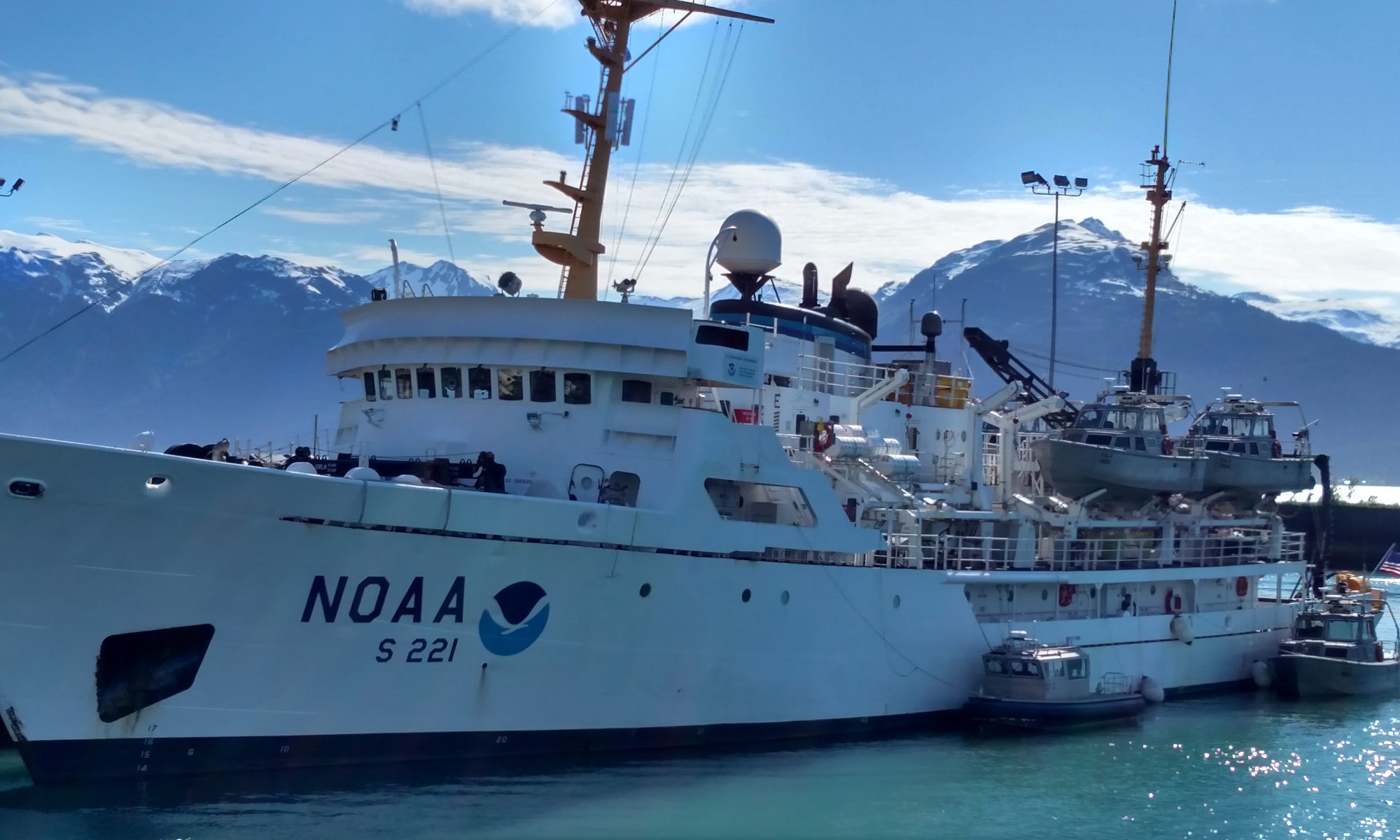

NOAA Teacher at Sea
Ryan Johnson
Aboard NOAA Ship Oregon II
June 18 – July 2, 2024
Mission: SEAMAP Summer Groundfish Survey
Geographic Area of Cruise: Gulf of Mexico
Date: June 11, 2024
Introduction
Hello! My name is Ryan Johnson, and I am a 7th and 8th grade science teacher at Jovita Idár Elementary School in Chicago, Illinois. You can find my teacher page HERE. I was born and raised in the Chicagoland area and now live on the far south side of the city with my lovely wife Kellan, two dogs Xena and Gare, cat Lucy Chef Meowly, and a variety of scaled friends that crawl, slither, and swim. In my free time I like to read, play video games, run, ride my bike, and swim (badly). Science has been my favorite subject since I dissected my first owl pellet in 4th grade… which Kellan thinks is gross. I have been a teacher at Idár for 12 years and am excited to continue to grow and develop the young minds of the future!

My passions as an educator lie in-and-around equity in STEM for underrepresented and historically marginalized communities, environmental education, climate science, food education, and urban education. This year, my students and I undertook a climate project: Seeds of Change Thrive in Concrete, a program that saw my students and school community grow (literally and figuratively) to new and exciting heights.

We were FIRST PLACE Winners in Illinois Green School Project through the Illinois Green Alliance
Our project was GREEN FLAG Certified by the National Wildlife Foundation
We earned Ocean Guardian School Year 2 status by the National Oceanic and Atmospheric Association
We were Take Action Global certified as a Climate Action School & USA Blue School Certified
Some highlights from SY23-24 for the Jovita Idar Community
- Composted over half-a-ton of fruits/vegetables and diverted the waste from landfills, off-setting over 800 driving miles and 40 gallons of gas!
- Reused 1,895 cutlery packages from breakfast, encouraging reuse above all else, or refuse if not needed!
- Recycled over 454 POUNDS of plastic bags… that’s about 40,000 bags repurposed/reused for a second life!
- Grew over 15 pounds of produce hydroponically/aquaponically for students and animals to eat – rethink our growing systems
- Grew over 50 pounds of produce in traditional soil gardens
- Collected and properly disposed of over 100 pounds of garbage from our school grounds to properly dispose of or recycle.
- Raised chickens and over dozen quail from egg to adulthood and harvested hundreds of eggs
- Raised over $2,000 (and counting) to devote directly back into environmental projects: 25% raised by students, 25% raised by families!
- Completed a waste audit with our partners from Arup Chicago and the Illinois Green School Project – Took first in state for the IL GSP
- Featured in the Daily Herald, Acero Food Newsletter, Illinois Green Alliance, Ocean Guardian School Newsletter, TAG Climate Action Spotlight, USA Blue Schools, and more!
- Supported by Pilot Light Chicago, Camp Eco.Logic, Morton Arboretum, Shedd Aquarium, Museum of Science and Industry, Project NEED, Illinois Green Alliance, Urban Canopy, Take Action Global, National Marine Sanctuaries, NOAA, Arup, Chicago Public Libraries, NSTA, The Hydroponic Venture Project, and the Peggy Notebaert Nature Museum.
- Created dozens and dozens of individual, group, and class art projects to support sustainability, environmentalism, and the importance of all this work (pollinators, junk robots, trash-trees, conserving wildlife, recycling, and SO MUCH MORE).

I am honored and excited to participate in this year’s NOAA Teacher at Sea program, particularly the groundfish study in the Gulf of Mexico. This incredible opportunity holds immense potential for both personal and professional growth, and I am eager to embark on this journey. As a middle school science teacher, this experience will enrich my teaching practice and provide my students with a deeper understanding of marine ecosystems and environmental science.

The NOAA Teacher at Sea program is a prestigious initiative that bridges the gap between scientists and educators, fostering a deeper understanding of marine research and its implications for our planet. Participating in the groundfish study will allow me to gain firsthand knowledge of marine ecosystems, the species that inhabit them, and the critical work being done to monitor and sustain fish populations. This hands-on experience is invaluable for educators, as it provides a unique perspective that can be directly applied to classroom teaching.
Groundfish, which include famous species like cod, flounder, and halibut (unlikely to catch any on this trip! We’re more likely to catch red snapper, blue crabs, and lizardfish) play a vital role in marine ecosystems and are also economically significant. Understanding their populations, behaviors, and habitats is crucial for maintaining healthy ocean environments and sustainable fisheries. By participating in this study, I will be able to observe and contribute to the scientific methods used to collect data on these species, such as measuring, tagging, and monitoring individual species and their habitats. This practical knowledge will enhance my ability to teach my students about marine biology, ecology, and the importance of sustainable practices.

One of the most exciting aspects of this program is the opportunity to bring real-world science into the classroom. My students are already engaged in innovative projects like organic gardening, hydroponics, and aquaponics, where they learn about plant growth, ecosystems, and sustainability. I partnered with the Morton Arboretum this year in a trip to Costa Rica that has proved invaluable to me and my students, and I hope the NOAA TAS program will be similarly impactful. The groundfish study will allow me to expand our curriculum to include marine ecosystems, providing a broader understanding of biodiversity and environmental stewardship. I plan to incorporate lessons on the different species of groundfish, their roles in the ecosystem, and the methods used to study and protect them. This will not only enhance my students’ scientific knowledge but also inspire them to consider careers in marine biology and environmental science. By bringing my experiences into the classroom and school community, I hope to foster a greater appreciation for science and its impact on our world. This will also provide an opportunity for interdisciplinary learning, as we can integrate these experiences into subjects like geography, social studies, and art.

Environmental education is a critical component of my teaching philosophy, and the NOAA Teacher at Sea program aligns perfectly with this goal. Our school community is already engaged in various sustainability projects, such as composting organic waste, circular growing of produce, and reducing single-use plastics. The groundfish study will provide additional context and examples of how we can protect and sustain our natural resources. I plan to create a series of lessons and activities that connect our local environmental efforts with the larger global context of marine conservation. This will help my students understand the interconnectedness of ecosystems and the importance of taking action to protect our planet.

Moreover, the skills and knowledge gained from this experience will contribute to my growth as an educator and leader. I am currently participating in a school leadership initiative with the Museum of Science and Industry, and the NOAA Teacher at Sea program will further enhance my leadership capabilities. By integrating my experiences into our school’s professional development programs, I can help other teachers incorporate environmental education into their curriculum. This will create a ripple effect, where more students across our school and district will benefit from enhanced science education and develop a greater appreciation for the environment.

Again, I am honored and excited to participate in this year’s NOAA Teacher at Sea program and the groundfish study in the Gulf of Mexico. This experience will provide invaluable knowledge and insights that will enhance my teaching practice, inspire my students, and contribute to a more scientifically literate and environmentally conscious school community. By bringing real-world science into the classroom, sharing my experiences with the broader community, and continuing to develop as an educator, I hope to make a lasting impact on my students and the environment. This opportunity represents a significant step towards achieving my goals as a teacher and environmental advocate, and I am eager to embark on this transformative journey.

