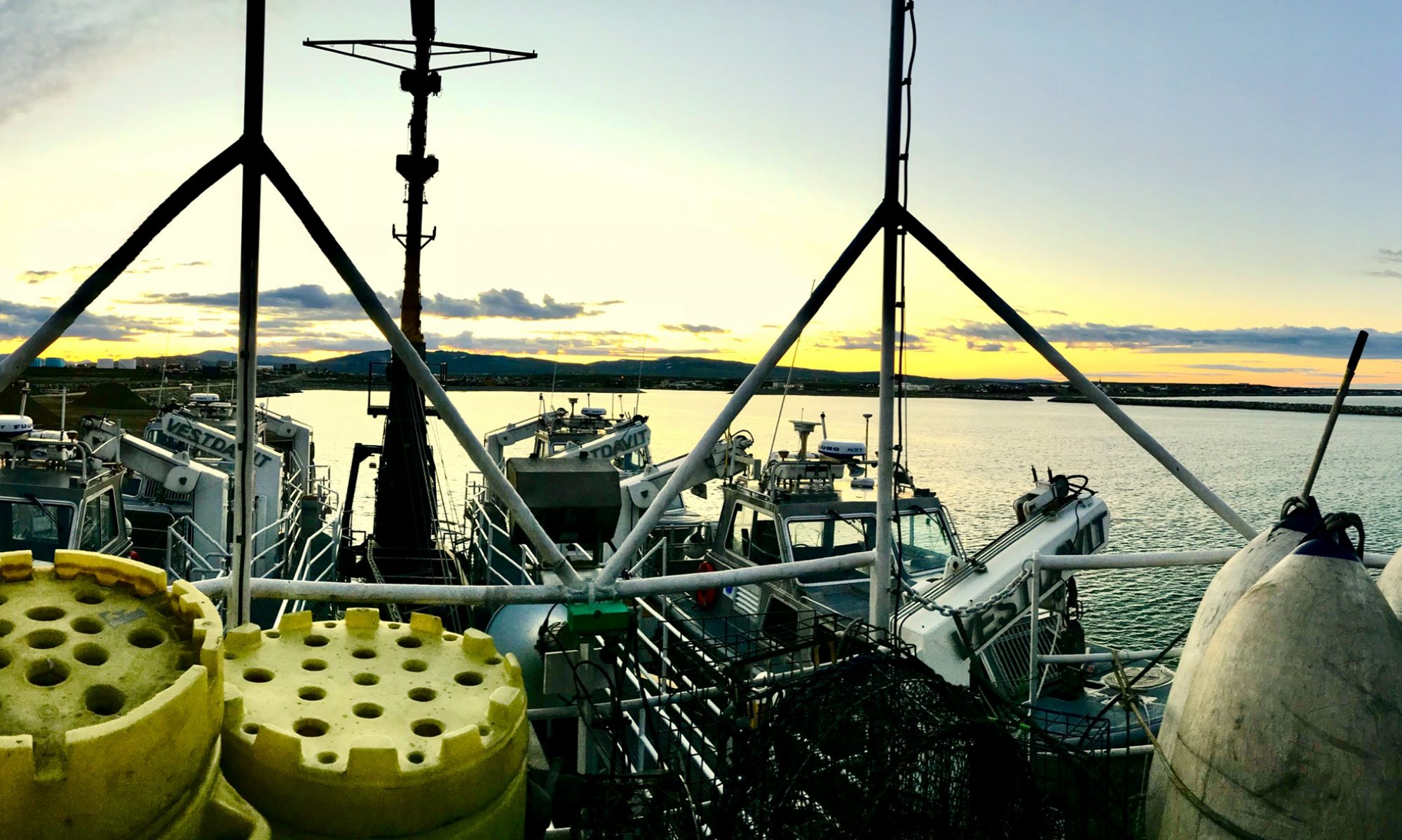
Sue Zupko: 12 What’s in the Water?

NOAA Teacher at Sea: Sue Zupko
NOAA Ship: Pisces
Mission: Extreme Corals 2011; Study deep water coral and its habitat off the east coast of FL
Geographical Area of Cruise: SE United States from off Mayport, FL to St. Lucie, FL
Date: June 8, 2011
Time: 1900

Weather Data from the Bridge
Position: 25.3°N  79.6°W
Present weather: 3/8 Alto Cumulus
Visibility: 10 n.m.
Wind Direction: 065°true
Wind Speed: 10 kts
Surface Wave Height: 3 ft
Swell Wave Direction: 110°
Swell Wave Height: 3 ft
Surface Water Temperature: 28.4°
Barometric Pressure: 1013.2 mb
Water Depth: 363 m
Salinity: 36.28 PSU
Wet/Dry Bulb: 27.7/24.8

This blog runs in chronological order.  If you haven’t been following, scroll down to “1 Introduction to my Voyage on the Pisces” and work your way back.

Take this quiz before reading this post.

Bucket hanging by rope in water
Straining bucket

Dr. Diego Figueroa and I went fishing over the side of the ship this evening with a straining bucket to try to catch zooplankton (animals which cannot swim against the current–free floating).  We had no plankton net so we had to improvise.

Diego pouring a cup of water into a bucket from the bottom
Diego pours water into the bottom of the bucket

Diego, a zooplankton expert, got a plastic container like you’d use to store food in the fridge, and we headed to the lab with what we hoped would be a good catch.  He got a cup of salt water from the special faucet in the ship’s science lab and poured it into the bottom of the bucket.  As he poured the water, he had the plastic container at the top of the it to retrieve our catch.

Diego peering into a plastic food container with water
Diego examines our catch

We  then examined the container to see what the naked eye could find.

Wow!  Our first specimen was a shrimp.  It’s huge.  Well, huge in comparison to the other zooplankton.  We still saw it best under the microscope.  He left that in to container to pull out later and caught some copepods with an eye dropper.

White buglike creature, transluscent, with long antennae
Calanus copepod

Eureka!  There were at least six Calanus copepods.  Cope– is Greek for oar or handle and pod–  means foot or limb.  These are very common off the coast of Florida and about 80% of all the zooplankton on the planet are some type of copepod.  He explained that the Calanus has five rows of legs that flap downward (like the doggie paddle that most of of use when learning to swim) in order to move around.  The Calanus eats phytoplankton (algae), making it a primary consumer.  It has five pairs of mouth parts.  The hairy seta (the plural is called setae)  act like a sieve when it eats.  This is so interesting.  The Calanus opens its mouth parts and gathers water molecules toward its body.  Then, it pulls its mouth parts in and squeezes the water out. What’s left is a scrumptious meal of diatoms.  The grazing copepod we watched was a female.  Her tail is shaped differently than the male’s tail.

The shrimp is at least 20 times bigger than the Calanus.  Diego hasn’t studied the shrimp like he has the copepods.  That’s because the shrimp are one of the bigger zooplankton and large ones make up only about 5% of all zooplankton.  He says that there are more copepods in the world than all the insects combined.  That makes sense since the earth’s surface is  71% water.

Jellyfish with tentacles spread against a black background with white particles near
Jellyfish in snow

When the ROV was flying through the ocean, we always saw snow in the water.  I used to scuba dive a lot and I never really noticed the snow.  If it was deep, they weren’t there.  Andy David explained that we see them so well since we’re shining light on them.  These are mostly zooplankton in the water.  In addition, there is a bunch of decaying organic matter called detritus flying along.

Curled up bee looking creature
Hyperiid

Further examination of the water yielded a Microsetella rosea, a hyperiid, and a Chaetognath (arrow worm). The Microsetella is a detritis-eating filter feeder, but it is only about 1/5 the size of the Calanus.   Well, with micro in its name, small had to figure into it somehow.  Since it’s small, it eats smaller things.

Clear ghost-like arrow-shaped creature surrounded by lines of white
Arrow worm

The arrow worm is like something from a horror movie because it attacks its prey viciously (it’s a carnivore and is a voracious predator).  I asked what all the other floating bits were in the water.  Detritus.  It’s the snow we kept seeing.

White shrimp with one claw showing viewed through microscope
Shrimp

Diego has a special camera which attaches to the microscope.  We would examine the zooplankton in the petri dish and then he would take off the microscope eyepiece and insert his camera.  Then, through the viewfinder, he would try to find the zooplankton resting somewhere.  Apparently, they don’t rest much, but he still got photographs.

Diego searches for our catch under the microscope while Sue looks on
Diego hunting for zooplankton

I really enjoyed this mini lab.  Diego taught me things about plankton in general and I now better understand this amazing  world of particulates in the ocean a bit better.  Jana and I had gone on deck last night to see what it was like in the pitch black.  We discovered it isn’t totally dark, though your eyes do have to adjust.  The moon kept peeking from between clouds off the starboard (right) side and lights shone from portholes below deck.  These lights reflected off the waves and were so fascinating to watch.  I’ve only had a beachside view of the ocean at night so this was a real treat.  Jana and I watched for bioluminescence in the water, a sign of some plankton.  We found little sparkles of green in the wave and hypothesized these were zooplankton.  After explaining what we had seen to Diego, he confirmed that these were zooplankton rather than phytoplankton.  Zooplankton have little sparkles in turning water while phytoplankton will cover a large area and just glow.  Too interesting.

Special thanks to Diego for sharing his knowledge with me after a long day and to Jana for helping get some pictures of this.

And the answer to the quiz above….Copepods.  They are so small you don’t notice them, but there are almost as many copepods as there are grains of sand on the beach.  It’s hard to fathom that many creatures swimming around.  Diego said that they eat the phytoplankton so fast that often there are more zooplankton than phytoplankton.

Laura Rodriguez, May 24th, 2010

NOAA Teacher at Sea
Laura Rodriguez
Aboard NOAA Ship Oscar Dyson
May 24 – June 2, 2012

Mission: Fisheries Surveys
Geographical Area: Eastern Bering Sea
Date: May 24, 2010

Pollock Survey Begins

Robert and Kerri deploy the CTD
Deploying the Bongo nets
The bongo nets are almost in
Retrieving the bongo nets, full of algae and hopefully full of Pollock Larvae

On Saturday, my watch began at 10:00 AM. Two of the scientists, Annette Dougherty and Kevin Bailey have watch from 4 AM until 4 PM. The other two scientists, Tiffany Vance and Steve Porter, have watch from 4 PM until 4 AM. I guess being the teacher they took pity on me and gave me half and half. Before getting to one of the stations, the scientists make sure that everything is ready. They lay out the bongo nets on the deck where they will be used. The bongo nets are two nets that from the top look like bongo drums. (See picture) There is an instrument attached to the bongo nets called a SEACAT that takes conductivity, temperature and salinity measurements during the tow. Inside the lab, buckets, bowls and tweezers are all laid out ready to be used.

As we approach each station, the bridge informs the scientists and survey technicians. The bongo nets have already been readied and are set to be deployed (put into the ocean) from the hero platform. When the OK is given, the nets are lifted by the hydrowinch to a point where they can be maneuvered over the rail and then they are lowered into the water. The nets are lowered until they are at 100 meters or 10 meters off the bottom. As they are lowered, the pilot of the boat keeps the wire at a 45° angle by moving the boat slowly forward. Once the nets reach their maximum depth, they are slowly brought back up again.  ( I tried to upload a video showing the deployment and retrieval of the bongo, but it won’t work so I’ll show you the video when I get back.

Pollock larvae under the microscope

When the nets clear the water, they are hosed down to get any organisms into the bottle on the end of the net (called the cod end.) The cod end is then removed and the contents of one net are poured into a bucket for sorting. The contents of the other net are preserved and sent to a lab in Poland where they use instruments to get a very accurate count of the Pollock.

Annette Dougherty and Kevin Bailey in the chem Lab

Inside the chem lab, the contents of the bucket are scooped out and poured little by little into a mixing bowl. We then perform a rough count by removing the very small Pollock larvae and any other fish larvae and put them into a petri dish with cold water (the petri dish is placed on top of ice.) They are only a few mm long (averaging between 6-10mm.) Once we have gone through the entire contents, the Pollock larvae are counted, photographed and the length measured. They are then placed into a labeled vial with 95% ethanol. The other fish larvae are placed in a separate vial in 100% ethanol. They are kept in case another scientific team needs the data. The Pollock larvae will be sent to the scientists’ lab back in Seattle where they will perform further analysis on them. I’ll tell you more about that in the next blog.


Answers to your questions:

Annalise – The ship travels at 12 knots when we are going between stations.

Abandon Ship drill – You need to know how to put on your survival suit

Matt T– The ship is very safe. Drills are conducted every week. My first day on the ship, we had a fire drill and abandon ship drill. (See photo of me in my survival suit.)

Dan – The Oscar Dyson observes and records a number of environmental conditions. The bridge takes weather readings every hour and keeps them in a weather log. These include wind direction, wind speed, seawater temperature, air temperature, air pressure, cloud cover, sea swell height and direction. Conditions in the water are also constantly monitored such as temperature, conductivity, salinity, and amount of oxygen.

Olivia – The bongo tow is one way to get fish eggs. The mesh used on the bongo nets is very fine). It is able to filter out these very small larval fish and fish eggs, too.

Brittany – There is no specific number of fish that need to be caught for this experiment. Part of the experiment is to see how many larval fish there are. For our rough count, the scientists measure 20 larvae to get an estimate of their size. They will then look at the otoliths (small inner ear bones) to estimate their age.

Euphausid – Krill
Copepod

Amy – Aside from the Pollock larvae in the nets, we have caught cod larvae, larval squid, fish eggs, amphipods, terapods, jellies, Euphausids or krill, copepods and the larvae of other fish. The nets are small enough that we don’t catch any large fish or other animals.

Josh W. and Jon – Joel Kellogg has the night shift, so I haven’t met him yet. Stephen Macri is not on this cruise so I can’t ask him your questions.


Questions for today

In your answers to the last blog, many of you researched the large animals that live here in the Gulf of Alaska. The most abundant organisms, however, are much smaller. Two organisms that are very important to the survival of the large animals here are copepods and Euphausids. The larval Pollock feed on the larval copepods that are called copepodites.

Find out what other animals feed on copepods and euphausids. Then, describe at least one food chain that includes copepods and one that includes krill. In your food chain start with a producer or autotroph Ex. Algae) and end with the highest level of consumer or predator (Ex. blue Whale)


Again, Please be sure to include the link to the website where you got your information.  Answer the questions in your own words writing complete sentences with as much detail as you can.

Justin Czarka, August 12, 2009

NOAA Teacher at Sea
Justin Czarka
Onboard NOAA Ship McArthur II (tracker)
August 10 – 19, 2009 

Mission: Hydrographic and Plankton Survey
Geographical area of cruise: North Pacific Ocean from San Francisco, CA to Seattle, WA
Date: August 12, 2009

Weather Data from the Bridge 

Sunrise: 06:25 a.m.
Sunset: 20:03 (8:03 p.m.)
Weather: isolated showers/patchy coastal fog
Sky: partly cloudy
Wind direction and speed: North 10-15 knots (kt)
Visibility: unrestricted to less than 1 nautical mile (nm) in fog
Waves: northwest 4-6 feet
Air Temperature: 17.3 °C
Water Temperature: 16.6 °C

Science and Technology Log 

Justin Czarka collects water samples to use in nutrient and chlorophyll research.  While on the deck during “ops” (operation) all personnel must wear a life jacket and hardhat.
Justin Czarka collects water samples to use in nutrient and chlorophyll research. While on the deck during “ops” (operation) all personnel must wear a life jacket and hardhat.

This log discusses the purpose behind the scientific cruise aboard the McArthur II. The cruise is titled, “Hydrographic and Plankton Survey.” The cruise is part of a larger study by many scientists to, in the words of chief scientist, Bill Peterson, “understand the effects of climate variability and climate change on biological, chemical and physical parameters that affect plankton, krill, fish, bird and mammal populations in Pacific Northwest waters.”  This specific cruise focuses on hydrology, harmful algal blooms, zooplankton, krill, fish eggs, fish larvae, and bird and mammal observations.

I will provide an overview of these aspects of the cruise. The McArthur II is set up with sensors for salinity, temperature, and fluorescence that provide a continuous monitoring of the ocean (hydrology) throughout the cruise.  In addition at various points along the transect lines (see the dots on the diagram of the cruise route on page 2), the CTD is deployed into the water column at specific depths to determine salinity (via measuring conductivity), water temperature, and depth (via pressure), and collect water samples (which we use to measure chlorophyll and nutrient levels at specific depths). The transects (predetermined latitudes that forms a line of sampling stations) have been selected because they have been consistently monitored over time, some since the late 1980s.  This provides a historical record to monitor changes in the ocean environment over time.

The dots represent planned sampling station. Due to sea conditions, these have been slightly modified.

One scientist, Morgaine McKibben from Oregon State University, is researching harmful algal blooms (HAB). HABs occur when certain algae (the small plants in the ocean that are the basis of the food web) produce toxins that concentrate in animals feeding on them.  As these toxins move up the food web through different species, they cause harmful effects in those species, including humans.  Bill Peterson (NOAA/ Northwest Fisheries Science Center) and Jay Peterson (OSU/Hatfield Marine Science Center) are studying copepod reproduction. They are collecting data on how many eggs are laid in a 24 hour period, as well as how the copepod eggs survive in hypoxic (low oxygen) conditions.  Mike Force, the bird and marine mammal observer is keeping a log of all species spotted along the cruise route, which is utilized by scientists studying the species.

Personal Log 

Tiny squid collected in a vertical net and viewed under microscope on Crescent City transect line at 41 deg 54 min North.

Who said you never find the end of the rainbow? All you have to do is go out to sea (or become a leprechaun!). We have been going through patches of fog today, putting the foghorn into action.  When it clears out above, yet is foggy to the horizon, you get these white rainbows which arc down right to the ship. We have become the pot of gold at the end of the rainbow. Who knew it was the McArthur II! If you follow the entire rainbow, you will notice that it makes a complete 360° circle, half on top the ocean and half in the atmosphere near the horizon.

I enjoyed using the dissecting microscope today.

The water collected from the vertical net is stored in a cooler on the deck to be used in experiments.  I was able to collect a sample of the water, which contained a diverse group of organisms, from tiny squids to copepods to euphausiids.  These tiny organisms from the size of a pinhead to a centimeter long are critical to the diets of large fish populations, such as salmon.  Under magnification, one can see so much spectacular detail.  I have learned how essential it is to have an identification guide in order to identify the names of each copepod and euphausiid.  On the other hand the scientists tend to specialize and become very adept at identifying the different species.

Animals Seen Today 

Arrow worms (long clear, with bristles)
Shrimp Copepods
Tiny rockfish (indigo colored eyes)
Fish larvae

Rebecca Bell, August 16, 2008

NOAA Teacher at Sea
Rebecca Bell
Onboard NOAA Ship Delaware II 
August 14-28, 2008

Mission: Ecosystems Monitoring Survey
Geographical Area: North Atlantic
Date: August 16, 2008

Weather Data from the Bridge 
Time:   1807 (GMT)
Latitude:  36.05.40 N Longitude: 75.24.30 W
Air Temp 0C: 25.3 0C
Sea Water Temp:  26.7 0C

On left: small barrel-shaped copepods; Center: white, arrow worms; Top right: amphipods

Science and Technology Log 

The most common zooplankton we have seen so far are salps, amphipods, arrow worms and copepods. Pteropods (sea butterfly) have been in a number of samples but are not numerous. Salps look like clear, jelly-like marbles. We’ve encountered these animals in warm, shallow water. They are holoplanktonic relatives of sea squirts (Urochordata). Salps are filter feeders, using cilia to move suspended particles from the water. They feed by pumping water through a sieve to remove bacteria and nanoplankton, and are thus, a very important link in the food chain. Some species of salps form huge chains by budding. They show both sexual and asexual life stages. For more about salps and photos see this website.

Amphipods are also extremely common crustaceans. There is no carapace (shell-like covering), but their bodies are flattened side-to-side, much like a shrimp.  Their bodies are segmented with 6 segments in the head, 8 in the thorax and 6 in the abdomen.1 They have a brood pouch on their thoracic limbs. They have a variety of limbs used for feeding, crawling or jumping. One group lives off a host, feeding on salp tissues. Some types live in tubes; others use their back legs to anchor themselves while they sway to and fro in the water column. Some species swim rapidly while others stay near the bottom of the ocean. Many will move vertically in the water column, moving near the surface during the day, and sinking again at night. The species we are catching has large compound eyes that can be seen by the naked eye. For more about amphipods, visit this website. 

Becky examines the catch using a hand lens.

Copepods are very common crustaceans, with more than 200 species and 10,000 families. 2 We have found more of these than any other organism. Copepods are omnivorous. Some groups graze on microplankton; other groups of copepods prey on larger plankton, including other copepods. They are an important link in the food chain as well, moving carbon from a microscopic level to a larger trophic (feeding) level. They are eaten by jellyfish, fish, comb jellies and arrow worms. Copepods have “antennae” that have special sensors that detect water movement around them. They are able to move toward prey by contracting a muscle that runs in a circle around their bodies. For more about copepods, visit this website.

Arrow worms (Chaetognatha) are common along coasts, but we did not catch any out away from shore. Arrow worms are classified in their own group, distinct from Annelids (earthworms), round worms and flatworms, which are all separate groups of worms. They are predators, often waiting to ambush their prey. When their cilia detect prey, usually copepods, the arrow worm contracts 2 muscles that run dorsally and ventrally (top to bottom) to strike. Their mouths have spines that grab the prey and smaller “teeth” produce a venom that subdues the prey. The prey is swallowed whole. Arrow worms, in turn, are eaten by jellyfish, copepods and fish.

Sea Butterflies were not common, but they are very interesting. Sea butterflies (pteropods) are holoplanktonic mollusks, related to snails. Basically, they are shell-less snails. Their foot is modified into winglike structures (ptero= winged) that they flap as they swim through the water. Their bodies are tube-shaped and clear. The bodies and wings of the species we have seen are an orange-pink color. They are predators and are preyed upon by fish, sea birds and whales.

References: 

Information for these paragraphs were modified and combined from the following sources: 1 Newell, G.E. and Newell, R.C.; Marine Plankton: A Practical Guide; 5th edition; 1977; Hutchinson & Co; London.2 Johnson, William S. and Allen, Dennis M.; Zooplankton of the Atlantic and Gulf Coasts: A Guide to Their Identification and Ecology; 2005; Johns Hopkins University Press.

Personal Log 

This morning we saw dark clouds in the distance. You could see rain falling from the clouds. Nearby we could see the tail of a water spout disappearing into the clouds.  We sampled our southern-most station and are now heading north along the coast just south of Chesapeake Bay. The samples we are pulling now have a lot of diatoms.

Rebecca Bell, August 15, 2008

NOAA Teacher at Sea
Rebecca Bell
Onboard NOAA Ship Delaware II 
August 14-28, 2008

Mission: Ecosystems Monitoring Survey
Geographical Area: North Atlantic
Date: August 15, 2008

Weather Data from the Bridge 
Latitude:  3846.7 Longitude: 7302.1
Temp 25.4 C

Bongo net
Bongo net

Science and Technology Log 

In the last post, I explained WHY we are collecting zooplankton. This post will illustrate HOW the samples are taken.

The samples are collected using a device called a bongo net (Yes, like the musical instrument).  You can see the metal rings and the nets hang from the metal rings. One net is marked with red and the other green. This allows you to tell the two nets apart. The samples from the red side will be used for the ichthyoplankton study. The samples from the green side will be used for the zooplankton study.

The white device is the CTD (Conductivity, Temperature, Depth). You attach it to the bongo net frame and turn it on. The CTD takes measurements on the way into the water and on the way out of the water. When the bridge clears you, the computer operator (inside) tells the hydraulics operator to start letting out the line and at what speed to let it out and bring it in. You calculate the amount of time in and out using a chart that is based on changing depth. You have to calculate it so you get at least a 5-minute tow.

The CTD
The CTD

Now the bongo nets are raised on the A-frame. You can see the CTD above the bongos (right picture) and there is a lead weight beneath and between the nets. Next, the A-frame moves the nets over the side of the ship and they are lowered into the water. You cruise for at least 5 minutes. The idea is to get within 5 meters of the bottom, then start bringing the nets back in. The computer operator keeps track of where the bottom is. The idea is to stop the line going out in time so the nets don’t hit the bottom and pull up a bunch of sand. Then you just have to wait for the tow, and eventually for the nets to come back up.

The bongos are removed from the A-frame and brought into the wet lab. You use the hose to wash the plankton down to the bottom of the net. The bottom of the net is put into the sieve. When the net is hosed down to the sieve end, you untie the bottom of the net and let the plankton wash into the sieves. The mesh captures zooplankton, but lets smaller phytoplankton through. Finally you rinse the plankton from the sieves into a jar with 5% formalin for preservation. A label is put into the jar as well as on top of the jar, stating station number, date and time.

NOAA Teacher at Sea, Becky Bell, assists in deploying the bongo nets.

Personal Log 

We had a fire drill and an “abandon ship” safety drill. In the picture to the right, I am wearing a survival suit, lovingly known as a “Gumby suit”. If you abandon ship, you have to run to the deck and put on this suit. It is one piece, with inflatable neck rest, whistle and flashing pocket light so you can be spotted. You have to lay the suit out on deck, and sit down in it. Feet go in first, then you stand up and pull the rest over your head, find the arms etc. Look at the look on my face. Not too sure about this! The front flap closes to show only your eyes–on me a little higher. You should try zipping the front zipper with thick rubber gloves that are too big for you. It reminds me of the astronauts trying to fix the space station. I have a new appreciation for how difficult it is too, like, HOLD anything. The best news yet–we get to practice next week again.

Deploying the Bongo net
The A-frame
The A-frame
The nets begin to emerge from the water.
Becky waits for the nets to come back up after the tow
Waiting for the nets to come back up after the tow
Becky rinsing down the net
Then she puts the plankton into a jar for preservation
Then she puts the plankton into a jar for
preservation
Becky dons her survival suit during a safety drill.