
NOAA Teacher at Sea
Leyf Peirce
Onboard NOAA Ship Rainier
July 6 – 15, 2004
Mission: Hydrographic Survey
Geographical Area: Eastern Aleutian Islands, Alaska
Date: July 8, 2004
Time: 09:00
Latitude: N 55°41.71
Longitude: W 158°03.81
Visibility: < 1 foot
Wind direction: 230
Wind speed: 10 knots
Sea wave height: 0 – 1 feet
Swell wave height: 0 – 2 feet
Sea water temperature: 10.0 °C
Sea level pressure: 1021.3 mb
Air temperature: 10.0 °C
Cloud cover: fog
Science and Technology Log
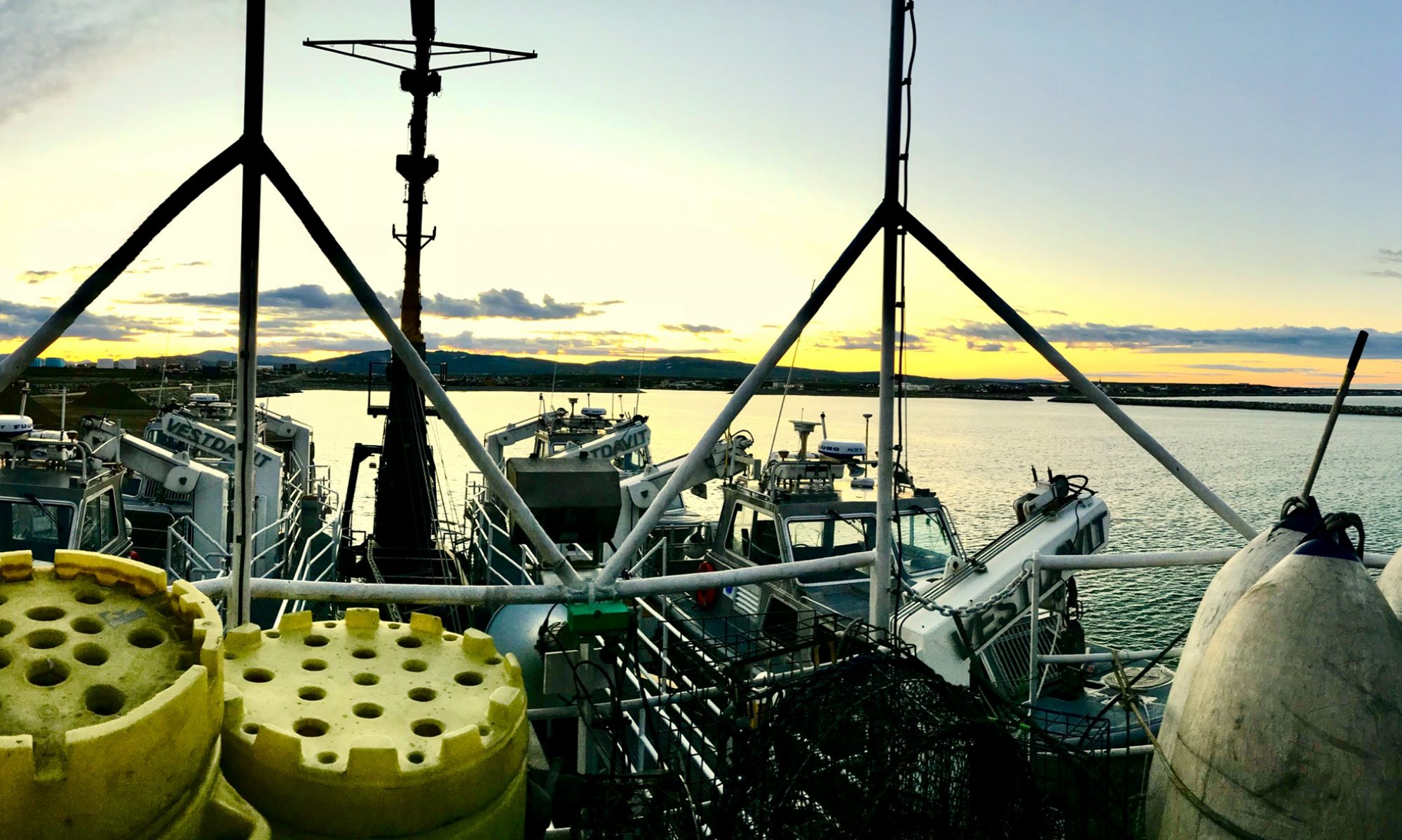
As I am typing my journal entry, I learn there are several good pictures on the network server of the RAINIER and its crew. Here is just one that I found:

From this picture, I can see that the aft most launch ship has been launched for survey, for there are 3 launch boats on either side of the ship. I talked further with the crew today about interesting characteristics of this ship, including a “field trip” with Lt. Kevin Slover to inspect the hulls of the launch boats to see the echo sounding devices. I learned that there are actually 3 different types of these devices: one with low resolution for very deep water, one for a little higher resolution of deep water, and one with high resolution for shallower water. These devices cost up to $25,000! I was able to get pictures of the three types; however I am not able to download them onto the computer yet. Lt. Slover also showed me more of the Caris program, the most recent computer program used to collect and analyze the data. I say most recent used, because these programs are constantly being changed and updated to be more accurate, user-friendlier, and display better graphics. One of the most interesting features of this program is not only its accuracy, but also the ability to look at the computer created images of the ocean floor from any angle. One of the images pulled up as an example showed a shipwreck off of the coast of Seward in about 38 meters of water. The details of this sunken ship were almost crystal clear! Of course, this is after the data has been corrected and cleaned. I hope to work more with this program as we start the launches tomorrow and Saturday.
I also spent some time on the bridge again today. There, I learned a few interesting trivia facts about this ship:
- The RAINIER was built in 1968 along with 2 other identical ships, the MT. MITCHELL and the FAIRWEATHER, all specifically for NOAA; these three were commissioned in 1969
- There are 2 main engines aboard this ship, both have 1200 Horsepower and they are the same type of diesel engines as those used in locomotives
- To figure out the cloud height, one can apply the equation: (wet bulb temp – dry bulb temp)*126.3; there was some dispute on how accurate this is, but for today it works since the wet bulb temperature = dry bulb temperature, so the cloud cover, according to this equation, is at 0 feet which is true since we are in a cloud today with all of this fog
- The boat was originally built to support 4 launch boats and 2 life rafts, however it was recently modified to have 6 launch boats on it; to counteract this weight up top, more ballast had to be added to the bottom
A launch boat also left today at 08:00 to conduct further hydrographic research, and the RAINIER maintains her course, “mowing the lawn” in a section of uncharted waters between Kodiak and the Shumagin Islands. Once this area is completed, we will head to the Shumagin Islands to anchor and send more launch boats throughout the next week before we return to Kodiak. This is such an adventure!
Personal Log
The foghorn blows every 2 minutes on this ship, and it acts as a great wake up call. This morning, the horn reminds me that we are sailing in a sea of uncharted and now seemingly invisible territory. I feel like an explorer thrown into the time of Captain Cook, half expecting to see a pirate ship emerge from the eerie blanket that surrounds us. However, the multitude of technology aboard this ship flaunts the modern times in which we live and, in doing so, destroys any hope of true exploration of the unknown. Still an explorer at heart, I also still find adventure in what we are doing. We are still conducting hydro research aboard the RAINIER, “mowing the lawn” across uncharted territory, so we are only moving at about 7 knots. A launch boat was also sent out today to investigate near by waters. As I sit here responding to emails and learning even more about how this ship works, I am anxious to see the data that is collected now be processed.
Question for the Day:
In talking with P.S. Shyla Allen and Lt. Kevin Slover, we discussed the rewards of this job—how does this work help society? Both agreed that one of the most rewarding, but somewhat scary, aspects of this job is being able to accurately chart and re-chart high traffic waters. They both said that there are often calls from local fisherman demanding more detailed and more accurate charts. P.S. Allen informed me that there is a group of retired U.S. Coast Guard members that will conduct their own charting research in order to expedite the charting process. While helpful, this is not always the most accurate information. However, I did begin thinking about ways to include local fisherman in the research; to ensure the data that they collect is more accurate. My question for the day is more of an engineering design problem and proposed solution defined:
Problem: Local fishermen travel the coastal waters along Alaska to make a living. However, these waters are poorly charted, if charted at all. As of now, fishermen use a “Hummingbird” device to measure the depth of water where they travel, but there is no electronic device that can record this data accurately, correct this data for margins of error, and combine this data to produce an accurate nautical chart aboard these fishing vessels. While boats such as the RAINIER have this capability, expanding the number of vessels capable of collecting and analyzing such data would expedite the nautical chart updating process.
Proposed Solution: Design, test, and implement a device that abides by the following parameters: not very expensive, accurate, maintains the same abilities as the multibeam echo sounding devices aboard the RAINIER, has the capability of communicating with the computers aboard the RAINIER to share information collected, and can be mounted on the fishing vessels in such a way that it will not alter steering or speed.
I asked Lt. Slover if there is much government funding for such engineering projects, and he assured me there is—most of the U.S.’s imported goods arrive by ship, so more accurate and up to date nautical charts are a large priority.