David Knight: Getting to Know the Pisces, July 16, 2018

NOAA Teacher at Sea

David Knight

Aboard NOAA Ship Pisces

July 10-23, 2018

Mission: Southeast Fishery-Independent Survey

Geographic Area: Southeastern U.S. coast

Date: July 16, 2018

Weather Data from the Bridge:

Latitude: 32° 49.6
Longitude: 78
° 52.4
Sea wave height: 1-2 ft
Wind speed: 10 kts
Wind direction: 59
Visibility: 10 nm
Air temperature: 28.7
°C
Barometric pressure: 1016.9 mb
Sky: Clear

An Interview with Ensign Luke Evancoe

Pisces logo
NOAA Ship Pisces Seal

My first day on NOAA Ship Pisces I was introduced to about 300 different people. Well, maybe it was more like 30, but it sure seemed like a lot of people were aboard.  NOAA vessels have civilian personnel that perform a myriad of important duties, scientists that assist in planning and carrying out the various missions of the ship, and commissioned NOAA Corps Officers that ensure the mission of NOAA is carried out.

Engineers are responsible for making sure that all of the systems on the ship are operating properly.  The engineers must be able to fix and maintain all mechanical, electrical, and plumbing systems on the ship.  It’s this important group that makes sure the A/C is working in our cabins and that the propulsion system gets us from one trap site to the next.  Members of the deck department use equipment to lower CTD units, bring up traps, deploy and retrieve buoys, and maintain watches throughout the day.  These men and women are responsible for making sure very expensive equipment is safely and effectively used. As a research vessel, the Survey department’s role in the acquisition and processing of oceanographic and survey data is crucial. These individuals operate and analyze data from a number of different pieces of equipment including the CTD and the multibeam echosounder.  And finally, there are the Stewards. The stewards are the ones responsible for making sure everyone is well fed and comfortable. They prepare and plan all meals, ensure the pantry is stocked and ready for each mission, and that all of the common areas are clean and sanitary.

Soon after boarding, I met Ensign Luke Evancoe, the newest NOAA Corps Officer to join the NOAA Ship Pisces. After talking to him briefly and learning about his varied background and the circuitous route that brought him to NOAA, I decided I wanted to interview him and find out more about his role as a NOAA Corps Officer.

IMG_6592
Ensign Luke Evancoe, NOAA Ship Pisces newest NOAA Corps Officer

Where are you from and what did you do before coming to NOAA?

I grew up in Pittsburgh and have a B.S. in Biology and Masters in Teaching from Virginia Commonwealth University in Richmond, Virginia. After high school and two years of college, I decided to join the United States Marine Corps and become an Infantryman. While in the Marine Corps I was a member of the USMC Silent Drill Platoon, a 24-member team that are ambassadors of the USMC that perform at sporting events and parades. I was then deployed to Afghanistan for seven months. I was a vehicle commander for an MRAP (Mine-Resistant Ambush Protected) vehicle.

After the Marine Corps, Mr. Evancoe went back to VCU and then became a sixth grade science teacher at the Franklin Military Academy in Richmond, Virginia where he taught for two and one half years. While at a research symposium, he learned about the work of NOAA and the NOAA Corps and decided to apply to the program and once he was accepted, left teaching to train to become an NOAA Corps Officer.

What was a memorable experience while you were teaching?

My most memorable experience teaching was when I successfully executed an experiment to see whether the myth that if someone moves while stuck in quicksand, they sink faster than if they remained motionless was true or not. Using Hexbugs, which are tiny robot bugs, my students tested whether the Hexbugs which were turned on and “squirming” sank into a cornmeal mix (the quicksand) at a faster or slower rate than Hexbugs that were turned off. It was a simple, yet fun way to demonstrate the basics of the scientific method to middle school children.

Tell us about your training with NOAA Corps.

The NOAA Corps training lasts 19 weeks and is held at the US Coast Guard Academy in New London, Connecticut. Our training is called Basic Officer Training Class (BOTC) and is carried out alongside the Coast Guard Officer Candidates.

The training is similar to the military academies in that we wear a uniform, start our day at about 5 a.m., go to classes and are expected to carry out other duties when we are not in class. It is very regimented, but it is also rewarding.

25501_0
Ensign Evancoe (on the left, 5th from the bottom)

How is training for NOAA Corps similar to your Marine Corps training that you received?

They are really incomparable. What is similar, however, is the training you receive in leadership and discipline and how to best represent yourself as a member of a uniformed service for the United States.

What types of things do you learn during your BOTC training?

As I mentioned, we learn a lot about leadership, but we also learn about the goals and mission of NOAA and the role of officers in fulfilling that mission. Obviously, we also learn about skills that will allow us to be good seamen.  We have to know about all of the different operations of a NOAA ship like propulsion, navigation, and communication and we also learn the skills of each of the departments like engineering and the deck crew. We learn different nautical skills and about maritime regulations.  Obviously, we learn how to handle both large ships and small vessels.

The training program involves a lot of hands on opportunities beside the classroom sessions we have. It is similar to how you would teach science with some lecture time and then lab time.

You are currently an ensign, what are your duties right now?

I am considered a Junior Officer of the Deck (JOOD). I am assigned two 4-hour watches on the bridge. During this time, I am driving the ship as we transit from one location to another or as we drop and pick up traps. You have to multi-task very well. I have to be listening to the radios as the crew relays information to the bridge, the scientists also communicate with the bridge as traps are being deployed or retrieved, I have to know our speed, pay attention to the strength of the current, wind direction and its speed, I have to watch for other vessels in the area, there’s a whole lot going on. Fortunately, I am being mentored by a senior officer when I am on the bridge. All of the training I am currently doing will allow me to become an Officer of the Deck (OOD) which will allow me to be unsupervised on the bridge.

What is the most difficult aspect of driving the ship?

The most difficult aspect of driving the ship would have to be maintaining an understanding of the current state of the wind, currents, and swell, while realizing that these variables can change multiple times over the course of a watch; a strategy that I was using to pick up fish traps the first hour of watch may not work at all with how the sea state has changed an hour later.

NOAA Ship Pisces in port

In addition to my shifts on the bridge, I have collateral duties that I am learning. For instance, I am learning the duties of the Navigation Officer who is responsible for ensuring that all of the navigation charts are up to date, that the navigation equipment is working properly, and that upcoming tracklines are laid out on our charts and approved by the CO.  The Imprest Officer is responsible for managing some of the ship’s funds and making sure the wage mariners are paid when required. I am also learning about the duties of the Movie Officer. We have a large inventory of movies from the US Navy that have to be cataloged and replaced. We get movies that are still playing in theaters so crew members can use their time when they are not on duty to relax. It’s important that people can relax.  Finally, I am coming up to speed with the duties of the Property Officer, who maintains inventory of all of the ship’s electronically-based and sensitive property and accounts for assets that must be properly disposed of.

What is the OOD workbook?

It is like on-the-job training. The work that I do in the workbook helps me put into practice the things I learned at BOTC, and once I have completed the workbook and it has been approved, it will allow me to stand watch on the bridge without supervision.

The workbook assesses my knowledge of the mission and maintaining the safety and security of the ship.

What didn’t you realize before you became a NOAA officer that you discovered since joining the NOAA Corps?

I guess I did not realize that, as an officer, you have to know everyone else’s job in addition to yours. An officer is ultimately responsible for all aspects of the ship, so I have to be knowledgeable in not just navigating or driving the ship, but I also have to know about all the other departments. It’s a lot to know, but I find it very rewarding.

What are your goals with NOAA?

My commitment as a NOAA Officer is three years, but I plan on making this my career.  After my two years on NOAA Ship Pisces I will then spend time at my land based assignment.  I enjoy my job because I am involved in collecting valuable data for the scientists to analyze, there is a lot of responsibility and you have to constantly be 100% engaged in your work, and you get to see and experience amazing things while at sea.

Personal Log

There is always work to be done on the NOAA Ship Pisces, but at the end of a day there may be time to relax and to play a little Corn Hole. Sunday evening the scientific team cleared the back deck for a little tournament. Playing Corn Hole on a moving ship is quite a bit different than playing in your back yard! Just as you are getting ready to release the bag a swell will move the ship and cause your bag to miss the board—-at least that’s my story and I’m sticking to it!

Did You Know?

Pisces is the Latin word for “fish”. In Greek mythology, Aphrodite and Eros were transformed into fish to escape the monster, Typhon.

Taylor Planz: Safety First!, July 15, 2018

NOAA Teacher at Sea
Taylor Planz
Aboard NOAA Ship Fairweather
July 9 – 20, 2018

 Mission: Arctic Access Hydrographic Survey
Geographic Area of Cruise: Point Hope, Alaska and vicinity
Date: July 15, 2018 at 8:46am

Weather Data from the Bridge
Latitude: 68° 22.310′ N
Longitude: 167° 07.398′ W
Wind: 3 knots W, gusts up to 20 knots
Barometer: 753.06 mmHg
Visibility: 5 nautical miles
Temperature: 10.8° C
Sea Surface 9° C
Weather: Overcast, light rain

Science and Technology Log
I was in my stateroom on Friday afternoon when I heard one continuous alarm sound, followed by an announcement that white smoke had been detected on board. My first thought was Oh no! What’s wrong with the engine now??? As I walked out of my room, I noticed smoke permeating through the halls near the ceiling. My muster station was the forward mess, so I walked there to meet up with my group. Two PICs (people in charge) had already laid out a map of the ship, and they were assigning pairs of people to search different sections of the ship looking for smoke and/or hot spots on doors or walls. Each “runner” group took a radio and reported their findings, and the results were written on the map. I was runner group 4 with an intern named Paul, and we were assigned the E level just below the bridge. We saw a small amount of smoke but no hot spots. One runner group opened an escape hatch to the fan room to find smoke EVERYWHERE. After finding the source of the fire, it was put out as quickly as possible and the smoke ventilated out of the ship. If you haven’t guessed it yet, this was our first fire drill.

Safety is always the first priority on all NOAA vessels. Working on a ship is much different than working on land. In the event of an emergency, everyone on board has to be prepared to be a first responder. If one serious accident happens, it could affect all 45 people on board. To ensure emergency preparedness, drills take place on a regular basis. Each drill is treated as though the emergency were happening in real life. Fire drills and abandon ship drills take place weekly, and man overboard drills and hazardous materials drills take place every three months.

An announcement to abandon ship happens as a last resort if there is no possible way to save the ship. If this were to happen, we would hear seven or more bursts of the alarm followed by an announcement. We would then grab our immersion suit and PFD (personal flotation device) as quickly as possible and meet at our muster stations. My muster station is on the port (left) side of the ship at fire station 24. There are life rafts on each side of the ship that can be deployed into the water. Right now, the water in the Arctic Ocean is a chilly 9° C. To protect ourselves from hypothermia, we must don an immersion suit within 60 seconds of arriving at our station. New people to the ship must practice this during our first few days on board.

The immersion suits would be used to keep warm in the event we had to abandon ship

In addition to drills, an operational risk assessment (or GAR score) is calculated for the mission each day. GAR stands for Green, Amber, or Red, and it determines whether the mission is safe to pursue that day. The GAR score consists of the following sections: resources, environment, team selection, fitness, weather, and complexity. Each section is given a rating of 1 – 10, with 1 being the best and 10 being the worst. Many of the sections are variable depending on the day, so sometimes a mission will be delayed until the weather improves, and other times assigning different personnel to the task may be enough to make the mission safe. The total score is the sum of the six sections. If the score is 45 or above (red zone), then the mission will not happen that day. If the score is between 24 and 44 (amber zone), it means extra caution is advised, and a low GAR score of 0 – 23 is green. The best case scenario is for the mission to be in the green zone.

Some other examples of safe practices on board NOAA Ship Fairweather are detailed below.

LT Manda gives a safety brief before deploying the small boats for the day. Once deployment begins, everyone must wear hard hats and a PFD for safety
LT Manda gives a safety brief before deploying the small boats for the day. Everyone participating in the boat deployment must wear hard hats and a PFD
Many hands are needed to safely deploy a small boat
The small boats are equipped with life jackets, immersion suits, first aid kids, and other safety equipment

Personal Log
I’m learning what it truly means to be flexible during my time with NOAA Ship Fairweather. Weather can make or break a day of surveying on the sea. The water experiences surface waves from both the wind and swell. Swells are the large waves that originate elsewhere and have a definite direction whereas the surface waves are caused by wind and are much smaller. The surface waves in combination with the swell produce a total wave height, and the NOAA Corps looks at the total wave height when deciding the plan of the day. Unfortunately, waves of up to 14′ are predicted in the Point Hope region this week, which will make it incredibly difficult to launch the small boats. Not only do the large waves create hazardous conditions on the boat, they make it harder to acquire good soundings with the MBES. If the data collected will be of poor quality, it is better to delay the mission and wait for better conditions. The poor weather in combination with the mechanical delay we experienced during the first week of the leg has made it difficult to collect very much data around Point Hope.

Not only do the large waves slow down the ship’s data collection, they make me queasy! I felt lucky coming in to the Arctic Ocean on Friday because the sea was calm and beautiful! It was almost eerily quiet. The most amazing part was that the horizon seemed to disappear as the sky and the ocean gently blurred into one. The serenity was short-lived however, and taking the small boats out Saturday morning was quite the adventure! I am so glad I brought motion sickness medication with me!

The Arctic Water was calm and beautiful Saturday morning

Did You Know?
Did you know NOAA Ship Fairweather weights 1,591 tons? Since one ton is the same as 2,000 pounds, the ship weighs 3,182,000 pounds! The ship stays afloat, so that means the buoyant force it experiences is equal and opposite to its weight. If the buoyant force were any less, the ship would sink!

Question of the Day
How does a personal flotation device (PFD) keep a person from sinking?

Answer to Last Question of the Day:
How many nautical names can you think of for rooms/locations on the ship, and what would their equivalent name be on land?
These are the ones I have learned so far:
Stateroom = Dorm or bedroom
Galley = Kitchen
Mess = Dining room
Scullery = Dish washing room
Head = Bathroom
Gangway = ramp (to get off boat)
Sick Bay = doctor’s office/patient room
Do you know of any that I missed? Feel free to answer in the comments!


Lee Teevan: The Unexpected Happens, July 13, 2018

NOAA Teacher at Sea

Lee Teevan

Aboard NOAA Ship Oscar Dyson

July 1-10, 2018

Mission: Acoustic Pollock-Trawl

Geographic Area of Cruise: eastern Bering Sea

Date: 13 July 2018

View of the Oscar Dyson on our last morning in Dutch Harbor, AK


Weather Data from Norfolk, VA

Latitude: 36.8508° N

Longitude: 76.2859° W

Tide Heights: 2.76 ft & 3.35 ft

Wind Speed: 19 km/h

Wind Direction: NE

Air Temperature: 28°C, 82°F

Barometric Pressure: 1028.1 mb

Sky: Clear

Humidity: 76%

“If you’re awake at 6:00 a.m., you’ll get to see the Oculus as I prepare it to glide around in the Bering Sea!”  With this promise from Dr. Chris Bassett, I made sure I was ready at the appointed time on our last day on the ship.

Dr. Chris Bassett preparing the Oculus.

The launching of the Oculus was not on Chris’ schedule for that day beforehand; our expedition was ending earlier than expected.  That setback, however, did not diminish the drive to pursue science.  The resilience and perseverance of the science team to readjust was apparent.  Through the mist of  disappointment, the scientists continued to do as much as possible to continue our mission of the pollock survey.


Science and Technology Log

Developed at Pacific Marine Environmental Laboratory in partnership with the University of Washington’s Joint Institute for the Study of the Atmosphere and Ocean and the University of Washington Seaglider Fabrication Lab, the Oculus is an ocean glider which samples abiotic factors in the ocean such as temperature, salinity and dissolved oxygen at different depths.

Inner component of the Oculus which regulates buoyancy.

After setting the Oculus upright, Chris connected it via the Internet to a computer operated by a scientist at the University of Washington.  This scientist is going to be sending coordinates to the Oculus and guiding it at various depths in the Bering Sea.  Chris explained that the Oculus has the ability to adjust its buoyancy quickly and is able to carry out a more reliable survey than other gliders.  Through the data remotely sent by the Oculus, scientists can gather a more accurate picture of ocean dynamics such as water column layers and ocean mixing.

Unfortunately, I was not able to observe the launch of the Oculus as I had to leave for the airport.

Personal Log

View from dock in Dutch Harbor, AK.

The week I spent on the ship was a whirlwind of experiences. I was just hitting my stride being completely awake for my 4:00 a.m. to 4:00 p.m. work shift and efficiently measuring the length of the pollock in each trawl.

Pollock and jellyfish in trawl.

At the end of the last trawl, I held a pollock, out of its element of water. Its dense, streamlined body shimmered with iridescence.  One eye stared, unfocused on the strange surroundings.   I too would be out of my element were it not for the 208.6 ft. boat on which I was standing.  Being on the boat was a constant reminder that my species is alien to this ocean habitat and that to explore it, we have to use technology such as the Oculus, underwater cameras, and acoustic technology as well as physical trawls.  Together, these different means of exploring combine information so that we can evaluate our interactions with the ocean and its inhabitants.

The view of the horizon from the deck of the Oscar Dyson.

At times, the ocean had a disorienting effect.  When on the deck, I looked out from all directions and saw nothing but ocean capped by a dome of stratus clouds.  Under this lid of heavy clouds, the sun gave no clue to discern our direction or time of day.

Marine Careers

Karla Martinez, Junior Unlicensed Engineer, on duty on the Oscar Dyson.

With her philosophy of focusing on the positive, Karla Martinez enjoys her time on and off duty on the Oscar Dyson.  As a Junior Engineer, Karla is responsible for ship upkeep and repairs.  On our last day of the trip, I spoke to her as she changed air filters in all of the staterooms.  Karla began working as a NOAA Junior Engineer three years ago after seven years in the U.S. Navy.  Since working for NOAA, she has traveled extensively and makes sure she visits each place the Oscar Dyson docks.  Karla is on the ship for at least 7-8 months of the year, and she makes the ship feel like home by getting to know people.

Karla Martinez, Tourist, off duty in field of flowers, Unalaska, AK.

For young people who are interested in a career like Karla’s, she advises asking many questions and studying technology as much as possible. In high school, students should take the ASVAP test before entering the military.  Once admitted to the military, students should get trained. Karla states that students should talk to their counselors and find out all they can.

Pam Schaffer: Back on Dry Land- a Reflection, July 14, 2017

NOAA Teacher at Sea

Pam Schaffer

Aboard NOAA Ship Bell M. Shimada

[July 2-10, 2018]

Mission: ACCESS Cruise

Geographic Area of Cruise: North Pacific:  Greater Farallones National Marine Sanctuary, Cordell Bank National Marine Sanctuary

Photo of Pam Schaffer wearing hard hat
Pam Schaffer, NOAA Teacher at Sea

All I can say about my NOAA Teacher at Sea experience is WOW- what an incredible experience.   Thank you to everyone at the NOAA Teacher at Sea program, the crew of the NOAA Ship Bell M. Shimada, the ACCESS research scientists on-board and the staff of the Greater Farallones and Cordell Bank National Marine Sanctuaries.     I’d particularly like to thank Dr. Jaime Jahncke for teaching me how to collect and process zooplanton samples using the Tucker Trawler and enabling me to become a trusted member of his research team.

During the cruise, I learned so much about the work of oceanographers, marine biologists and ecologists.  I’ve sailed in these waters in my own sail boat many times but I’ve never seen the sanctuaries through the lens of a researcher.  The care and attention to detail taken during marine wildlife observations and the collection of  zooplankton and phytoplankton samples throughout the water column reveals an incredibly rich and abundant ecosystem.  The data collected will be shared with scientists around the world and helps us better understand and manage the health of our oceans.

The experience has given me lots of great ideas for lessons that I think will engage students and get them excited about knowing more about the ocean. I can hardly wait for the next school year to start so that I can share this amazing experience with students and facilitate learning experiences to inspire future scientists.

Here are some great wildlife pictures that I wanted to share earlier but the connectivity on the vessel was really limited and I wasn’t able to post them.

Humpback whale tail
Humpback Whale Tail. Photo credit: Julie Chase/NOAA/ACCESS/Point BLUE
humpback whale fin
Hump back Whale Fin. Photo Credit: Dru Devlin/NOAA/ACCESS/Point Blue
Pacific White-Sided Dolphin
Pacific White-sided Dolphin. Photo Credit: Dru Devlin/NOAA/ACCESS/Point Blue
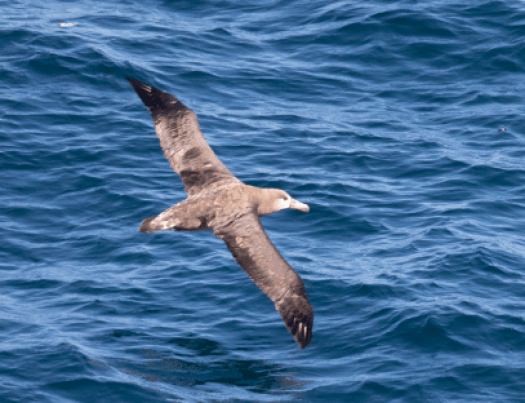
Black Footed Albatross
Black Footed Albatross. Photo Credit: Julie Chase/NOAA/ACCESS/Point Blue
squid
Squid. Photo Credit: Ryan Anderson/NOAA/ACCESS/Point Blue
nazca boobie
Nazca Boobie- from the Galapagos. Photo Credit: Julie Chase/NOAA/ACCESS/Point Blue
sooty shearwater
Sooty Shearwater. Photo Credit: Julie Chase/ NOAA/ACCESS/Point Blue

Taylor Planz: Oodles of Jobs on NOAA Ship Fairweather, July 13, 2018

NOAA Teacher at Sea
Taylor Planz
Aboard NOAA Ship Fairweather
July 9 – 20, 2018

Mission: Arctic Access Hydrographic Survey
Geographic Area of Cruise: Point Hope, Alaska and Vicinity
Date: July 13, 2018 at 8:50am

Weather Data from the Bridge
Latitude: 64° 29.690′ N
Longitude: 165° 26.276′ W
Wind: 15 knots SW, gusts up to 25 knots
Barometer: 761.31 mmHg
Visibility: 10+ nautical miles
Temperature: 14.4° C
Sea Surface Temperature: 15° C
Weather: Cloudy, no precipitation

Science and Technology Log
As you may or may not know, NOAA stands for National Oceanic and Atmospheric Administration. NOAA is a branch of the Chamber of Commerce and gets funded by the federal government to undergo many important tasks. Their mission is “to understand and predict changes in climate, weather, oceans, and coasts, to share that knowledge and information with others, and to conserve and manage coastal and marine ecosystems and resources.” (http://www.noaa.gov/about-our-agencyNOAA Ship Fairweather’s role in that mission is to measure and understand changes in the sea floor to allow for safe navigation in our world’s oceans and seas.

Two NOAA Corps Members prepare to dive under the ship to clean sound-measuring instruments.
Two NOAA Corps Members (LT Moulton top, ENS Siegenthaler bottom) prepare to dive under the ship to clean sound-measuring instruments.

Many different career specialties are required to keep the ship running smoothly. The NOAA Commissioned Officer Corps operates ships, conducts dive operations, and manages the hydrographic research projects assigned to the ship. They make up one of the seven uniformed services of the United States: Army, Navy, Marine Corps, Airforce, Coast Guard, NOAA Commissioned Officer Corps, and Public Health Service. All NOAA Corps members have a bachelors degree or higher in a STEM field; some of the degrees earned by Corps members on NOAA Ship Fairweather are marine biology, environmental science, wildlife ecology, chemistry, physics, and math.

The Survey Department is comprised of scientists who exclusively focus on the hydrographic mission. They operate and monitor instruments, collect and process data, and deploy and recover survey equipment. Data collection sometimes takes place on the ship and sometimes on small boats. They have to be proficient with advanced hydrographic software and with combining multiple sources of data into one. I have even seen members of the Survey Team conducting dive operations, so being dive-certified is very useful for the job. The Survey team makes nautical charts used by many different industries worldwide.

We have the option to eat fresh fruits and vegetables at every meal, and there is always a new kind of meat to try! This meal was the first time I have ever eaten lamb!
Fresh fruits and vegetables are served at every meal, and there is always a new kind of meat to try! This was my first time trying lamb!

The Deck Crew consists of Able-Bodied Seamen (ABs) and General Vessel Assistants (GVAs). ABs and GVAs must be knowledgeable and capable of completing many types of work. They perform general maintenance, infrastructure repair, sanitation, and upkeep of the ship. They also assist in emergency operations and the launch and recovery of small boats. Another department is the Steward Team who cook our food, clean the mess (dining area) and galley (kitchen), and wash dishes in the scullery (dish room). They often work 12 hour days, and their work is needed 7 days a week. So far, they have planned nothing but delicious meals for us all to enjoy (especially the desserts!).

EU Meissner cuts a gasket to fit in between the engine and exhaust mainfold
EU Meissner cuts a gasket to fit in between the engine and exhaust manifold

Engineers keep the ship functioning well by inspecting, maintaining, and repairing all of the ship systems (water, sewage, power, heating, etc.). They must be familiar with a vast array of equipment in order to do their job well! We also have one medical professional, a Physician’s Assistant, who works in the sick bay to treat anyone who may be ill or injured and assist with emergency operations. Visitors frequent the ship as well. Currently, there is a meteorologist from the National Weather Service and an intern from Loyola University Chicago on board. Specialists may come aboard for a few days or a whole trip depending on what kind of work they are doing. As you can see, working aboard a ship is not limited to ocean-related careers. You can find positions for many different interests, and all of these people get to work in an environment that most others don’t get to experience!

In my previous blog, I promised to include a picture of a nautical chart developed by the multibeam echosounder (MBES) on NOAA Ship Fairweather and its small boats. The photo below shows progress on a survey that began in April 2018. As you can see by the colored boxes that not all of the surveying is yet complete. NOAA Ship Fairweather has experienced a fairly difficult season with some mechanical setbacks, but they use every minute possible when underway, sometimes working 24 hours per day in designated shifts to finish a job. Every team on this ship does a great job working together and adjusting to the unexpected!

This sketch was completed by staff on NOAA Ship Fairweather in May 2018 to replace surveys that were last updated as long ago as 1916.

The numbers around the chart show depth in fathoms from previous surveys (the survey is in meters). Before echosounding technology was developed, surveys were often completed using lead lines. Lead lines are exactly what they sound like; there is a long rope with a block of lead attached to the end. It is slowly lowered through the water column until it hits the sea floor. The line is then pulled back up and the water depth is measured. This form of surveying gives mariners some idea of what the sea floor looks like, but you can see that current technology allows for a fuller coverage map of the area. This is helpful because fishing and transportation ships need to know what obstacles they may encounter below the surface of the water while traveling.

Personal Log

Two whale ribs at the entrance of the Carrie McLain Museum in downtown Nome

Our ship is very close to Nome’s town center, and there are a few interesting things to do and see! Nome is the ending point of the famous Iditarod Sled Dog Race. You can find photos all over town of previous competitors in addition to standing under the arc of the finish line in the middle of town. There is a museum in town, the Carrie McLain Museum, that showcases the beautiful history of Nome and has over 15,000 artifacts.

Tropospheric Antennas build in the 1950s from the White Alice Communications (WACs) System

It’s also very easy to access some beautiful hiking. I hiked Anvil Mountain yesterday with a couple other friends on the ship. During our hike, we encountered two separate herd of Muskox. They are large, gentle creatures that call the Arctic regions their home. You can learn more information on this National Geographic website. We made sure to keep a safe distance away because both herds had young, and we did not want them to feel threatened in our presence.

A herd of Muskox on Anvil Mountain

After a few extra days in Nome, I am happy to announce that we began our 22 hour journey to Point Hope at 10:00 this morning! The survey work will start once we reach our final destination. If all goes well, we will cross the Arctic Circle tonight. There is a history in the Navy of awarding sailors unofficial certificates for crossing navigation lines at sea. For example, sailors earn the “Shellback” when they cross the Equator by boat. When we cross the Arctic Circle, many of us onboard will earn the “Blue Nose”. You can see other unofficial certificates that are offered around the globe on this Navy website.


I took this picture at 4:30am on July 13. Sunrise was at 5:03am. Even though the sun technically "sets", it doesn't get dark at night during this time of year.
I took this picture at 4:30am on July 13. Sunrise was at 5:03am. Even though the sun technically “sets”, it doesn’t get dark at night during this time of year.

 Did You Know?
In January of 1925, the Nome hospital realized their treatment serum for the deadly diptheria infection was expired, and the winter weather was too harsh to send a replacement via plane. People began to get infected, and they were in a state of emergency! If treatment didn’t arrive soon, the entire town could acquire the disease. Luckily, over twenty sled dog mushers volunteered to take part in a relay on the Iditarod Trail, spanning over 650 miles of wilderness. The final sled dog team was led by 3-year old Balto, a siberian husky. Does this story sound familiar? In 1995, a cartoon movie was made and given the name “Balto” in honor of the brave, rookie sled dog who led his team into Nome on February 2, 1925 to save the town!

Question of the Day
How many nautical names can you think of for rooms/locations on the ship, and what would their equivalent name be on land? (For example:  the “scullery” = “dish washer”).
Hint: reread the “Science and Technology” section of this blog for a few answers! Feel free to leave your answer as a comment!

Answer to Last Question of the Day:
If a CTD determined that the speed of sound in an area was 1,504 m/s and the time it took for the sound wave to travel from the ship’s transmitter to receiver was 0.08 seconds, how deep was the water in that specific area? 

  1. The time must be divided in half to find the time it took for the sound to travel one way:
    0.08 seconds x 0.5 = 0.04 seconds
  2. Plug your known values into the equation: distance = rate x time
    rate = 1,504 m/s          time = 0.04 seconds
    distance = (1,504 m/s) x (0.04 seconds)
    distance = 60.16 meters deep