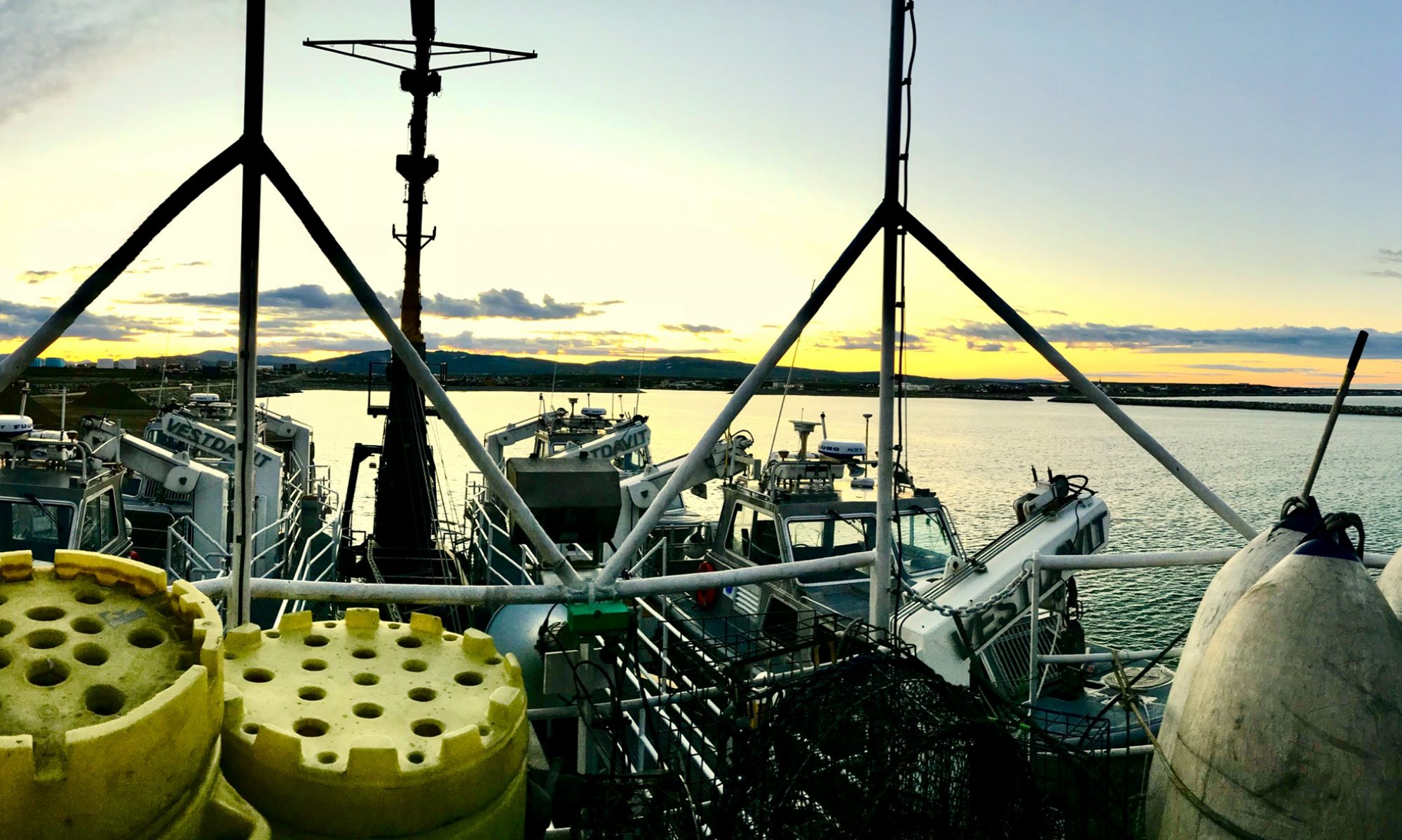
When I received my assigned schedule for my time at sea aboard the R/V Tommy Munro, I was participating in Leg 1 of the Summer SEAMAP Groundfish Survey that departed Biloxi, MS on July 18 and returned to Biloxi, MS on July 27. In a previous post, I highlighted the changes that have occurred since its original planned journey (departing from Galveston, TX instead of Biloxi, MS; change in ships from Oregon II to Tommy Munro; and change in dates from 6/20 – 7/3 to 7/18 – 7/27). With all of these changes, the cruise was delayed by one day because of logistical concerns. Once everyone boarded the vessel on the evening of July 19 and we left dock, it truly felt like this experience was actually happening… and it was. But as they say, especially among scientists, one should always expect the unexpected.
On early Sunday morning while asleep following my shift, I was awoken by one of my bunkmates that we would by stopping the survey and heading to port early because of an emergency issue with a crew member. We were expected to arrive in Biloxi on Monday, July 25 by 6:00 am.
As Sunday evening came around, the estimated time of arrival was moved up to 4:30 am so I simply stayed up so I would be packed and ready to go once we reached port. My immediate worry turned to my flight from Biloxi to Dallas but the NOAA Teacher at Sea staff were on it and I was confronted with a good news/bad news scenario. The good news? I was able to get on a flight for Monday. The bad news? The flight was scheduled for 7:00 pm. So I stayed aboard the ship until 12 Noon and then called for a taxi. I decided to contact the driver who took me from the airport in Biloxi upon arrival. He was honest, friendly and personable so I decided to see if he was available for a ride to the airport. This turned out to be another good news/bad news scenario. The good news? Yes, the taxi cab driver was available to pick me up and take me to the airport. The bad news? He would be able to pick me up until 3:00 pm, leaving me with a 3-hour wait but I felt good knowing I had a ride to the airport.
As luck would have it, the driver showed up about 15 minutes early and I was off to the airport. Following check in at the counter, I went through security and on to my gate to await the flight. There were several changes in the departure time but in the end it turned out to be delayed approximately 30 minutes. The flight was short in duration (about 90 minutes) and smooth. The flight is detailed in the attached figure below.
Information Regarding my Homeward Bound Flight
After a short wait at baggage claim to retrieve my luggage and a 30-minute taxi ride home, it was the end of a very tiring day, and the beginning of a period of reflection and processing of a very exciting experience. In the next and final blog post, I will share my reflections from my time as a NOAA Teacher at Sea.
In this installment of my exercise of the Ocean Literacy Framework, I would like to ask you
to respond to three questions about the sixth essential principle (The ocean and humans are inextricably interconnected.), presented in a Padlet accessed by the following link:
Remember, there are no right or wrong answers – the questions serve not as an opportunity to answer yes or no, or to get answers right or wrong; rather, these questions serve as an opportunity not only to assess what you know or think about the scope of the principle but also to learn, explore, and investigate the demonstrated principle. If you have any questions or would like to discuss further, please indicate so in the blog and I would be glad to answer your questions and initiate a discussion.
In this post, I would like to walk you through my interactions and observations with the science research being conducted aboard the R/V Tommy Munro, in particular, the steps that were taken during a trawling process. The entire process involved three stages: Preparing for Sampling, Conducting the Sampling, and Analyzing the Sampling with each stage consisting of six distinct steps.
Step 1: The ship travels to designated coordinates for sampling sites as determined for the particular leg of the Survey by SEAMAP (Southeast Area Monitoring and Assessment Program).
Ship Transport to Sampling Site
Step 2: Once the ship reaches the site, a Secchi disk is attached to a cable and lowered into the water off the side of the ship to determine visibility. When the disk can no longer be seen, the depth is recorded and the disk is raised and secured on ship.
Deployment of Secchi Disk
Step 3: A CTD (Conductivity, Temperature, and Depth) unit is then prepared for deployment. It is a rectangular chamber with sensors designed to measure physical properties of the water below including dissolved oxygen, conductivity, transmissivity, and depth.
Preparation of CTD Unit
Step 4: The CTD unit is powered on and first is submerged just below the surface of the water and left there for three minutes for sensors to calibrate. It is then lowered to a specified depth which is 2 meters above the floor of the body of water to protect the sensors from damage.
Deployment of CTD Unit
Step 5: Once the CTD unit has reached the designated depth, it remains there only for seconds until it is raised up and secured on board the ship.
Recovery of CTD Unit
Step 6: The CTD unit is then turned off and the unit is connected through a cable to a computer in the dry lab for data upload. Once the data upload is completed, the CTD unit is flushed with deionized water using a syringe and plastic tubing and then secured on the side of the ship.
Data Upload from CTD Unit
II. Conducting the Sampling
Step 1: The trawling process now begins with the trawl nets thrown off the back of the ship. The nets are connected to two planks, each weighing about 350 lbs, which not only submerges the nets but also provide an angled resistance which keeps the nets open in the form of a cone – optimal for sampling while the ship is in motion.
Preparation of the Trawling Process Part 1
Preparation of the Trawling Process Part 2
Step 2: Once the trawl nets have been released into the water from the ship, the ship starts up and continues on its path for 30 minutes as the nets are trapping marine life it encounters.
Onset of the Trawling Process
Step 3: After 30 minutes has transpired, a siren sounds and the ship comes to a stop. The two weighted planks are pulled upon the ship followed by the trawl nets.
Conclusion of the Trawling Process Part 1
Conclusion of the Trawling Process Part 2
Step 4: The trawl nets are raised and hoisted above buckets for all specimens to be collected. Then begins the process of separation. In the first separation, the marine life is separated from seaweed, kelp and other debris. The buckets with marine life and debris are then weighed and recorded.
Content Collection from the Trawl Part 1
Content Collection from the Trawl Part 2
Step 5: The bucket(s) with marine life are emptied upon a large table on the ship’s stern for separation according to species.
Separation Based on Species Part 1
Separation Based on Species Part 2
Step 6: Each species of marine life is placed in their own tray for identification, examination, and measurements inside the wet lab.
Species Sorted in Trays Part 1
Species Sorted in Trays Part 2
III. Analyzing the Sampling
Step 1: After all species were grouped in their trays, all trays were taken into the wet lab for analysis. Each species was positively identified, counted, and recorded.
Tray Transport to Wet Lab
Step 2: Once each species was identified and counted, the total number of species was weighed while in the tray (accounting for the mass of the tray) and recorded on a spreadsheet to a connected computer display system.
Total Weight Measurements
Step 3: For each species, the length of each specimen was recorded using a magnetic wand with a sensor that facilitated the electronic recording of the value into a spreadsheet.
Individual Length Measurements
Step 4: Weights of the collected species were recorded for the first sample and every fifth one that followed.
Individual Weight Measurements
Step 5: If time permitted between samplings, the sex of selected specimens for a species was determined and recorded.
Individual Species Sex Identification
Step 6:Once the entire sampling was analyzed, selected samples of specimens were placed in a baggie and stored in a freezer for further analysis with the remaining specimens returned to a larger bucket and thrown overboard into the waters. The separation table was cleaned with a hose and buckets were piled in preparation for the next sampling.
Finalize Process and Prepare for Next
In this installment of my exercise of the Ocean Literacy Framework, I would like to ask you
to respond to three questions about the fifth essential principle (The ocean supports a great diversity of life and ecosystems.), presented in a Padlet accessed by the following link:
Remember, there are no right or wrong answers – the questions serve not as an opportunity to answer yes or no, or to get answers right or wrong; rather, these questions serve as an opportunity not only to assess what you know or think about the scope of the principle but also to learn, explore, and investigate the demonstrated principle. If you have any questions or would like to discuss further, please indicate so in the blog and I would be glad to answer your questions and initiate a discussion.
In the prior blog post, I focused my attention on the ship that I would be sailing on during Leg 1 of the Summer SEAMAP Groundfish Survey and then took you on a virtual tour of the various compartments and areas of the R/V Tommy Munro. The ship is an enclosed, confined space and thus I found myself spending much of my time in most of the compartments and areas of the ship during my time on the cruise. In this post, I would like to describe what life was like on the ship as a member of the science team.
Work schedule
My primary role as a Teacher at Sea was to participate in the research process for this cruise – Summer Groundfish Survey. The detailed step-by-step description of the preparation, collecting, measuring, and analysis of sampling specimens of marine life will be covered in the following blog post. However, regarding the work conducted on the ship, research is ongoing continuously on a 24-hour schedule. The science research team was grouped into two teams with each team working a 12-hour shift. The two teams worked either the AM shift (12:00 am Midnight – 12:00 pm Noon) or the PM shift (12:00 pm Noon – 12:00 am Midnight), seven days a week. I was assigned the PM shift, which took a little getting used to but after the first full shift, the schedule became a routine schedule.
Small living quarters
One of things I should have packed prior to the cruise was a football helmet. Why you might ask? In the prior post as I took you on a tour of the R/V Tommy Munro, I showed pictures of my living quarters on the ship and my bed which provided limited space. If you will recall, my bed was the bottom bunk to the left in the photo below.
My living quarters aboard the R/V Tommy Munro.
In fact, as I retired to my bed on the first night, I bumped my head. I then got up to go to the bathroom and I bumped my head. Returning to the bed and positioning myself under the covers, I bumped my head yet again. After bumping my head an additional 1,374 times (not really but it seemed like an accurate enough number), I wish I had thought to pack a football helmet but I was not the only one having trouble moving in my bed without bumping my head. My bunkmates experienced the same thing – apparently a normal occurrence in life at sea.
Meals
One thing to note that while aboard the ship, I never… and I mean never… found myself hungry. There were all sorts of food to accommodate all tastes for all workers at all hours of the day and night. The cook on board the R/V Tommy Munro, John Z., was an amazing cook and continuously worked his magic in the kitchen to prepare three square meals for the crew and research staff. The three meals were breakfast at 5:30 am, lunch at 11:30 am, and dinner at 5:30 pm. One of my many pleasant memories after working one of my shifts and getting to bed by 1:30 am was being awoken by the smell of bacon wafting through the ship. Although I was going on 4 hours of sleep and was dead tired, the bacon was calling… no, scratch that… screaming my name and I was dressed and had a seat at the dining table within 15 minutes. Because of the long shifts often involving hard, strenuous work, many of the crew would sleep through a meal or two. However, leftovers of the prior meal were always available to those sleeping in to be heated up and enjoyed later. Lunch was the one meal that could be enjoyed by the PM crew before starting their shift and be the AM crew as they completed their shift on their way to bed. Some examples of meals that I enjoyed during my time on the R/V Tommy Munro is shown in the collage below.
Meals that I enjoyed during my time aboard the R/V Tommy Munro.
DO NOT Touch that Fish but… Bon Appétit!
As an educator interested in any and all things science, I would always look forward to the end of the sampling process and the emptying of the nets to survey our catch – a grab bag of a variety of different types of marine life and species. I had seen images of several types of marine life contained within the nets and recognized even fewer numbers by their name, but again this was an opportunity to learn and every sampling increased my library of marine science knowledge. During one such sampling (as shown in the photo below), I noted a multitude of one species of fish that were unique in their presence and I quickly understood them to be a species of lionfish.
The collection of fish from a sampling.
I was somewhat familiar with lionfish and knew them to be an invasive species, detrimental to marine ecosystems. For those interested in learning more about lionfish, please review the two graphics below:
An infographic describing the features and habitat of the lionfish. Credit: Hiram Henriquez / H2H Graphics & Design Inc.
Lionfish adversely impact coral reefs by feeding on herbivores which in turn feed on and keep a check of algae growth as well as pose a danger to any organism that comes in direct contact with them. They carry venomous spines which contain a deadly poison that can initiate a severe and painful allergic reaction in humans and can be fatal when in contact with other marine species. This is exactly why I was warned several times to avoid touching the lionfish… orders I followed to a T. When the sampling was brought into the wet lab for analysis, I asked Andre D. and my team members Kyle A. and Jacob G. questions about lionfish to find out more information about this interesting species of fish. We were discussing its detrimental impact to marine ecosystems, and the efforts currently underway to curtail the population of lionfish, when the ship’s cook, John Z., mentioned that they are very delicious and often served in seafood dishes like fish tacos. He went on to explain that one strategy to control the population of lionfish was to see if they could be eaten and if people would find it palatable. It turned out that this was the case for lionfish. I did not know that lionfish could be eaten and expressed surprise. He waited until the analysis of the sampling was over and then took two lionfish to the kitchen, cooked them, and brought the prepared fish to us in the wet lab to taste. I did and John Z. was right – it was very delicious!
Lionfish captured…and consumed!
Seasickness
During the Orientation webinar for all Teacher at Sea educators who would be sailing this season, the topic of seasickness came up and it was strongly suggested to have Dramamine on hand to relieve the unpleasant symptoms of motion sickness. Nawww, I’ll be OK. It would be one less thing to worry about during packing. My wife thought differently and urged me to take some with me…just to have on hand. So, I did pack some Dramamine just in case I need it. Well, on the first night of my cruise, it turned out that I needed it. As much as I thought I would be OK once the ship set sail, my stomach thought otherwise and experienced a mild case of nausea. I did take some Dramamine and allowed me to get some restful sleep and everything was fine. Dramamine did come in handy a couple of other times, particularly when the waters became more choppier than usual, but for the most part, I feel that I adjusted to life at sea quite well. Nevertheless, I was glad I had Dramamine with me.
No Wi-Fi
As a science teacher engaged in a once-in-a-lifetime opportunity like Teacher at Sea, I am particularly excited about sharing my experiences…as they happen in real time. However, updating blog posts, uploading photos to Facebook, or engaging followers through social media can only happen if Wi-Fi is available. The NOAA fleet of research vessels are equipped with Wi-Fi which as I was reminded on frequent occasions can be weak and intermittent. However, the R/V Tommy Munro was not part of NOAA and had no Wi-Fi. It was not possible for me to communicate my observations, my photos, and my narratives as a Teacher at Sea while it was happening. It just meant I would have to wait until the end of the cruise to begin sharing my experience.
On Deck scenic views
Although many might think that the lack of Wi-Fi would be a major inconvenience, I actually found it to be refreshing, offering me opportunities to simply relax. After a long shift and getting some rest, I would often go up to the top deck and just look gaze all around. At what you are probably wondering? Enjoy a sample of the breathtaking views I enjoyed from my perch atop the deck of the R/V Tommy Munro.
Scenic views from aboard the R/V Tommy Munro.
In this installment of my exercise of the Ocean Literacy Framework, I would like to ask you to respond to three questions about the fourth essential principle:
The ocean made Earth habitable.
presented in a Padlet accessed by the following link:
Remember, there are no right or wrong answers – the questions serve not as an opportunity to answer yes or no, or to get answers right or wrong; rather, these questions serve as an opportunity not only to assess what you know or think about the scope of the principle but also to learn, explore, and investigate the demonstrated principle. If you have any questions or would like to discuss further, please indicate so in the blog and I would be glad to answer your questions and initiate a discussion.
La línea hidrográfica de newport es un estudio de investigación oceanográfica realizado por científicos del Centro de Ciencias Pesqueras del Noroeste de NOAA y de la Universidad Estatal de Oregón en las aguas costeras de Newport, Oregón .
Los investigadores han recopilado métricas oceanográficas físicas, químicas y biológicas a lo largo de Newport Line cada dos semanas durante más de 20 años. Este conjunto de datos de más de veinte años nos ayuda a comprender las conexiones entre los cambios en el clima oceánico y la estructura y función del ecosistema en la corriente de California1,2,3.
Los datos de Newport Line se destilan en indicadores de ecosistemas oceánicos , que se utilizan para caracterizar el hábitat y la supervivencia de los salmónidos juveniles, y que también se han mostrado prometedores para otras poblaciones como el bacalao negro, el róbalo y la sardina4. Estos datos también brindan información crítica del ecosistema sobre problemas emergentes, como las olas de calor marinas3, la acidificación de los océanos, la hipoxia6 y la proliferación de algas nocivas7.
Newport line
Barómetro de la acidificación e hipoxia de los océanos en un clima cambiante
Los modelos climáticos globales sugieren que los cambios futuros en el afloramiento costero conducirán a una mayor incidencia de hipoxia y exacerbarán aún más los efectos de la acidificación de los océanos. La serie temporal de Newport Line proporciona una línea base de parámetros biogeoquímicos, como el estado de saturación de aragonito, un indicador de condiciones ácidas (Fig. 4). Los investigadores pueden comparar esta línea de base con posibles cambios futuros en la abundancia de organismos (p. ej., pterópodos, copépodos y krill) sensibles a la acidificación del océano y la hipoxia.
Equipo utilizado
Red vertical
Colocando la red vertical en el agua
red vertical desplegada verticalmente en el agua desde un buque de investigación
Una red vertical es una red de anillos con un ancho de malla pequeño y una forma de embudo largo. Al final, la red se cierra con un cilindro (copo) que recoge el plancton. Se despliega verticalmente en el agua desde un buque de investigación. Se utiliza principalmente para investigar la estratificación vertical/diagonal del plancton. Esto permite determinar la abundancia y distribución del mesozooplancton.
Red de bongó
Lavado de la muestra por la red bongó
Un barco de investigación tira horizontalmente de una red de bongo a través de la columna de agua.
Una red bongó consta de dos redes de plancton montadas una al lado de la otra. Estas redes de plancton son redes de anillos con un ancho de malla pequeño y una forma de embudo largo. Ambas redes están encerradas por un copo que se utiliza para recolectar plancton. Un barco de investigación tira horizontalmente de la red bongo a través de la columna de agua. Usando una red bongo, un científico puede trabajar con dos anchos de malla diferentes simultáneamente.
Asistiendo a Toby con la red Isaacs-Kidd
Red Isaacs-Kidd
Dimensiones de la red Isaacs-Kidd
La red de arrastre de media agua Isaacs-Kidd recolecta especímenes biológicos batipelágicos más grandes que los capturados por las redes de plancton estándar. La red de arrastre consiste en una red específicamente diseñada unida a una amplia paleta de buceo rígida en forma de V. La veleta mantiene abierta la boca de la red y ejerce una fuerza de presión, manteniendo la red de arrastre en profundidad durante períodos prolongados a velocidades de remolque de hasta 5 nudos. La abertura de entrada no está obstruida por el cable de remolque.
Muestras recolectadas
Muestras de red verticalMuestras de red bongó
Muestasas de Isaacs-Kidd
Kril recolectado de Isaacs-Kidd
Registro personal
¡ATAQUE DE TIBURÓN!
Así es, nuestro uCTD fue atacado por un tiburón.
Q.D.P.
En un día brillante y soleado, el equipo científico decidió lanzar el CTD en curso, ¡pero las cosas no salieron según lo planeado! Al recuperar el uCTD de regreso al barco, vimos una gran aleta dorsal zigzagueando cerca del uCTD, hasta que notamos que el uCTD ya no estaba conectado a la línea, por lo que no tuvimos más remedio que cancelar el uCTD. Deberías haber visto todas nuestras caras; no podíamos creer lo que vimos. Creemos que podría haber sido un:
Tiburón BlancoTiburón Salmon
uCTD (lo que se comió el tiburón)
CTD significa conductividad (salinidad), temperatura y (Depth) profundidad y permite a los investigadores recopilar perfiles de temperatura y salinidad de la parte superior del océano a velocidades en curso, a profundidades de hasta 500 m. Los exploradores oceánicos a menudo usan mediciones CTD para detectar evidencia de volcanes, respiraderos hidrotermales y otras características de aguas profundas que causan cambios en las propiedades físicas y químicas del agua de mar.
One way scientists assess the health of our ocean’s ecosystems is to take samples of zooplankton and ichthyoplankton (fish eggs and larvae), both on the surface of the water and at depth. Observations of these plankton can inform us greatly about productivity at the bottom of the food chain, spawning location and stock size of adults, dispersal of larval fish and crabs to and away from nursery areas, and transport of ocean currents.
The Newport Hydrographic (Newport Line) is an oceanographic research survey conducted by NOAA’s Northwest Fisheries Science Center and Oregon State University scientists in the coastal waters off Newport, Oregon.
Researchers have collected physical, chemical, and biological oceanographic metrics along the Newport Line every two weeks for over 20 years. This twenty-plus year dataset helps us to understand the connections between changes in ocean-climate and ecosystem structure and function in the California Current.
Data from the Newport Line are distilled into ocean ecosystem indicators, used to characterize the habitat and survival of juvenile salmonids, and which have also shown promise for other stocks such as sablefish, rockfish, and sardine. These data also provide critical ecosystem information on emerging issues such as marine heatwaves, ocean acidification, hypoxia, and harmful algal blooms.
Newport line
Barometer of ocean acidification and hypoxia in a changing climate
Global climate models suggest future changes in coastal upwelling will lead to increased incidence of hypoxia and further exacerbate the effects of ocean acidification. The Newport Line time-series provides a baseline of biogeochemical parameters, such as Aragonite saturation state—an indicator of acidic conditions. Researchers can compare this baseline against possible future changes in the abundance of organisms (e.g., pteropods, copepods and krill) sensitive to ocean acidification and hypoxia.
Equipment used
Vertical/half meter net
Getting the vertical net in the water
Vertical net deployed vertically in the water from a research vessel
A vertical net is a ring net with a small mesh width and a long funnel shape. At the end, the net is closed off with a cylinder (cod-end) that collects the plankton. It is deployed vertically in the water from a research vessel. It is mostly used to investigate the vertical/diagonal stratification of plankton. This allows the abundance and distribution of mesozooplankton to be determined.
Bongo net
Washing the sample down the bongo net
A bongo net is drawn horizontally through the water column by a research vessel
A bongo net consists of two plankton nets mounted next to each other. These plankton nets are ring nets with a small mesh width and a long funnel shape. Both nets are enclosed by a cod-end that is used for collecting plankton. The bongo net is pulled horizontally through the water column by a research vessel. Using a bongo net, a scientist can work with two different mesh widths simultaneously.
Assisting Toby with Isaacs-Kidd net
Isaacs-Kidd midwater trawl
Isaacs-Kidd midwater trawl dimension
Isaacs-Kidd midwater trawl collects bathypelagic biological specimens larger than those taken by standard plankton nets. The trawl consists of the specifically designed net attached to a wide, V-shaped, rigid diving vane. The vane keeps the mouth of the net open and exerts a depressing force, maintaining the trawl at depth for extended periods at towing speeds up to 5 knots. The inlet opening is unobstructed by the towing cable.
What we got?
Samples from vertical netSamples from bongo net
Isaacs-Kidd sample
Krill from the Isaacs-Kidd
Personal Log
SHARK ATTACK!
That’s right, our underway CTD was attacked by a shark.
R.I.P.
On a bright and sunny day, the science team decided to launch the underway CTD, but things didn’t go as planned! Retrieving the uCTD back to the ship we saw a big dorsal fin zigzagging close to the uCTD, until we noticed that the uCTD was no longer attached to the line, therefore we had no choice that to cancel the uCTD. You should have seen all of our faces; we couldn’t believe what we saw. We think it could have been a:
White sharkSalmon shark
underway CTD (what the shark ate)
CTD stands for conductivity (salinity), temperature, and depth and it enables researchers to collect temperature and salinity profiles of the upper ocean at underway speeds, to depths of up to 500 m. Ocean explorers often use CTD measurements to detect evidence of volcanoes, hydrothermal vents, and other deep-sea features that cause changes to the physical and chemical properties of seawater.