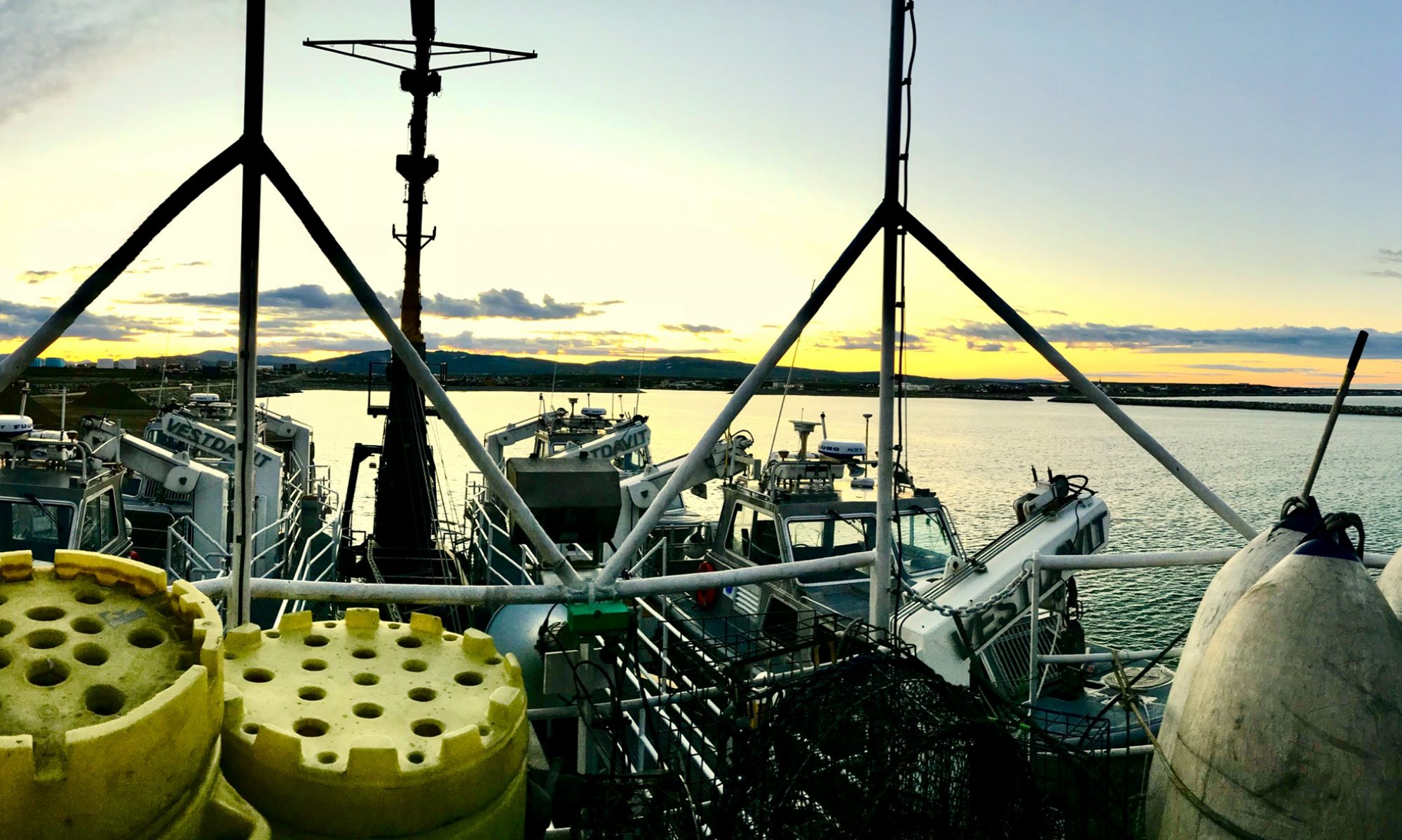
Barney Peterson: Rescue at Sea, August 23, 2016

NOAA Teacher at Sea
Barney Peterson

Aboard NOAA Ship OREGON II
August 13 – 28, 2016


Mission: Shark/Red Snapper Longline Survey

Geographic Area of Cruise: Gulf of Mexico

Date: Tuesday, August 23, 2016

Weather Data from the Bridge:

Latitude: 28 10.999 N

Longitude:  084 09.706 W

Air temperature: 90.68 F

Pressure: 1020.05 Mb

Sea Surface Temperature: 32.6 C

Wind Speed: 4.74 Kt

Science Log:

Rescue At Sea!

About mid-morning today the ship’s electrician found me to tell me that the night shift crew had just reported seeing a Sea Turtle near the line that they were currently deploying.  The turtle swam over the line and then dove toward the baited hooks some 30 meters down near the bottom.  Nobody is supposed to catch Sea Turtles; the stress of being on the hook can be fatal so immediate recovery and release is required in the case of an accidental catch.  The crew went into immediate pro-active rescue mode!

Loggerhead Turtle
File photo of a Loggerhead Turtle.

The deployment was stopped. The line was cut and a final weight and a second hi-flyer were deployed to mark the end of the set for retrieval.  The Captain altered course to bring the ship back around to a point where we began retrieving the line.  Crew moved to the well deck and prepared the sling used to retrieve large sharks; it would be used to bring a turtle gently to the deck in the event that we had to remove a hook.

As retrieval started and gangions were pulled aboard, it became obvious that this set was in a great location for catching fish.  8 or 9 smallish Red Grouper were pulled in, one after another. Many of the other hooks were minus their bait.  The crew worked the lines with a sense of urgency much more intense than on a normal retrieval!  If a turtle was caught on a hook they wanted it released as quickly as possible to minimize the trauma.

As the final hi-flyer got closer and the last of the gangions was retrieved, a sense of relief was obvious among the crew and observers on the deck.  The turtle they spotted had gone on by without sampling the baited hooks.

On this ship there are routines to follow and plans in place for every emergency.  The rescue of an endangered animal is attended to with the same urgency and purpose as any other rescue.  The science and deck crews know those routines and slip into them seamlessly when necessary to ensure the best possible result.  This is all part of how they carry out NOAA’s mission of stewardship in our oceans.

Personal Log:

Here is Where I Live

I am assigned a bunk in a stateroom shared with another science crew member.  I am assigned to the top bunk and my roomie, Chrissie Stepongzi, is assigned to the bottom.  Climbing the ladder to the top bunk when the ship is rolling back and forth is like training to be an Olympic gymnast!  But, I seem to have mastered it!  Making my bed each morning takes determination and letting go of any desire for perfection: you just can’t get to “no wrinkles!”

stateroom
Find the Monroe Eagle in my nest aboard the OREGON II

Chrissie works the midnight to noon shift and I work noon to midnight so the only time we really see each other is at shift change.  Together, we are responsible for keeping our space neat and clean and respecting each other’s privacy and sleep time.

I eat in the galley, an area open to all crew 24/7. Meals are served at 3 regular times each day.  The food is excellent!  If you are on shift, working and can’t break to eat at meal time, you can request that a plate be saved for you.  The other choice for those off-times is to eat a salad, sandwich, fruit or other snack items whenever you need an energy boost.  We are all responsible for cleaning up after ourselves in the galley.  Our Chief Steward Valerie McCaskill and her assistant, Chuck Godwin, work hard to keep us well-fed and happy.

Galley
Everyone on the ship shares space in the galley where seats are decorated with the symbol of the New Orleans Saints… somebody’s favorite team.

There is a lounge, open to everyone for reading, watching movies, or hanging out during down time.  There is a huge selection of up-to-date videos available to watch on a large screen and a computer for crew use.  Another place to hang out and talk or just chill, is the flying deck.  Up there you can see for miles across the water while you sit on the deck or in one of two Adirondack chairs.  Since the only shade available for relaxing is on this deck it can be pretty popular if there is a breeze blowing.

Lounge
During off-duty times we can read, play cards or watch movies in the lounge.
Flying Bridge
The flying bridge is a place to relax and catch a cool breeze when there is a break in the work.

My work area consists of 4 stations: the dry lab which has computers for working with data, tracking ship movements between sample sites, and storing samples in a freezer for later study;

Dry Lab
The dry lab where data management and research are done between deployments

the wet lab which so far on this cruise, has been used mainly for getting ready to work on deck, but has equipment and storage space for processing and sampling our catch; the stern deck where we bait hooks and deploy the lines and buoys; the well deck at the front of the ship where lines and buoys are retrieved, catch is measured and released or set aside for processing, and the CTD is deployed/stored for water sampling.

We move between these areas in a rhythm dictated by the pace of our work.  In between deployments we catch up on research, discuss procedures, and I work on interviews and journal entries.  I am enjoying shipboard life.  We usually go to bed pretty tired, that just helps us to sleep well.  The amazing vistas of this ocean setting always help to restore my energy and recharge my enthusiasm for each new day.

sunset
Beautiful sunsets are the payoff for hot days on the deck.


Barney Peterson: Cut Bait and Fish! August 17, 2016

NOAA Teacher at Sea
Barney Peterson

Aboard NOAA Ship OREGON II
August 13 – 28, 2016


Mission: Shark/Red Snapper Longline Survey

Geographic Area of Cruise: Gulf of Mexico

Date: Wednesday, August 17, 2016

Weather Data from the Bridge:

Latitude: 25 29.664 N

Longitude: 082 02.181 W

Air temperature: 84.56 F

Pressure: 1018.13 Mb

Sea Surface Temperature: 30.5 C

Wind Speed: 13.54 Kt    East 12.72 degrees

Science Log:

The fishing process on the ship repeats itself in a well-defined cycle: cut bait, bait 100 hooks, drop hi-flyer, drop weight,  attach 50 tags and baited hooks, drop weight, attach 50 more tags and hooks, drop weight, deploy hi-flyer.  Put the CTD over the side and retrieve for water quality data.  Wait an hour.  Retrieve hi-flyer, retrieve weight, pull in first 50 hooks and detach tags logging any catch as they come in, retrieve weight, pull in next 50 hooks and detach tags logging any catch as they come in, retrieve last weight, retrieve last hi-flyer.  Process the catch as it comes in, logging tag number, gender, species, lengths at 3 points, life stage, and tag number if the catch is a shark that gets tagged, return catch to water alive as quickly as possible. Transit to the next sample site.  Wash, rinse and repeat.

That boils it down to the routine, but long line fishing is much more interesting and exciting than that!  Bait we use is Atlantic Mackerel, caught farther north and frozen, thawed just before use and cut into 3 pieces per fish.  A circle hook is inserted through each piece twice to ensure it will not fall off the hook…this is a skill that takes a bit of practice.  Sometimes hooks are pulled in with bait still intact. Other times the bait is gone and we don’t know if it was eaten without the hook catching, a poor baiting job, or more likely eaten by smaller fish, too little to be hooked.  When we are successful we hear the call “FISH ON!” and the deck comes alive.

The line with a catch is pulled up as quickly and carefully as possible.  Some fish are not securely hooked and are lost between the water and the deck…not what we want to happen.  If the catch is a large shark (generally 4 feet or longer) it is raised to the deck in a sling attached to the forward crane to minimize the chance of physical injury.  For large sharks a camera with twin lasers is used to get a scaled picture for estimating length.  There is a dynamometer on the line between the sling and the crane which measures pressure and converts it to weight.  Both of these processes help minimize the time the shark needs to be out of water with the goal of keeping them alive to swim away after release.  A tag is quickly attached to the shark, inserted under the skin at the base of the second dorsal fin.  A small clip is taken from a fin, preferably from the pelvic fin, for DNA studies. The sling is lowered back to the water and the shark is free to swim away.  All data collected is recorded to the hook-tag number which will identify the shark as to geographic location of the catch.

Shark in sling
A sandbar shark being held in the sling for measurements.

Sometimes the catch is a smaller shark or a bony fish:  a Grouper, a Red Snapper, or any one of many different types of fish that live in this area.  Each of these is brought onto the deck and laid on a measuring board. Species, length, and weight are recorded. Fin clips are taken.  Many of them are on the list of species of recreational and commercial importance.  These fish are retained for life history studies which will inform future management decisions.  In the lab they are dissected to retrieve otoliths (ear stones) by which their age is determined.  Depending upon the species, gonads (the reproductive organs) may be saved for study to determine the possibilities of future reproductive success.  For certain species a good-sized piece of flesh is cut from the side for fraudulent species voucher library use.

After the smaller sharks are measured, fin clipped, gender identified, life stage is determined and weight is taken, they are tagged and returned to the water as quickly as possible.  Tags on these sharks are a small, numbered plastic tag attached by a hole through the first dorsal fin.

This is a lot to get done and recorded and it all happens several times each shift.  The routine never varies.  The amount of action depends upon the success of the catch from any particular set.  This goes on 24 hours per day.  The only breaks come as we travel between the sites randomly selected for our sets and that time is generally spent in the lab.

(Thanks go to Kevin Rademacher, Trey Driggers and Lisa Jones, Research Fisheries Biologists, for contributing to this entry.  File photo NOAA/NMFS)

Personal Log:

I do not need 12 hours of sleep.  That means I have several hours at the start or end of each shift to write in my journal, talk to the other members of the crew, take care of personal business such as laundry and communicate with home via email.  Even so, every day seems to go by very quickly and I go to bed thinking of all the things I have yet to learn.  In my next posts I will tell more about the different kinds of sharks and introduce you to some of the other people on the ship.  Stay tuned.

Barney Peterson:Welcome to OREGON II, August 14, 2016

NOAA Teacher at Sea
Barney Peterson

Aboard NOAA Ship OREGON II
August 13 – 28, 2016


Mission: Shark/Red Snapper Longline Survey

Geographic Area of Cruise: Gulf of Mexico

Date: August 14, 2016

Weather Data from the Bridge:

Latitude: 25 23.297 N

Longitude: 083 40 .794 W

Air temperature: 87.6 F

Pressure: 1017.04 Mb

Sea Surface Temperature: 30.6 C

Wind Speed: 16.6 Kt    East 86.74 degrees

Science Log:

We will set clocks tonight SHIP WIDE.  At 0100 it will become 0000.  Please plan accordingly.

What this translates to is that when we moved into the Gulf of Mexico we went to the Central Time Zone.  That means only a 2-hour difference between the ship and my home in the Pacific Northwest.  That also means I, who am on the noon-to-midnight shift, got one more hour to sleep (or whatever) Sunday night.

I am busy learning about schedules on the ship. The science group is split into 2 shifts.  We work days: noon to midnight; or nights: midnight to noon.  These hours rule our lives. Meals are served at 0630, 1100, and 1700.  You eat your first meal before you go on shift and your last at shift’s end.  During the 12 hours you are off shift your stateroom is yours and your roommate is expected to stay away and let you sleep.  The opposite is true for your time on: take everything you may need with you when you leave.  Showers, laundry and personal business are fit into your 12 hours off.  Shipboard courtesy requires that we keep voices low in the passageways and be careful not to let doors slam.  Somebody is always trying to sleep.  There is always a quiet spot somewhere to relax for a moment if you get the time: on the flying bridge, at the table on the stern, in the lounge or at a galley table.

Sunday, at 1230 hours, we had safety drills, required for all personnel within 24 hours of departure and once a week thereafter on every cruise.  Reporting stations for 3 different types of drills are posted in staterooms and throughout the ship.  Nobody is exempt from participation.

The signal sounds: a 10 second ringing of the bell: FIRE!  The PA announces a drill: “All hands report to assigned stations.”  Members of the science team quickly make their way to the stern.  By the galley stands a crew member with a sign reading: Fire ahead – detour.  After we arrive at our station, get checked off and, when all crew have been accounted for, return to our staterooms.

Next – 7 short and one long ring on the bell: ABANDON SHIP!  Announcement: “Drill.  All hands report to the bow with PFD’s and survival suits.”  We grab our life jackets and “Gumby suits” and head to the bow where we are checked off as we arrive.  We are required to don our “Gumbies” in 2 minutes or less – not impossible, but not simple either.  I’ve done it before.  The hardest part is getting the hood on and zipping up with your hands jammed into the lobster-claw gloves and your shoes and hat crammed into the suit with you…that’s when you discover just how much too long the arms and legs are.  It isn’t pretty, but if we actually end up in the water, those neoprene suits will be our best protection against the deadly, energy-sapping effects of hypothermia!

Just after we have stripped out of the “Gumby” suits, rolled them up and stowed them and our life jackets back in staterooms, we get the next signal.

3 long bells: “MAN OVERBOARD!” This drill is important too, but feels almost like an anti-climax.  It could mean the difference between life and death to a fellow crew member who falls into the water when the ship is moving.  Science team reports again to the stern and, in a real emergency, would receive instructions for participating in spotting or assisting in a rescue.  This time we stay and listen to a safety talk about our work with long lines, hooks, bait, and our possible catch which could include all kinds of fish and sharks.  There are very definite rules and procedures to ensure crew are safe and our catch is handled with care and respect.  If all goes well…our first lines will be set Monday night!

Personal Log:

Sitting on the flying bridge about 1900 Sunday evening, 3 of us spotted a small boat about ½ mile away that seemed to be drifting aimlessly.  There were two enormous cruise ships coming up behind us and they went around it on either side after cutting their engines to reduce their wake.  A crew member from the bridge watched from our deck as somebody on the boat fired a flare.  We were informed that radio contact was established: the boat was adrift, out of fuel, and we would stand by until the Coast Guard arrived. The OREGON II cut speed and circled back to stay closer to the small boat.  One of the cruise ships was also standing by while the other went on its way.  After about 20 minutes the white and red Coast Guard ship appeared and, when it reached the small boat, we were released to go on our way.

Seeing this response to another vessel in need of help put emphasis upon the importance of participating fully in our drills and understanding the measures in place to keep us safe and aid other ships sharing this big ocean.

Did You Know?  What is the largest shark found in the Gulf of Mexico?

going aboard
Teacher at Sea Barney Peterson about to board NOAA ship OREGON II

Barney Peterson: Spreads Like A Ripple, July 1, 2016

Field studies of salmon habitat with 4th grade students

NOAA Teacher at Sea

Barney Peterson

(Soon to be) Aboard NOAA Ship Oregon II

August 13-28, 2016

Mission: Shark/Red Snapper Longline Survey

Geographic Area of Cruise: Gulf of Mexico

Date: July 1, 2016

Spreads Like a Ripple

“Yep, sounds exciting, but you teach about Pacific Salmon, so how useful is learning about Hammerhead Sharks in the Gulf of Mexico really going to be?” my friend asked.

Her reaction was not unusual. I am a 4th grade teacher with 26 years of experience in the Everett Public Schools in Washington State. I have put some serious thought into using my Teacher At Sea experiences to open eyes and minds to the world around us. I think the possibilities are endless.

My first Teacher at Sea assignment was summer 2006 aboard NOAA ship, RAINIER, on a hydrographic survey mission in the Shumagin Islands, Gulf of Alaska. From this I developed lessons on making contour maps using sticks and a sounding box. I grew my understanding of how weather systems that develop in the Gulf of Alaska influence our weather in Puget Sound. I used that knowledge to help students understand relationships between geography, weather and climate. I learned about birds, mammals and fish in the ocean food chain and inserted that learning into helping students understand the life cycle of the salmon we raise in our classroom.

In 2008 I had the opportunity to share a Teacher in the Air experience with fellow TASA Dana Tomlinson from San Diego, California. We flew with a winter storm research crew from Portland, Oregon; traveling 1800 miles out over the Pacific Ocean and back tracking developing weather systems. We created lessons that helped students understand the importance of using accurate global positioning information to follow low pressure systems as they moved across the ocean toward the west coast of North America. We put together a unit to help them understand how air pressure, relative humidity, and wind speed and direction are measured and how that data is used to understand and predict weather patterns. My students still use those lessons as we participate in the GLOBE program, sending data in every day of the school year.

That was then, and this is now:

Field studies of salmon habitat with 4th grade students

At school, I have students use globes and inflatable Earth Balls to track from the Arctic Ocean through every other ocean and back to the Arctic without taking their pointer-fingers off ocean surface. Then they start to get it… the connections: there is really just one big ocean! We learn about the water cycle and I challenge them to explain “where the water comes from.” We learn about food webs and energy flow. Our salmon studies teach them about producers, consumers and decomposers. They get the idea of cycles and systems and how all parts must work together. They learn to consider what happens when one step of a cycle fails or one part of a system is missing. We learn about organisms labeled “indicator species” that help scientists track changes in the health of ecosystems.

True, all of this is presented with a focus on where we live in the Pacific Northwest. But…that is just one place on the edge of our one ocean. Time comes to broaden the view. There are many life cycles depending upon the continual efficient functioning of Earth’s systems. Since there is just one ocean, nothing really happens in isolation. The same kinds of events that disrupt life cycles in one place will certainly disrupt them in another.

In August I will be aboard the NOAA ship, OREGON II, in the Gulf of Mexico. Our mission is to investigate and gather data about Scalloped Hammerhead Sharks and Red Snapper. They share an ecosystem and participate in the same food web. They are subject to consequences of the same environmental changes and catastrophes that happen in other parts of our ocean.

Drop a pebble into the water anywhere and ripples spread until they reach the outermost boundaries. We all share one ocean. Where does the ripple stop?