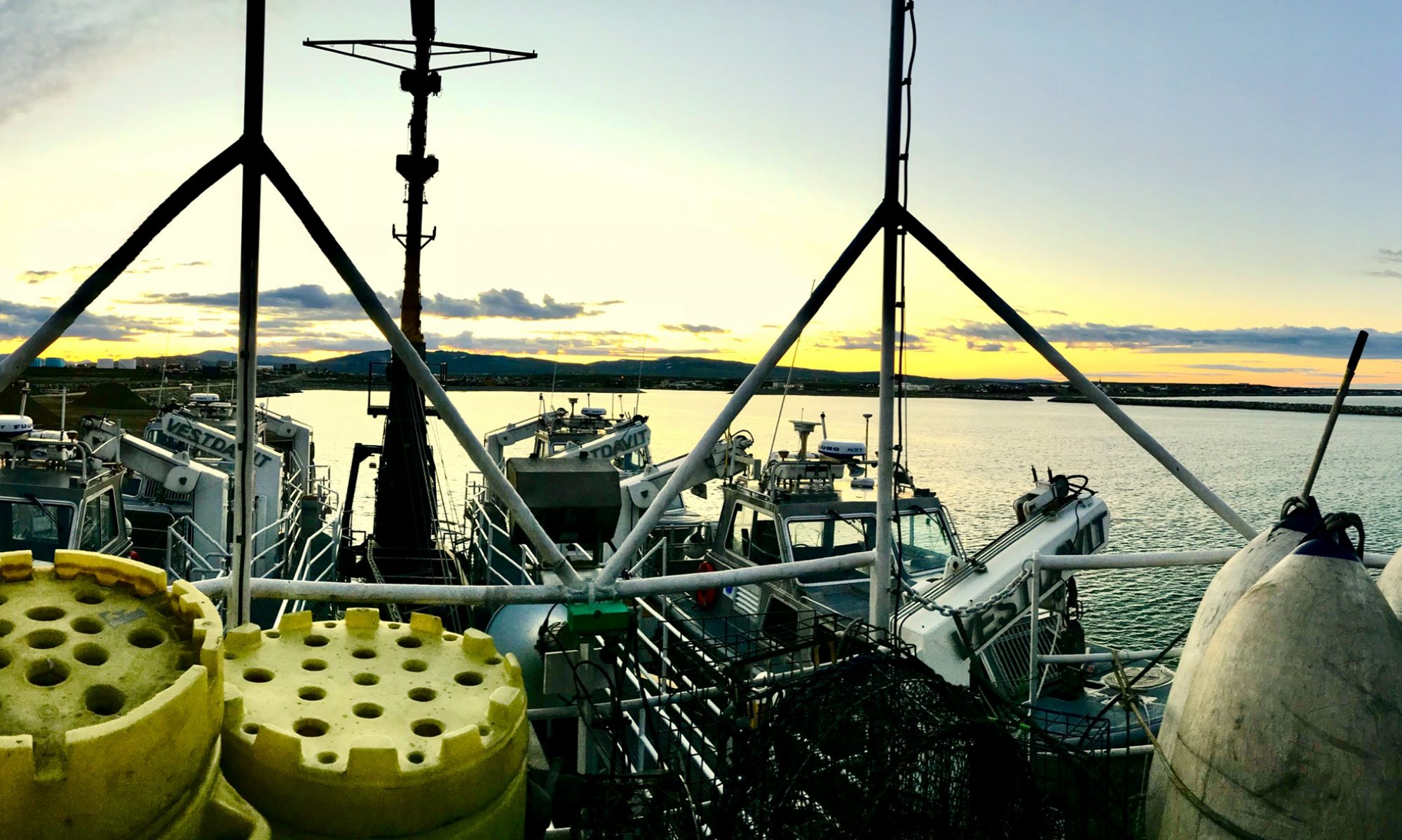
Cheryl Milliken: Drifting and Setting, July 30, 2025

NOAA Teacher at Sea

Cheryl Milliken

Aboard NOAA Ship Oregon II

July 25 – August 10, 2025

Mission: Bottom Longline Survey, Leg 1

Geographic Area of Cruise: Atlantic Coast of Florida

Date: July 30, 2025

Weather Data from the Bridge

Latitude: 28° 35.1’ N

Longitude: 080° 14.9’ W

Wind speed: 9 knots

Wave height: 0-1 ft.

Air temp.: 31.3° C (88° F)

Sky: Few clouds

Science and Technology Log

Before I begin, my friend asked if we have a streaming presence. Although we do not, NOAA supports a website that tells where NOAA Ship Oregon II (and the rest of the fleet) is located at this link: https://coastwatch.noaa.gov/cwn/apps/noaa-shipwatch.html. This week we are completing many stations off the Florida coast and have made it as far north as Cape Canaveral.

On Tuesday we launched our first drifter, from NOAA’s Adopt-a-Drifter (ADP) program. The deployment went off without a hitch. Soon we will be able to view its movements using the following link: https://adp.noaa.gov/trackadrifter/falmouth-high-school/. Oceanographers from NOAA’s Atlantic Oceanographic and Meteorological Laboratory (AOML) in Miami, Florida, set up this dashboard to eventually see all three drifters in the ocean.

Images: (1) Drifter #1 in wet lab; (2) Cheryl and drifter #1 prior to deployment; (3) Cheryl and Josh (chief bosun) deploying Drifter #1; (4) Cheryl and Josh preparing to launch; (5) Drifter #1 in the Gulf Stream!

Tuesday night at 2030 (military time for 8:30 PM), we began preparing the first longline of the trip! This process looked daunting the first time we did it, but I’m sure we will settle into a groove soon.

A longline is a series of baited hooks stretched out for a long distance (ours stretches for a mile!). The line is weighted down at the beginning, middle, and end and marked by flanking high flyers, or buoys with long poles and a flashing beacon on top of a reflective panel so the ship’s captain can return to retrieve the gear.

We set out 100 gangions clipped to the mile-long longline. The ship steams forward, and the bridge calls out every 1/10 of a mile (10, 20, etc.) to help the bosun pace the number of gangions along the mile-long line. A gangion is a fishing unit consisting of a metal number to keep track of the hook, a clip, a length of monofilament with a circle hook at the end, and a piece of bait (we used mackerel cut into thirds). A circle hook is used because the curve of the hook reduces the chances that a fish or sea turtle will swallow the hook (an event that often mortally wounds the fish because it is very difficult to remove, or it can hold a sea turtle underwater and may drown them ). The bait has to be double-hooked (pierce it twice with the hook) to secure it.

Once the 100th gangion is attached to the monofilament, the bosun secures a weight, the second high-flyer, and a separate floating buoy to mark the end of the longline. Then the timer begins: the longline soaks, or stays in the water, for an hour from the time the second high flyer hits the water to the time we retrieve the first high-flyer. Here is an infographic made by Stephen Kade, former Teacher at Sea from 2018:

an illustration titled Long Line Fishing on the NOAA Ship Oregon II. The ship is depicted at the (completely flat) surface of the ocean. in the foreground, the ocean surface is cutaway to reveal a view of a deployed longline both above and beneath the surface. two buoys with tall fins ("high flyer buoys") are tied to each end of a line that is weighted at the ends and middle to stay on the ocean bottom. short lines extending off the longline in two directions are labeled baited gangions. there are silhouettes of sharks all around. at the top, there are 10 lines of text explaining the steps for deploying and retrieving the long line.

Infographic of longline survey aboard NOAA Ship Oregon II, created by Stephen Kade, NOAA TAS 2018.

We did not land any fish at our first station, but we have a long way to go! The night watch caught two sharks: one silky shark and one dusky shark. I can’t wait to see some on our watch!

I am enjoying being on the ship and meeting new people. I will be interviewing some of them for this blog, so you can see for yourself the diversity of careers needed to support a survey cruise.

Interview with LT Luke Petzy

portrait of a man in a navy blue t-shirt, a blue NOAA Corps baseball cap, and an orange life vest. he stands at a railing on the deck of the ship. the sky and the ocean are bright blue.

LT Luke Petzy of NOAA Corps on NOAA Ship Oregon II.

LT Luke Petzy was one of the first members of NOAA Corps (National Oceanic and Atmospheric Administration Commissioned Officer Corps) we met, as he led the “Welcome Aboard” meeting for all new volunteers and crew. From the outset, it was clear that safety is a top priority on this vessel.

The meeting covered essential safety procedures and introduced us to the impressive array of equipment installed to ensure our well-being at sea. Located at the top of the ship is an EPIRB (Emergency Position-Indicating Radio Beacon), which is triggered to call for help via satellite if the ship is in distress. In addition, SARTs (Search and Rescue Transponders) emit radar signals to aid in locating the ship during an emergency. 

Each person aboard is assigned to a specific life raft and issued an EEBD (emergency escape breathing device) for use in smoke-filled or low-oxygen situations. Hard hats and work vests are mandatory when working on deck. It is reassuring to know that we are in capable and well-practiced hands, as they perform drills at the start of each leg of the survey. Here’s a closer look at LT Petzy’s background and how he came to serve in the NOAA Corps.

How did you become a part of the NOAA Corps?

I grew up in Methuen, MA, and graduated with a degree in Natural Resource Studies and Fisheries Conservation from UMass Amherst. I took a SCUBA course that culminated in a trip to Key Largo, FL, which really hooked my interest in fish and the ocean. After college, I moved to St. John, US Virgin Islands to work at an eco-resort, where I met my wife, Corie. We moved back to MA when I got a job as a fisheries observer out of Woods Hole to go out on different types of fishing boats. It was the coolest job, but also the most dangerous. The job had a very unpredictable schedule and no way to call home for a couple of weeks while I was at sea observing. It was a really great experience but also a tough lifestyle.

In 2015 I moved back to St. John with my wife. I got my captain’s license and taught scuba. In 2019 I got a job in Newburyport, MA, as a tow boat captain.

Later that year, I applied and was accepted to NOAA Corps training. This job has given me the ability to drive boats and be a part of scientific operations and have adventures. I am a NOAA diver and have to dive a certain amount per year to maintain proficiency.

Why is your work important?

My job is to navigate the ship. I also work with the science crew to plan trips to complete the surveys. I like working for an agency that promotes science, scientific integrity, and an environmentally focused mindset. My job supports these efforts. I am responsible for the safety of the crew and safety of the ship, and I take pride in that.

What do you like most about your job?

I like seeing the ocean in a way that many others don’t, in all its moods and forms. I get to see marine mammals and marine life during the surveys. It is a rewarding feeling after we complete a successful mission.

What is the most important piece of technology that you use in your job?

The radar and electronic chart display system are so important to know where we are, and to avoid other vessels. I have to add the depth sounder, too, to avoid shallow water. 

What do you think you would be doing if you weren’t working at NOAA?

I would put my captain’s license to use on ecotourism boats or work with schools to bring students out on the water.

Do you have any hobbies?

Scuba, woodworking, and playing guitar. I have my ukulele on this trip to practice.

Personal Log

Life aboard NOAA Ship Oregon II is comfortable and exciting. The scientific crew work twelve-hour shifts, so a lot of time is spent with four other people on my watch. Each person brings different strengths to the group and takes on a variety of roles and responsibilities when we are fishing. I will share more about that in my next blog.

Animals seen:

  • Flying fish (they don’t actually fly, but the ship’s movement definitely motivates them to scoot along or glide)
  • Brown booby (a seabird)
  • Barracuda! The fishermen troll behind the ship when their work is done, and this day they caught a barracuda. They did not keep it because the barracuda sometimes contains ciguatoxin, a toxin that causes ciguatera fish poisoning. We don’t want anyone to be poisoned on this trip!

L to R: Chief bosun Josh Cooper and skilled fisherman Sean Gronquist reel in the barracuda from the stern of the ship. Josh Cooper shows his barracuda catch to an excited group.

Did You Know?

Many sharks have only a few babies (called pups) at a time. Tiger sharks, however, can have up to a hundred! Their pups are often preyed upon by adult tiger sharks, including their mother!

Cheryl Milliken: We’re Steaming across the Gulf, July 26, 2025

view of NOAA Ship Oregon II in port in the evening. We can see the NOAA logo, the letters N O A A, and part of the hull number (R332)

NOAA Teacher at Sea

Cheryl Milliken

Aboard NOAA Ship Oregon II

July 26 – August 10, 2025

Mission: Bottom Longline Survey

Geographic Area of Cruise: Atlantic Coast of Florida

Date: July 26, 2025

Weather Data from the Bridge

Latitude: 29° 32.4’ N

Longitude: 087° 53.2’ W

Wind speed: 8 knots (peak 36 knots)

Wave height: 3’ swell (wind waves 1-2’)

Air temp.: 32.6° C

Sky: Cumulus and cirrus clouds, ⅜ cloud coverage

Science and Technology Log

Although we are going to spend a couple of days steaming before we reach our sampling stations on the Atlantic (east) side of Florida, crew and staff having been gearing up to prepare for the work ahead. 

Personal Log

After a stormy start that delayed our departure by a day, I’ve officially embarked on my journey aboard NOAA Ship Oregon II. Though the thunderstorms on Wednesday and Thursday scrambled flight plans, the extra day in Pascagoula turned out to be a gift — a chance to explore this small but vibrant coastal city and ease into ship life.

I moved into my stateroom Thursday morning, a cozy space shared with Lila Xenakis, a grad student from Florida Tech researching sharks. The room is compact but comfortable, featuring a bunk bed, a personal sink, and a mini-split A/C unit that’s been a lifesaver in Mississippi’s sweltering July heat. Although Lila and I are on different watch shifts (she will work from midnight until noon, while I will work from noon until midnight), we had a great time getting to know each other before departure.

Photos, L to R: Bunk bed and sink viewed from your door; our storage cabinets behind the door; cabinet in our room with emergency gear and a foldout desk.

Lila and I walked 6 miles (three each way) to see the beach. Top 5 things we saw there:

5.  Buffett Bridge – apparently, Jimmy Buffett lived here as a child, so they named this bridge in his honor. You can also see his house, but it was not along our route.

 4. The trains and bridge – many trains pass through Pascagoula, and they need to cross the Pascagoula River. The CSX Transportation railroad drawbridge, a bascule bridge (according to my research), is operated by a bridge tender in Mobile, AL. It was eye-opening to see such long trains coming through this city (I counted 44 cars on one train Thursday evening) and to think about all the industry going on in the southern states.

Photos, L to R: Buffett Bridge along Pascagoula coast; train coming over Pascagoula River; pogie boat passing under drawbridge.

3. Downtown Pascagoula – full of local color, murals, and culinary gems like “Jack’s by the Tracks,” where I chose shrimp and grits one night and mahi mahi tacos the next. The sushi might be the local favorite, but I have no regrets. We spent some time with other crew members, who have been very helpful and kind in welcoming us aboard.

2. Coastal nature – we walked past towering Southern Magnolias and graceful Coastal Live Oaks, plants that rarely survive back home on Cape Cod. The beach itself, rebuilt after Hurricane Katrina (2005) and restored post–Deepwater Horizon oil spill (2010), stands as a testament to the Gulf’s resilience and the hard work of conservation teams.

Photos, L to R: live oak on our route; magnolia in bloom; beach.

1. NOAA Ship Oregon II – our home for the next couple of weeks! Built in 1967, this vessel has aged gracefully, with modern updates and full air conditioning throughout. Getting around her isn’t always straightforward (still learning how to get from the stern to the flying bridge), but I’m eager to call her home as we head into the Gulf.

Photos, Clockwise from left: NOAA Ship Oregon II docked in Pascagoula; plaque on Oregon II acknowledging its origin at Ingalls Shipbuilding in Pascagoula, MS; view of forward deck from above.

Special thanks to my friend, Laura, for showing me around Ocean Springs, MS, on Thursday! We had a great time exploring such a charming place.

Did You Know?

The Gulf is home to more than 1,443 finfish species, 51 shark species, and at least 49 species of rays and skates. Source: sign hanging in the hallway of NOAA Fisheries building in Pascagoula, MS.

Animals Seen Today:

  • Many birds in port and on the way out to the middle of the Gulf:
    • Brown pelicans – they sit on every channel marker out of Pascagoula
    • Laughing gulls 
    • Black skimmer – striking black and white with distinct orange and black bill
    • Sandwich terns – identified by yellow-tipped bills like mustard smears
  • Bottlenose dolphins! (Tursiops truncatus) – right next to NOAA Ship Oregon II in the Pascagoula River!

Cheryl Milliken: Setting Sail in the Gulf, July 21, 2025

Cheryl Milliken

Aboard NOAA Ship Oregon II

July 25 – Aug 10, 2025

Mission: Bottom Longline Survey, Leg 1

Geographic Area of Cruise: Atlantic Coast of Florida

Date: July 21, 2025

Personal Introduction

Hello from Cape Cod, Massachusetts!
I’m so excited to be preparing for an upcoming experience at sea—a unique opportunity that will deepen my connection to marine science and bring new inspiration to my classroom.

For the past 23 years, I’ve taught high school science at Falmouth High School here in Falmouth, MA. I currently teach Marine Ecology, Marine Engineering and Technology, and Forensic Science. I love sharing my passion for these subjects and helping students make real-world connections through exploration and hands-on learning.

view of a classroom from the back; we see high school students seated at tables, facing away from the camera. at the front of the classroom are four women in matching t-shirts and orange lanyards. They are standing in front of a screen with a slide that contains a photo of a whale
Falmouth High School students in Marine Engineering and Technology learn about protecting North Atlantic right whales by implementing ropeless lobster gear from experts from the Whale and Dolphin Society. (Photo by C. Milliken)

My love for the ocean started early. When I was in second grade, a middle school teacher visited our class to share her seashell collection from around the world. I was mesmerized by the intricate beauty and complexity of those shells, and I’ve been curious about the ocean ever since. Though I grew up on Johnson’s Pond in the middle of Rhode Island—swimming, boating, and fishing on the lake—I didn’t spend much time by the ocean. But summer marine science camps, including two Girl Scout Wider Opportunities (now called Destinations), in Virginia and Michigan, helped solidify a lifelong love for marine science.

Cheryl, at left, wearing a green sash with Girl Scout patches, poses with a man in a suit in front of a flag.
Girl Scouts from the Water-Is-Fundamental wider opportunity received the President’s Environmental Youth Award in Washington, DC, in 1985.

I earned my Bachelor of Science in Zoology from the University of Rhode Island and my Master of Science in Zoology from the University of New Hampshire.  At UNH, I learned to scuba dive and completed a thesis studying two crab species in the Gulf of Maine. I also worked as a teaching assistant and found a genuine joy in working with students. That experience shaped the path I would eventually take into teaching—and even earned me the Graduate Teaching Assistant Award.

After grad school, I spent a few years in research, including work related to the North Cape oil spill off Rhode Island. That’s actually how I met my husband, Henry, who now works full-time for NOAA Fisheries. We moved to Cape Cod for his job, and I began working as a contractor for NOAA’s Food Web Dynamics Program in Woods Hole. I participated in two habitat cruises to Georges Bank and the Great South Channel, examining fish communities in areas closed to commercial fishing. The biodiversity and fish abundance in closed areas was astounding!

During my NOAA years, we also welcomed two sons into our family, and my priorities shifted. With both of us working in marine science—and sometimes going to sea—I decided to transition into teaching full-time so I could be home with our kids. I took a one-year project mapping herring runs across Massachusetts (an adventure in itself!) and completed an accelerated teacher certification program designed for mid-career professionals.

That leap into education turned out to be the perfect fit. 

a group photo 14 people (and two black labs) in a driveway in front of a house. they are all dressed warmly.
Annual family gathering for Christmas 2024.

This upcoming expedition feels like a full-circle moment—reconnecting with the marine science field I love and bringing that experience back to my students. I can’t wait to share what I learn with them and continue to inspire the next generation of ocean explorers.

Preparing for My Mission

I’m thrilled to share that I’ll be heading out on a new research adventure! This week, I’ll board the NOAA Ship Oregon II in Pascagoula, Mississippi, to begin Leg 1 of the Bottom Longline (BLL) Survey. Our mission is to assess the abundance and distribution of coastal sharks and reef fish, including red snapper, throughout the Southeast.

This will be my first time sailing in the Gulf—and my first time traveling through the Straits of Florida—so I’m eager to experience these regions and learn more about the diverse marine life they support.

One of the highlights of this mission will be launching a NOAA ocean drifter as part of the Adopt a Drifter program. This initiative is a collaboration between NOAA’s Global Ocean Monitoring and Observing (GOMO) program and the Global Drifter Program, which began in 1979.

The drifter is a sophisticated tool: it consists of a surface buoy, a tether, and a drogue (a long, submerged component that ensures the buoy follows ocean currents rather than just surface winds). The buoy includes a satellite antenna that transmits data such as sea surface temperature, location, and time. These data are crucial for forecasting weather, predicting the movement of oil spills and marine debris, and tracking hurricanes and storms.

Illustration of NOAA drogue drifter, showing surface float with the capability to send location and data via satellite, and drogue or sea anchor suspended in the water column.

I’ll be working with scientists and data specialists from NOAA’s Atlantic Oceanographic and Meteorological Laboratory (AOML) in Miami, Florida, to launch the drifter and monitor its path over the next 18 months. As someone who has long been involved with student drifter programs, I’m excited to share this experience with my students. It’s a powerful way to connect them to real-world ocean science and to explore how currents influence ecosystems far beyond our local waters off Cape Cod.

Stay tuned for updates from the field—I can’t wait to share what we discover!