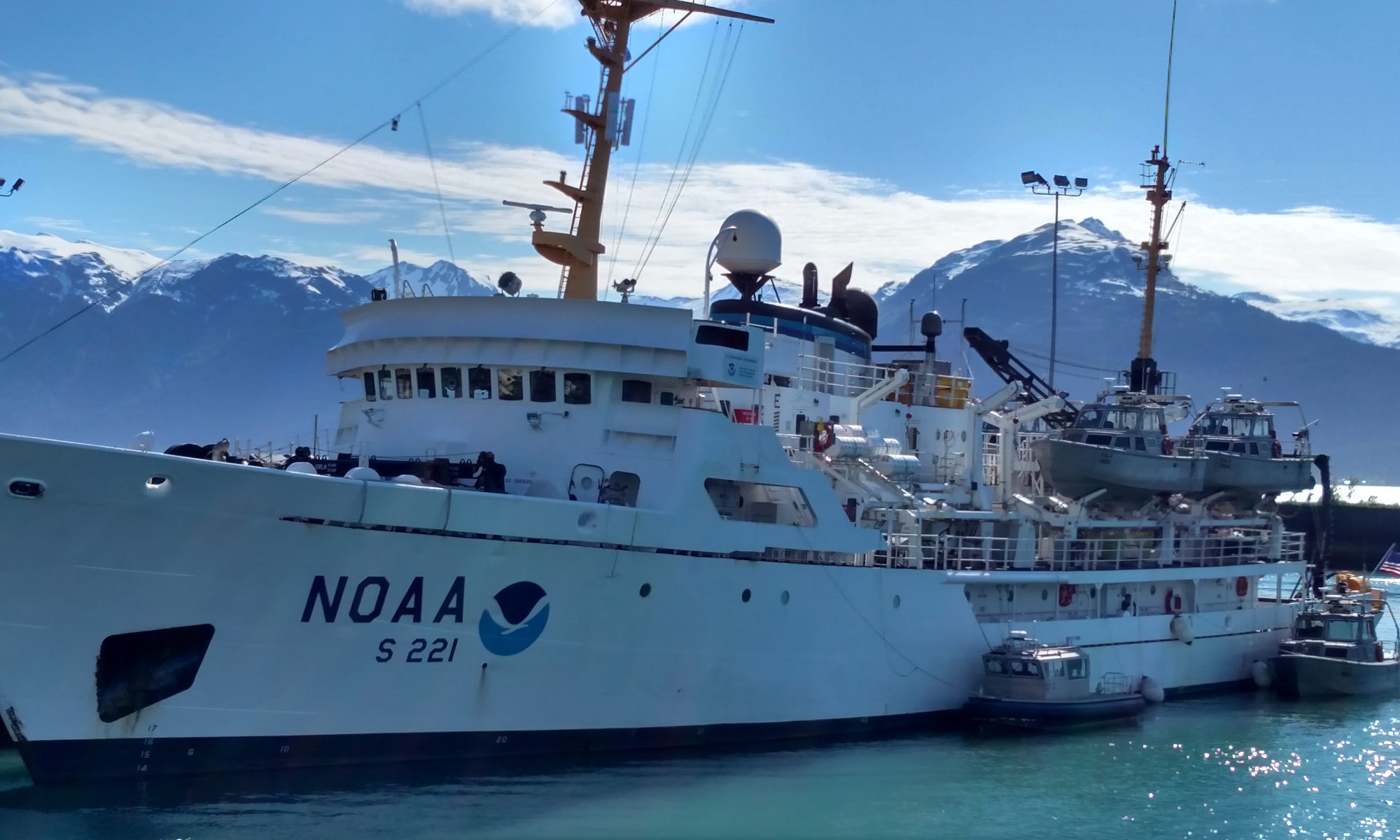
Sam Garson: Alexa, What Fish Is This? September 20, 2024

NOAA Teacher at Sea

Sam Garson

Aboard NOAA Ship Henry B. Bigelow

September 6th – September 25th, 2024

Mission: 2024 Fall Bottom Trawl Survey

Geographic Area of Cruise: Northeast Atlantic Ocean

Date: September 20th, 2025

Weather Data:

Latitude: 35°31’43.1″N

Longitude: 75°16’18.3″W
Wind Speed: N 14.68 kt
Air Temperature:
22.9°C (73°F)

As a participant in NOAA’s Teacher at Sea program, I’ve had the incredible opportunity to see first-hand the innovative tools scientists use to study marine life. One such tool that has become indispensable is the Fisheries Scientific Computing System (FSCS), a specialized software developed to help scientists efficiently process the specimens brought up in trawl nets during research surveys. In this blog, I’ll take a closer look at how the FSCS software guides scientists through the complex task of collecting, analyzing, and recording biological data from the sea’s many inhabitants.

photo of a computer screen displaying the trawl monitoring software. we can see a graph of trawl depth over time. there are other readouts that are not legible.
Trawl Monitoring Software lets the Watch Leaders see if the parameters for a successful trawl were met.
Photo Credit: Sam Garson

What is FSCS?
The Fisheries Scientific Computing System (FSCS) is a powerful, custom-built software that NOAA scientists use to manage the massive amount of data gathered during trawl surveys. Every time a trawl net is brought aboard, scientists are faced with a diverse haul of marine specimens that need to be sorted, identified, measured, and cataloged. FSCS streamlines this entire process, ensuring that data are collected accurately and consistently across multiple surveys and locations.

photo of the computer screen at the cutting station that displays the FSCS program. Currently, the screen shows the list of names of possible science team members, and to the right, the assignments at this station: Cutter - Sabrina Dahl, Recorder - Sam Garson. at the base of the screen is a label that reads DO NOT SPRAY.
FSCS begins with the pair of scientists logging in with their roles of cutter or recorder. Photo Credit: Sam Garson

The FSCS software is designed specifically for the high-paced environment aboard research vessels, where time is of the essence. There are times during a busy string of trawl operations that a net’s worth of samples will barely be complete before the next net is already onboard ready to be dumped into the checker. It operates as a centralized platform, allowing scientists to record and track a variety of biological data, including species identification, lengths, weights, and even environmental conditions like water temperature and depth. By digitizing the data collection process, FSCS not only improves accuracy but also allows the information to be instantly accessible for analysis.

The Trawl Processing Workflow with FSCS
Once a trawl is hauled aboard, the real work begins. First, the catch is emptied into a sorting table called “the checker” where the catch is fed in manageable amounts onto the first conveyor belt and brought up into the sorting table. In the past, this sorting process involved manually recording data on paper, but FSCS has helped this step by providing real-time data entry directly into the system via rugged, waterproof touchscreens and computers.

Once the catch has moved down the sorting table it is processed by the Watch Leader into the system and then fed down the last conveyor belt to the 3 cutting stations. The Watch Leader is responsible for:

  • Species ID: Using guides and reference materials, scientists identify each species brought up in the trawl. This is important because in the paper log days, each container would be re-identified by the cutting team, and mistakes could be made with look-alike species. The system now removes this source of error.
a stack of three smaller screens, some with keypads, showing length and weight readings
Integrated scales and length measuring allow the team to move quickly and efficiently. Photo Credit: Sam Garson

From there, the specimens are processed one by one. For each fish or invertebrate species, scientists enter:

  • Length and Weight: FSCS is connected to precision scales and measuring boards, allowing data to be automatically uploaded into the system.
  • Sex and Maturity: For certain species, scientists may record sex and reproductive status to assess population dynamics.
  • Stomach Contents: For certain species the stomach volume and contents are examined and identified
  • Freeze Sample: Based on the research needs of scientists ashore and programs supported by the trawl, certain species are collected, bagged and frozen for further processing back ashore.

FSCS’s intuitive interface helps guide scientists through this complex process, ensuring no key steps are missed. It also automatically flags any anomalies, such as unusually large or small specimens, prompting scientists to re-check measurements for accuracy.

photo of a computer screen display showing a list of closed drop-down menus titled "Organism 133," "Organism 134," etc to "Organism 148"
Sometimes there is a LOT of processing to do! Photo Credit: Sam Garson

Why FSCS is Important for Marine Research
The FSCS software plays a critical role in ensuring the consistency and accuracy of data collection across NOAA’s bottom trawl surveys. Since the same software is used across different vessels and surveys, it standardizes the way data are collected, which is essential when comparing long-term trends in fish populations and marine ecosystems.

Furthermore, FSCS dramatically reduces the risk of human error, which can be a challenge when processing hundreds or even thousands of specimens in a single day. By integrating measurement devices directly into the software, FSCS ensures that all data are automatically logged without the need for manual entry, reducing errors and speeding up the overall workflow.

This efficiency is particularly important for scientists working in the field, where time is often limited. With FSCS, scientists can process specimens more quickly and move on to analyzing the data, which helps them make faster, more informed decisions about the health of fish populations and ecosystems. The software also allows for real-time data transfer, meaning that the data collected can be immediately uploaded to NOAA’s central databases for use in managing fisheries and conservation efforts.

FSCS and Data-Driven Decisions
The data collected through FSCS are vital for the sustainable management of marine resources. By providing real-time, high-quality data on fish populations, FSCS helps inform decisions about fishing quotas, endangered species protections, and ecosystem conservation measures. The software ensures that scientists have access to accurate, up-to-date information, which is crucial for making data-driven decisions that can have long-lasting impacts on the health of our oceans.

NOAA uses the data collected through FSCS to assess the status of important commercial fish species like cod, haddock, and flounder. These assessments along with commercial catch data form the basis for setting annual catch limits and developing regulations to prevent overfishing and ensure that fish populations remain healthy for future generations.

Personal Log

During my time aboard the NOAA Ship Henry Bigelow, I have had the opportunity to observe the close collaboration between scientists and crew members during trawling operations. Each person, from the captain navigating the ship to the scientists analyzing the catch, contributes their expertise to ensure the success of each trawl. It’s evident that communication and coordination are at the core of every operation, with everyone knowing their role and adapting as needed to changing conditions.

What stands out most is how the team handles the demanding work involved in trawling. The deck crew efficiently deploys and retrieves the nets, often under challenging conditions, while the scientists are quick to sort, measure, and record data on various species. The entire process is a well-practiced routine, yet there is constant attention to detail and safety. This level of cooperation is not just about completing the task but about ensuring that the data collected is reliable and valuable for ongoing research.

Watching the crew and scientists work together has given me a deeper understanding of the complexities involved in marine research. It’s not just the technical skills that matter but the ability to work as a cohesive team, problem-solve on the spot, and maintain a shared focus on the mission. This experience has been an eye-opening look at the dedication and collaboration required to conduct scientific research at sea.

What coding language does a fish use?

Sea++

Did You Know?

A fun fact about sea robins is that they have “legs” and “wings”! While they don’t actually have legs, sea robins possess spiny, modified pectoral fins that look and act like little legs, allowing them to “walk” along the ocean floor. These fins are used to feel for prey like crabs, shrimp, and small fish. Additionally, their large, wing-like pectoral fins can be spread out like a fan, making them look like they’re flying underwater—adding to their unique and quirky appearance!

highly detailed scientific photo of a preserved specimen of a sea robin against a black background
Northern Sea Robin Photo Credit: Harvard Museum of Comparative Zoology

Sam Garson: What’s in a Name, September 15, 2024

NOAA Teacher at Sea

Sam Garson

Aboard NOAA Ship Henry B. Bigelow

September 6–25, 2024

Mission: Leg 1 of Fall Bottom Trawl Survey

Geographic Area of Cruise: Mid-Atlantic Ocean

Date: September 15, 2024

Weather Data from the Bridge:

Latitude: 36°57’37.2″N
Longitude: 76°03’19.6″W
Wind Speed: NE 22 kt
Air Temperature:
22.8°C (73°F)

Science and Technology Log

The oceans are home to a huge variety of fish species, many of which remain understudied. But thanks to the work of scientists like Matthew Girard and Katherine Bemis, we are gaining deeper insights into marine biodiversity through innovative approaches in fish genomics and imagery. In this blog, I will highlight their cutting-edge research, which merges advanced technologies with traditional fieldwork, ultimately providing critical data for understanding fish species and their role in the ecosystem.

Part of the team on this leg of the cruise are two scientists from the Smithsonian National Museum and NOAA National Systematics Lab.  Katherine Bemis and Matthew Girard are prominent scientists in marine research, each bringing unique expertise to the study of fish. Katherine Bemis, based at the Smithsonian National Systematics Lab, specializes in ichthyology—the study of fish. Her work primarily focuses on taxonomy, systematics, and evolutionary biology. Matthew Girard, also deeply involved in marine research, works alongside Bemis, bringing technical expertise in genomics and digital imaging of fish species. Together, their collaboration has allowed for more detailed cataloging and understanding of fish species than ever before, blending traditional identification methods with modern genomic technology and high-resolution imagery.

a combined image on a black background: in the lower portion, we see a highly magnified image of a preserved specimen of a fish. center, as if its swimming toward us, is a detailed computer-generated image of the same fish swimming toward the viewer, but alive, with pectoral fins outspread, and long ribbon-like additional fins
Matthew’s work looks at using genomics to identify larval stages of fish. Photo Credit: Matthew Girard


Genomics has become extremely important in the study of marine science. By sequencing the DNA of fish species, Bemis and Girard are able to delve into the genetic blueprint of marine organisms. This genomic data provides key insights into species identification, evolutionary relationships, and population dynamics.

For instance, genomics helps differentiate between species that are visually similar, a task that can be challenging through morphology alone. It also enables scientists to track genetic diversity within populations, which is essential for conservation efforts and for predicting how species might adapt to environmental changes.

This work is also critical in the use of eDNA. Once you extract DNA from the environment you need a database to compare your samples against in order to identify the source of that DNA. Girard’s work at the Smithsonian is key to building out that database to further allow the technology of eDNA to continue to advance our ability to sample and track biology in the aquatic environment.

a graphic in the shape of a wheel with lines radiating out from the center and segmenting as species diverge. there are hundreds, branching many times and terminating as dots (each representing one species) on the outer ring of the circle. most dots are yellow, some are blue or purple. there is no text.
Phylogenic relationships are part of the body of work benefiting from genomics. Photo Credit: Matthew Girard

Through their work, Bemis and Girard have contributed to a growing database of fish genomes, which not only advances scientific understanding but also aids in the development of sustainable fisheries practices. Their research helps identify populations that may be at risk of overfishing or those that are particularly vulnerable to climate change. Genomics also provides critical data for protecting endangered species, by better understanding their genetic health and resilience.

In addition to genomics, Bemis and Girard utilize cutting-edge digital imagery techniques to capture detailed, high-resolution images of fish specimens. These images, taken with specialized equipment, allow for the preservation of visual data without the need to retain large physical collections. This is especially valuable for rare or endangered species, as it minimizes the need for destructive sampling while still providing detailed anatomical information.

Using 3D imaging technologies, Girard has been able to create digital models of fish that offer unprecedented detail in studying their external features. These models are used for both scientific analysis and educational purposes, allowing researchers and the public to explore the physical traits of various fish species with incredible accuracy. These images can also be archived and shared globally, making them a critical resource for future research. Furthermore, fish imagery helps to bridge the gap between fieldwork and laboratory analysis. With high-resolution images, researchers can collaborate across institutions and countries, comparing specimens in real time. This visual data aids in species identification, the study of evolutionary traits, and understanding how fish adapt to different environments.

three people, wearing dark sweatshirts, stand the lab with a makeshift photo booth. a camera on a tripod covered in a black cloth is set facing away from this camera. a glass tank contains a mounted fish. behind that tank is a black curtain. bright lights on stands are mounted to illuminate the fish. the man in the foreground faces away from our camera, working on something off to his left.
Bemis and Girard preparing a sample to be photographed in high resolution for addition to their cataloguing efforts.
Photo Credit: Sam Garson
three people, wearing dark sweatshirts, stand the lab with a makeshift photo booth. a camera on a tripod covered in a black cloth is set facing away from this camera. a glass tank contains a mounted fish. behind that tank is a black curtain. bright lights on stands are mounted to illuminate the fish. the man in the foreground now stands behind the mounted camera to take a photo.
The high level of resolution in these images is critical in helping differentiate species for scientists wanting to reference and use the collection. Photo Credit: Sam Garson

The Bigger Picture
Katherine Bemis and Matthew Girard’s work demonstrates how science is evolving to meet the challenges of understanding and conserving marine life in the 21st century. By integrating genomics and digital imagery, they are contributing to a growing body of knowledge that is critical for managing marine biodiversity. Their research supports NOAA’s broader mission of ensuring the sustainability of our oceans by informing policy decisions, fisheries management, and conservation efforts. As climate change and human activity continue to impact marine ecosystems, their work is more relevant than ever.

Looking Forward
As I learn more about the technology and techniques used in marine science, I am excited to bring these insights back to my classroom. Katherine Bemis and Matthew Girard’s approach to fish genomics and imagery not only showcases the power of collaboration but also highlights the importance of merging traditional and modern scientific methods. This research underscores the fact that there is still so much to discover about the creatures that inhabit our oceans, and I look forward to sharing this journey of exploration and discovery with my students. I also find the connection between the science of the catalogue and the artist nature of the documentation to be really amazing. Seeing the high level imagery and beauty of the photos is something that again reminds me the importance of arts being present and used in science.

a highly detailed photo of an unidentified fish specimen against a black background
Example of the results of the photographic techniques used by Kate and Matt in the shipboard photo studio they have developed over the last 5 years. Photo Credit: Smithsonian

Personal Log

The nature of ship life can be unpredictable and with so many moving parts there are inevitable challenges. One of the things that has always impressed me is the ability of professional mariners to handle every challenge that comes their way and this cruise has proved to be no exception to the rule. A sudden issue in the power of our drive engines pushed the engineering team to respond, and troubleshoot, diagnose and repair the issue. This led to the ship needing to sail into Norfolk, VA for shoreside support in their repairs. This unexpected port call allowed us to be hosted by Erik Hilton at the Virginia Institute of Marine Science to view their collection of fish specimens.

The Virginia Institute of Marine Science (VIMS), established in 1940, is a research and educational institution located in Gloucester Point, Virginia, and is part of William & Mary. VIMS focuses on the study of coastal and marine environments, conducting research on fisheries, ecosystem health, and the effects of climate change on marine systems. One of its notable areas of work includes the collection and study of fish specimens, contributing to the understanding of fish populations and biodiversity in the Chesapeake Bay and beyond. These collections are used in long-term monitoring efforts and provide valuable data for research and management decisions. VIMS also provides scientific advice to government agencies and industries for sustainable resource management. Alongside its research initiatives, VIMS offers graduate programs in marine science and engages in public outreach to inform and educate the community on marine and coastal issues.

As we head into week 2 of the trawl the aspects of working at sea are all evident. We are planning around unpredictable weather, a complex mechanical and electrical system and the needs to get all of our data and sampling completed. We are headed into some of the diverse areas that should yield some diverse trawls and specimens so stay tuned!

Sam, wearing a t-shirt and bright orange overalls, stands in the wet lab holding a large tilefish up for a photo
Sam Garson during watch with a Tile Fish
Photo Credit: Sabrina Dahl

Sam Garson: Everybody’s Trawling for the Weekend, September 12, 2024

NOAA Teacher at Sea

Sam Garson

Aboard Henry B. Bigelow

September 6 – 25, 2024

Mission: Leg 1 of Fall Bottom Trawl Survey

Geographic Area of Cruise: Mid-Atlantic Coast

Date: September 13, 2024

Weather Data from the Bridge:

Latitude: 36.93°N
Longitude: 76.3°W
Wind Speed: E 15 G 21 mph
Air Temperature:
22°C (71°F)

Science and Technology Log

NOAA’s Fall Bottom Trawl Survey began in 1963 and holds the distinction of being the longest-running standardized fishery-independent scientific trawl survey in the world. Its primary goal was to monitor the abundance and distribution of fish species in the northwest Atlantic Ocean, particularly on the continental shelf stretching from Cape Hatteras, North Carolina, to the Gulf of Maine. However, over time, the survey’s role has evolved into something far greater.

With over 60 years of continuous data collection, this survey is not only an important resource for understanding fish population dynamics, but it also serves as a data source for marine research across the globe. The data gathered provides unparalleled insights into long-term trends in marine ecosystems, making it a cornerstone of NOAA’s fisheries management program. This consistency allows scientists to assess how various factors—such as fishing pressure, environmental changes, and oceanographic conditions—affect fish populations over time.

By maintaining strict protocols and procedures across the decades, NOAA ensures that the data collected remains comparable year after year. As a result, this long-running trawl survey is a powerful tool for detecting shifts in marine biodiversity, population fluctuations, and changes in habitat use among species. The findings from the survey inform not only U.S. fisheries policy but also global conservation efforts, positioning it as a keystone project for marine resource management. The enduring nature of the Fall Bottom Trawl Survey has provided a reference point for understanding the impact of climate change on marine ecosystems, as rising ocean temperatures and shifting currents are increasingly influencing species distribution.

view from the distances of the ship underway. it's a cloudy day, gray skies and water, and the image itself is a little cloudy - we can't make out the NOAA logo or ship number on the hull.
NOAA Ship Henry B. Bigelow. Photo Credit: Sam Garson
a diagram of NOAA Ship Henry B Bigelow showing the plankton net, trawl net, and sonar capabilities. title: State of the Art Research Vessel Henry B. Bigelow. box labels identify the following features: (1) Navy designed "quiet" hull does not disturb marine life. (2) Advanced 3-D sonar gives researchers a bigger picture of fish and their marine habitat. (3) Plankton net gives an accurate survey of fish food supply. (4) Fish net can help gauge abundance of fish stocks.
Illustration credit: James Warren / Cape Cod Times, Information source: NOAA

How Does a Trawl Work?

Members of the Bottom Trawl team work in 12 hour shifts, Midnight to Noon and Noon to Midnight. When it is your turn on watch you will wait for the ship to reach the next “station” or sampling site. Once there the survey team will deploy a CTD and possibly a “Bongo” plankton tow.

two crewmembers wearing hard hats, life vests, and gloves stand on the deck of the ship near a large piece of scientific equipment. the conductivity, temperature, and depth probe, along with one water sample bottle, is mounted inside a cylindrical metal frame attached to a cable.
Crewmembers ready to deploy the CTD.

Once on station, the ship will deploy and stream the trawling net for between 16 and 20 minutes at a specified depth. Far from a simple task, this operation of the net streaming behind the ship is monitored closely with technology and data. The watch lead has to work closely with the bridge to ensure that the trawl net is running through the water properly. Monitoring the opening, speed and depth throughout the dive. Once all of that is confirmed to be in good working order you’ll hear the call over the PA, “HAUL BACK!”

photo of a computer screen showing a plot. on the x-axis is time. the y-axis shows depth and "TE Height," and there are three plot lines.
Trawl net monitoring. Photo Credit: Sam Garson

Haul Back

Once the “haul back” call is given the deck crew springs into action to bring the net back on deck, while the science team moves into position in the sorting room. This process starts in the ready room, where everyone keeps their foul weather gear and gloves.

view of a collection of orange rain coats, orange overalls, and large rubber boots spilling out of a closet-type area on one side of a room
Ready Room. Photo Credit: Sam Garson

Once in their foul weather gear, the team will move to their positions along the first of three main conveyor belts. One member of the team will move out to the checker box where all of the trawl contents are first placed. From there the checker will feed the marine life into the first conveyor belt that brings all the specimens up to the main conveyor belt. Here the marine specimens are all sorted into buckets and bins by species, size and sex. The watch leader will tell the team what they are going to “run” that trawl, meaning which species do they leave on the belt to be deposited into bins at the very end. Depending on the goals, catch diversity or needs the watch leader could run everything from squid or crabs to sea robins.

view inside the wet lab. there are rows of stations, each comprised of a metal table with a measuring board, a drainage sink, a work surface, a computer monitor.
Cutting Station. Photo Credit: Sam Garson

Now that everything is sorted into buckets and bins the real data collection begins! The watch is broken into teams of two. A recorder and cutter work together to process every single marine sample for a variety of data products. These trawls are incredibly productive and have lots of scientists from institutions around the country sending in requests for samples and data. This is where the computer screens are so critical. As buckets of samples move down the last conveyor belt, the cutter scans them into the system and then is prompted by the computer to walk through any number of data collection procedures. The recorder enters them all into the computer, bags the samples, and processes the documentation needed. On this cruise we have been freezing samples, collecting otoliths (unfamiliar? check out this great NOAA resource), collecting stomachs and measuring and weighing hundreds of different species across all of our trawls.

Once that is complete we clean our stations and get ready for the next trawl. Sometimes this could be 30 minutes away, or even an hour, at times. It can be instantly after completing the last trawl. Working in 12 hour shifts, 24 hours a day means that the amount of data we are producing and cataloging is massive, but so is the job of sampling on the scale needed to help scientists answer questions about the ecology, populations, diversity and impacts of climate change along the Eastern Seaboard.

Personal Log

It’s been 10 years since I last sailed and I have been amazed at how quickly I’ve fallen back into the swing of life at sea. The night shift from 12:00 AM – 12:00 PM was a rough adjustment at first, but pretty quickly my body adapted and I settled into the routine.

It has been incredibly interesting to compare my previous time on an ROV based exploration vessel with the reality of a trawl based research mission. The E/V Nautilus was my home for 7 years and walking around the Bigelow definitely brings back some amazing memories, but it also has been a great reminder of how different things are across platforms. The ins and outs of life on Bigelow and the pace of the trawl are worlds different from the 24 hour ops of the ROV missions. I’ll write more on that later, but it has been a really cool comparison to make. It will be interesting to see how the rest of the cruise goes as we are only 3 days into our mission, and lots of cool fish still to come!

Did You Know?

Henry Bigelow was one of the key members of the scientific community who helped found Woods Hole Oceanographic Institute, here is an amazing photo of Henry Bigelow with WHOI’s mascot!

a scanned black and white photograph. A man, dressed in a 3 piece suit and white hat, stands on the deck of a ship - the shoreline is visible at the horizon. he braces himself, his left foot positioned back, because a goat standing it on its hind legs is pushing against his chest with its forelegs. the man holds something with both hands, up toward the goat's face - maybe food.
Henry Bigelow and Buck the WHOI Mascot (1904). Photo Credit: NEFSC NOAA

Sam Garson: Introduction, September 2, 2024

NOAA Teacher at Sea

Sam Garson

Aboard NOAA Ship Henry B. Bigelow

September 6–25, 2024

Mission: 2024 Fall Bottom Trawl Survey

Geographic Area of Cruise: Northeast Atlantic Ocean

Date: September 2, 2025

Weather Data from Friday Harbor, Washington

Latitude: 48.52°N
Longitude: 123.02637°W
Wind Speed: N 0 MPH
Air Temperature:
12°C (53°F)

Introduction

Hello, my name is Sam Garson and I am thrilled to be a part of this year’s cohort of Teachers at Sea! I teach science and CTE STEM courses at Friday Harbor High School (FHHS) on an island off the coast of Washington State named San Juan Island. I teach AP Biology, AP Chemistry, Anatomy & Physiology, AP Computer Science Principles, AP Computer Science A, Robotics, Electric Vehicle Principles, Project Management and 3D Design and Fabrication… rural science education is no joke, folks.

I have been involved with education for 20 years now in roles from a substitute teacher in Miami, Florida to an education programs coordinator with a program not so dissimilar from the NOAA TAS program. In my current role as a rural remote educator, I push students to think about the world in terms well beyond their trips to “America” (the mainland), and instead adopt a “Glocal” perspective of thinking globally and acting locally.

view over the railing from the deck of a commuter ferry. we see the ferry's trailing wake through calm, bright blue waters; along the horizon are forested islands. The sky is bright blue and clear, with only a few wispy clouds toward the left of the image. Hanging on the railing is an orange life preserver with the name of the ferry, Kaleetan.
Island Life when the only access is by boat or plane Photo Credit: Sam Garson

Teaching science is something that I am incredibly passionate about, and I have worked hard to help my students realize the amazing STEM pathways that exist in today’s world. Especially now in my rural community, I want my students to see STEM as the gateway to a world economy desperate for their creativity, ingenuity and problem-solving skills. I strive to bring the real world into my classroom and allow my students to try and solve the issues they see in the world around them and ask BIG questions of what could be.

an enormous high-altitude weather balloon - perhaps 50 ft tall - inflated and ready to deploy from what appears to be a large parking lot or airplane runway. a construction vehicle, perhaps an excavator, is parked nearby, boom folded. in the far distance we can see mountains along the horizon.
World-View high altitude Balloon carrying FHHS student sensor up! Photo Credit: NASA

This past year, students from FHHS found themselves designing a radiation sensor for a NASA and World View high altitude balloon mission while being named State Finalists for Samsung’s Solve for Tomorrow Challenge.

I am thrilled to be able to show students a piece of the world that many of them have probably never thought about, and share with them the excitement of real world research, data collection and all the amazing technology, teamwork and collaboration among a host of different STEM careers that go into making this sort of survey possible.

Science and Technology Log

In just a few days time, I’ll be lucky enough to be back at sea aboard the NOAA Ship Henry B. Bigelow sailing out of Newport, Rhode Island. The Bottom Trawl survey operates along the Northwest Atlantic continental shelf, sampling at stations from Cape Lookout, North Carolina to Canada’s Scotian Shelf (NOAA Fisheries). This survey is actually the longest running of its kind in the world! There are more than 60 years worth of data from these surveys. Given the dynamic nature of climate change and ocean acidification, this data is needed more than ever.

a simple map of the area around Georges Bank (northeast of Cape Cod) and the Gulf of Maine. All land is shown in a plain beige color. Throughout the water are dots, labeled with numbers, showing sample stations. There are at least one hundred dots. The resolution of the image makes it difficult to read the station numbers.
Northeast Fisheries Science Center 2024 Spring Bottom Trawl Survey stations on Georges Bank and in the Gulf of Maine. Credit: NOAA Fisheries

The amount of cooperating technology, science and engineering that goes into a mission like this is truly incredible. I’m excited to be in a position to share the people, science and data that we collect over the next three weeks.

Personal Log

This cruise is an exciting and slightly strange one for me to participate in due to a few interesting coincidences. The first one that struck me was that I am a graduate of Henry B. Bigelow Middle School in Newton, Massachusetts. A name that, unless I have forgotten, the significance of was never revealed to me as a student there.

Perhaps the most striking coincidence with this cruise is the return to Rhode Island. As a new teacher in Seattle, Washington 15 years ago, I was one of the inaugural members of the Ocean Exploration Trust’s Teacher at Sea program. I had participated in a Research Experience for Teachers (RET) with the Fred Hutchinson Cancer Research program earlier that year and was alerted to this new opportunity by a colleague. What followed was 7 years of work with the Ocean Exploration Trust helping to take students and teachers out to sea on the E/V Nautilus.

That time in my career was incredibly transformative and the educational tools and values I developed there have been central to my pedagogy as a teacher in the 9 years since I left and returned to the classroom in Friday Harbor. I have tried to show my students how far and wide STEM can take you and all the different stories of people in those STEM fields.

Four men pose for a photo behind a desk in an office lined with trophies and framed photos. Two men on the right hold up an American flag, while Sam and the other man on the left hold up the Moroccan flag.
From working with educators in Meknes, Morocco as part of the Fulbright Teachers for Global Classrooms Program…( Photo Credit: Hassan Elhilali)
Only Sam's legs are visible, sporting a wet suit and flippers, as he dives into the water in front of a pier. A building on the pier has a large sign that reads University of Washington Friday Harbor Laboratories. Beyond, there are cranes, other docks, small vessels anchored in the harbor, and a tree-lined shore.
…to clearing kelp while working with researchers on the Friday Harbor Laboratories Ocean Observatory. (Photo Credit: Kirk Sato)

I am thrilled to return to sea with a very different type of expedition. Exploration is a key aspect of our understanding of the world’s oceans, but this opportunity to be a part of a longitudinal study to help understand the ecosystems and fauna present on the Northeast Coast is one that I am thrilled to be embarking on.

Did You Know?

Despite being the home of the Southern Resident Orcas, Orcas Island in the San Juan Archipelago is actually named for Juan Vicente de Güemes Padilla Horcasitas who sent an expedition to the islands in 1791!