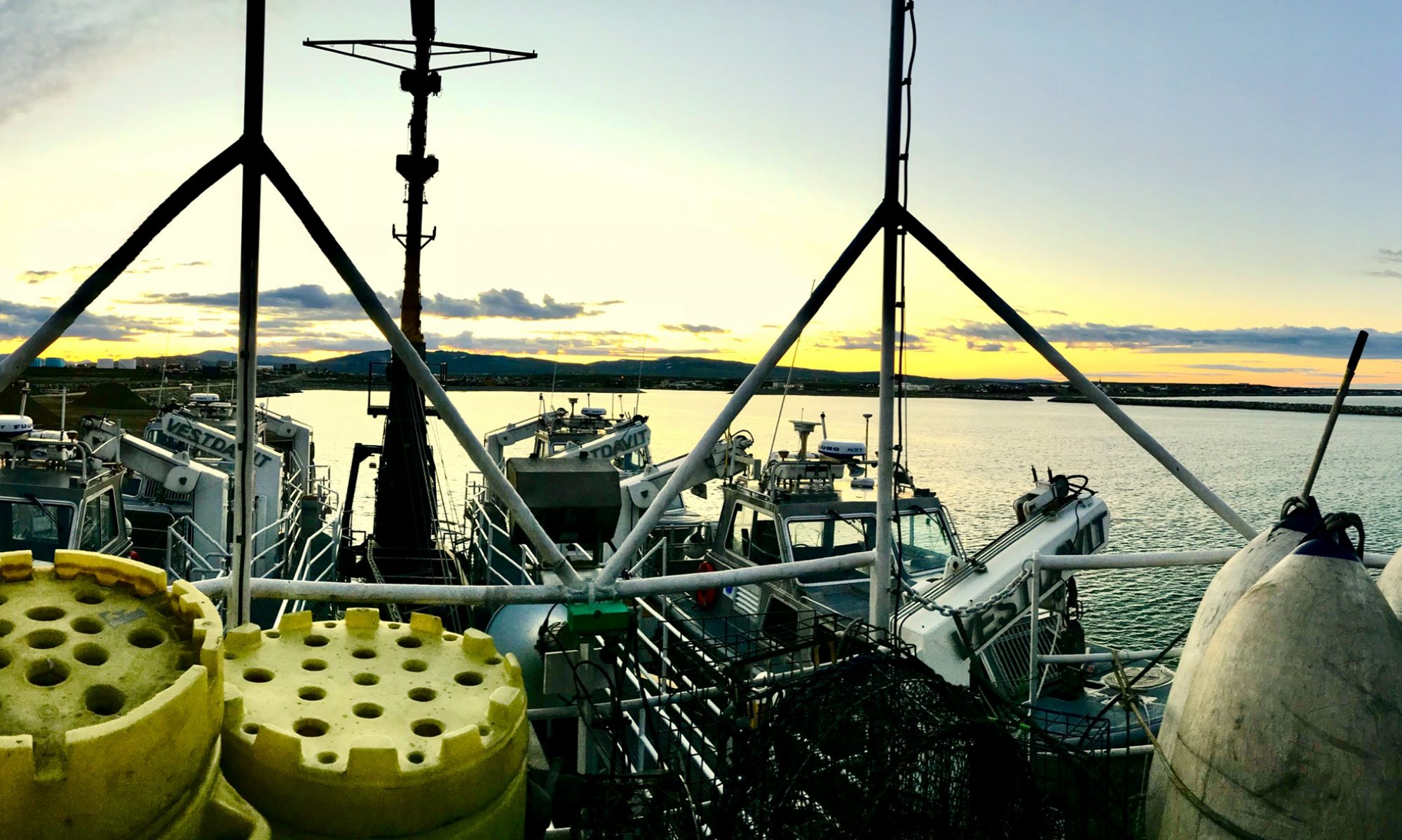
Christopher Tait: Suburban Wilderness, March 27, 2017

 NOAA Teacher at Sea

Christopher Tait

Aboard NOAA Ship Reuben Lasker

March 21, 2017 to April 7, 2017

Mission: Spring Coastal Pelagic Species Survey

Geographic Area of Cruise: Pacific Ocean from San Diego, CA to San Francisco, CA

Date: March 27, 2017

Weather Data from the Bridge

Time 3:35 PDT,

Current Location: near San Nicolas Island, Latitude 33.3 N Longitude -119.2 W

Air Temperature 16.0 oC  (59.5 oF)

Water Temperature 14.9 oC  (58.6 oF)

Wind Speed 19 kts

Barometric pressure 1014.64 hPa

IMG_4674
San Nicolas Island from the Reuben Lasker

Science and Technology Log

Acoustic Trawl

There is a lot of advanced equipment that is used to do a survey of fish that spans the coast of California. The Reuben Lasker has been fitted with state of the art echo-sounders (Figure 1), which send out pulses of sound that bounce off objects and return to the ship in the form of backscatter.  Looking at the backscatter data you can create a profile of the water column and see a variety of organisms swimming beneath the ship.  The target species for the research is the Northern anchovy (Engraulis mordax) and Pacific sardine (Sardinops sagax).  The schools of fish are detected using a range of frequencies.  Looking at graphical representations of these data, or echograms, you can see the bottom as an area with strong echoes and, at times, you can see an area of high-intensity back scatter higher in the water column such as a school of fish or an aggregation of krill or plankton (figure 2).  This would be a school of fish, krill or other organisms.  The geographic location of the school is marked for a return by the ship at night for collection using a trawl.  To conduct a thorough survey, the ship travels back and forth between the coast and a predetermined distance out to sea across the predicted habitat of the target species (Figure 3.)  Scientists referred to this as “mowing the lawn.”

 Figure 1: Reuben Lasker Acoustic-Sampling Beams

Reuben Lasker Acoustic Sampling.png
©2014 Oceanography, Volume 27, number 4, Zwolinski et al.

Figure 2: An example echogram, showing the seabed and various sound scatterers in the water column.

Echogram

Figure 3 : Survey Map of the Spring Coastal Pelagic Species Survey 2017

California Sampling Map.png

Scientist Profile:

The Cruise Leader, Kevin Stierhoff, is a fisheries scientist who works for the Advanced Survey Technologies group at NOAA Southwest Fisheries Science Center (SWFSC) in San Diego, CA.  Not only has he been effectively managing this complex science expedition, he has gone out of his way to make me feel welcome and a part of this scientific endeavor.


How did you become a NOAA scientist?

I earned a B.S. in Biology, a Ph.D. in Marine Studies, and completed several postdoctoral research appointments prior to getting hired by NOAA. The work that my colleagues and I do at the SWFSC is very interdisciplinary, and the variety of educational and research experiences that I’ve had prepared me become a researcher at NOAA.

What do you like best about your career?

I consider myself lucky to have a job with a variety of duties. Not only do I spend time in the office analyzing data, but I also get to spend time at sea conducting survey and collecting data. When I’m not using acoustics to study pelagic fishes that migrate between Canada and Mexico, I use remotely operated vehicles (ROVs, or undersea robots) to survey endangered abalone that live on rocky reefs in the deep sea. When I’m not at sea, I’m analyzing the data that we collected at sea to communicate the results of our work.

What advice would you give to a student who would like to follow a similar career path?

Increasingly, a research career in marine biology requires a graduate degree to allow for maximal career advancement. If possible, take some time after undergrad to work in a job related to your career goals. This will allow you to focus your interests before choosing a graduate program, or perhaps discover that you don’t actually like that career path (better to find out sooner than later!) or that you don’t require a graduate degree to do the job that really interests you (which will save you lots of time and money). Most importantly, choose a job that you look forward to going to every day.


Personal Log

It is dark out, but as I look down from high atop the ship through an open window from the bridge, the lights of Long Beach reflect on the placid expanse of ocean and I come to a great moment of reflection.  One of the busiest ports in the world is just off in the distance and I am looking for marine mammals in this suburban wilderness.  Beside the glow of humanity, nature continues on.

IMG_4638.JPG
Long Beach, California

I have been mostly helping with analyzing organisms that came up in the trawl at night, so my work schedule has moved to a 6 pm to 6 am.  I am struck by how hardworking, dedicated, and driven all members of this expedition are.  The crew, scientists, and NOAA Corps collaborate to continuously run surveys 24 hours a day, 7 days a week.  I am enjoying working at night now even though it took me a few days to get use to all of the adjustments in my schedule.  I particularly enjoy doing the marine mammal watch from the bridge.  It gives you this aerial point of view of all the action the NOAA Corps expertly navigating the ship and coordinating operations, the deck crew masterfully deploying nets and equipment, and the scientists excitedly exploring the organisms we collect.

Catch of the Day!

Haliphron atlanticus – This strange creature is a gelatinous octopus, whose body resembles a jellyfish, but when you look close, you see eyes looking at you!

Octipus Gelatinous.png
Haliphron atlanticus

Boreal Clubhook Squid (Onychoteuthis borealijaponicus)

IMG_4630.JPG
Boreal Clubhook Squid (Onychoteuthis borealijaponicus)

Ocean Sunfish (Mola mola) is the strangest fish I have ever seen! It is one of the heaviest bony fish, surprisingly from a diet high in jellyfish and salps. We caught a small and large sunfish.

IMG_4607.JPG
TAS Chris Tait holds an Ocean Sunfish (Mola mola)
IMG_4576
Measuring the ocean sunfish…
IMG_4579
Slide to Freedom!

Pacific Saury (Cololabis saira): This fast looking fish hunts plankton at night near the surface.

img_4573.jpg
Pacific Saury (Cololabis saira)

Curlfin Turbot (Pleuronichthys decurrens): This juvenile flatfish rises to the water surface at night to hunt zooplankton.  Flatfish have an eye that migrates from one side of their body to the other as they develop.

IMG_4618.JPG
Curlfin Turbot (Pleuronichthys decurrens)

Emily Sprowls: Tag, you’re it! March 26, 2017

NOAA Teacher at Sea

Emily Sprowls

Aboard NOAA Ship Oregon II

March 20 – April 3, 2017


Mission: Experimental Longline Survey

Geographic Area of Cruise: Gulf of Mexico

Date: March 26, 2017

Weather Data from the Bridge

13:00 hours

28°12.1’ N 89°23.8’W

Visibility 6 nm, Haze

Wind 15 kts 170°E

Sea wave height 4-5 ft.

Seawater temp 23.4°C

Science and Technology Log

MeasureShark.jpg
I learn to measure my first (little) shark!

The ship has completed our deep-water sampling and we are now headed to more shallow areas, where there are likely to be more sharks and hopefully even some that have been tagged in the past.  With each shark we catch, we record in a database their measurements and exactly where they were caught.  If things are going well with the shark out of water, we also take a fin clip, a blood sample, and attach a tag.

Tag-and-recapture is one way for wildlife biologists to estimate population size.  You can compare the number of tagged sharks to newly caught sharks, and then extrapolate using that ratio to the total number of sharks in the area.


P1050255
Volunteers help enter data into the “Toughbook” computer.

Recapturing a tagged shark also helps scientists determine the age of a shark, as well as its rate of growth.  In bony fish, it is possible to examine the otoliths (bony structures in the ear) to determine the age of a fish.  However, since sharks do not have bones, scientists must use other ways to determine their ages and track their growth.  One of the scientists on board (my roommate) is collecting shark vertebrae so that her lab can use growth rings in the vertebrae to assess their age, sort of like counting the rings on a tree stump.


Personal Log

The past few days have put all my seasickness remedies to the test with waves over 6 feet and plenty of rolling on the ship.  The good news is that they have been working pretty well for the most part – I’ve only lost my lunch once so far!  One “cure” for seasickness is to stay busy, which has been difficult to do because the high winds and lightning have made it unsafe to do any sampling.

Fortunately, the crew’s lounge is well-stocked with movies, so I have watched quite a few while we wait for the waves to calm down and the thunderstorm to pass.  The lounge has some cushioned benches long enough to stretch out on, which is key because being horizontal is the best way for me to minimize my seasickness.


Kids’ Questions

  • How do you put the tag on?

    P1050392
    Data collection sheet and shark tagging tool.

The tag for smaller sharks is a bit like a plastic earring, but on the shark’s dorsal fin.  First you have to “pierce” the fin with a tool like a paper hole-punch, and then use another tool to snap in the tag  — making sure that the ID numbers are facing out.  If the shark is a species that will outgrow a plastic roto tag, they get a skinny floating tag inserted just under their dorsal fin.

  • How does the tag stay on the shark?

The shark heals the wound made by the tag, and the scar tissue holds the tag in place. Because the tags are made of plastic and stainless steel, they do not rust or deteriorate in the ocean.

P1050391
Tagged dorsal fin of Mustelus sinusmexicanus.
  • How do they make the tags? 

The NOAA fisheries lab orders tags from manufacturing companies, and are similar to tags used on domestic animals like cows.  Each tag includes a phone number and the word “REWARD,” so that if fishermen catch a tagged shark they can report it.

  • What are they doing with the shark tagging data?

Tagging the sharks in the Gulf of Mexico allows us to figure out how fast they are growing and how far they are traveling.  Measuring all the sharks also helps scientists understand how the populations of different species might be changing.  Some clues to changing populations include catching smaller or fewer sharks of one species.

Christopher Tait: Catch of the Day, March 21, 2017

NOAA Teacher at Sea

Christopher Tait

Aboard NOAA Ship Reuben Lasker

March 21 – April 7, 2017

Mission: Spring Coastal Pelagic Species Survey

Geographic Area of Cruise: Pacific Ocean from San Diego, CA to San Francisco, CA

Date: March 21, 2017


The Spring Coastal Pelagic Species Survey will be conducted in 2 legs between San Diego and Cape Mendocino, CA.  The ship will have a port call in San Francisco, CA between survey legs.

ca-map.jpg

Weather Data from the Bridge

Time 4:38 PDT,

Current Location: near San Clemente Island, Latitude 32.9 N Longitude -118.96 W

Air Temperature 15.3 oC  (59.5 oF)

Water Temperature 14.8 oC  (58.6 oF)

Wind Speed 13 kts

Barometric pressure 1021.15 hPa

Science and Technology Log

Trawling

                The ship trawls for schooling coastal pelagic fish from sundown to sunrise. This is because, under the protection of darkness, the zooplankton come up toward the surface to feed on phytoplankton and the planktivorous fish, in turn, follow the zooplankton.  Before the trawl net can be deployed, you have to go to the bridge, or the upper floor on the ship where all navigation and operations occur, to do a marine mammal watch for 30 minutes.  A marine mammal watch is a lookout for dolphins or other marine mammals that might be in the vicinity of the ship to avoid catching them in the trawl.  It is difficult to see any dolphins or sea lions in the inky blackness of the night ocean, but this is important to prevent incidental catch.  My first time up to the bridge at night was a surprise.  Walking up the lit stairs, you open the door to the bridge and the whole area is in darkness with just faint red lights so you can see.   After a while your eyes adjust and you make you way to the port or starboard sides of the bridge to start the watch. After you determine that the coast is clear, it is time for the deck crew to start deploying the net.  There is big overhead rigging with winches to help lift the net, ropes, chains, and buoys up to lower them down into the water.  We drag the net behind the boat for 45 minutes and then haul it in, hopefully full of fish!  When the fish are on the boat there is an elaborate process to gather information about the catch.

 Catch of the Day

IMG_4456
Pelagic Red Crab (Pleuroncodes planipes)
IMG_4455
Sorting buckets filled with Pelagic Red Crab


IMG_4480
Market Squid (Doryteuthis opalescens)


IMG_4482
Pyrosome (colonial tunicate)


IMG_4486
Greater Argonaut (Argonauta argo)


IMG_4484
King of the Salmon (Trachipterus altivelis)


IMG_4447
The Wet Lab where the catch is sorted.

Personal Log

3/21/17

Today is the first day at sea and everyone is busy setting up their labs and calibrating their equipment.  The goal of the research is to survey the distributions and abundances of the coastal pelagic fish stocks, their prey, and their biotic and abiotic environment in the California Current Ecosystem.  The Reuben Lasker is a state of the art research vessel with many specialized research laboratories.

IMG_4411
NOAA Ship Reuben Lasker

Coronado Bridge out my window.                                                      My State Room

3/22/17

I’m getting used to the 24 hour nature of the expedition. Everyone is assigned a 12 hour shift and I’m working 12 pm to 12 am.  During the day I am currently observing the methods and trying to assist where I can.  At night there are multiple trawls.  2 to 5 trawl are planned each night.  We caught a variety of different organisms, which are weighted, measured for length, and some saved for further studies such as genetic analysis.


3/23/17

Today I woke up to rough seas with waves about 8 feet, which made it very difficult to get moving!  As I moved around the ship everyone smiled because we know how each other are feeling.  The seas calmed later in the day and everyone felt much better.  Looking forward to doing our trawl tonight!


Did You Know?

The King of the Salmon got their name from the Makah people who believed the fish lead salmon to their spawning rivers.

The Argonaut looks like a nautilus, but they are really an octopus in which the female creates an egg case that wraps around the body.


Emily Sprowls: The pressure is on! March 23, 2017


NOAA Teacher at Sea

Emily Sprowls

Aboard Oregon II

March 20 – April 3,2017

Mission: Experimental Longline Survey

Oregon2
NOAA Ship Oregon II

Geographic Area of Cruise: Gulf of Mexico

Date: March 23, 2017

Weather Data from the Bridge

13:00 hours

28°03.9’ N 89°08.3’W

Visibility 10 nm, Haze

Wind 3kts 100°E

Sea wave height <1 ft.

Seawater temp 25.1°C

 Science and Technology Log

The past two days have been devoted to setting extremely deep longlines. Each of these sampling lines take many hours, as we have to slowly reel out over 3 miles of line, give it time to sink, soak, and then reel it back in.   The line that we put out today is even a bit longer than usual, because I got to be in charge of “slinging” the hooks onto the line and I was not very fast at getting the four different sizes of hooks ready

Grenadier fish Kevin.jpg
A Mexican grenadier fish

. Have I mentioned how patient everyone is with the “Teach” aboard?

This morning we pulled up 97 empty hooks from 1250 meters before we caught the amazing grenadier fish! It suffered barotrauma, which is a nicer way of saying that its eyes and swim bladder inflated like balloons from the inside as it was hauled up from the high pressure depths.

One of the scientists onboard studies ocean food chains by examining the contents of fish stomachs. The stomach of the Mexican grenadier fish contained a fully intact armored shrimp!

Personal Log

Today I took advantage of the calm, calm seas to try the workout equipment onboard. They have all kinds of gear to help folks stay active and work off the delicious food in the galley. There is a rowing machine, stationary bike, weight bench, Jacob’s ladder, and elliptical. I used the elliptical machine because it was way too hot on the upper decks to use the exercise bike. Even with the very calm seas, there is a little bit of rolling, which made it an extra challenge for me keep it going!

Kids’ Questions of the Day

These questions about the Oregon II are from Harmony elementary students:

  • How big is the boat?       How tall? How long?

The boat is 175 feet long and 80 feet tall.

  • How much does the boat weigh?      

The boat weight is 800 tons. This is not how much the boat would weigh if you put it on a scale, but how

survival suit.jpg
TAS Emily Sprowls dons a survival suit

much weight the boat can carry if it were loaded full of cargo. We are not carrying nearly that much weight because a lot of the space on the boat is for equipment and for scientists and crew to live aboard.

  • How fast can it go?

Typically, the boat can go about 10 nautical miles per hour using both engines. She can go a little faster if the wind and current conditions are just right.

  • What is the boat made of?

The boat is made of steel and aluminum.

  • What are the white balloon things on top of the boat?

The white domes cover satellite dishes for the internet and phone.

  • What are the poles on the boat for? Are there sails?

The two yellow poles on either side of the boat are the outriggers used to

CTD sensor.jpg
This array houses the Conductivity, Temperature, and Depth probe.

pull a wide trawling net, much like a shrimp boat. Scientists trawl the bottom to study benthic organisms, including shrimp, but also sponges, crabs and bottom-dwelling sharks.

  • What new technologies does the boat have?

The Oregon II turns 50 years old this year!   It has been sailing the Atlantic Ocean since before I was born, but the crew is constantly fixing and replacing equipment on the boat. Even though she is old, she is very safe and reliable. Nevertheless, we still have to prepare for emergencies, including the possibility of needing to abandon ship while wearing the goofy-looking, but life-saving survival suits.


StyrofoamCup
Styrofoam Cup Test!

Scientists have brought new technology on board, including plenty of computers to collect, sort, store and analyze all the data we collect. One of the computers is connected to a device called the “CTD” with a set of sensors for Conductivity, Temperature, Depth and Dissolved Oxygen. Today the CTD went all the way to about 1100 meters (3700 ft.), and we tethered some styrofoam cups to the outside to subject them to the extreme pressure at that depth.


Emily Sprowls: It’s a shark eat shark world down there! March 22, 2017

NOAA Teacher at Sea

Emily Sprowls

Aboard Oregon II

March 20 – April 3, 2017


Mission: Experimental Longline Survey

Geographic Area of Cruise: Gulf of Mexico

Date: March 22, 2017

Science and Technology Log

This first leg of the Oregon II’s research for the season is an experimental longline survey. This is an exciting cruise for everybody, as we are all anxious to see what comes in on each line, and we hope to find some rare and little-studied species.

longline.jpg
               Reeling in a shark caught on one of the longline hooks 

A longline is a type of fishing gear that deploys one very long and very thick fishing line with many hooks attached. A fisheries survey is a systematic sampling of the ocean to assess fish populations. This mission is experimental because we are testing the longline at extreme depths and we are using different kinds of hooks in order to catch as wide a variety of species as possible.

Things have been busy onboard from the very first day, as we have been setting out and hauling longlines around the clock. We are headed deeper and deeper into the Mississippi canyon of the Gulf of Mexico with each station, starting at 100m and have worked our way down to 750 m, where we currently have a line “soaking” before we haul it up to record what we caught.

Personal Log

Life on the ship is divided into night and day watch. I’m “on days,” which means I work noon to midnight. I am so lucky to be a cruise with a lot of seasoned marine scientists and a great, hard-working crew. Shark scientist Kristin Hannan is the Field Party Chief and has taken me under her wing to get me settled and teach me as much as she can (without making me feel like the newbie that I am)!

oilrigs.jpg
Oil rigs on the horizon

The seas have been calm and the water is the most beautiful color of blue! We are pretty far out to sea, and I have been amazed to see so many oil rigs off in the distance. They glow like small cities at night, and I think they look like strange robots walking on the horizon during the day.


Kids’ Questions of the Day

These questions are from the 1st-2nd grade and multi-age classes at Harmony School.

  •  How do you catch the sharks?

We catch the sharks by setting out 100 baited hooks at a time on a very long fishing line. A winch reels in the 3 miles of line after a couple of hours, and we record what is on every single hook.

  • How do you find the sharks?

We rely on the sharks finding our baited hooks. We put weights on the line so that it will sink all the way down to the bottom. We are fishing so deep that it takes almost an hour just for the line to sink! The sharks find the bait using their incredible sense of smell.

  •  What do sharks eat? Fish? Squid? Cookies? Other sharks?

We are baiting the hooks with pieces of squid. The process of baiting hundreds of hooks has left my clothes covered with squid ink!

sharkbait.jpg
Hooks baited with pieces of squid

Sometimes they catch sharks with fish (mackerel), but squid bait stays better on the hooks, and deep-sea sharks clearly like squid, which also live in deep water. While this mission is experimental, the scientists onboard do not think we will have much luck baiting a hook with a cookie – it will just dissolve in the sea (besides the cookies in the galley are so delicious that there are no leftovers)! One type of deep-sea shark makes their own cookies… cookie-cutter sharks (Isistius) bite “cookies” out of other fish with their amazing jaws. Maybe we’ll catch one!?!

Last night we hauled in one hook with only a shark head on it…. What do you think happened to the rest of the shark?