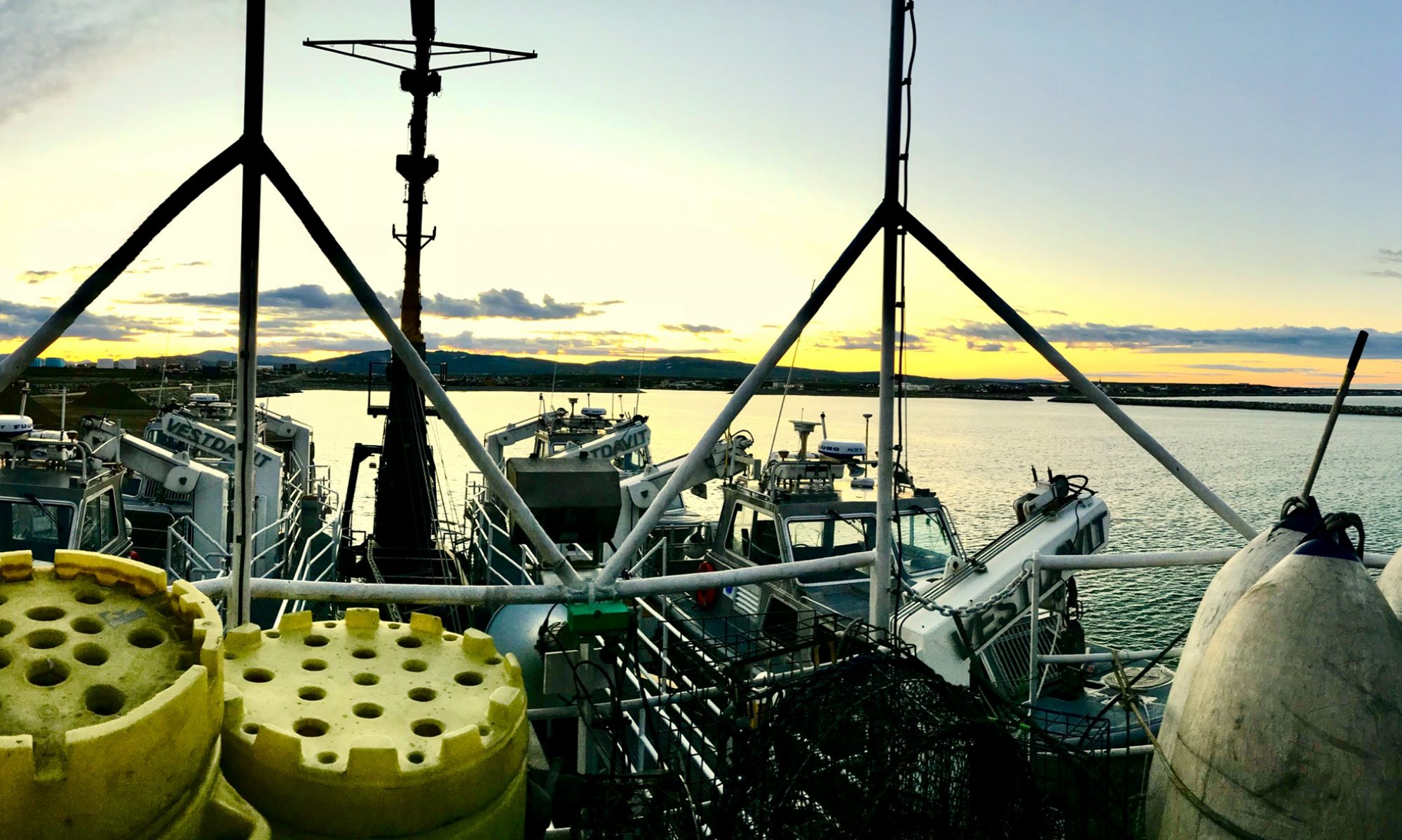
Karen Grady: Let’s Catch Some Sharks, April 7, 2017

NOAA Teacher at Sea

Karen Grady

Aboard NOAA Ship Oregon II

April 5 – 20, 2017

Mission: Experimental Longline Survey

Geographic Area of Cruise: Gulf of Mexico

Date: April 7, 2017


Weather Data

74 Degrees

Clear Skies

Calm Seas

Location

Latitude 2754.34N

Longitude 08905.93W


 Science and Technology Log

This is the second leg of the Oregon II’s experimental longline survey.  A longline is a type of fishing gear that will deploy one fishing line that is very long and very thick and has many hooks attached to it.  We will be doing a survey by collecting systematic samplings to assess fish populations.   This mission is an experimental one because the longline is being placed at depths deeper than they fish during the annual longline survey and are able to alter the bait type and leader material to see how it could affect catch rates.

The longlines are baited with pieces of squid. Squid live in deep water so it makes sense to use them to attract deep-sea sharks.  Squid also stays on the hooks better than the mackerel and these hooks have to make it a LONG way down on this survey. The lines are placed in the water and then allowed to soak for several hours.  This allows the squid bait to settle down into the deep water (aided by the weights attached) and for sharks to find the bait.  The fishing line with the hooks is a mile long, but the total line put out can be up to 3 miles long because of the scope needed to allow the 1 mile of gear to reach the deep bottom depths.

baiting hooks
Scientist Kevin Rademacher baiting hooks with squid

As we bring in the catch we will be gathering data on the species caught, sex, maturity stage for male sharks, and certain sharks will be tagged. There are different tags for different sizes of sharks and a small piece of fin is collected on all tagged sharks for genetic purposes. The weight and three or four different measurements will be taken on the all species. Photos of any uncommon species are also taken if time allows to help with identification processes in the future, and so everyone can see them if they weren’t on the watch when the catch occurred.

On my dayshift team is James Sulikowski, a scientist from the University of New England in Maine, who will be using an ultrasound on larger female sharks that we bring on board. Ideally, he and Trey Driggers, the night watchleader from the NOAA MS Labs, would like to catch some large female hammerhead or dusky sharks.  James will use the ultrasound to determine if the large females are pregnant. If they are pregnant, a satellite tag will be placed on the sharks that will stay on for approximately 30 days.  This is perfect as females could be giving birth over this time frame.  The tags will be used to track the sharks with the hope that important habitats where the adults give birth can be identified.  James (and Neil Hammerschlag) has conducted similar research on tiger sharks, but linking pregnancy to specific movements has not been conducted with sharks captured in the Gulf of Mexico.  Our experimental longline survey is happening at a perfect time to gather data for this research.

ultrasounding sharks
James Sulikowski ultra sounding some small pregnant sharks.
shark-ultrasound.jpg
How many baby sharks do you see? We saw THREE!


Personal Log

We are at sea now but since getting somewhere is half the fun…..isn’t that what they always say….I wanted to tell you a little about my trip to the ship. On Tuesday night as I was packing we had a storm and lost power for a few hours.  No big deal since I was on the ball and pretty much packed at this point. Wednesday morning, I leave for the airport and about 15 miles down the road I realize I left something I had to have. So, I made a quick turn around and retrieved it. It was a nice drizzling rain and some fog for the drive to the airport.  Now my luck continued when I arrived at airport. Long term parking was full so I had to park at the BACK of the economy lot.  I don’t mind a walk normally but it was raining and that made THREE parking lots to walk through.  Luckily the airport has a little shuttle van to pick up travelers in just such situations.  Oh wait…. This one just drove past us all and kept circling but never actually picked anyone up.  Hmmm.  I had a very bumpy ride to Dallas due to the weather and was relieved to make it to my gate for my connection in Dallas.  Then comes the announcement that they need to change a tire on our plane.  I was completely ok with this hour wait since I see the value in having tires when we land in Gulfport! So only an hour late I made it safely to my destination.

I had a great visit with the scientist who picked me up at the airport. I found out that he and his family intend a vacation in the future to canoe on the Buffalo River. I forget what an amazing state I live in sometimes when it comes to our state parks and outdoor adventures.   One of his areas of focus is Cownose Rays and we discussed how he uses networking to find opportunities to gather data.  My students know how important I feel networking can be.   You never know when that person you meet can help answer a question, provide guidance or solve a problem for you somewhere down the road.  He told me how he took the time just this week to meet some folks who are at NOAA from other countries and ask them to share his contact information because it could help him fill in some needed data for his research.

arriving at ship
Arriving at the Oregon II! Ready to get this adventure started.

Arriving the day before most everyone else made my first night a little bit of an adventure. I had a short tour of the boat and then was on my own.  I was talking with my son on the phone and he asked if it felt like an episode of Scooby Doo where they are on an abandoned ship.  Well.. a little like that.  There were lots of new noises to get used to. And for such a small ship there are lots of doors and rooms.  It is a definite culture shock from the cruise ship I was on during spring break just two weeks ago.

My students all wanted to know what the ship would be like. I will be posting some pics so you can get an idea of what it’s like. I will be sharing my cabin with someone else.  We will basically take turns using it about 12 hours apiece each day.  I knew it would be small but let’s just say I won’t be doing any workouts in my room.  But it has a place for everything and my bunk is comfortable.  There are metal stairs from level to level on the ship.  These are an adventure with my tri-level glasses.  One hand for the rail and I am good.  For those that know me well one of their concerns was that I wouldn’t be able to make it without going for a run.  Crisis averted…there is a rowing machine, weights, a stationary bike etc. onboard. So I guess I will not have to resort to running in place as some people thought.

stairs
The stairs require you to pay attention and use a hand rail..especially if your wearing tri-level glasses like I am
stern.jpg
A boat deck is a busy place with lots of equipment.

The first day onboard was spent getting ready to sail. I just stayed out of the way and introduced myself to the crew as they passed by. We were underway in the early afternoon and it was an adjustment getting used to the motion of the boat.  We had some very informative safety meetings and I got an overview of what we would be doing the next day.  Had a great dinner, our stewards really will keep us fed well!  Then we spent the evening talking and getting to know one another, watching tv, catching up on emails, going through data collection and trying to stay up till midnight so we could get our bodies started on our new schedule.

Day two and we are ready to rock and roll. I slept amazing and woke up to calmer seas.  I was up on deck enjoying the sunshine and getting to watch James ultrasound a few smaller sharks.   I have participated in ultrasounds on dogs, cows, and horses but never a shark.  It was a lot of fun trying to identify how many babies were inside and the best way to use the ultrasound on these smaller sharks.

The day continued to be gorgeous. We pulled one set and caught several sharks, red snapper, and a few eels.  After pulling one set we had several hours of downtime as we head to our next station.  The timing looks like we will get the next set out for the night crew to pull.  The downtime allows everyone to catch up on computer work, and emails.   You can also just sit out on the deck and enjoy the sunset.


sunset
Gorgeous sunset our first full day at sea.  Like working 12pm-12am because sunsets are my favorites.


Did You Know

  • The Gulf of Mexico has a broad range of ocean ecosystems from shallow reefs to sea forests and has both shallow coastlines and deep ocean waters reaching as deep as 14,300. There is an ample food supply and the perfect habitat for several species of sharks.
  • Sharks do not have swim bladders like bony fish.
  • Sharks store energy in their liver in the form of a viscous oil.   This means their liver is very large.

Christopher Tait: Where am I? April 1, 2017

 NOAA Teacher at Sea

Christopher Tait

Aboard NOAA Ship Reuben Lasker

March 21 – April 7, 2017

Mission: Spring Coastal Pelagic Species Survey

Geographic Area of Cruise: Pacific Ocean from San Diego, CA to San Francisco, CA

Date: April 1, 2017

Weather Data from the Bridge

Time 8:51 PDT,

Current Location: South West of Santa Rosa Island, Latitude 33.37N Longitude -120.7 W

Air Temperature 13.4 oC  (56.1 oF)

Water Temperature 13.1 oC  (55.5 oF)

Wind Speed 12 kts

Barometric pressure 1013.98 hPa

DSC_0326

Science and Technology Log

Oceans cover 71% of the surface of Earth and 99% of the livable space (Figure 1).  The Coastal Pelagic Survey is taking several approaches to map the distribution of anchovy, sardine, and other target species within the epipelagic zone.  This zone is the thin surface layer extending to the depths light penetrates the ocean, which is approximately 200 meters near California.  The epipelagic zone in some coastal areas is very productive due to the upwelling of nutrient rich water causing an abundance of primary production by phytoplankton.  Besides the net trawling and acoustic transects, the researchers are using samples of fish eggs and ichthyoplankton (ichthyo = fish, plankton = drifting) to determine locations of spawning. This voyage is mostly surveying over the continental shelf and I am amazed at the diversity of organisms we have found thus far.  In this modern era of exploration of the vastly unknown deeper regions, I can only imagine the species still to be discovered!


Figure 1: Ocean Layers

Ocean Layers.png

(c) Knight, J.D., 1998, Sea and Sky, http://www.seasky.org/deep-sea/ocean-layers.html

CUFES:

A CUFES (Continuous Underway Fish Egg Sampler) system is used to determine the location of fish eggs as we travel transects on a continuous daily basis (Figure 2).  Water from 3 meters below the surface is pulled into the boat at 640 L/min. and poured through a filter to collect fish eggs and other plankton.  The collected samples are analyzed every 30 minutes to determine a density of eggs and which species are spawning.  The collected samples are further analyzed at NOAA’s SWFSC (Southwest Fisheries Science Center) in La Jolla, CA.

Figure 2: CUFES Schematic

CUFES.png
CUFES schematic.


Figure 3: Preliminary Results of CUFES Survey

CUFES Eggs.png
Preliminary results of the CUFES survey. The CUFES data is overlaid on sea surface temperatures measured by satellite.

The CUFES data is overlaid on sea surface temperatures measured by satellite.

PairoVET Tow & Bongo Tow

A PairoVET (paired vertical egg tow) sample is collected using a pair of small, fine mesh nets dropped to 70 meters deep and vertically towed to the surface to collect fish eggs and zooplankton in the water column at predetermined locations along our transects every 20 nautical miles. This is generally the depths that sardine release their eggs. The Bongo net gets its name because the nets are the size of bongo drums (Figure 4 & 5).  This is a plankton tow that is pulled alongside the ship and occurs every 40 nautical miles.  The net is dropped to a depth of 210 meters and pulled up at a 45 degree angle to get a more complete sample of the ichthyoplankton and zooplankton throughout the water column at location.

 Figure 4: Bongo net in center of image and PairoVET on the right.

IMG_4467.JPG
Bongo net in center of image and PairoVET on the right.

Figure 5: Bongo going overboard.

IMG_4469.JPG
Bongo going overboard.

Figure 6: Preserving the Bongo Sample for later analysis.

IMG_4500.JPG
TAS Chris Tait preserves the Bongo Sample for later analysis

CTD: Conductivity, Temperature and Depth Probe

The scientists use a CTD (conductivity-temperature-depth) probe to measure the physical properties of the seawater throughout the water column that biologic samples are being taken (Figure 7). Conductivity is used to calculate the salinity of the water. These physical properties are very important in determining the types of organisms that are present at varying locations.

 Figure 7: CTD (Conductivity Temperature Depth) Analysis

DSC_0323.JPG
CTD (Conductivity Temperature Depth) analysis

Personal Log

One of the great mysteries of waking up is answering the question of “where am I?”  After a long evening of trawling for fish and keeping an eye on where you are, you go to bed.  Exhausted, the boat rocks you to sleep.  When I wake up the first thing I do is, jump out of bed and run out onto the front deck.  Some days, there is ocean for as far as the eye can see, some days a mysterious island (Figure 8) in the distance and sometimes there is the mainland (Figure 9)!  I run to grab my phone when mainland is in sight to get a couple of phone calls out to family.

 Figure 8: The mysterious island turns out to be Anacapa Island, which is part of the Channel Islands National Park.  The waters surrounding the park are part of a national marine sanctuary.

IMG_4752.JPG
Anacapa Island, one of the Channel Islands


Figure 9: Sunrise over Santa Barbara.  Time for me to make a call home!

IMG_4872.JPG
Sunrise over Santa Barbara

In the Dry Lab there is a computer with a map showing where we are currently located, a red track line showing where we have been and transect lines displaying where we will soon be (Figure 10).  On our acoustic transects, we follow the parallel lines to mow the lawn and find the location of the CPS (coastal pelagic species) from their echoes.  When we trawl, we break transect and go to places that showed promise in the acoustic backscatter.  

 Figure 10: Without tracking our location on the computer I would feel totally lost! The blue lines are where we plan to go, and the red lines show where we’ve actually gone.

Map of transect.png
Blue lines show where we plan to go, and the red lines show where we’ve actually gone.

Catch of the Day

As I get ready for my night shift, I feel this anticipation to discover what species we are going to find!  Every day brings a new catch of the day!

Grey Smoothhound Shark (Mustelus californicus): This small coastal shark feeds on small invertebrates and fish.

IMG_4581.JPG
Gray Smoothhound Shark (Mustelus californicus)

Needle Fish (Family Belonidae):  This large needle fish is coastal piscivorous fish, meaning they specialize at eating other fish. They have a mouth full of tiny needle like teeth to prevent a slippery fish from getting away.

IMG_4739.JPG
Needle Fish (Family Belonidae)

Northern Anchovy (Engraulis mordax): This is one of our target species on this survey.  Anchovy have the potential to form massive schools and have a tremendous impact of the ecology of the California Current Ecosystem.  They feed on zooplankton, provide food for other fish, sea birds, and marine mammals.  They are also an important fishery which have the potential to be over fished if not properly managed.

IMG_4644.JPG
Northern Anchovy (Engraulis mordax)

Pacific Sardine (Sardinops sagax, top specimen) and Pacific Mackerel (Scomber japonicas, bottom two specimens): These two species are also part of the Coastal Pelagic Species community, which this survey are targeting.  The sardine is another very important fish due to their ability to form tremendous schools, impacting plankton through feeding, providing food for larger predators, and they are a valuable fishery.  Sardine populations have the ability to boom and crash, and the cause is still not fully understood.  The Pacific mackerel is a species that has been populous at times of lower sardine and anchovy abundance.

IMG_4748.JPG
Pacific Sardine (Sardinops sagax), top, and Pacific Mackeral (Scomber japonicus), bottom two

Pacific Sardine (Sardinops sagax) and Pacific Mackeral (Scomber japonicus)

IMG_4749.JPG
Close-up of Pacific Mackerel (Scomber japonicus)

Pacific Mackeral (Scomber japonicus)

IMG_4747.JPG
Pacific Mackerel (Scomber japonicus)

Jack Mackerel (Trachurus symmetricus) and Larval Rockfish (Sebastes sp.): Jack Mackerel is another target species of the Coastal Pelagic Survey.

IMG_4750
Jack Mackerel (Trachurus symmetricus) and a larval rockfish (Sebastes sp.)

Emily Sprowls: Gulpers of the Gulf, March 31, 2017


NOAA Teacher at Sea

Emily Sprowls

Aboard NOAA Ship Oregon II

March 20 – April 3, 2017


Mission: Experimental Longline Survey

Geographic Area of Cruise: Gulf of Mexico

Date: March 31, 2017


Weather Data from the Bridge

12:00 hours

29°36.7’ N, 87°43.7’ W

Visibility 10 nm,

Wind 6 kts 350°N

Sea wave height 2-3 ft.

Seawater temp 22.9°C


Science and Technology Log

GulperEye
Gulper shark from 800 meters under the sea!

On the deep longlines we sampled many gulper sharks (Centrophorus spp.). Gulper sharks have cool anatomical adaptations, including their huge reflective eyes, buccal folds for gulping their food, and the ability to excrete huge amounts of slime from their skin. Gulpers also have very large eggs, which is of particular interest to my crewmate Lydia Crawford, a scientist from Tulane University that is studying shark reproduction and evolution.

LydiaDissects
Lydia dissects a shark specimen to study its eggs.

Lydia is collecting eggs from as many different kinds of sharks as she can in order to understand more about how sharks evolved a variety of reproductive strategies. Oviparous sharks and skates lay egg cases, also knows as “mermaids purses.” Oviviparous sharks let their eggs hatch internally and the babies are born swimming. Some embryos eat other eggs or even their siblings as they develop in their mother! Placental viviparous sharks are also born alive, but the embryos are fed via umbilical cords, similar to us humans.

Lydia will examine the microscopic structures of the shark ovaries she collected when she gets back to her lab. She hypothesizes that certain features of the ovaries have allowed sharks to evolve the ability to give birth to large babies, ready to act like the apex predators they are!


Personal Log

Last night we caught a blacktip shark (Carcharhinus limbatus) that my data sheet says measured 1.4 meters, but my memory says it was MUCH BIGGER because he lunged and snapped at us! Most of the sharks we have collected have been rather stunned by their brief trip out of the ocean onto the deck, but this guy acted like a shark still in the water! He and his biting jaws were clear reminders of what incredible predators sharks are. He put a healthy dose of fear back in me, along with a lot of respect for the science team who managed to measure him despite his aggressive activity!


Kids’ Questions

  • Why don’t sharks have swim bladders?

Sharks maintain neutral buoyancy by having very large, oily livers. We confirmed this by throwing the dissected lobes of the liver overboard and they floated!

  • Is there a shark that glows in the dark?

The eyes of some of the deep sea sharks that what we caught appear to be glowing because they are so big and have very reflective layers (called tapeta lucida) that shines back the boat lights. However some sharks, including the lantern shark, have special organs called photophores that glow!

Lydia Tilefish
Marine biologist Lydia with tilefish (Lopholatilus chamaeleonticeps)
  • How would you recommend reversing the sense of fear people associate with sharks?

Lydia’s response:

As a scientist, you shouldn’t try to reverse people’s fears because you can’t rationalize away a feeling. Also, we should have a respectful fear of sharks. They are amazing predators! Instead we should convince people why sharks are important in the ocean ecosystem as keystone species.

Karen Grady: Planning, Packing and Anticipation….the Countdown has Begun! March 29, 2017

NOAA Teacher at Sea

Karen Grady

Aboard NOAA Ship Oregon II

April 5 – 20, 2017

Mission:  Experimental Longline Survey

Geographic Area of Cruise: Gulf of Mexico

Date:  March 29, 2017

Weather Data

I live in Arkansas and the weather is probably changing as I am typing this!  It is Spring so that means our weather is unpredictable.  Today we woke up to red creepy skies and predictions of severe thunderstorms.  As I am writing this it is 75 and we are still waiting to see if any storms pop up. I am fine with storms, just keep the tornadoes away!

Introduction

end of july 206
Checking out the local wildlife in one of my favorite places… Daytona Beach


Hi all!   My Name is Karen and I am the K-12 Gifted and Talented teacher for the Lavaca School District in Lavaca, Arkansas. I have the best job because I am on the move all day working with students from all grade levels.  I have an BSA in Animal Science, Master’s degrees in Teaching and Gifted, Talented and Creativity.  I am able to utilize my degrees and my personal background to create activities for my students that keep them moving and their brains working.  I feel that my participation in the NOAA Teacher at Sea program is setting an important example for my students about stepping out of one’s comfort zone to chase a dream.

Science and Technology Log

In just a few days I will join the crew of the Oregon II  for the start of their second research trip of 2017.  You’ll notice that this trip is referred to as an “experimental” longline survey.  This is because our trip is happening earlier in the year than the normal longline surveys. The scientists will be experimenting with some different methods and its earlier in the year so everyone will be anxious and excited to see what types of sharks and fish are brought on board over the two weeks at sea…

Personal Log

I have only been a teacher for 5 years.  I spent several years as a Water Quality Technician working with farmers and poultry growers to manage the nutrient content in their soil and protect water sources.  I then was blessed with some great adventures working for the National Wild Turkey Federation’s Women in the Outdoors Program in Arkansas, Louisiana, Mississippi and Alabama.  I also spent many years as a poultry farmer.  I went back to school in 2011 and began teaching in 2012 while finishing my Masters of Art in Teaching. I taught seventh and eighth grade science for three years and then was chosen to fill an opening for Gifted and Talented teacher in the district.  I completed my Master’s in Gifted and Talented and Creativity this past December.

My past job experiences have provided me many great ideas that I use in my classroom. I also believe in the power of networking and I use my network of contacts to gather information, activities or speakers for my classes.   I have always been interested in biology and had a love of animals.  As a teacher I continue to lean towards professional development that focuses on science and then I add other components to make some very creative lessons for my students.

It was during a professional development session 4 years ago that I first learned about the NOAA Teacher at Sea program.  I looked at the application process and considered applying, but my oldest son was in high school sports, my youngest wasn’t quite old enough for me to want to be gone that long, I just got married….there was always an excuse. Each year I looked and considered and I waited.  This past November I talked to my family and if filled out the application.  I remember sitting and deciding whether to hit submit when it was all done.  I took a deep breath and submitted!  Then I tried not to think about it.

end of july 511
Spending time exploring helped take my mind off the wait!


Fast forward to February 1 of this year… I walk into my classroom and turn on my computer and there is an email from NOAA. I was afraid to open it. When I saw the message that I had been selected I think I sat with my mouth hanging open. I kept reading it thinking surely the wording was going to change and they were going to let me down easy.  I remember texting my husband and telling him I had been chosen and asking him what I was going to do and his response was “ You’re going to go, of course!” It really did take a week for it to sink in that I was going to be a part of the class of 2017.

I completed all of the requirements as quickly as possible because I couldn’t wait to see which research trip I would be matched with.  Within just a few weeks I was matched with a research cruise heading into the Gulf of Mexico  and we would be doing studies with sharks. I realized I had just under 4 weeks to get everything in order and report to the ship.  Of course I had to make it more complicated by having a huge networking event at school with 38 speakers and a SKYPE with NOAA Teacher at Sea Program to pull off, a 7 day cruise for spring break that we had already had on the calendar, a couple Quiz Bowl tournaments with my students plus squaring away things at home. Did I mention our mare is due to foal any day and that one of the dogs is diabetic and has to have insulin twice a day? Let’s just say the weeks have flown by.  Thank goodness my husband and kids are awesome and my friends rock because it will all be lined out before I leave next week.

I cannot even find words to express my appreciation to NOAA for offering me as an educator this opportunity.  I am excited that I will get to share my time with the scientists and the things I learn with not only my students but with many schools in my area.  One more week and I will be setting foot on the Oregon II and praying for calm seas!

Did You Know?

Fish supply the greatest percentage of the world’s protein consumed by humans. This makes the health of our ocean vitally important even if you do not live near the ocean.

Emily Sprowls: Shark Bait, March 28, 2017

NOAA Teacher at Sea

Emily Sprowls

Aboard NOAA Ship Oregon II

March 20 – April 3, 2017


Mission: Experimental Longline Survey

Geographic Area of Cruise: Gulf of Mexico

Date: March 28, 2017


Weather Data from the Bridge

RedSnapper
Red snapper (Lutjanus campechanus)

13:00 hours

29°09.3’ N 88°35.2’W

Visibility 10 nm, Scattered clouds

Wind 8 kts 170°E

Sea wave height <1 ft.

Seawater temp 22.9°C


Science and Technology Log

In addition to experimenting by sampling deeper, we are varying the fishing gear and using different kinds of bait. We have switched to hooks on a steel leader so that even a strong, big shark cannot bite through the line. We are rotating through squid and mackerel as bait in order to see which species are more attracted to different bait. In addition to many species of sharks, we have also caught and measured eels, large fish and rays.

Nick hooks
Nick prepares hooks for longline gangions.

One of the scientists on board specializes in fishing gear, and helps keep maintain all our gear after it gets twisted by eels or looped up on itself. He also works on turtle exclusion devices for trawling gear.


Personal Log

Last night the line pulled in a huge tangle of “ghost gear.” This was fishing line and hooks that had been lost and sunk. It would have been much easier to just cut the line and let the mess sink back to where it came from, but everybody worked together to haul it out so it won’t sit at the bottom tangling up other animals.

Ghost gear
Lost or “ghost” gear that tangled in our lines.

This is just one example of the dedication the scientists and crew have to ocean stewardship. I have been so impressed by the care and speed with which everybody handles the sharks in order to get them back in the water safely.


Kids’ Questions

  • Is there any bycatch of dolphins?
Deep seastar
A few seastars come up with uneaten bait as bycatch.

Today we saw dolphins for the first time! They were only a few of them pretty far from the boat, so they did not affect our sampling. Had they decided to come play by riding in our wake, we would have postponed our sampling to avoid any interactions between the dolphins and the gear. One of the reasons that we only deploy the fishing gear for one hour is in case an air-breathing turtle or mammal gets tangled (they can hold their breath for over an hour). However, since dolphins hunt live fish, they don’t try to eat the dead bait we are using.

  • Can sharks use echolocation? How do they find their food?

Sharks do not use echolocation like marine mammals, but they do have an “extra” sense to help them find their food. They can detect electrical current using special sense organs called ampullae of Lorenzini.

  • What are the chances of getting hurt? Why don’t they bite?

While there is a chance of the sharks accidentally biting us as we handle them, we are very careful to hold them on the backs of their heads and not to put our fingers near their mouths! “Shark burn” is a more likely injury, which occurs when a shark wiggles and their rough skin scrapes the person handling them. Sharks do not have scales, but are covered in tiny, abrasive denticles that feel like sandpaper.