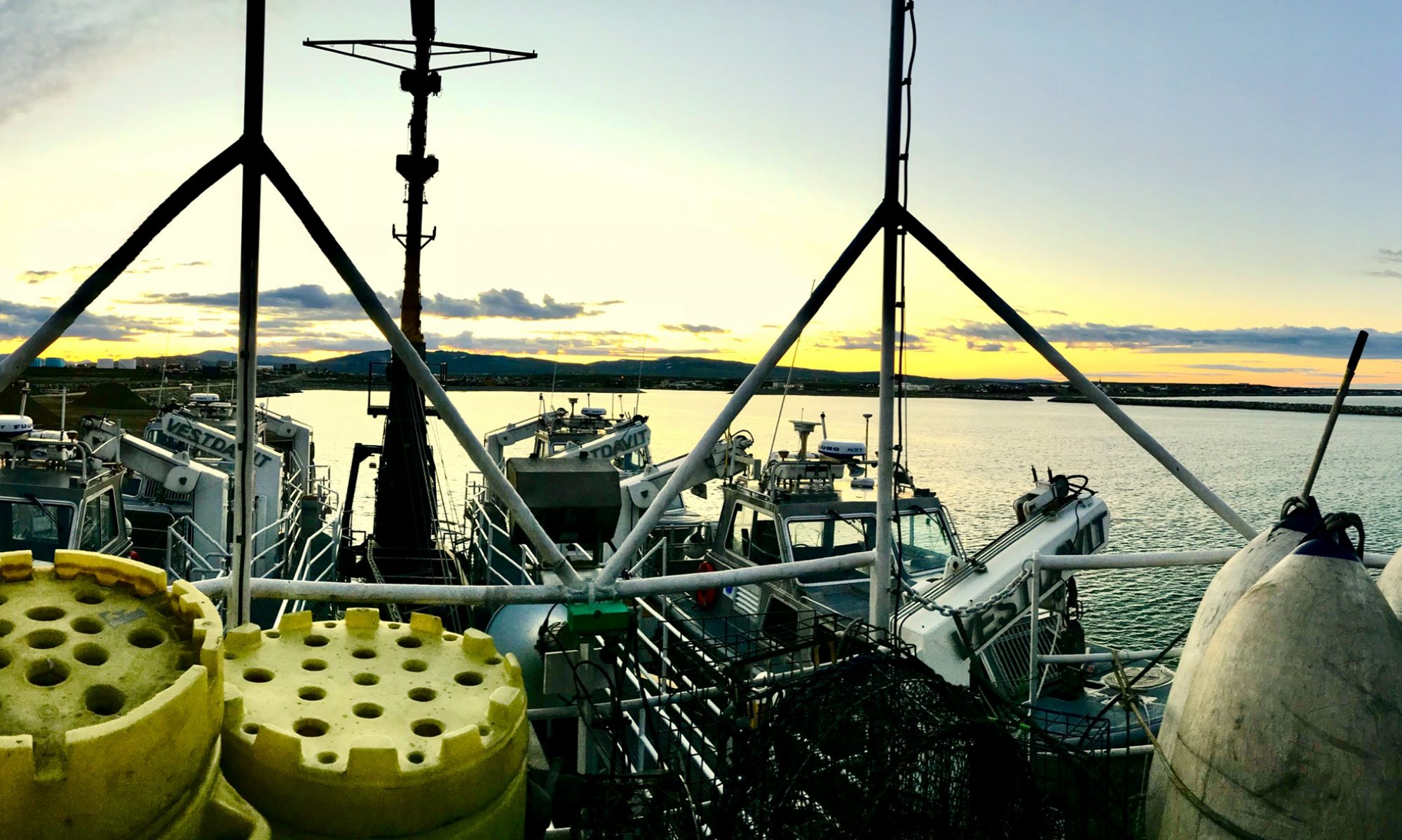
Methea Sapp-Cassanego, August 4, 2007

NOAA Teacher at Sea
Methea Sapp-Cassanego
Onboard NOAA Ship Delaware II
July 19 – August 8, 2007

Mission: Marine Mammal Survey
Geographical Area: New England
Date: August 4, 2007

Weather Data from Bridge 
Visibility: 5 in haze lowering 3 to 5 in showers
Wind Direction: Southwest
Wind Speed: 10-15 knt increasing to 20 knt.
Swell height: 3-5 feet building 4-6 feet

A solitary ocean sunfish basks in the sun while a shearwater skims by.

Science and Technology Log 

Rotations have been going like clock-work, although today’s sightings have again been numerous we still have not found any more right whales.  Again I’ll fill today’s blog with some species profiles of animals we’ve seen today.  By the way, the sightings list for today includes, pilot whales, minke whales, offshore bottlenose dolphins, common dolphins, white-sided dolphins, beaked dolphins and harbor porpoise.  We’ve also seen a few Mola mola which are not tallied since they are not marine mammals.

Atlantic White-sided Dolphin (Lagenorhynchus acutus) Researchers and scientists also refer to this animal as a “Lag.” Identification: At first glance the Atlantic white-sided dolphin looks very much like the common Atlantic dolphin. Its body is slightly more robust then that of the common Atlantic dolphin; its tail stock is also thicker.  The upper portions of the body are black while the lower belly and chin are white; a long horizontal grey strip bisects the upper and lower body portions. The flippers are also grey.  Max length and weight: 510 pounds and 9 feet. Diet and Feeding: Fish and squid Migration: No organized or seasonal migration Distribution: Found in cold waters of the northern North Atlantic from the Northeast United States to Northern Europe and Southern Greenland.    Special Note: Atlantic White-sided Dolphins are especially gregarious and are often seen swimming along the side of boats and bow riding.  They will also mingle and feed with fin and humpback whales. Several hundred are caught and killed each year as a source of food by the Faroese Island people.  

References 

Collins Wild Guide: Whales and Dolphins. HarperCollins Publishers, New York, New York. 2006.

Ocean Sunfish (Mola mola)

Identification: This oddly shaped fish is most easily identified when it is basking at the surface. Its large disk-like body is pale grey to white in color; lacks a true tail; both the dorsal fin and anal fin are extremely elongated so that the fish is as tall as it is long. Sunfish are solitary but may occasionally be found in pairs.

Max length and weight: Averages 5 feet 9 inches in length and 2,200 pounds.  Records exist of sunfish spanning 10.8 feet in length and weighting just over 5,000 pounds.

Diet and Feeding: Primarily seajellys but also feeds on salps, squid, crustaceans, comb jellies and zooplankton. Sunfish are pelagic and may feed at depths just shy of 2,000 feet.

Migration: No organized or seasonal migration

Distribution: Ocean sunfish are found globally in both temperate and tropical waters. Research suggests that populations of sunfish inhabiting the Atlantic and Pacific have greater genetic differences than populations in the Northern and Southern Hemispheres.

Special Note: The ocean sunfish poses no threat to humans and is commonly approached by divers. Its meat is of minimal economic importance although there seems to be an increasing popularity in sunfish cuisine and it is considered a delicacy in some parts of the world. The sunfish has few natural predators due to the thickness of its skin which can measure up to 3 inches in some places.  More often than not the sunfish encounters its greatest threat when caught in fishing gear.  Sunfish by-catch totals ~30% of the total swordfish catch off the coast of California and ~90% of the total swordfish catch in the Mediterranean.

Impressive size and startling appearance make the ocean sunfish a favorite attraction at the Monterey Bay Aquarium.  This photo is freely licensed via Wikimedia Commons and is courtesy of Fred Hsu.
Impressive size and startling appearance make the ocean sunfish a favorite attraction at the Monterey Bay Aquarium. This photo is freely licensed via Wikimedia Commons and is courtesy of Fred Hsu.


Methea Sapp-Cassanego, August 3, 2007

NOAA Teacher at Sea
Methea Sapp-Cassanego
Onboard NOAA Ship Delaware II
July 19 – August 8, 2007

Mission: Marine Mammal Survey
Geographical Area: New England
Date: August 3, 2007

Weather Data from Bridge 
Visibility: 5 in haze lowering 3 to 5 in showers
Wind Direction: Southwest
Wind Speed: 10-15 knt increasing to 20 knt.
Swell height: 3-5 feet building 4-6 feet

Pilot whales as seen from the zodiac—note the calf in the foreground.  Photo courtesy of Brenda Rone.
Pilot whales as seen from the zodiac—note the calf in the foreground.

Science and Technology Log 

Today was another great day for sightings. Critter counts include sperm whales, white sided dolphins, a whopping 17 minke whales, a Sei whale, offshore bottle nose dolphins, a finback whale, another pod of pilot whales and 100’s of common dolphins.  At one point during my starboard observation shift, both I and my portside counterpart were calling off sightings so rapidly that the recorder was having problems keeping up with us.  We both paused for a moment and pulled away from the big eyes to look around and discover that we were surrounded by literally 100’s upon 100’s of common dolphins.  The sea was frothing with their activities; some doing aerobatics, others charging, some came to bow-ride of the ship, while other could be seen chasing large fish which were identified as yellow-fin tuna.

Researchers position themselves to rejoin the main ship.
Researchers position themselves to rejoin the ship.

In a repeat from several days ago the pilot whale sighting prompted another launch of the zodiac…only this time I got to climb down the Jacob’s ladder and go for a zodiac ride which brought me as close to pilot whale as I could ever hope to be.  We were able to procure 5 tissue samples for further genetic study along with an untold number of dorsal fin photographs. (Please see log from August 1st for further explanation of these genetic studies and photos.) My job on the zodiac was to fill out the photography data sheets which record the GPS headings, frame numbers, animal position within pod, approximate size of animal, special markings on the animal, if an attempt to biopsy the whale was made, if the shot resulted in a hit or miss….etc.  I was madly recording all this information as cameras were shooting and crossbows were firing and the whole experience whizzed past me.  I hope I didn’t forget to record anything!

An ill-fated Northern yellow warbler rests on the deck of the DELAWARE II
An ill-fated Northern yellow warbler rests on the deck of thevDELAWARE II

Aside from all the sightings (some of which have become rather common place), and my zodiac ride I really have nothing left to report for the day….except of course that the day flew by. In fact every day passes in a blink…even the foggy ones.  I suppose that’s what happens when each day is filled with something new to see and do. Before I sign off for the day I’ll leave you with two more species profiles.  One of which may surprise you!

Yellow warbler (Dendroica petechia)

There are approximately 40 subspecies of this widely distributed little bird. This bird, in particular, was most likely from the subspecies aestiva thus making it a ‘Northern’ yellow warbler.

As a true bird-lover I’ve been taking notice and taking note of every new bird I’ve seen while out at sea, and naturally all of the birds I’ve seen lately from black-backed gulls to shearwaters are suppose to be out here in the open ocean searching for fish and bobbing around in the waves while resting.  The yellow warbler however is not suppose to be here….and in fact being at sea means certain death for the delicate songbird as its food source is almost non-existent out here and it is ill-equipped to handle a lack of freshwater.  The warbler pictured above probably hitched a ride with us following our 24 hour port call in Yarmouth, Nova Scotia.  Sad to say that this warbler did in fact perish at sea despite my offerings of fresh water and bread crumbs (I was all out of their primary food which are insects!)  A second warbler and a grosbeak did however find the boat as we were coming back into harbor so we hope they were more fortunate then the first stowaway.

Common Dolphins Bow-riding off the DELAWARE II: Note the crisp crisscross markings on the dolphins’ side.
Common Dolphins Bow-riding off the DELAWARE II: Note the crisp crisscross markings on the dolphins’ side.

Identification: The yellow warbler is fairly large compared to other warblers and has an exceedingly short set of tail feathers.  Both sexes have a yellowish green head and back with yellow underbellies. Females tend to be a bit duller in color while males typically have brown streaks on the cheek and breast. Distribution: The Northern Warbler breeds from Alaska to Newfoundland and Southern Labrador, south to South Carolina and into Northern Georgia, and as far west as the Pacific Coast. It is also found periodically in the American Southwest.   Migration: Winters in the Bahamas, Northern Mexico, Peru and the Brazilian Amazon.  Diet and Habitat: In its northern and eastern distribution the warblers live in damp habitats surrounding swamps, bogs, marshes, ponds and stream or river banks.  They will also feed and nest in woodland areas, meadows, and overgrown pasture lands.  In the west and southwest the bird is restricted mainly to riparian habitats.  Unfortunately riparian habitat is rapidly decreasing in the Southwest as are the population of yellow warblers within this region.  The warbler feeds primarily on insects, but will occasionally eat berries. Listen to its song here.

Common Dolphin

Until recently both the short-beaked and long-beaked common dolphins were considered to be one species. Although much of the recent research and literature still does not differentiate between short-beaked and long-beaked, they are technically two different species.  For the purposes of our survey we also did not distinguish between the two as they are nearly identical in physical appearance.   

Short Beaked Common Dolphin and Long-beaked Common Dolphin

Identification: Very distinctive crisscross patterning on the sides; yellow/tan patches on the side, dark gray over the topside and pale underside. Light grey patch along the peduncle of the tail.

Max length and weight: 330 pounds and 9 feet. Males are just slightly larger then females

Diet and Feeding: Fish and squid

Migration: No organized or seasonal migration

Distribution:  Widely distributed throughout the Atlantic, Pacific, and Indian Oceans as well as the Black and Mediterranean Seas. Special Note: Common Dolphins are especially active and are commonly seen doing aerobatics and bow riding. They are also extremely vocal; to such a degree that their high pitched whistles and clicks may be heard above water.

References 

Collins Wild Guide: Whales and Dolphins. Harper Collins Publishers, New York, New York, 2006.

More Common Dolphins riding the bow.

Methea Sapp-Cassanego, August 1, 2007

NOAA Teacher at Sea
Methea Sapp-Cassanego
Onboard NOAA Ship Delaware II
July 19 – August 8, 2007

Mission: Marine Mammal Survey
Geographical Area: New England
Date: August 1, 2007

Weather Data from Bridge 
Visibility: 7nm lowering to less then 1 in fog
Wind Direction: Southerly
Wind Speed: 3-8 knt increasing to 8-13
Swell height: 3-5 feet

The flexible Jacob’s ladder rolled up for easy storage.

Science and Technology Log 

Fog has kept our sightings to a minimum over the past two days. In fact we’ve had only two sighting since my last log on July 27th. Yet despite today’s weather forecast, the fog horn has been silenced and everyone is outside enjoying the sunshine and stretching their eyes.  It is a wonder to see color other then a shade of grey!  The change in weather has also brought new sightings including 3 humpback whales, a pod of harbor porpoises, 4 right whales, a minke whale and a dozen or so pilot whales (spotted by your’s truly).  These sightings kept the observers busy as well as those involved in the launching of the zodiac (aka little grey boat) and the Tucker trawl. The morning sighting of the right whales prompted a Tucker trawl sampling in order to examine the copepod densities in the surrounding areas.

Dr. Richard Pace assists with deployment of the zodiac.

The trawl did yield a higher density of copepods then all of our previous trawls which where carried out in the absence of right whale sightings, however compared to their prior experiences most of the researchers thought that the copepod densities were still on the sparse side. The sighting of pilot whales brought the first launching of the zodiac boat.  The goal for this expedition is two fold:  1. To attain tissue samples from some of the pods larger whales so that genetic analysis and subsequent pedigrees may be chronicled and;  2. Acquire photographic images of individual dorsal fins in an effort to establish a method of identifying individuals based on their unique dorsal fin features. Such features may include nicks, scratches, unusual scars and or color patterns. Deployment of the zodiac requires numerous experienced hands and a wherewithal for safety. First the boat is loaded with all the supplies (photography equipment, biopsy tips and crossbows, and tissue specimen jars) that will be needed for the sampling and documentation of the pilot whales.  Then the crane on the back deck is used to hoist the zodiac up and over the side of the DELAWARE II.  Chief scientist, Dr. Richard Pace then climbs on board the zodiac while the crane slowly lowers the boat into the water.   Dr. Pace keeps the zodiac in position while a special flexible hanging ladder called a Jacob’s ladder is unrolled down the side of the DELAWARE II.  All other persons enter the zodiac from the DELAWARE’s back deck via the Jacob’s ladder. 

Once deployed, the researchers make final adjustments before pursuing the pilot whales.

After the little grey boat is loaded it sets off in the direction of the whales as indicated by the observers on the fly bridge, who have all the while been communicating the whales’ position to the captain of the DELAWARE who then makes sure that the ship stays relatively close to the pod.   As one can imagine three-way communication between the fly bridge, the wheel house and the zodiac is critical for not only tracking the swiftly moving whales but also for the safety of all involved. Today was my day to be on the fly bridge as all of this was going on but if the weather holds and we keep seeing pilot whales then I too may get to ride on the zodiac.

Methea Sapp-Cassanego, July 27, 2007

NOAA Teacher at Sea
Methea Sapp-Cassanego
Onboard NOAA Ship Delaware II
July 19 – August 8, 2007

Mission: Marine Mammal Survey
Geographical Area: New England
Date: July 27, 2007

Weather Data from Bridge 
Visibility: 7nm lowering to less then 2 in patchy fog
Wind Direction: Westerly
Wind Speed: 8-13 knots with gusts of 20
Swell height: 2-4 feet

From left to right; Melissa Warden, Kate Swails, and Methea Sapp staff their observatory stations on the flying bridge of the DELAWARE II
From left to right; Melissa Warden, Kate Swails, and Methea Sapp staff their observatory stations on the flying bridge

Science and Technology Log 

Today marks one of the most active sighting days yet!  The species list for today included the following; common Atlantic dolphin, fin whale, sei whale, sperm whale, humpback whale, white sided dolphin, minke whale, offshore bottlenose dolphin and pilot whale. The methodology for logging each sighting is fairly straight forward yet detail orientated.  There are nine of us scientists on board and we have been organized into shifts which begin at 7:00am and end at 18:00. In the absence of fog three of us are stationed on the fly bridge at any given time; one person uses big eyes on the starboard side, the second person serves as the sightings recorder and the third person uses the big eyes on the port side. Every thirty minutes we rotate stations with the port side station retiring from their shift, and a new person taking up watch on the starboard side.

Data is recorded in two electronic touch pad tablets called Pingles.  The first pingle is used to record effort and as such is updated each time a rotation is made. Other points of effort which are also recorded are weather conditions, beaufort scale (or degree of wave action), sun angle, glare, swell height, swell angle, etc.  The second pingle is used to record the sightings. When an observer calls out “sighting” the recorder will log the following information (as iterated by the observer):

  • Animal identification
  • Cue (or what the observer saw first ie. a splash, or the animal itself)
  • Behavior (swimming, milling, aerobatics etc)
  • Bearing relative to the ship
  • Swim direction relative to the ship
  • Distance from the horizon
  • Best head count followed by estimations of highest and lowest probable numbers

sapp_log4a

sapp_log4b

Flukes of two different humpbacks; Notice the variations in white and black patterning.  Such patterns are used by researchers to identify and track individual humpbacks.

On a day like today the recorder is certainly in the hot seat trying to log the sightings of two people! Based on today’s sighting list I’ve chosen two species to profile for you, the humpback whale and sperm whale.

Species Profile for Sightings of July 25th 2007 

Humpback Whale, Megaptera novaeangliae  Identification:  Stocky body, black topside with white or mottled underside, flippers are exceedingly long and marked with white as is the fluke.  Flukes are often visible when animal begins dive. (see photo below)   Max length and weight: 56 ft and 40 tons Diet and Feeding: Krill and small schooling fish. Up to 20 individuals may cooperatively hunt and feed via bubble net fishing.  Humpbacks are a baleen whale Migration: Extensive migration between Antarctic feeding grounds to breeding grounds off the coast of Columbia.  Round trip = 11,000 miles Distribution: Ranges from the poles to the tropic.  Have made a good post-whaling recovery and are one of the best studied of all cetaceans.  Record breaker for the longest flippers:  Averages 15 feet but may be as long as 18 feet; humpback flippers are the longest of any whale species.

Sperm Whale, Physeter catodon Identification:   Huge square shaped head; no dorsal fin; blow is often angled forward; body is dark and wrinkled  Max length and weight: 36 ft and 24 tons (female), 59 ft and 57 tons (male)  Such sexual dimorphism is rare among whales.  Diet and Feeding: Mostly squid and some octopi, sharks and other fish.  Sperm whales are a toothed whale as opposed to a baleen whale.  Migration: Is not wide spread in females and young whales although adult males will travel long distances. Distribution:  Sperm whales are found in population clusters from the tropics to the extreme southern and northern latitudes.  They are most common offshore in deep water.  Record breaker:  The sperm whale holds three records in the cetacean world; One being that it is the largest of the tooth whales. This whale also holds the record for diving depth and longest dive. One particularly large male sperm whale has been recorded diving to 6,500 feet and on a separate dive stayed down for 52 min.  Famous Sperm Whale: Moby Dick; the great white whale from Herman Melville’s 1851 classic Moby Dick.

Sorry, no photos of the sperm whale sighting 

References 

Collins Wild Guide: Whales and Dolphins. HarperCollins Publishers, New York, New York.  2006.

Methea Sapp-Cassanego, July 24, 2007

NOAA Teacher at Sea
Methea Sapp-Cassanego
Onboard NOAA Ship Delaware II
July 19 – August 8, 2007

Mission: Marine Mammal Survey
Geographical Area: New England
Date: July 24, 2007

Weather Data from Bridge 
Visibility: less then 0.5 nm
Wind Direction: Easterly
Wind Speed: 5-10 mph increasing to 20
Swell height: 3 to 5 feet

A photograph of a C. finmarchicus C5 with a large oil sac, taken with a VPR (Video Plankton Recorder).

Science and Technology Log 

Dense fog has given us little to see or do but listen to the fog horn for the past two days.  Therefore today’s entry will be less of an activities report and more of an informative piece that will hopefully elucidate just one of the many ecological relationships which we aim to study…once the fog lifts of course.  

Got Copepods? 

Mammalian foraging strategies are as diverse as mammal themselves, from coordinated packs of prowling wolves to a solitary grazing rhinoceros. Yet regardless of the critter, the energy (or calories) spent pursuing a meal must be less then the energy gained from eating the meal. This simple equation of energy expenditures to energy gains must be kept in the positive for proper growth, development, and reproduction.  All of this may seem fairly intuitive and straight forward until you stop to consider the right whale Eubalaena glacialis. This whale is one of the largest predatory animals on the planet measuring up to 17 meters and weighing 40-50 tons, yet feeds almost exclusively on a small ephemeral looking copepod which measures 1-2 mm long.

The copepod preferred by right whales is called Calanus finmarchicus but is often referred to simply as Calanus. Calanus, like most copepods feed on phytoplankton, transition through a number of growth stages, and aggregate in large concentrations of up to ~ 4,000 copepods per cubic liter of water.  As far as right whale feeding goes the copepod of choice is most calorically valuable during stage 5 of its life cycle.  By this stage (C5) the copepod has sequestered a significant amount of lipid (specifically wax esters) in a part of its body called an oil sack.

Right whales feed on copepods by either skimming the waters surface or diving; sometimes reaching feeding depths of 175 meters.  Regardless of depth, the whale pushes its open mouth through the water and then shuts it while forcing the big gulp through its baleen plates which boarder the upper mandible.  All filter feeding whales possess baleen, although the baleen of right whales is very fine and hair-like in texture, therefore enabling it to filter out the miniscule copepods.  In contrast, a humpback’s baleen is thick and bristle-like and more adept to filtering larger krill and small fish.

In order to maintain proper growth a right whale must consume copious amounts of copepods. Melissa Patrician, an Oceanographic Technician for Woods Hole Oceanographic Institute, reports that scientists estimate that a right whale consumes on average of 2-4,000 pounds (wet weight) of copepods per day.  This is the equivalent weight of 1 Volkswagen beetle and calorically equal to 3,000 Big Macs.  In general right whales can be found feeding in four main locations within the North Atlantic.  These feeding grounds are centered around the Bay of Fundy, Roseway Basin, Cap Cod Bay, and the Great South Channel which runs E. of Nantucket.

Understanding the intricacies of copepod life and right whale feeding are just part of a greater body of knowledge which is aimed at saving the right whale from extinction.  Researchers estimate that only 390 right whales are left following the extensive whaling practices of the 19th century.  Scientists from multiple disciplines including but not limited to, pathologists, reproductive endocrinologists, geneticists, veterinarians, behavioral ecologists, and toxicologists are all working to protect the species from disease, entanglement, ship-strike and to better understand recent declines in reproductive success.

sapp_log3a

sapp_log3b

sapp_log3d

This diving sequence depicts right whale foraging for nutrient rich Calanus finmarchicus.
This diving sequence depicts a right whale foraging for nutrient rich Calanus finmarchicus.