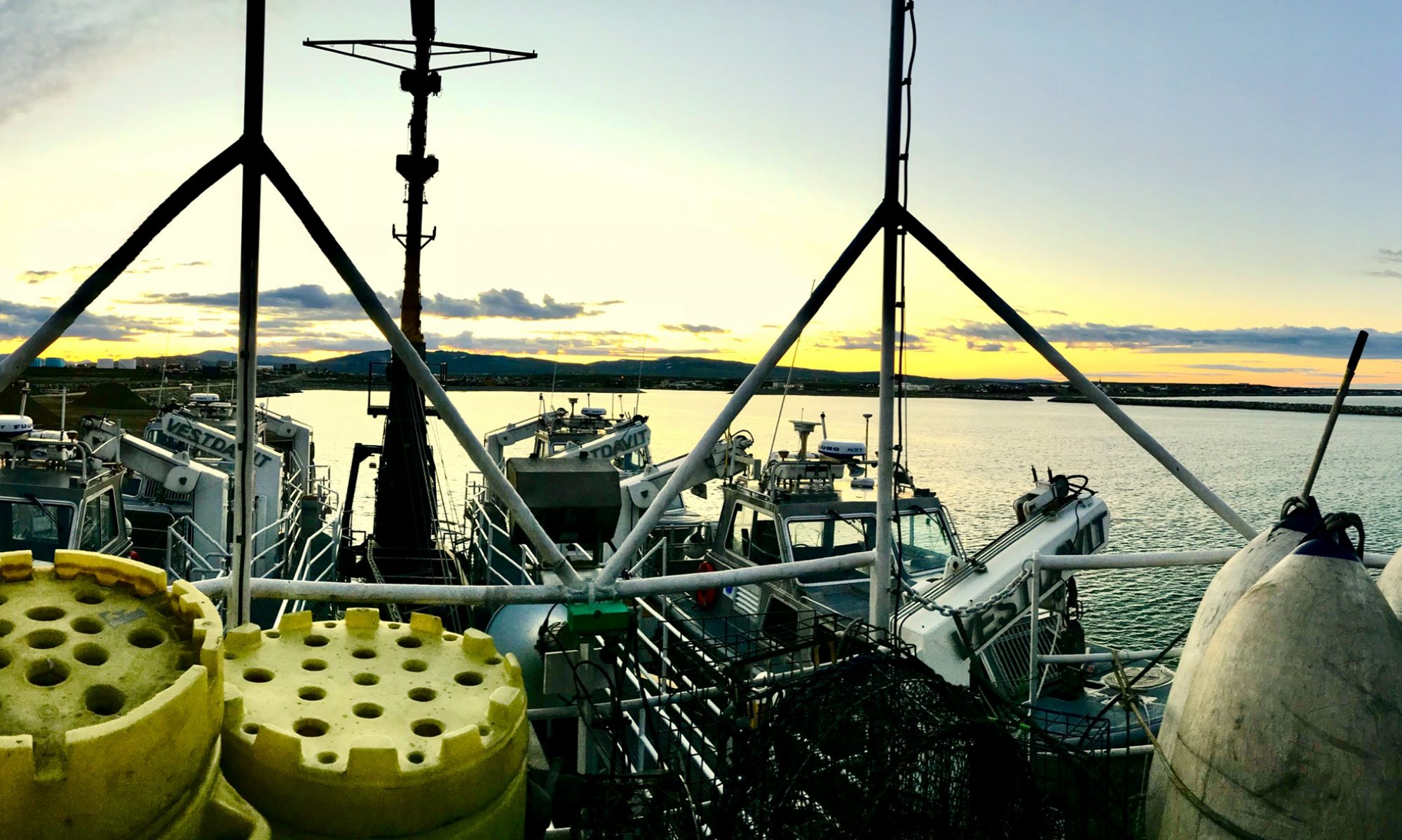
Tom Savage: Surveying the Coastline of Point Hope, Alaska, August 12, 2018

NOAA Teacher at Sea

Tom Savage

Aboard NOAA Ship Fairweather

August 6 – 23, 2018

Mission: Arctic Access Hydrographic Survey

Geographic Area of Cruise: Point Hope, northwest Alaska

Date: August 12, 2018

Weather data from the Bridge

Wind speed 8 knots
Visibility: 10 nautical miles
Barometer: 1010.5 mB
Temp:  8.5 C     47 F
Dry bulb 8   Wet bulb 6.5
Cloud Height: 5,000 ft
Type: Alto Stratus
Sea Height 2 feet

Science and Technology

Why is NOAA taking on this challenging task of mapping the ocean floor?  As mentioned in an earlier blog, the ocean temperatures worldwide are warming and thus the ice in the polar regions are melting. As the ice melts, it provides mariners with an option to sail north of Canada, avoiding the Panama Canal. The following sequence of maps illustrates a historical perspective of receding ice sheet off the coast of Alaska since August 1857.  The red reference point on the map indicates the Point Hope region of Alaska we are mapping.

This data was compiled by NOAA using 10 different sources. For further information as how this data was compiled visit https://oceanservice.noaa.gov/news/mar14/alaska-sea-ice.html. 

The light grey indicates  0-30% Open Water – Very Open Drift.  The medium grey indicates 30 – 90 % Open drift – Close Pack.  The black indicates 90 – 100% very close compact.

Sea Ice Concentration August 1857
Ice Concentration August 1957
Sea Ice Concentration August 2016

Ships that sail this region today rely on their own ships sonar for navigating around nautical hazards and this may not be as reliable especially if the ships sonar is not properly working (it’s also problematic because it only tells you how deep it is at the ship’s current location – a sonar won’t tell you if an uncharted hazard is just in front of the ship). Prior to mapping the ocean floor in any coastal region, it requires a year of planning in identifying the exact corridors to be mapped. Hydrographers plot areas to be mapped using reference polygons overlaid on existing nautical charts.  Nautical charts present a wealth of existing information such as ocean depth, measured in fathoms(one fathom is equal to six feet) and other known navigation hazards.

As mariners sail closer to the shorelines, the depth of the ocean becomes increasingly important.  Because of this uncertainty in the depth, the Fairweather herself cannot safely navigate safely (or survey) close to shore.  In order to capture this data, small boats called “launches” are used. There are a total of four launch boats that are housed on the boat deck of the Fairweather. Each boat can collect data for up to twelve hours with a crew of 2-5. Depending on the complexity of the area, each daily assignment will be adjusted to reasonably reflect what can be accomplished in one day by a single launch. Weather is a huge factor in the team’s ability to safely collect data. Prior to deployment, a mission and safety briefing is presented on the stern of the ship by the Operations Officer. During this time, each boat coxswain generates and reports back to the operations officer their GAR score (safety rating) based on weather, crew skills and mission complexity (GAR stands for Green-Amber-Red … green means low risk, so go ahead, amber means medium risk, proceed with caution; red means high risk, stop what you’re doing).  In addition, a mission briefing is discussed outlining the exact area in which data will be collected and identified goals.


Safety Briefing
Safety Briefing by LT Manda – photo by Tom Savage


Deploying a launch boat
Deploying a launch boat – photo by Tom Savage

The sonar equipment that transmits from the launch boats is called EM2040 multi beam sonar. A multi beam sonar is a device that transmits sound waves to determine the depth of the ocean. It is bolted to the hull that runs parallel to the boat, yet emits sound perpendicular to the orientation of the sonar. In the beginning of the season, hydrographers perform a patch test where they measure the offsets from the sonar to the boat’s GPS antenna, as well as calculating any angular misalignments in pitch, roll or yaw. These measurements are then entered in to software that automatically corrects for these offsets.

deploying CTD
TAS Tom Savage deploying the conductivity, temperature and density probe ~ photo by Megan Shapiro

The first measurement to collect is the ocean’s conductivity, temperature and depth. From this information, the scientists can determine the depths in which the density of the water changes. This data is used to calculate and correct for the change in speed of sound in a given water column and thus provide clean data. The boats travel in pre-defined set lines within a defined polygon showing the identified corridor to be collected. Just like mowing a lawn, the boat will travel back and forth traveling along these lines. The pilot of the boat called the Coxswain, uses a computer aided mapping in which they can see these set lines in real time while the boat moves. This is an extremely valuable piece of information while driving the boat especially when the seas are rough.

Coxswain
Coxswain Zucker – photo by Tom Savage

The coxswain will navigate the boat to the position where data collection will begin inside a defined polygon. Since the multibeam echosounder transmits sound waves to travel through a deep column of water, the area covered by the beam is wide and takes longer to collect. In such stretches of water, the boat is crawling forward to get the desired amount of pings from the bottom needed to produce quality hydrographic data. The reverse is true when the boat is traveling in shallow water. The beam is very narrow, and the boat is able to move at a relatively fast pace. The boat is constantly rolling and pitching as it travels along the area.


Hydrographer Megan analyzing the data

As the boat is moving and collecting data, the hydrographer checks the course and quality of the data in real time. The depth and soundings comes back in different colors indicating depth. There is at least four different software programs all talking to one another at the same time. If at any point one component stops working, the boat is stopped and the problem is corrected.  The technology driving this collection effort is truly state of the art and it all has to operate correctly, not an easy feat. Every day is different and provides different challenges making this line of work interesting.  Troubleshooting problems and the ability to work as a team is crucial for mission success!


Personal Log

I have found the work on the Fairweather to be extremely interesting. The crew onboard has been exceptional in offering their insights and knowledge regarding everything from ship operations to their responsibilities.  Today’s blog marks my first week aboard and everyday something new and different is occurring. I look forward in developing new lesson plans and activities for my elementary outreach program. Prior to arriving, I was expecting the weather to be mostly overcast and rainy most of the time. However, this has not been the case. Clear blue skies has prevailed most days; in fact I have seen more sun while on the Fairweather than back home in Hendersonville in the entire month of July!  For my earth science students, can you make a hypothesis as to why clear skies has prevailed here? Hint, what are the five lifting mechanisms that generate instability in the atmosphere and which one(s) are dominant in this region of Alaska?

Question of the day.  Can you calculate the relative humidity based on the dry and wet bulb readings above?      Data table below……    Answer in the next blog

What is the relative humidity?


Until next time, happy sailing !

Tom

Thomas Savage: Which radars are used on the bridge? August 6, 2018

NOAA Teacher at Sea

Tom Savage

NOAA Ship Fairweather

August 6 – 23, 2018


Mission: Arctic Access Hydrographic Survey

Geographic Area of Cruise: Point Hope, northwest Alaska

Date: August 6, 2018

Weather data from the Bridge

Wind speed 14 knots
Visibility: 5 nautical  miles
Barometer: 1007.5 mB
Temp:  8.5 C     47 F
Cloud Height: 10,000 ft
Type: Alto Stratus
Sea Height 2 feet

Science and Technology 

The focus of the NOAA ship Fairweather is to generate and update existing maps of the ocean floor called hydrography. The ship is outfitted with state of the art mapping equipment which uses single and multibeam sonar in capturing the physical topography of the ocean floor (more on this in a future blog).  The region we are mapping is located off the coast of Point Hope in north west Alaska.  It takes an amazing amount of technology especially navigational tools located in the bridge to navigate the ship within this challenging region called the Chukchi Sea.  There are two types of radar on the bridge used to navigate the ship using different radio frequencies, the X band and S band.

The X Band radar generates radio waves with 3 cm and 9 GHz, respectively. The radar is positioned high above the bridge and has the ability to pick up ships up to 40 miles in the distance. During the best weather conditions, officers on the bridge can see the horizon at a distance of 6 miles with the highest powered binoculars and make out other vessels out to about 14 miles. This radar extends the visual range of officers especially identifying ships that are not visible through the use of binoculars. This radar is useful for detecting smaller objects such as small boats in the vicinity of the ship, due to its ability to better resolve smaller objects.

The S Band radar generates radio waves with 9cm and 3 GHz … for context, a microwave oven operates at around 2.5 GHz; a car radio receives at 0.1 GHz (though most people think in MHz… e.g. “You’re listening to The Mountain on 105.9 (MHz)”… the lower frequency of the radio means it’s even less affected by rain and can travel even farther – both good things if you’re running a radio station). This type sound wave have longer distances between each crest. As a result, the sound wave can better track larger objects than the X band and objects at greater distances. In addition, this radar can be used to detect ships through walls of rain. This radar is used by weather forecasters to track types of precipitation, direction and severity and to identify possible rotations that could develop tornado. Another unique property of this radar is its ability to track precipitation on the other side of mountains. In this region of Point Hope, the Brooks Range is visible to the east and knowing the precipitation and direction is important for planning ship operations.


X Band Radar
Ensign Tennyson operating the X Band Radar

Another vital role of these radars is to track current position of the ship when anchored. By using four known coordinates of physical objects on land, in our case, the Brooks Range, located to our east, and known peninsulas are targeted. Officers will use the alidade (and compass rose) located outside the bridge to get their bearings and confirm the ships geographic coordinates. This information reveals whether the ship’s anchor is being dragged.

Alidade
Ensign Tennyson operating an alidade


Geography – Point Hope is located just above the Arctic Circle; why is NOAA mapping this region?  The sea ice in this region of Point Hope continues to disappear as a reflection of increased global temperatures. This has generated an opportunity for merchant ships to sail north of Canada instead of using the Panama Canal. The mapping of the ocean floor will provide mariners accurate maps resulting in safer passage.

Personal Log

My journey began at 6 am as my plane from the Asheville airport departed. Traveling over Alaska viewing the Rockies and glaciers from the window has been inspiring and reveals how big Alaska really is.  As soon as I landed in Nome, Alaska, around 1 am eastern time, I was reminded again how important it is to be flexible when participating in any NOAA research. After meeting up with the junior officer at the airport, he informed me that the ship is leaving in two hours due to an approaching storm. Scientists conducting research on board a ship at sea are always at the mercy of mother nature. Everyone on board NOAA’s hydrographic ship Fairweather has been exceptionally welcoming and nice which made my transition to life at sea smooth. The tradition of excellent food on board NOAA ships continues!!

Flying out of Asheville


I am looking forward to learning as much as I can during this three week adventure and bring back inspiring lessons and labs to the classroom. It is always my hope and vision to provide real world science in action to excite and encourage our students to explore and possible explore careers in science.

Until next time, happy sailing !

~ Tom


Tom Savage: Introduction, June 1, 2018

NOAA Teacher at Sea

Tom Savage

NOAA Ship Fairweather

August 6 – 23, 2018


Mission: Southeast Alaska Hydrographic Survey

Geographic Area of Cruise: Southeast Alaska

Date: June 1, 2018

Introduction

Greetings from Western North Carolina.  My name is Tom Savage, and I am a high school Science teacher at the Henderson County Early College on the campus of Blue Ridge Community College in Flat Rock, NC.  I currently teach Chemistry, Earth Science, Physical Science and coach our Science Olympiad Team. This is my fourteenth year teaching and ninth year teaching at the early college.

Science Olympiad team
Science Olympiad team placed first this year at UNC – Asheville, NC !


Exactly three years ago, I was preparing for my first NOAA Teacher at Sea voyage aboard NOAA Ship Henry Bigelow. During that mission, we conducted a cetacean (whale) inventory off the coast of New England in a region called Georges Bank. It was a trip of a lifetime and it had a profound impact on my teaching and my students.  As a result, students in my physical science classes are now identifying whales species based on their sound acoustics. In addition, I began a new elementary outreach program, “Young Scientist.”  Through activities, elementary children are exposed to the many sounds marine mammals produce for communication. Embedded within these lessons is the the marine mammals that reside in our oceans and NOAA’s mission in safe guarding these fragile ecosystems. Collaboration continues today with acoustician scientist Genevieve Davis, from NOAA’s Northeast Fisheries Science Center, located in the small scientific community of Woods Hole on Cape Cod.

Stickers for the Drifter Buoy
“Sounds of the Sea” ~ elementary children designing stickers to be attached to the drifter buoy.

I was very excited and honored to be chosen for another “once in a lifetime adventure,” two in one lifetime! This year I will be assisting with a hydrographic survey in and around the inside passages of southeast Alaska on NOAA Ship Fairweather! The goal of the survey is to map the ocean floor through the use of SONAR for the purpose of updating nautical charts. Using sound waves for mapping will compliment my marine mammal lesson plans. On this mission, we will be deploying a drifter buoy in which students will be tracking during the year as it will be transmitting realtime locations.

I have always had a fascination with the oceans. During the summer of 2013,  I spent a week with eighteen other science teachers from across the county, scuba diving within the Flower Garden Banks National Marine Sanctuary. This week long program was sponsored by the Gulf of Mexico Foundation and NOAA.  This exceptional professional development provided an opportunity to explore, photograph and develop lesson plans with a focus on coral reefs. I also learned about how important the Gulf of Mexico is to the oil industry. I had the opportunity to dive under an abandoned oil platform and discovered the rich, abundant animal life and how these structures improve the fish population.

Prior to becoming a teacher, I worked for six years in the GIS (Geographic Information System) field collecting, developing and designing maps for many purposes; ocean floor mapping is not on the list. I also worked for five years as a park ranger at many national parks including the Grand Canyon, Glacier and Acadia. Working at these national treasures was wonderful and very beneficial to my teaching.

Discover SCUBA

Providing young adults with as many experiences and career possibilities is the hallmark of my teaching. During the year, I arrange a “Discover SCUBA” at the local YMCA. Students who have participated in this have gone on to become certified. In the fall I have offered “Discover Flying” at a local airport, sponsored by the “Young Eagles” program. Here students fly around our school and community witnessing their home from the air. A few students have gone on to study various aviation careers.

Preparing for flight
Preparing for flight !

The most difficult part of being at sea for such a long time is missing my family.  They all enjoy the ocean! I have been diving with my son since he was 12 and this summer my daughter will earn her junior certification.

MacKenzie and Julianna
My children, MacKenzie and Julianna

I look forward to sharing this adventure with you!  Please send any questions that you may have and I will respond in a timely manner.

Until next time; happy sailing!


Tom Savage: Meet the Staff and Scientists, June 18, 2015

NOAA Teacher at Sea
Tom Savage
On Board NOAA Ship Henry B. Bigelow
June 10 – 19, 2015

Meet the Staff and Scientists

Mission: Cetacean and Turtle Research
Geographic area of Cruise: North Atlantic
Date: June 18, 2015

Weather Data from the Bridge
Air temperature: 15 C
Wind speed: 5 knots
Wind direction: coming from the North West
Relative humidity: 90%
Barometer: 1009 millibars

Personal Log

My journey has come to a conclusion, and we are one hour from docking at the naval base in Newport, RI. What a privilege it is to be a part of this scientific mission. The substantial photos, videos, data and experiences will greatly enhance my physical and earth science curriculum and further my goal of getting students interested in fields of science. This journey has reinforced my position that a nation cannot advance and improve the quality of life without scientific research.

I would like to thank the scientists on board during this cruise, Mr. Pete Duley and Dr. Danielle Cholewiak


Teacher & Chief Scientist
Me, Pete Duley and Danielle “Dani” Cholewiak

Science and Technology Log

Every job aboard a research vessel is mission critical, and one is not more important than the other. During this excursion, I had the pleasure of meeting some of the crew and scientists that made this tour a success.


IMG_0579
Executive Officer (XO), Patrick Murphy, NOAA Corps

Pat began his career studying Physics at the University of North Carolina, Wilmington and earned a master’s degree in oceanography while attending Dominion University in Norfolk, Virginia. When asked how he got involved in the NOAA Corps, he mentioned there were two well defined career paths as an oceanographer: NOAA or teaching. He advises students who are considering the NOAA Corps to build operational leadership skills and to demonstrate that you can work in a team and complete a job when assigned.

A few of his favorite places he has visited while employed with the NOAA Corps: Farallone Islands Ca, Alaska bays and inside passages when hiding from storms, and Dutch Harbor located among the Aleutian Islands in Alaska.


Yin-AMAPPS-HBigelow-17Jun2015-Julianne-1349
Julianne, Acoustician

Julianne is a recent graduate of Oregon State University and received a BS in zoology, and she is currently working on her master’s degree. Her path with NOAA started as a recipient of the Ernest F. Hollings Undergraduate Scholarship Program. This program provides students with scholarship money and paid internships with the goal of fostering multidisciplinary training opportunities within NOAA. After graduating from Oregon State University, Julianne worked in Alaska at a remote salmon hatchery, Snettisham Hatchery. She is currently an acoustician with NOAA’s Northeast Fisheries Science Center as a research analyst focusing on real-time acoustic tracking of baleen whales and the North Atlantic right whale migratory corridor project.


Genevieve, Research Analyst

Genevieve was also a NOAA Hollings scholar and worked on North Atlantic Right Whale calling behavior across seasons. Genevieve joined NOAA’s Northeast Fisheries acoustics team as a research analyst focusing on baleen whale acoustics and as an elementary school educational outreach program at the center. She is working on her doctorate in Environmental Biology with a focus on baleen distributions and migrations.


MMPA17355_HMoors-Murphy_ (35)
Hillary, whales specialist for Fisheries and Oceans, Canada.

Hilary became interested in whales at the age of five. “My mom was always super interested in the ocean and we went whale watching often.” She studied marine biology with a focus on seal acoustics. Getting on a boat to see and study marine animals is what she enjoys most about her job.

When asked about advice for students who want to study marine biology. “Get experience whenever you can, especially if you have the opportunity to work in a lab. Having experience is crucial. Volunteering with a professor who is studying seals led me to an avenue in whale biology.”


IMG_0674
Dennis, Chief Steward

Prior to joining NOAA, Dennis had a career with the Navy for 20 years. Dennis has one of the most important jobs on the ship, keeping everyone fed. He is absolutely amazing!  While I was on duty on the Fly Bridge, around four in the afternoon, aromas from the galley drifted to the Fly Bridge.  It was a nightly contest to guess what would be served in the galley. His cooking is so unique that all of our guesses were incorrect; we went 0/5 that week. One night, steak was served for dinner and it was the best steak I have ever had.  Thanks Dennis!


IMG_0500
Marjorie , Research Fishery Biologist

Marjorie works for NOAA’s Northeast Fisheries Science Center. Her job focuses on collecting data from commercial fishing operations. This data provides valuable information on determining if certain fish populations can maintain a healthy marine mammal population.

She earned an undergraduate degree in Natural resources from University of Massachusetts, Amherst.  She is currently working on a doctorate in Marine Biology from the University of Massachusetts, Dartmouth.

Best wishes to all !

Tom

Tom Savage: Tuning in to Sei Whales, June 16, 2015

NOAA Teacher at Sea
Tom Savage
On Board NOAA Ship Henry B. Bigelow
June 10 – 19, 2015

Tuning in to Sei Whales

Mission: Cetacean and Turtle Research
Geographic area of Cruise: North Atlantic
Date: June 16, 2015

Weather Data from the Bridge
Air temperature: 13 C
Wind speed: 10 knots
Wind direction: coming from the North West
Relative humidity: 95%
Barometer: 1004 millibars

Personal Log

Today is my third day at sea and I’m enjoying every moment; time onboard the ship flies. Although time onboard is dwindling, lots of discovery remains. Sunday brought sunny skies and warm temperatures, another perfect day for whale identification. It has been a real joy working with this exceptional group of professionals. Everyone is very supportive of each other and mission focused.

Science and Technology Log

The mission of this cruise is Cetacean research, but what exactly is a Cetacean? Cetus is a Latin word used in the context of biology defined as “whale”. Whales and dolphins are included within this order of classification. As stated in my earlier blogs, we are focusing on sei whales, pronounced ‘say” and beaked whales.

Why study sei and beaked whales? These whales are some of the least studied and scientists know relatively little about them. Information collected so far on sei whales: they have poleward migration trends, feed on small fish, krill and copepods (small crustaceans), and are thought to be populated along boundaries of elevated sea floors such as Georges Bank. Along the border of Georges Bank, upwelling of small prey occur due to ocean currents creating a perfect feeding ground for whales. Sei whales will also skim the ocean surface for food. Unfortunately, due to this feeding habit, many sei whales are struck and killed by large ships.

The other type of whale we are searching for are beaked whales. These whales are extremely difficult to identify due to their feeding and swimming behaviors. They are deep divers and spend a lot of time at depths of more than a thousand feet feeding on squid and fish. When they surface, they are inconspicuous and not acrobatic, and they are very difficult to see. Because they are found offshore in very deep waters, there are few opportunities to study them. Most of what is known about these species comes from individuals that have stranded on beaches where people can find them.

Spectrogram
Acoustician scientist, Chris, analyzing a spectrogram

One method scientists on board use to detect the presence of sei whales is to listen for them using hydrophones (underwater microphones). For this cruise, the acousticians are deploying sonobuoys: short term recorders that can transmit live audio feed through VHF channels. Sei whales generate tonal calls and produce a “down sweep “ from high to low frequency with a range from of 80 – 30 Hz. Sei whales are classified as a Baleen Whale.

Sei whale
Sei whale, photo courtesy Northeast Marine Fisheries, NOAA Whale permit mmpa # 17355

Baleen whales produce tonal calls typically under 1 kHz. For some species, like the humpback whale, song is known to be produced only by males, presumably to attract mates. After deploying the sonobuoy, we quickly began receiving signature tonal calls of sei whales. A sound spectrogram is used to interpret and project these acoustics on a graph with frequency on the y axis (vertical) and time on the x axis (horizontal). The darker plots indicate that the whale is close and lighter plots are weaker signals. Sometimes they will call in doubles or triple sweeps. Below is an example of a sei whale tonal call of the coast of Nova Scotia. Can you find the call?

Spectrograph
Sei whale acoustic sample recorded off the coast of Nova Scotia.

Scientists are not sure at this point what purpose these calls serve; for example, they could be used to maintain contact between individuals, attract mates, or advertise feeding areas.

Atlantic White Sided Dolphin
Atlantic White Sided Dolphin Photo taken by Hillary Moors-Murphy

Scientists are also trying to understand the oceanographic and habitat factors that are correlated with sei whale distribution. One question is what kind of prey are in the areas where sei whales are and are not found. In the evening hours, fishing nets are deployed to take a sample of organisms present in the ocean at that location. Shallow nets, called bongos, are used to take samples of zooplankton in the water down to 200m. Tonight, we are in deeper waters and the mid-water trawl net went down to 650 meters for 45 minutes. The net is then pulled in and fish are identified, counted and entered into a computer database. As mentioned above, sei whales like to feed on copepods and small arthropods. Guess what we pulled out of the bongo nets last night?

Copepod Soup
Copepod soup. A delicious dinner for sei whales!

Until next time, happy sailing!

Tom