Robert Ulmer: Quo Vadimus? June 16, 2013

NOAA Teacher At Sea

Robert Ulmer

Aboard NOAA Ship Rainier

Underway from June 15 to July 3, 2013

Current coordinates:  N 55⁰47.254’, W 130⁰58.264’

(at anchor in Behm Canal at the mouth of Chickamin River)

Mission:  Hydrographic survey

Geographical area of cruise:  Southeast Alaska, including Chatham Strait and Behm Canal, with a Gulf of Alaska transit westward to Kodiak

Log date:  June 16, 2013

Weather conditions:  26.04⁰C, scattered altocumulus clouds, 32.91% relative humidity, 1012.18 mb of atmospheric pressure, light variable winds (speed of less than 3 knots with a heading between 26⁰ and 51⁰)

A bit of breathing room in Wrangell Narrows
A rare bit of breathing room in the passage of NOAA Ship Rainier through Wrangell Narrows

Explorer’s Log:  Preparing for the transit through Wrangell Narrows

When watching a great concert, recital, or athletic event, we often forget the hours upon hours of preparation that were invested before the starting whistle or the rise of the curtain.  History remembers and recites the first few moments of Neil Armstrong’s walk on the surface of Earth’s moon, but too often neglected from that history are the many years of research, discussion, calculation, prediction, and practice by thousands of people – including Armstrong – prior to that famous “one small step,” for without those advance preparations the brilliant moment likely never would have occurred.

Photos at the top of Everest belie the training, packing, mapping, and grueling climb that precede the snapshot.  Last-minute buzzer beaters arise out of years of dribbling and shooting in empty gyms long after scheduled team workouts end.   The revolutionary insights of Copernicus and Kepler were built upon hundreds of previous models and millions of recorded observations and related calculations.  Great campaigns are waged on drawing boards long before they approach the battlefield.

Chart showing approach to Wrangell Narrows
This is the chart used during the navigational team meeting in preparation for Rainier’s approach to Wrangell Narrows.

Aboard NOAA Ship Rainier the culture of preparation is omnipresent.  Posted on the door of my stateroom and carried in my pocket at all times is a billet card that delineates where I am to report and what task I am assigned in each of several emergency situations aboard ship.  Within an hour of getting underway from the port of Juneau, the alarm sounded for a fire drill, and every person aboard reported smartly to his or her assigned station.  Heads were accounted, gear was readied, and some crew members even donned full firefighting suits and deployed hoses and fans to address the fictional fire in the XO’s office.  Because every person aboard knew his or her role in advance, the ship was prepared for the drill.  And more importantly, because the entire ship participated actively in the drill, dealing with a genuine emergency, if necessary, will be more seamless and effective.

Then only ten minutes later, the alarm rang again.  This time an abandon ship drill.  As assigned, I retrieved my emergency gear and moved quickly to Muster Station 1 on the starboard bridge wing, where ACO Mark Van Waes explained in detail what would happen in the event of such an emergency.

Teamwork and Safety first
As this sign above the fantail proudly displays, NOAA Ship Rainier values teamwork and puts safety first in all operations and missions.
Leaving the dock at Juneau Port
Careful navigation requires attention to details, like avoiding this small dock while leaving Juneau Port.

Of course, most of the preparatory work aboard Rainier is not about emergency situations, but rather is focused on readying for the work of navigating and operating the ship or the scientific missions of conducting surveys and samples, and that aspect of life aboard ship is non-stop.  Everywhere around me, crew members and scientists are constantly working together, giving formal and informal trainings and lessons, offering one another ideas, insights, questions, and answers, unencumbered by the impediments of pride and arrogance that too often prevent achievement through growth.  To the left of me, a young ensign is given room to make navigational decisions, while to my right two expert hydrographers consult available data and each other while they brainstorm about technical and theoretical issues on their own horizons.

Passing Petersburg, Alaska
The entrance to Wrangell Narrows is alongside the town of Petersburg, Alaska.
Reviewing the data and documents during the mission
Scientists from the survey team review data and documents while aboard the launch.

And the gathering of minds aboard Rainier is impressive.  Today the hydrographic survey team assembled in the wardroom to talk about the upcoming week’s launches of smaller vessels to perform multi-beam sonar surveys and gather bed samples from the floor of Behm Canal.  Under the guidance of FOO Mike Gonsalves, data were shared, schedules were outlined, and every member of the team – regardless of rank or role – was encouraged to share thoughts, concerns, and inquiries relevant to preparation for the task at hand, the ultimate task of this leg of Rainier’s mission.  Like those other great events throughout history, here is yet another example of prior preparation preventing poor performance at the critical moment.  And those were not the last conferences regarding the survey launches, either.  A meeting regarding safety and other last-minute issues was held on the fantail before putting the launches out, and the various people aboard each small vessel constantly interacted to update and modify their ideas before executing their actions.

(Note:  My next blog post will be about the scientific survey launches, so stay tuned!)

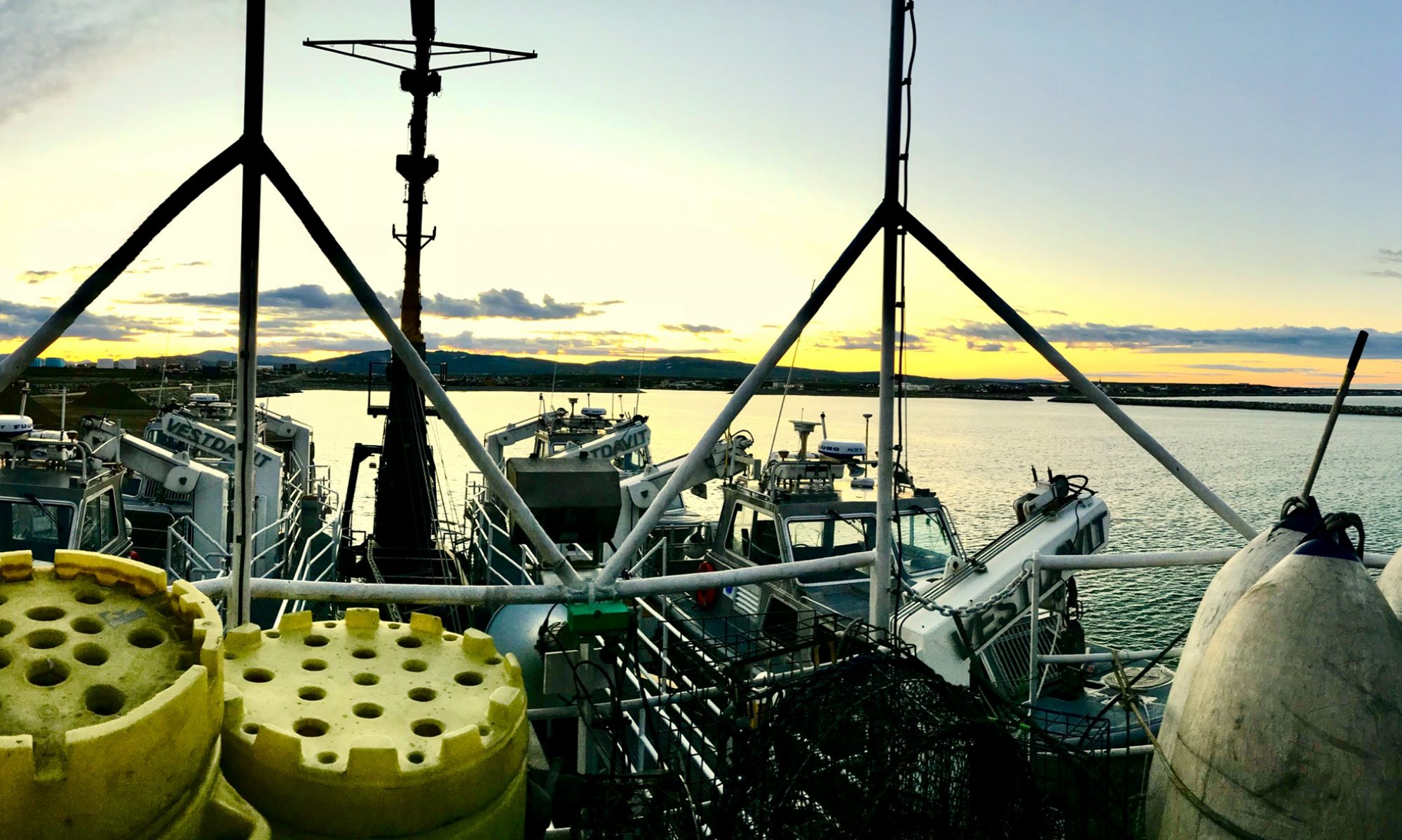
The view forward through Wrangell Narrows
A panoramic view of the passage forward through Wrangell Narrows

The most impressive preparation during the past few days, though, was that of the navigational crew.  After hours of work compiling past data and available current information and building itemized route plans for passage through the potentially-treacherous Wrangell Narrows, Ensign JC Clark led a large and comprehensive meeting to discuss every bit of the upcoming traverse.  Utilizing charts, mathematics, weather forecasts, and expert opinions, the group of men and women in the boardroom created a plan of execution that considered everything from tides to local traffic, from channel depths to buoy patterns.  Adjustments were made in an air of excitement tempered by the confidence of experience, preparation, and skill.

Alidade on starboard bridge wing
This device (called an alidade) on the starboard bridge wing is used for visual bearings.

And when the ship approached the town of Petersburg at the mouth of Wrangell, the preparation paid off.  Turn after turn, command after command, the teamwork was superb, and the resulting passage was seamless.  The ride was so smooth as the bridge maneuvered Rainier through the slalom in that deep and narrow fjord, that only the beautiful scenery itself was breathtaking.

Chief Boatswain Jim Kruger practicing knots
During a brief opportunity to look away from the water, Chief Boatswain Jim Kruger worked on maintaining his expert knot-tying skills.

We tend to envision genuine explorers as being people who dare to travel beyond the horizon, choosing adventure over caution every time they set out.  But the truth is that every great explorer, long before he lifts his foot for the first step of the travel, asks himself and his companions:  Quo vadimus?

Where are we going?

Pre-launch meeting on the fantail
Field Operations Officer Mike Gonsalves conducts one last survey team meeting on the fantail before the launches get underway.

The answer to that question might be a physical location, or it could just as easily be a direction.  Up that mountain.  Toward that little island.  Around the bend.  It could even be broad and metaphorical.

Sea lions basking on a buoy at the entrance to Wrangell Narrows
The ACO pulled out the binoculars to answer his own question of why that red buoy at the entrance to Wrangell Narrows was listing so much to the right. The tilt was because these sea lions were using the buoy to bask in the warm near-solstice sun.

But regardless of the short answer, the great explorer knows that the value of good preparation ultimately is the maximization of adventure can be maximized.  Explorers may appear to disregard caution, but in fact, they have done the training, built the skills, plotted the course, and considered the likely obstacles in order to address that caution before getting underway.

But regardless of the short answer, the great explorer knows that the value of good preparation ultimately is the maximization of adventure can be maximized.  Explorers may appear to disregard caution, but in fact, they have done the training, built the skills, plotted the course, and considered the likely obstacles in order to address that caution before getting underway.

ACO Van Waes shared with me a superb insight:  The difference between a road map and a nautical chart is that a road map outlines a suggested path of travel, while the chart simply shows the traveler what things are out there.  The hydrographic survey teams and supporting scientists who work for NOAA make nautical charts so that seagoing explorers can continue the great human endeavor of creating their own maps to turn curiosity into discovery, and I am very proud to spend these weeks working and learning among the people who keep that grand tradition going forward.

So prepare yourselves, practice your skills, plan a bit, and choose a direction or two.  And then keep exploring, my friends.

Personal Log:  Father’s Day

On the day before I left Florida I cropped my hair closely and stopped shaving my face (for the first time ever), in part to minimize the need for maintenance away from home, and also as a minor-league scientific experiment to compare rates of hair growth on the face and on the crown.  After five days the chin, cheeks, and jawline seem to be winning the race.  But the most interesting datum – as so often is the case in scientific tests – is a peripheral notation:  When passing a reflective window this morning, I saw a familiar face framed by the short beard and small wrinkles at the edges of the sunglasses under the brim of my hat, but the face that I saw wasn’t my own.  This third Sunday in June, thousands of miles from home, sort of pensively half-smiling at a fleeting thought that was blending with a pretty view of the treeline off starboard, I saw the face of my dad looking back at me.  And my smile grew a bit softer and fuller when I caught glimpses of my sons in the reflection, too.

So happy Father’s Day to you three other Ulmer men who do so much to define this Ulmer boy.  I’m proud of you, and I love you guys.

And on behalf of children everywhere, happy Father’s Day to the rest of you readers who have undertaken the great task of raising kids.  Your work is important.  

Did you know?

Underway through Gastineau Channel
Underway through Gastineau Channel, outbound from Juneau

The ship’s propellers are called screws because essentially they spiral through the water to propel the boat forward by pulling water from in front and pushing it backward.  NOAA Ship Rainier has two screws, one starboard (right) and one port (left), and they spin in opposite directions to make smoother and more efficient fluid dynamics.  On this ship the screws constantly spin, but they are tilted differently to increase or decrease forward propulsion.

To increase forward vessel speed, the screws hang with a vertical profile so that the water moves horizontally backward from the boat, thus pushing the boat forward.  To decrease forward vessel speed, the screws are tilted toward a more horizontal plane, decreasing the backward push of water, and consequently reducing the ship’s thrust force.  It’s very much like holding your open, flat hand outside the window of a moving car and feeling the wind push it backward, upward, or downward, depending upon the angle of your palm relative to the car’s (and the wind’s) trajectory.  Newton’s Third Law of Motion says that every action comes with an equal and opposite reaction, and so the more directly backward the water is pushed, the more directly forward (with the same amount of force) the ship is pushed in the opposite direction.

Robert Ulmer: Perspectives on a Glacier, June 14, 2013

NOAA Teacher At Sea

Robert Ulmer

(En route from Jacksonville, Florida to NOAA Ship Rainier and at port in Juneau, Alaska)

Will be underway from June 15 to July 3, 2013

At port in Juneau:  N 58⁰17.895’, W 134⁰24.684’

Mission:  Hydrographic survey

Geographical area of cruise:  Southeast Alaska, including Chatham Strait and Behm Canal, with a Gulf of Alaska transit westward to Kodiak

Log date:  June 14, 2013

Weather conditions at port:  19.08⁰C, scattered cumulus clouds with little vertical extent against bright blue skies, 43.05% relative humidity, 1017.36 mb of atmospheric pressure, wind speed of 9.5 knots with a heading of 79⁰

Port of Juneau
A panoramic view of the Port of Juneau with a cruise ship beginning its exit of Gastineau Channel

Explorer’s Log:  Mendenhall Glacier

Flying across the North American continent at an altitude of 34,000 feet is an experience somewhere between looking down upon a held globe and walking across the terrain.  Maybe that’s too obvious a sentence for starting this second blog entry, but the fact of that obviousness is the necessary beginning, I think.

Marker on the trail to Mendenhall Glacier with Ensign Steven Wall
As we walked the few miles through Tongass National Forest and across or around several mountains along the West Trail to Mendenhall Glacier, Ensign Steven Wall and I followed piled stone trail markers called cairns.

Crossing the skies above the glaciers of western Canada and eastern Alaska, I was overwhelmed by the sheer majesty of the sights below me.  Stretching from one horizon to the other, mile after seemingly endless mile of nearly blinding albedo from frozen water reflecting the sunlight of the approaching solstice at the nearly-Arctic latitude, interrupted only occasionally by jutting dark crags of towering mountains with just enough warmth or slope to slough the otherwise boundless field of snow, and dotted here and there by impossibly sapphire pools of today’s meltwaters.  Eons of valleys carved by the almost imperceptibly unhurried slog of ice advancing under the magnitude of its own weight.  Cascades of energy waiting, breathing, crawling, leashed only by the chilly bonds of molecular attraction below a certain thermal mark.  But the hiker in me instantly feels a frostbitten ache in the ankles and knees just from peering downward at the tremendous glaciers from the warmth of the airplane cabin, entirely based on the mere consideration of just one day’s walk across the frozen sheet, thousands of frigid footfalls constituting a single-digit of traversed miles, at best.   Truly, the glaciers are awesome when seen from an airplane.

At the toe of Mendenhall Glacier, just before a calving
These ice formations are at the leading face of Mendenhall Glacier as it slowly creeps along and melts into the lake and river below. Even though they seem small, the rocks beneath the ice are more than twenty-five feet high above the water line in this picture! About an hour after I took this photograph, a chunk of ice calved away from the glacier, making an explosive sound that could be heard for miles.

On a globe in my classroom, though, those magnificent glaciers are mere splotches of white and maybe a bit of texture for the fingertips, an entirely different paradigm, to be sure.  Accurate, proportional, and contextually appropriate on a cardboard sphere that must display the major surface features of an entire planet.  Excellent for showing young people comparative and relative size and location in order to launch discussions about geography, tectonics, Earth’s axial tilt, or the water cycle, but not likely to send shivers through the imaginations of the young students whose travels more often are flights of fancy rather than physical treks to distant lands.

The west side of Mendenhall Glacier, viewed from below
This was our first close-up view of Mendenhall Glacier. The “ramp” of ice that you see on the right is more than one hundred feet high.

The point of this comparison?  A study in perspective.

Where a biologist sees a species of tree (or maybe a whole ecosystem), a painter sees verticality or varieties of green, and a carpenter sees a cabinet.  Importantly, all three observers are valid, correct, and good in their perspectives.  Perhaps more importantly, not one of those perspectives has to be deemed wrong just so that the others can be right at the same moment.  Likewise, the globe and the look-down from the airplane both are meaningful in providing totally different perspectives on the same glaciers.

Ice cave at Mendenhall Glacier
Pressure, temperature, and friction work together to carve holes and caves in glaciers, some of which are big enough to walk through… with safety gear, of course!

Therefore, I was overjoyed to hear on my first morning after boarding Rainier a bit of enthusiastic encouragement (and a quick primer on how to use a can of bear spray!) from the ship’s XO, Holly Jablonski, insisting that Ensign Steven Wall and I should spend the day actually exploring Mendenhall Glacier above the Tongass National Forest, just outside the Juneau city limits.  With snacks and drinks in hand, Ensign Wall and I were dropped at the head of the West Trail, where we hiked through a few miles of verdant evergreens and mosses, over and around a few mountains, and up a rock face before arriving at the toe of Mendenhall Glacier.  Abruptly, here in front of me was a rippled wall of ice with folds so large that singular words of description are insufficient to capture their enormity.  What had appeared from miles across the meltwater lake to be small chunks of ice at the face of the glacier now were towers more than 140 feet tall, and yet their backdrop still showed them to be relatively tiny.  In the river below were chunks of floating ice that had fallen forward from the glacier’s leading edge, seemingly just a few feet wide… until I saw kayaks completely dwarfed next to them like flies next to football stadiums.

Kayaks among the calvings in Mendenhall Lake
If you look closely, you’ll see that the black specks on the lake are kayaks, which will give you some idea of the size of the “small” icebergs adrift in the water below Mendenhall Glacier.
Twenty-foot crevasse in Mendenhall Glacier
What appears to be a small crack really is a crevasse more than twenty feet deep, and its small drainage cave continues downward for more than 150 feet to the lake below the glacier.

Indeed, the ice was cold, but the feelings at the front of my thoughts were more about size and power, awe and beauty.  Nothing in my previous education had prepared me for my sudden inability to appreciate the magnitude of the behemoth.  Crawling through caves of ice and walking on the surface of the ice was both spiritually overwhelming, as I joined something so much larger in size and time than any human experience, and also tremendously frightening, as the sound of every creak and every drip striking a floor hundreds of feet below the edges of the hole served as a reminder of my fragility at the hands of such forces.

Next, though, I surprisingly was struck by exactly the opposite of the feeling that I had expected:  Rather than feeling the tremendous difference between the frozen landscape in front of me and the 90-plus Fahrenheit degrees that I left before dawn just one day earlier in Florida, I was moved instead by an overwhelming sense of unity, sort of a bridge between the airplane view and the globe view about glaciers that already had passed through my mind.  I couldn’t escape the connection between this mountainous ice sheet and the swampy lowlands where I live thousands of miles to the southeast, because ultimately it is the existence of this frozen ocean atop the mountains of Alaska (and its neighboring icecap, extending toward the planet’s pole) that leaves the great liquid oceans of Earth at a lower level, thus exposing the small peninsula of Florida that I call home at the far other corner of the continent.  And then I saw everything around me differently:  The flowing ice around the peaks looks very much like the wind-blown sands at the beginnings of beach dunes, the small deltas in the mud from the trickles of meltwater are shaped identically to the much larger region surrounding the Suwannee River as it crashes into the Gulf of Mexico, and the wetland grasses miles below the glacier are nearly twins of the salty marshes near Florida’s Intercoastal waterway.  While very different, also quite the same in many ways.

Delta beneath a rivulet near the toe of Mendenhall Glacier
A delta is formed when running water meets the friction of an obstacle in its path (often a larger body of water) and spills leftward and rightward of its banks, making a triangular shape (like the shape of the Greek letter delta) in the nearby land when seen from above. This tiny delta is at the end of a rivulet at the base of Mendenhall Glacier, but it has the same basic form as larger river deltas all over the world.

As my students and friends hear me say so often, we are the sum of our stories, and every story is interesting if told from a meaningful or exciting perspective.

If I simply had described the past few days of my life as a series of long and uneventful flights followed by a walk among some trees and ice chunks, it wouldn’t have been untrue; it just would have been less interesting.  We all know that the best stories often come from places of familiarity, but spun with unfamiliar points of view.  During the next three weeks, I look forward to hearing and sharing ideas and insights with scientists, mariners, stewards, and technicians aboard Rainier as together we explore the same scenery along the waterways of Alaska, but from our own different perspectives… and then sharing those stories with you here.

Hikers on Mendenhall Glacier
By finding the ice features along the left wall of this picture on other photos in this blog may give you some additional perspective about the tremendous size of Mendenhall Glacier, as here you can see a group of hikers along the edge of a meltwater stream.

In our hurried world of expediency, cell phones, and paved highways, perhaps we too often put on blinders to see our travels from only one frame of reference.  As you walk your own paths, I challenge you – as I again challenge myself – to look at each new thing in several ways before closing any doors of possibility or windows of perspective.  Keep exploring, my friends.

Explorer’s Supplemental Log:  Juneau, Alaska

Tlingit totem pole and wall painting on Village Drive in Juneau
The native Tlingit people carve and paint totem poles and other images to tell stories, record events, and celebrate or worship. Central to their totemic imagery is the great raven, a powerful bird of the local skies. The items in this photograph are at the entry to Village Drive, where many members of the Tlingit Tribe still live just a few blocks from the water in downtown Juneau.

Before my excursion to Mendenhall Glacier, I first was taken to the ship port in Juneau, where NOAA Ship Rainier has been at port for two weeks.  Despite the late hour of my arrival, the sun at this northern latitude so near the beginning of summer remained far above the horizon, and so I decided to explore the local city on foot.

Blooming flowers in Juneau
Many colorful flowers bloom in the warming air in and around Juneau as summer approaches.

Juneau, the Alaskan state capital, is nestled among several evergreen-rich yet white-capped mountains on both banks of the mighty Gastineau Channel, which carries its glacial headwaters eventually to the distant Gulf of Alaska in the North Pacific Ocean.  While Juneau has served as host for my shipmates during their hours of liberty in the past several days, the city traces its history both to the discovery of gold in the nearby mountains and waters and to the native Tlingit people who moved from nearby Auke Bay.  During the past century and a half, those beginnings have laid a strong foundation for commercial ventures in mining, exploration, and government alongside a rich cultural heritage that still is seen in the stories told by the totem poles at the entry to Village Drive.  Further, those roots have since grown as other visitors and new residents have brought their own religions, cultures, and curiosities, resulting in a small and beautiful city of varied flavors and voices, a city whose shopkeepers, fisherman, sailors, citizens, and guests mingle their perspectives into a lovely harmony with those of the soaring eagles, boisterous ravens, playful otters, and hungry gulls.

Juneau movie theater building
Downtown Juneau has many beautiful older buildings, like this one, which houses the movie theater (a favorite evening site for ship crews ashore).
Alaska Senate Chambers
Senators represent their home districts as they debate, negotiate, and legislate in the Alaska Senate Chambers in the state capital city of Juneau.
Russian Orthodox church in Juneau
This is the oldest Russian Orthodox church in North America, constructed in the 1800’s to educate and convert the local Tlingit people.

Did you know?

Like other living things, languages grow, ingesting new ideas and experiences, and then converting them into written or spoken symbols called words.  The study of vocabulary often reveals another important lesson in perspective, as word roots give us clues about how the inventors of those words saw the items and events in their own worldviews.

For example, a glacier is an enormous sheet of ice, but the etymological root of that word is the same root that underlies glass (which looks like ice in its nearly-clear, fragile, appearance of solidity) and glaze (which means to coat or polish a surface so that it appears to be covered in ice, a metaphor that is extended into frosting and icing on cakes).  And in many European countries, you can order a frozen treat by asking for a glacé.  Also, when a frozen chunk of the leading face of a glacier breaks free of the main body of the glacier, the event is called a calving, as the inventor of that term in that context must have seen the many ways that the event is like the birthing of a smaller baby cow from its much larger mother.

(By the way, calved chunks of glaciers that fall into bodies of liquid water don’t sink, but rather they float to become icebergs.  Most substances become denser when they freeze from liquids into solids, but water is unusual.  The buoyancy of water ice – which you’ve experienced on a small scale every time that you see ice cubes floating in a glass of drinking water – is caused by the greater density of liquid water compared to the lesser density of frozen water, as electrochemical forces lock water molecules into a more spread-out lattice during the freezing process than those same molecules experience as they flow more closely around one another in the liquid state.)

NOAA Ship Rainier at port in Juneau
NOAA Ship Rainier at port in Juneau, Alaska

Rob Ulmer: Preparing to Leave Home, May 13, 2013

NOAA Teacher At Sea
Robert Ulmer
(Not yet aboard) NOAA Ship Rainier
At sea from June 16 to July 3, 2013
(Still home in Gainesville, Florida, N 29 42 30, W 82 22 48)

Mission: Hydrographic survey
Geographical area of cruise: Along the coast of Alaska, from Juneau to Kodiak
Log date: May 12, 2013

Personal Log

For as long as I can remember, I have loved maps. A good map is an invitation to explore, to let the mind wander in distant lands, among unfamiliar environs, and into new challenges, but always with the advice of the explorers who walked there earlier. Imagine being the first person to cross a dense bit of jungle or a vast glacier, to find an underground passageway of ancient caves, or to walk on the surface of some planet. Certainly, you or other people might have created speculative pictures in your head before your journey, hypotheses about what you might find. But those hypotheses must be tested, verified, investigated. The explorer bravely takes the advice of others, the creative ideas that grow from his own previous experiences and imaginings, and whatever other tools fit into his kit, and he walks forward.

That is what we humans are. Explorers.

Checking the trail map and USGS marker on Pine Mountain

Even young children are scientists. Starting from very little background knowledge, they do that most human of activities: They wonder. Uninhibited by the social structures of the adult world, they spend nearly all of their waking moments drawing new maps in their heads. Maps of the paths of beetles crossing the yard, maps of the grocery store aisles, maps of best hiding places on the playground or in the house… but not only geographic maps. They also “draw maps” of how to talk Mom into an extra snack, how to fill the bathtub with bubbly water, and how to put on a shirt.

Two routes from Amelia Island to Big Talbot Island

When Euclid wrote Book 1 of his Elements, he laid down a road map of proofs so that others could confidently follow him to the Pythagorean Theorem. When Leonardo da Vinci and the Wright Brothers made drawings of their flying machines, they were mapping the paths that they had trod toward liberating humans from the clutches of Earth’s gravity. And when Grandpa wrote the recipe for his excellent gumbo, he, too, was a cartographer, taking notes about how he had done the work so that others might learn from it and, maybe, expand it into something more meaningful and delicious in their own lives.

The land and surrounding waters of Alaska have captivated humans for many ages. The majesty of the advancing and receding glaciers as they slowly carve valleys amid the mountains, the freedom of the soaring flights of eagles as they look down upon the rarely-visible orcas and belugas, the mystic palette of icy blues and whites against the vernal greens and floral splashes… People travel to, through, along, and across Alaska for commerce, for sightseeing, for escape, and for investigation, and the maps of those who have gone before them make those passages easier and more interesting, both by providing guideposts and by leaving other details to be explored by the new travelers with their own curiosities and motivations.

When I join CDR Rick Brennan (who is both the Commanding Officer and the Chief Science Officer of the ship), Executive Officer Holly Jablonski, and the rest of the crew of NOAA Ship Rainier in a few weeks, I will be learning how skilled scientists continue the grand tradition of mapmaking, using modern equipment to plumb the depths and chart the coasts from Juneau to Kodiak, updating the notes made by previous explorers so that the next travelers will have the confidence of our data before they add their own interesting pieces to their own maps. By participating actively in the expedition, I will be mapping new territory for my students and myself, too, as I gain first-hand evidence of how scientists in the field conduct the business of their science. Remember that more than two-thirds of Earth’s surface is covered with water, and we have more than 100 miles of atmosphere above our heads, and yet we’ve barely begun to explore those regions of our own home world. That makes the work and leadership of the National Oceanic and Atmospheric Administration even more important because they are pioneers at this early stage in human exploration of those parts of our planet.

Rock climbing with the family in the hills of Georgia

Don’t you wonder what it might have been like to hang out with Galileo as he peered through his telescope, to sit next to Beethoven as he composed and edited a symphony, or even to watch the patient musings of Mendel as he gardened peas season after season? I do. It’s difficult to remember what it felt like to be a young explorer, unburdened by almost any preconceptions. But exploration is always available if we are willing to open our eyes and minds, and to get our hands dirty while investigating our own surroundings.

Learning by investigation on the shore of Jekyll Island

And when I return to my 8th-grade classroom in tiny land-locked Lake Butler, Florida, at Lake Butler Middle School,  I’ll be able to share my own first-hand experiences and explorations aboard Rainier. I look forward to feeling the excitement bubble from inside me to capture the curiosities of my kids, as I act out the launching of depth-finding devices, display real data from my cruise, and share stories, notes, pictures, and videos to help them see and smell and hear what I witnessed. I look forward to my students’ questions after I return as much as I am excited about my own questions now. And I know that I won’t be able to answer all of those questions, but that’s the beauty of exploration: The students’ own wonderings will lead them to continue the explorations themselves, to enhance the maps with new notes, new details, and new points of interest.

Expedition boat about to visit the corals reef off Summerland Key from Mote Marine/NOAA Lab
View southeastward from Mote Marine Lab in Summerland Key, Florida

Teachers always are motivating their students to dig in, to investigate, to think for themselves and take chances with new and creative ideas. Of course, my students read to learn what others before them have discovered, but they learn in other and sometimes more meaningful ways by designing and building their own rockets, by lifting heavy weights with different sets of pulleys, and by constructing legitimate scale models of their home solar system. As a teacher, I have great influence over the young people in my care, and so I also must explore so that my students can trust my insistence that learning by active engagement is necessary and a real commitment for life-long learning. By leaving the comfort of my home to conduct hydrographic surveys along the coast of Alaska with the crew of Rainier, I hope to model that commitment.

Students building models at Kennedy Space Center

A last note: There’s something very poetic and temporal about starting my cruise at Juneau and ending it at Kodiak. Juneau is the capital of the state of Alaska, and Kodiak was the regional capital when Alaska was Russian territory. Moreover, regardless of the political boundaries, people of different tribes and nations have lived in the region since long before either country formally existed. Maybe what I’m saying is that the maps always will be re-drawn based on what people want to see in those maps. In some ways, people are just like people always have been, and in other ways they change. So does the land, so does the sea. And so I end this first blog where I started it, by respecting the role of the mapmaker as a trailblazer, a note-taker, a guide, and an explorer.

Keep exploring, my friends. And follow my blog here to travel with me and see where my explorations go next. Thanks for reading.