Lisa Kercher, June 17, 2006

NOAA Teacher at Sea
Lisa Kercher
Onboard NOAA Ship Fairweather
June 11 – 24, 2006

Assistant Survey Technician Stephanie Mills and Physical Scientist Megan Palmer prepare the CTD for deployment
Assistant Survey Technician Stephanie Mills and Scientist Megan Palmer prepare the CTD for deployment

Mission: Hydrographic and Fish Habitat Survey
Geographic Area: Alaska
Date: June 17, 2006

Science and Technology Log 

Today was an intense day of hydrography survey work! I received an introductory course to all the survey research that is done on the ship. The morning began with computer system problems – something that took teamwork and troubleshooting to fix. The system that logs data as the ship moves through the water was unable to track the ships movements. It was a team effort to get the system up and working again, but they were eventually successful.  As the ship moved through the Gorman Strait collecting data using a transducer that send multiple beams to the ocean floor the technicians were able to show me how they read and interpret that data. It is a complex process with many computer screens and complicated programs.

I assist in sending the CTD line to the bottom of the ocean

I am glad I was not in charge! Every few passes through the Gorman Strait we were also required to take a sample of the conditions of the ocean floor. A machine called an MVP (moving vessel profiler) is used to do that. Unfortunately this piece of equipment would not cooperate with us either and we were forced to use the manual version of the MVP called a CTD (conductivity, temperature, depth) device. Each instrument does the same thing in sampling the conditions on the ocean floor, but the benefit of the MVP is that the ship is not required to stop to collect data when using it, hence the name moving vessel profiler. The CTD on the other hand cannot be trusted to give accurate data while the ship is in motion. It is also operated manually; therefore several people need to be on hand to assist in its deployment into the water. I was able to help in this task. By the end of the day we had nearly finished surveying the Gorman Strait and completed several CTD deployments leaving us with a lot of data that needed to be processed later that evening.

Megan and I bring the CTD safely back to the ship.

Personal Log 

It was very interesting and fun to be part of the scientific research that went on today by surveying the Gorman Strait. I truly felt like I was accomplishing something of value, something that Alaskan fisherman and the cruise line industry will be able to use for years to come. It was great to be part of a team, working together to complete a task, just the way science students work in the laboratory to complete lab activities.

Question of the Day 

After acquiring the data from the CTD (conductivity, temperature, depth) device, we were able to produce a graph comparing the sound velocity (the speed at which sound travels) and the depth of the water. We found that as we lowered the CTD further into the water (increased the depth) the sound velocity decreased.  What type of relationship does sound velocity have to depth?  What would you expect to happen to the sound velocity as you raise the CTD out of the water (decrease depth)?

In the O-Lab, Stephanie and Megan begin to process the data that we collected.

Lisa Kercher, June 15, 2006

NOAA Teacher at Sea
Lisa Kercher
Onboard NOAA Ship Fairweather
June 11 – 24, 2006

Back in beautiful Homer, AK, boats are  constantly coming and going
Back in beautiful Homer, AK, boats are constantly coming and going

Mission: Hydrographic and Fish Habitat Survey
Geographic Area: Alaska
Date: June 15, 2006

Science and Technology Log 

Last night we spent time in port back in Homer, AK. I had to opportunity to explore the small town but unfortunately did not take my camera with me. What was I thinking!?! This morning we left port and began our journey towards the Shumagin Islands where we will be conducting hydrography studies. The greatest part of today’s leg so far was the amazing volcano that I got to see. We passed by the St. Augustine volcano before noon. This area is known for its volcanoes and small earthquakes.

A view from under the pier

The Saint Augustine volcano! Notice the steam coming out of the top and the deep trenches down the side of the mountain.

kercher_log5c

Question(s) of the Day 

  1.  Of the three types of geologic plate boundaries: convergent, divergent, and transform fault; deduce what type(s) of boundary must be near the St. Augustine volcano and this area of Alaska?
  2.  When was the last time that the St. Augustine volcano erupted?

Lisa Kercher, June 14, 2006

NOAA Teacher at Sea
Lisa Kercher
Onboard NOAA Ship Fairweather
June 11 – 24, 2006

The towfish
The towfish

Mission: Hydrographic and Fish Habitat Survey
Geographic Area: Alaska
Date: June 14, 2006

Science and Technology Log 

Today the crew worked on deploying several devices that work to collect information about the ocean floor. Together with the fisheries department, the FAIRWEATHER is able to gather information about the layout of the ocean floor and the substrate itself which helps them better understand what type of fish live in what area and what kind of habitat they prefer. For example, it may be known that a certain fish whose existence may be threatened and protected lives in a specific area. Therefore it is important to protect that area.  With the new information that is being collected, we can tell what the bottom habitat looks like and then also work to protect not just specific locations in the water, but also specific habitats.

Deploying the towfish

This large torpedo-like device is called a towfish. It is dropped into the water behind the ship to collect pictures of the ocean floor.  Teacher at Sea Lisa Kercher assists in bringing it back to deck.

Personal Log 

I was able to help in deploying and retrieving several of the instruments used today. While it was cold and rainy, the learning experience outweighed the negatives in the climate.  It is great to be out learning what goes on in the research aspect of the science field, rather than just within the classroom!

The penetrometer has been deployed into the  water to collect information about the consistency  of the ocean floor.

Question of the Day 

I was told that there were many sea otters surrounding the ship last night.  The water was also full of kelp.  Why might the two of these organisms be found in the same location of the water at the same time?

The penetrometer
The penetrometer
The bottom sampler
The bottom sampler

Lisa Kercher, June 13, 2006

NOAA Teacher at Sea
Lisa Kercher
Onboard NOAA Ship Fairweather
June 11 – 24, 2006

kercher_log3Mission: Hydrographic and Fish Habitat Survey
Geographic Area: Alaska
Date: June 13, 2006

Science and Technology Log 

On a ship one of the most important aspects of daily life aboard is safety. Each day on the FAIRWEATHER work begins with a safety briefing. This meeting is held to discuss the tasks for the day and any concerns that the crew needs to be made aware of. There are also many rules to follow in order to keep oneself and others safe while aboard. There are safety drills that are done to practice what should be done in the event of an emergency at sea and plans that are followed should something go wrong.  One such drill includes Man Overboard. Each person has a specific place to go and a specific duty to uphold so that the person who has gone overboard can be rescued in a timely manner. To all my students who told me to be careful not to fall in, don’t worry…they have a plan to save me if I do!

The ring buoy
The ring buoy

Some of the safety policies on the FAIRWEATHER include:

  • Always wear a hard hat when working with things overhead
  • Always wear a life vest when working over the side of the ship
  • Bring a survival suit in times of emergency
  • Wear long sleeves, long pants and a hat during emergency situations
  • Always wear closed toed shoes when working on deck
  • Stay clear of hazardous materials and radiation zones

The safety rules on the FAIRWEATHER are just like rules we, as science teachers and students, follow while working in the science laboratory. Think of some of the lab safety rules that we follow as well as some of the lab safety equipment we have throughout the lab to help us prevent emergency situations and handle them when they arise.

Just in case!
Just in case!
More safety gear
More safety gear
The fire hose
The fire hose

Lisa Kercher, June 12, 2006

NOAA Teacher at Sea
Lisa Kercher
Onboard NOAA Ship Fairweather
June 11 – 24, 2006

Pulling away from the dock

Mission: Hydrographic and Fish Habitat Survey
Geographic Area: Alaska
Date: June 12, 2006

Science and Technology Log 

At approximately 16:00 today, we pushed off from the Deep Water Dock in Homer, AK The FAIRWEATHER plans to do some fisheries work in the waters surrounding the Homer area.  We will be testing equipment, and sampling the ocean floor in an attempt to learn more about the fish habitat.

I had plenty of time today to explore the ship, establish my email connection, and attend a safety meeting. Junior Officer ENS Allison Martin explained the history of the FAIRWEATHER to me. I was excited to learn that the FAIRWEATHER, while not being used for research work, was used during the clean up efforts of the Exxon Valdez Oil Spill in the late 1980’s.

Tug boat St. Augustine helps the Fairweather pull out

The FAIRWEATHER was stationed in Valdez, AK for crewmembers to retreat to while working to control the results of the most devastating oil spill to the Alaskan coastal habitat. ENS Martin also showed me a project she had just finished working on that mapped a specific part of the Alaskan coastal waters. The work the FAIRWEATHER does is important to both the fisheries industry and the tourist industry, with the increase in cruise lines in Alaska. The FAIRWEATHER maps the uncharted territory so that both fishing vessels and cruise ships can safely maneuver through the water.  Some of the equipment used for these survey missions includes launch boats and cone penetrometer devices. These are all capable of surveying the ocean floor using sonar.

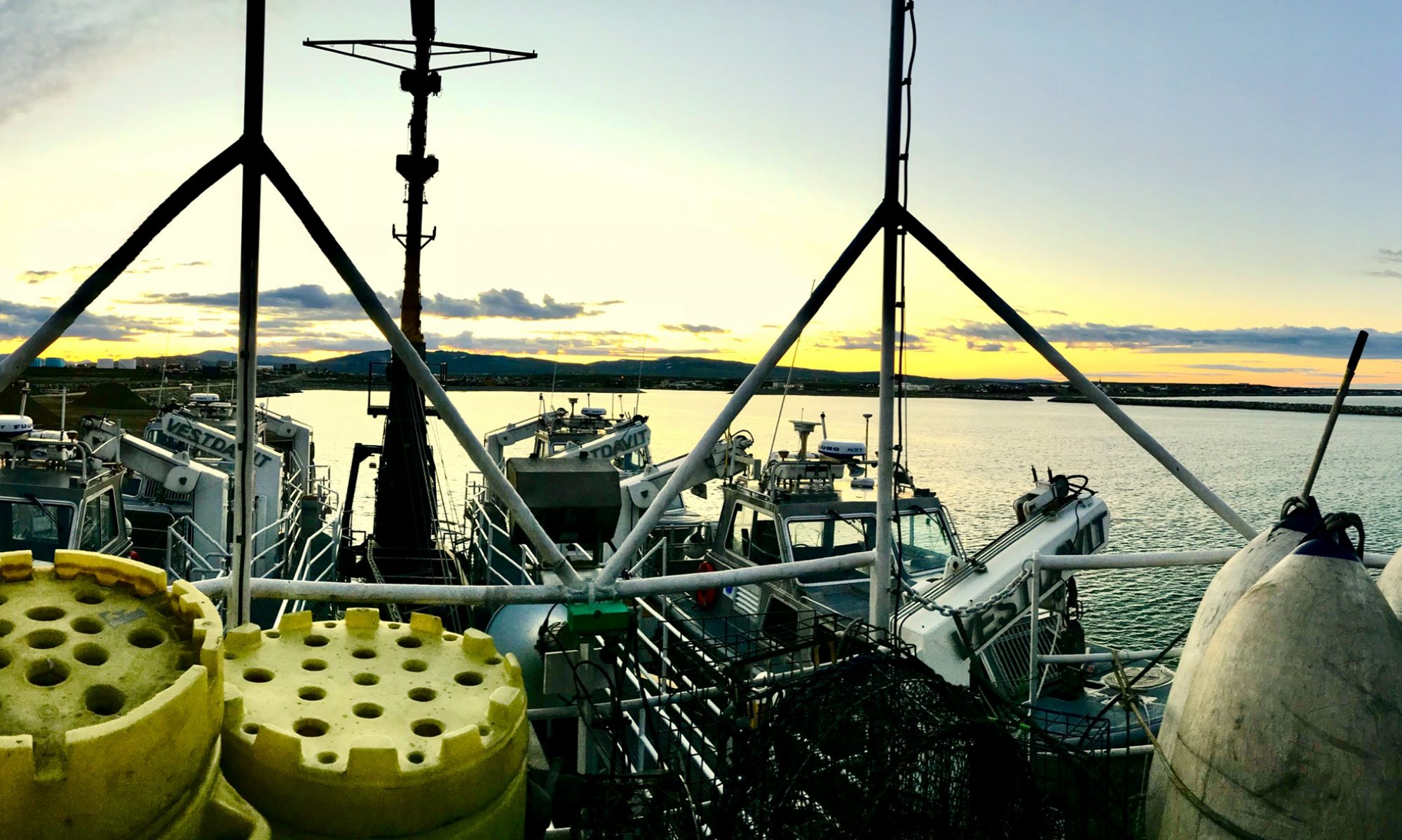
Two other launches like this one are stationed on the Fairweather