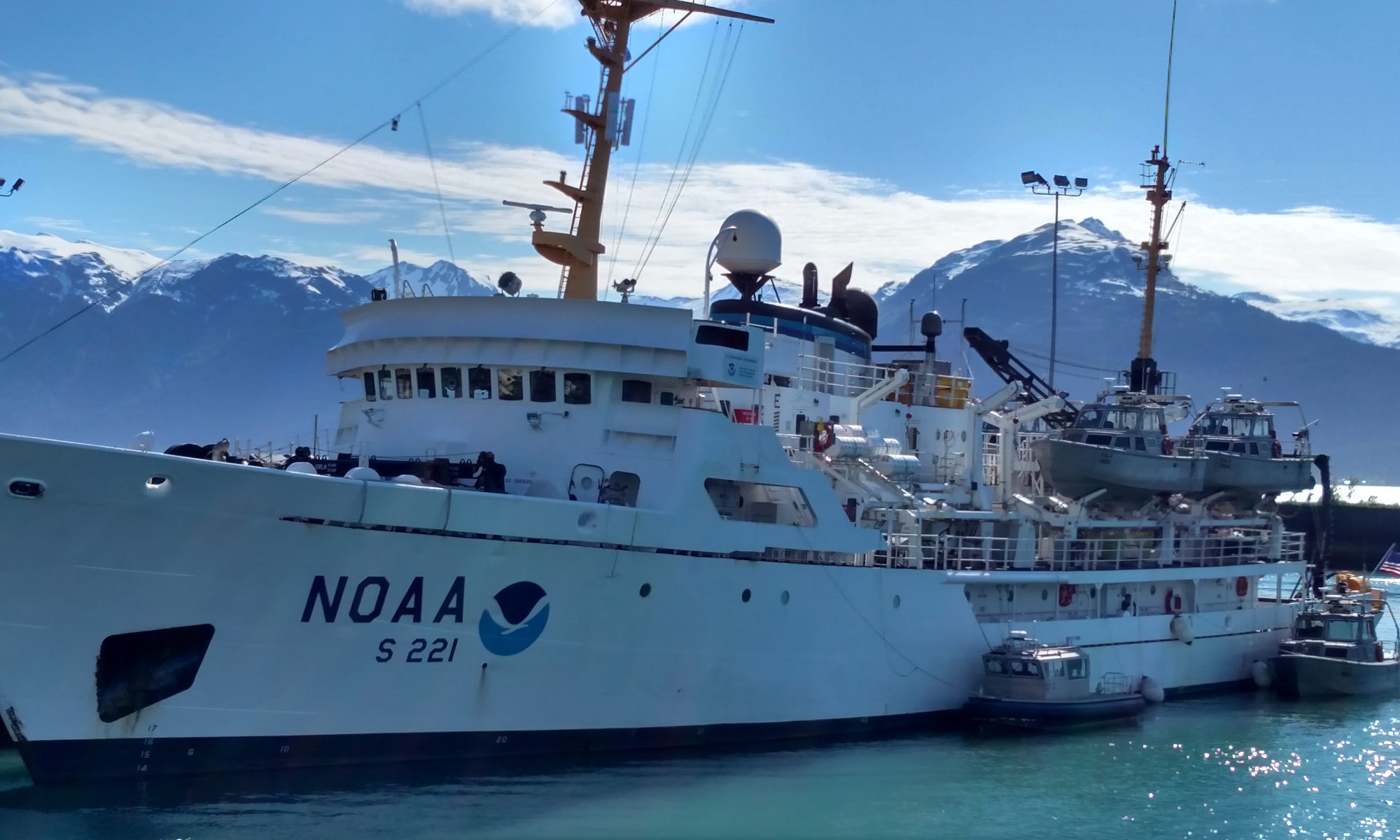
Karah Nazor: One Week Until I Board and I am Already Dreaming About Fish, May 22, 2019

NOAA Teacher at Sea

Karah Nazor

Aboard NOAA Ship Reuben Lasker

May 29 – June 7, 2019


Mission: Rockfish Recruitment & Ecosystem Assessment

Geographic Area: Central California Coast

Date: May 22, 2019

Hi!  My name is Karah Nazor and I am a science teacher at McCallie High School, an all-boys college preparatory school in Chattanooga, TN, which is also my hometown. It is one week until I board the Reuben Lasker in San Francisco, and I am already dreaming about fish.  I teach marine biology, molecular biology and environmental science and “coach” students in our after-school science research program. We typically have around 20 tanks running at a time in my classroom including three species of jellyfish, a reef tank, zebrafish tanks, and a freshwater shrimp tank.  Ongoing marine research projects in my lab include primary culture of nerve nets of the jellyfish Aurelia aurita, moon jellyfish, (students Jude Raia and Danny Rifai), the effects of ocean acidification on the jellyfish Cassiopea xamachana, upside down jellyfish, (students Ian Brunetz and Shrayen Daniel) and spawning of the lobate ctenophore Mnemiopsis leidyi (Thatcher Walldorf). Seniors Keith Kim and Eric Suh just presented their findings on the effects of river acidification on freshwater snails at the International Science and Engineering Fair in Phoenix, AZ, and sophomore Kevin Ward just wrapped up his research on the effects of a high sugar diet on tumor formation in tp53 zebrafish.

A corner of the Nazor Classroom/Lab
Freshmen Ian Brunetz and Shrayen Daniel Shenanigans
Typical shenanigans with Freshmen Ian Brunetz and Shrayen Daniel
Freshman Danny Rifai and Junior Jude Raia Culturing Moon Jellyfish Nerve Cells

Education

I am a lifelong competitive swimmer who loves the sea, marine mammals, and birds, and like many of my students today, as a high schooler I dreamed of becoming a marine biologist.  I earned a bachelors of science in biology with a minor in gerontology from James Madison University, where I was also on the swim team. I was interested in learning more about the neurodegenerative diseases of aging, such as Alzheimer’s disease (AD), and attended the Ph.D. Program in Gerontology at the University of Kentucky and worked in the Telling Lab.  There I studied the molecular foundation of prion diseases, caused by protein misfolding which forms aggregates in the brain, a pathology similar to AD. I continued this research as a postdoc at the University of San Francisco (Prusiner Lab).

How did I come to raise jellyfish in my classroom?

Chattanooga is home to the world’s largest freshwater aquarium, the Tennessee Aquarium, located on the Tennessee River waterfront.  This non-profit public aquarium has two buildings, River Journey, which opened in 1992, and Ocean Journey, which opened in 2005. The Ocean Journey exhibit “Boneless Beauties and Jellies: Living Art” (2005-2019) featured exotic invertebrates including around 10 species of jellyfish, ctenophores, cuttlefish, giant Pacific octopuses, and spider crabs. On my first visit to Ocean Journey in 2005, I became transfixed with the “comb jelly” (the ctenophore Mnemiopsis leidyi) tank, specifically its rapidly beating ctene rows, which refract light creating a rainbow effect, and function as the animal’s  swimming organ. Many people mistake the light refraction of the beating ctenes for electrical signals traveling along the ctenophore’s body.  This first visit to the comb jellies tank left a lasting impression on me, and I was truly inspired by their beauty and curious to learn more about this gelatinous creature..

A  comb jelly Mnemiopsis leidyi in my classroom tank
A comb jelly Mnemiopsis leidyi in my classroom tank

Six years ago, I visited the comb jelly exhibit again and decided to try to bring jellyfish into my classroom.  I missed swimming in the frigid waters of the San Francisco Bay, so I sought to bring the cold ocean and at least one of it’s critters into my classroom. I chose to raise the Pacific Ocean variety moon jellyfish, which I so often encountered swimming in the San Francisco Bay and at Tomales Point!   A gifted student built a special jellyfish tank, called a Kriesel, and next I contacted the TN Aquarium’s invertebrate specialist Sharyl Crossley to inquire about how to raise jellyfish. I was beyond thrilled when she invited me to train under her for a summer!  That Fall, I began culturing moon and upside down jellies in my classroom and my students began research projects right away. Raising jellyfish is not easy, as they require perfect current, and water the salinity and temperature that matches their native habitat.  Jellyfish require daily live feed of two day old enriched brine shrimp nauplii and rotifers. We actually have to feed the jellyfish’s food. The next year, I was ready to introduce the more difficult to raise comb jellies into the lab and have cultured them ever since.  In 2017, I got to spend a week with Dr. William Brown at the University of Miami to learn how to spawn ctenophores, study hatchlings, and dissect out stem cell rich niches from the animals for in vitro work in the cell culture lab.   You can often find me in the lab late at night at the dissecting scope still mesmerized and awed by the simplistic nature and immense beauty and of ctenophores in their spawning bowl.

Moon Jellyfish (Pacific Ocean variety) in my classroom tank

Back to the Bay Area for a cruise on NOAA Ship Reuben Lasker!

The years that I lived in San Francisco for my postdoc were some of the best of my life because of the science plus athletic opportunities afforded by living next to the ocean including open water swimming, surfing, and abalone diving.   I made lifelong friends partaking in these cold and rough water ocean sports. I lived in the Sunset neighborhood and I often went to Ocean Beach for the sunset and swam in the Bay several times per week at the South End Rowing Club (SERC).   In 2008 I swam the English Channel. While swimming in the Bay, we often saw NOAA ships and I never thought I would get to join a cruise one day as part of the science team! While living in San Francisco, I did have the opportunity to go on a couple of whale watching tours and swim all over the San Francisco, Richardson, and San Pablo bays for my training swims, but I have never got to spend much time on a boat and I have never spent the night at sea!  I am a bit nervous about becoming seasick and adjusting to being on the night shift next week.

Swimming with SERC friends in 2017 next to the Muni Pier at Aquatic Park in San Francisco (I am in the center with goggles on).

Even though I was raised visiting the Atlantic ocean for summer vacations and am fond of the Caribbean Islands and the coral reefs, I am partial to the West Coast, where the mountains meet the sea.   I prefer the cold green rough seas, the winter swell, kelp forests, abalone at Fort Bragg, great white sharks at the Farallones, Pier 39 sea lions, harbor seals, salps, humpbacks, orcas and sea otters in Monterey Bay, Garibaldi of La Jolla Cove, sting rays of La Jolla Shores, and elephant seals of Ano Nuevo.  I enjoy kayak fishing for rockfish and yellowtail in San Diego with my brother, Kit.

Karah at Pillar Point near Half Moon Bay, CA in 2018
Abalone shell on top of a cooler or some other white surface
A large beautiful abalone I harvested from about 40 feet down from Fort Bragg, CA in 2007. You can see the algae on its shell. The abalone diving season is now closed until 2021.

The rockfish recruitment survey is a longitudinal research project in its 30th year led by the NOAA chief scientist Keith Sakuma.  I have always been inspired by ichthyologists, specifically Dr. David Etnier, of the University of Tennessee, who worked with my step-dad, Hank Hill, on the snail darter case (Hill v. TVA) in the court’s first interpretation of the Endangered Species Act in 1978.   I am excited to learn from NOAA chief Scientist Keith Sakuma and the other members of the Reuben Lasker‘s science team about the rockfish and groundfish species we will be targeting in the recruitment survey. I look forward to learning how to identify up to 100 additional species of epipelagic fish, most of which I have never seen (or even heard of) before, as well as micronekton including several types of krill, tunicates, and hopefully jellyfish!  

The animals we will be surveying are known as forage species and are mostly primary and secondary consumers in the food web. These young of year rockfish and groundfish, epipelagic crabs, and small fish such as anchovies, sardines, and lanternfish are important prey for tertiary consumers including marine mammals, large fish, and seabirds. Long-term research studies allow for scientists to study the relationships between hydrographic data such as sea surface temperature, salinity, and density and the abundance and geographic distribution of forage species over decades, and in the case of this survey, three decades. An ecological rearrangement of forage species can affect not only the tertiary consumers and apex predators such as orcas and great white sharks, but will also impact the fishing industry. It is important to understand the impact of warming oceans and weakened California upwelling events have had and will have on the diversity and health of the ecosystem of the Pacific Coast.

Lona Hall: Alaska Awaits, May 22, 2019

NOAA Teacher at Sea

Lona Hall

Aboard NOAA Ship Rainier

June 3 – 14, 2019

Mission: Kodiak Island Hydrographic Survey

Geographic Area of Cruise: Kodiak Island, Alaska

Date: May 22, 2019

Personal Introduction

Finishing off the school year has never been so exciting as it is now, with an Alaskan adventure awaiting me!  My students are nearly as giddy as I am, and it is a pleasure to be able to share the experience with them through this blog.

In two weeks, I will leave my home in the Appalachian foothills of Georgia and fly to Anchorage, Alaska.  From there I will take a train to the port city of Seward, where I will board NOAA Ship Rainier.  For 11 days we will travel around Kodiak Island conducting a hydrographic survey, mapping the shape of the seafloor and coastline. The Alaska Hydrographic Survey Project is critical to those who live and work there, since it greatly improves the accuracy of maritime navigational charts, ensuring safer travel by sea.

Lona Hall and students in Mozambique
My Mozambican students, 2013

In the past, I have traveled and worked in many different settings, including South Carolina, Cape Cod, Costa Rica, rural Washington, and even more rural Mozambique.  I have acted in diverse roles as volunteer, resident scientist, amateur archaeologist, environmental educator, mentor, naturalist, and teacher of Language Arts, English Language, Math, and Science.

View of Mount Yonah
Mount Yonah, the view from home in northeast Georgia

I now found myself back in my home state of Georgia, married to my wonderful husband, Nathan, and teaching at a local public school.  Having rediscovered the beauty of this place and its people, I feel fortunate to continue life’s journey with a solid home base.

Lona and Nathan at beach
My husband and I at the beach

Currently I teach Earth Science at East Hall Middle School in Gainesville, Georgia.  For the last five years, I have chosen to work in the wonderfully wacky world of sixth graders.  Our school boasts a diverse population of students, many of whom have little to no experience beyond their hometown.  It is my hope that the Teacher at Sea program will enrich my instruction, giving students a glimpse of what it is like to live and work on a ship dedicated to scientific research.  I am also looking forward to getting to know the people behind that research, learning what motivates them in the work that they do and what aspects of their jobs they find the most challenging.

Did you know?

Kodiak Island is the largest island in Alaska and the second largest in the United States.  It is located near the eastern end of the Aleutian Trench, where the Pacific Plate is gradually being subducted underneath the North American Plate.

Jill Bartolotta: Introduction, May 21, 2019

NOAA Teacher at Sea

Jill Bartolotta

Aboard NOAA Ship Okeanos Explorer

May 29 – June 14, 2019


Mission:  Mapping/Exploring the U.S. Southeastern Continental Margin and Blake Plateau 

Geographic Area of Cruise: U.S. Southeastern Continental Margin, Blake Plateau

Date: May 21, 2019

Weather Data (from Cleveland, OH):

Latitude: 41.53° N

Longitude: 81.67° W

Lake Wave Height: 1ft

Wind Speed: 8.6 knots

Wind Direction: 0 degrees

Visibility: 8.6nm

Air Temperature: 11°C

Barometric Pressure: 1021.7 mb

Sky: Overcast

Introduction

In one week I will be landing in Key West, Florida ready to begin my journey as a Teacher at Sea aboard NOAA Ship Okeanos Explorer. As a native to the northern shores of Ohio along the coast of Lake Erie, the ocean is a distant place only visited on family vacations, through books, or in my dreams. Throughout my childhood we visited the ocean several times and I fell in love with all things ocean. My curiosity and love for the ocean deepened as I let Jules Verne and Captain Nemo take me “20,000 Leagues Under the Sea” where I saw a colossal squid, massive schools of fish, and learned about animals that glow in the dark. As I watched shows, read magazines, and saw pictures, I began to learn more about what lies below and was fascinated by how little we actually know about the ocean. Did you know we know more about space than we do about the ocean? My curiosity intensified as I began to realize a career in marine biology was possible for a young woman from Cleveland, Ohio. But my curiosity only ever stayed near the shore. I was always interested in the ships that went out to sea for weeks on end to discover new sea life, conduct fish population assessments, or map the ocean floor. However, they were out to sea and my close-toed shoes and I were still on land…well, more accurately, in the tide pools. Never in my wildest dreams did I think I would be on one of these ships. Well I am! My close-toed shoes and I are heading to sea!

photo_jillbartolotta
Exploring the coast of Maine in my tide pooling boots. Photo Credit: Joshua Layne

Before I get too wrapped up in the weeks to come I would like to tell you a little bit about myself. I grew up east of Cleveland, Ohio on the southern shores of Lake Erie. I spend most of my free time out on the water on my paddleboard or taking my dog, Luna, on grand land adventures. We tried the whole paddling thing with her. It failed epically. My love for water led me to the most amazing job. I work as an Extension Educator for Ohio Sea Grant. There are 34 Sea Grant programs across the country that work with coastal communities to sustainably manage and use their coastal resources. Much of my work is centered on educating youth on the human-caused issues of Lake Erie such as invasive species, harmful algal blooms, and marine debris (trash in waterways). I also conduct research on the use of disposable plastics to better understand why humans use so many of them and what behaviors can we change to encourage them to use less. My career is very rewarding because every day I teach others about Lake Erie and together we learn how to improve her health. My time as a Teacher at Sea will allow me to learn more about the ocean so I can bring all her wonders home to the people of Ohio. Many people where I leave have never even been to Lake Erie so the chances of them visiting the ocean is slim. I will be able to bring the ocean to them making this experience so important to those I teach.

marine-debris-outreach
Sarah, Sue, and I teaching students about marine debris at Cedar Point Match, Science, and Physics Week. Photo Credit: Kathy Holbrook

Mission Information

The journey will be epic, the days long, and the sunsets magnificent. Truly a once in a lifetime opportunity and I am so excited and honored to be able to share my time at sea with all of you. Together, we will explore the ocean deep, map areas of poorly understood ocean floor, and dabble in some seasickness. Don’t worry! I will only give you the play by play for the first two. To begin our trip we depart from Key West and cruise for 16 days until we make landfall in Port Canaveral. Our mission is to map poorly understood areas of the ocean floor off the southern and eastern tips of Florida known as the Southern Atlantic Bight and Blake Plateau. Operations will take place 24/7 (don’t worry I got you covered when you need to get your zzzs) and will rely on the use of sonar to map these poorly understood areas. I promise to learn all about the equipment on board and share it with all of you. We will be tech wizards by the time we are done.

The mapping operation is actually part of a multi-year, multi-national collaboration campaign called the Atlantic Seafloor Partnership for Integrated Research and Exploration (ASPIRE). The purpose of the campaign is to further our knowledge of the Atlantic Ocean which is a goal of the Galway Statement of Atlantic Ocean Cooperation. The US, Canada, and the European Union developed the Galway Statement of Atlantic Ocean Cooperation to further our understanding on the Atlantic Ocean in support of increased knowledge and ocean stewardship. I will learn more about ASPIRE and the Galway Statement of Atlantic Ocean Cooperation while on board and share a more detailed account so we can all better understand why mapping operations and increased knowledge of the Atlantic Ocean are important for current and future generations.

Not only will I provide you with detailed accounts of all the science happening on board, I will learn about those who call the sea their home. I will share their stories and journeys in case an ocean career is of interest to you. I will share the crests (ups) and troughs (challenges) of life at sea. Such as what we do for fun. I have heard through the grapevine cribbage is a popular pastime. I am not familiar with this game so any tips you want to share with me will be greatly appreciated. Help give me an edge on the competition.

Luna is ready for sea!

I hope my first blog has given you a glimpse of what is to come over the next three weeks. My time at sea quickly approaches and my last days at home will be spent playing with Luna, packing as lightly as possible (very challenging), breathing in the non-salty Lake Erie air, and mentally preparing to be completely out of my comfort zone. As I have said already, I am happy to take this journey to sea with all of you, thank you for your support, and I look forward to our three weeks together. See you in Key West!

paddleboard
Farewell Lake Erie! The ocean awaits! Photo Credit: Connie Murzyn

Katie Gavenus, Bonus Blog: MIXOTROPHS, May 5, 2019

NOAA Teacher at Sea

Katie Gavenus

Aboard R/V Tiglax

April 26 – May 9, 2019

Mission: Northern Gulf of Alaska Long-Term Ecological Research project

Geographic Area of Cruise: Northern Gulf of Alaska – currently in transit from ‘Seward Line’ to ‘Kodiak Line’

Date: May 5, 2019

Weather Data from the Bridge

Time: 2305
Latitude: 57o 34.6915’
Longitude: 150o 06.9789’
Wind: 18 knots, South
Seas: 4-6 feet
Air Temperature: 46oF (8oC)
Air pressure: 1004 millibars
Cloudy, light rain


Science and Technology Log

I was going to just fold the information about mixotrophs into the phytoplankton blog, but this is so interesting it deserves its own separate blog!

On land, there are plants that photosynthesize to make their own food. These are called autotrophs – self-feeding.  And there are animals that feed on other organisms for food – these are called heterotrophs – other-feeding.  In the ocean, the same is generally assumed.  Phytoplankton, algae, and sea grasses are considered autotrophs because they photosynthesize.  Zooplankton, fish, birds, marine mammals, and benthic invertebrates are considered heterotrophs because they feed on photosynthetic organisms or other heterotrophs.  They cannot make their own food.  But it turns out that the line between phytoplankton and zooplankton is blurry and porous.  It is in this nebulous area that mixotrophs take the stage!

Mixotrophs are organisms that can both photosynthesize and feed on other organisms.  There are two main strategies that lead to mixotrophy.  Some organisms, such as species of dinoflagellate called Ceratium, are inherently photosynthetic.  They have their own chloroplasts and use them to make sugars.  But, when conditions make photosynthesis less favorable or feeding more advantageous, these Ceratium will prey on ciliates and/or bacteria.  Bacteria are phosphorous, nitrogen, and iron rich so it is beneficial for Ceratium to feed on them at least occasionally. Microscopy work makes it possible to see the vacuole filled with food inside the photosynthetic Ceratium. 

illustration of mixotrophic dinoflagellate Ceratium
I created this drawing after viewing a number of microscopy photos of the mixotrophic dinoflagellate Ceratium under different lights and stains. This artistic rendition combines those different views to show the outside structure of the dinoflagellate as well as the nucleus, food vacuole and chloroplasts. (Drawing by Katie Gavenus)

Other organisms, including many ciliates, were long known to be heterotrophic.  They feed on other organisms, and it is particularly common for them to eat phytoplankton and especially cryptophyte algae. Recent research has revealed, however, that many ciliates will retain rather than digest the chloroplasts from the phytoplankton they’ve eaten and use them to photosynthesize for their own benefit. Viewing these mixotrophs under blue light with a microscope causes the retained chloroplasts to fluoresce.  I saw photos of them and they are just packed with chloroplasts!

illustration of mixotrophic ciliate Tontonia sp.
The mixotrophic ciliate Tontonia sp. eats phytoplankton but retains the chloroplasts from their food in order to photosynthesize on their own! I made this drawing based off of photos, showing both the outside structure of the Tontonia and how the chloroplasts fluoresce as red when viewed with blue light. (Drawing by Katie Gavenus)

Mixotrophs are an important part of the Gulf of Alaska ecosystem.  They may even help to explain how a modestly productive ecosystem (in terms of phytoplankton) can support highly productive upper trophic levels. Mixotrophy can increase the efficiency of energy transfer through the trophic levels, so more of the energy from primary productivity supports the growth and reproduction of upper trophic levels. They also may increase the resiliency of the ecosystem, since these organisms can adjust to variability in light, nutrients, and phytoplankton availability by focusing more on photosynthesis or more on finding prey. Yet little is known about mixotrophs.  Only about one quarter of the important mixotroph species in the Gulf of Alaska have been studied in any way, shape or form!

Researchers are trying to determine what kinds of phytoplankton the mixotrophic ciliates and dinoflagellates are retaining chloroplasts from.  They are also curious whether this varies by location, season or year.  Understanding the conditions in which mixotrophic organisms derive energy from photosynthesis and the conditions in which they choose to feed is another area of research focus, especially because it has important ramifications for carbon and nutrient cycling and productivity across trophic levels.  And it is all very fascinating!

food web illustration
A drawing illustrating a fascinating, tightly linked portion of the Gulf of Alaska food web. Mesodinium rubrum must eat cryptophyte algae (this is called obligate feeding). The Mesodinium rubrum retain the chloroplasts from the cryptophyte algae, using them to supplement their own diet through photosynthesis. In turn, Dinophysis sp. must feed on Mesodinium rubrum. And the Dinophysis retain the chloroplasts from the Mesodinium that originally were from cryptophyte algae! (Drawing by Katie Gavenus)

Did you know?

Well over half of the oxygen on earth comes from photosynthetic organisms in the ocean.  So next time you take a breath, remember to thank phytoplankton, algae, and marine plants!

Personal Log:

Tonight was likely our last full night of work, as we expect rough seas and high winds will roll in around midnight tomorrow and persist until the afternoon before we head back to Seward.  We were able to get bongo net sampling completed at 6 stations along the Kodiak Line, and hope that in the next two nights we can get 2-4 stations done before the weather closes in on us and 2-4 nets on the last evening as we head back to Seward.

Despite our push to get 6 stations finished tonight, we took time to look more closely at one of the samples we pulled up.  It contained a squid as well as a really cool parasitic amphipod called Phronima that lives inside of a gelatinous type of zooplankton called doliolids.  Check out the photos and videos below for a glimpse of these awesome creatures (I couldn’t figure out how to mute the audio, but I would recommend doing that for a less distracting video experience).


Phronima
A parasitic Phronima amphipod. This animal typically lives inside doliolids, a type of gelatinous zooplankton. Apparently its body structure and fierce claw-like appendages inspired the design of “Predator.”


Katie Gavenus: Don’t Forget the Phytoplankton! May 5, 2019

niskin bottles on the rosette

NOAA Teacher at Sea

Katie Gavenus

Aboard R/V Tiglax

April 26 – May 9, 2019

Mission: Northern Gulf of Alaska Long-Term Ecological Research project

Geographic Area of Cruise: Northern Gulf of Alaska – currently in transit from ‘Seward Line’ to ‘Kodiak Line’

Date: May 5, 2019

Weather Data from the Bridge

Time: 2305
Latitude: 57o 34.6915’
Longitude: 150o 06.9789’
Wind: 18 knots, South
Seas: 4-6 feet
Air Temperature: 46oF (8oC)
Air pressure: 1004 millibars
Cloudy, light rain

Science and Technology Log

Phytoplankton!  These organisms are amazing.  Like terrestrial plants, they utilize energy from the sun to photosynthesize, transforming water and carbon dioxide into sugars and oxygen.  Transforming this UV energy into sugars allows photosynthetic organisms to grow and reproduce, then as they are consumed, the energy is transferred through the food web.  With a few fascinating exceptions (like chemotrophs that synthesize sugars from chemicals!), photosynthetic organisms form the basis of all food webs. The ecosystems we are most familiar with, and depend upon culturally, socially, and economically, would not exist without photosynthetic organisms.

Indeed, productivity and health of species like fish, birds, and marine mammals are highly dependent upon the productivity and distribution of phytoplankton in the Gulf of Alaska. Phytoplankton also play an important role in carbon fixation and the cycling of nutrients in the Gulf of Alaska.  For the LTER, developing a better understanding of what drives patterns of phytoplankton productivity is important to understanding how the ecosystem might change in the future.  Understanding the basis of the food web can also can inform management decisions, such as regulation of fisheries.

niskin bottles on the rosette
Seawater captured at different depths by niskin bottles on the rosette transferred to bottles by different scientists for analysis.

To better understand these patterns, researchers aboard R/V Tiglax use the rosette on the CTD to collect water at different depths.  The plankton living in this water is processed in a multitude of ways.  First, in the lab on the ship, some of the water is passed through two filters to catch phytoplankton of differing sizes.  These filters are chemically extracted for 24 hours before being analyzed using a fluorometer, which measures the fluorescence of the pigment Chlorophyll-a.  This provides a quantitative measurement of Chlorophyll-a biomass. It also allows researchers to determine whether the phytoplankton community at a given time and place is dominated by ‘large’ phytoplankton (greater than 20 microns, predominantly large diatoms) or ‘small’ phytoplankton (less than 20 microns, predominantly dinoflagellates, flagellates, cryptophyte algae, and cyanobacteria).

Preparing filters
Preparing filters to separate large and small phytoplankton from the seawater samples.

For example, waters in Prince William Sound earlier in the week had a lot of large phytoplankton, while waters more offshore on the Seward Line were dominated by smaller phytoplankton.  This has important ramifications for trophic interactions, since many different consumers prefer to eat the larger phytoplankton.  Larger phytoplankton also tends to sink faster than small plankton when it dies, which can increase the amount of food reaching benthic organisms and increase the amount of carbon that is sequestered in ocean sediments.

The Chlorophyll-a biomass measurements from the fluorometer are a helpful first step to understanding the biomass of phytoplankton at stations in the Gulf of Alaska.  However, research here and elsewhere has shown that the amount of carbon fixed by phytoplankton can vary independently of the Chlorophyll-a biomass.  For example, data from 2018 in the Gulf of Alaska show similar primary productivity (the amount of carbon fixed by phytoplankton per day) in the spring, summer, and fall seasons even though the Chlorophyll-a biomass is much higher in the spring.  This is likely because of at least two overlapping factors.  Vertical mixing in the winter and spring, driven primarily by storms, brings more nutrients and iron into the upper water column. This higher nutrient and iron availability in the spring allow for the growth of larger phytoplankton that can hold more chlorophyll.  This vertical mixing also means that phytoplankton tend to get mixed to greater depths in the water column, where less light is available.  To make up for this light limitation, the phytoplankton produce more chlorophyll in the spring so they can more effectively utilize the light that is available.  This variation in chlorophyll over the seasons probably helps to make the phytoplankton community overall more productive, but it makes it problematic to use Chlorophyll-a biomass (which is relatively easy to measure) as a proxy for primary productivity (which is much more challenging to measure).

Phytoplankton sample in the flourometer
A sample of filtered, extracted phytoplankton is placed into the fluorometer.

To address the question of primary productivity more directly, researchers are running an experiment on the ship.  Seawater containing phytoplankton from different depths is incubated for 24 hours.  The container for each depth is screened to let in sunlight equivalent to what the plankton would be exposed to at the depth they were collected from.  Inorganic carbon rich in C13 isotope is added to each container as it incubates. After 24 hours, they filter the water and measure the amount of C13 the phytoplankton have taken up.  Because C13 is rare in ecosystems, this serves as a measurement of the carbon fixation rate – which can then be converted into primary productivity.

Phytoplankton samples from the rosette are also preserved for later analysis in various labs onshore.  Some of the samples will be processed using High Performance Light Chromotography, which produces a pigment profile.  These pigments are not limited to Chlorophyll-a, but also include other types of Chlorophyll, Fucoxanthin (a brownish pigment found commonly in diatoms as well as other phytoplankton), Peridinin (only found in photosynthetic dinoflagellates), and Diadinoxanthin (a photoprotective pigment that absorbs sunlight and dissipates it as heat to protect the phytoplankton from excessive exposure to sunlight).  The pigment profiles recorded by HPLC can be used to determine which species of plankton are present, as well as a rough estimate of their relative abundance.

A different lab will also analyze the samples using molecular analysis of ribosomal RNA.  There are ID sequences that can be used to identify which species of phytoplankton are present in the sample, and also get a rough relative abundance.  Other phytoplankton samples are preserved for microscopy work to identify the species present.  Microscopy with blue light can also be used to investigate which species are mixotrophic – a fascinating adaptation I’ll discuss in my next blog post!

It is a lot of work, but all of these various facets of the phytoplankton research come together with analysis of nutrients, iron, oxygen, dissolved inorganic carbon, temperature, and salinity to answer the question “What regulates the patterns of primary productivity in the Gulf of Alaska?”

There are already many answers to this question.  There is an obvious seasonal cycle due to light availability.  The broad pattern is driven by the amount of daylight, but on shorter time-scales it is also affected by cloud cover.  As already mentioned, vigorous vertical mixing also limits the practical light availability for phytoplankton that get mixed to greater depths.  There is also an overall, declining gradient in primary productivity moving from the coast to the deep ocean. This gradient is probably driven most by iron limitation.  Phytoplankton need iron to produce chlorophyll, and iron is much less common as you move into offshore waters.  There are also finer-scale spatial variations and patchiness, which are partly driven by interacting currents and bathymetry (ocean-bottom geography). As currents interact with each other and features of the bathymetry, upwelling and eddies can occur, affecting such things as nutrient availability, salinity, water temperature, and intensity of mixing in the water column.

View of horizon from station GAK
The early-morning view from station GAK on the ‘Seward Line.’ Patterns of primary productivity are driven both by amount of cloud cover and amount of daylight. During our two weeks at sea, we actually sampled at GAK1 3 separate times. The amount of daylight (time between sunrise and sunset each day) at this location increased by nearly 60 minutes over the two week cruise!

The current work seeks to clarify which of these factors are the most dominant drivers of the patterns in the Gulf of Alaska and how these factors interact with each other. The research also helps to determine relationships between things that can be more easily measured, such as remote-sensing of chlorophyll, and the types of data that are particularly important to the LTER in a changing climate but are difficult to measure across broad spatial scales and time scales, such as primary productivity or phytoplankton size community. Phytoplankton are often invisible to the naked eye.  It would be easy to overlook them, but in many ways, phytoplankton are responsible for making the Gulf of Alaska what it is today, and what it will be in the future.  Understanding their dynamics is key to deeper understanding of the Gulf.

Personal Log

The schedule along the Seward Line and as we head to the Kodiak Line had to be adjusted due to rough seas and heavy winds.  This means we have been working variable and often long hours on the night shift. It is usually wet and cold and dark, and when it is windy the seawater we use to hose down the zooplankton nets seems to always spray into our faces and make its way into gloves and up sleeves.  But we still manage to have plenty of fun on the night shift and share lots of laughs.  There are also moments where I look up from the task at hand and am immersed in beauty, wonder, and fascination. I get to watch jellies undulate gracefully off the stern (all the while, crossing my fingers that they don’t end up in our nets  — that is bad for both them and us) and peer more closely at the zooplankton we’ve caught.  I am mesmerized by the color and motion of the breaking waves on a cloudy dawn and delighted by the sun cascading orange-pink towards the water at sunset.  I am reminded of my love, both emotional and intellectual, for the ocean!

Float coats
We experienced a lot of wind, rain, waves, and spray from the high-pressure hose (especially when I was wielding the hose), but bulky float coats kept us mostly warm and dry.

Did You Know?

Iron is the limiting nutrient in many offshore ecosystems.  Where there is more iron, there is generally more primary productivity and overall productive ecosystems.  Where there is little iron, very little can grow.  This is different than terrestrial and even coastal ecosystems, where iron is plentiful and other nutrients (nitrogen, phosphorous) tend to be the limiting factors.  Because people worked from what they knew in terrestrial ecosystems, until about 30 years ago, nitrogen and phosphorous were understood to be the important nutrients to study.  It was groundbreaking when it was discovered that iron may be a crucial piece of the puzzle in many open ocean ecosystems.

Question of the Day:

Regarding sustainability and scalability of intensive ocean resource harvesting: If humans started eating plankton directly, what could happen? And a follow-up: Can we use algae from harmful bloom areas?

Question from Leah Lily, biologist, educator, and qualitative researcher, Bellingham, WA

I first shared this question with the zooplankton night crew.  The consensus was that it was not a good idea to harvest zooplankton directly for large-scale human consumption.  Some krill and other zooplankton are already harvested for ‘fish oil’ supplements; as demand increases, the sustainability of this practice has become more dubious.  The zooplankton night crew were concerned that if broader-scale zooplankton harvest were encouraged, the resource would quickly be overharvested, and that the depletion of zooplankton stocks would have even more deleterious consequences for overall ecosystem function than the depletion of specific stocks of fish. They also brought up the question of how much of each zooplankton would actually be digestible to humans.  Many of these organisms have a chitinous exoskeleton, which we wouldn’t be able to get much nutrition from.  So it seems like intensive ocean harvesting of zooplankton is likely not advisable.

However, when I talked with the lead phytoplankton researcher on board, she thought there might be slightly more promise in harvesting phytoplankton.  It is more unlikely, she thinks, that it would get rapidly depleted since there is so much phytoplankton out there dispersed across a very wide geographic scale.  Generally, harvesting lower on the food chain is more energy efficient. At every trophic level, when one organism eats another, only a fraction of the energy is utilized to build body mass. So the higher up the food web we harvest from, the more energy has been ‘lost’ to respiration and other organism functions.  Harvesting phytoplankton would minimize the amount of energy that has been lost in trophic transfer.  Unlike most zooplankton, most phytoplankton is easily digestible to people and is very rich in lipids and proteins.  It could be a good, healthy food source.  However, as she also pointed out, harvesting phytoplankton in the wild would likely require a lot of time, energy, and money because it is generally so sparse.  It likely would not be economically feasible to filter the plankton in the ocean out from the water, and, with current technologies, not particularly environmentally friendly.  Culturing, or ‘farming,’ phytoplankton might help to address these problems, and in fact blue-green algae/Spirulina is already grown commercially and available as a nutritional supplement.  And there may be some coastal places where ‘wild’ harvest would be practical.  There are a number of spots where excess nutrients, often from fertilizers applied on land that runoff into streams and rivers, can cause giant blooms of phytoplankton.  These are often considered harmful algal blooms because as the phytoplankton die, bacteria utilize oxygen to decompose them and the waters become hypoxic or anoxic.  Harvesting phytoplankton from these types of harmful algal blooms would likely be a good idea, mitigating the impacts of the HABs and providing a relatively easy food source for people.  However, it would be important to make sure that toxin-producing plankton, such as Alexandrium spp. (which can cause paralytic shellfish poisoning) were not involved in the HAB.