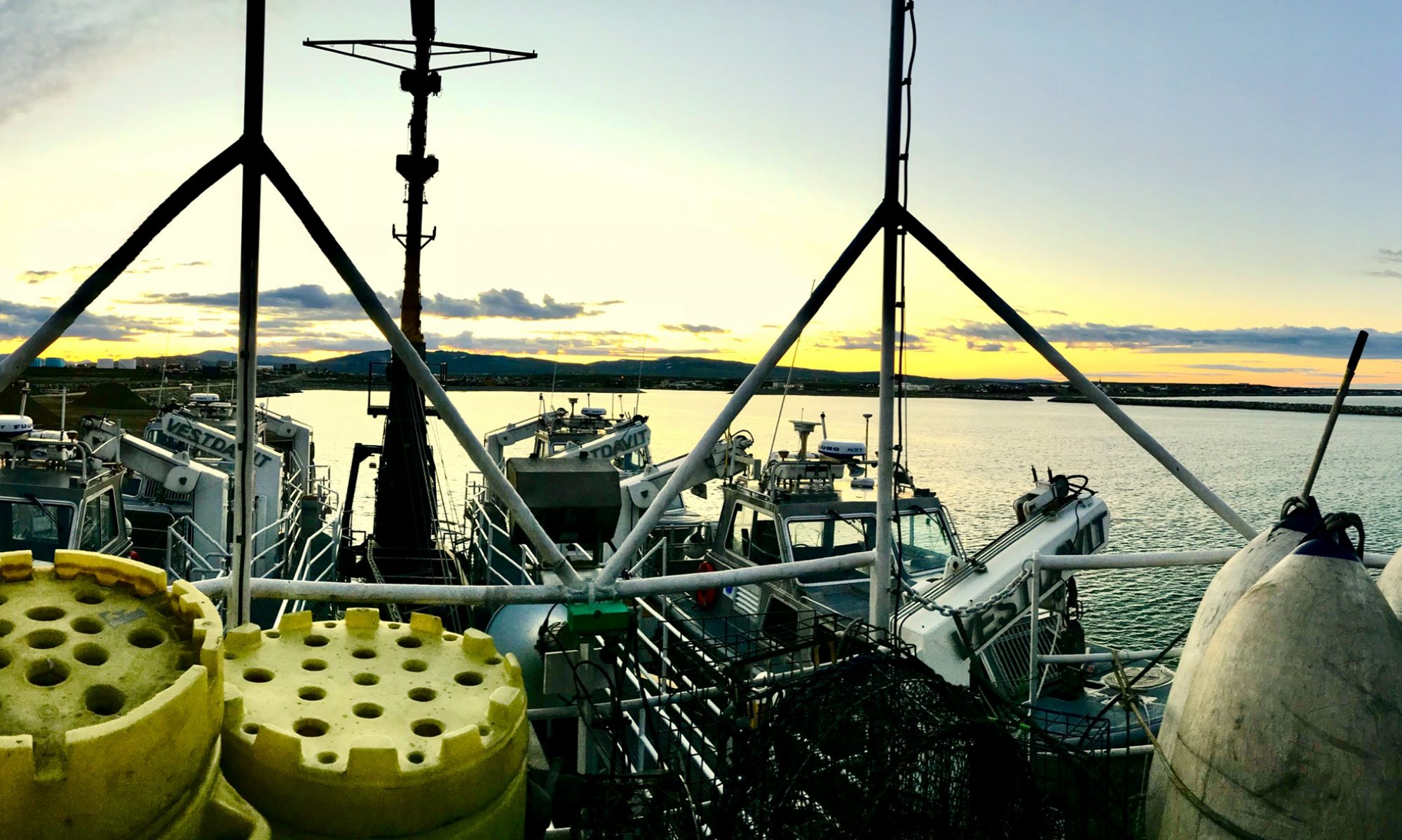
Robert Ulmer: Know Your Surroundings, June 28, 2013

NOAA Teacher At Sea
Robert Ulmer
Aboard NOAA Ship Rainier
June 15–July 3, 2013

Mission:  Hydrographic survey
Geographical area of cruise:  Southeast Alaska, including Chatham Strait and Behm Canal, with a Gulf of Alaska transit westward to Kodiak
Log date:  June 28, 2013

Current coordinates:  N 56⁰40.038’, W 134⁰20.908’ (southeast of Point Sullivan in Chatham Strait)

Weather conditions:  13.53⁰C and falling, scattered cumulus clouds with intermittent light rainfall, 81.05% relative humidity, 1019.55 mb of atmospheric pressure, breezy with gusts of wind out of the NNW at 10 to 15 knots

Explorer’s Log:  The layout of the ship

An explorer who doesn’t make himself familiar with his new surroundings is truly no explorer at all, and he might just as well stay home.  Why would you venture forth if not to witness the events and items along the way?

The "big eyes" on the flying deck with the anchor deck visible below
Keep your eyes open.  There’s so much to see everywhere!

For the past few days, NOAA Ship Rainier has been continuing its mission to complete a detailed and thorough survey of the sea floor along Chatham Strait, a channel used by many nautical vessels in their transit of the Inside Passage of Southeast Alaska.  So, aside from noticing the appearance and disappearance of some rock features in the rising and falling tides and the daily incremental reduction of snow as it melts on the high mountaintops nearby in the relative warmth of early summer, most of what I see from the deck of the ship and from the smaller launch vessels is the same topography in every direction that I’ve seen for the past week, along with occasional clouds, whales, otters, birds, and other boats.  The scenery beyond the rails is very beautiful, but the temporary respite from faster passage to any new geographic destination also has given me a chance to take a few photos of the space around me:  the ship herself.

http://wp.me/pyu3c-7JC
Using the shadow cast by a gnomon in one city while the sun reflected straight up from the bottom of a well in another city, along with alternate interior angles and a proportion, Eratosthenes calculated Earth’s circumference in 240 BCE. Image by Dr. John H. Lienhard, University of Houston.

However, instead of writing nautical miles* of text to talk you through a verbally descriptive tour of the entire vessel, I’ve posted a bunch of captioned photos that will give you some view of what I see while wandering around my current home away from home.

Before we begin the tour, a brief note:  In case you’ve ever wondered (as I have!), a nautical mile is a unit of length approximately equal to one minute (1/60 of a degree, and there are 360 degrees in a circle) of latitude measured along any meridian or about one minute of arc of longitude measured at the equator.  Because our understanding of the exact shape of Earth has evolved from a perfect circle into that of an ellipsoid since Eratosthenes of Cyrene calculated the circumference of his perfectly round model of the planet (and assigned the first latitudes and longitudes), the definition of nautical mile has changed over time.  To address the variation in actual one-minute arc lengths around Earth, the definition of a nautical mile has been standardized by international agreement to be 1,852 meters (approximately 6,076 feet).  A statute mile, by comparison, evolved both in etymology and in length-definition from the Latin term mille passuum (“one thousand paces”), commonly used when measuring and marking distances marched by Roman soldiers across Europe.  Healthier and better-fed soldiers often took longer strides, and so their “miles” were longer than the miles marched by less-healthy counterparts.  To address this variation, most countries eventually agreed to standardize the statute mile at its current length of 5,280 feet (about 1,609 meters).

Now for some snapshots from NOAA Ship Rainier:

This log, called a "camel," is used as a buffer alongside less-equipped docks to protect both the dock and the ship.
This log, called a “camel,” is used as a buffer alongside less-equipped docks to protect both the dock and the ship.
Mechanism for operating the port side davits
Mechanism for operating the port side davits, which use hydraulics to lift and lower the launch vessels
Starboard side walkway to the launch vessels at their raised and secured positions in the davits
Ventilation pipe from the incinerator
Some interesting-looking tube joints
Some interesting-looking hydraulic hose fittings for the davits
The galley
The crew’s mess and the galley
Fire Station No. 23, starboard, deck D
Fire Station No. 23, D deck starboard side
Crane, anchor, vents, and the stowed gangplank on the bow
Crane, anchor windlass, vents, and the stowed gangway on the bow
Muster Station 1
Muster Station 1, where I am to report in the event of an abandon ship order
Docking bits on the bow
These large bits on the bow are used for securing lines while docking.
Cranes on the bow
Cranes on the bow
Electric boxes on the forward mast
Electric boxes keep the important electrical equipment that is mounted on the forward mast properly powered
The view along starboard from the flying deck
The view along the starboard side from the flying bridge
Machinery for lowering and hoisting the anchor
The anchor windlass (machinery on the bow for letting go and weighing anchor) includes gypsy heads, a riding pawl, a devil’s claw or pelican hook, and a wildcat.  (Many other “animals” are referenced on a ship, including a goose neck and a bull nose.  Look up others on your own!)
The forward mast
The forward mast carries radar equipment for navigation. The halyards (lines from the mast) are for support and for hanging items used for distant communication.
The "big eyes" on the flying deck
The “big eyes” on the flying bridge allow magnified distant viewing from above the bridge.
Passageways are narrow, from deck (floor) to bulkhead (ceiling)
Passageways are narrow aboard NOAA Ship Rainier from the overhead to the deck and bulkhead to bulkhead.
Stateroom C-04-103-U
This is the view from corner to corner of stateroom C-04-103-U, one of the larger two-man staterooms on the ship, which I share with HSST John Doroba. (His is the lower bunk.)
Some of the internal communications equipment on the bridge
A phone on the bridge that gets its power from the energy of sound waves spoken into it (so that the phone still can work even if the generators fail — awesome, right??)
Ensign Micki Ream plotting a course on the bridge
Ensign Micki Ream uses old-fashioned compass-and-straightedge geometric constructions and calculations to plot a course through Hecate Strait on the bridge.
Bicycles for use ashore during liberty
Port ladder to launches alongside Rainier
Launch crews usually board launch vessels by walking directly level off the deck onto the smaller boats while the davits hold the small launch vessels in place. This Jacob’s ladder is lowered to launch vessels like the skiff when they are placed in the water alongside NOAA Ship Rainier.
Fishing poles
Fishing poles, to be used only when licensed and permitted
A cool light and electric fixture
A cool-looking light and electric fixture
A hatch on the fantail
A hatch on the fantail that leads to After Steering
The winch control mechanism for the "fish"
The “fish” is a very heavy brass device that is towed on a strong Kevlar-sheathed electric cable up to 600 meters behind the ship, and it requires a sophisticated winch mechanism for casting, retrieval, and transfer of data to the computer system aboard the NOAA Ship Rainier.
A lifebuoy and the "fish"
On the fantail the “fish,” a part of the Moving Vessel Profiler (MVP), is the very heavy CTD device that is towed by winch behind NOAA Ship Rainier, usually during multi-beam sonar data acquisition. CTD stands for conductivity, temperature, and depth of the water, all of which affect the speed of sound from and to the ship’s sonar device.  (The lifebuoy is a nearby safety measure, of course.)
One of many ladders
One of many ladders (which is what staircases are called aboard ship)
The skiff secured on the fantail
The skiff secured on the fantail underneath a sign that reminds everyone of NOAA’s culture of safety
Stowage space
All stowage space is used efficiently aboard NOAA Ship Rainier.
The emergency pull station, just in case
The galley service line
Pyrotechnic locker for emergency flares, on the flying deck
Pyrotechnic locker for emergency flares, on the flying bridge
Launch vessels secured in starboard davits
Launch vessels secured within the starboard davits
A tie-down the port deck
Line (rope in use aboard a ship) is one of the most important tools on a ship for tying, supporting, securing, pulling, and hoisting, and so it is treated with proper respect at all times.
Warnings on the stack
Noise, fire, and heavy equipment can be dangerous if not addressed with caution, as these signs on the stack warn.
Kayaks for exploration (and sometimes recreation)
Life rafts 2 and 4 alongside the port bridge wing, with davits in the background
Alidade on the port bridge wing
The alidade on the port bridge wing, which is used for determining a “true” line of sight for navigation

I aligned the photos to give you a more authentic feel of passing waves.  Oh, I hope that you didn’t get seasick!  If you did, just head to the dispensary on D deck near the bow amidships, and then go on deck and look at the horizon so that your inner ears and your eyes can agree about which way actually is up.

Now that you’ve seen many random angles in no particular order — but  — maybe you also need a tour to put the whole package together into a meaningful map of NOAA Ship Rainier.  Fortunately, HAST Christiane Reiser created a video of just such a tour for visitors, and you can watch it here.

The gangplank
This is the gangway to board Rainier when the ship is docked. Uniformed personnel must salute the colors when boarding or exiting the vessel.

… And now you’re ready to come aboard!

Remember always that half the fun of the journey is getting there… but the other half is actually being somewhere.  So look at the scenery in the world around you — wherever you happen to be — as you keep exploring, my friends.

Did You Know?

Before you board a seagoing vessel, you’d better be able to talk the talk.  People on ships have a vernacular that can sound like a foreign language if you’re not familiar with the terminology, so here’s a list of some key words worth knowing before you come aboard, with definitions and descriptions from a glossary of terms provided by the U.S. Coast Guard, a partner agency of NOAA with regard to training crew members and making nautical travels safer:

  • Starboard:  The right side of the ship when facing forward.  The name is a very old one, derived from the Anglo-Saxon term steorbord, or steering-board.  Ancient vessels were steered not by a rudder amidships, but by a long oar or steering-board extended over the vessel’s right side aft.  This became known, in time, as the steering-board side or starboard.
  • Port:  The left side of the ship when facing forward.  The original term was “larboard,” but the possibility of confusing shouted or indistinct orders to steer to larboard with steering to starboard at a crucial moment was both obvious and serious.  The term was legally changed to ‘port’ in the British Navy in 1844, and in the American Navy in 1846.  The word ‘port’ was taken from the fact that ships traditionally took on cargo over their left sides (i.e., the side of the vessel facing the port).  This was probably a holdover from much earlier times when ships had steering-boards over the right side aft; obviously, you couldn’t maneuver such a vessel starboard side to the pier without crushing your steering oar.
  • Wings:  Extensions to either side of the ship.  Specifically, the port and starboard wings of the bridge are open areas to either side of the bridge, used by lookouts and for signaling.
  • Bow:  The forward end of any vessel.  The word may come from the Old Icelandic bogr, meaning “shoulder.”
  • Stern:  The rear of any vessel.  The word came from the Norse stjorn, meaning “steering.”
  • Deck:  What you walk on aboard ship.
  • Below:  Below decks, as in “going below to C Deck,” never “down.”
  • Fore:  An adverb, meaning “toward the bow.”
  • Aft:  An adverb, meaning “toward the stern.”
  • Boat:  Any small craft, as opposed to a ship, which carries boats.
  • Ship:  A general term for any large, ocean-going vessel (as opposed to a boat).  Originally, it referred specifically to a vessel with three or more masts, all square-rigged.
  • Stateroom:  An officer’s or passenger’s cabin aboard a merchant ship, or the cabin of an officer other than the captain aboard a naval ship.  The term may be derived from the fact that in the 16th and 17th centuries, ships often had a cabin reserved for royal or noble passengers.
  • Stack:  The ship’s funnel on an engine-powered vessel.
  • Bridge:  The control or command center of any power vessel.  The term arose in the mid-19th century, when the “bridge” was a structure very much like a footbridge stretched across the vessel between or immediately in front of the paddle wheels.
  • Galley:  The ship’s kitchen, where food is prepared.  The origin is uncertain but may have arisen with the ship’s cook and helpers thinking of themselves as “galley slaves.” (A galley was originally a fighting ship propelled by oars rowed by slaves, from the Latin galea.)
  • MessPart of the ship’s company that eats together, (such as the officers’ mess) and, by extension, the place where they eat.
  • Head:  The bathroom.
  • Ladder:  On shipboard, all stairs are called “ladders.”

Yaara Crane: Engineering a Floating Town, June 29, 2013

NOAA Teacher at Sea
Yaara Crane
Aboard NOAA Ship Thomas Jefferson
June 22, 2013 – July 3, 2013

helm
My roommate, Ensign Kristin, is teaching me how to steer at the helm.

Mission: Hydrographic Survey
Geographical area of cruise: Mid-Atlantic
Date: Saturday, June 29, 2013

Latitude: 38.81°N
Longitude: 75.06°W

Weather Data from Bridge:
Wind Speed:  13.50 knots|
Surface Water Temperature: 22.61°C
Air Temperature:  23.30°C
Relative Humidity: 87.00%
Barometric Pressure: 1001.38mb

TJ sunset
Sunset over the bow of the Thomas Jefferson.

Science and Technology Log

At any given time, the Thomas Jefferson is home to about 30-40 individuals. These individuals come from all walks of life to become deck hands, engineers, stewards, scientists, or officers. Yesterday, I spent a couple of hours with Chief Engineer Tom learning about how his team of engineers works to keep this home afloat and functional. There are currently 4 licensed engineers, and 3 QMEDs (Qualified Members of the Engine Department) aboard the TJ.

engineering console
The engineering control console keeps and eye on all of the mechanics of the ship. If the bridge loses control, the engineers could steer the ship from here!

How do you become an engineer on a NOAA ship?  There are two routes to becoming an engineer on a NOAA ship. If you wanted to start working immediately aboard a ship, you could apply to start as an undocumented engineer. You are required to work 180 days at sea, pass a basic safety course, and then would become eligible to take a test to become a QMED. Another 1080 days would make you eligible to take a licensing test to become third engineer. From there, time and more licensing tests help you work up the ranks. There are a myriad of licensing tests that depend on the horsepower of the ship you want to work on. For example, most NOAA ships require the same license, but the NOAA ship Ron Brown has more horsepower and requires what is called an unlimited license. All licensing falls under the purview of the U.S. Coast Guard and various federal regulations. A different route to becoming an engineer involves attending a four-year program at a maritime academy. The maritime academy gives graduates the necessary skills to move straight into a third engineer position because it includes internships and semester at sea opportunities. The students from the academy must still take all of the same licensing tests. Clearly, engineers must have a great amount of knowledge as part of their toolkit no matter their background.

What really stood out to me was when Tom mentioned the fact that the word engineer comes from engine. The primary purpose of the engineer is to make sure that the ship has enough power for all of the tasks that happen around the clock. The TJ has two engines for propulsion and three generators for electricity that can be put online to boost the power output. When I was in the engine room yesterday, second engineer Steve was on watch and communicating with the bridge about having more power for their bow thruster. The bow thruster increases the maneuverability of the ship when it is slowing down, such as when anchoring. Steve made sure that Generator 1 was providing the energy needed for this particular task while Generator 2 was providing power for the rest of the ship’s needs. Overall, the Thomas Jefferson can hold approximately 198,000 gallons of diesel fuel, and uses about 1,500 gallons a day for all of its operations.

RO comparison
Can you tell which of these reverse osmosis machines is working, and which one is offline?

Most of the engineering equipment comes in duplicate just in case anything breaks down. For example, there are two reverse osmosis machines whose purpose is to turn seawater into potable water. One of them is currently down, so it is imperative that we have a second aboard. Reverse osmosis is the process by which seawater is pushed through a semi-permeable membrane in order to filter out the solutes, and only allow the water solvent through. The solute (sea salt) can then be dumped right back into the ocean. The water that is collected must be chlorinated before use, but will then go on to the galley, bathrooms, laundry, etc. The TJ can store around 21,500 gallons of freshwater and uses about 2,500 gallons of fresh water a day.

saline_diagram
The internal workings of reverse osmosis. Image credit: http://www.nrdc.org/onearth/04sum/saline_popup.htm

When being built, NOAA ships are outfitted for water usage in different ways, and Tom is busy planning how to make the ship more energy efficient. The TJ does not have the ability to use and recycle gray water or sea water very efficiently. Some NOAA ships have the ability to use seawater in the toilets, but the TJ does not. Have you ever thought of how much water is used when flushing a toilet? Well, you might have to think of that if you live in a desert area, or on a ship! Tom will be able to reduce the amount of water used in each flush by about 1.4 gallons with a simple valve that he plans on installing when the ship is docked for some maintenance work this summer. If we assume that there are 35 people on board the ship, and each person flushes 5 times a day, then the TJ can save 245 gallons of water each day with just a simple upgrade. This amounts to a reduction in water use of around 10% a day!

Tom has thought through many other types of upgrades, most not so simple, to better put to use the resources on board. Instead of using reverse osmosis, some NOAA ships make water through an evaporator. An evaporator is a much more efficient way of creating water because it needs a reduced pressure and average temperature near 160°F. On ships that have evaporators, water is diverted into pipes near the heat of the main engine so that the waste energy created by the engine can be transferred to reduce the amount of energy needed in the evaporator.

Although I have a particular interest in wastewater treatment and energy usage, these are by no means the extent of the engineer’s tasks. They are also responsible for checking fuel levels, keeping the air conditioning running (crucial considering the heat generated by the servers required to hold all of the ship’s scientific data), maintaining a workshop, being the ship’s electricians, and much more. Finally, they also work to keep up the morale of everyone in this floating town.

 Personal Log

I am trying to keep myself busy learning about all of the aspects of the ship. It is difficult to throw myself into the data analysis because the CARIS program is so complex; however, I spend lots of time watching the scientists plug at it. I have also been spending a lot of time on the bridge where some of the officers have been letting me help to collect hourly weather data, and teaching me to take navigational fixes. It is interesting to see that even with all of the digital data, the bridge officers must still take time to read a wall-mounted barometer and interpret cloud formations in the sky. For navigation, the officers still need to know how to use a compass and protractor, which brought me back to 1998 and my days in geometry class.

I also love hearing travel stories from the many people on board. Keith, a deckhand, has travelled all over the world on a NOAA ship based in Hawaii. It motivates me to continue to find opportunities to expand my horizons and see the world. I hope that I can also motivate my students back at Annandale to get creative with their ambitions.

 Did You Know?

Officers must be on watch 24/7, even when at anchor. To help preserve their night vision after the sun sets, the bridge is stocked with red plastic squares which are mounted over the screens to help minimize glare from white light.

night vision
The monitors on the bridge at night.

Sarah Boehm: Shrimp Galore, June 30, 2013

NOAA Teacher at Sea
Sarah Boehm
Aboard NOAA Ship Oregon II
June 23 – July 7, 2013 

Mission: Summer Groundfish Survey
Geographic area of cruise: Gulf of Mexico
Date: June 30, 2013

Weather at 20:40
Air temperature: 29.8 °C (85.64° F)
Barometer: 1007 mb
Humidity: 65   %
Wind direction:  221 °
Wind speed: 8.4  knots
Water temp: 29.2° C
Latitude: 29.05° N
Longitud: 88.69 ° W

Science and Technology Log

I have been on board for a week now and have learned a lot about the fish of the Gulf of Mexico. We have collected data on over 300 different species at 129 trawl stations So what happens with all this data?

Our work out here is part of SEAMAP – South East Area Monitoring and Assessment Program – a joint venture between NOAA and the states to better understand the populations of fish and invertebrates along the coast of the Gulf and Atlantic. The information we are collecting on Oregon II is combined with the data from other ships that do surveys in closer to land. The groundfish surveys began in the 1950s and happen each summer and fall. All this data tells a story of each species – how many individuals there are, how big they are, and where they prefer to live. This information can then be used to better manage the fishing industry so that marine populations stay strong.

We gather data about every species we pull up in our nets, but we pay special attention to the ones that are fished commercially like shrimp and red snapper. There are several shrimp species out here, but one we see a lot of is the brown shrimp.

Brown Shrimp
Brown Shrimp

The brown shrimp are found from Massachusetts to the Gulf. They live for about 1 ½ years and can be up to 7 inches long. Their lives start as eggs deep in the waters of the Gulf and Atlantic. After they hatch, tiny baby shrimp float in to the shallow water of estuaries (coastal areas where fresh river water mixes with sea water). They grow larger in the protected waters of the estuaries and eventually migrate out into deeper, saltier water.  They live on the bottom of the sea, moving out farther into deeper water as they grow larger. You can learn more about brown shrimp on NOAA’s Fish Watch website.

For most species we haul in we record length on up to 20 individuals, and weight and sex for only every 5th individual. But for brown shrimp we measure the length, weight and sex of up to 200 individuals. Sometimes we pull up a lot of shrimp like the 419 brown shrimp in just one trawl last night. To tell male from female you flip the shrimp over and check the spot in between its walking legs (in front) and swimming legs (in back).  A female has a wider plate. A male has extra fuzzy bits on the inside of the front swimming legs.

Male and Female Shrimp
The shrimp on the left is a female and the one on the right is male.

Shrimp fishing is a big industry here in the Gulf. Last year 221 million pounds of shrimp were taken by fishing boats from the states along the Gulf. Commercial fishing boats use similar nets to ours, but they are larger and trawl underwater for much longer. Just like we pull up many fish in addition to shrimp, shrimping boats have a large bycatch. Part of our research is to monitor the bycatch species to help make management decisions that protect them, too. NOAA works with the fishing industry to develop nets with Bycatch Reduction Devices that allow unwanted fish to escape.

shrimp boat
A fishing boat trawling for shrimp

Let me answer a few more student questions. Jared, we don’t wear lab coats; we mostly wear old t-shirts and shorts that definitely get wet, muddy and slimy working with the fish. A lab coat would help keep me clean, but it is hot and humid in our lab and the extra layer would be uncomfortable. Sabrina, we have found some plastic and other trash in the water, but have not seen any animals tangled in it. Deliana, we do all our work from the ship, so we don’t swim underwater with the fish. When they do surveys of reef fish earlier in the year they send a video camera underwater to learn more about the fish, but the scientists still stay on board.

silver fish
Clockwise from top: Rough Scad, Silver Jenny, Dusky Anchovy, Long Spine Porgy
brown fish
Shoal Flounder on the left and Big Eye Sea Robin on the right

Julissa asked about colors of our fish. Most of our fish come in two colors – silver or brown. We catch fish that live on the bottom of the sea or swim near the bottom and these colors help them camouflage with the sand and mud. But there are some that have splashes of color.

Dwarf Goatfish
Dwarf Goatfish
Lesser Blue Crab
Lesser Blue Crab

Personal Log

Several students had questions about food on board, so let me reassure you I am eating well.

the stewards
Stewards Walter and Lydell

The two stewards on board, Walter and Lydell, are responsible for feeding 30 people on board. The food is good, plentiful and there are several options at each meal. One challenge is that people on board are working different schedules and can’t always make meal times. If you ask ahead of time, they will save you a plate of food for later. There are also snacks and sandwich fixings available all the time. To give you an idea of what I am eating, yesterday I had a freshly baked muffin and juice for breakfast, a chicken fajita and Mexican veggies for lunch, fried rice, stir fry and a salad for dinner, and then some ice cream with fruit for a late night snack.

How much food does it take to feed 30 people for 2 weeks? Walter gave me a few numbers for this trip: 80 pounds of chicken, 35 dozen eggs, 100 pounds of potatoes, 12 gallons of ice cream, and a whole lot of coffee. Jennixa wondered what would happen if we ran out of food – the answer is that we would head back to land and buy more. But I’m pretty sure Walter has enough on board. Damian asked if we eat what we catch – and yes, some of the shrimp and red snapper have gone to the galley after being measured.  They were delicious.

CDCPS science students – How are the colors of fish an adaptation to survival?

sunset
sunset

Sarah Boehm: Groundfish Survey Basics, June 25, 2013

NOAA Teacher at Sea
Sarah Boehm
Aboard NOAA Ship Oregon II
June 23 – July 7, 2013 

Mission: Summer Groundfish Survey
Geographic area of cruise: Gulf of Mexico
Date: June 25, 2013

Weather
Air temperature: 29.4 C (84.9 F)
Barometer: 1015 mb
Humidity: 71%
Wind direction: 55°
Wind speed: 7 knots
Water temp: 29.6 C
Latitude: 27.99°
Longitude: 92.99°

Science and Technology Log

Greetings from the Oregon II in the middle of the Gulf of Mexico. I am very impressed by all the questions my students have asked in comments on the first blog post. Now I guess I need to start answering some of them.

Oregon II
The Oregon II at the pier in Galveston. To answer Taina’s question, it is 170 feet long.


The Oregon II left the port of Galveston, Texas on Sunday afternoon. As we worked our way out to open water I enjoyed watching the pelicans, terns and frigate birds soaring and diving for fish. Occasionally a few dolphins would surface briefly, only to disappear again under the water. The shipping channels were packed with large ships, mostly oil tankers servicing the rigs that dot the Gulf of Mexico in this region. The farther we got from land, the less busy our surroundings became. With only a few boats and rigs on the horizon, the full moon rose in front of us as we cruised to the southeast.  You can follow the path the ship takes on NOAA’s Ship Tracker.

P1010756
The Oregon II dwarfed by a cruise ship in the port of Galveston.
terns
Terns visiting the ship as we leave Galveston.

We didn’t reach the first sampling site until nearly midnight. The ship functions on a 24 hour working cycle with the science crew broken into two shifts: the night shift works from midnight to noon and the day shift works from noon to midnight.   I am on the day shift, along with 2 scientists from the lab at Pascagoula, Mississippi and 2 student interns.

There are many different aspects to the fisheries research taking place on board. On my first shift yesterday I concentrated on the sorting and measuring of fish, so that is where I will start in this blog.

net
A net being pulled out of the water.

The net is dragged across the ocean floor behind the ship for a half hour, and then pulled up on board, bulging with fish. The net is emptied into buckets and the total catch is weighed. If it is a small catch we keep the whole thing to work up, but if the catch is large we keep some and throw the rest back in the water. The ones we will work with are emptied into the trough in the wet lab – a multicolored heap of writhing, slimy fish just waiting to be sorted. While the rolling of the ship didn’t bother my stomach, when faced with all those smelly fish I suddenly felt rather nauseous. I had a moment of doubt that I could really handle this work 12 hours a day for two weeks. But once I dipped my hands in and concentrated on sorting out the species my stomach settled.

sorting fish
Caitlin begins the sorting process.

While this seems a simple task, many species are similar in appearance. Looking carefully at shapes of jaws or the placement of spots, we sort them out with one species per container. Last night we had 40 – 60 different species in each trawl, with fish, crabs, shrimp, jellies and more. Once everything is sorted we count the number of individuals in each species and measure their total weight. All this information goes into the computer. The next step is to measure the individuals. There are two work stations for this step, each with a measuring board, a scale and a computer. We work in partners, with one person handling the fish and the other manning the computer. The measuring board is a fancy piece of technology that is attached to the computer. You line the specimen up and simply touch a magnetic stick to the board at the end of the fish. The computer then records the length in millimeters. Next you put the fish on the scale to record its weight. Like the measuring board, the scale is attached to the computer and it records in kilograms out to the thousandths place value. Then you determine if the fish is a male or female or “unknown”. We will bag, label, and freeze a few specimens if a scientist back at the lab has requested it, and then the rest of the catch is tossed back into the sea. By the time we finish all this, the ship has probably reached the next trawl site and the process begins again.

measuring shrimp
Measuring the length of a brown shrimp.

Nick asked about the largest fish we have found. Yesterday’s weight winner was this 5 kg red snapper.

red snapper
This red snapper was the largest fish of the first day.

The weirdest fish we found was a spotted batfish. It uses those odd fins to walk on the bottom of the sea. Its brown bumpy skin camouflages with the bottom. Suspended off its head is a fishing lure to attract prey.

spotted batfish
Spotted Batfish
Atlantic Sharpnose Shark

Kevin wanted to know if we would see any sharks. We have caught a few small ones, and have seen a few larger ones off the stern (back) of the boat.

Personal Log

Jaelene asked if it would be cold, and the simple answer to that is no, not on the Gulf in summer. When I stepped out of the airport in Texas I was immediately hit by the hot, humid air. We have had a mild spring in Massachusetts – which is a blessing since most schools do not have air conditioning – and so the intensity of the sun, the heat and humidity combined to make me rather uncomfortable as I explored the port city of Galveston. Now that we are out on the water a constant breeze helps make things more comfortable…as does the air conditioning in the living quarters of the ship. The wet lab is not air conditioned, so all the fish work is rather hot and sticky.

Guillermo, Michelle and Doranny all asked about my room on board. It is a rather small space I share with Junior Officer Rachel Pryor. We each have a bunk and storage space. The room also has a sink and a chair. Rachel works a 4 hour shift early each morning and another 4 hour shift in the evening. This means when I finish work she is already asleep, but will be getting up for work in just a few hours. So being quiet and considerate of the other person is important. The curtain you can pull across your bunk is helpful to keep out light and provide privacy. Our room does not have a window, so it is dark all the time. This is helpful when people need to sleep at odd hours. It is also surprisingly quiet – or maybe a better way to describe it is that the constant background noise of the engines drowns out other noises. I have been sleeping great, even with the rocking and rolling of the ship. Kiara asked about falling out of bed, and that has not happened to me yet. I suppose it could if seas got really rough. I hope not to experience that.

stateroom
My stateroom. The bottom bunk is mine.

CDCPS science students – Remember you should be reading and responding to two different blog posts (two responses to the same post is not enough). Also please re-read your writing to make sure it makes sense and has correct spelling, punctuation and capitalization.

Why do you think sharks hang out around our boat?

Can you read this clock? What time is it?

ship clock
A clock on board. Can you tell the time?

Virginia Warren: Introduction, June 27, 2013

NOAA Teacher at Sea
Virginia Warren
Aboard R/V Hugh R. Sharp
July 9 – 17, 2013

Mission: Sea Scallop Survey
Geographical Area of Cruise: Northwest Atlantic Ocean
Date: Thursday, June 27, 2013

Personal Log:

Virginia Warren, 2013 NOAA Teacher at Sea

Hello, my name is Virginia Warren and I live in Theodore, Alabama. I teach 5th grade science and social studies at Breitling Elementary School in Grand Bay. I am really excited to have been chosen by NOAA (National Oceanic and Atmospheric Administration) to be a part of their Teacher at Sea program! I believe that one of my biggest responsibilities as a teacher is to educate my students about the importance of protecting and conserving the earth and its seas so that they will continue to thrive for many generations to come. Both Theodore and Grand Bay are only minutes from the Gulf Coast. The Gulf Coast has abundance of what I think are the prettiest, sugar-white-sand beaches the world has to offer. Growing up on the Gulf Coast has created a love and passion in my heart for the sea and all the wonder creatures that live in it! I’m so thankful to NOAA for giving me the opportunity to be a real scientist and to learn more about the scientific research behind protecting the seas that I love so much.

Beautiful Dauphin Island, Alabama!  Courtesy of http://dibeachhouses.com/resources/beach_front_condo_rental_on_dauphin_island.JPG
Beautiful Dauphin Island, Alabama! 

Science and Technology Log:

I will be sailing from Woods Hole, Massachusetts aboard the R/V Hugh R. Sharp to participate in an Atlantic sea scallop survey. The R/V Hugh R. Sharp was built in 2006, is 146 feet long, and is the newest vessel in the University of Delaware’s College of Earth, Ocean, and Environment fleet. You can take a virtual tour of the ship by clicking here. If you would like to follow the ship while I am at sea you can track the ship here (Google Earth is required).

R/V Hugh R. Sharp Courtesy of http://www.nrl.navy.mil/media/news-releases/2013/navy-researchers-reservists-evaluate-novel-passive-sonar-surveillance-methods
R/V Hugh R. Sharp
Courtesy of http://www.nrl.navy.mil/media/news-releases/2013/navy-researchers-reservists-evaluate-novel-passive-sonar-surveillance-methods

The purpose of a sea scallop survey is to protect this important fishery from being over-harvested. Traditionally scientists will dredge the bottom of the ocean with a scallop dredge to collect samples. NOAA uses the information collected from the surveys to make decisions about which areas are okay to harvest scallops.

Atlantic Sea Scallop Courtesy of http://www.vims.edu/features/research/scallop_management.php
Atlantic Sea Scallop
Courtesy of http://www.vims.edu/features/research/scallop_management.php

The R/V Hugh R. Sharp is equipped with a relatively new piece of equipment called the HabCam, short for Habitat Camera Mapping System. The HabCam is a less invasive way to survey populations and allows scientists to see what is on the ocean floor. This is an alternative method of surveying, compared to dredging. I look forward to learning how both methods of surveying work.

What I Hope to Learn:

I am so excited to be able to learn firsthand what it’s like to be a real scientist and to be able to participate in a genuine research experience. I hope to learn more about the scientific process and pass the knowledge I learn on to my students. I am also excited to learn about the different types of sea life found in the North West Atlantic Ocean and compare that with what I know of sea life from home on the Gulf of Mexico.

Please follow me on this adventure as I post my experiences on this blog. Let me know what you think by leaving your thoughts and questions in the comment section at the bottom of every blog entry.