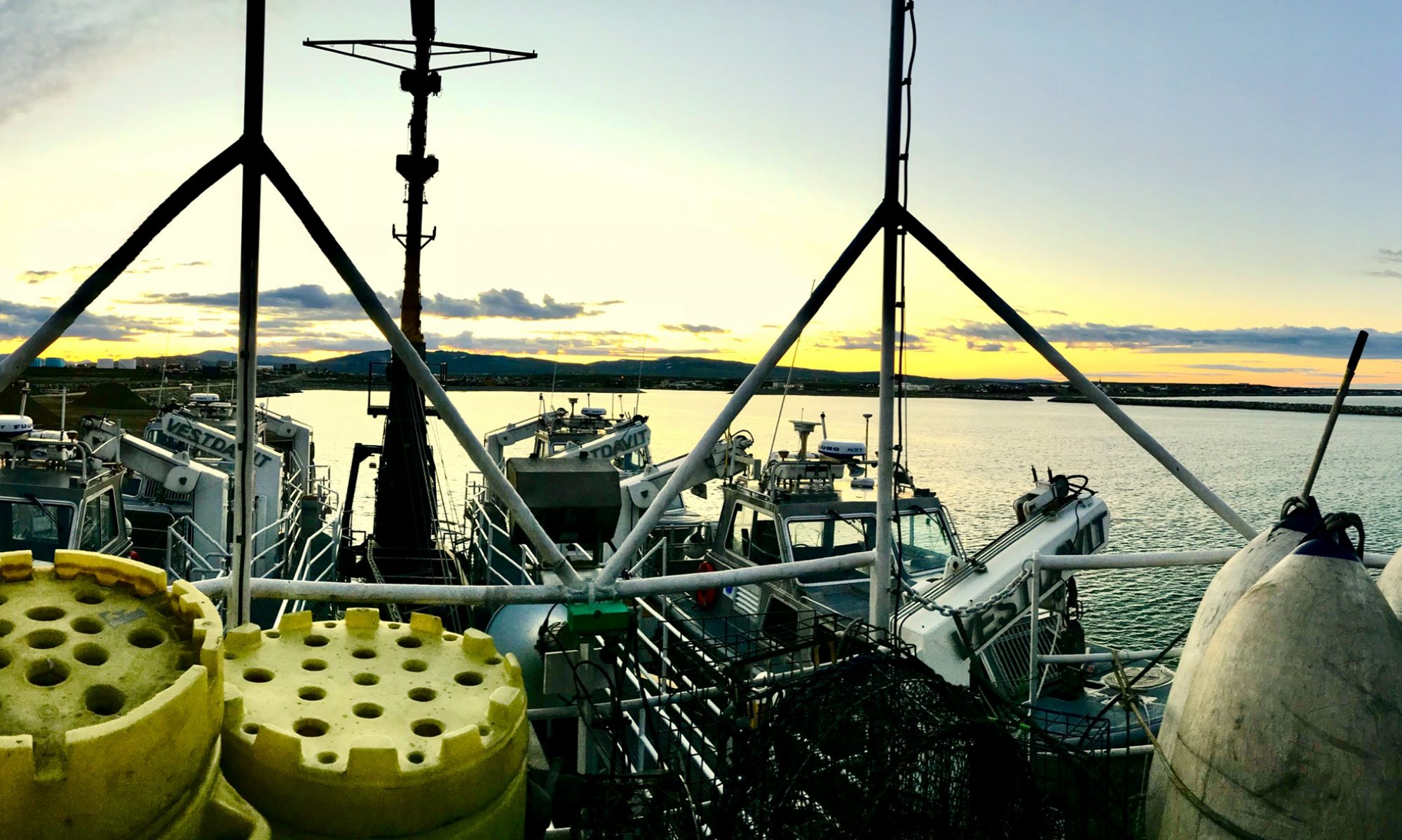


Recently NOAA Teacher at Sea Sue Zupko was interviewed about his cruise. Read this article at al.com about Sue’s cruise.
Recently NOAA Teacher at Sea Sue Zupko was interviewed about his cruise. Read this article at al.com about Sue’s cruise.
NOAA Teacher at Sea: Sue Zupko
NOAA Ship: Pisces
Mission: Extreme Corals 2011; Study deep water coral and its habitat off the east coast of FL
Geographical Area of Cruise: SE United States from off Jacksonville, FL to Biscayne Bay, FL
Date: June 24, 2011
If you are just beginning this blog, you might wish to go back to post #1 and start reading there.
Before reading this post further, take the quiz.
Life at Sea

Life at sea is things in miniature—except the view. The ocean seems to stretch on forever. It’s easy to see why people in ancient times thought you would fall off the edge if you got too close. Explorers ventured out to prove them wrong. Mathematicians and astronomers also studied it to try to discover the truth. We’ve come a long way in our understanding of the universe since then, but there is so much more to explore and learn. The ocean is just one of those unexplored and undiscovered places.

After the scientists disembarked in Ft. Lauderdale, I stayed aboard the Pisces to learn about the workings of the ship while it steamed back to its home port of Pascagoula, MS. After all, how often does one get an opportunity like this? I had a tour of engineering, discussions on the bridge, conversations with the crew in the mess, and a lesson on bandwidth. This post is an attempt to describe some everyday things you need to know about going to sea with NOAA.
Safety
Shortly after we boarded, we had a briefing in the conference room. This was mostly to cover safety issues and things to help us understand procedures. Of course, meal time hours were shared. I made a mental note of those hours since I knew I wouldn’t want to miss any meals. The stewards’ reputation for good meals preceded them.
ENS Michael Doig began our briefing by drawing the following on the white board.
______________________________
_______ _________ _________
_____ _____ _____ _____ _____ _____ _____ __________________________________

I thought this was a clever way to introduce what he would later discuss—our alarm bell and whistle patterns. Mike, a former high school teacher, brought this method of capturing the class’s attention to his work on the Pisces. One of the first things we practiced after the briefing was the “fire” drill. Mike explained that one long bell and whistle meant either fire, collision (I figured we would feel that as well), or security alert. If we heard this, we were to bring our PFD (Personal Floatation Device—life preserver), located under our bunks, to the conference room, which was the mustering (gathering) station for the scientists. Our chief scientist, Andy David, would take a head count and call 101 on the phone to report to the bridge our headcount. Mike explained that fire is one of the big concerns on a ship. It really needs to be taken seriously. You can’t run out to the mailbox to gather as many families do for their emergency spot where everyone knows to go. So, they gather the scientists together since we are more like guests and wouldn’t know the correct procedures to fight a fire. Of course, for the first drill the alarm said the fire was near the conference room so we had to muster on the fantail (back-end of the ship). It was interesting to watch the crew quickly go to their duty stations in full gear to fight the fire.

During the course of our trip, I did hear alarms sound on the bridge from different locations. Often it was something someone needed to check on. None turned out to be real emergencies, but were alerts to the crew to check on something. Thank goodness. These were always attended to immediately—not just when the bridge crew finished what they were working on. ENS Doig happened to be on duty when one of these alarms went off and I was on the bridge. Knowing I was going to take a picture, he made a face full of alarm. It’s good to have a sense of humor, especially since they had checked out the possibility of a fire and determined the cause for the alarm wasn’t a fire.

After we finished our fire drill (by the way, when the alarm sounds they always announce whether it is a drill or not), we were told we’d be practicing our abandon ship drill. For this you must bring a hat, long-sleeved shirt, long pants, PFD, and your “Gumby suit” (survival suit) to your muster station. The Gumby suit probably has some long special name, but no one calls it that. It is located in one’s stateroom in an orange bag next to the door. It has handles and even pictures and directions explaining how to put it on. Those who hadn’t donned a suit recently, crew and scientists, had to put it on. Never having been at sea, I, of course, had to put it on. What a pain! One hopes never to have to abandon ship, but it would be difficult to put that on in the water. I am pretty sure I’d have it on within the required minute if we were doing the act of last resort and abandoning ship. Easier putting it on aboard the ship than in the water. The signal to abandon ship is 6 or more short bells and/or whistles followed by one long one.
The answer to the quiz is three short bells or whistles is the signal for man overboard. Our mustering station was the conference room for this activity so a head count could be taken.

When working with a crane or winch and lifting something over the side of the boat, you must wear a hard hat and PFD —even if you’re just watching. My first experience with this was when I stepped out by the door to take a picture of the ROV being launched. The fisherman standing nearby told me I had to get properly dressed. They were just getting ready to launch and I needed to be ready. Oops! I went right in and put on my hard hat and PFD. Stephanie Rogers captured that moment after I was properly attired. I later learned that when entering or leaving a port, you had to wear a hard hat on the bow. Lots of safety rules.

If there is a fire alarm, some doors automatically close and you must know about it so you won’t stand in the way if they start to close. I think the door would win in a battle for possession of that space. We have similar doors at the school which slam shut during fires. Watch out! In other words, on a ship, just as in school, safety is always on everyone’s mind.

On the bridge, someone is always assigned to watch. The captain pulled out his book, COMDTINST M16672.2D: Navigation Rules (COLREGS), to show me the regulation which he had just quoted. I’m telling you, there is a book for everything on the bridge and they use them. Reading makes life so much easier. The Inland Steering section, Rule 5, says the ship “must maintain proper look-out by sight and hearing”. The watch officer cannot risk a collision. There are two radar screens displayed prominently on the helm station. What do you need to watch for? Won’t the radar pick up the boats? Well, no. Large boats usually have a “black box” like airplanes, which have a transponder telling the ship’s name and what type of craft it is.

Small boats often don’t have this equipment and are a big threat. I found that out the day after we left port. Boaters don’t seem to realize that there might be someone besides them on the water. Even in deep water small fishing boats would cut in front of us. It often seemed like a game of “Chicken”. Victor, an able-bodied seaman (special certification for those with extra training and skill) pointed out that whenever the winds pick up to 15 or 20 knots there are more than a few incidents of boaters getting in trouble and the Coast Guard alerts all ships to be aware and possibly assist in rescue. Besides possibly tipping over, small boats cannot be seen in high swells until a large ship is almost upon them. Many don’t have transponders or radios to contact anyone to communicate problems or questions. Also, they often drink alcohol and drive. Dumb! I asked Victor what the Pisces would do if a small boat got too close. Run ‘em down was not the answer. Trying to radio them, calling to them with a loudspeaker, or blowing the horn usually gets their attention, he told me.

You must wear shoes enclosed on the toes and heels. It’s readily apparent why. The stairs can be treacherous when you are flopping around. In waves you could slide and hurt yourself, walk out of the shoes and twist an ankle, or slip on a wet deck. I found out several reasons for the deck being wet: rain (no kidding), humidity (it’s amazing how quickly water vapor condenses on the deck and makes a pond that sloshes around), swabbing (cleaning), and potable water runoff.

The ship makes its own fresh water. If there is too much in the potable (drinking) storage tank, the excess water will exit out a runoff valve onto the deck. I discovered this one morning toward the beginning of the trip. The engineer who explained it to me said that the people on the ship were conserving their water, most likely, and the excess from the tank drained off onto the deck. I heard the captain make the same comment a week later about how the people on this research expedition were doing a good job conserving. That made me feel really good. Those short showers paid off. Fun fact: it takes one gallon of diesel fuel to produce one gallon of fresh water on the ship.

“One hand for yourself, and one for the ship” is how you walk on a ship safely. There are railings everywhere for you to hang on to. It’s a challenge in choppy seas to carry something, such as a laptop, and successfully maneuver down the hall while holding on as well. When the seas were about seven feet high I found it more than a little challenging to stand let alone walk.
Ship Tour

Let me explain how a ship is laid out. When I say there are a lot of stairs, I’m not kidding. Before I knew anything about the ship, we took a tour of most of the places we’d be “living” and a few extras. Of course it was all fascinating. We started in the conference room on the deck right across from my stateroom. That deck inside includes staterooms, the lounge and conference room, the dive locker (the ship has three divers who can inspect the propeller, rudder and underwater parts of the hull if there is a problem), and business office. Outside is the rescue boat, a couple of winches, and the bow.

We climbed some stairs and as we got there the guide told us that this was the O 2 deck. At first I thought he was kidding since right in front of me were two oxygen tanks. I asked for clarification and he said this is the deck with the staterooms of the NOAA officers, bosun, chief engineer, and chief scientist. Hmmm…still didn’t make any sense to me. What does that have to do with oxygen? I kept my thoughts to myself. Later I found a map of the ship. I slept on the O-1 deck, the officers were on the O-2 deck, and the bridge was on the O-3 deck. Hello! It was the level name of the deck and had nothing to do with oxygen. It was just a coincidence. Too funny.
Climbing above the bridge was the “flying bridge” (I wonder if that’s because the flags are there). It houses the radio towers and says, “Danger–Radiation Warning.” We were told to let the bridge know when we were going up there. It’s a great place to try to catch a cell phone signal or watch a sunrise.

Doors
On the Pisces, and I would assume on other ships, there are doors everywhere. I was surprised at how much strength I needed to operate them. When entering the lab from where the ROV was being piloted, which was the center of all the dive activity, I found that I had to “put my hip into it” to push it open. As a matter of fact, I noticed I have a few door-pushing bruises.
There are doors for everything. The fire and watertight doors are to keep you safe from fire and flood. The refrigerator and freezer doors protect food from bacteria and keep them preserved until it’s time to eat. There are doors to the bathroom (yeah), doors for lockers, doors for closets, doors for equipment, medicine cabinet doors, stateroom doors, doors, doors, doors. Almost all doors have a latch at the ceiling behind them so they can be held open. A swinging door is a real safety issue. You either close it right after you use it or go through it, or you latch it open. I found it a pain to have to keep closing my locker door. It would swing with the waves and I didn’t want to have it wake anyone up. The noise bugged me as well. As you can see, I had a bit of trouble with the door leading to the exercise room down below the main deck. The engineers could close it with one hand. I was there for two weeks and, try as I might, it never got any easier.

Close all watertight doors and fire doors, all the time. Fire or flooding can lead to a rapid death. The engineers and NOAA Corps constantly monitor for this. Although it is a safety thing, opening and shutting doors was one of my biggest challenges on ship. Good thing I have been working out with weights. Opening those doors was often a very difficult—especially if there were a door or window open to the outside at the other end of the room. I brought home several bruises on my hip for throwing my body into the door to get it open. I once remarked that if someone ever opened the door to the ROV lab when I was pushing my way in from the other side, I’d go flying into the room. Not cool since there is a counter right inside the door. Think law of inertia. Push hard against something (heavy door), it moves out of the way (someone opens it), you’re no longer stopped and off you fly (until you run into something). Newton’s law of inertia….

Exercise
Taking a walk on the ship for aerobic exercise isn’t easy. The whole ship is only 209 feet long. Well, you have to go through doors just about everywhere. The only place I could have done this for any real length was to start near the wet lab, travel around to the right, over the fantail, up the stairs, up to the bow (front of ship), climb stairs to the bridge and turn around. Can’t go farther since there are doors to enter the bridge. When I needed to go just about anywhere inside the ship there were a minimum of two doors to open. To get from my stateroom to the exercise room I had to go through three watertight or fire doors—and three to return. When tired I’d pray for the door to open and someone to step through.
At night, make sure someone knows you are on deck. ENS Doig told us to dial 101 and tell the bridge you’ll be outside in the dark. Even better, take a buddy. I also found it was good to carry a flashlight. If you turn the flashlight off when on deck when you get where you are going, your eyes adjust and it seems almost as bright as day. For this, you must extinguish (turn off) the flashlight.

Politeness Counts
Living on a ship means if you want to make/keep friends, you are nice. People are very close. You can’t even walk two abreast down the hall. If you enter a hallway and someone is half way down, wait for the other person to exit before entering yourself. Same goes for the stairs. If someone is coming down, or going up, don’t start until they pass you. Not only is it polite, it’s just good common sense.

I was fortunate to have the Queen of Politeness, Jana Thoma, as a roommate. She was always thinking of others and expressed thanks for everything they did–often several times. I have thought of myself as pretty polite, but I don’t think I can even compare to Jana. What a great example for me to follow. She was always a patient teacher as she tried to help me learn about cnidarians. Perhaps one of my students will work in her lab someday.

If someone drinks the last cup from a pot of coffee, he/she should make a fresh pot for the next folks. Although I am not a coffee drinker, from the way this was stressed by the officers and stewards, it must be very frustrating for someone coming for a warm drink to not have it readily available. They don’t have real long breaks. Remember, they have a lot of doors to slow them down. I think if they found out you took the last cup and didn’t refill the pot, you might be doing the Man Overboard drill as the victim (just kidding).
Clean up after yourself. Seems like common sense. The stewards are not your mother–they are busy working in the kitchen and cleaning. They shouldn’t have to come and bus (clean) the tables. You should take your dishes to the window, put the silverware in the water to soak, and put dishes, cups, bowls, and glasses in the plastic tub. There are two trash cans. One is for paper and plastic and a slop bucket for leftover food. At Tremont food you don’t eat on your plate is called food waste. If you take only what you’ll eat, this bucket has very little in it. They separate the food from the other trash so it won’t get smelly. They cover it with a lid and empty it when folks are all done eating for the day.

The ship runs 24 hours a day so someone is probably sleeping at any time. Loved the curtains around the beds. I could get up and not disturb Jana and vice versa. Don’t slam doors. This is not always easy, especially in rough seas. I know I mumbled a couple of times “sorry” when the door slipped from my hands. Locker doors and bathroom doors in staterooms also flop around and make a racket if left open. I got in the habit of keeping these closed so they wouldn’t make noise. Our bathroom door had a neat feature. It had an automatic stay open fixture on it. Unfortunately, it didn’t work in rough seas so we had to prop open. I know if we had told the engineers they would have fixed it, but we kept forgetting to mention it.
The Pisces has an entertainment room for when you or the crew is off duty. There is a selection of DVDs and home theatre chairs to lounge in. My stateroom was right across the hall from this lounge. I never noticed anyone playing the TV too loudly. Movies also would feed into the staterooms. You could put the DVD on a certain channel and go watch while lying in bed. If you put a movie in, the rule was to let it play to the end. Someone might be watching it in their room. I am not sure how many movies can be played at the same time, but it is several. I put one in one time and didn’t get to watch since I had to go do some work. I figure I can watch movies at home, but will probably only be in this situation once.
The walls are really thin between staterooms. Conversations can be heard as can loud TV. Jana and I found that it’s easy to have a not so quiet discussion, especially if telling jokes, and tried to whisper. We did have a lot of fun and had to think of any neighbors who might be sleeping. Laura had hours opposite us and was our neighbor. One rule of politeness is to use headphones when listening to music so as not to disturb others. I used to work the midnight shift and went to school in the morning. Only had a few hours to sleep before going back to work. My upstairs neighbor got a new sound system and literally rocked me awake . I had to go upstairs and remind them that I slept during the day. Headphones would have let me sleep in peace. On a ship this seems to be doubly important because walls are so thin. The one exception to the headphone and music rule is in engineering. When I was exercising it was nice to have some good music playing. This happened a couple of times and it made the walking on the treadmill more enjoyable. I’m glad they were there in the next room working with the music on.

Use paper if not eating during scheduled times. The stewards have to keep the dishes washed and if someone put dirty dishes in the bin, they would have to clean it. I noticed the crew was polite and used disposables after hours.
Conservation
Remember to shut off the water when just lathering up in the shower. This limits water use to about two minutes. I learned to do this during the power outage we had for 5 days in north Alabama after the tornadoes on April 27. My husband and I limited the length of our showers and had warm water for many days. Jana and I both said we loved how the shower on the ship works—it makes short showers possible. It has a knob in the middle to turn the water on and off. The knob on the right adjusts the temperature. When you turn the shower back on after lathering, the temp is the same as when it was shut off. Very neat.
Reuse your cup. One of the scientists said that she loves to bring her coffee cup which has a lid. It’s her way of staying in touch with home when on a ship and she always has a drink nearby. The best part is she is reusing her cup and limiting waste. That’s very smart.
Besides limiting water use and reusing cups, the crew recycles their aluminum cans just as we do at our school. The money is put in a special fund for things such as deaths, births, and celebrations.
Tips
Jana learned on another ship that if you leave the heat lamp on in the head (bathroom), the water from the shower dries on the floor quicker. I would think it would also inhibit mold growth.

I learned that temperatures vary on a ship. The acoustics lab, filled with computers, is freezing. I used to work in a computer center on the midnight shift. I brought an afghan to wrap up in when sitting at my station and had to wear pants (women didn’t usually wear pants to work in this office back then). However, it wasn’t as cold as the chemical lab where the scientists photographed specimens, cataloged their data, and examined specimens under the microscope. Then, go outside and it would be 82° F (about 28° C). Jason Moeller writes in his blog that it is a lot colder. Check that out. He dresses in many layers–with good reason.
One thing I’ll remember is how bright the stars are. What is really cool about being on a ship at night is that there are no trees to get in the way when viewing the stars. There is very little light pollution too. If I ever get to go to sea again, I’d like an astronomer with me to point out all the constellations. I have a lot of trouble seeing them since there are so many stars which crowd out the major stars in constellations.
Engineering

I didn’t see the engineers very often unless they were fixing something nearby or eating. They stayed below most of the time working on keeping the equipment purring or doing preventive maintenance. Often they were making something using the lathe or other tools. There is always something going on with them in their sauna-like work spaces. I did learn that they watched for a few bad things: squirting fluids, smoke, strange sounds, and changes in their gauges.
The engineers have to be able to fix just about anything. When you’re out at sea on a mission, you don’t just stop and run down to the boat repair shop to get things fixed. They bring the boat repair shop with them. In engineering there are milling machines, lathes, welding equipment, and so much more. I was impressed. At one point I saw Joe Jacovino making a frame to hold a light they were going to be adding outside. Another engineer, Steve Clement, was nominated for an award on the mission for making a part to repair a piece of scientific gear.

I was very interested in engineering. There was so much to learn there. I took more videos than I did photographs there since it was difficult to take notes and juggle all the stuff I had. My students can put together something with all the video I took. It was more as a reference to remind me of the facts that Chief Engineer, Brent Jones, was teaching me.
All in all, it was a fabulous experience. I hope more teachers will apply to learn about the work that NOAA is doing and pass this on to their students. I am looking forward to learning from the other Teachers at Sea. We will have lots of stories and lessons to share.
I took zillions of pictures (well, it seems like it). If you’d like to see some more, click here.
NOAA Teacher at Sea: Sue Zupko
NOAA Ship: Pisces
Mission: Extreme Corals 2011; Study deep water coral and its habitat off the east coast of FL
Geographical Area of Cruise: SE United States from off Mayport, FL to Biscayne Bay, FL
Date: June 13, 2011
Time: 14:00 EDT
Weather Data from the Bridge
Position: 30.4°N 88.6°W
Present weather: 2/8 Cumulus
Visibility: 10 n.m.
Wind Direction: 192° true
Wind Speed: 12.5 kts
Surface Water Temperature: 30.9°C
Barometric Pressure: 1013.5 mb
Water Depth: 10.9 m
Salinity: 36.5 PSU
Wet/Dry Bulb: 35°/25.5°
This blog runs in chronological order. If you haven’t been following, scroll down to “1 Introduction to my Voyage on the Pisces” and work your way back.
Take the quiz before reading this post.
I think it would be fun to be in the NOAA Corps (listen to the NOAA Corps song, “Forward with NOAA”). To be an officer in the NOAA Corps you need at least a Bachelor’s degree and must be younger than 42 years old so you can give 20 years to the Corps before age 62. An interest in science would be very helpful since that is NOAA’s mission, to support science. Basic officer training is 22 weeks long. However, once assigned to a ship the real training begins. I observed how seasoned officers helped to lead the ensigns, the least experienced and lowest ranking officers, to build upon the training they received in basic training. It’s OJT (on-the-job-training) at its best. There is so much to learn.

I didn’t realize that NOAA did anything other than forecasting the weather. I have the NOAA weather page on my favorites on all my computers. After applying to be a Teacher at Sea, I realized that NOAA does so much more than the weather. According to NOAA’s home web page, “The National Oceanic and Atmospheric Administration (NOAA) is a scientific agency providing information and data about life on earth, our oceans, atmosphere, and the Nation’s living marine resources. NOAA’s programs range from marine sanctuaries, environmental satellites, global climate change, and ocean exploration initiatives to climate, weather, and water services.” The ocean creates weather. Without the ocean, there wouldn’t be hurricanes. The water cycle begins and ends with the ocean. It didn’t occur to me that NOAA actually works with fish, coral, and the environment in general, not just the weather. I have decided that Teacher at Sea is an incorrect term for me. Learner at Sea makes more sense. Although I will take what I learned here on the Pisces back to my classrooms and to my colleagues, I have been a learner first. Lindsey, one of the NOAA officers on the bridge, said I’ll probably be glad to be home since I’m constantly taking in information while on the ship. Nah! I’m a professional student at heart. I even considered calling myself the Sponge at Sea since everyone has been so generous in sharing their thoughts and information with me, and I just soak it in.

While on the bridge, I asked questions about so many things, but only touched on the surface of what they know. It was interesting learning how to use a compass to see how far we were from land. This compass is a ‘V’ shaped tool with the legs of the ‘V’ hinged at the top which adjusts the distance between the points at the bottom of the ‘V’. There is also a compass used to tell which way is north. Same name, but different tools. I used it to measure how far it was from 29° N latitude to 30° N latitude. 1 minute = 1 nautical mile and 60 minutes = 1°. Therefore, 60 miles = 1° latitude. I put one of the points on each of the latitude lines to get the measurement. Then, went to where our present position and put one point on it. The other point was then 60 miles. I “walked” the compass across the map to the nearest point of land and counted my “steps”. I tried again later and found I could do it. That was fun. I love math.

I am interested in flags. When in Mayport, FL at the naval base, I was moved by the striking of the colors and the playing of taps on the base. The sailors on the naval vessel next to us, and the NOAA crew, stood at attention as the sun was setting and they slowly lowered the flag into a waiting seaman’s arms. Both ships were sitting side by side and with great ceremony each proceeded to fold their ship’s flag. When I was in the Army, this was my favorite service to perform. It always brings a swell of emotion to hear taps played and see people showing respect to our country’s flag by standing at attention.

I noted that the flag on the back of the ship only flies while in port. When we left the dock, we again struck the colors and hoisted (put up) a smaller flag over the flying bridge.

There is a cabinet on the bridge with an assortment of flags. I asked what they all meant. My gaze was directed to the side of the cabinet to help answer my question.

Posted on the side of the cabinet is a chart which explains what the flags stand for. The Pisces’ call sign is WTDL. A call sign is used to communicate who you are. It’s easier than going through a long explanation on a radio or over long distances. Airplanes, ham radio operators, ships, etc. all have call signs to identify themselves. In addition, the ship can use its flags. Each letter in the call sign has a specific flag as you can see in the picture above. These flags are flown from the mast at the top of the ship to communicate information.

Flags are used to communicate on a ship, but ships use lights and shapes to communicate as well. When a ship has restricted ability to move, the ship displays vertically (up to down) from the mast a black ball, diamond, and black ball. At night a white light between two red lights vertically lets everyone know the ship has limited movement for some reason, such as an ROV underwater or engine trouble. Don’t forget that the ship has a red light on its port (left) side and a green light on its starboard (right) side. These lights help other boaters know whether the other boat is coming or going.

What do the NOAA Corps personnel “do” on the ship? The Corps members, who are the ship’s officers, are lead by the captain, in this case CDR Jeremy Adams. The captain is ultimately responsible for everything which happens on the ship. An analogy would be he is the processor on a computer. Just as a computer assigns tasks or jobs to the peripheral equipment, the captain is the person responsible for delegating jobs. Some of the jobs the Corps are responsible for knowing include navigation, recovering fishing equipment (the Pisces supports scientists who are learning about diverse fish populations so they must fish for them), currents and how they affect the ship, working oceanographic sampling equipment (such as the CTD), underwater cameras and sonar devices, etc. Of course, he has heads of departments, such as the steward (food), bosun (deck), and engineer (workings of the ship) who do the daily delegating within each department.

Here are some specifics I noticed aboard the Pisces. The captain decides who is qualified to be in charge on the bridge (officer of the deck). These responsibilities include, but are not limited to: steering, looking for safety hazards, responding to alarms, communicating directions and information to the ship’s personnel, and so much more. Think about it. He is responsible for the safety of the people on the ship, the safety and working of the ship, the support of the scientists and their missions, and all the paperwork which shows these things have been done. To be designated an OOD, you must demonstrate a cool head under pressure, a knowledge of the workings of the ship, and an understanding of the ocean systems themselves. It takes a lot of practice as I’ll explain later.

Oh, yes. One of the responsibilities of the noon watch was to ring the bell and announce the time. I hoped to watch this and ring the bell myself. I would think about it daily, but would either be busy or forget about it. I wanted to see the bell rung from the bridge and the announcement made that it was “12:00 aboard the Pisces.”

Another announcement they made was, “The following is a test of the ship’s alarm. Please disregard.” One of my favorites was, “The ship’s store will be open in 10 minutes in the lounge.” I needed a few things.
Let’s look at some interesting things. First, drills. As I have mentioned, the ship is running 24 hours a day, so someone is always sleeping. Our first drill was at 4:00 in the afternoon. Drills are run weekly. The second week, the drill was at midnight. I wore earplugs on the ship so strange noises wouldn’t disturb me. Well, I did hear the fire alarm through my earplugs. I had just gotten to sleep. The captain later explained another reason for having a midnight drill besides not always waking up the day sleepers. Emergencies don’t always happen in the day. You must be prepared for emergencies whenever they occur. I hadn’t thought of that. At night on the bridge, they use red light so their eyes stay adjusted to the darkness while on watch. Writing with red light is a bit different from with white lights so practicing at night helps the bridge crew practice this.

Weather Report
One of my opportunities as a Teacher at Sea was to report the weather with my blog posts. I have participated in The Globe Program at my schools in the past where students monitor weather and share observations with scientists around the world. I have always been interested in the weather. It was a natural fit for me to get to go to the bridge and learn more about it from the crew. The most interesting was the dry/wet bulb thermometers located just outside the bridge’s watertight doors on either side.

The bulb on the left is just the regular air temperature. The bulb on the right has a wick which surrounds the bulb and trails off into a water reservoir underneath. This measures the temperature of the water as it evaporates. When the dry and wet bulb temperatures are close together, it means it is humid (there is a lot of water vapor in the air). What happens when there is a lot of water vapor? Think about a glass of water sitting on the table. Have you noticed it gets beads of water on it if you have ice cubes inside? What happens when water vapor hits something cold? Yep, it condenses and turns to a liquid. No, the water from the glass isn’t leaking through the glass. The water vapor in the air condenses on the glass. Make sure you use a coaster under a glass sitting on a wooden table. That condensation will not make your parents happy because it will leave a water ring. Isn’t science great? So, if the dry/wet bulb temperatures are real close and there is a lot of water vapor in the air floating up to the cold air above, what might happen next? If you suggest that clouds will form, you are correct again. That probably means it will rain soon. We rarely had dry/wet bulb temperatures close together. What was the weather like during my time on the Pisces off the coast of Florida? If you said gorgeous for the most part, you are correct. We had lovely weather except for June 1, the first day of hurricane season, when a tropical disturbance formed right over us. We had thunder, lightning, and rain for a short time and we had to postpone launching the ROV for a while. I thought the boat would rock terribly, but it wasn’t bad at all. Yeah!
Man Overboard

Having someone fall overboard would be awful at any time. It would be much more difficult to find someone at night than during the day. It’s hazardous to run a man overboard drill during the day. I’d hate to have them do it at night. During our man overboard drill, everyone went to their assigned positions. Three people went out on the rescue boat. One was the driver, one was a rescue swimmer, and one kept his eye on the person who was in the water. I didn’t see them get on the rescue boat since I was at my muster station in the conference room, which is on the starboard side of the O-1 deck and the rescue boat launches off the port side. The rescuers got in the boat and those assigned to the winch which was to lower the boat, mostly the fishermen, lowered the boat into the water. Now, I can only imagine, but most people aren’t going to fall overboard in nice calm seas. There are railings in the way. I would bet that if someone fell over it was because they were jostled over during violent seas–perhaps while working recovering fishing nets or equipment.

Going down in that rescue boat from the O-1 deck would be scary to me. The crew on deck had someone watching the rescue boat on both sides of the deck, someone watching the victim from both sides, people with medical training standing by to administer first aid, and those on the bridge were driving based on where the victim and rescue boat were.

Wouldn’t be good to run over either, nor to leave them behind. Everyone worked as a team. I was able to witness the drill with special permission once I checked in at my muster station to make sure I wasn’t the victim. Also, they probably want to keep us out of the way:) From my observation, everyone was professional and treated this as if our dummy they threw over was a real victim. Just as we practice fire and tornado drills at school and expect students and teachers to treat it seriously in case there ever is a real emergency so everyone will be prepared, so did the crew. As I watched, I noted the concern on the faces of the fishermen as they retrieved the boat from the water. There was a leader in charge who told people where they needed to stand on the rescue boat and who should get off when. The last person off was someone light, but strong. He was responsible for attaching equipment and had to be light to make it easier for those maneuvering the rescue boat up to the deck and back to its cradle.
Ship’s Control

I waited until I knew the captain would be on the bridge for my driving lesson. CDR Adams said he would be happy to let me give it a try. I still joked that because of the autopilot I could say I was driving and just stand on the bridge. He was serious so I went up on Monday morning during his watch. He wasn’t there. Hopes dashed, I mentioned it to the officers on duty who had switched schedules since the captain had other responsibilities to attend to. “No problem. We’ll let you steer.” At last, my chance. The OOD, LT Lindsay Kurelja, alerted the captain and engineering, that I would be steering. Seems that if you slow way down or the ride gets rocky the crew calls and to check on what’s happening.

The steering lesson began. Can’t do anything without instructions. “Although it looks like a sports car steering wheel, if you turn it quickly in either direction the boat will list (roll) heavily.” The cooks won’t like that kind of surprise. Others might fall out of bed. How about those guys on deck painting? Whoops! “So, be sure to watch the rudder angle indicator gauge and don’t let it move left or right more than 5°.” “Focus forward. If you look left or right your natural tendency is to move your arms in that direction as well.” “Got it? Ready?’
ENS Michael Doig reduced speed to 60% from 128 rpm (revolutions per minute) to 72 rpm. Hey, don’t they think I can handle this? Apparently not! These are smart folks. When I took the helm, I watched the rudder angle indicator like a hawk. No matter what I did, the ship kept going one direction or another. Zig zag all the way. I’d correct, but not enough. Then it would be too far to the right and I’d have to correct left. You have to wait a while before the ship responds to the wheel turning. They stood right over me to make sure I wasn’t messing up. After all, even though I was driving, they were responsible and no one wants the soup all over the kitchen:) I found it very nerve-wracking to have the ship’s course in my hands, literally.

When I finished and they turned the auto pilot back on, Lindsay said that I only went “62 miles” off course. I don’t think that is physically possible since we were just going about 9 knots and I only drove a couple of minutes. I’m hoping she was exaggerating. She congratulated me and said I did very well for a first time. I think she was just being polite. All I know is it didn’t feel the way my car feels when driving it. However, it was interesting to experience driving the ship. I was grateful to have trained professionals watching over me. We might have ended up in New Zealand or something.

When we arrived at the port in Pascagoula later that afternoon, I was told that we would be docking in front of another NOAA ship already at dock but before a bridge. It reminded me of parallel parking, which many people consider the most difficult skill in driving and some people avoid like the plague. One of the crew members groaned and said it would take forever since it was difficult to do. We had no idea who was going to be bringing the ship in. Well, to her credit, LT Tracy Hamburger piloted the vessel flawlessly and we were at the dock very shortly. The crew was happy to be at their home port so they could get off the ship and relax for a while. I, on the other hand, was happy to stay on the ship and get last-minute pictures, clean my room, pack, and blog. For awhile I thought I was alone on the Pisces and wondered about security. Not long after my ponderings, a security guard came walking by. That made me feel more comfortable. I also found that many folks returned to the ship later because they live on the ship. Interesting home.

I am grateful to NOAA for giving me this opportunity to learn about NOAA and the science missions they support. The Pisces has a wonderful crew who were always willing to help me learn.

Sue Zupko was interviewed by WHNT News about her time on NOAA Ship Pisces. Click the image above to view the video.
NOAA Teacher at Sea: Sue Zupko
NOAA Ship: Pisces
Mission: Extreme Corals 2011; Study deep water coral and its habitat off the east coast of FL
Geographical Area of Cruise: SE United States from off Mayport, FL to Biscayne Bay, FL
Date: June 11, 2011
Time: 1400 EDT
Weather Data from the Bridge
Position: 25.5°N 080,0°W
Present weather: 5/8 SC AC
Visibility: 10 n.m.
Wind Direction: 034°true
Wind Speed: 12 kts
Surface Wave Height: 1-2 ft
Swell Wave Direction: –
Swell Wave Height: 2-3 ft
Surface Water Temperature: 28.3°C
Barometric Pressure: 1011.1 mb
Water Depth: 49 m
Salinity: 36.5 PSU
Dry/Wet Bulb: 30.0°/26.5°
This blog runs in chronological order. If you haven’t been following, scroll down to “1 Introduction to my Voyage on the Pisces” and work your way back.
Take the quiz before reading this post.
One of the first questions I asked when informed that I had been selected as a Teacher at Sea was, “Can I use Skype with my students?” Well, no. There isn’t enough bandwidth. I really had no idea what that term meant. After discussing this with my chief scientist, he asked the “Powers-that-be” (I really don’t know whom he asked) if we might be able to Skype. We received permission to communicate with some classes. Oh, was I excited. Now, we needed to find the classes. My school would be out for the summer by the time I came onto the Pisces. However, my Robotics Club mentors are very flexible and generous. Mr. Chua, who also helps teach me about computers in my class, offered up his dining room for the Robotics Club to use to Skype. This was very appealing to me since the kids would see a real robot in use. Of course, the mentors enjoyed it immensely and asked lots of questions themselves. We also had a high school class from Cary, NC signed up. My niece, Debra Zupko, read the email telling the family to read my blog. She asked if her 4th grade class could Skype with and and jumped on the opportunity when I said yes. Her class communicates with the Jason Project and is interested in oceanography. Before departure, I practiced a Skype conference call between me, the ROV crew, and two scientists. The results were mixed. We weren’t sure with our limited bandwidth (there came that term again) if we’d be able to do this conference call from the ship. So, we decided to contact each class individually and do a one on one call like you normally do with Skype.

I brought my webcam and computer. Good thing. The scientist who was going to bring this equipment did not come at the last minute and I didn’t know until I was on board. I’m so grateful I took my equipment as a backup. The Electronic Technician (ET), Bob, informed me when I checked in that we could practice with Skype before our scheduled meeting times. All electronic gear has to be scanned and approved before anyone can use it with the ship’s equipment. How horrible it would be to infect the computers on the ship with something.
I emailed the teachers we would be Skyping with and set up practice times. The first group I spoke with was Mrs. Zupko’s 4th grade class in New York. She has to check out the equipment from the library so it wasn’t a simple process as it is in my classroom where all the gear is ready to go. I practiced from my stateroom. They got to see what our room is like and looked out the window at the ocean. The oohs and aahs from the classroom helped me know this was a cool way to practice.

So, what is bandwidth? A good analogy was used by the Survey Technician, Mike, that bandwidth is like a highway. Highways have two directions. I am talking about the internet highway here. All emails, blogs, watching the news, playing online, facebook, twitter, streaming movies, ship’s data, communication, etc. goes on this highway. When it gets too crowded, it’s like a traffic jam and some things won’t move. This is when you have to be mindful of others and be polite. On ship you aren’t allowed to Skype normally (remember, we had special permission and I’ll explain that later), watch movies online such as with Netflix, work on Facebook for hours, play online games, or other things which take up a lot of bandwidth. Email doesn’t use much so it’s a good way to communicate. One thing the crew is allowed to use, during non-business hours, which sucks up bandwidth is the phoneline called Voice Over Internet Protocol (VOIP). This is how people keep in contact with family. Folks up north, such as in Alaska, don’t have access to these things very often because of where the satellite is and the ship can’t easily communicate. So, email, but don’t plan to have immediate access. You might have to wait until the satellite comes in sight and the server can send out the messages.
Back to the bandwidth highway. All the NOAA ships have to share the highway to and from the satellite. They are usually allocated 128 KB of bandwidth. We might have purchased some extra bandwidth from the satellite company or used bandwidth allocated to a ship which is in getting repaired or something. However they did this, we were allocated enough to Skype with the students and for this I am grateful. Opening that up was like letting us use the carpool lane. There is less traffic there and it is less susceptible to traffic jams.
When the high school class was speaking with us, we were actually launching the ROV. I had the computer set up by the window and held my webcam out the window so they could see that was happening in real time. Then, they got to speak with the scientists while the ROV was diving to the bottom. Later, they saw footage from the bottom. They asked some great questions of the scientists. Perhaps one of these students will have their interest piqued and become a scientist or ROV engineer. Maybe a teacher:)

The Robotics Club was very interested in the ROV. Dave Murfin, taking a break from piloting the ROV and on his way to lunch, graciously sat down and answered some questions. I learned from Scott Mau, another ROV pilot, about creating underwater ROVs. Bet we could use our YMCA to run them. We also have access to some swimming pools.
Back on the bandwidth highway. I asked Kevin Stierhoff about some pictures we were processing for the website. I used the incorrect term and said upload when I should have said download. These always seemed like synonyms to me. If you have a desire to understand the difference, read on. On the highway there is coming to your computer and going from the computer. If you are uploading something, you are copying it from your computer. While on the ship, these data travel on a highway to a satellite then on to Silver Spring, MD where the internet service provider is. The server then sends it to where you want it to go. To download, something is going into your computer. It comes from somewhere else through Silver Spring to the satellite to your computer on the ship. The lane for the bandwidth going to the ship is about three times wider than what is going out. Skype is really bad on our highway since it travels in both directions, and it really hogs the lane. It’s like one of those homes being moved on the road taking up a lane and a half or more and going slowly. Everyone has to slow down or get off the road to make room.
FYI, I asked one of the engineers who helped build the Pisces the total length of the electrical cables are on the ship. “Long.” He did then give me a number. Over 200,000 feet. How many miles long is that?
