NOAA Teacher at Sea
Steven Frantz
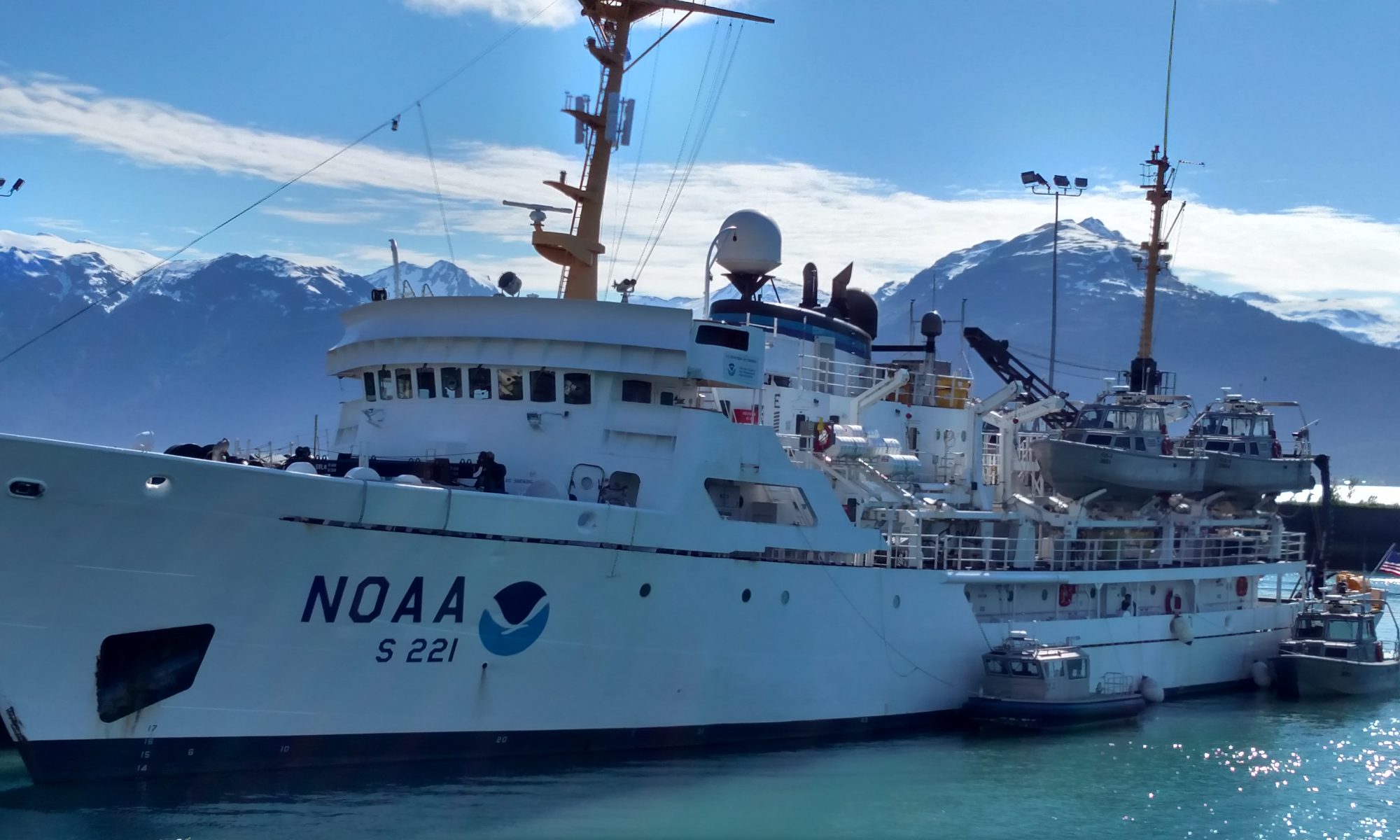
Onboard NOAA Ship Oregon II
July 27 – August 8, 2012
Mission: Longline Shark Survey
Geographic area of cruise: Gulf of Mexico and Atlantic off the coast of Florida
Date: August 5, 2012
Weather Data From the Bridge:
Air Temperature (degrees C): 29.0
Wind Speed (knots): 10.28
Wind Direction (degree): 138.68
Relative Humidity (percent): 076
Barometric Pressure (millibars): 1022.33
Water Depth (meters): 28.45
Salinity (PSU): 35.612
On my last blog I introduced you to five species of shark found so far. I think you can tell which one is my favorite, which is yours?
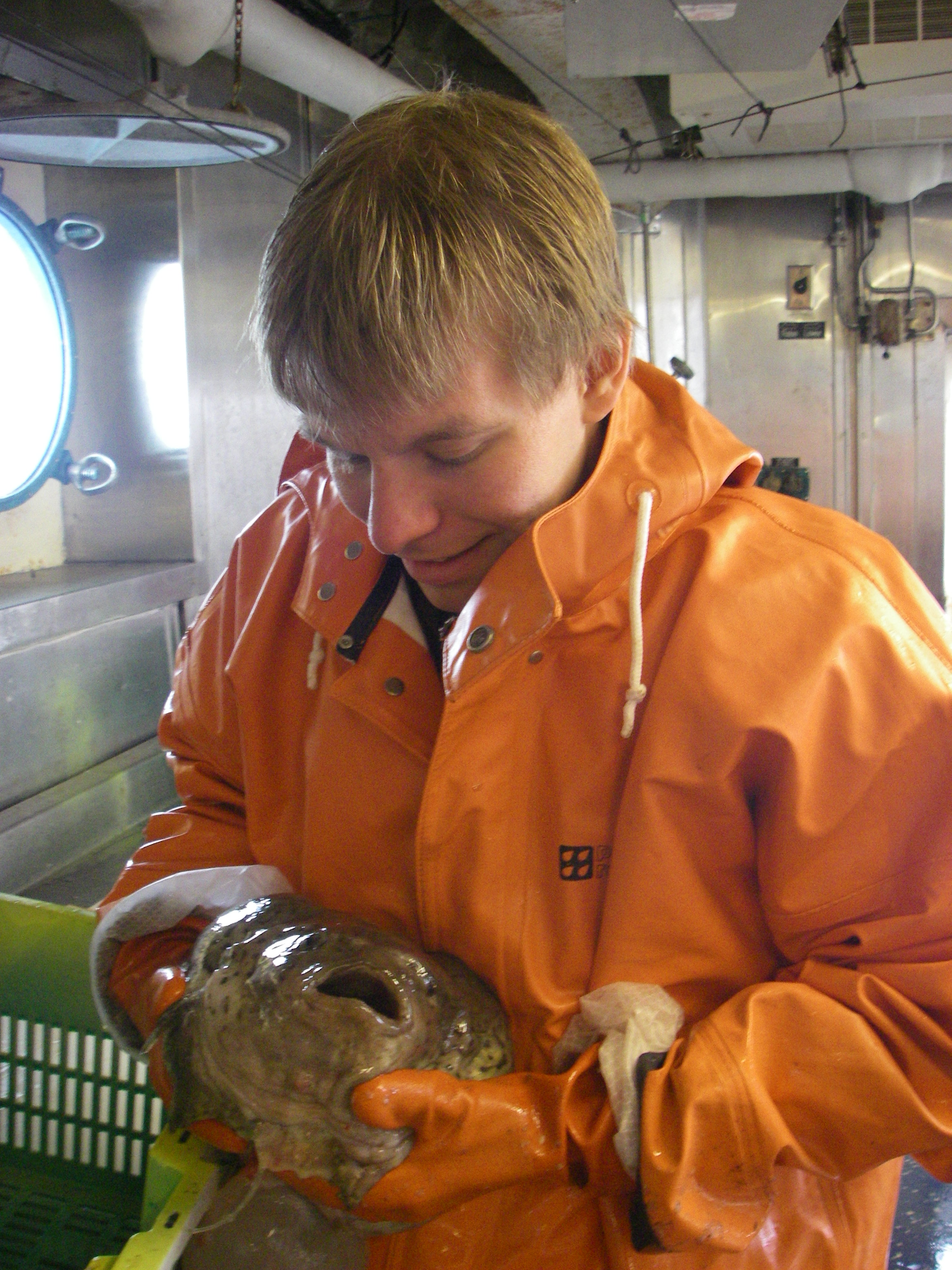
Even though our mission is to collect data on sharks, you never know what might come up on the end of a hook (or tangled in the line!). Data is still collected on just about everything else we catch. For today’s blog I have put together a photo journey on the so many other beautiful creatures we have caught.
Basket Starfish with pieces of soft red coralBlack Sea BassBlue Line Tile Fish (Unfortunately damaged by a shark)Box CrabClearnose SkateConger EelRed GrouperMermaid’s Purse (egg case from a skate or ray)Candling the Mermaid’s Purse reveals the tail and yolk of the animalAmberjackScallop ShellScomberus japonicus (Can you come up with a common name?)Sea UrchinSpider CrabStarfishRed Snapper (10Kg)
There you have it. I hope you enjoy the pictures of just some of the beauty and diversity in the Atlantic Ocean. Be sure to visit my next blog when we tie up loose ends!
NOAA Teacher at Sea
Anne Artz Aboard NOAA Ship Delaware II July 25 — August 5, 2011
Mission: Clam and Quahog Survey Geographical Area: North Atlantic Date: July 26, 2011
Weather Data from the Bridge
Location: 40 32.672 N070 43.585 W
Temperature: 18.5 C
Winds: Easterly at 3-4 knt
Conditions: Sunny today, some clouds, ocean calm
Science and Technology Log
Our first full day at sea (and at work)! We left the dock at Woods Hole, MA yesterday at 2 pm and headed out past Martha’s Vineyard and Nantucket. While steaming towards our sampling site, we practiced two very important safety drills — a fire drill and the abandon ship drill. The abandon ship drill was unique in that we had to don our survival suits (supposedly in a minute but I think I took longer than that) that protect us in the water from hypothermia and also help keep us afloat.
Anne Artz in her survival suit
Around 6 pm we reached our first sample location and the “day team” (that’s me and some fellow volunteers) started our work. The testing protocol is fairly simple: sample sites have been predetermined by computer. Survey sites are selected based on depth and location (latitude and longitude). When we reach those locations, a large sled-like cage called a dredge is lowered into the water and dragged along the ocean floor for a prescribed amount of time (generally 5 minutes).
This cage goes on the ocean floor scooping up samples for our analysis.
The dredge is then brought up and the contents emptied onto the deck. Our work then takes 10-15 minutes to sort through what is brought up, keeping those items we are surveying or counting, and throwing the rest back into the water. We attempt to identify organisms we bring up and we count all live bivalves, any gastropods, hermit crabs, starfish and all fish. Species we identify and measure are the surfclam, the ocean quahog, the southern quahog, and sea scallops. Once we’ve separated out what we need, we weigh the catch then measure the size of each item collected. We throw everything back into the water and clean up the deck while heading to our next location. The procedure is repeated about twice each hour. For our work on the deck we wear protective clothing, hard hats, and of course, a life vest.
Personal Log
There are seven volunteers aboard this trip, including myself. They are a varied group from all over but are all very interested in ocean science. Some of them are college graduates, some are still in college and we are all first-timers on this type of research vessel. We were assigned a 12-hour shift, either noon to midnight or midnight to noon. I feel fortunate to be on the noon-midnight shift as that means I don’t have to alter my sleeping pattern much. It’s tiring work but the good part is there are breaks between each haul so most of us have our books with us on the deck (so handy to have a Kindle!). The crew here is as varied as the volunteers, from all over the country and they are all very good at what they do. I initially thought having 4 girls sleeping in a room the size of a walk-in closet would be difficult but it’s not. At any given time two of us are on deck, on duty, so the room is available for sleeping, changing, showering, etc. We all respect quiet below deck because at any given time, someone is always trying to sleep!
Interesting Things Seen Yesterday
A shark with a rather large fin above the water was following us from a distance for a while — maybe curiosity? We brought up several skates (they look like rays) the largest being about 12 inches long. They are incredibly beautiful up close, looking almost angelic. It seems a shame they have such a bad reputation!
NOAA TEACHER AT SEA JASON MOELLER ONBOARD NOAA SHIP OSCAR DYSON JUNE 11 – JUNE 30, 2011
NOAA Teacher at Sea: Jason Moeller Ship: Oscar Dyson Mission: Walleye Pollock Survey Geographic Location: Gulf of Alaska Dates: June 21-22, 2011
Ship Data
Latitude: 55.03N
Longitude: -163.08W
Wind: 17.81 knots
Surface Water Temperature: 6.7 degrees celsius
Air Temperature: 10.10 degrees celsius
Humidity: 85%
Depth: 82.03 meters
Personal Log
Welcome back, explorers!
June 21
Today has been the calmest evening since I boarded the Oscar Dyson. The night shift did not fish at all, which meant that I basically had an evening off! Even the evenings we have fished have been relatively calm. It takes us about an hour to an hour and a half to process a haul of fish, and up to this point we average about one haul per night. That gives me quite a bit of down time! When I am on shift, that down time is usually spent in one of two places.
The first spot is the computer lab in the acoustics room. This is the room where we wait for the haul to be brought in. I write the logs, lesson plan, check emails, and surf the web during quiet times.This is the lounge. The cabinet under the TV has over 500 movies, and a movie is usually playing when I walk in. Behind the couch is a large bookshelf with several hundred books, so I have done a fair amount of pleasure reading as well.
When I am not sitting in one of these two places, I am usually running around the ship with my camera taking nature photos. Below are the best nature photos of the past three days.
One of the coolest things about the Aleutian islands has to be the number of volcanoes that can be seen. This is the one on Unimak Island.A second picture of the same volcano.This is just a cool rock formation off of the coast. The Oscar Dyson has been hugging the coast the entire trip, which has been great for scenery.A gull skims the water by the Oscar Dyson.A gull wings toward the Oscar Dyson
June 22
We resumed fishing today! These trawls brought in quite a few species that I had not seen before, along with the ever plentiful pollock.
The net, filled with fish!Jason waits for the net to load the fish onto the conveyor belt.Here, I am separating the arrowtooth flounder from the pollock.We managed to catch a skate in the net! Skates are very close relatives to sharks. We quickly measured it and then released it into the ocean.A second photograph of the skate.Do you remember the little lumpsucker from a few posts back? This is what an adult looks like!The lumpsucker was slimy! I tried to pick it up with my bare hands, and the slime gummed up my hands so that I couldn't pick it up! Even with gloves designed for gripping fish I had trouble holding on.A closeup of the lumpsuckerThis fish is called a sculpin.I finally saw a crab! None of us know what was attached to it, but the scientists believe that it was an anemone.This is a starfish the net pulled up.
Science and Technology Log
There is no Science and Technology Log with this post.
Today’s question comes from James and David Segrest, who are two of my homeschool students!
Q. What do you eat while you are on your adventures? Do you get to catch and eat fish?
The food is great! Our chef has a degree in culinary arts, and has made some amazing meals!
I wake up at 2:30 pm for my 4 pm to 4 am night shift, and usually start my day with a small bowl of oatmeal and a toasted bagel. At 5 pm, about two hours after breakfast, dinner is served, and I will eat a huge meal then too. Every meal has two main courses, a vegetable, a bread, and dessert. We have had a wide variety of main courses which have included bratwurst, steak, gumbo with king crab, fish, chicken parmesan, spaghetti with meatballs, and others!
We will often eat some of the fish we catch, usually salmon and rockfish since those provide the best eating. The salmon disappears to the kitchen so quickly that I have not actually been able to get a photo of one! We have not caught a halibut in the trawl net yet, otherwise we would likely have eaten that as well. Yum! We have not yet eaten pollock, as it is viewed as being a much lower quality fish compared with the rockfish and salmon.
NOAA Teacher at Sea
Kathleen Brown
Aboard R/V Hugh R. Sharp June 7 – 18, 2011
Mission: Sea Scallop Survey Geographical area of cruise: North Atlantic Dates: June 8-9, 2011
June 9, 2011
Weather Data from the Bridge Time: 10:00 am
Winds 10 to 20 knots
Seas 3 to 4 feet
Science and Technology Log
R/V Hugh R. Sharp
This morning is the first day that I have awoken on board the ship. It will be my first twelve-hour shift. The scientists work either from noon until midnight or from midnight to noon. Kevin, the chief scientist, has assigned me to the day shift. I am very happy about this! We suit up in our foul weather gear. Those who have done this before explain to me that it is easiest to slip on the black rubber boots and rain pants like a firefighter who just got a call might do. We eagerly wait for the winch to pull the catch out of the water. The net drops everything out on the table. When we receive word from the engineer that all is clear, I don a hardhat, and hop up on the table with a white board that lists the station, strata and tow. My shipmate, La Shaun, snaps a photo record of the catch. We stand around the table and begin the inventory. We are looking for sea scallops and any we find go into a big orange basket. Other species that we separate out include: red hake, monkfish, haddock, skate, and ocean pout. We measure the length of the fish that we have separated. I imagine how the data might be used by scientists back on land to indicate the health of that portion of the ocean. As soon as we finish the haul and clean up, it is time to do it all over again. Every third catch we count the number of starfish and cancer crabs. I am excited to hold sponges, sea urchins, and hermit crabs. I am surprised to learn that the sand dollars are red.
Scallops!
Once all the sea life on the table has been sorted, it is time to head to the wet lab. There, the buckets of animals are counted and measured. Two persons work at each table measuring the fish. The fish is laid flat against the scale and one scientist uses a magnetic tool to capture the length electronically. During one catch, Aaron and I measured the length of 37 skate. I am impressed by the knowledge of the scientists who can easily tell the difference between a winter skate and a little skate. I hope by the end of the trip, I will be able to do so as quickly as they can.
Personal Log
I hardly notice the rocking of the ship while we are working. I think I may be starting to get my sea legs. On this first day there is very little time in between stations, and there is no real down time. I have learned how to shuck a sea scallop and seen the anatomy of the animal for the first time. I had been promised that I would get to work hard out on the open ocean and I am not disappointed.
Question of the DayDo you know the shape of the sea scallop shell? If you open the shell of a sea scallop you can immediately tell if it is a male or a female. How?
June 8, 2011
Personal Log
I reported to the Woods Hole dock at 7:30 in the morning. The day was bright and sunny, with temperatures in the 70s. The sight of the ship docked next to the NOAA building was so exciting. I climbed on board and introduced myself to Captain Jimmy who showed me right to the galley and offered me a cup of coffee. He was so welcoming! The ship had arrived in port at about 5:00 am and the crew and scientists were working to get everything ready to go by noon. I was shown my room, which is meant for four persons and has two sets of bunk beds. The room is so much bigger than it appeared in the photographs I saw! I chose a lower bunk and stowed my duffel bag underneath the bed in a cubby that was designed just for that. As more of those traveling on the journey arrived, I was interested to find that five of us have ties to Maine. We gathered to hear a briefing on the research that we will be supporting while on board the ship. Did you know that the American Sea Scallop is the most valuable fishery in the United States? Then we went off to lunch in the galley. The cook, Paul, served us an amazing lentil soup and sandwiches. The galley is full of snacks, a fridge with ice cream, and milk juice, coffee and tea, all of which are available day and night. As we were eating, I felt the ship start to move. We were told our first station is about eight hours away. (A station is a place where we collect a sample of the sea life.) Away we go!
Question of the Day What is the reason that Woods Hole became the location on Cape Cod for ocean research?
NOAA Teacher at Sea
Channa Comer On Board Research Vessel Hugh R. Sharp May 11 — 22, 2011
Mission: Sea Scallop Survey Leg 1 Geographical area of cruise: North Atlantic Date: Monday, May 15, 2011
Weather Data from the Bridge
Air Temperature: 16.2C, Mostly Cloudy
Wind Speed: 11.6 knots
Water Temperature: 13.4C
Swell Height: 1.0 meters
Science and Technology Log
Question of the Day (See the answer at the end of the post)
How do you count a basket of crabs?
It’s hard to believe that we’re already at the halfway mark of the cruise. Since my last log, we’ve covered a total of 966 nautical miles. Today, we’ve traveled from Hudson Canyon which is 60 nautical miles east of Atlantic City to about 50 nautical miles from the coast of Point Pleasant, NJ.
Bucket of Crabs
Each day, the boat stops at predetermined points along the route. At each stop, the scallop dredge is lowered to the ocean floor at depths ranging from 15 to 60 fathoms. The dredge is then towed for 15 minutes at a speed of 3.8 knots. When 15 minutes has passed, the dredge is brought up and the catch is dumped onto a platform were we all wait anxiously to see what comes up. Once the empty dredge is secure, we get to work sorting the catch. Scallops and fish get separated, with everything else collected into baskets, cataloged as “trash” and returned to the ocean. The scallops are measured, and the fish are sorted by species, then counted, weighed and in some cases saved for further scientific study back at NOAA labs. Once everything has been counted, weighed and measured, it’s time for my favorite activity – shucking! Scallops are shucked and if there’s time, washed bagged and placed in the deep freezer for Paul to use in the galley for meals. To date, we’ve completed 90 tows and dredged 23,212 scallops.
What comes up at each catch depends on the location of the tow. The southernmost, areas that have been open, or those areas that have recently been closed will usually yield fewer scallops. Scallop yields increase as we head northward and in areas that are closed to fishing. In addition to scallops, our tows have included a variety of deep sea fish, starfish, lots of live sand dollars (with their accompanying green slime), and very often, mud.
At select tows, representative samples of scallops are processed beyond the usual length measurements. The shells are scrubbed clean and weights are recorded for the meat and gonad (reproductive organ). The shells are then labeled and bagged for transport to the lab where they will be aged. The age of scallops are determined by counting the number of growth rings on the shell – similar to counting rings on a tree.
Every three tows is my favorite – Crabs and Stars!! In this tow, in addition to the usual sorting and measuring, all Cancer crabs are collected, counted and weighed and a representative sample of starfish are sorted by species, then counted and weighed. Astropecten, a small starfish is a predator of scallops and the most abundant species of starfish that we’ve counted. Usually, a tow that has large numbers of Astropecten has very few scallops. Being a stickler for detail, having the job of counting starfish has been perfect for me.
Did you know?
Starfish eat a scallop by attaching themselves to the scallop in numbers, forcing the shell open, then extruding their stomachs into the shell and digesting the meat.
Animals Seen
Dolphins
Red Hake
Sea Mouse
Chain Dogfish
Little Skate
Four Spot Flounder
Red Sea Robin
Sea Urchin
Snake Eel
Ocean Pout
Sand Dollar
Sand Lance
Goosefish
Starfish
Gulf Stream Flounder
Black Sea Bass
Hermit Crab
Sea Raven
Personal Log Day 3 – Thursday, May 12, 2011
With my sea sickness over after the first day and having adjusted to my new sleep schedule — I actually get to sleep a full 8 hours! — the days are starting to take on a nice flow. It’s been great being part of a team. We’re like a well-oiled machine. Everyone in my crew continues to be generous, sharing the best shucking techniques and giving me a little extra time to take photos and collect samples. We’ve jokingly renamed the “crabs and stars” tow to “crabs, stars and mud”. It’s really hard to count starfish when they’re covered in mud. Dinner was especially delicious today with salmon in pesto sauce with potatoes and broccoli.
Day 4 – Friday, May 13, 2011
The day started out cloudy and overcast, but the sun made an appearance late in the afternoon. The first tow of the day was my favorite — Crabs and Stars!! — with accompanying mud. As part of the Teacher at Sea program, in addition to my logs, I am required to write a lesson plan. I’ve started to draft what I think will be a great unit using the sea scallop as a springboard to explore issues in ecology and the nature of ecological science. Highlights will be an Iron Chef style cooking competition using scallops and a design challenge where students will have to build a working model of a scallop dredge. Vic has been great with providing whatever data, materials and background information that I need for my lessons. Lunch today was chicken burritos with fresh, spicy guacamole.
Day 6 – Sunday, May 15, 2011
Since its Sunday, I decided to take it easy and instead of trying to get a lot done before my shift and during the breaks, I took it easy and watched a little TV. With satellite TV and a large selection of DVDs, there are always lots of options. Although the guys tend to prefer sports or reality TV. The first few tows were back to back which meant little time for breaks, or snacks, or naps. Just enough time to clean up, shuck and be ready for the next tow.
Day 7 – Monday, May 16, 2011
The trip is half over. It’s hard to believe. The tows were once again, back to back with a fair amount of scallops, but I think after today, we won’t need to shuck anymore. Yay! Today was the day that the animals fought back. I was chomped by a scallop and a crab! The scallop was more of a surprise than a pain, but the crab clawed right through my glove. After days with no restrictions, we received the warning from the engineers today that we have to be careful with the faucets. Dripping faucets waste water and it takes time for the water to be converted through condensation in the condenser to usable water. If we’re not more careful, we’ll be faced with restrictions on how much water we can use……… I hope that doesn’t happen since I think we all officially smell like fish. Lunch today was cream of asparagus soup, yummy and reminiscent of my recent trip to Peru. The only thing missing was Quiona. And finally, today was the day that I’ve been waiting for. I found my favorite ice cream. I’ve been rationing myself to one per day, but after I found my favorite – butter pecan ice cream sandwiches – I could not resist a second.