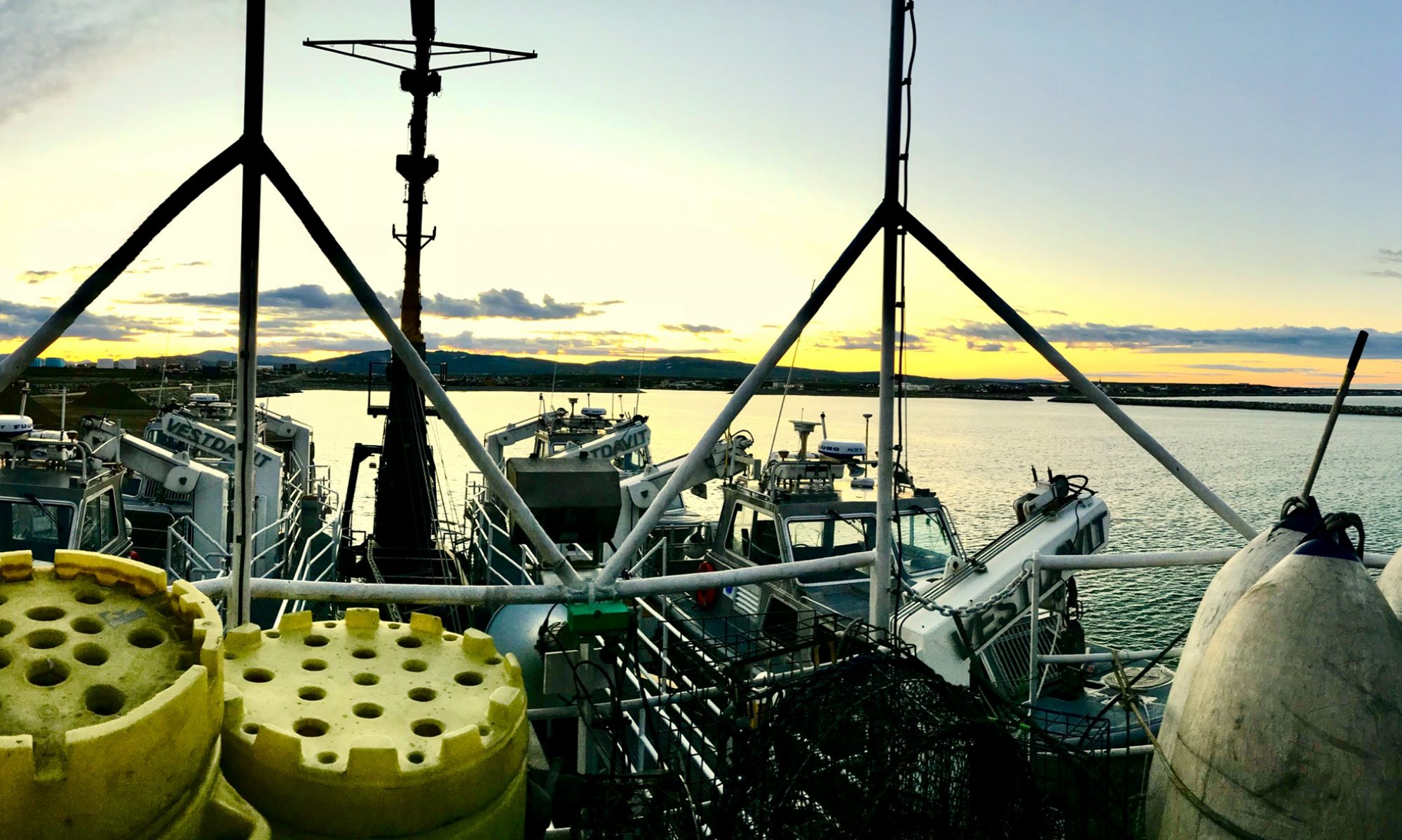
Kainoa Higgins: Preparing to Set Sail! June 15, 2014

NOAA Teacher at Sea

Kainoa Higgins

(Almost) Aboard the R/V Ocean Starr

June 18 – July 3, 2014

Mission: Juvenile Rockfish Survey

Geographical Area of Cruise: Pacific Coast

Date: June 15, 2014

Personal Log

Aloha from the great Pacific Northwest!  My name is Kainoa Higgins and although I was born and raised on the island of O’ahu, Hawai’i, I have spent the last 10 years calling Tacoma, Washington home.  I am incredibly excited to have been selected as a 2014 NOAA Teacher at Sea and can’t wait to climb aboard the R/V Ocean Starr in a matter of hours!  I will be participating in two legs of research during my two and half weeks on ship.

During the first leg, I will be assisting scientists with conducting a Juvenile Rockfish Survey as they examine groundfish populations off the coast of the Western Seaboard of the North America.  Though I have been attempting to get caught up to speed, I currently only understand the program at a general level.  There are many species of rockfish, all of which are commercially valuable, and keeping track of their populations and distributions is essential for conscious management.  Having spoken with my Chief Scientist for this leg, Ric Brodeur, on several occasions leading up to my departure, I understand that my job will entail any, some or all of the following: mammal/bird observational surveys and plankton analysis by day followed by sorting of trawled collections analysis of the catch in the wet lab by night.  I’ll be able to share more as the adventure unfolds.

In the second leg, I will connect with Laurie Weitkamp who will take over as chief scientist with a fresh research team and research focus.  In a recent e-mail Laurie explained that this leg will be “experimental”.  In short, we will be trying a variety of modifications to a marine mammal excluder device to see how it fishes and influences the catch.  I’m not sure, exactly, how the MMED is used, but I would be willing to take a guess at it’s purpose.  I imagine it has something to do with an attempt to maintain commercial fishing operations without the interruption of marine mammals (dolphins, porpoises, seals, whales, etc.) in close proximity.  Through some sort of “deflection”, its goal would also be reduce unintentional by-catch.  Once again, I’ll know more concretely a bit further down the road.  According to Laurie, in addition to help work up the catch, I will be helping with “marine mammal watch” before and during fishing.  Since we will use a surface trawl during the day, it is possible that we could catch a marine mammal (e.g., seals and dolphins). To minimize this risk, I will help serve as a lookout  before we set and when the trawl is out, and are required to immediately stop fishing if any are spotted nearby.  I look forward to spending some time on the bow scanning the horizon for marine mammals.

Plankton
One of my favorite pics of marine diatoms (phytoplankton) from the Puget Sound. Taken with iphone camera though microscope eyepiece.

A bit more about myself and the school I represent.  I grew up loving the ocean.  Much of my life as a child was spend in or around it.  Whether snorkeling, surfing or fishing my brother and I were raised to respect and appreciate all that the ocean had to offer.  After all, my name, Kainoa, means “free as the sea”.  There is a saying in the islands, Malama ‘aina, Malama i ke kai, meaning ‘to care for the land and care for the ocean’.  After graduating from Punahou School  in Honolulu, Hawaii I headed for the great Northwest to attend the University of Puget Sound.  I participated in Athletics, Lu’au, Senior Theatre Festival and even Greek Life.  I studied Biology and spent a semester abroad in Christchurch, New Zealand.  Even though I took Marine Biology in one of the most amazing diverse systems in the world, my favorite class had to be “The Diversity of Algae”.  It opened my eyes up to the beauty and importance of micro life for the first time.  This led to my passion for – and borderline obsession with – plankton.

After earning a Master’s in the Arts of Teaching from UPS, I began my career at the Tacoma School of the Arts teaching entry level biology.  After my second year, I was asked to join our recently founded sister school, the Tacoma Science and Math Institute (SAMI) located in Point Defiance Park on the North Tacoma peninsula.  SAMI  is built around a particular vision: we believe that students make the most of their learning when they take ownership of their education—when students intentionally choose to take on the challenge real learning entails. We further believe that this ownership most naturally develops within a learning community, encouraged by others who share that commitment.  We theme our curriculum around the math and science and emphasis the integration of disciplines and staff collaboration all the while perpetuating the pillars on which the schools were founded: community, empathy, thinking and balance.  SAMI has allowed me to pursue my passion for marine science.  We are a two minute walk to the waterfront which makes the learning opportunities for myself as students invaluable.  Between this field resource and collaborations with the University of Washington in the High School program and the University’s School of Oceanography I am in a position to offer my students a world-class learning experience.

I think it is important that teachers are always looking for opportunities to improve their practice and better educate themselves in ways that will better prepare their students for the world ahead of them.  The Teacher at Sea opportunity is an incredible way to engage myself as a life-long learner and will help me to better engage and inspire my students.  I look forward to designing and offering lessons derived from real-time science and experiences.  I am very grateful for this opportunity and can’t wait to share it with you.

See you soon,

Kainoa


SAMI Students
SAMI Students reflecting on a trip to Dungeness Spit, WA.
Pups
The men of the house in my absence
Sandys
A relationship founded on respect


Patty McGinnis: Anchovies, Shrimp, and Krill, May 28, 2013

NOAA Teacher at Sea
Patty McGinnis
Aboard R/V Ocean Starr
May 20 – 29, 2013

Mission: Juvenile Rockfish Survey
Geographical Area of Cruise: Pescadero, California
Date: Tuesday, May 28, 2013

Weather Data from the Bridge
Latitude: 37 16.941 ° N
Longitude: 123 07.440° W
Air Temperature: 14 Celsius
Wind Speed: 25 knots
Wind Direction: NE
Surface Water Temperature: 12.8 Celsius
Weather conditions: foggy

Science and Technology Log

I’ve come to realize that each trawl is a whole new adventure; although Chief Scientist Keith Sakuma has the historical data to predict what might be found at each station, he is occasionally surprised at the treasures that are yielded by the ocean’s pelagic zone. The majority of our trawls are conducted at 30 meters below the surface. The area that falls between the surface and 200 meters below the surface is known as the epipelagic zone. The next zone, the mesopelagic, is the area that lies 200 meters to 1,000 meters below the surface. Last night our first trawl of the night was a deep water trawl. Although described in the Project Instructions, this was our first opportunity to conduct a deep water trawl. Keith was taking advantage of the fact that the captain wanted to unwind one of the trawl winch cables so that it could be carefully rewound onto the spool.

putting out the net
The crew of the Ocean Starr cheerfully assisted with the trawls each night

During the deep water trawl, the net was dragged for 15 minutes at a depth of 300 meters, rather than the traditional 15 minutes at 30 meters. In addition to a large number of adult hake, we pulled up a long-finned dragonfish. Like many fish that live in the deep ocean, the dragonfish has an organ on its head that produces a bioluminescent light. This light is used by some species to attract prey and can also serve to help the fish see its surroundings. Tonight we found another type of deep dwelling fish; the stoplight loosejaw fish, so named for its large jaw. Its red spot is capable of producing red light to help it navigate. We also pulled in several King of the salmon specimens. The King of the salmon is not a real salmon, but is a type of ribbon fish. It has a very flat, ribbon-shaped body and a long dorsal fin that runs down the entire body. Deep water fish like the stoplight loosejaw and King of the salmon tend to get pretty banged up in the trawl.

deep water trawl haul
I stand next to the results of our deep water trawl haul
stoplight loosejaw
This stoplight loosejaw is a type of dragonfish that lives in deep ocean waters
king of the salmon
King of the salmon fish

Lindsey good-naturedly dissected out a handful of otoliths (ear bones) from the adult hakes so that I could have a memento of my NOAA Teacher at Sea voyage. I anticipate using the otoliths to create a lab activity for the middle school science classroom. The hake lengths were then measured on a special board and a small piece of tissue was cut from five of them to be frozen and analyzed later.

adult hake
Adult hake
These otoliths, or ear bones, came from adult hakes

We conducted five additional trawls at 30 meters. Prior to and during each haul one of us does a mammal watch. This consists of listening and watching for mammals that may appear alongside the ship during the trawl. Should we encounter any marine mammals, the protocol is to stop the trawl immediately to avoid injuring any mammals. As of today, we have yet to be accompanied by any marine mammals during our trawls.

One of the surprises of the night was a catch of northern anchovies. I was surprised at their size; rather than the small fish I had envisioned, these fish were solid, robust, and at least 6 inches in length. Keith was pleased with the number of anchovies we hauled in given that very few or none were obtained the last two years. As he explained, the anchovy population tends to go through boom and bust cycles and have been down for the last several years. We also pulled up a North Pacific spiny dogfish, a shark named for its sharp dorsal spines.

Dogfish
Watch out for the dorsal spines on the North Pacific spiny dogfish

Other hauls yielded large amounts of juvenile rockfish and market squid. I have a great fondness for the squid, which I dissect annually with my students each spring. The small market squid we pull up, some barely an inch in length, pale in comparison to the adult squid which I use in my classroom. There is, however, no mistaking the miniature squid for anything else, so strong is their resemblance to their full-grown relatives that make their way from California’s pelagic waters to my classroom in Eagleville, Pennsylvania.

squid
We pulled up this beautiful squid in one of our trawls
Measuring Squid
I measure market squid as part of my work on the Ocean Starr
juvenile rockfish
juvenile rockfish

Krill, of course, are well-represented in the hauls as well. The abundance of the tiny crustacean makes it easy to envision the humpback whale straining out mouthfuls of krill as they make their annual trek to Alaska each spring.

Krill
Krill!
Krill
Krill

Since identifying and counting the majority of all the organisms for each trawl would be too labor intensive, we concentrate on a subsample. Keith then extrapolates the data from the subsample to obtain an estimation of what the total haul contained. Depending on what is present in the haul, we generally identify a subsample of 1,000 or 5,000 millilitres. Difficult sorts such as one that consists primarily of krill and small shrimp, may be restricted to 1,000 millilitres, whereas easier sorts may be up to 5,000 millimeters. Regardless, the total volume of the trawl is always recorded, as is the total volume of krill. Keith bags some of the catch for later use, carefully labeling each bag with the haul number, cruise number, and species identification code. Up to 30 specimens of each important species are also measured and recorded. In the morning, it will fall to Don Pearson to transfer the data from the data sheets to the computer. These numbers are then cross-checked the following evening to ensure that the data is accurate. The result: the groundfish stock assessments NOAA produces are as accurate as possible, an important factor for fisheries management.

subsample
Chief Scientist Keith Sakuma obtains a subsample
samples in bags
Samples are carefully labeled and stored for later analysis
catch data sheet
The haul from all trawls are recorded on data sheets

As busy as the night shift is, the day shift keeps busy with important work, too. Don conducts CTDs throughout the day, while Jamie filters phytoplankton from water samples that the CTD captures.

ame filters phytoplankton
Graduate student Jamie Lee filters phytoplankton obtained from CTD sampling
Doug watches the computer as part of conducting a CTD
Fisheries biologist Don Pearson watches the computer as part of conducting a CTD
deploying CTD
Deploying the CTD

As I am sleeping the ship periodically conducts transects over the ocean floor. These transects are conducted in areas where upwelling tends to occur. Upwelling is caused when a predominantly northwest wind pushes water offshore. Water rises up from below the surface to replace the water that was pushed away. In doing so, nutrients from the ocean bottom are transported from the sea floor to the water column. These nutrients serve to promote the growth and reproduction of phytoplankton, which is the basis of all ocean food chains. Upwelling areas therefore attract fish, birds, and marine mammals. While the ship is running transects, a computer in the lab is continually monitoring evidence of sea life at different frequencies. The picture below shows four graphs that monitor for krill, invertebrates, and fish. Fisheries biologist Don Pearson explained that it takes a practiced eye to spot patterns in the data. These patterns should correspond with the birds and mammals that Sophie spots on deck as seeing lots of organisms on the computer means lots of food for the birds and mammals. As much as I’ve enjoyed the night shift, part of me wishes that I had been able to have spent more time on the lookout deck with Sophie.

graphs
These graphs indicate the presence of marine organisms
transects on computer
The computer tracks the transects conducted by the Ocean Starr by day

All of this takes an enormous amount of preparation. Keith, Don, Amber, and oceanographer Ken Baltz spent the better part of a day setting up the equipment which will be used over a six-week span. This includes the trawling net which has been built to a specific length, opening and mesh size. The use of a standardized net is important because it enables the scientists to compare catches throughout the years. Other equipment includes an array of computers, the CTD, and miscellaneous equipment needed to sort through catches.

trawl net
Trawl net Photo credit: Kaia

Personal Log

It is interesting getting used to life on ship; this small community consists of 17 crew and 8 scientists (including myself). This vessel, in addition to being equipped with the necessary science equipment, houses its inhabitants in “staterooms.” I have been partnered with Kaia, a reflective wildlife biologist whose company I thoroughly enjoy.

stateroom
This is where I slept while on the Ocean Starr
roommate
Kaia was a wonderful roommate!

I have taken note that you can set your clock by the four meals served each day. Our ship’s steward, Crystal, and her assistant Liz, never fail to amaze me with the diverse menus that they faithfully create for us each day. The mess, or the room where we eat, has snacks and sodas available at all times of the day and night. Crystal also keeps a refrigerator stocked with leftovers that are available for anyone to access at any time. If that wasn’t enough, there is an entire freezer which houses nothing but a variety of ice cream bars (which the night shift enjoys on a regular basis). The mess is a popular place to hang out between meals. Two large televisions are constantly on; I’ve noticed that sci-fi movies (especially B-rated ones) and old war movies seem to be the favored among the crew.

Monday dinner
The ship steward consistently prepares wholesome and delicious meals
Menu
What’s for dinner?
ice cream
Ice cream was a favorite treat for the night shift

Yesterday I had an opportunity to do my laundry using one of the ship’s two washing machines. When I first came on board I asked Keith about fresh water on the ship. He explained to me that as long as the ship is moving that it is able to make fresh water through a desalination process. Since the Ocean Starr is in constant movement other than when the CTD is being employed, having fresh water has not been an issue. Regardless, taking the type of long showers favored by many of my students is something I did not indulge in.

washer
The Ocean Starr has all the comforts of home

As I write this the ship rocks gently from side to side. I think of how quickly I have adapted to my new surroundings and to the companionship of my new friends. As Keith had promised, after three days of working the night shift my body has adjusted and has acclimated to the routine. My time here is drawing short, however…three days from now I’ll be back in my classroom sharing stories and photos with my students.

Did You Know?

Commercial fisherman use a big spotlight to attract market squid?

Here is a list of some of the fish I have seen this week:  barracudina, northern lampfish, blue lanternfish, Pacific hake, pallid eelpout, yellowtail rockfish, shortbelly rockfish, cowcod, blue rockfish, boccacio, lingcod, cabezon, Irish lord, wolf-eel, medusafish, Pacific sanddab, speckled sanddab, rex sole, Dover sole, and many more


Patty McGinnis: Fishing for Science, May 16, 2013

NOAA Teacher at Sea
Patty McGinnis
Aboard R/V Ocean Starr
May 20 – 29, 2013

Mission: Juvenile Rockfish Survey
Geographical Area of Cruise: Pacific Coast
Date: May 9, 2013

Personal Log

Hi everyone! I’m thrilled to have been selected for this opportunity of a lifetime! As a NOAA Teacher at Sea, I’m looking forward to learning about the oceans and to sharing that knowledge with you. I’ll be aboard R/V Ocean Star assisting scientists with their work in conducting a Juvenile Rockfish Survey. You can learn more about this important scientific work by clicking here. In my reading, I have found out that there are many species of rockfish, all of which are a commercially valuable groundfish. Since fisheries are a renewable resource, keeping track of the rockfish population is important for managing it wisely. This will involve trawling at night and then analyzing the catch–as my adventure unfolds I will be able to provide you with more details.

I currently work as a gifted support specialist at Arcola Intermediate School in Eagleville, Pennsylvania. I have also taught science (mostly biology) for over 20 years. My favorite part of teaching is watching a student’s face light up with excitement over a new idea. I’m passionate about my work–especially when it involves educating students about ecology and the role man plays in protecting natural resources. I also enjoy traveling and learning about how local people utilize the land–last summer I had an opportunity to go to Kenya. In the picture I am listening to a transmitter that is picking up signals from a radio-collared lion.

I know my experience as a Teacher at Sea will help me to better understand the type of work that a fishery biologist conducts and that I’ll also gain insight into the various careers that are necessary for supporting this research. I’ll be posting to this blog as often as I can–I hope you follow along!

Here I am listening for lions

Caitlin Thompson: Bottom Trawl, August 11, 2011

NOAA Teacher at Sea
Caitlin Thompson
Aboard NOAA Ship Bell M. Shimada
August 1 — 14, 2011

Mission: Pacific Hake Survey
Geographical Area: Pacific Ocean off the Oregon and Washington Coasts
Date: August 12, 2011

Weather Data from the Bridge

Lat. 48 degrees 07.0 N
Long. 125 degrees 13.7 W
Present weather: partly cloudy 6/8
Visibility: 10 n.m.
Wind direction: 335
Speed 10 kts
Sea wave height: 2-3 feet
Swell waves – direction: —
Swell waves – height: —
Sea water temperature: 15.0 degrees C
Sea level pressure: 1017.3 mb
Temperature – dry bulb: 15.8 degrees C
Temperature – wet bulb: 13.2 degrees C

Science and Technology Log

Third Wire FS70
The Third Wire FS70 provides an image of the net, shown as half circle, and the fish around it.

The big news is that we’re headed to port a day early. There was a electrical component failure in the engine system that converts the diesel power to electricity which powers the electrical motors that turn the propeller shaft. This reduced the Shimada to running on about half power. I can’t believe the cruise is ending!

Yesterday we did a bottom trawl, the first bottom trawl ever conducted on the Shimada. Using the sonars, the scientists on the sonar team saw an interesting aggregation of fish. They couldn’t use the usual mid-water net, which is relatively easy to damage, because the fish were very close to the bottom. Besides, the bottom appeared hard and rocky. I was excited when they decided to test the new net. Unlike the mid-water trawls, which usually bring up a mostly “clean” haul of hake, a bottom trawl tends to bring up a wide array of species. I wanted to learn some new names.

ITI
The ITI shows the distance of the bottom of the ocean from the net. Where the pink lines are highest, the net is lowest.

Deploying the bottom net proved educational. The mid-water net is sent down with the FS70 attached, which provides an image of the objects near and in the net. On the screen shot of the FS70 above and to the right, look for the half-circle, which shows the open net, the silver blue line under the net, which is the bottom of the ocean, and some dots inside the net that are most likely fish already caught in the net. The images are sent through a wire. It would be too easy to damage the wire in a bottom trawl, so the scientists use the ITI instead.

Larry was in charge of fishing today and was disatisfied with the image the ITI System produced of the bottom trawl. The ITI does not produce as good an image of the bottom trawl as the FS 70 did on the midwater trawl. This made it more difficult to decide how much was being caught and how long to fish. The scientists began planning how to get a better system for the ship.

The bottom trawl disappointed the scientists because it brought up fewer hake than they had hoped, but I was happy to see so many new kinds of fish, and to learn to identify many so that I could help sort. This is the list of everything we pulled up:

Ratfish
This spotted ratfish has a venomous spine on its dorsel fin!
Aspot prawn, full of eggs
A spot prawn, full of eggs
Rockfish
Larry, Alicia and I sort rockfish. Initially, the fish on the table looked the same to me, but I soon learned to identify ...
Rex sole
Rex sole

Arrowtooth flounder
Brown cat shark egg case
Cloud sponges
Darkblotched rockfish
Dover sole
Greenstriped rockfish
Hermit crab unident.
Lanternfish unident.
Long honred decorator crab
Longnose skate
Pacific hake
Pacific ocean perch
Pom pom anemonome
Redbanded rockfish
Rex sole
Rosethorn rockfish
Sablefish
Sea cucumber unident.
Sea urchins and sand dollars unident.
Sharpchin rockfish
Shortspine thornyhead
Skate egg case ulnident.
Slender sole
Snail unident.
Spot prawn
Spotted ratfish
Wattled eelpout

Personal Log

Last night, some of us went up to the fly bridge in hopes of seeing the Perseid Meteor Shower. The sky was miraculously clear but the nearly full moon and bright lights on the ship blocked out most of the stars. Still, we saw some truly magnificent shooting stars before the clouds rolled in. I had brought my sleeping bag for warmth and fell fast asleep to the soothing voices of my shipmates. When they woke me up, I dropped by the chemistry lab to see how the nighttime zooplankton sampling was going and discovered that a mallard had arrived on deck. Mallards are not sea birds and are not equipped to be so far out to sea, so we were highly surprised to see her some fifty nautical miles off land. We named her Myrtle. We gave Myrtle food and water and hoped she would stay with the ship until we were close to land, but after a long nap, she took off. I hope she makes it to land.

In cribbage news, I won the semi-finals but lost the championship game. I had such a great time playing.

Caitlin Thompson: Going Fishing! August 4, 2011

NOAA Teacher at Sea
Caitlin Thompson
Aboard NOAA Ship Bell M. Shimada
August 1 — 14, 2011

Mission: Pacific Hake Survey
Geographical Area: Pacific Ocean off the Oregon and Washington Coasts
Date: August 4, 2011

Weather Data from the Bridge
Lat. 46 degrees 22.4 N
Long. 124 degrees 41.1
Present weather: cloudy
Visibility: 10 n.m.
Wind direction: 330
Speed 11 kts
Sea wave height: 2-3 feet
Swell waves – direction: 310
Swell waves – height: 3-4 feet
Sea level pressure: 197.3 mb
Temperature – dry bulb: 17.0 degrees C
Temperature – wet bulb: 15.0 degrees C

Science and Technology Log

Shimada
Me in front of the Shimada.

Yesterday, I saw, sexed, and measured my first hake. And my second hake, and hundredth hake, and two hundredth hake. Most of the time, the scientists on the acoustics team watch computer monitors that show acoustic data as colors to represent life under the ship. Twice today, however, they identified large populations of hake and decided to fish for them in order to get more accurate data.

Pressure Housing
The pressure housing, held together by electrical tape and sponges, holds the battery and data storage for the light, lasers, and camera attached to the net.

Both times, the ship went into immediate action. Upstairs in the bridge, or command room, the NOAA officers slowed and repositioned the ship. Two scientists watched for marine mammals. If mammals were too close, we would have to abort the operation entirely. On the fish deck, John Pohl, on the acoustics team, taught me to assemble the pressure housing and attach it to the net. Objects attached to the net include the video camera, which will film anything passing by the mouth of the net, a four-beam laser to judge the length of the images that are filmed, a light to illuminate the water, batteries for power, and another camera for storing the data. The crew began lowering the net.

Hake
Josh Gunter, survey technician, operates a hatch to let hake onto the flow cale, which will find the mass of the whole haul.

For me, the real excitement began once the fish began pouring onto a conveyor belt into the fish lab. First, we sorted the fish by species. In the first haul, the fish were mostly hake, as intended, but we also caught three yellow-tail rockfish and three eulachons, a type of smelt. In the second haul, there was largely yellow-tail rockfish and hake, with several Pacific Ocean perch and widow rockfish. The rockfish were difficult to sort: they have dangerous spines and fight hard. Alicia Billings, a fisheries biologist on the acoustics team, taught me how to pick them up with one hand over their eyes and the other firmly grasping their tails. Even so, we both had a few close calls. We threw most of the fish right back into the ocean but kept about three hundred hake to sex and scale. With another fifty hake, we put then stomachs in individual bags so that the lab on shore can determine what the hake were eating. We also stored the otolith, or ear bones, in order to determine the age of the hake. Just like the rings of a tree, otoliths show growth rings every year.

Fish Lab
In the wet lab, the acoustics team prepares for the next batch of hake. From left Alicia Billings, Steven de Blois, and Dr. Rebecca Thomas

Finally, we cleaned up and settled back in the acoustics lab to watch for the next batch of fish.

The monitors use echosounders, which are exactly how they sound: Signals (sound waves) are emitted from beneath the ship and echo back once they hit something. The computer records the distance of an object by how long it takes for the signal to return.  For example, suppose a fish were right at the surface. The signal would hit it and return in very little time.

Echosounder
The monitor shows the depth of the ocean floor, sea surface, and objects in between.

On the other hand, in deep water the signal would take much longer to hit the bottom of the ocean and return. See the thick red line on the graph to the left? That’s the ocean floor. Notice how it curves down on the right at the edge of the continental shelf. The flat line at the top of the graph is the surface of the ocean. The scattered dots in between are most likely fish. The scientists can guess the kind of fish and the number of fish by the pattern and color of dots. All the color below the ocean floor is meaningless noise. Look to the upper left-hand corner of the graph to find the frequency of the signal, measured in kilohertz (KHz). The lower frequencies (20 kHz and 38 kHz) tend to measure larger objects and to go deeper in the water. These frequencies are perfect for finding hake. The higher frequencies (120 kHz and 200 kHz) measure smaller objects. For example, shortly before we started the first haul, we saw a large number of plankton, which showed up bright blue on the 120 kHz and 200 kHz frequencies but barely showed at all on the lower frequencies.

You can follow the progress of the Shimada at shiptracker. We’re headed for Port Angeles on August 14, making East-West transects along the way.

Larry
Chief Scientist Larry Hufnagle in the acoustics room

Personal Log

I am so happy to be at sea. The journey was delayed an entire day because of a problem with a valve, and we finally set sail yesterday. The skies are blue and the ocean calm, and I am constantly learning new stuff. I’ve had to learn to lift my feet when stepping through a doorway (I forgot once and went sprawling!) and to memorize the complicated series of halls and ladders to get from the fly deck to the bridge to the mess room to my stateroom. I’ve had to memorize thirty-some names.  The scientists have been incredibly patient, explaining each part of their work while I take copious notes. Working in the fish lab is my favorite part so far. It’s fascinating and satisfying work.

I am impressed by the sense of camaraderie on this ship. The scientists on the acoustics team – also known as the hake people –  keep up a constant, teasing banter, which only turns serious when discussing science. With science, they all have a different opinions. Before fishing today, Chief Scientist Larry Hufnagle worried that there were too few fish shown on the monitor. He said, “I don’t even know how you would fish on this stuff.” Dr. Rebecca Thomas, a research fishery biologist on the acoustics team, seemed to think there were plenty of fish, but suggested leaving the net in for a longer amount of time for a larger sample. After much more discussion, the team decided on a strategy and put in the net. I’m impressed how often they disagree and how carefully they listen to one another’s ideas.