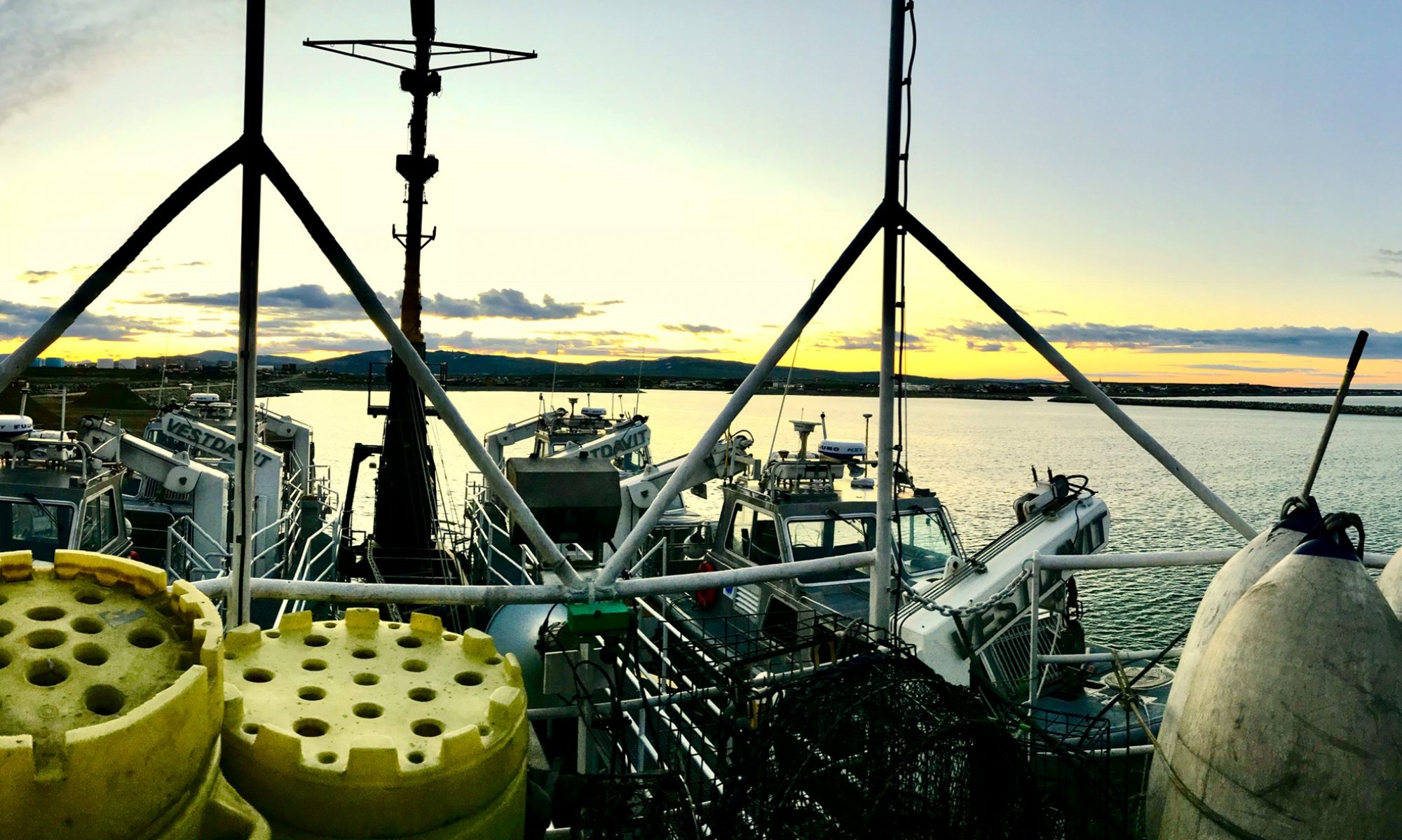
Hello and welcome! My name is Guy (Clark) Sturdevant from Northwest High School in Wichita, KS. You join me as I make final preparations for my two-day journey to Dutch Harbor, Alaska. Once there, I will board the Oscar Dyson and join an amazing science team and crew for a month-long leg of the biennial Eastern Bering Sea Pollock Survey.
As I prepare for this incredible opportunity, I find myself reflecting on the amazing science educators and communicators that helped define my relationship with science. From Mr. Patton’s sixth grade life science class through graduate studies in the department of Geology at the University of Kansas, the passion, character, and enthusiasm of my mentors and teachers was infectious. In my seven years in the classroom, I have worked to immerse my students in the hands-on practice of science. NOAA’s Teacher at Sea Program will be another amazing opportunity for me to learn from world-class scientists and technicians in hopes of bringing the exciting world of marine science into my high school classroom.
Check in here for regular updates from the Bering Sea!
Science and Technology Log
Next Monday, I will board NOAA Ship Oscar Dyson in Dutch Harbor, Alaska. The Oscar Dyson is a 208 ft. purpose-built research vessel which hosts the Midwater Assessment & Conservation Engineering (MACE) team for the Summer Pollock Survey. The full survey spans nearly three months and hundreds of nautical miles of the Bering Sea and the Gulf of Alaska.
NOAA Ship Oscar Dyson. Photo credit: Ensign Haley Glos (Photo from @NOAAShipOscarDyson Facebook account)
Did You Know?
The Oscar Dyson is named in honor of a fisherman and sustainable fisheries advocate, Oscar Dyson.
A photo of Oscar can be found hanging in the galley aboard his namesake.
Oscar’s fame, however, is eclipsed by his wife, Peggy. Peggy Dyson acted as the “Voice of the North Pacific”, broadcasting out marine weather forecasts as WBH-29 twice daily for over 30 years. Her voice served fishing communities in the North Pacific, providing valuable information and a familiar voice across the vast span of the open ocean.
Peggy Dyson christening NOAA Ship Oscar Dyson. Photo credit: Ray Broussard.
Mission: 2023 Summer Acoustic-Trawl Survey of Walleye Pollock in the Gulf of Alaska Geographic Area of Cruise: Islands of Four Mountains area, Western Gulf of Alaska Location (in transit, location recorded on June 12 at 2PM (Alaska Time)): 56o 45.1227′ N, 155o 38.3353′ W
Data from 2PM (Alaska Time), June 12, 2023 Air Temperature: 7.72 oC Water Temperature (mid-hull): 6.8oC Wind Speed: 18.71 knots Wind Direction: 201.27 degrees Course Over Ground (COG): 207.53 degrees Speed Over Ground (SOG): 11.46 knots
Date: June 13, 2023
NOAA Ship Oscar Dyson as it docked in Kodiak, Alaska, on February 6, 2022
The journey of NOAA Ship Oscar Dyson begins as we are underway from Kodiak Island and head out along the Aleutian Islands.
Every NOAA ship has a name – but who is behind the name? I dedicate this blog post to Oscar Dyson (both Oscar Dysons, actually!)
Launched in 2003 and commissioned in 2005, the ship is named after Alaskan fisherman Oscar Dyson, a pioneer in Alaska’s fishing industry for half a century before his death in 1995. A well-known fishing activist and an industry advisor to government, Dyson was dedicated to improving the industry for the many Alaskans who make their living at sea. The ship is homeported in Kodiak, Alaska.
Peggy Dyson, wife of Oscar, christened the ship at its launch on October 17, 2003, in the VT Halter Marine shipyard in Moss Point, Mississippi. The first commanding officer was Commander Frank Wood.
Oscar Dyson (and Peggy!)
Oscar Dyson made an impact in Kodiak and across Alaska. I found a transcript of a Congressional Record read in 1995 less than two weeks after his passing with a detailed biography. There is a scholarship named for Oscar and his wife Peggy managed by the University of Alaska Fairbanks with a description I found online in 2022 that reads:
Oscar Dyson was a dedicated fisherman who turned his hobby into a business and his life’s work for 50 years. A Kodiak resident, Oscar had ample opportunity to partake in Alaska’s expansive fishing opportunities, but he also pioneered the crab fishing industry in Alaska. Oscar co-founded All Alaskan Seafoods (one of the largest seafood processing companies in the state) and built military bases during World War II …. The Oscar Dyson Memorial Scholarship was created in his honor and funded by numerous fishing and seafood companies within Alaska — a fitting homage to a man who did so much to develop Alaska’s marine economy. Oscar thought of himself — first, last and always — as a fisherman.
There is a dock in Kodiak named after Oscar Dyson with a marker to note his contributions and achievements (*photos taken by me as I spent some time exploring Kodiak in 2022)
Entrance sign for Oscar’s Dock
View of the dock
Memorial plaque for Oscar Dyson
View beyond Oscar’s Dock
And I’d like to give a shout-out to his wife Peggy, who made significant contributions of her own to the fishing community. Between 1965 and 2000, Peggy Dyson broadcast the marine weather from her house in Kodiak, twice a day over single sideband radio. She also reported sports scores and election results! The Kodiak Maritime Museum has a wonderful description of Peggy, including an audio clip of her voice, on their webpage, Peggy Dyson, Voice of the North Pacific. And NOAA Ship Oscar Dyson has a launch named Peggy D!
The launch Peggy D on NOAA Ship Oscar Dyson
NOAA Ship Oscar Dyson
The NOAA Oscar Dyson pulled into the Port yesterday. Homeported in Kodiak, Alaska, Oscar Dyson is the first in a class of ultra-quiet fisheries survey vessels built to collect data on fish populations, conduct marine mammal and seabird surveys, and study marine ecosystems. pic.twitter.com/zZ2gGzuYvd
NOAA Ship Oscar Dyson plays a major role in collecting data used in the management of Alaska pollock, one of the world’s largest commercial fisheries. At 208-feet in length with a cruising speed of 12 knots and an endurance of 40 days at sea, Oscar Dyson can support 24 crew and 15 scientists (*see additional Specifications). The six onboard laboratory spaces include: a wet lab, dry lab, electronics/computer lab, bio lab, acoustics lab and hydrographics lab. Oscar Dyson sails primarily in the Gulf of Alaska and Bering Sea.
I look forward to sharing more information about the ship and stories from my time at sea. But I don’t want to repeat the incredible work done by educators that sailed before me. Here are some excellent recent blog posts by other educators that have sailed on Oscar Dyson that describes everything from the facilities to the work involved on a fisheries survey:
View of NOAA Ship Oscar Dyson just as she docked in Kodiak, Alaska, on February 6, 2022
Old Ships, New Ships
The first NOAA ship I sailed on, Thomas Jefferson, started its life as US Naval Ship Littlehales. From January 1992 to January 2003, Littlehales recorded 85,018 hydrographic survey miles along the coast of Africa and in the Red Sea and Mediterranean Sea. Littlehales ended its time with the Navy and then renamed Thomas Jefferson and officially entered the NOAA fleet on July 8, 2003 (*see About Thomas Jefferson which also explains why the ship was named after the former U.S. president).
Oscar Dyson was new construction, the first of four planned 208-foot NOAA fisheries survey vessels.
In my first post, I mentioned how I’m reflecting upon this year being the 150+-year celebration of H.M.S. Challengerexpedition. Launched in 1858, Challenger was a small warship with cannons assigned to coastal patrols and to support larger ships in the British naval fleet, not built for a science expedition. Modifications to Challenger were funded by the British government through the navy to include laboratories and accommodations for six civilian scientists to join the 250 British Royal Navy sailors and officers for the 3+ year journey at sea. I could not find information on why the navy chose “Challenger” as the name of the ship – but this ship’s name was the inspiration for the NASA space shuttle, the lunar module on the Apollo 17 mission, the scientific ocean drilling vessel Glomar Challenger, and even Sir Author Conan Doyle is said to have named his recurring character Professor Challenger after this ship. (*information from Macdougall, 2019)