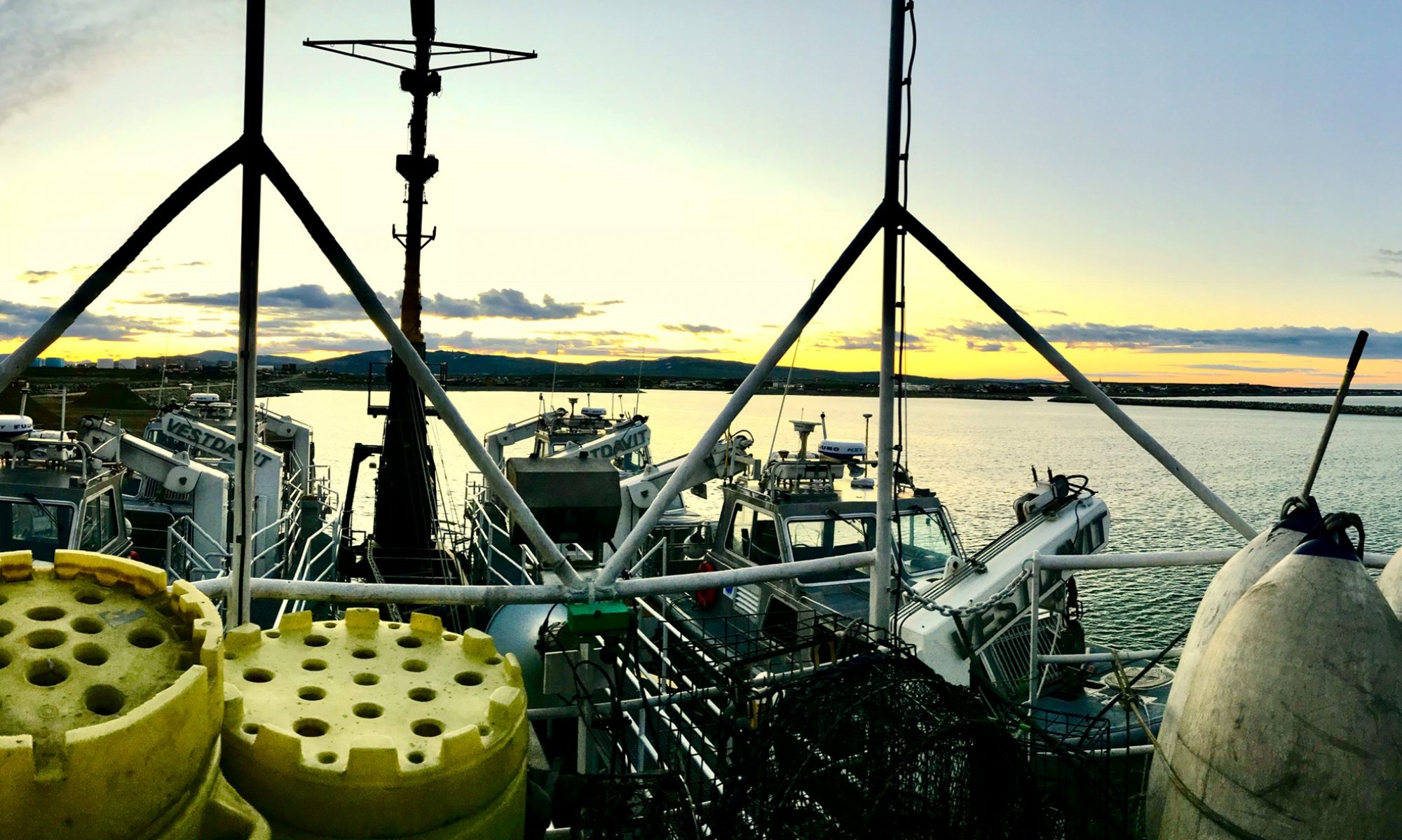
Sarah Boehm: Groundfish Survey Basics, June 25, 2013

NOAA Teacher at Sea
Sarah Boehm
Aboard NOAA Ship Oregon II
June 23 – July 7, 2013 

Mission: Summer Groundfish Survey
Geographic area of cruise: Gulf of Mexico
Date: June 25, 2013

Weather
Air temperature: 29.4 C (84.9 F)
Barometer: 1015 mb
Humidity: 71%
Wind direction: 55°
Wind speed: 7 knots
Water temp: 29.6 C
Latitude: 27.99°
Longitude: 92.99°

Science and Technology Log

Greetings from the Oregon II in the middle of the Gulf of Mexico. I am very impressed by all the questions my students have asked in comments on the first blog post. Now I guess I need to start answering some of them.

Oregon II
The Oregon II at the pier in Galveston. To answer Taina’s question, it is 170 feet long.


The Oregon II left the port of Galveston, Texas on Sunday afternoon. As we worked our way out to open water I enjoyed watching the pelicans, terns and frigate birds soaring and diving for fish. Occasionally a few dolphins would surface briefly, only to disappear again under the water. The shipping channels were packed with large ships, mostly oil tankers servicing the rigs that dot the Gulf of Mexico in this region. The farther we got from land, the less busy our surroundings became. With only a few boats and rigs on the horizon, the full moon rose in front of us as we cruised to the southeast.  You can follow the path the ship takes on NOAA’s Ship Tracker.

P1010756
The Oregon II dwarfed by a cruise ship in the port of Galveston.
terns
Terns visiting the ship as we leave Galveston.

We didn’t reach the first sampling site until nearly midnight. The ship functions on a 24 hour working cycle with the science crew broken into two shifts: the night shift works from midnight to noon and the day shift works from noon to midnight.   I am on the day shift, along with 2 scientists from the lab at Pascagoula, Mississippi and 2 student interns.

There are many different aspects to the fisheries research taking place on board. On my first shift yesterday I concentrated on the sorting and measuring of fish, so that is where I will start in this blog.

net
A net being pulled out of the water.

The net is dragged across the ocean floor behind the ship for a half hour, and then pulled up on board, bulging with fish. The net is emptied into buckets and the total catch is weighed. If it is a small catch we keep the whole thing to work up, but if the catch is large we keep some and throw the rest back in the water. The ones we will work with are emptied into the trough in the wet lab – a multicolored heap of writhing, slimy fish just waiting to be sorted. While the rolling of the ship didn’t bother my stomach, when faced with all those smelly fish I suddenly felt rather nauseous. I had a moment of doubt that I could really handle this work 12 hours a day for two weeks. But once I dipped my hands in and concentrated on sorting out the species my stomach settled.

sorting fish
Caitlin begins the sorting process.

While this seems a simple task, many species are similar in appearance. Looking carefully at shapes of jaws or the placement of spots, we sort them out with one species per container. Last night we had 40 – 60 different species in each trawl, with fish, crabs, shrimp, jellies and more. Once everything is sorted we count the number of individuals in each species and measure their total weight. All this information goes into the computer. The next step is to measure the individuals. There are two work stations for this step, each with a measuring board, a scale and a computer. We work in partners, with one person handling the fish and the other manning the computer. The measuring board is a fancy piece of technology that is attached to the computer. You line the specimen up and simply touch a magnetic stick to the board at the end of the fish. The computer then records the length in millimeters. Next you put the fish on the scale to record its weight. Like the measuring board, the scale is attached to the computer and it records in kilograms out to the thousandths place value. Then you determine if the fish is a male or female or “unknown”. We will bag, label, and freeze a few specimens if a scientist back at the lab has requested it, and then the rest of the catch is tossed back into the sea. By the time we finish all this, the ship has probably reached the next trawl site and the process begins again.

measuring shrimp
Measuring the length of a brown shrimp.

Nick asked about the largest fish we have found. Yesterday’s weight winner was this 5 kg red snapper.

red snapper
This red snapper was the largest fish of the first day.

The weirdest fish we found was a spotted batfish. It uses those odd fins to walk on the bottom of the sea. Its brown bumpy skin camouflages with the bottom. Suspended off its head is a fishing lure to attract prey.

spotted batfish
Spotted Batfish
Atlantic Sharpnose Shark

Kevin wanted to know if we would see any sharks. We have caught a few small ones, and have seen a few larger ones off the stern (back) of the boat.

Personal Log

Jaelene asked if it would be cold, and the simple answer to that is no, not on the Gulf in summer. When I stepped out of the airport in Texas I was immediately hit by the hot, humid air. We have had a mild spring in Massachusetts – which is a blessing since most schools do not have air conditioning – and so the intensity of the sun, the heat and humidity combined to make me rather uncomfortable as I explored the port city of Galveston. Now that we are out on the water a constant breeze helps make things more comfortable…as does the air conditioning in the living quarters of the ship. The wet lab is not air conditioned, so all the fish work is rather hot and sticky.

Guillermo, Michelle and Doranny all asked about my room on board. It is a rather small space I share with Junior Officer Rachel Pryor. We each have a bunk and storage space. The room also has a sink and a chair. Rachel works a 4 hour shift early each morning and another 4 hour shift in the evening. This means when I finish work she is already asleep, but will be getting up for work in just a few hours. So being quiet and considerate of the other person is important. The curtain you can pull across your bunk is helpful to keep out light and provide privacy. Our room does not have a window, so it is dark all the time. This is helpful when people need to sleep at odd hours. It is also surprisingly quiet – or maybe a better way to describe it is that the constant background noise of the engines drowns out other noises. I have been sleeping great, even with the rocking and rolling of the ship. Kiara asked about falling out of bed, and that has not happened to me yet. I suppose it could if seas got really rough. I hope not to experience that.

stateroom
My stateroom. The bottom bunk is mine.

CDCPS science students – Remember you should be reading and responding to two different blog posts (two responses to the same post is not enough). Also please re-read your writing to make sure it makes sense and has correct spelling, punctuation and capitalization.

Why do you think sharks hang out around our boat?

Can you read this clock? What time is it?

ship clock
A clock on board. Can you tell the time?

Sarah Boehm: Preparing for Sea, June 9, 2013

NOAA Teacher at Sea
Sarah Boehm
Aboard NOAA ship Oregon II
June 23 — July 7, 2013

Mission: Summer Groundfish Survey
Geographic area of cruise: Gulf of Mexico
Date: June 9, 2013

Personal Log

Summer vacation is right around the corner – just one more week of school! Students and teachers alike are busy wrapping up the school year and dreaming of that long, delicious vacation. While summer is a vacation from the classroom, it is hardly a vacation from learning. That learning may look a whole lot different than the school year; it takes place at summer camp, your grandmother’s kitchen, or even the beach. This summer I have the fabulous opportunity to join scientists aboard the NOAA research ship Oregon II as they conduct surveys of the fish in the Gulf of Mexico. I am excited to learn more about this ecosystem and the organisms that live there. I am equally excited to participate in real scientific research and to learn more about how scientists gather and use information. That’s right – even teachers have new things to learn.

Kayaking Pictured Rocks
Last summer’s learning adventure: kayaking at Pictured Rocks National Lakeshore.

Last summer my travels took me to the Great Lakes region where I camped, hiked, and explored. In the process I learned about the ecology and geology of the region (and swam in each of the Great Lakes). I also spent two weeks working on an organic farm, learning how to take care of vegetables and animals.

Checking on the bees
Last summer’s learning adventure: checking on the bee hive at Three Roods Farm
wolf track
Last summer’s learning adventure: hiking with wolves on Isle Royale

I discovered my love of teaching while working as an outdoor environmental educator, leading school groups on field trips to explore forests, ponds, and beach habitats. Kids are natural scientists out in the field, full of curiosity, with an ability to see things adults often miss, and a willingness to jump in and get their hands dirty. I made the transition into classroom teaching, bringing with me elements of that hands-on learning. I started out teaching 4th grade in Guilford, Vermont and then Brunswick, Maine. I currently teach at Community Day Charter Public School in Lawrence, Massachusetts and am thrilled to be the 4th – 6th grade science teacher. I also lead our Adventure Club, taking 6th – 8th grade students out hiking and camping in the nearby forests, mountains and coastlines. One of my goals is to make science more “real” for students by incorporating actual research into lessons and encouraging their own inquiry and exploration.  I am hoping my time with the Teacher at Sea program will give me new tools, knowledge, and inspiration to bring back to my students.

While on board the Oregon II I will be assisting the scientists as they gather data about the organisms and water quality of the Gulf. Their tools will be more sophisticated and the body of water larger, but I imagine it is much like one of my favorite science lessons – pond scooping. Just last week I had my 4th graders out exploring a pond habitat. As we approached the pond they all noticed the bigger animals like the birds calling overhead and the frogs along the pond’s edge. But hidden underneath the water is a whole other world rarely seen. With nets and buckets we set out to explore, finding salamander larvae, tadpoles, water beetles, caddisfly larvae, isopods, copepods, snails and so much more. The ocean is much the same; we are drawn to the organisms easily seen like the shells on the beach or playful dolphins. But hidden out there beneath the waves are all sorts of living things, each with an intriguing story and an important role in the ecosystem. So in two weeks I will be standing on the deck of the ship, with nets and buckets, alongside a team of knowledgeable scientists and crew, ready to learn all about the ocean ecosystem.

Pond Scooping
Scooping in the pond on a 4th grade field trip.

CDCPS science students:

Can you name the 5 states and 2 countries that border the Gulf of Mexico?

What questions do you have about living on a research ship?

Patty McGinnis: Fishing for Science, May 16, 2013

NOAA Teacher at Sea
Patty McGinnis
Aboard R/V Ocean Starr
May 20 – 29, 2013

Mission: Juvenile Rockfish Survey
Geographical Area of Cruise: Pacific Coast
Date: May 9, 2013

Personal Log

Hi everyone! I’m thrilled to have been selected for this opportunity of a lifetime! As a NOAA Teacher at Sea, I’m looking forward to learning about the oceans and to sharing that knowledge with you. I’ll be aboard R/V Ocean Star assisting scientists with their work in conducting a Juvenile Rockfish Survey. You can learn more about this important scientific work by clicking here. In my reading, I have found out that there are many species of rockfish, all of which are a commercially valuable groundfish. Since fisheries are a renewable resource, keeping track of the rockfish population is important for managing it wisely. This will involve trawling at night and then analyzing the catch–as my adventure unfolds I will be able to provide you with more details.

I currently work as a gifted support specialist at Arcola Intermediate School in Eagleville, Pennsylvania. I have also taught science (mostly biology) for over 20 years. My favorite part of teaching is watching a student’s face light up with excitement over a new idea. I’m passionate about my work–especially when it involves educating students about ecology and the role man plays in protecting natural resources. I also enjoy traveling and learning about how local people utilize the land–last summer I had an opportunity to go to Kenya. In the picture I am listening to a transmitter that is picking up signals from a radio-collared lion.

I know my experience as a Teacher at Sea will help me to better understand the type of work that a fishery biologist conducts and that I’ll also gain insight into the various careers that are necessary for supporting this research. I’ll be posting to this blog as often as I can–I hope you follow along!

Here I am listening for lions

Carmen Andrews: News from Somewhere in the Atlantic Ocean off the Coast of Georgia, July 9, 2012

NOAA Teacher at Sea
Carmen Andrews
Aboard R/V Savannah
July 7 – July 18, 2012

Mission: SEFIS Reef Fish Survey
Geographical Location: Atlantic Ocean, off the coasts of Georgia and Florida
Date: July 9, 2012

Location Data:
Latitude: 30 ° 54.55’   N
Longitude: 80 ° 37.36’  W       

Weather Data:
Air Temperature: 28.5°C (approx. 84°F)
Wind Speed: 6 knots
Wind Direction: from SW
Surface Water Temperature: 28.16 °C (approx. 83°F)
Weather conditions: Sunny and fair

Science and Technology Log

Purpose of the research cruise and background information

The Research Vessel, or R/V Savannah is currently sampling several species of fish that live in the bottom or benthic habitats off the coasts of Georgia and Florida.

Reef fish study area
The coastal zone of Georgia and Florida and the Atlantic Ocean area where the R/V Savannah is currently surveying reef fish

These important reef habitats are a series of rocky areas that are referred to as hard bottom or “live” bottom areas by marine scientists. The reef area includes ledges or cliff-like formations that occur near the continental shelf of the southeast coast. They are called ‘reefs’ because of their topography – not because they are formed by large coral colonies, as in warmer waters. These zones can be envisioned as strings of rocky undersea islands that lie between softer areas of silt and sand. They are highly productive areas that are rich in marine organism diversity. Several species of snapper, grouper, sea bass, porgy, as well as moray eels, and other fish inhabit this hard benthic habitat.

Reef fish
Hard bottom of reef habitat, showing benthic fish — black sea bass is on left and gray trigger fish is on right side of image.

It is also home to many invertebrate species of coral, bryozoans, echinoderms, arthropods and mollusks.

Bottom organisms pulled up with fish traps
Bottom-dwelling organisms, pulled up with fish traps deployed in the reef zone.

The rock material, or substrate of the sea bottom, is thought to be limestone — similar to that found in most of Florida. There are places where ancient rivers once flowed to a more distant ocean shoreline than now. Scientists think that these are remnants of old coastlines that are now submerged beneath the Atlantic Ocean. Researchers still have much to discover about this little known ocean region that lies so close to where so many people live and work.

The biological research of this voyage focuses primarily on two kinds of popular fish – snappers and groupers. These are generic terms for a number of species that are sought by commercial and sports fishing interests. The two varieties of fish are so popular with consumers who purchase them in supermarkets, fish markets and restaurants, that their populations may be in decline.

Red snapper close up
Red snapper in its reef habitat

At this time, all red snapper fishing is banned in the southeast Atlantic fishery because the fish populations, also known as stocks, are so low.

How the fish are collected for study

The fish are caught in wire chevron traps. Six baited traps are dropped, one by one from the stern of the R/V Savannah. The traps are laid in water depths ranging from 40 to 250 feet in designated reef areas. Each trap is equipped with a high definition underwater video camera to monitor and record the comings and goings of fish around and within the traps, as well as a second camera that records the adjacent habitat.

Chevron fish trap
Fish swimming in and out of a chevron fish trap

I will provide the details of the fish trapping and data capture methods in a future blog.

Who is doing the research?

When not at sea, the R/V Savannah is docked at the Skidaway Institute of Oceanography (SKIO)on Skidaway Island, south of Savannah, Georgia. The institute is part of the University of Georgia. The SKIO complex is also the headquarters of the Gray’s Reef National Marine Sanctuary. The facility there has a small aquarium and the regional NOAA office.

The fisheries research being done on this cruise is a cooperative effort between federal and state agencies. The reef fish survey is one of several that are done annually as part of SEFIS, the Southeast Fisheries Independent Survey. The people who work to conduct this survey are located in Beaufort, North Carolina. SEFIS is part of NOAA.

The other members of the research team are from MARMAP, the Marine Research Monitoring Assessment and Prediction agency, which is part of the South Carolina Department of Natural Resources . This team is from Charleston, South Carolina.

Carmen, suited up to retrieve fish from traps
Mrs. Andrews, on deck near the stern of the R/V Savannah, getting ready to unload fish traps

NOAA also allows “civilians” like me — one of the Teachers at Sea– as well as university undergraduate and graduate students to actively participate in this research.

Andrea Schmuttermair: Back On Solid Ground, July 7, 2012

NOAA Teacher at Sea
Andrea Schmuttermair
Aboard NOAA Ship Oregon II
June 22 – July 3

Mission: Groundfish Survey
Geographical area of cruise: Gulf of Mexico
Date: July 7, 2012

Personal Log

As I write this final post, I sit at a cafe looking out at the Pacific Ocean. A cool ocean breeze kisses my face, and the smell of the salty sea air fills my nostrils. Different from the damp air and blazing sun that inhabit the Gulf of Mexico, yet the ocean all the same. I know I am in my element, and will soak in as much ocean as possible before heading back to land-locked Colorado.

I have spent a lot of time this past week thinking about my trip on the Oregon II, at sea with people passionate about the work they do. I can’t help but think how lucky I am to have had this amazing, once in a lifetime opportunity (although I am certain I will do this again) to not only participate in real-life science, but to be able to share this experience with my students.

scientists in the galley
A few of us scientists hanging out in the galley.

I have spent some time talking about the scientists that were on board with me on the Oregon II, and I must say that my experience would not have been the same had it not been for these people I worked so closely with. When traveling, it is not only important to see the sights and soak in the culture, but to also get to know the locals. Hear their story. Spend time with them. Listen to them. I placed as much importance on getting to know some of the scientists and crew on board as I did the work that we were doing. In that, I know I have made lasting relationships.

night shift
Our night shift team: Me, Alonzo, Lindsey, Alex, and Renee.
all scientists
All the scientists on the Oregon II

The more I talk to my friends and family and fellow teachers back at home, I am realizing that working on a ship is not for everyone. In fact, it takes a special person to spend a good portion of their years on a ship, away from friends and family, up to their elbows (quite literally) in fish. The adventurous side of me absolutely loved this, and hopes to do it again in the future. Alonzo, my watch leader, says I am welcome back any time. Well, Alonzo, I may just take you up on that one of these days.

Towards the end of my cruise, I had the opportunity to interview one of the junior NOAA Corps officers on board the Oregon II, ENS Junie Cassone. In her interview, she talks about life in the NOAA Corps and how one can become a NOAA Corps officer.

Watch the interview with ENS Cassone here: Interview with ENS Cassone.

My final post would not be complete without a few last critter pics, as I’ve started naming my ever-growing file. Here are some of my favorite critters from our last few trawls.

hermit crab
One cute little hermit crab!
seahorse
A seahorse we found amongst the Sargassum.
bashful crab 2
A flame-streaked box crab (Calappa flammea)- my new favorite of the bashful, or shameful, crabs
lion fish
Alex showing off one of his lionfish

To wrap up, I’d like to post one final Critter Query. When we brought up out trawls, I noticed some fish had this red bulge coming out of their mouths. I had never seen this before, and inquired what it was. Do you know what it is and what causes it?

fish
What is the red bulge coming out of the mouth of this fish and what is the cause of it?