NOAA TEACHER AT SEA CATHRINE PRENOT FOX ONBOARD NOAA SHIP OSCAR DYSON JULY 24 – AUGUST 14, 2011
Personal Log
Why cartooning? It all began with letters my dad sent me when I was away from home as a kid. The star of the letters was an elephant named Ima. She was curious, intelligent, hilarious, and had a penchant for peanuts, jelly beans and painted toenails. From age 9 to ~20, Ima made her cameo appearance via the USPS. Girl scout camp, Europe, summer trips and finally to college–Ima came along in a series of adventures marked by jelly bean shortages.
Eventually, my dad’s letters morphed into more “adult” humor, but I had a little sister still at home, and I started to write to her in cartoon form. My family and friends found out that my sister was receiving cartoons and demanded photocopies. “Adventures with Cat” was born.
This summer’s cartoon series is titled “Adventures in a Blue World,” a nod to Sylvia Earle’s The World is Blue: How Our Fate and the Ocean’s Are One. (If you don’t know who this amazing woman is, I encourage you to take 18 minutes and 16 seconds and watch her acceptance speech for the prestigious TEDprize: http://www.tedprize.org/sylvia-earle/). My goal with this cartoon series is to make science more accessible, instill a curiosity about the ocean world, and provide fodder for all of the other “knowledge junkies” out there in the world, like myself.
Issue 1: Walleye Pollock Survey? What is Walleye Pollock?
Adventures in a Blue World, Issue 10
I am working out the kinks of size and format to make the cartoons readable. You should be able to click on the cartoon and it will open in a separate window. Let me know if this doesn’t work and you can’t read it still!
NOAA TEACHER AT SEA JASON MOELLER ONBOARD NOAA SHIP OSCAR DYSON JUNE 11 – JUNE 30, 2011
NOAA Teacher at Sea: Jason Moeller Ship: Oscar Dyson Mission: Walleye Pollock Survey Geographic Location: Gulf of Alaska Dates: June 19-20, 2011
Ship Data
Latitude: 54.29 N
Longitude: -165.13 W
Wind: 12.31 knots
Surface Water Temperature: 5.5 degrees Celsius
Air Temperature: 6.1 degrees Celsius
Humidity: 97%
Depth: 140.99 meters
Personal Log
Welcome aboard, explorers!
To be honest, there is not a great deal to write about for the personal log. My daily schedule has settled in quite nicely! I get off work at 4 in the morning, shower, sleep until 2:30 in the afternoon, and then head down to the acoustics room where we track the fish. When we are processing a catch (see the science and technology section of this blog), I am in the fish lab wearing bright orange waterproof clothes that make me resemble a traffic cone.
Jason in fishing gear.
The rest of the time is down time, which is spent reading, working on the blog, learning about the ship, and dreaming up lesson plans that I can use to torment my students. I hope they are interested in a summer fishing trip, as that is the one I am currently planning.
Most of the blog work involves running around and taking photographs. My wife’s camera was soaked beyond repair during the prank that was pulled (see the previous post) as Sarah was holding the camera when the wave came over the railing. Fortunately, there was another camera on board.
Our survey is keeping us very close to the coast and islands of Alaska. As a result, I’ve gotten some gorgeous photos. This place is just beautiful.
An island shrouded by clouds.A waterfall falls off into the ocean.Jason in front of an island. It was a bit windy, but at least it was sunny!Mountaintops visible just above the island coast. Jake took this photo while I was in the fish lab.Sunset over Alaskan waters.
Science and Technology Log
Walleye Pollock waiting to be processed
We finally started fishing! As I mentioned in my very first blog, the Oscar Dyson is surveying walleye pollock, which is an important fish species here in Alaska. Walleye pollock make up 56.3% of the groundfish catch in Alaska, and is eaten in fast food restaurants around the world such as Wendy’s, McDonalds, and Burger King. It is also used to make imitation crabmeat.
Our first catch had a little over 300 walleye pollock, and we processed all of them. Three hundred is an ideal sample size for this species. If, for example, we had caught 2,000 pollock, we would only have processed 300 of the fish, and we would have released the rest of them back into the ocean.
The photo captions below will provide a tour of the fish lab as well as introduce blog readers to the data we wish to collect and how scientists aboard the Oscar Dyson collect it.
This is the conveyor belt. After the catch is pulled on board, it is loaded onto this conveyor belt and moved down the belt and into the lab. At this point, the scientists separate the pollock from the rest of the sea life that was accidentally in the net. Today, the majority of the "extra" sea life were brittle stars, sponges, and a few squid.Once the pollock and other sea life are separated, they are moved to this box to be sexed. In order to do this, we would have to cut the fish open and look at the internal organs of the fish. Once this was done, females would go over the yellow sign on the right and into the box that was hidden behind it. The males went into the box on the left.Once we had determined the pollock's gender, we moved to the measuring station, which was on the other side of the last station. We laid each individual fish on the table on top of the ruler, and then measured the fish from the head to the fork of its tail. We recorded the length by tapping the table at the fork of the fish's tail with a sensor that we carried in our hand. A sensor in the table recorded the data and sent it to the computer monitor seen above the table.Jason measures a pollock on the board!
From this catch (we will do this for any following catch as well) we also took and preserved twenty stomachs from random fish. This was done in order to later analyze what the pollock had eaten before they died. We also took forty otoliths from random pollock as well. An otolith is the ear bone of the pollock, and it is incredibly important to researchers as they will tell the pollock’s age in a similar manner to the way a tree’s rings will.
This is a pollock otolith!After removing the otolith from the fish, they were put into these vials. Each pair of otoliths received their own vial.
While looking at pollock is the main focus of the survey, we did run into some other neat critters in this haul as well!
This is an Atka Mackerel. We also caught a salmon, but I didn't get a good look at it. Our kitchen grabbed it!
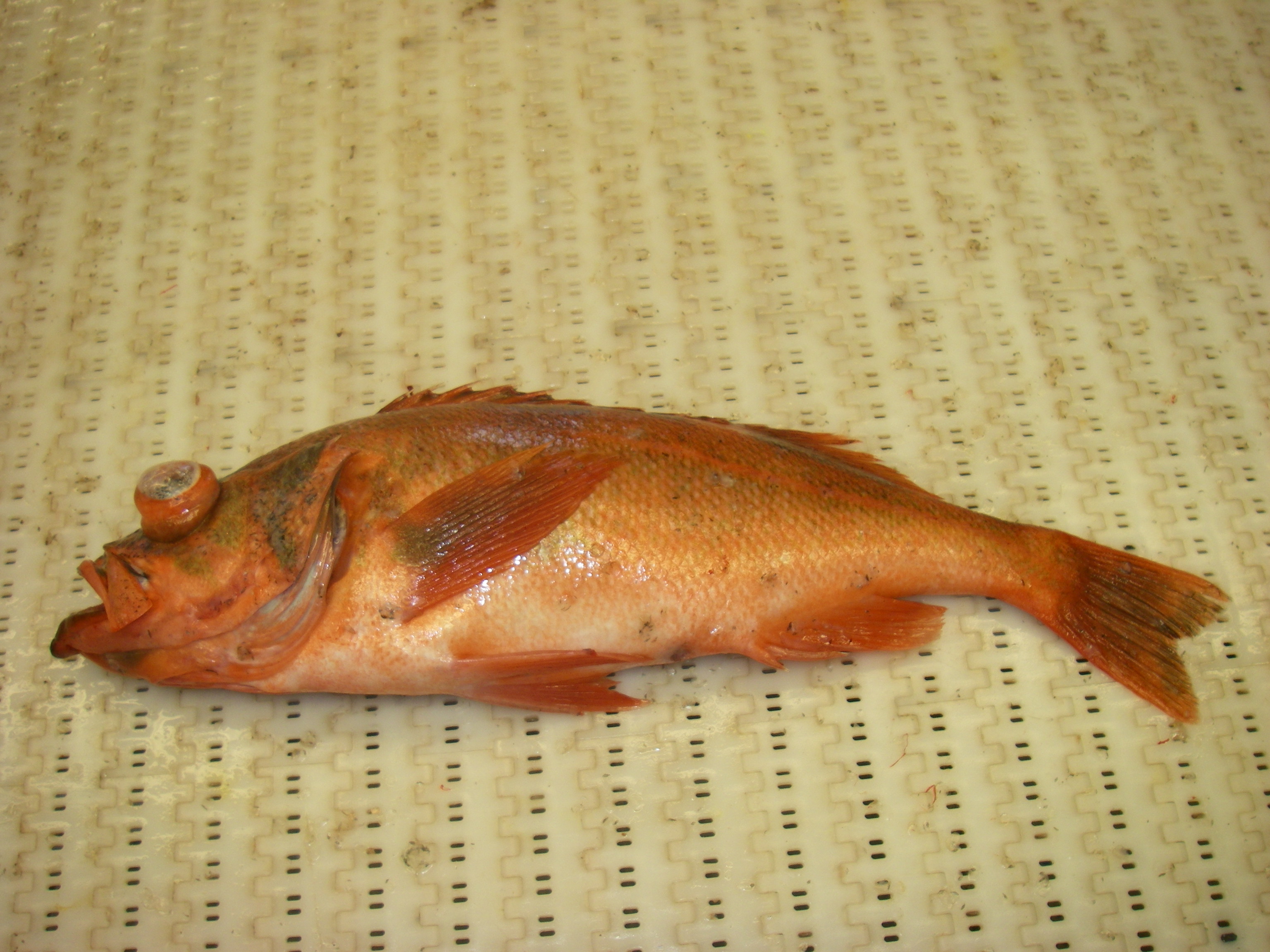
This is a basket starfish. We were trawling close to the bottom and pulled it up in the nets.This is a lumpsucker! They spend their lives on the bottom where they eat slow-moving animals such as worms and mollusks.This is an arrowtooth flounder. These are not very good eating fish, and are not the flounder found in the supermarket. Check out the nasty teeth in the photo below this one!I wouldn't want to be bitten by this fish!Finally, this is a rockfish! The red snapper that we see in the marketplace is often this fish instead.
Today’s question is actually a request. It comes from Tish Neilson, one of our homeschool parents.
Hey Jason –
I had a super favor to ask of you. There is a little girl from Jackson’s school that is a 5th grader and she was recently diagnosed with leukemia. There have been some bracelets created for her that say “Going Bananas for Anna” to show support and several moms and I have gotten together and are putting together a scrapbook for her and trying to get as many people as possible wearing her bracelets in really cool places. Then we are having them take pictures to send to us to put in her scrapbook so she can she how far her bracelets have traveled and how many people are pulling for her. If it’s possible to do so and you would be willing to do it I would LOVE to try and get you a bracelet to take some pictures and send to me from Alaska. Her nickname is Anna Banana and she is always asking for pictures and such so that is why we came up with this idea.
Tish Neilson
Unfortunately, I had left for Alaska before I received the email, and as a result I do not have a bracelet. Hopefully, a sign will work just as well.
Hi Anna! This is Unimak Island! It is one of the Aleutian Islands off the coast of Alaska! Hang in there, we are rooting for you!
NOAA TEACHER AT SEA JASON MOELLER ONBOARD NOAA SHIP OSCAR DYSON JUNE 11 – JUNE 30, 2011
NOAA Teacher at Sea: Jason Moeller Ship: Oscar Dyson Mission: Walleye Pollock Survey Geographic Location: Gulf of Alaska Dates: June 13-14, 2011
Personal Log
Welcome back explorers!
June 13th
A view of the dock as we finally leave!
We are finally underway! The weather cleared up on the 12th, so the rest of our scientific party was finally able to make it in from Anchorage. The scientists did not arrive until later in the day, but at 9:00 in the morning, the Oscar Dyson finally left port in order to run some tests, including a practice cast of the fishing net!
An island in Kodiak Harbor. Kodiak is hidden by the island in this photograph.Open ocean, straight ahead!Casting the net was a tricky process that took about 30-45 minutes. (I did not time the process.) The casting started by unhooking the edge of the net from this giant spool. The net was wrapped tightly around this spool when not in use.Next, the net was hooked to the mechanism that would lower the net in the water. (The mechanism is the yellow object that looks like an upside-down field goal post)This is a photo of the net being hooked up to the casting mechanismOnce attached, the mechanism then pulled up on the net to start unwinding the net from the spool. Once the net was properly unwinding, the net was lowered into the water to begin fishing!
Once the tests were completed, we headed back towards the harbor to pick up the rest of the scientists. Once we were all on the vessel, we held a quick briefing on the ship rules. This was followed by a meeting among the scientists where shifts were handed out. I am on the 4 PM to 4 AM shift, also known as the night shift! Hopefully, I will see some northern lights during the few hours that we actually have darkness. After the meeting and a fast guided tour, I went to bed, as I was extremely seasick. Hopefully, that is a temporary issue.
June 14
I woke up to discover that the ship has anchored in a protected cove for the day in order to calibrate the acoustic devices on board that are used for fishing. This is a time consuming but necessary process as we will need the baseline data that the scientists receive by calibrating the device. However, that means that there is not much to do except for eating, sleeping, watching movies (we have over 1,000 aboard) and enjoying the beautiful scenery. As we are in a quiet cove with no waves, I am not currently sick and decided to enjoy the scenery.
The next four images are from the back of the ship. If printed, you can go from left to right and get a panoramic view.
I know the image is bad, but can you see the white blob in the middle of the water? That is a jellyfish!Here is a photograph from the side of the boat of a snow-capped mountain. Even though it is summer here, there is still quite a bit of snow.This is another image off the side of the boat. A waterfall falls off into the ocean.A closer shot of the waterfall. This place is just gorgeous!
Science and Technology
The Science and technology segment of the blog will be written at the start of the Walleye Pollock survey, which should begin in the next day or so.
Species Seen
Jellyfish!
Arctic Tern
Gulls
Reader Question(s) of the Day
I received a few questions from Kaci, who will be a TAS here in September!
1. What is the temperature here?
A. The temperature has been in the mid to upper 40s, so much cooler then back home in Knoxville, Tennessee, where we were getting 90 degree days! It’s actually been pleasant, and I have not been cold so far on this trip.
2. What did you bring?
A. The temperature affected what I brought in terms of clothing. I started with a weeks worth of shorts and t-shirts, which I stuffed in my check in bag, and then two days worth of clothes in my backpack just in case my checked bag didn’t get it. Our other TAS, Tammy, got stuck here with only the clothes on her back, so a backup set of clothes was necessary. In addition, I have several pairs of jeans, 2-3 sweatshirts, a heavy coat, and under armor to round out the clothing. The under armor and heavy coat have been great, it’s why I haven’t been cold. I also packed all of my toiletries (though I forgot shampoo and had to buy it here.
In terms of electronics, I have my iPod, computer, and my wife’s camera with me. (A special shout out to Olivia is in order here, thanks for letting me use the camera! I am being VERY careful with it!). I have a lot of batteries for the camera, which I have needed since I’ve already gone through a pair!
Just for fun, I brought my hockey goalie glove and ball to use in working out. We have weight rooms aboard the ship, which I will definitely need since the food is fantastic!
I hope that answers those questions, and I will answer more in the next post!
NOAA TEACHER AT SEA JASON MOELLER ONBOARD NOAA SHIP OSCAR DYSON JUNE 11 – JUNE 30, 2011
NOAA Teacher at Sea: Jason Moeller Ship: Oscar Dyson Mission: Walleye Pollock Survey Geographic Location: Gulf of Alaska Date: June 12th, 2011
Personal Log
Welcome back explorers!
Fog over Kodiak
Once again, I woke up this morning to a thick, heavy fog and drizzling rain that enveloped Kodiak like a wet, soggy blanket. While Tammy, who will be the other Teacher at Sea with me, was able to make it into Kodiak, the majority of our science party is still stuck in Anchorage, trying to get aboard a flight. Even though Tammy was able to make it in, her suitcase and clothes did not follow suit, and she was forced to make a Wal-mart run. The result of the weather has been a delay on the cruise, and we hope to set sail for equipment trials tomorrow.
As usual, I had a great day regardless of the rain. I started by helping our steward (cook) stock up on supplies for the ship’s galley. For 40 people on a 19 day cruise, we have $25,000 worth of food stashed away on board. It takes quite a bit of money to stock up a ship!
This is a photo of the river I explored weaving its way to the ocean.
After helping shop for the fresh produce, I had the rest of the day off, so I turned to my favorite Kodiak past time, and decided to embark on another bear photo hunt. In addition to bears, I was also on the lookout for salmon (I do not count eating salmon as seeing it) and bald eagles, both of which should be common. Today’s location was the same river that I explored on my first day, but I was much further south. My starting point was where the river met the ocean, and then I walked inland. I will let the photos and captions talk from this point on.
I turned left to explore the beach first. It is a black sand beach, the first I have ever seen.This photo is of the same beach, and better shows the fog cover we had today.While walking down the beach, I noticed a freshwater stream coming out of the woods and winding down to the ocean. I ducked under a pine tree at the edge of the beach and saw this waterfall.Another photo of the waterfall.The same waterfall, falling away towards the ocean.After I left the waterfall, I continued to walk down the beach, and just happened to look up at the right moment to capture this bald eagle, high above the trees. They are so common here that the eagles are jokingly called roaches of the north.I saw a total of 8 bald eagles, including this pair in the trees. The fog makes them a bit difficult to pick out.After exploring the beach, I headed upstream to look for salmon and bears. This is what the river looked like by the ocean.The path by the river was difficult, if it was there at all. Most of the time, I just trudged my way through it. There was not a dry spot on me by the time I finished the hike. It was worth it though.For the first half mile, the river was in a marshland, which the photo shows accurately. However, the marshland quickly gave way to pine forests, which can be seen in the next image.The river running through the woods.A photo of the woods running alongside of the river.In the end, I didn't see any bears or salmon in the river, and the vegetation became too thick to go on without a trail. As I was leaving, however, to head back to the ocean and catch my ride home, I ran across this piece of white lichen which contrasted with the darkened woods surrounding it. For me, the photo was worth the trip.
Science and Technology Log
The Science and Technology log will begin at the start of the Walleye Pollock survey.
Species Seen
Bald Eagles!!!
Arctic Tern
Gulls
Magpie
Reader Question(s) of the Day!
Reader questions of the day will start at the beginning of the Walleye Pollock survey! At the moment, I have not received any questions yet, so please send them in! I can take questions at jmoeller@knoxville-zoo.org.
NOAA TEACHER AT SEA JASON MOELLER ONBOARD NOAA SHIP OSCAR DYSON JUNE 11 – JUNE 30, 2011
NOAA Teacher at Sea: Jason Moeller Ship: Oscar Dyson Mission: Walleye Pollock Survey Geographic Location: Gulf of Alaska Date: June 11, 2011
Personal Log
Welcome back, explorers!
Kodiak, Alaska
Today was my official first day in Kodiak Alaska! Kodiak is a small city on Kodiak Island, which lies off the southern coast of Alaska. The city had a population of 6,653 people in 2009, and is likely growing due to its unique population of animals, including salmon, Kodiak bears, and bald eagles. The city’s main livelihood comes from the ocean, where halibut, pollock, several species of salmon, scallops, and crabs are pulled from the waters surrounding the island. A second source of income comes from tourism.
I woke up today to find the city covered in mist with rain steadily falling. This was bad news for several of our scientists and Tammy, the other teacher at sea on our trip, as they were unable to fly in from Anchorage due to the weather.
Jason's Stateroom on the Oscar Dyson
The weather, however, did not stop me from having an active day in the city. The first thing that I did was move onto the ship into my stateroom, where I will be sleeping during the research expedition. I was surprised at the size, as the room was larger than several college dorm rooms that I had seen.
Once I was moved in, I began to explore the ship. While I have not been given an official guided tour as of yet (that will happen when Tammy arrives), I was able to move around and find some of the rooms that I will be in frequently during the trip.
This is the sound/acoustic room, where we will look for the fish using sonar!This is the command deck of the Oscar Dyson. If I ask nicely, will they let me drive?The all important mess hall!Fred Zharoff Memorial Bridge
In talking with several individuals onboard, I found out that some of the best hiking in the area was within walking distance of the Oscar Dyson. Even better, hikers in this area occasionally saw bears. As I still wanted to see a bear in the wild, I immediately left for the bridge that would take me to another island right off the coast of Kodiak Island. I passed through town on the way.
After walking through town, I reached this bridge and crossed it.
This is the island that I was headed to.
After crossing the bridge, I came across the following park which had some stunning nature trails. I am going to let my photographs do the talking for this next part of the blog, as words do not do justice for the beauty of this place.
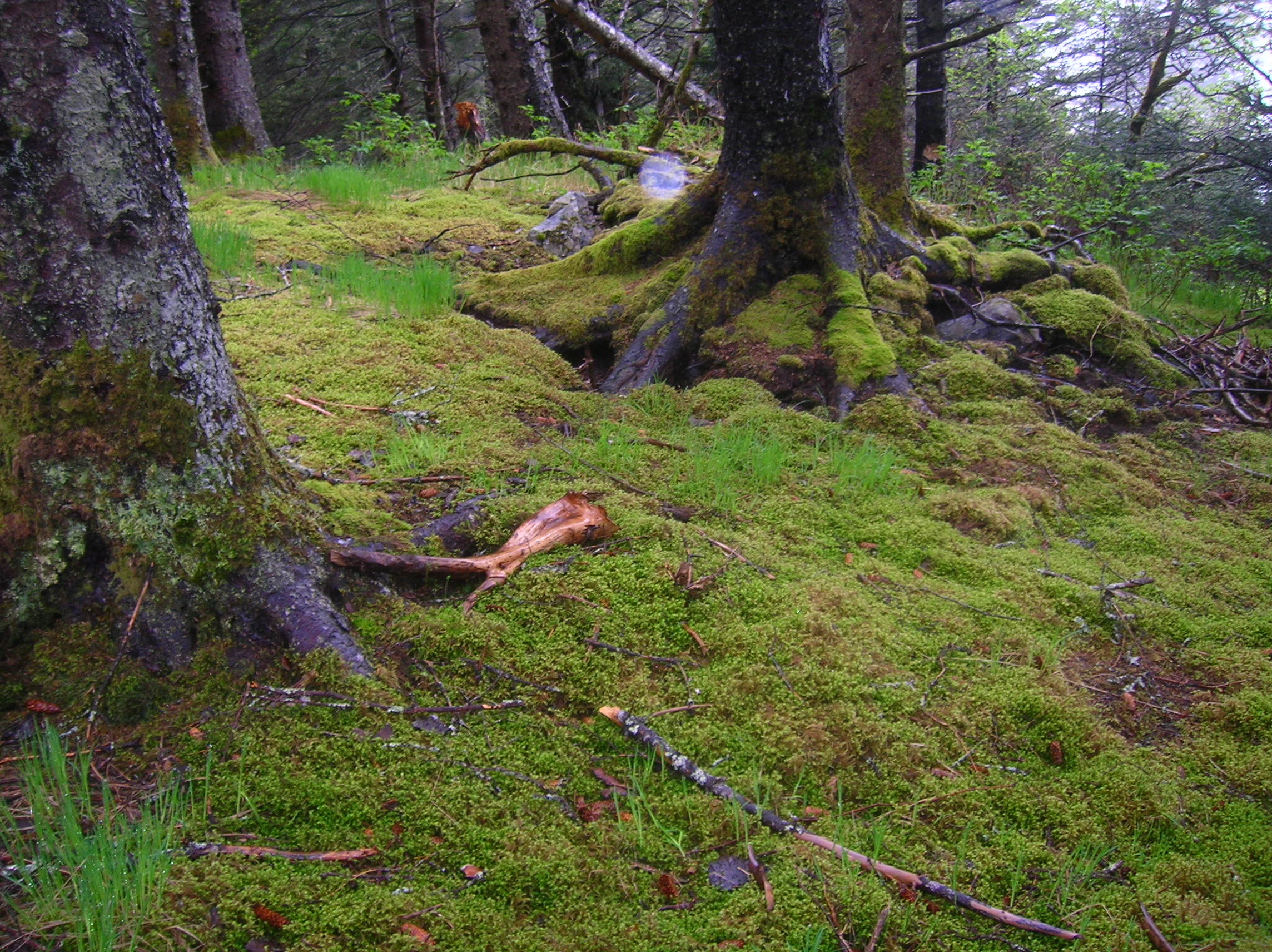
There were many of these thick bodied pines in the park.This image, as well as the next, shows the abundant moss in the woods. It carpeted the forest floor completely!
A nice view of the ocean from the trail.Another beautiful view of the ocean from the trail.Many of the low-lying bushes also had moss and lichens on them.One of the most common trees was the Pacific Red Elderberry. Elderberries are often used for making wines, and occasionally as the punchline in a joke.A few Elderberry trees!
Surprisingly, I did not see a great deal of wildlife, only seeing songbirds. I still have time to see a bear, but I did not spot one today and did not see any bear tracks. Deer tracks were in abundance but I did not see any deer on the pathways.
All in all, I was out hiking on the trails for over three hours, and was soaking wet when I got back.
After the hike and a change of clothes (it rained the entire time), I went out to dinner with a few of the ship’s engineers to a sushi/seafood restaurant. The salmon just melted in my mouth, I have never had salmon that fresh. I also had the opportunity to taste Alaskan king crab, and wish that I hadn’t. I am now addicted, and it is expensive at $47.00 a pound being the market price!
Science and Technology Log
The science and technology section of this blog will begin after the survey of the Walleye Pollock has been started.
Species Seen
Arctic Tern
Pacific Red Elderberry
Reader Question(s) of the Day!
The reader question(s) of the day will start after the survey of the walleye pollock begins. I will answer at least one question during each log, and hopefully will be answering more than one. Please submit your questions to me at jmoeller@knoxville-zoo.org.