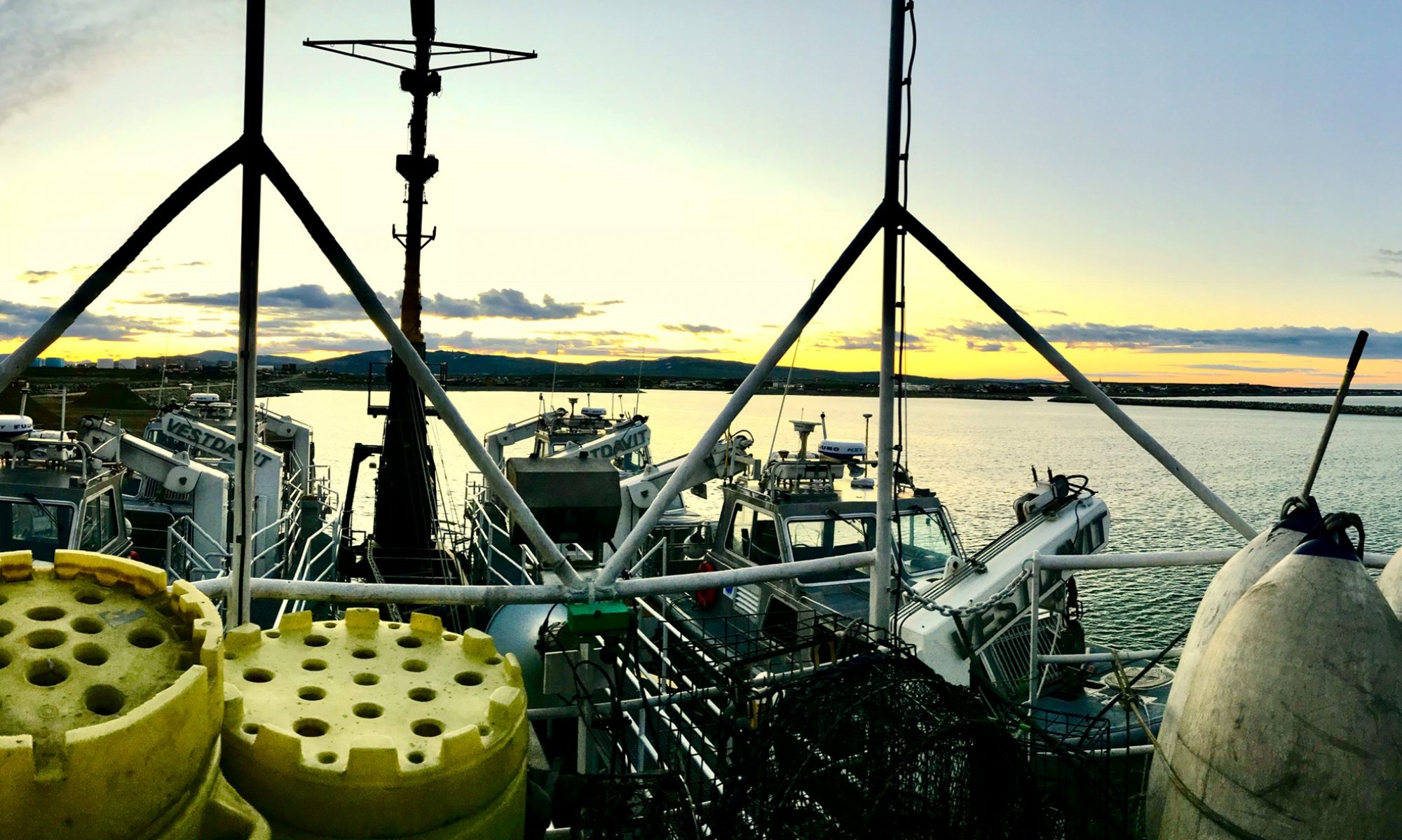

We are excited to bring back our Photo of the Week section so stay tuned for new content coming soon! In the meantime, take a look at these fantastic pictures from our teachers.

Haul Back!
June 26, 2017
After hauling in the net, the deck crew tie off the ends to contain the catch.
Photo: Marsha Lenz
Once the science team decides that they have what they would like in the net, they announce that its time to, “Haul back!” in the radio. At this point, the winch operators and Deck hands start bringing in the net. The contents of the pocket net are given to the scientists for identification. The scientific equipment are also removed and downloaded. The fish that are in the net are brought over to a bin next to the Fish lab with a crane. The nets are then carefully maneuvered back onto the net reel.Read the blog post

More topics (78)
- Oregon II
- Dyson
- Alaska
- Pisces
- Gulf of Mexico
- Rainier
- Bigelow
- Oregon
- Ship
- Gunter
- Fairweather
- Catch
- Fisheries
- Atlantic
- Buoy
- Sette
- Sharp
- Women
- Women's History Month
- Flag
- Shimada
- Sunset
- Camera
- Jefferson
- Launch
- Net
- CTD
- Equipment
- Healy
- Jellyfish
- Lasker
- Longline
- NOAA Ship Oscar Dyson
- Safety
- Sample
- Survey
- Chart
- Gulf of Alaska
- Ocean
- Seafood
- Bottom trawl
- Dolphin
- Dredge
- Endangered
- Fourth of July
- Juvenile
- Microscope
- Navigation
- New Year
- NOAA Corps
- NOAA Ship Oregon II
- Oscar Elton Sette
- Shrimp
- Whales
- Arctic
- Bow
- Explorer
- Fishing
- Flounder
- Georges Bank
- Glacier
- Groundfish
- Gulf of Maine
- Hugh R Sharp
- Hugh R. Sharp
- Humpback
- Independence Day
- New England
- Octopus
- Okeanos
- Oscar Dyson
- Reef
- Right whale
- Sea star
- Sea turtle
- Small boat
- Starfish
- Tide
9 photos for net · Clear
 Trawling for Pollock, But Catching JelliesSeptember 17, 2019
 Seeing What We CatchJune 18, 2018
 Fishing for DataApril 23, 2018
 It’s the Little Things in Life (like Plankton)October 9, 2017
 Haul Back!June 26, 2017
 “At each target location, a trawling net will be deployed and dragged near the bottom of the sea for a 20 minute period at a speed of 3 knots.”March 10, 2014“At each target location, a trawling net will be deployed and dragged near the bottom of the sea for a 20 minute period at a speed of 3 knots.”March 10, 2014
 “At station #146 we had an oxygen reading of 1 mg/L (which is hypoxic) but pulled up a huge net of fish that filled 18 buckets.”July 15, 2013
 “The Neuston tow has a large, rectangular frame with a fine mesh net attached to it. At the end of the net is a large cylindrical bucket, called a codend, with a mesh screen meant for catching the organisms.”December 17, 2012